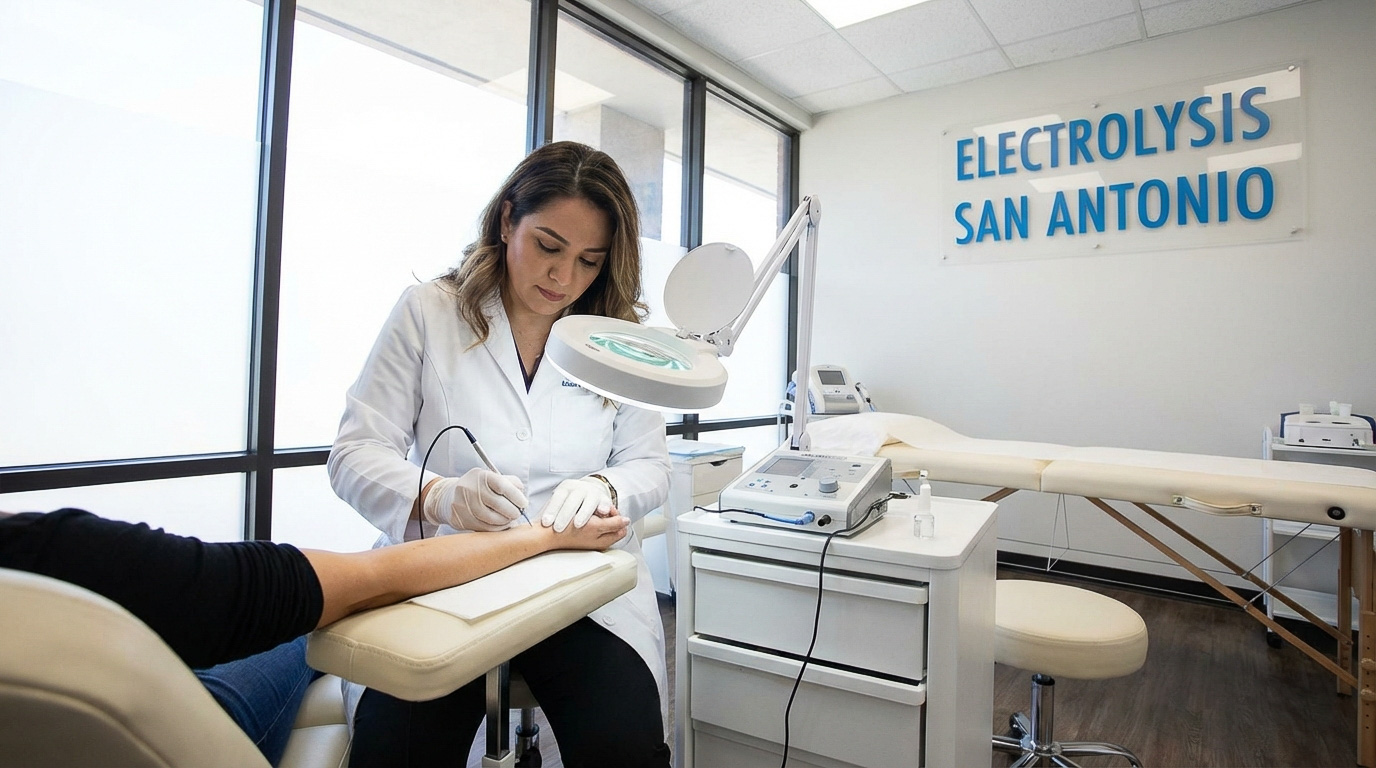
Electrolysis stands as the unparalleled gold standard in hair removal.
San antonio, Texas 2026
Distinguished by its unique classification from the U.S. Food and Drug Administration (FDA) as the only truly permanent method. Unlike other widely marketed techniques, such as laser hair removal, which achieve mere long-term reduction, electrolysis guarantees the complete and lasting eradication of hair growth. This comprehensive report delves into the foundational aspects of electrolysis, tracing its rich 140-year history, showcasing its unmatched versatility across all hair types, skin tones, and body areas, and affirming its robust safety profile meticulously honed over generations of medical and cosmetic application.
Beyond its scientific and historical merits, this report provides a thorough analysis of the global electrolysis market. Currently valued at approximately $847.7 million in 2024, the market is poised for significant expansion, projected to reach $1.33 billion by 2033. This growth trajectory is fueled by evolving consumer beauty standards, increasing grooming expenditures, and continuous technological advancements that enhance both efficacy and client comfort. Herein, we examine the core benefits and dynamic market forces propelling electrolysis to the forefront of permanent hair removal solutions, offering an in-depth understanding of its enduring relevance and rapidly expanding adoption worldwide.
Key Takeaways:
- Electrolysis is the only FDA-recognized method for permanent hair removal, setting it apart from all other techniques, including laser, which only offers long-term reduction.
- It offers unparalleled versatility, effectively treating all hair colors (including blond, red, grey, white) and all skin types, making it universally applicable.
- Electrolysis can be performed on virtually any body area, from delicate facial features like eyebrows to large areas such as the back and bikini line.
- With over 140 years of proven efficacy and safety since its inception in 1875, electrolysis boasts a long-standing track record of reliability.
- The global electrolysis market is robust, valued at approximately $847.7 million in 2024, and is projected to grow to $1.33 billion by 2033, driven by increased consumer demand.
- Clients commit to multiple sessions over time for permanent results, with each hair follicle individually treated during its growth phase.
1. Executive Summary
Electrolysis stands as the singular hair removal method recognized by the U.S. Food and Drug Administration (FDA) as truly permanent, a distinction that positions it as the unequivocal gold standard for individuals seeking lasting hair removal solutions[2]. Unlike other popular methods such as laser hair removal, which achieve long-term hair reduction, electrolysis offers guaranteed eradication of hair growth. This report provides an in-depth understanding of electrolysis, detailing its historical context, unparalleled versatility across all hair types and body areas, and its robust safety profile honed over 140 years of medical and cosmetic application[11]. We will explore the current state of the global electrolysis market, valued at approximately $847.7 million in 2024, and project its steady growth to $1.33 billion by 2033, driven by increasing consumer grooming expenditures, evolving beauty standards, and technological advancements[4]. This executive summary serves as a comprehensive overview of the key findings, outlining the unique benefits and market dynamics that underscore the enduring relevance and growing adoption of electrolysis as a definitive solution for unwanted hair.
Electrolysis: The Only FDA-Recognized Permanent Hair Removal Method
The defining characteristic that sets electrolysis apart from all other hair removal techniques is its official classification by the FDA as a permanent method[2]. This is a critical distinction that often goes unappreciated by consumers. While laser hair removal is widely marketed, it is, by regulatory definition, considered a method for “long-term hair reduction,” meaning it reduces hair growth over time but does not guarantee its complete and permanent cessation[2]. Electrolysis, on the other hand, works by directly destroying the hair follicle’s growth cells through the application of a small amount of electrical energy delivered via a fine probe inserted into the follicle[13]. Once a follicle is properly treated, it is permanently unable to produce hair[5].
This permanence is not a recent discovery; the efficacy of electrolysis has been proven over a profound historical timeline. Its first recorded medical application dates back to 1875 when Dr. Charles Michel, an ophthalmologist, successfully used it to remove an ingrown eyelash, providing permanent relief to his patient[11]. This pioneering intervention laid the groundwork for electrolysis to evolve into a globally recognized cosmetic procedure with a track record of safety and effectiveness that spans more than a century and a half[5]. The method has been continually refined since then, with modern techniques and equipment enhancing both its efficiency and client comfort, without compromising its core principle of permanent follicle destruction.
The implications of this FDA classification are significant for both consumers and practitioners. For consumers seeking a definitive end to unwanted hair, electrolysis represents the only technology that can deliver on that promise. For practitioners, this official recognition provides a strong assurance of the method’s scientific validity and long-term results, solidifying its position as an essential offering in the aesthetic and medical hair removal landscape. It underscores the unique value proposition of electrolysis in a market saturated with various hair removal options, many of which offer only temporary or partial solutions.
Unparalleled Versatility: Treating All Hair Types, Skin Tones, and Body Areas
A cornerstone of electrolysis’s appeal is its universal applicability. Unlike laser therapies that depend on the presence of pigment (melanin) in hair for effective targeting, electrolysis operates independently of hair color or skin tone[2]. This makes it the only viable permanent hair removal solution for individuals with:
- Light-colored hairs: Blond, red, gray, and white hairs, which are often impervious or unresponsive to laser treatment due to their lack of pigment[2].
- Any skin tone: Electrolysis safely and effectively treats all skin tones, from very light to very dark, without the risk of pigmentation changes or burns that can be a concern with laser therapy, especially on darker skin types[13].
This inclusivity broadens the demographic for whom permanent hair removal is an option, providing a crucial service to a diverse clientele previously underserved by other methods. Professional electrologists routinely treat a vast array of body areas, demonstrating the method’s remarkable versatility[3]. These areas include, but are not limited to:
- Face: Upper lip, chin, cheeks, jawline, and delicate areas like eyebrows and hairline[3]. Electrolysis is particularly favored for shaping eyebrows and clearing stray hairs in areas too close to the eyes for laser procedures[12].
- Neck and Decolletage: Often targeted for hormonal hair growth or for clients seeking a cleaner aesthetic.
- Underarms: A common area for permanent hair removal to eliminate the need for shaving or waxing.
- Bikini and Brazilian Areas: Allows for precise shaping or complete clearance based on client preference, without issues related to skin sensitivity or tattoo interference[12].
- Abdomen and Chest: Popular among both men and women seeking to manage or remove unwanted hair.
- Back: Especially common for men desiring a smooth back.
- Extremities: Including arms, legs, fingers, and toes, for fine vellus hairs or coarse growth patterns[3].
The precision of electrolysis, treating each hair follicle individually, makes it ideal for small, contoured, or sensitive areas where detail and safety are paramount[12]. This meticulous approach is invaluable for tasks such as creating clean beard lines, removing individual ear or nose hairs, or addressing ingrown hairs that cause skin irritation. For individuals with medically sensitive situations, such as trichiasis (ingrown eyelashes, as was the original use case[11]) or those with dermatological conditions like melasma where heat from lasers could exacerbate pigmentation, electrolysis presents a safer, lower-risk alternative[12]. While large areas require more time and numerous sessions, the ability to address virtually any unwanted hair, regardless of its location or characteristics, solidifies electrolysis’s position as a uniquely comprehensive hair removal solution.
Market Landscape and Growth Trends
The global electrolysis hair removal market is experiencing steady growth, reflecting an increasing consumer demand for permanent and effective solutions. In 2024, the market was valued at approximately $847.7 million, with projections indicating a rise to $1.34 billion by 2033, representing a Compound Annual Growth Rate (CAGR) of roughly 5.2% annually between 2025 and 2033[4]. This consistent expansion is underpinned by several key drivers:
- Rising Grooming Expenditures: Consumers are increasingly willing to invest in personal grooming and aesthetic enhancements. In the U.S. alone, quarterly spending on hair removal and personal care products and services saw an increase from $113.3 billion in Q1 2023 to $122.5 billion in Q4 2024, and further to $123.8 billion by Q1 2025[10]. This trend indicates a strong and sustained commitment to appearance, which directly fuels the growth of permanent solutions like electrolysis.
- Changing Demographics: The clientele for electrolysis is diversifying significantly. While traditionally dominated by women, men now constitute a growing segment of hair removal clients. For instance, approximately 38% of laser hair removal patients in the U.S. in 2023 were male, indicating a broader acceptance of male body grooming[9]. Electrolysis benefits from this trend, with increasing demand from men for back, chest, neck, and beard-line hair removal. Furthermore, transgender individuals and those with hormonal conditions such as Polycystic Ovary Syndrome (PCOS) rely heavily on electrolysis for its permanent results, especially for facial hair, representing a significant and growing market segment.
- Regional Dynamics: North America currently leads the global electrolysis market, accounting for approximately 38-43% of total revenue in 2024[4], [16]. This dominance is attributed to high disposable incomes, a well-established aesthetic industry, and strong cultural emphasis on grooming. However, the Asia-Pacific region is emerging as the fastest-growing market, projected to expand at an impressive 7.8% CAGR through 2034[17], [18]. This rapid growth is driven by increasing urbanization, rising beauty awareness, and the burgeoning middle-class populations in countries like China, India, and Southeast Asia. Europe also holds a significant share, with steady growth driven by similar factors.
- Technological Advancements: Continuous innovations in electrolysis equipment are enhancing treatment speed, precision, and client comfort. Modern devices, such as the Apilus xCell Pro launched by Dectro International in September 2024, feature computerized precision, ultra-short pulse delivery, and integrated cooling systems, which significantly reduce discomfort and improve efficacy across various hair types and skin conditions[20], [21]. These advancements make electrolysis more attractive to a wider audience and empower practitioners to deliver more efficient and pleasant treatment experiences.
- Dominance of Thermolysis: Among the different electrolysis modalities (galvanic, thermolysis, and blend), thermolysis (short-wave radiofrequency) has become the most widely used, accounting for approximately 52% of procedures in 2024[19]. Its popularity stems from its ability to treat hair follicles more quickly per hair, contributing to faster individual sessions and potentially reducing the overall treatment timeline.
- Application Focus: Facial hair removal remains the single largest application segment for electrolysis, representing about 45% of all treatments in 2024[22]. This high demand underscores the importance of electrolysis for visible areas that significantly impact personal confidence.
These market trends indicate a robust future for the electrolysis industry. As consumers become more educated about the distinct benefits of permanent hair removal and technology continues to improve, the demand for electrolysis services is expected to climb steadily. The expansion into new geographic regions and evolving demographic profiles further solidify its position as a critical player in the global aesthetic market.
Electrolysis vs. Other Methods: A Comparative Analysis
Understanding the value proposition of electrolysis necessitates a comparison with other prevalent hair removal methods. While each method has its advantages, electrolysis stands out due to its claim of true permanence and universal applicability:
1. Laser Hair Removal:
- Advantages: Laser hair removal is highly popular for its speed and ability to cover large body areas quickly. Over 893,000 laser hair removal procedures were performed in the U.S. in 2009 alone[8], demonstrating significant demand. It offers substantial hair reduction, typically between 80-90% after a full course of treatment[6].
- Limitations: Laser is officially classified as “long-term reduction” by the FDA, not permanent removal[2]. It is less effective on light-colored (blonde, red, gray, white) hairs and certain skin types, as it relies on pigment for targeting. Maintenance sessions are often required to manage regrowth[6]. Laser also carries risks of burns or pigmentation changes, especially on darker skin tones if not performed correctly[13], and is generally not safe for areas directly around the eyes.
- Electrolysis Complementarity: Many individuals utilize laser first to achieve broad hair reduction, then follow up with electrolysis to eliminate the remaining stubborn, fine, or light-colored hairs for a completely smooth and permanent result[13].
2. Waxing, Threading, and Plucking:
- Advantages: These methods provide immediate removal of hair from the root, offering temporary smoothness. They can be relatively inexpensive per session and widely accessible.
- Limitations: Hair always grows back because the follicle is not destroyed. This necessitates frequent, repetitive treatments, leading to ongoing costs and time commitments. Potential side effects include pain, skin irritation, and ingrown hairs.
- Electrolysis Contrast: Electrolysis offers a permanent exit from this cycle of regrowth, eliminating the need for ongoing, often painful, maintenance.
3. Depilatory Creams and Shaving:
- Advantages: These are the quickest and most accessible methods, with minimal upfront cost. Shaving cuts hair at the skin’s surface, and creams dissolve it just above, making them painless (aside from nicks or chemical burns). Roughly 89% of people who remove hair have tried shaving[14].
- Limitations: The results are very short-lived, with hair reappearing in a matter of days. This leads to constant maintenance, potential stubble, razor burn, or chemical irritation. Long-term costs of blades, creams, and associated products can ironically surpass the one-time investment in electrolysis.
- Electrolysis Contrast: Electrolysis, though a higher upfront investment, provides a permanent solution that frees individuals from the never-ending routine and recurring costs associated with these temporary methods.
Discomfort and Side Effects: Pain perception is subjective, but modern electrolysis techniques are designed for minimal discomfort. The sensation is often described as a brief sting or warmth. Electrolysis and laser often have comparable pain levels, both responsive to topical anesthetics[13]. A key advantage of electrolysis is its minimal and temporary side effects (slight redness or swelling) when performed by a skilled professional, with virtually no risk of scarring. Unlike laser, which has specific contraindications (e.g., during pregnancy, for certain conditions, or on specific body areas), electrolysis is generally more universally applicable and considered safe by dermatologists for even delicate areas[5].
In essence, election hair removal often becomes the choice for individuals prioritizing absolute permanence, universal applicability (all hair colors, skin types), precision, and its robust safety profile. While slower and more labor-intensive than laser for large areas, its definitive results mean an end to lifelong hair management. Many clients make a calculated decision, viewing electrolysis as a long-term investment that saves time, money, and hassle over several years, justifying the commitment of multiple sessions over time. This patient-centric view, matching specific client needs with the unique capabilities of electrolysis, drives its sustained demand.
Commitment and Investment: The Path to Permanent Results
Achieving permanent hair removal with electrolysis requires a dedicated commitment from the client, a factor that differentiates it from quick, superficial treatments. Each hair follicle must be treated during its active growth phase (anagen) for the treatment to be effective[5]. Since not all hairs are in this phase simultaneously, multiple sessions are essential to target new cycles of hair as they emerge. Typical treatment ranges for areas include:
- Face: Approximately 10-20 sessions[23]
- Bikini Line: 8-15 sessions[23]
- Legs or Arms: 15-30 sessions[23]
These sessions are typically spaced 1-2 weeks apart and can range from 15 minutes to an hour per appointment, depending on the area and hair density[24]. While this indicates a significant time investment, the payoff is unparalleled: once the series of treatments is completed, the hair is permanently removed and does not grow back[5]. This long-term benefit transforms electrolysis from a mere cosmetic procedure into a meaningful lifestyle investment.
The cost of electrolysis varies depending on location, electrologist experience, and the size of the area being treated. Individual sessions typically cost between $30 to $100[24]. While small areas like the upper lip might total $150-$300 for complete clearance, larger areas such as full legs or the back can accumulate costs ranging from $4,500 to $10,000 over the entire treatment course[25]. For an extensive area like a dense beard, the total treatment might exceed 100-300 hours, potentially costing well into five figures[26]. Although the upfront cost can be substantial, many consumers view it as a worthwhile investment when compared to the perpetual expenses and inconvenience of lifelong shaving, waxing, or repeated laser touch-ups. The average total spend for a typical client is around $500[27], illustrating that while it can be expensive for large areas, it’s often more affordable for targeted, smaller corrections.
The commitment extends beyond just time and money; it requires patience. While clients often observe a noticeable reduction in hair density after just a few treatments (one case study noted a 91% reduction in hair regrowth after six sessions with a newer technique[28], compared to a historical ~50% reduction[29]), complete clearance takes time. The ongoing nature of the treatment plan is essential to ensure that every follicle is caught in its growth cycle and effectively disabled. Clients who persevere through the full recommended course report immense satisfaction, finding the permanent freedom from hair removal routines to be invaluable. The promise of never having to shave, wax, or pluck again provides a powerful incentive that outweighs the initial demands of the treatment.
Technological Innovations and Future Outlook
The electrolysis industry, while rooted in a centuries-old principle, is continually evolving through technological advancements that enhance treatment speed, comfort, and efficacy. Modern epilators, such as the Apilus xCell Pro launched in 2024, are highly computerized, delivering precise energy pulses with integrated cooling systems that significantly reduce client discomfort and optimize results[20], [21]. These innovations allow electrologists to perform treatments more rapidly and with greater precision, potentially shortening the overall treatment timeline for clients. For example, some practitioners report clearing 15-20 hairs per minute with advanced technology, compared to 5-10 hairs per minute with older equipment. This increased efficiency makes electrolysis more appealing for clients and profitable for practitioners.
The prevalence of thermolysis (short-wave radiofrequency) as the dominant modality, accounting for over 52% of treatments in 2024, underscores the industry’s shift towards faster, heat-based destruction of follicles[19]. The blend method, combining galvanic and thermolysis currents, also offers advantages by maximizing effectiveness. Continuous research and development in probe design (e.g., insulated probes) further concentrate energy at the follicle base, improving efficacy and minimizing skin irritation.
The industry is also responding to global demand by scaling up manufacturing and improving training standards. For instance, Sterex International expanded its production capacity by 40% in 2024 to meet growing global orders for electrolysis equipment and needles[30]. Standardized training curricula, often developed in partnership with international certification bodies, are crucial for ensuring that new practitioners globally uphold high standards of safety and effectiveness, fostering consumer trust and expanding the market. Furthermore, the rise of at-home electrolysis devices, while offering limited efficacy compared to professional treatment, contributes to increasing consumer awareness and interest in permanent hair removal, often leading individuals to seek professional care after attempting DIY solutions.
The future outlook for electrolysis is bright, characterized by steady growth, technological refinement, and an expanding, diverse clientele. With ongoing advancements making treatments faster and more comfortable, and with its unwavering status as the only truly permanent hair removal method, electrolysis will continue to fill a critical and unique niche in the ever-growing global beauty and wellness market. Its inclusivity, safety, and definitive results ensure its enduring relevance, complementing other hair reduction methods while serving as the ultimate solution for those seeking a lifetime free from unwanted hair.

2. Defining Electrolysis: The Permanent Hair Removal Standard
In the dynamic landscape of aesthetic procedures, where the pursuit of long-lasting beauty and convenience drives innovation, electrolysis stands as a cornerstone of permanent hair removal. Unique among its counterparts, electrolysis holds the distinction of being the only hair removal method officially classified as permanent by the U.S. Food and Drug Administration (FDA)[2]. This critical designation sets it apart from other popular techniques, such as laser hair removal, which are categorised merely as methods for long-term hair *reduction*[2]. The permanence offered by electrolysis is not a recent discovery; its efficacy has been validated over 140 years of consistent use and refinement, tracing back to its pioneering medical application in 1875[11]. This enduring track record underscores its reliability, safety, and effectiveness across a diverse range of clients and hair types. The core mechanism of electrolysis involves the precise delivery of electrical energy directly into individual hair follicles, permanently disabling their ability to produce hair[1]. This direct-to-follicle approach endows electrolysis with unparalleled versatility, making it effective for any hair color and skin type, in virtually any body area–even those sensitive spots often inaccessible or unsuitable for other methods[3]. As a result, electrolysis has emerged as the definitive solution for individuals seeking truly lasting hair removal results, including those with light-colored, gray, or red hair that laser treatments frequently miss[2]. The global market for electrolysis is experiencing steady growth, projected from approximately $847.7 million in 2024 to $1.34 billion by 2033, reflecting an annual growth rate (CAGR) of about 5.2%[4]. This expansion is fueled by rising consumer grooming expenditures, a growing demand for permanent aesthetic solutions, and increasing awareness of its broad applicability and effectiveness. While the process demands commitment, requiring multiple sessions over time to address all hair growth cycles, the payoff is total permanence, eliminating the continuous need for shaving, waxing, or repetitive laser treatments. This section will delve deep into the defining characteristics of electrolysis, elucidate its mechanisms, compare it with alternative hair removal methods, and examine the market trends and technological innovations driving its continued prominence.
2.1. The Mechanism of Permanent Hair Removal
At the heart of electrolysis’s unparalleled position as the permanent hair removal standard is its fundamental mechanism of action. Unlike methods that merely remove hair temporarily (like shaving or waxing) or reduce its growth (like laser hair removal), electrolysis targets and eliminates the hair follicle’s regenerative capabilities.
2.1.1. Core Principle: Direct Follicle Destruction
The procedure of electrolysis involves the insertion of a very fine, sterile probe—often thinner than the hair itself—into the natural opening of the hair follicle, alongside the hair shaft[1]. Once the probe reaches the root of the follicle, a precisely controlled amount of electrical energy is delivered. This electrical current generates heat or a chemical reaction (depending on the modality used) that physically destroys the papilla (the blood supply and nutrient source for hair growth), the germinative cells responsible for hair production, and the surrounding cellular structures vital for hair regeneration[1]. Once adequately treated, that specific hair follicle is permanently incapable of producing another hair[1]. Brendan Camp, MD, a board-certified dermatologist, affirms that “Electrolysis is truly a permanent hair removal option because it effectively destroys the hair follicle”[2]. This definitive destruction is what earns electrolysis its unique FDA classification as the only permanent hair removal method[2].
2.1.2. The Role of Hair Growth Cycles and Multiple Sessions
While the destruction of a single hair follicle is immediate, achieving complete and permanent hair removal over a larger area is a process that requires patience and multiple treatment sessions. This necessity stems from the cyclical nature of hair growth, which includes three primary phases:
- Anagen (Active Growth Phase): This is the ideal phase for electrolysis, as the hair is actively growing, and the follicle is fully connected to its blood supply and germinative cells. Targeting the follicle during anagen ensures maximum efficacy of the electrical current in destroying these vital structures.
- Catagen (Transitional Phase): During this short phase, hair growth ceases, and the follicle begins to shrink.
- Telogen (Resting Phase): In this phase, the hair follicle is dormant, and the hair may shed. Electrolysis is ineffective on telogen hairs because the follicle is not actively connected to its growth mechanisms.
At any given time, only a certain percentage of hair follicles on a particular body area are in the active anagen phase. Other hairs are either dormant, transitioning, or too new to be visible above the skin’s surface. Therefore, electrologists must treat the area repeatedly over several months or even years to “catch” each hair follicle during its active growth phase as it emerges. For example, clients typically need anywhere from 8 to 30 sessions per area. Facial hair often requires 10–20 sessions, while larger areas like legs might need 15–30 sessions[10]. These sessions are usually brief, lasting between 15 minutes to an hour, and are scheduled weekly or bi-weekly[6]. This staggered treatment approach is crucial because it ensures that every individual follicle is definitively targeted and destroyed when it is most vulnerable. The commitment to these multiple sessions is a testament to the thoroughness required for 100% permanent removal, transforming the ongoing burden of temporary hair removal into a one-time investment in lasting smoothness.
2.1.3. Evolution of Electrolysis Modalities
Since Dr. Charles Michel’s pioneering work in 1875, the techniques for delivering electrical energy for electrolysis have evolved, leading to increased speed, efficiency, and comfort:
- Galvanic Electrolysis: This was the original method, utilizing direct current (DC) to create a chemical reaction (lye) within the follicle, destroying cells. While highly effective and permanent, it is the slowest modality, as the chemical reaction takes time to fully disable the follicle.
- Thermolysis (High-Frequency or Short-Wave): Introduced later, thermolysis uses alternating current (AC), which creates heat (diathermy) within the follicle, coagulating and destroying the papilla and germinative cells. Thermolysis is significantly faster than galvanic electrolysis, treating each follicle in a fraction of a second[8]. Its speed has made it the most popular modality, accounting for approximately 52% of electrolysis procedures in 2024[8].
- Blend Method: As the name suggests, the blend method combines both galvanic (DC) and thermolysis (AC) currents. This combination leverages the speed of thermolysis and the chemical destruction efficacy of galvanic, often resulting in quicker and more thorough destruction, especially for stubborn hairs.
Modern electrolysis devices, such as the Apilus xCell Pro launched in 2024, further enhance these modalities with computer-controlled precision and integrated cooling systems, significantly reducing discomfort and improving treatment speed and accuracy[16]. These technological advancements ensure that while the fundamental principle of permanent follicle destruction remains, the client experience has become increasingly refined and efficient.
2.2. Unmatched Versatility: Treating All Hair, Skin, and Body Areas
One of the most significant advantages of electrolysis, and a key differentiator from other hair removal methods, is its universal applicability. Electrolysis is truly inclusive, capable of treating any type of hair, on any skin tone, and across virtually all body regions, including sensitive and precise areas.
2.2.1. Effectiveness Across All Hair Colors and Skin Tones
A crucial limitation of laser hair removal is its reliance on melanin (pigment) in the hair shaft to absorb light energy. This means laser is most effective on dark hair against light skin and can be less efficacious or even risky for individuals with light-colored hair (blonde, red, gray, white) or darker skin tones[2]. Electrolysis completely bypasses this limitation.
- Any Hair Color: Because electrolysis directly targets the follicle with electrical current, the pigment of the hair is irrelevant to its effectiveness. This makes it the only viable permanent solution for individuals with blonde, red, gray, or white hairs that lasers cannot effectively detect or treat[2].
- Any Skin Tone: Similarly, electrolysis does not target skin pigment. This feature makes it safe and effective for individuals of all skin tones, from Fitzpatrick I to VI, without the risk of hyperpigmentation or hypo-pigmentation that can sometimes occur with laser treatments on darker skin if improper settings are used. This broad applicability ensures that every individual, regardless of their hair or skin characteristics, can achieve permanent hair removal safely[3].
2.2.2. Comprehensive Body Area Treatment
Electrolysis can be performed on virtually any part of the body where unwanted hair grows. This versatility extends to areas that are often challenging, unsafe, or simply not recommended for other hair removal methods:
- Face: This remains the largest primary application, accounting for about 45% of all electrolysis treatments in 2024[9]. Areas include the upper lip, chin, cheeks, jawline, and eyebrows. For instance, electrolysis is uniquely suited for precise eyebrow shaping or removing stray hairs around the hairline, areas where laser treatment is generally avoided due to proximity to the eyes[3].
- Neck and Body: The neck, underarms, bikini line (including full Brazilian), abdomen, chest, and back are all routinely treated areas[3].
- Delicate and Specialized Areas: Electrolysis is also safely used on toes and fingers, areolas, or even within the ears and nose periphery, which are often too awkward or risky for laser[3]. The ability to precisely target single hairs is invaluable for clients seeking to permanently clean up razor bumps around a beard line or remove coarse ear hairs.
This extensive range of treatable areas, combined with its effectiveness across all hair and skin types, solidifies electrolysis as the most universally applicable method for permanent hair removal.
2.2.3. Safety and Track Record of Over 140 Years
The safety and long-term efficacy of electrolysis are not theoretical but are borne out by its extensive history. First used successfully by Dr. Charles Michel in 1875 to treat an ingrown eyelash, it has since amassed over 140 years of continuous use and refinement[11]. When performed by a trained and certified professional, electrolysis has no long-lasting side effects[1]. Any minor, temporary side effects, such as slight redness, swelling, or tiny scabs, are part of the normal healing process and typically resolve within a few hours to days. The procedure’s safety is particularly notable for sensitive skin types or in medically sensitive situations, where the heat from lasers or harsh chemicals might be contraindicated. For instance, electrolysis is often recommended for pregnant women who wish to remove facial hair, as laser treatments are generally avoided during pregnancy as a precaution. Furthermore, for individuals with conditions like melasma, where heat can trigger pigmentation, electrolysis presents a safer alternative. This long track record, coupled with modern advancements in equipment and training, makes electrolysis a thoroughly vetted and highly trusted procedure worldwide.
2.3. Electrolysis in the Market: Growth, Demographics, and Cost-Benefit
The electrolysis hair removal market is a steadily expanding segment within the broader aesthetics industry, driven by increasing consumer demand for permanent solutions, evolving beauty standards, and technological advancements.
2.3.1. Market Size and Growth Trajectory
The global electrolysis hair removal market was valued at an estimated $847.7 million in 2024[4]. Projections indicate consistent growth, with the market expected to reach approximately $1.34 billion by 2033, representing a compound annual growth rate (CAGR) of 5.2% annually between 2025 and 2033[4]. This positive outlook is fueled by several factors:
- Rising Grooming Expenditures: Consumers are increasingly willing to invest in personal grooming and aesthetic treatments. Quarterly spending on hair removal and personal care in the U.S., for example, rose from $113.3 billion in Q1 2023 to $122.5 billion in Q4 2024, hitting $123.8 billion by Q1 2025[12]. This trend indicates a cultural shift towards prioritizing and financing long-term beauty and wellness solutions.
- Demand for Permanent Solutions: As awareness of electrolysis’s permanent nature grows, consumers are increasingly seeking it to eliminate the ongoing hassle and cost of temporary methods.
- Technological Advancements: Innovations in electrolysis equipment, such as the Apilus xCell Pro, are improving treatment speed and comfort, making the procedure more appealing to a broader client base[16].
2.3.2. Regional Dynamics and Emerging Markets
Globally, North America maintains the largest share of the electrolysis market, accounting for approximately 42.9% of global revenue in 2024[5]. This dominance is attributed to high disposable incomes, established aesthetic industries, and ingrained grooming norms. However, the Asia-Pacific region is emerging as the fastest-growing market, with a projected CAGR of about 7.8% through 2034[6]. This accelerated growth is propelled by:
- Rapid Urbanization: Increasing populations in urban centers with greater access to aesthetic services.
- Growing Middle Class: Rising incomes enable more individuals to afford premium and permanent hair removal solutions.
- Increasing Beauty Awareness: A growing focus on personal aesthetics and grooming trends across countries like China, India, and Southeast Asian nations[6].
This regional shift indicates significant future opportunities for electrolysis equipment manufacturers and training providers in these burgeoning markets.
2.3.3. Diversifying Client Demographics
The client base for electrolysis is broadening significantly beyond its traditional segment.
- Men: There’s a notable increase in male clientele seeking permanent hair removal for areas such as the back, shoulders, neck, and to define beard lines. Men comprised about 38% of laser hair removal patients in the U.S. in 2023[13], and electrologists confirm a similar trend in electrolysis, driven by evolving male grooming trends.
- Transgender Individuals: Electrolysis is a critical component of gender affirmation for many transgender individuals, particularly trans women seeking permanent beard and body hair removal. Its ability to treat all hair types and permanently eliminate growth makes it indispensable for these clients.
- Hormonal Conditions: Women experiencing hirsutism due to hormonal imbalances, such as those with Polycystic Ovary Syndrome (PCOS), frequently turn to electrolysis. For these individuals, unwanted facial and body hair is a significant concern, and electrolysis offers a permanent solution when medical treatments may not fully resolve the issue.
This expanded demographic base underscores electrolysis’s role not just as a cosmetic procedure, but as a vital service addressing deeply personal and confidence-related needs across various communities.
2.3.4. Cost-Benefit Analysis and Long-Term Value
Electrolysis treatments involve a significant upfront time and financial commitment. Individual sessions typically cost between $30 to $100 for 15 to 60 minutes, depending on the location and practitioner[6]. The total cost for complete removal varies widely based on the size and density of the treated area:
- Small Areas (e.g., upper lip): $150–$300 total cost[6].
- Medium Areas (e.g., bikini line): Potentially several hundred to a few thousand dollars.
- Large Areas (e.g., full legs, back, dense beard): Can range from $4,000 to $10,000 or even higher, with extensive beard removal potentially requiring over 100-300 hours of treatment[6].
Despite these costs, many individuals view electrolysis as a wise long-term investment. When compared to the lifelong expenses and time commitment associated with recurring temporary methods such as shaving (razors, creams), waxing (salon visits), or even repeat laser maintenance sessions, electrolysis often proves to be more cost-effective over the client’s lifetime. The value proposition is the promise of truly hair-free skin, eliminating the need for any further hair removal efforts in the treated area, thus saving time, money, and inconvenience in the long run.
2.4. Electrolysis vs. Other Hair Removal Methods
To fully appreciate the unique standing of electrolysis, it is essential to compare it against other prevalent hair removal methods, highlighting its distinct advantages and the contexts in which it serves as the superior choice.
2.4.1. Laser Hair Removal: Reduction vs. Permanence
Laser hair removal is a popular method, evidenced by the over 893,000 procedures performed in the U.S. in 2009 alone[7]. It offers speed and efficiency for covering large areas, often treating an entire underarm in minutes. However, a key distinction lies in its classification: laser hair removal is considered for “long-term hair reduction,” not permanent removal[2].
- Mechanism: Lasers use pulsed light to target melanin in the hair follicle, heating and damaging it to inhibit future growth.
- Efficacy: Typically achieves 80-90% hair reduction after a full course of treatment[14]. Regrowth is usually finer and lighter but maintenance sessions are often required to manage it[14].
- Limitations: Less effective on light-colored (blonde, red, gray, white) or fine vellus hair due to insufficient melanin pigment[2]. Can pose risks of pigmentation changes or burns on darker skin tones if not performed with suitable laser technology and expertise. Also generally not used for sensitive areas like eyebrows or very close to the eyes[2].
- Complementary Use: Many clients opt for laser hair removal first to “debulk” large areas of dark hair efficiently, then transition to electrolysis to permanently eliminate the remaining lighter, finer, or resistant hairs that laser cannot address. This combined approach leverages the strengths of both technologies.
2.4.2. Temporary Methods: Shaving, Waxing, Plucking, and Depilatory Creams
These methods provide immediate, though transient, relief from unwanted hair. They are generally accessible and cost-effective per session, but their effectiveness is short-lived, necessitating continuous repetition.
- Shaving: Cuts hair at the skin’s surface. While painless and quick, hair reappears within days, often causing stubble, razor burn, or ingrown hairs.
- Depilatory Creams: Chemically dissolve hair at or just below the skin’s surface. They are pain-free but temporary, with hair growing back within days, and can sometimes cause skin irritation or allergic reactions.
- Waxing and Threading: Remove hair from the root, providing longer-lasting results (typically weeks) compared to shaving or creams. However, they are often painful, can lead to ingrown hairs, folliculitis, or skin irritation, and require hair to be grown out to a certain length before treatment. The hair follicle remains intact and eventually regenerates the hair.
The fundamental difference with electrolysis is that these temporary methods never address the root cause of hair growth – the active follicle. For someone seeking to escape the endless cycle of managing hair regrowth, electrolysis offers a definitive exit strategy. The investment in electrolysis yields freedom from lifelong maintenance, which for many, outweighs the initial time and cost commitment of the procedure.
2.4.3. Comparison of Features
To illustrate the unique position of electrolysis, the following table summarizes key comparisons:
| Feature | Electrolysis | Laser Hair Removal | Waxing/Threading | Shaving/Depilatory Creams |
|---|---|---|---|---|
| Permanence | Permanent (FDA-classified)[2] | Permanent Reduction | Temporary | Temporary |
| Hair Color Efficacy | All hair colors (blonde, red, gray, white)[2] | Best on dark hair; less effective on light/fine hair | All hair colors (as long as it can be grasped) | All hair colors |
| Skin Tone Efficacy | All skin tones (safe)[3] | Best on light skin; specific lasers for darker skin, some risk | All skin tones | All skin tones |
| Treated Areas | Virtually all body areas, including sensitive spots (brows, ears)[3] | Most body areas; usually avoids eyes/brows | Most body areas | Most body areas |
| Treatment Pace | Hair-by-hair (slower, meticulous) | Fast (covers large areas quickly) | Fast (covers small/medium areas quickly) | Very fast |
| Required Sessions | Multiple (8-30) over months/years[10] | Multiple (6-8) over months, plus maintenance | Recurring every 3-6 weeks | Daily/every few days |
| Discomfort Level | Mild to moderate (brief sting) | Mild to moderate (snapping rubber band) | Moderate to high (sharp pull) | Minimal (except nicks/burns) |
| Cost (Total) | High upfront (thousands), zero long-term | Moderate to high upfront (hundreds/thousands), plus maintenance | Low per session, high long-term | Very low per session, high long-term |
| Potential Side Effects | Temporary redness/swelling, minimal risk of scarring with skilled practitioner[1] | Temporary redness/swelling, risk of burns, hyper/hypopigmentation | Temporary redness/bumps, ingrown hairs, skin irritation | Razor burn, cuts, ingrown hairs, chemical irritation |
| FDA Status | Permanent Hair Removal[2] | Permanent Hair Reduction | N/A | N/A |
This comparison clearly outlines that while other methods offer advantages such as speed or low individual session cost, none provide the universal applicability and definitive permanence that electrolysis does. It is the only method that promises a truly hair-free future.
2.5. Innovations and the Future Outlook for Electrolysis
The field of electrolysis, despite its venerable history, is not static. Continuous innovation in technology and professional practices is enhancing its efficiency, comfort, and accessibility.
2.5.1. Technological Advancements in Equipment
Modern electrolysis machines are a far cry from Dr. Michel’s battery-powered needles. Today’s devices incorporate sophisticated electronics and software to optimize treatment delivery:
- Computerized Precision: Advanced epilators, like the Apilus xCell Pro, use microprocessors to control the electrical current, timing, and pulse duration with extreme accuracy[16]. This precision allows electrologists to customize settings for different hair types, skin sensitivities, and body areas, leading to more effective follicle destruction with less discomfort.
- Integrated Cooling Systems: Newer machines often feature integrated cooling or numbing modalities to enhance client comfort during treatment. This can significantly reduce sensation, making longer sessions more tolerable.
- Faster Modalities: The prevalence of thermolysis (52% of treatments in 2024[8]) and blend methods underscores the industry’s drive for speed. Innovations focus on delivering energy in ultra-short pulses (“microflash” or “multipulse” techniques) to increase efficiency, allowing more hairs to be treated per minute. One clinic utilizing a newer Multipulse Microflash technique reported a 91% reduction in hair regrowth after just six sessions on a client with dense chin and neck hair, a significant improvement over previous methods[17].
- Smart Probes: Research into insulated probes is ongoing, aiming to concentrate electrical energy precisely at the base of the follicle, minimizing collateral heating of surrounding skin and further improving efficacy and comfort.
These technological advancements are making electrolysis faster and more comfortable, thereby broadening its appeal and enhancing the overall client experience.
2.5.2. Professional Standards and Training
As the market expands, so does the emphasis on professional training and regulation.
- Licensing and Certification: In many regions, electrologists are required to be licensed or certified, necessitating rigorous training in anatomy, physiology, hygiene, and practical application. Organizations like the American Electrology Association (AEA) and the International Board of Electrologist Certification (IBEC) set high standards for education and practice[15].
- Global Expansion of Training: Training infrastructure is expanding into new markets, with IBEC partnering to establish standardized curricula in regions like Asia and Latin America[18]. This ensures consistent quality of service and builds consumer trust in emerging markets.
The continuous professionalization of electrolysis ensures that treatments are performed safely and effectively, upholding the method’s reputation for superior results.
2.5.3. Industry Investment and Growth Indicators
The steady growth in demand is prompting significant investment within the electrolysis industry. For example, Sterex International, a leading UK-based manufacturer of electrolysis needles and machines, expanded its production capacity by 40% in January 2024 to meet rising global demand[19]. This kind of capital investment signifies strong confidence in the market’s trajectory and indicates a healthy, growing sector. The outlook for electrolysis remains robust. Its unique status as the only FDA-recognized permanent hair removal method, coupled with its universal applicability and ongoing technological enhancements, positions it as an irreplaceable solution in the aesthetic and personal care industries. As evolving social norms and increasing personal grooming expenditures continue to fuel demand, electrolysis is poised for continued growth, serving an ever-widening demographic seeking definitive, long-lasting hair removal results.
The next section of this report will delve into the various conditions and motivations that lead individuals to seek electrolysis, exploring the specific challenges it addresses and the benefits it offers across diverse client profiles.
3. Versatility of Electrolysis: Treating Any Area, Hair Color, and Skin Type
Electrolysis stands as a singular solution in the vast landscape of hair removal, distinguished by its unparalleled versatility and effectiveness across all hair and skin types, as well as virtually any body area. Unlike other methods that often come with caveats concerning hair color, skin tone, or treatment zones, electrolysis offers a truly inclusive approach to permanent hair removal. This section will delve into the multifaceted adaptability of electrolysis, illustrating why it is often regarded as the gold standard for individuals seeking definitive, lasting results, especially in cases where other modalities fall short. This inherent flexibility is not just a technological advantage; it underpins the growing global demand for electrolysis, positioning it as a fundamental component of the expanding aesthetic and personal grooming market. Its proven track record, spanning over 145 years since its first documented use for ingrown eyelashes in 1875 by Dr. Charles Michel, speaks to its foundational efficacy and continuous refinement [11]. The ability of electrolysis to effectively treat virtually any hair, regardless of its pigmentation, or any skin type, ranging from the fairest to the darkest, is a critical differentiator. This makes it an invaluable option for a diverse clientele, including those with blonde, red, gray, or white hairs, which are notoriously difficult for laser hair removal systems to target due to their lack of melanin [2]. Furthermore, the precision of electrolysis allows for effective and safe treatment of delicate and contoured areas, from the eyebrows and upper lip to the bikini line and extremities like fingers and toes [3]. This section will meticulously examine these aspects, providing detailed insights into the mechanism, application, and market implications of electrolysis’s remarkable versatility, highlighting its unique position as the only method recognized by the FDA as providing permanent hair removal [1].
3.1 Unparalleled Inclusivity: Treating All Hair Colors and Skin Tones
One of the most significant advantages of electrolysis, and a core component of its versatility, is its ability to permanently remove hair irrespective of its color or the client’s skin tone. This attribute sets it apart from laser and intense pulsed light (IPL) therapies, which rely on the principle of selective photothermolysis – targeting melanin (pigment) in the hair follicle.
3.1.1 Efficacy Across All Hair Pigmentations
Electrolysis operates on a fundamentally different principle than light-based therapies. Instead of targeting melanin, it introduces a fine, sterile probe into each hair follicle, delivering a controlled electrical current that destroys the actual growth cells responsible for hair production [16]. This direct assault on the follicle’s germinative cells means that the presence or absence of pigment in the hair shaft is entirely irrelevant to the treatment’s success. This mechanism ensures that electrolysis is equally effective on:
- Blonde and Red Hair: These hair colors contain pheomelanin, which is less detectable by lasers and often results in suboptimal or no reduction with laser treatments [2]. Electrolysis reliably treats these hairs.
- Gray and White Hair: As hair loses all pigment, turning gray or white, it becomes completely invisible to laser devices. For such hairs, electrolysis is not merely an option but often the *only* viable path for permanent removal [2]. This is particularly relevant for an aging population or individuals whose hair grays prematurely.
- Vellus Hair (“Peach Fuzz”): Fine, light-colored vellus hairs (often found on the face, breasts, or abdomen) are generally untreatable by lasers due to their minimal pigment. Electrolysis is capable of precisely targeting and eliminating even these delicate hairs, offering comprehensive smoothness [33].
This broad applicability means that electrolysis caters to a segment of the population that is underserved by other permanent hair reduction methods. Individuals who have invested in laser treatments only to find resistant blonde, gray, or fine hairs often turn to electrolysis to achieve complete clearance, highlighting its role as a complementary, and often final, solution.
3.1.2 Safety and Effectiveness for All Skin Types
The versatility of electrolysis extends to all skin tones, from Fitzpatrick I (very fair) to Fitzpatrick VI (very dark), without the elevated risks associated with laser treatments on darker skin. Laser hair removal, by design, targets melanin. On darker skin types, the high concentration of melanin in the epidermis can absorb the laser energy, potentially leading to burns, hyperpigmentation (dark spots), or hypopigmentation (light spots) [32]. While advancements in laser technology have introduced safer options for darker skin, the risk remains higher compared to electrolysis. Electrolysis, conversely, bypasses the skin’s surface and directly targets the follicle. This direct approach significantly minimizes the risk of adverse reactions related to skin pigmentation [13]. As a result, individuals with richly melanated skin, who might be unsuitable candidates for laser treatment or have experienced complications, can safely and effectively undergo electrolysis for permanent hair removal. This inclusivity is a crucial factor contributing to its growing global demand, particularly in diverse populations where a wide range of skin tones is prevalent. The market insight points to regions like Asia-Pacific experiencing rapid growth in electrolysis, partly due to increasing beauty awareness and the method’s universal applicability [6]. This makes electrolysis a uniquely democratic option in cosmetic treatments, aligning with broader trends toward inclusive beauty standards.
3.2 Comprehensive Body Application: From Delicate Facial Areas to Extensive Body Zones
Beyond hair and skin type, electrolysis distinguishes itself through its capability to treat virtually any area of the body. Its meticulous, hair-by-hair approach allows for extreme precision, making it suitable for both highly sensitive zones and larger, more extensive regions, which are often challenging for other methods.
3.2.1 Precision for Sensitive and Contoured Areas
The fine detail work possible with electrolysis positions it as the ideal, and often only, method for shaping and clearing hair in sensitive or highly visible areas where other methods are either unsafe or imprecise.
- Face: Facial hair removal is the single largest application of electrolysis, accounting for approximately 45% of all treatments in 2024 [15]. This includes delicate areas such as [3]:
- Upper Lip and Chin: Common areas for unwanted hair, often exacerbated by hormonal changes.
- Eyebrows: Unlike laser, which is generally not used near the eyes due to safety risks, electrolysis can meticulously shape and define eyebrows, removing stray hairs permanently [33].
- Forehead and Hairline: Used to refine hairlines, remove widow’s peaks, or eliminate fine vellus hair that might otherwise be noticeable.
- Ears and Nose: Precisely targets coarse hairs around the ear rims or at the periphery of the nostrils, areas often too awkward or risky for other methods [33].
- Neck and Back of Neck: For cleaning up necklines, especially for men, or removing “unruly” hairs that extend onto clothing collars.
- Underarms: A common area for permanent hair removal, easily treated by electrolysis.
- Bikini and Brazilian: Electrolysis allows for highly customized removal, from cleaning up the bikini line to full Brazilian treatments, offering precise shaping without concern for skin tone or the presence of tattoos that might interfere with laser treatments [33].
- Abdomen and Chest: Both fine and coarse hairs on these areas can be permanently removed.
- Back: While extensive, electrolysis can be performed on the back, often in combination with strategies like “debulking” with laser first, followed by electrolysis for complete clearance [33].
- Toes and Fingers: Small, often overlooked areas where unwanted hair can be a source of self-consciousness, easily handled by electrolysis.
The ability to target single hairs with pinpoint accuracy makes electrolysis invaluable for addressing specific cosmetic concerns, such as permanently eliminating ingrown hairs that cause razor bumps, particularly in beard areas for men [33]. This level of control ensures that electrologists can customize the treatment precisely to a client’s aesthetic goals, an advantage unmatched by broader, less discriminating hair removal technologies.
3.2.2 Adaptability for Extensive and Medical Applications
While often lauded for its precision in small areas, the versatility of electrolysis also extends to larger body zones. However, treating extensive areas like full legs or a dense back requires significant time and commitment due to the hair-by-hair nature of the process. For instance, obtaining complete clearance on a large area might involve 15-20 months of regular visits, and clearing a dense beard could require over 100-300 hours of treatment [19]. Despite the extended timeline and higher cumulative cost (potentially $4,000–$10,000 for full legs or back) compared to single-session temporary methods [18], the permanent results justify the investment for many clients. Electrolysis is also uniquely positioned for medically sensitive situations. Its origins lie in treating ingrown eyelashes (trichiasis) in 1875 [11], a testament to its safety and efficacy in delicate medical contexts. Today, it is recommended for individuals with specific dermatological conditions where heat from lasers could exacerbate issues, such as melasma, or for those with high risk of keloid scarring, as it offers a lower-risk profile [33]. This medical versatility underscores electrolysis as a trusted and safe option, even for pregnant women who may opt for electrolysis on facial hair since lasers are generally avoided during pregnancy as a precaution.
3.3 The Mechanism of Permanence: Patience and Precision
The true power of electrolysis lies in its mechanism, which ensures irreversible destruction of the hair follicle. This commitment to permanent results, however, necessitates a methodical approach, often requiring multiple sessions.
3.3.1 One-by-One Follicle Destruction for 100% Permanence
Electrolysis permanently disables hair growth by targeting the individual follicle’s growth cells [16]. The process involves:
- Probe Insertion: A trained electrologist carefully inserts a very fine, sterile probe (typically thinner than a hair) into the natural opening of each hair follicle.
- Electrical Current Delivery: A small amount of electrical energy is delivered through the probe to the base of the follicle. This energy can be in the form of galvanic current (chemical destruction), thermolysis (heat destruction through high-frequency current), or a blend of both [14].
- Cell Destruction: The electrical current denatures the germinative cells responsible for hair growth. Once these cells are successfully destroyed, the treated follicle loses its ability to produce hair, leading to permanent removal [16].
This meticulous, hair-by-hair approach ensures that once a follicle is treated correctly, that hair is eliminated forever. This differentiates electrolysis from methods that merely reduce hair or offer temporary solutions. It is this fundamental, irreversible damage to the follicle’s growth mechanism that has earned electrolysis its distinction as the only hair removal method recognized by the FDA as permanent [1].
3.3.2 The Necessity of Multiple Sessions
Achieving complete and permanent clearance with electrolysis is not an instantaneous process and typically requires a series of treatments over time. This is primarily due to the cyclical nature of hair growth. Human hair grows in three main stages:
- Anagen (Active Growth): The hair follicle is active and producing hair. This is the optimal stage for electrolysis, as the growth cells are most receptive to treatment.
- Catagen (Transition): A brief transitional phase where hair growth stops.
- Telogen (Resting): The hair follicle is dormant, and the hair may eventually shed.
At any given time, only a certain percentage of hairs in a treatment area are in the active (anagen) growth phase. Hairs in the catagen or telogen phases are not effectively treated by electrolysis because their growth cells are not fully active or are not anatomically positioned for successful destruction. Therefore, multiple sessions spaced over weeks or months are necessary to ensure that every hair follicle in the targeted area is treated during its optimal anagen phase as it emerges. For facial hair, clients typically need 10-20 sessions, while areas like the bikini line might require 8-15 sessions, and legs or arms 15-30 sessions [15]. Skipping sessions can allow dormant follicles to cycle back into growth without being treated, potentially prolonging the overall process. This commitment to the treatment schedule, guided by a professional electrologist, is crucial for achieving the promised 100% permanent results.
3.4 Comparative Advantage: Electrolysis vs. Other Hair Removal Methods
To fully appreciate the versatility of electrolysis, it’s essential to understand how it contrasts with other popular hair removal methods, each with its own benefits and limitations.
3.4.1 Electrolysis vs. Laser Hair Removal
| Feature | Electrolysis | Laser Hair Removal |
|---|---|---|
| FDA Classification | Permanent hair removal [1] | Permanent hair reduction [1] |
| Hair Color Efficacy | All hair colors (blonde, red, gray, white) [2] | Best on dark hair; less effective on light/red/gray/white hair [32] |
| Skin Tone Efficacy | All skin tones (light to dark) [13] | Risks of burns/pigmentation on darker skin tones [32] |
| Area Coverage | Hair-by-hair precision; suitable for small, intricate areas (e.g., eyebrows) [33] | Fast for large areas; less precise [32] |
| Typical Reduction/Removal | 100% permanent removal [14] | 80-90% reduction, often requires maintenance [14] |
| Speed of Treatment | Slower (individual hairs) | Faster (can treat large areas in minutes) |
| Cost Implications | Higher initial cost, but true permanence offers long-term savings [18] | Moderate initial cost, but potential for ongoing maintenance costs [6] |
While laser hair removal is popular for its speed in treating large areas (over 893,000 laser hair removal procedures were performed in the U.S. in 2009 alone) [9], it offers *reduction* rather than true *removal*. It typically achieves 80-90% hair reduction, and maintenance sessions are often required [14]. Its reliance on melanin also means it’s less effective on lighter hair and poses risks on darker skin. Electrolysis, in contrast, offers 100% permanent hair removal for all hair and skin types. Many professionals recommend a combination approach: starting with laser for broad hair reduction, then using electrolysis for the remaining, stubborn, or light-colored hairs to achieve complete, lasting smoothness [33].
3.4.2 Electrolysis vs. Temporary Hair Removal Methods
Temporary methods such as shaving, waxing, threading, and depilatory creams offer immediate results but do not affect the hair follicle’s ability to regrow hair.
- Shaving and Depilatory Creams: These methods remove hair at or just below the skin’s surface, leading to rapid regrowth (within days). They are convenient and inexpensive per use, but require constant repetition, often leading to issues like razor burn, ingrown hairs, or chemical irritation. The cumulative cost and time investment over a lifetime can be substantial.
- Waxing, Plucking, and Threading: These methods remove hair from the root, providing smoothness for several weeks. However, they are often painful, can cause skin irritation, and contribute to ingrown hairs. The follicle remains intact, ensuring the hair will regrow. While effective for short-term smoothness, they represent an endless cycle of maintenance.
Electrolysis breaks these cycles entirely. For individuals seeking to escape the continuous burden of temporary hair removal, electrolysis offers a permanent solution, eliminating the need for daily or monthly maintenance. Over time, this translates to significant savings in effort, money, and discomfort, making the upfront investment in electrolysis a wise long-term decision.
3.5 Market Trends and Client Profiles Driving Electrolysis Demand
The versatility of electrolysis directly contributes to its growing market presence and appeal to diverse client demographics.
3.5.1 Broadening Client Demographics
The client base for electrolysis has evolved significantly beyond traditional female facial hair concerns:
- Men: A growing segment of electrolysis clients are men seeking permanent hair removal for areas like the back, shoulders, beard shaping, or ears and nose. Men comprised approximately 38% of laser hair removal patients in the U.S. in 2023 [10], indicating a wider acceptance of male grooming that extends to permanent solutions.
- Transgender Individuals: Electrolysis is a critical component of gender affirmation for many transgender individuals, particularly trans women seeking to achieve a hair-free face and body. The method’s ability to treat all hair types and colors makes it invaluable in these comprehensive transformations.
- Hormonal Conditions: Women with hormonal imbalances, such as Polycystic Ovary Syndrome (PCOS), often experience hirsutism (excessive hair growth) on the face and body. Electrolysis provides a permanent solution for managing this unwanted hair, significantly improving self-confidence and quality of life when medical treatments alone cannot fully resolve the issue.
- Individuals with Light/Gray Hair: As mentioned, these clients have few other permanent options, making electrolysis their primary choice.
This broadening clientele contributes to the steady growth of the electrolysis market, which was valued at approximately $847.7 million in 2024 and is projected to reach $1.34 billion by 2033, growing at a CAGR of roughly 5.2% annually [4].
3.5.2 Technological Innovations Enhancing Versatility
Ongoing advancements in electrolysis technology further amplify its versatility and appeal:
- Advanced Epilator Machines: Modern devices, such as the Apilus xCell Pro launched by Dectro International in 2024, feature computerized precision, ultra-short pulses, and integrated cooling systems [8]. These innovations enhance client comfort and accelerate treatment times, allowing electrologists to clear more hairs per session with less discomfort.
- Refined Modalities: Thermolysis (short-wave radiofrequency) accounted for about 52% of electrolysis procedures in 2024, favored for its speed [14]. Blend methods combine galvanic and thermolysis currents, offering the benefits of both for resistant hairs. These advancements improve efficacy across diverse hair and skin characteristics.
- Standardized Training: As the market expands globally, particularly in regions like Asia-Pacific (projected 7.8% CAGR through 2034) [6], there’s a growing emphasis on standardized training and certification for electrologists. This ensures consistent quality, safety, and effectiveness, maintaining the versatility and reliability of the method [33].
These innovations and expanding market reach confirm that electrolysis, despite its age, continues to evolve, making it an increasingly attractive option for individuals worldwide seeking definitive, versatile, and permanent hair removal solutions. The demand is further fueled by rising consumer grooming expenditures, which saw a surge from $113.3 billion in Q1 2023 to $122.5 billion in Q4 2024 in the U.S. alone [12], reflecting a greater willingness to invest in long-term aesthetic solutions. In conclusion, the unparalleled versatility of electrolysis—its ability to effectively treat any hair color, any skin type, and virtually any body area with permanent results—solidifies its unique position in the hair removal industry. This inclusivity and precision cater to a broad and diverse clientele, filling a vital niche that other methods cannot fully address. Its historical efficacy, coupled with continuous technological advancements and expanding market demand, ensures that electrolysis remains the gold standard for those seeking truly permanent hair removal, offering a lasting solution to a deeply personal concern. The next section will further explore the technological underpinnings of electrolysis, examining the various modalities and their respective benefits in achieving permanent hair removal.
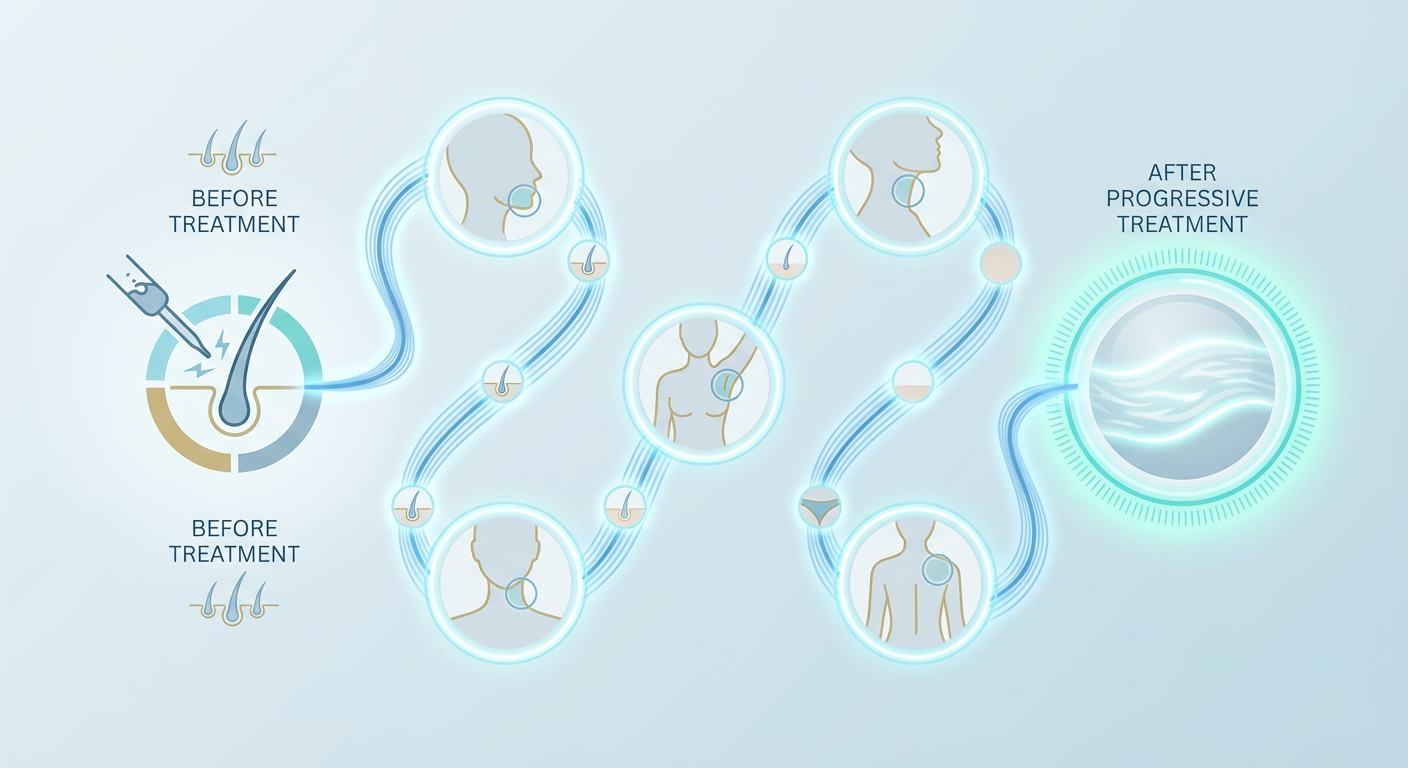
4. The Electrolysis Treatment Process: Sessions, Commitment, and Results
Electrolysis stands alone in the realm of permanent hair removal, distinguished by its unique scientific foundation and its official recognition by regulatory bodies. Unlike temporary solutions or even long-term reduction methods, electrolysis offers a definitive end to unwanted hair. This section delves into the intricate process of electrolysis treatment, exploring the necessary commitment from clients, the scientific principles underpinning its efficacy, typical session parameters, and the ultimate, permanent results. It also addresses prevalent concerns regarding discomfort and safety, emphasizing the critical role of trained professionals in ensuring successful outcomes.
4.1 The Scientific Foundation of Permanent Hair Removal
At its core, electrolysis is the only hair removal method classified as permanent by the U.S. FDA [1]. This distinction is crucial, as it sets electrolysis apart from other popular techniques like laser hair removal, which is categorized as a “long-term hair reduction” method [1]. The permanence of electrolysis stems from its direct action on individual hair follicles, which are the biological structures responsible for hair growth.
4.1.1 Mechanism of Action: Targeting the Follicle
The process of electrolysis involves inserting a very fine, sterile probe, often no thicker than the hair itself, into the natural opening of the hair follicle [2]. This precise insertion is critical; the probe follows the hair shaft down to its root, where the germinative cells responsible for hair production reside. Once in position, the electrologist delivers a small amount of electrical energy [3]. This electrical current, depending on the modality used (galvanic, thermolysis, or blend), generates heat or a chemical reaction that permanently destroys the hair follicle’s growth cells [3]. Once these cells are properly treated and destroyed, the follicle is no longer capable of producing hair [4]. This one-by-one approach ensures that each treated hair is permanently eliminated, preventing any future regrowth from that specific follicle [4]. This mechanism literally denatures the source of the hair, preventing it from regenerating [5].
The earliest documented application of this principle dates back to 1875 when Dr. Charles Michel, an ophthalmologist, successfully used electrolysis to permanently remove an ingrown eyelash (trichiasis) [6]. His pioneering work laid the groundwork for what has evolved into a sophisticated and widely practiced cosmetic procedure with a track record of over 145 years [7].
4.1.2 The Hair Growth Cycle: Why Multiple Sessions are Essential
The requirement for multiple electrolysis sessions is rooted in the cyclical nature of human hair growth. Hair follicles do not all grow simultaneously; instead, they cycle through three main phases:
- Anagen (Growth Phase): This is the active growth stage where the hair follicle is producing a hair shaft. It is during this phase that the hair follicle is most vulnerable and responsive to electrolysis treatment, as its growth cells are actively dividing and accessible to the electrical current [8].
- Catagen (Transition Phase): A short transitional phase where hair growth stops, and the follicle shrinks.
- Telogen (Resting Phase): The follicle is dormant, and the old hair prepares to shed. New hair growth will begin in the anagen phase once the telogen phase concludes.
At any given time, only a fraction of visible hairs are in the active anagen phase. Many others are either dormant beneath the skin or in transitional phases. Therefore, an electrologist cannot effectively treat all existing hairs in a single session because many follicles are not actively producing hair and thus are not accessible for treatment [8]. To achieve comprehensive and permanent removal, clients must undergo a series of treatments spread out over several months. This staggered approach ensures that as new hair cycles enter the anagen phase and become detectable, they too can be effectively treated and permanently disabled [8]. This scientific reality underscores the need for patience and adherence to the treatment schedule. Skipping too many weeks can allow previously dormant follicles to recover or new hairs to emerge fully, prolonging the overall treatment duration.
4.2 The Electrolysis Treatment Course: Sessions, Duration, and Commitment
Embarking on an electrolysis journey requires a significant commitment of time and consistency. The entire process, from initial consultation to final clearance, typically spans several months, or even years for larger areas [9]. However, the ultimate reward is a genuinely permanent, hair-free result.
4.2.1 Number of Sessions Required
The total number of electrolysis sessions needed varies considerably based on several factors, including the treated area, hair density, hair coarseness, the client’s individual hair growth cycle, and previous hair removal methods employed. Clients typically require anywhere from 8 to 30 sessions per area [9]. Specific ranges provided by industry sources are as follows:
- Facial Hair (e.g., upper lip, chin, eyebrows): Approximately 10–20 sessions [9]. This high number reflects the common desire for complete clearance in highly visible areas and the density of facial hair.
- Bikini Line: Typically 8–15 sessions [9].
- Legs or Arms: Can range from 15–30 sessions due to the larger surface area and density [9].
For extensive or very dense areas, such as a full beard, the commitment can be even more substantial, potentially requiring over 100–300 hours of treatment [10].
4.2.2 Session Duration and Frequency
Electrolysis sessions are generally shorter than what might be imagined for a procedure that treats individual hairs. Most appointments last between 15 minutes to 1 hour [11]. The short duration allows clients to integrate treatments into busy schedules. Sessions are typically scheduled weekly or bi-weekly [12]. This frequent scheduling is crucial for effectively targeting hairs as they enter their active growth phase. Consistent adherence to this schedule is paramount for achieving optimal results in the shortest possible timeframe [13]. As an example, an upper lip might need weekly 15-minute sessions for 6-12 months to treat every follicle that produces hair in that area [13].
4.2.3 The Commitment and Patience Required for Permanent Results
Electrolysis is not an instantaneous solution; it is a gradual process that demands patience and unwavering commitment. While clients may begin to observe a noticeable reduction in hair density after a few treatments, complete clearance takes time [14]. For instance, one clinic utilizing a “Multipulse Microflash” technique observed a 91% reduction in hair regrowth after just six treatments in a case study, a significant improvement over the historical average of 50% reduction with older methods [15]. Even with accelerated techniques, the remaining hairs still require subsequent treatment to ensure complete, permanent removal [15].
The commitment asked of clients is a crucial investment, often viewed as a trade-off: a focused period of consistent appointments for a lifetime free from the daily chore of shaving, frequent waxing, or costly laser touch-ups. Once all necessary sessions are completed and the follicles are permanently incapacitated, the treated area remains smooth indefinitely, requiring zero ongoing maintenance [4]. This long-term freedom from hair removal routines is a major driving factor for individuals who choose electrolysis despite its intensity and duration.
The table below summarizes typical session requirements and commitment for different areas:
| Body Area | Typical Sessions Needed | Typical Session Duration | Overall Treatment Duration |
|---|---|---|---|
| Upper Lip / Chin | 10-20 | 15-30 minutes | 6-18 months |
| Eyebrows | 8-15 | 15-30 minutes | 6-12 months |
| Underarms | 12-20 | 30-45 minutes | 12-24 months |
| Bikini Line | 8-15 | 30-60 minutes | 9-18 months |
| Lower Legs | 15-30 | 60 minutes+ | 18-30 months |
| Back / Chest | 20-30+ | 60 minutes+ | 24-36 months+ |
Note: These are average ranges; individual results and timelines may vary based on various factors.
4.3 Perceived Discomfort and Safety Considerations
Concerns about discomfort and safety are natural when considering any cosmetic procedure. While electrolysis involves the insertion of a probe and the application of an electrical current, modern techniques and professional standards ensure that it is generally well-tolerated and, when performed correctly, remarkably safe.
4.3.1 Discomfort Levels
The sensation during electrolysis is often described as a brief warming, tingling, or a slight stinging “zap” when the electrical current is delivered [16]. While individual pain thresholds vary, many people find the procedure tolerable, sometimes comparing it to a quick pinch or the plucking of a single hair. The insertion of the fine probe into the follicle opening is typically not felt, as the electrologist is trained to follow the natural path of the hair [16]. The perception of discomfort has also significantly reduced with technological advancements.
- Technological Advancements: Modern electrolysis devices, especially those using thermolysis or blend currents, are faster and more comfortable than older techniques [17]. For example, the Apilus xCell Pro, launched by Dectro International in 2024, incorporates computerized precision, ultra-short pulses of energy, and an integrated cooling system designed to numb the treatment area, thereby enhancing client comfort [18]. This allows for more efficient treatment and often reduces the cumulative sensation.
- Topical Anesthetics: For particularly sensitive areas or for clients with lower pain tolerance, topical anesthetic creams can be applied prior to treatment to further minimize discomfort.
The Cleveland Clinic states that the procedure “is not painful and has no long-lasting side effects” [16], reinforcing the advancements in technique and technology.
4.3.2 Safety and Side Effects
Electrolysis has a long and robust safety record, with over 140 years of use after its first application in 1875 [19]. When performed by a trained and certified professional, electrolysis is considered extremely safe with no long-term side effects [16]. The localized nature of the treatment, directly targeting the follicle without affecting surrounding tissues significantly, contributes to its safety profile.
Common, Temporary Side Effects:
- Redness and Swelling: Immediately after a session, it is common to experience slight redness and mild swelling in the treated area. This is a normal inflammatory response and typically subsides within a few hours to a day [20].
- Tiny Scabs: In some cases, minute scabs may form at the site of treatment. These are part of the natural healing process and should not be picked, falling off naturally within a few days [20].
- Dryness: Temporary dryness in the treated area is also possible.
These temporary effects can be managed with proper aftercare, such as applying soothing agents like aloe vera or witch hazel, avoiding sun exposure, and refraining from makeup application for a short period [20].
Professional Training and Regulation: The safety and efficacy of electrolysis are heavily reliant on the expertise of the practitioner. Because the procedure involves inserting a probe into the skin, professional training and adherence to strict hygienic protocols are paramount. In many regions, electrologists are required to be licensed or certified, necessitating comprehensive training in:
- Hair follicle anatomy and physiology.
- Different electrolysis modalities (galvanic, thermolysis, blend).
- Proper probe insertion techniques.
- Sterilization and cross-contamination prevention.
- Client assessment and aftercare [21].
This rigorous training ensures that electrologists possess the knowledge and skills to perform treatments safely, minimizing the risk of complications such as skin irritation, infection, or scarring. The use of sterile, disposable probes for each client is a standard practice that eliminates the risk of disease transmission [20]. Consequently, consumers are strongly advised to seek out certified or licensed electrologists to ensure both safety and optimal results [22].
4.4 Versatility and Inclusivity of Electrolysis
One of the most compelling aspects of electrolysis is its unparalleled versatility. It can effectively treat virtually any hair color, skin type, and body area, making it a truly inclusive hair removal solution where other methods often fall short.
4.4.1 Universal Applicability: All Hair Colors and Skin Tones
Unlike laser hair removal, which relies on targeting pigment (melanin) in the hair and is therefore less effective or unsuitable for light-colored (blonde, red, gray, white) or very dark hair on dark skin tones, electrolysis has no such restrictions [23]. The direct insertion of the probe and delivery of electrical energy directly affects the follicle, regardless of hair pigment [23]. This makes electrolysis the ideal, and often only, permanent option for individuals with:
- Light-colored hair: Blond, red, gray, or white hairs that lasers cannot detect or effectively treat [23].
- All skin tones: Safe and effective for all Fitzpatrick skin types, from very fair to very dark, as it targets the follicle directly rather than relying on skin pigment for energy absorption [24]. This is a significant advantage for individuals with darker skin who might face a higher risk of hyperpigmentation or burns with certain laser treatments.
This broad applicability allows electrologists to serve a diverse clientele, including those who have been deemed unsuitable candidates for laser hair removal.
4.4.2 Treatment on Virtually Any Body Area
Electrolysis can be performed safely and effectively on almost any part of the face or body where unwanted hair grows [25]. This includes both common and highly sensitive or precise areas:
- Face: Upper lip, chin, cheeks, jawline, eyebrows, hairline (e.g., removing stray hairs or widow’s peaks) [25]. Electrolysis is particularly valuable for eyebrow shaping, an area where laser is generally not used due to safety risks near the eyes [26]. Facial hair removal is the single largest application of electrolysis, representing about 45% of all treatments in 2024 [27].
- Neck: Both front and back, often for beard line definition for men or to remove fine vellus hairs.
- Body: Underarms, arms, chest, back, abdomen, bikini and Brazilian areas, fingers, toes, and breasts [25]. For the bikini and Brazilian area, electrolysis offers precise shaping or total clearance, regardless of skin tone or the presence of tattoos that might interfere with laser treatments [28].
The precision of electrolysis allows for targeting single hairs, which is invaluable for detailing or removing isolated coarse hairs [28]. While large areas like full legs or a dense back require numerous and lengthy sessions, they are entirely treatable. Electrologists can also prioritize “problem spots” within larger areas, offering flexible treatment plans [28].
4.4.3 Suitability for Sensitive Skin and Medical Conditions
Due to its precise, follicle-specific action, electrolysis is often recommended for individuals with sensitive skin or certain dermatological conditions [29]. For example:
- Clients with melasma, where heat from lasers could exacerbate pigmentation issues, often find electrolysis a safer alternative [29].
- Individuals prone to keloid scarring may also opt for electrolysis as a lower-risk method.
- The original medical use for ingrown eyelashes highlights its gentle yet effective nature [6].
This makes electrolysis a trusted option for dermatologists and endocrinologists to recommend, particularly for patients with hormone-related hirsutism (such as those with Polycystic Ovary Syndrome – PCOS) or individuals undergoing gender affirmation therapy, where permanent hair removal is a critical component of their transition [30].
4.5 Cost of Electrolysis and Long-Term Value
While electrolysis treatments require an upfront and ongoing financial commitment during the treatment phase, many clients consider it a sound investment due to its permanent results and the elimination of future hair removal expenses.
4.5.1 Session and Total Costs
The cost of electrolysis varies depending on the session duration, the electrologist’s rates, and geographic location. Most sessions cost between approximately $30 to $100 per 15-60 minute appointment [11]. The total cost for a complete treatment course can range widely:
- Small areas (e.g., upper lip): Might total $150–$300 for complete clearance [31].
- Larger areas (e.g., full legs, back): Can range from $4,500 to $10,000 for comprehensive treatment [32].
- Extensive areas (e.g., dense beard): May exceed five figures, potentially costing $12,000 or more for 100-300 hours of treatment [10].
Despite these figures, the average total spend for a typical client has been estimated at around $500 [33], suggesting that many clients seek treatment for smaller, targeted areas rather than extensive body HairRemoval. The labor-intensive, one-by-one nature of the procedure makes it more expensive per treated area than mass-coverage methods like laser hair removal, but its permanence offers a different value proposition.
4.5.2 Long-Term Economic Value
When evaluated over a lifetime, the upfront investment in electrolysis can be economically favorable compared to the cumulative costs of ongoing temporary hair removal methods or even maintenance sessions required for laser hair reduction. Consider the recurring expenses associated with:
- Shaving: Razors, shaving creams, aftershaves, and the time spent daily or every few days.
- Waxing/Threading/Plucking: Regular salon appointments or DIY products, which, while cheaper per session, add up over years, along with the associated discomfort and potential for ingrown hairs.
- Laser Hair Reduction: Initial course of several thousand dollars, plus annual or biennial touch-up sessions, which can cost hundreds of dollars each.
For example, the continuous purchase of razors and shaving cream can easily exceed the cost of a several hundred dollar electrolysis treatment for a small area over a few years [34]. From a consumer perspective, electrolysis represents an investment that eliminates future expenses and the perpetual inconvenience of hair removal, ultimately saving both time and money in the long run. This perspective contributes to the steady growth in demand for permanent solutions, aligning with rising consumer grooming expenditures, which saw quarterly spending on hair removal and personal care products in the U.S. climb from $113.3 billion in Q1 2023 to $122.5 billion in Q4 2024, and $123.8 billion by Q1 2025 [35].
The next section of this report will delve into the market trends and demand drivers that are contributing to the steady growth and evolving landscape of the electrolysis industry, exploring its global footprint and the diverse clientele it serves.

5. Electrolysis vs. Other Hair Removal Methods: A Comparative Analysis
The pursuit of smooth, hair-free skin has driven innovation in hair removal techniques for centuries. From rudimentary methods to advanced technological solutions, consumers today have a myriad of options to choose from. However, when evaluating these methods, particularly for long-term and permanent results, a clear hierarchy emerges. This section provides an in-depth comparative analysis of electrolysis against other prevalent hair removal methods, including laser hair removal, waxing, threading, plucking, depilatory creams, and shaving. The comparison will focus on efficacy, permanence, speed, cost implications, suitability for different hair and skin types, and their alignment with individual aesthetic goals. Understanding these distinctions is crucial for both consumers making informed choices and industry professionals seeking to position electrolysis within the competitive aesthetics market.
Electrolysis stands out immediately as the only hair removal method recognized by the U.S. Food and Drug Administration (FDA) as truly permanent. In contrast, laser hair removal, despite its popularity, is categorized as providing “long-term reduction” rather than permanent removal[2]. This fundamental difference in classification underscores electrolysis’s unique value proposition as the “gold standard” for those seeking definitive and lasting results. Its historical provenance, dating back to 1875 when Dr. Charles Michel first used it to treat an ingrown eyelash, further attests to its proven track record and foundational effectiveness[11].
The Foundational Advantage: Electrolysis as the Only FDA-Approved Permanent Solution
The distinction of permanence is arguably the most significant factor differentiating electrolysis from all other hair removal methods. The U.S. FDA’s classification of electrolysis as the sole method capable of permanent hair REMOVAL, as opposed to hair REDUCTION, is not merely semantic; it speaks to the fundamental mechanism of the procedure. Electrolysis works by inserting a very fine, sterile probe into the hair follicle opening and delivering a small amount of electrical energy directly to the root, destroying the growth cells responsible for hair production. Once these cells are successfully treated, the follicle is permanently disabled, and that specific hair will never grow back[1]. This one-by-one, follicular-level destruction sets it apart.
Contrast this with laser hair removal, which uses concentrated light energy to target the melanin (pigment) in the hair follicle. While highly effective at disabling a significant percentage of follicles, typically achieving 80-90% hair reduction after a full course of treatment, it does not guarantee the complete and permanent cessation of hair growth. Some follicles may regenerate over time, or new hair growth can be stimulated by hormonal changes, necessitating periodic maintenance sessions dubbed “touch-ups”[13]. Therefore, while laser is excellent for reducing hair density and coverage, electrolysis is the definitive choice for complete elimination.
This enduring permanence is supported by electrolysis’s long and safe history. First documented in 1875, it has been refined over 145 years into a commonly practiced and safe cosmetic procedure with no long-lasting side effects when performed correctly by a trained professional[1]. The modern electrolysis industry is built upon this established safety and efficacy, which continues to drive its steady global market growth, projected to reach $1.33 billion by 2033 from $847.7 million in 2024[4].
Electrolysis vs. Laser Hair Removal: A Detailed Comparison
Laser hair removal and electrolysis are often considered the two most advanced methods for long-term hair removal. While both aim to reduce or eliminate unwanted hair, their approaches, ideal candidates, and outcomes differ significantly.
Efficacy and Permanence
- Electrolysis: Offers 100% permanent hair removal. Each treated follicle is destroyed and cannot produce hair again[10]. This is why it’s the only FDA-approved permanent hair removal method[2].
- Laser Hair Removal: Provides permanent hair reduction, typically achieving 80-90% reduction after a series of treatments[13]. However, regrowth often occurs due to dormant follicles awakening or hormonal changes, necessitating maintenance sessions.
Suitability for Hair and Skin Types
- Electrolysis: Universally applicable. It works on all hair colors (blonde, red, gray, white, dark) and all skin tones, as it targets the follicle directly and does not rely on pigment contrast[3]. This makes it ideal for individuals with light-colored hair, dark skin, or conditions sensitive to light-based treatments. It is also safe for sensitive skin and medically sensitive situations[12].
- Laser Hair Removal: Most effective on dark hair against light skin, as the laser energy is absorbed by the melanin in the hair. It has reduced efficacy or can be risky on light-colored (blonde, red, gray, white) hairs or very dark skin types, which carry a higher risk of burns or pigmentation changes. While newer lasers are improving efficacy for a broader range of skin types, a contrast between hair and skin color is generally still preferred[2].
Speed and Area Coverage
- Electrolysis: Labor-intensive and meticulous. It treats one follicle at a time, making it generally slower. Sessions can range from 15 minutes to an hour, and multiple sessions (8 to 30 per area) are required over several months to catch hairs in their growth phases[6]. Large areas like full legs or a dense beard can require over 100-300 hours of treatment over an extended period[7].
- Laser Hair Removal: Much faster for large areas. A laser device can treat hundreds of follicles simultaneously. Large areas such as the back or full legs can be covered quickly, often in minutes, making it popular for those seeking quick coverage. For instance, over 893,000 laser hair removal procedures were performed in the U.S. in 2009 alone, reflecting its high demand for speed and convenience[9].
Cost Implications
The total cost for both methods can vary significantly based on the area treated, geographic location, and the number of sessions required. However, the cost structures differ.
- Electrolysis: Generally costs $30-$100 per session[6]. Total costs for small areas like an upper lip might be $150-$300, while large areas like full legs can range from $4,500 to $10,000 for complete treatment over many sessions[6]. While the upfront investment for large areas can be substantial, it’s a one-time cost for permanent results.
- Laser Hair Removal: Session costs can be comparable or higher than electrolysis, but fewer sessions might be needed initially for large areas. However, the long-term cost can accumulate due to lifetime maintenance sessions to manage regrowth.
Side Effects and Discomfort
- Electrolysis: Modern techniques are generally well-tolerated. The sensation is often described as a brief warming or tingling sting. Temporary redness and minor swelling are common immediately after treatment but subside within hours. Scarring is rare when performed by a trained professional.
- Laser Hair Removal: Pain is often described as a snapping or stinging sensation. Risks include temporary discomfort, redness, swelling, and in rare cases, burns, blistering, or changes in skin pigmentation (hypo- or hyperpigmentation), especially if inappropriate settings are used for skin type.
A common strategy recommended by dermatologists is to use laser hair removal first to “debulk” hair on large areas if the client is a suitable candidate (dark hair, light skin), and then finish with electrolysis for any remaining, stubborn, or light-colored hairs to achieve a truly smooth and permanent outcome. This approach combines the speed of laser with the complete permanence of electrolysis, as evidenced by clients who combine laser hair removal with electrolysis treatments for their specific hair removal needs[8].
Comparative Analysis Table: Electrolysis vs. Other Hair Removal Methods
To further illustrate the distinctions, the table below provides a comprehensive comparison of electrolysis against other common hair removal methods.
| Feature | Electrolysis | Laser Hair Removal | Waxing | Threading | Plucking (Tweezing) | Depilatory Creams | Shaving |
|---|---|---|---|---|---|---|---|
| Permanence | Permanent Removal (FDA approved)[2] | Permanent Reduction | Temporary (3-6 weeks) | Temporary (2-6 weeks) | Temporary (2-6 weeks) | Temporary (Days to 1 week) | Temporary (Hours to 1 day) |
| Hair Color Suitability | All colors (light, dark, red, gray, white)[3] | Best on dark hair, less effective on light/red/gray/white hair[2] | All colors | All colors | All colors | All colors | All colors |
| Skin Tone Suitability | All skin tones (no pigment reliance)[3] | Best on light skin, can be risky on dark skin without specialized lasers | All skin tones | All skin tones | All skin tones | All skin tones (patch test recommended) | All skin tones |
| Speed/Convenience | Slow, meticulous (hair-by-hair), multiple sessions over months/years | Fast for large areas, multiple sessions over months | Fast for large areas, quick in-salon process | Fast for small, precise areas (face) | Slow (hair-by-hair), convenient for touch-ups | Quick application, few minutes wait | Very fast, daily/every other day |
| Cost (Per Session/Process) | $30-$100/session, total $150-$10,000+[6] | Variable, often higher/session, recurring costs for touch-ups | $15-$70+ (depending on area) | $10-$30 (face) | Minimal (tweezers) | Low ($5-$15/tube) | Very low ($0.5-$5/razor) |
| Pain Level | Mild to moderate stinging/tingling[1] | Mild to moderate snapping/stinging | Moderate to high, sharp pull | Mild to moderate, plucking sensation | Mild to moderate, sharp pull | Painless (unless irritation occurs) | Painless (unless nicks/cuts) |
| Potential Side Effects | Temporary redness, swelling; rare scarring if improperly done | Temporary redness, swelling; rare burns, blisters, pigmentation changes | Redness, bumps, ingrown hairs, skin irritation, mild burns | Redness, irritation, ingrown hairs | Redness, irritation, ingrown hairs | Chemical burns, irritation, allergic reactions | Razor burn, cuts, nicks, ingrown hairs |
| Body Area Suitability | Any area, including eyebrows, sensitive areas, and small fine hairs[3] | Most body areas, generally not near eyes | Most body areas, not ideal for fine facial hair | Mainly facial hair (eyebrows, upper lip) | Small areas, touch-ups (eyebrows, stray hairs) | Most body areas (patch test critical for face) | Any body area |
Traditional Temporary Methods: Waxing, Threading, Plucking, Depilatory Creams, and Shaving
Each of these methods offers immediate, albeit temporary, hair removal. Their appeal lies in their accessibility, lower upfront cost, and ease of use for many consumers.
- Waxing, Threading, and Plucking: These methods remove hair from the root, providing smoothness for several weeks.
- Pros: Hair grows back softer and finer over time; relatively inexpensive per session; results last longer than shaving.
- Cons: Painful; can cause ingrown hairs, redness, or skin irritation; repetitive and time-consuming over a lifetime; the follicle is not destroyed, so hair always regrows.
- Depilatory Creams and Shaving: These are the most common and accessible hair removal methods, primarily due to their painlessness (creams) or speed (shaving) and very low immediate cost.
- Pros: Easy, fast, readily available, inexpensive per use. Shaving is practiced by nearly 89% of people who remove hair at some point in their lives[14].
- Cons: Hair regrows within days; methods only remove hair at or just above the skin surface; can cause skin irritation, razor burn, nicks, or ingrown hairs; requires constant upkeep, which accumulates significantly in terms of time and cost over a lifetime.
The Intersection of Goals and Consumer Profiles
The “best” hair removal method is highly subjective and depends on individual goals, priorities, and physical characteristics. From a practitioner’s standpoint, guiding clients involves understanding these factors:
- For those seeking absolute permanence: Electrolysis is the undisputed choice, especially for individuals with light-colored hair, any skin tone, or specific hairs that resist other treatments. It’s also ideal for intricate shaping (e.g., eyebrows) or treating specific problem areas like ingrown hairs or hormonal growth.
- For bulk hair reduction on large areas: Laser hair removal can be an efficient first step, provided the client has suitable hair and skin characteristics. Many opt for this and then turn to electrolysis for the remaining hairs.
- For short-term, low-cost solutions: Shaving, depilatory creams, waxing, threading, or plucking remain viable options for temporary results, special events, or budget constraints. However, these methods come with the understanding of continuous maintenance.
The evolving hair removal market shows a clear trend towards more permanent solutions. Growing consumer spending on personal grooming (e.g., U.S. quarterly spending on hair removal and personal care rose from $113.3 billion in Q1 2023 to $122.5 billion in Q4 2024, hitting $123.8 billion by Q1 2025) indicates a willingness to invest more in long-term aesthetic solutions[12]. Moreover, a broadening clientele, including men (38% of laser hair removal patients in the U.S. in 2023 were male) and transgender individuals, are increasingly seeking permanent body and facial hair removal, often turning to electrolysis for its definitive results where others fall short[10].
In conclusion, while numerous hair removal methods exist, electrolysis uniquely offers permanent hair removal for all hair and skin types on virtually any body area. Its precision and permanence make it an invaluable option, particularly for individuals where other methods prove ineffective or inappropriate. The slower pace and higher upfront investment are offset by the promise of a lifetime free from unwanted hair, a compelling proposition that continues to drive its steady growth in the global aesthetic market.
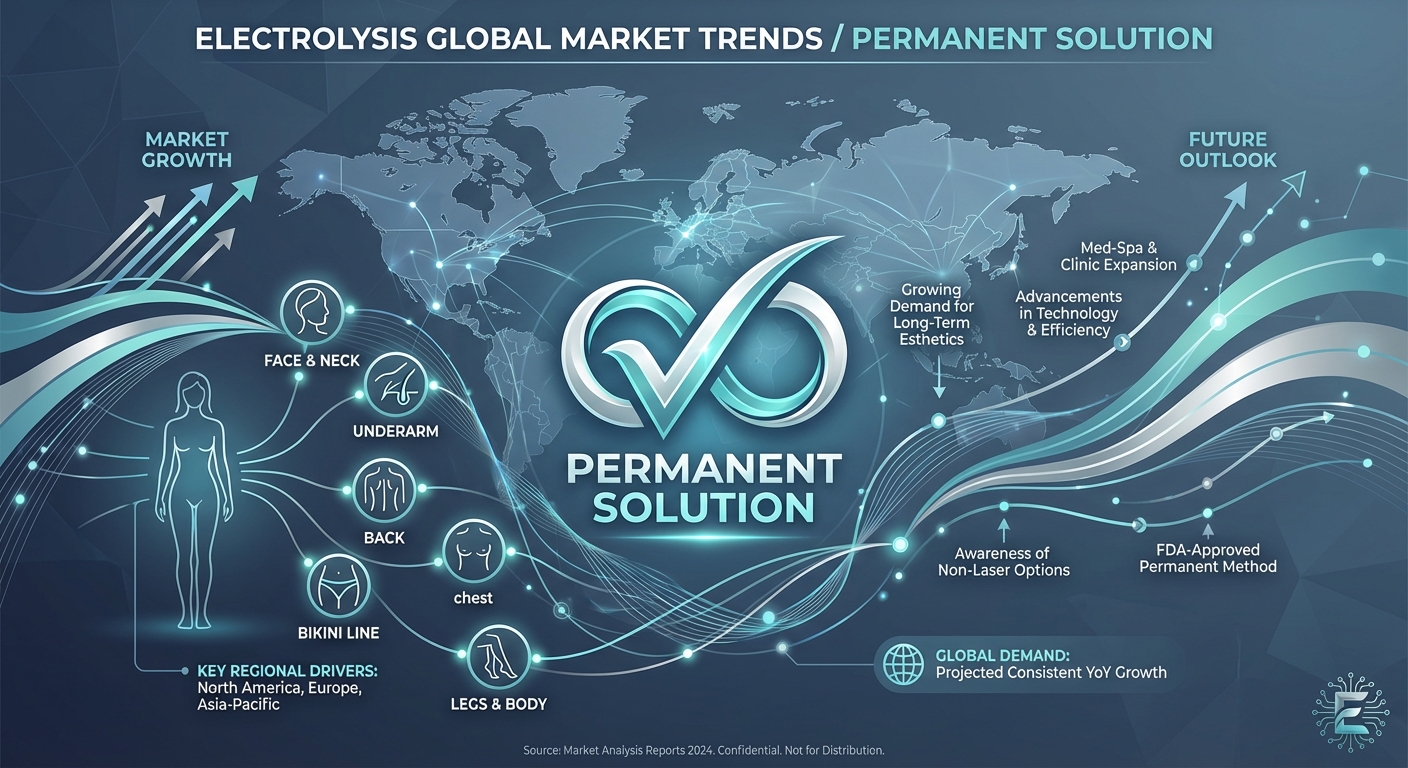
6. Global Market Trends and Demand Drivers for Electrolysis
The global landscape of beauty and personal care is continuously evolving, marked by significant consumer interest in long-term and permanent solutions for various aesthetic concerns. Within this dynamic environment, electrolysis stands out as the only hair removal method recognized as truly permanent by regulatory bodies such as the U.S. Food and Drug Administration (FDA)1. This unique attribute positions electrolysis as the “gold standard” for individuals seeking definitive hair removal, distinguishing it from methods like laser hair removal, which is classified as long-term hair *reduction*2. The market for electrolysis, while historically considered niche, is currently undergoing steady expansion, driven by a confluence of factors including rising consumer grooming expenditures, a growing emphasis on inclusive beauty standards, and increasing demand from diverse demographic groups. This section provides a comprehensive analysis of the global electrolysis market, its size and projected growth, key regional dynamics, and the underlying demand drivers shaping its future.
6.1. Global Market Size and Projected Growth
The global electrolysis hair removal market demonstrates robust and consistent growth. In 2024, the worldwide industry was valued at approximately $847.7 million3. Projections indicate a substantial increase, with the market expected to reach $1.33 billion to $1.34 billion by 20334. This trajectory implies a Compound Annual Growth Rate (CAGR) of approximately 5.2% annually between 2025 and 20335. Such steady growth underscores increasing global demand for permanent hair removal solutions, fueled by rising beauty consciousness and consumers’ growing willingness to invest in long-term aesthetic treatments. While the electrolysis market is significant, it is important to contextualize its position within the broader hair removal industry. For instance, the laser hair removal market, while offering only reduction, currently commands a larger share of the overall permanent hair reduction space, estimated at around $1.0 billion to $1.1 billion in 2023 and growing at double-digit rates6. However, electrolysis firmly occupies a complementary and indispensable niche. It addresses the limitations of laser technology, particularly its inability to effectively treat light-colored (blonde, red, gray, white) hairs or certain skin types7. This dynamic illustrates a market expansion where both technologies thrive, with lasers attracting mass-market clients for broad hair reduction and electrolysis catering to those who require absolute permanence or have specific hair and skin characteristics that render laser ineffective. Many clinics now offer both treatments, creating a comprehensive suite of hair removal options and fostering a collaborative referral ecosystem between dermatologists, laser technicians, and electrologists. The demand for permanent hair removal services is further validated by its ranking among the top three most popular non-surgical aesthetic procedures globally, alongside Botox and dermal fillers8. Millions of hair removal treatments are performed worldwide each year, with over 3.1 million “skin treatments” (including laser hair removal and IPL) recorded in the U.S. in 2024 alone9. This high volume confirms that hair removal is a core component of the burgeoning beauty and wellness industry, driving continued investment and innovation across all modalities, including electrolysis.
6.2. Regional Dominance and Emerging Markets
The global electrolysis market exhibits distinct regional trends, with established markets demonstrating continued growth and emerging regions showing accelerated expansion.
6.2.1. North America: A Mature and Dominant Market
North America currently holds the largest share of the global electrolysis market. In 2024, the region accounted for approximately 38% to 43% of the global electrolysis market revenue, specifically 42.9% according to some reports10. This dominance is attributed to several factors: * High Disposable Incomes: Consumers in North America generally have higher disposable incomes, enabling them to invest in long-term aesthetic treatments that, while initially more expensive, offer significant long-term value compared to recurring temporary solutions11. * Established Aesthetic Industry: The region possesses a well-developed aesthetic industry with numerous professional clinics, trained practitioners, and a mature regulatory framework. * Cultural Grooming Norms: A strong cultural emphasis on personal grooming and a clean-shaven or hair-free aesthetic in certain areas contributes to consistent demand. * High Consumer Awareness: There is a relatively high level of consumer awareness regarding the benefits and permanence of electrolysis, often cultivated through professional associations and educational initiatives. Growth in North America remains steady, driven by new generations entering the market and an increasing understanding that electrolysis addresses specific hair removal needs that laser treatment cannot fulfill. This market maturity also means a higher concentration of specialized electrolysis clinics and a robust training infrastructure for electrologists.
6.2.2. Asia-Pacific: The Fastest-Growing Region
While North America leads in overall market size, the Asia-Pacific (APAC) region is projected to be the fastest-growing market for electrolysis. Forecasts indicate a remarkable CAGR of approximately 7.8% through 2034 for the Asia-Pacific electrolysis market, outpacing other regions12. Several powerful drivers underpin this accelerated growth: * Rapid Urbanization: Increasing urbanization across countries like China, India, and Southeast Asian nations leads to greater exposure to global beauty trends and a greater emphasis on personal appearance. * Growing Middle Class and Disposable Income: The expansion of the middle class in these economies translates to higher disposable incomes and a greater capacity for discretionary spending on premium beauty and grooming services. * Increasing Beauty Awareness: A rising awareness of beauty standards, coupled with the influence of social media and global trends, is fueling demand for advanced aesthetic treatments. * Emerging Infrastructure: The development of new aesthetic clinics, medical spas, and professional training programs in the region is improving access to electrolysis services. This rapid expansion in Asia-Pacific signifies a significant opportunity for market penetration and growth, with increasing numbers of consumers seeking permanent solutions for unwanted hair. Similarly, parts of Latin America are also showing emerging growth, as cosmetic procedures become more accessible and culturally accepted.
6.2.3. Other Regions
Europe also represents a significant portion of the global electrolysis market, with established practices and a steady client base. In the Middle East, cultural preferences for hair removal and high consumer spending power contribute to a robust market for both laser and electrolysis, with electrolysis often being the choice for clients whose hair or skin types are not suitable for laser treatments. The overall trend points towards a gradual shift in the geographical revenue mix, with Asia-Pacific expected to claim a larger share of the global electrolysis market in the coming years.
6.3. Key Demand Drivers
Beyond market size and regional dynamics, several fundamental drivers are propelling the demand for electrolysis services worldwide.
6.3.1. Rising Consumer Grooming Expenditures
A primary driver for the electrolysis market is the sustained and increasing global consumer spending on personal grooming and beauty. Consumers are allocating a larger portion of their income to aesthetic treatments and personal care products. For instance, in the United States alone, quarterly consumer spending on hair, shaving, and related grooming products rose from $113.3 billion in Q1 2023 to $122.5 billion in Q4 2024, further climbing to **$123.8 billion by Q1 2025**13. This represents an increase of over 8% in just two years, signaling a broad trend of consumers investing more substantially in their appearance. This upward trend in grooming expenditures bodes well for permanent hair removal services like electrolysis. As consumers become more invested in their personal presentation, they are increasingly viewing permanent solutions as a worthwhile long-term investment, analogous to other personal care regimens or aesthetic procedures. The desire to eliminate the ongoing time, hassle, and cost associated with temporary methods (shaving, waxing, plucking) drives many to seek permanent alternatives.
6.3.2. Inclusive Beauty Standards and Diversifying Clientele
The traditional perception of hair removal as primarily a female concern is rapidly changing. The beauty industry is increasingly embracing more inclusive standards, leading to a significant diversification of the electrolysis client base.
6.3.2.1. Growing Male Clientele
Men are constituting an increasingly significant demographic in the hair removal market. Statistics indicate that men comprised approximately 38% of laser hair removal patients in the U.S. in 202314, a trend mirrored in electrolysis. Electrologists report a rising number of male clients seeking permanent hair removal for various areas, including: * Back and Shoulders: For aesthetic reasons and comfort. * Neck and Beard Line: To achieve a clean, defined look and reduce irritation from shaving, especially for those prone to razor bumps. * Ears and Nose: To permanently eliminate coarse, visible hair in these often-problematic areas. This trend is intertwined with the broader male grooming market, where body grooming is becoming normalized and even expected in certain social and professional contexts.
6.3.2.2. Transgender and Gender Affirmation Clients
The transgender community represents a particularly significant and growing segment for electrolysis. For transgender women undergoing gender affirmation, permanent hair removal, particularly of facial hair (beard), is often a crucial step in aligning their external appearance with their gender identity. Electrolysis is frequently the preferred or necessary method due to its permanent results and ability to treat all hair types and colors, which is critical for dense, coarse beard hair that may not fully respond to laser or may include light-colored strands. Many electrolysis clinics have reported that serving transgender clients, who often require extensive and long-term treatment, has become a meaningful and dedicated portion of their practice.
6.3.2.3. Clients with Hormonal Conditions
Women experiencing hirsutism (excessive hair growth) due to hormonal imbalances, such as those associated with Polycystic Ovary Syndrome (PCOS), also represent a substantial and consistent demand segment for electrolysis. Unwanted facial and body hair can be a source of significant distress for these individuals. When medical treatments do not fully resolve hirsutism, or when permanent physical removal is desired, electrolysis offers a reliable solution. Its ability to target and permanently destroy individual hair follicles regardless of a hormonal growth pattern makes it invaluable for these clients. These expanding demographics highlight that electrolysis fulfills not just cosmetic desires but also deeply personal, psychological, and quality-of-life needs for a diverse range of individuals. Clinics that are sensitive, inclusive, and provide specialized services for these client groups are experiencing loyalty and strong referral growth.
6.3.3. Recognition of Electrolysis’s Unique Permanence and Versatility
A core demand driver is the scientific and regulatory affirmation of electrolysis as the *only* truly permanent hair removal method. This undeniable fact sets it apart from all other options: * FDA Classification: The U.S. FDA officially recognizes electrolysis as causing “permanent hair removal”1. In contrast, laser hair removal is deemed “permanent hair reduction”2, meaning treated hair may partially regrow, or new hair may emerge. This distinction is crucial for consumers seeking definitive results. * Universal Applicability: Electrolysis works on all hair colors (blonde, red, gray, white) and all skin types and tones, unlike laser which relies on melanin pigment and is less effective on lighter hair or higher risk on darker skin tones15. This broad applicability ensures that no client is excluded based on their natural hair or skin characteristics. * Targeted Precision: The ability to treat individual hair follicles with pinpoint accuracy makes electrolysis ideal for small, sensitive, or contoured areas such as eyebrows, upper lip, chin, ears, nose, and the bikini/Brazilian area. It can also be used for detailed hair sculpting or to finalize areas after laser treatment. Its precision allows for targeted removal of specific nuisance hairs without affecting surrounding areas. As consumer education and awareness of these distinct advantages grow, more individuals are turning to electrolysis, either as their primary method or as a complementary treatment to achieve truly hair-free results in specific areas or for specific hair types that laser cannot address.
6.3.4. Technological Advancements and Improved Client Experience
While electrolysis is a mature technology tracing back to 187516, ongoing technological advancements are significantly enhancing its appeal: * Modern Epilator Machines: Contemporary electrolysis devices (epilators) feature sophisticated computer controls that allow for precise timing and intensity of electrical current delivery. For instance, the Apilus xCell Pro, launched by Dectro International in September 2024, integrates ultra-short pulse technology and a cooling system to minimize discomfort, making treatments faster and more tolerable17. These innovations can reduce the sensation to a mild warmth or tingling, a significant improvement over older, more painful methods. * Refined Modalities: The current dominant modality, thermolysis (short-wave radiofrequency), heats and destroys the follicle in fractions of a second, making it significantly faster than the older galvanic method. Thermolysis now accounts for approximately 52% of all electrolysis procedures18. Blend methods combine galvanic and thermolysis for maximum efficacy. These advancements mean that sessions can be more efficient, reducing the overall time commitment for clients. * Enhanced Comfort: Integrated cooling systems, more ergonomic probes, and advanced software algorithms contribute to a more comfortable client experience. This helps to overcome the historical perception of electrolysis as a painful and lengthy procedure, making it more attractive to a wider audience. These technological improvements translate directly into better client experience, making electrolysis a more viable and appealing option for individuals seeking permanent hair removal.
6.4. Competitive Landscape and Synergies with Other Methods
The hair removal market presents a diverse range of options, each with its own advantages and limitations. Understanding the competitive landscape helps illuminate why electrolysis continues to hold its unique position and how it often synergizes with other methods.
Table 6.1: Comparison of Hair Removal Methods and Electrolysis’s Unique Value Proposition
| Method | Mechanism | Permanence | Key Advantage | Limitations | Synergy with Electrolysis |
|---|---|---|---|---|---|
| Electrolysis | Electric current destroys follicle | Permanent (FDA certified) | Works on all hair colors/skin types; High precision; 100% effectiveness. | Time-consuming for large areas; Can be costly upfront. | N/A (The ultimate solution) |
| Laser Hair Removal | Laser targets melanin, damaging follicle | Reduction (FDA certified) | Fastest for large pigmented areas. | Not effective on light hair (blonde, red, gray, white); Risks with dark skin; Hair regrows partially. | Electrolysis often used to remove residual light hairs or fine hairs after laser, or to clear areas laser cannot treat. |
| Waxing / Threading / Plucking | Hair pulled from root | Temporary (Weeks) | Inexpensive per session; Widely available. | Hair always regrows; Can cause ingrown hairs, irritation; Painful. | Clients transition to electrolysis when tired of continuous temporary removal, or for precision shaping. |
| Shaving / Depilatory Creams | Hair cut at surface/dissolved | Very temporary (Days) | Quick, painless (shaving); Low cost; DIY. | Frequent regrowth; Stubble, razor burn, chemical irritation. | Consumers seek electrolysis to escape the endless cycle of daily/weekly maintenance. |
While laser hair removal currently commands a larger market share in terms of revenue for “permanent hair reduction,” electrolysis maintains its distinct and expanding role. Many clients initiate hair removal with laser, particularly for large areas with dark hair, and then transition to electrolysis for the remaining light, fine, or resistant hairs, or for precision work on areas like defining beard lines or shaping eyebrows. This combined approach leverages the speed of laser for bulk reduction and the thoroughness of electrolysis for complete and permanent elimination. This symbiotic relationship ensures that as the overall demand for hair removal grows, both segments benefit, with electrolysis retaining its status as the specialist solution for total permanence and universality.
6.5. Business Outlook and Future Trends
The positive market trends are reflected in the business activities of manufacturers and service providers within the electrolysis sector. * Industry Investment and Expansion: Manufacturers of electrolysis equipment and consumables are scaling up. For example, Sterex Electrolysis International, a UK-based producer of needles and machines, expanded its production capacity by 40% in 2024 to meet surging global demand19. This investment signals strong confidence in the long-term growth trajectory of the electrolysis market. * Professionalization and Training: As electrolysis expands into new markets, there is a parallel growth in standardized training and certification programs. Organizations like the International Board of Electrologist Certification (IBEC) are collaborating to establish consistent training curricula in emerging regions such as Asia-Pacific and Latin America20. This focus on professionalization ensures high standards of practice, which is critical for client safety and optimal treatment outcomes, thereby building greater consumer trust. * Digital Integration and Marketing: Modern electrolysis clinics are increasingly adopting digital tools for booking, client management, and marketing. Social media platforms are utilized to educate potential clients about the benefits of electrolysis and to showcase dramatic before-and-after results, particularly for challenging cases where other methods have failed. * Sustainability and Inclusivity as Selling Points: Electrolysis can be positioned as a sustainable choice given its “one-and-done” nature, significantly reducing the waste associated with disposable razors and other temporary hair removal products. Moreover, its inherent inclusivity (effective for all hair and skin types) aligns perfectly with the beauty industry’s growing emphasis on “beauty for all,” making it an attractive option for diverse clienteles. The global electrolysis market is set for sustained growth, driven by an expanding and diversifying client base seeking the definitive permanence and versatility that only electrolysis can offer. Bolstered by technological advancements and greater professionalization, electrolysis is poised to not only maintain its unique position but also capture an increasing share of the booming global beauty and wellness economy. The next section will delve deeper into the specific body areas treated by electrolysis, highlighting its comprehensive applicability and suitability for varied client needs.
7. Innovations and Business Outlook in the Electrolysis Industry
The electrolysis industry, while rooted in a technique first introduced in 1875 by Dr. Charles Michel to remove an ingrown eyelash, is far from static [11]. In recent decades, and especially in the 2020s, it has witnessed significant technological advancements that are profoundly impacting its efficiency, client comfort, and overall market position. These innovations, coupled with evolving consumer preferences and a growing understanding of electrolysis’s unique advantages, are shaping a dynamic business landscape. The global electrolysis hair removal market, valued at approximately $847.7 million in 2024, is projected to reach $1.33 billion by 2033, demonstrating a steady annual growth rate of about 5.2% [4]. This expansion is fueled by rising consumer grooming expenditures and an increasing desire for truly permanent hair removal solutions, positioning electrolysis as a crucial player in the broader aesthetic industry. This section delves into the technological improvements enhancing electrolysis, the growing presence of at-home devices, and the competitive environment in which electrolysis operates, highlighting its sustained relevance and promising future.
Technological Advancements: Enhancing Speed, Precision, and Comfort
Modern electrolysis is a significantly different experience from its early iterations, primarily due to sophisticated technological advancements in epilator machines and treatment modalities. These innovations have directly addressed historical perceptions of electrolysis as a slow and uncomfortable procedure, making it more appealing to a broader clientele.
Modern Epilator Machines and Computerized Precision
The core instrument of electrolysis, the epilator machine, has undergone a substantial evolution. Contemporary devices are now highly computerized, offering unprecedented levels of precision and control over the electrical current delivered to the hair follicle. These machines integrate advanced software and hardware to optimize treatment parameters, tailor settings to individual hair and skin types, and enhance the overall client experience. A prime example of this technological leap is the 2024 launch of the **Apilus xCell Pro** by Dectro International, a leading manufacturer in the field [17]. This flagship device boasts several cutting-edge features:
- Highly Computerized Timing System: The xCell Pro delivers energy in ultra-short pulses, precisely controlled in milliseconds. This minimizes the duration of current application while maximizing follicular destruction [17].
- Integrated Cooling Modality: To significantly reduce client discomfort, the machine incorporates an internal cooling system that numbs the treatment area, alleviating the sensation of heat or stinging [17].
- Programmable Profiles: Electrologists can preset or create customized programs for different hair types (e.g., fine vellus hair, coarse terminal hair) and skin conditions. This allows the machine to automatically adjust settings when transitioning, for instance, from a coarse chin hair to a finer neck hair, optimizing efficacy and comfort for each specific follicle [17].
Clinics adopting devices like the Apilus xCell Pro have reported marked improvements. For example, some electrologists noted a 15–20% reduction in overall treatment time for a given area, potentially shortening the total number of sessions required for complete clearance. Clients also experienced less post-treatment redness and discomfort, which enables longer, more efficient sessions without compromising safety or tolerance. These advancements allow practitioners to handle a greater volume of clients and provide a superior service, ultimately contributing to business growth. Another notable innovation comes from “Hi” which, in March 2024, introduced devices further enhancing treatment rates for professional clinic applications [18]. Such continuous improvements signify a robust and forward-looking manufacturing sector within the electrolysis industry, responding to the demand for better, faster, and more comfortable treatments.
Evolution of Treatment Modalities: Thermolysis and Blend Current Methods
Historically, electrolysis primarily utilized galvanic current, which, while effective, was a slow process, often requiring several seconds per hair. The field has largely shifted towards more efficient modalities:
| Modality | Principle | Advantages | Market Share (2024) |
|---|---|---|---|
| Galvanic | Chemical decomposition of the follicle via direct current, creating sodium hydroxide (lye). | Very effective, particularly for distorted follicles; less reliant on perfect probe insertion. | Minority share |
| Thermolysis (Short-wave) | Rapid heating of the follicle tissue by high-frequency alternating current. | Significantly faster (fractions of a second per hair), leading to quicker sessions and more widespread adoption. | ~52% of procedures [8] |
| Blend | Combines both galvanic and thermolysis currents simultaneously or sequentially. | Leverages the speed of thermolysis and the chemical effectiveness of galvanic, providing a comprehensive destruction of the follicle. | Remaining share (after thermolysis) |
Thermolysis has emerged as the dominant modality, accounting for approximately **52% of all electrolysis procedures in 2024** [8]. Its popularity stems from its ability to treat hair follicles in a fraction of a second, dramatically improving treatment speed. Ongoing innovation in thermolysis focuses on even greater precision, for example, through the use of insulated probes. These probes concentrate the electrical energy exactly at the base of the follicle, minimizing heat spread to the surrounding skin and thereby preventing discomfort and potential damage. The blend method, combining the strengths of both galvanic and thermolysis, offers a synergistic approach for difficult-to-treat hairs. The overarching trend is towards achieving higher efficacy with each “shot” or energy pulse. This means fewer total insertions are needed over the course of treatment, leading to an overall reduction in total client time and enhanced comfort. The advertising of “fast electrolysis” or “pain-free electrolysis,” once considered an oxymoron, is now becoming a realistic expectation for clients, driven by these continuous technological and methodological advancements. These improvements are critical for attracting new clients and retaining existing ones in a competitive market.
The Rise of At-Home Devices and Their Impact
The accessibility of permanent hair removal has broadened with the introduction of at-home electrolysis devices. These consumer-grade gadgets, typically priced lower than professional treatments, aim to tap into the market of individuals seeking DIY solutions.
Market Presence and Limitations of At-Home Solutions
At-home devices come in various forms, from stylus-like tools that users apply to individual hairs to patch-based systems with multiple tiny probes. While the market is still dominated by professional-grade machines (approximately 53.6% of sales in 2024), personal-use and at-home devices constituted a significant **46% of the electrolysis equipment sales by value** [7]. However, the efficacy and safety of DIY electrolysis are considerably limited compared to professional treatments:
- Difficulty in Targeting: An untrained individual often struggles to correctly insert the fine probe into the hair follicle opening, which is crucial for delivering the electrical current precisely to the growth cells. Imprecise insertion can lead to ineffective treatment or, worse, potential skin damage.
- Safety Concerns: Lack of proper training in hygiene, skin anatomy, and device operation increases the risk of infection, skin irritation, or superficial burns.
- Partial or Temporary Results: Due to the challenges in accurate targeting, many DIY users achieve only partial hair removal or temporary reduction rather than true permanence. This often leads to frustration and ultimately, a search for professional help.
From an industry perspective, the rise of at-home devices has not significantly harmed professional electrologists. In fact, many experts believe these devices serve to educate consumers about electrolysis as a concept. Those who are dissatisfied with the limited results or safety concerns of DIY solutions often become clients for professional treatments, having already understood the fundamental principles of electrolysis. This dynamic suggests that at-home devices primarily serve a niche market, while the professional segment maintains dominance due to its superior results, safety, and expertise.
Evolving Competitive Landscape and Business Strategies
The electrolysis industry operates within a dynamic hair removal market, competing and complementing other methods while adapting to shifting consumer demands and global trends.
Competition with Laser Hair Removal
Laser hair removal, offering faster treatment for large body areas, has gained immense popularity, with over 893,000 procedures performed in the U.S. in 2009 alone [9]. The global market for laser hair removal was estimated around $1.0–1.1 billion in 2023, growing at double-digit rates [19]. However, laser treatment provides **permanent hair reduction** (typically 80–90%), rather than guaranteed permanent removal, often requiring maintenance sessions [13]. Its effectiveness is also limited to certain hair/skin combinations, struggling with light-colored hairs and posing risks for very dark skin [2]. Electrolysis distinctly fills the gaps left by laser:
- 100% Permanence: It remains the only hair removal method recognized as permanent by the FDA [1], physically destroying the growth cells of each follicle [1].
- Universal Applicability: Electrolysis works on all hair colors (blonde, red, gray, white) and all skin tones, making it effective where lasers fail [2].
- Precision: It can target individual hairs, making it ideal for sensitive areas like eyebrows, irregular hairlines, or fine facial hair [3].
Many dermatologists recommend a **combination approach**: using laser for initial “debulking” of large areas with dark hair, and then finishing with electrolysis for the remaining, lighter, or stubborn hairs to achieve a completely smooth, permanent result. This collaborative rather than purely competitive dynamic allows both methods to thrive, with electrolysis serving as the specialist solution for definitive permanence and inclusivity.
Broader Hair Removal Market and Consumer Trends
The overall hair removal market is booming, driven by rising consumer grooming expenditures. Quarterly spending on hair removal and personal care in the U.S. climbed from $113.3 billion in Q1 2023 to $122.5 billion in Q4 2024, reaching $123.8 billion by Q1 2025 [12]. This significant increase underscores a growing willingness among consumers to invest in aesthetic and grooming treatments. Key demographic shifts are also boosting electrolysis demand:
- Male Grooming: Men are increasingly seeking permanent hair removal, accounting for about 38% of laser hair removal patients in the U.S. in 2023 [10]. This trend extends to electrolysis for areas like the back, shoulders, beard lines, and ears.
- Transgender Community: Transgender individuals, particularly trans women, represent a significant and growing segment for electrolysis, often requiring extensive facial and body hair removal as part of gender affirmation.
- Medical Conditions: Women with hormonal conditions like Polycystic Ovary Syndrome (PCOS) often turn to electrolysis for the permanent removal of unwanted facial and body hair (hirsutism), which medical treatments may not fully resolve.
These expanding client demographics highlight that electrolysis addresses not just cosmetic preferences but also deeply personal and confidence-related needs. Clinics that offer inclusive, specialized services are poised for significant growth through these communities.
Industry Professionalization and Expansion
As electrolysis gains broader acceptance, the industry is investing in professionalization and global expansion.
- Training and Standards: Organizations like the International Board of Electrologist Certification (IBEC) are partnering to establish standardized training curricula in emerging markets such as Asia and Latin America [20]. This ensures high-quality training, which in turn builds consumer trust and demand. Electrologists are now expected to be proficient not only in technique but also in leveraging advanced machine features.
- Regulatory Oversight: More regions are introducing or strengthening licensing requirements for electrologists to ensure public safety and maintain high standards as the practice expands.
- Manufacturing Growth: Equipment suppliers are scaling up to meet demand. For instance, Sterex Electrolysis International, a UK-based manufacturer, expanded its production capacity by 40% in 2024, signaling strong confidence in the market’s potential [21]. This expansion also facilitates market entry into new regions by providing equipment packages to training institutes.
This professionalization reinforces electrolysis’s reputation as a safe and effective treatment, differentiating it from less reliable methods and even from uncertificated laser providers.
Outlook for Electrolysis
The business outlook for electrolysis is one of steady growth and increasing integration within the broader aesthetic and wellness industry.
- Complementary Role: Electrolysis will continue to serve as the definitive permanent solution, especially for areas and hair types that laser cannot treat. Many clinics offer both services, providing a comprehensive hair removal solution.
- Enhanced Client Experience: Ongoing technological improvements will make treatments faster, more comfortable, and more precise, reducing the time commitment for clients and attracting those previously deterred by older methods.
- Diversified Clientele: The growing male grooming market, the transgender community, and individuals with hormonal conditions will continue to be significant drivers of demand, expanding the traditional client base.
- Global Expansion: Emerging markets, particularly in Asia-Pacific (projected 7.8% CAGR through 2034) [6], present substantial growth opportunities as beauty awareness and disposable incomes rise.
- Sustainability and Inclusivity: Electrolysis can be positioned as a sustainable choice given its “one-and-done” nature reducing long-term waste, and its universal applicability aligns with modern “beauty for all” marketing initiatives.
The strategic investments in technology, training, and manufacturing capacity indicate a mature yet dynamically evolving industry. Electrolysis, an established practice, is skillfully integrating modern innovations to meet contemporary consumer expectations, ensuring its enduring relevance in the permanent hair removal landscape. The discussion of innovations and business outlook in electrolysis sets the stage for a deeper dive into specific market dynamics, regional variations, and the economic factors influencing client choice, which will be explored in the subsequent sections.
8. Cost-Benefit Analysis and Client Investment
The decision to pursue permanent hair removal, particularly through electrolysis, represents a significant financial and time investment for clients. Unlike temporary methods that demand recurring costs and continuous effort, electrolysis offers a definitive, one-time solution recognized by the U.S. FDA as truly permanent1. This section delves into a comprehensive cost-benefit analysis of electrolysis, examining the financial outlays for individual sessions and total treatment plans across various body areas. By contrasting these upfront costs with the cumulative expenses and inconveniences of temporary hair removal methods over a lifetime, this analysis frames electrolysis as a strategic long-term economic investment rather than a short-term expenditure. The global electrolysis hair removal market, valued at approximately $847.7 million in 2024, is projected to reach $1.34 billion by 2033, demonstrating a steady annual growth rate of about 5.2% (2025–2033)2. This growth is underpinned by rising consumer grooming expenditures and an increasing desire for permanent beauty solutions3. While the initial investment in electrolysis can seem substantial, a closer examination reveals that its permanent nature can lead to considerable savings in both time and money over the client’s lifetime, alongside significant improvements in quality of life and confidence.
Understanding the Financial Commitment: Session Costs and Total Treatment
Electrolysis is a meticulous process that necessitates multiple sessions to achieve permanent hair removal because it targets individual hair follicles in their active growth phase4. The financial investment is therefore not a one-off payment but a cumulative sum spread across several months or even years.
Per-Session Costs
Electrolysis appointments typically range from 15 minutes to 1 hour in duration5. The cost per session can vary significantly based on geographic location, the electrologist’s experience, the technology used, and the size of the area being treated.
- Most sessions cost approximately $30 to $1005.
- For shorter, focused sessions on small areas like the upper lip or eyebrows, costs might be at the lower end of this range.
- Longer sessions for larger areas or denser hair growth will command higher per-session rates.
These individual session costs, while seemingly manageable, add up over the course of a complete treatment plan.
Total Treatment Costs by Body Area
The total cost of electrolysis is directly proportional to the amount of hair being removed and the number of sessions required. Each hair follicle must be treated during its active growth phase, meaning repeated treatments are essential to catch all hairs as they cycle through their growth phases4. The number of sessions required varies by body area and individual hair growth patterns.
Typical ranges for sessions and total costs for various body areas:
- Face (e.g., Upper Lip, Chin, Eyebrows): Facial hair is the single largest application of electrolysis, representing about 45% of all treatments in 20246. For these areas, clients typically require 10–20 sessions7. A small area like an upper lip might cost a total of $150–$3005. For a dense beard clearance, which is a common request particularly among transgender individuals, the process can be extensive, requiring over 100–300 hours of treatment and potentially costing well into five figures8.
- Bikini Line/Brazilian: This area usually requires 8–15 sessions7. The total cost can vary significantly depending on the extent of removal (e.g., a simple bikini line vs. full Brazilian).
- Underarms: Similar to facial areas, underarms typically need multiple sessions.
- Legs or Arms: Larger body areas like full legs or arms demand more extensive treatment, often ranging from 15–30 sessions on average7. The total cost for large areas such as full legs or the back can range from $4,500 to $10,000 for complete treatment5.
- Chest/Back: These areas, especially for men with dense hair growth, can also fall into the higher cost range due to the volume of hair and surface area.
- Toes and Fingers: These smaller, more precise areas would be comparable to an upper lip in terms of total duration and cost concentration.
The average total client spend for a typical electrolysis treatment is around $5005, though this figure is broad and heavily dependent on the area and extent of treatment. It is crucial for clients to understand that these are not instantaneous processes; treatments are usually spaced 1–2 weeks apart, meaning a full course can span several months to over a year7.
The labor-intensive nature of electrolysis contributes to its cost. Each hair must be individually targeted, a process that requires considerable skill and patience from the electrologist. While technological advancements, such as modern computerized thermolysis machines, have improved speed and comfort9, the fundamental one-by-one approach remains. For example, the Apilus xCell Pro, launched by Dectro International in 2024, offers enhanced precision and integrated cooling, potentially reducing overall treatment time and client discomfort1011. Such innovations help streamline the process but do not negate the necessary hours of skilled work.
Table 8.1: Estimated Total Electrolysis Costs and Sessions by Body Area
| Body Area | Typical Sessions Required | Estimated Total Cost Range | Notes |
|---|---|---|---|
| Upper Lip / Chin / Eyebrows | 10-20 | $150 – $300 | Small, precise areas; high priority for many clients. |
| Underarms | 10-20 | $300 – $1,000 | Moderately sized, generally responds well. |
| Bikini Line / Brazilian | 8-15 | $500 – $2,500+ | Varies significantly based on the extent of removal. |
| Arms (half/full) | 15-30 | $2,000 – $6,000 | Larger areas; total cost heavily depends on hair density. |
| Legs (half/full) | 15-30 | $4,500 – $10,000 | Extensive treatment; one of the highest total cost areas. |
| Chest / Back | 15-30+ | $4,000 – $10,000+ | Often dense; can require significant hours and cost. |
| Dense Beard Clearance (e.g., Transgender clients) | 100-300+ hours (cumulative across sessions) | $10,000 – $30,000+ | Very extensive and long-term commitment. |
Electrolysis as a Long-Term Economic Investment
The true value proposition of electrolysis emerges when its upfront costs are weighed against the cumulative, ongoing expenses and associated inconveniences of temporary hair removal methods over a lifetime. This perspective transforms the perceived “cost” of electrolysis into a strategic “investment.”
The Cumulative Cost of Temporary Methods
Most individuals engage in some form of temporary hair removal throughout their lives. The most common methods include shaving, waxing, threading, and depilatory creams. While inexpensive per instance, their costs accumulate significantly over decades.
Consider the cumulative costs for a lifespan of hair removal:
- Shaving: Requires regular purchase of razors, blades, shaving cream, and aftershave. Daily or bi-daily shaving for decades can lead to substantial expenses. Over 89% of people who remove hair have tried shaving12. The continuous need for supplies and the time spent shaving each day (which could be minutes to over an hour across the body) represent an ongoing drain on both financial and time resources.
- Waxing: Typically performed every 3-6 weeks, a single waxing session can cost anywhere from $20-$100+ depending on the area. Over a year, this can amount to hundreds or even thousands of dollars. Over 10-20 years, these costs become significant, besides the repeated discomfort and time spent in salons.
- Depilatory Creams: Similar to shaving, these require continuous repurchase of products. While less frequent than shaving, they are still a recurring expense with short-lived results.
- Laser Hair Reduction (vs. Electrolysis): While laser treatment can be faster for large areas and offers significant reduction (80-90% of hair)13, it is typically considered “long-term reduction” rather than permanent hair removal by the FDA1. This means that many clients will require maintenance sessions post-initial treatment, which then become a recurring, though less frequent, cost.
From an economic standpoint, the “total cost of ownership” for temporary methods is perpetual. There is no endpoint where the expense ceases. For example, if a person spends an average of $50 per month on waxing and related products for 40 years, that equates to $24,000. If they opt for a laser hair reduction package costing $3,000, but then spend $200 annually on touch-ups for 30 years, that’s an additional $6,000, bringing the total to $9,000. These figures illustrate that electrolysis, despite its higher upfront cost, can be financially advantageous in the long run.
The Value of Permanence: Time and Convenience Savings
Beyond the direct financial comparison, the intangible benefits of electrolysis—the savings in time, emotional labor, and increased convenience—are substantial.
- Time Saved: Daily or weekly rituals of shaving, waxing appointments, or threading sessions consume countless hours over a lifetime. Once electrolysis treatment is complete, that time is permanently reclaimed. This can translate to hundreds, if not thousands, of hours over many years, which can be reallocated to work, leisure, or other personal pursuits.
- Enhanced Confidence & Reduced Emotional Stress: For many, unwanted hair is a source of anxiety, self-consciousness, and even social discomfort. The permanent removal of hair can be profoundly liberating, improving body image and mental well-being. Individuals with conditions like PCOS or those undergoing gender affirmation often find electrolysis to be life-changing, as exemplified by cases like Jenney, a 30-year-old marketing professional who achieved permanent facial hair removal after previous laser treatment failures, dramatically boosting her confidence14. The absence of unwanted hair means no more worrying about stubble, ingrown hairs, razor bumps, or the embarrassment of visible hair.
- Freedom from Maintenance: The constant need to plan hair removal around social events, vacations, or daily routines disappears. This freedom from ongoing maintenance is a major draw for clients seeking a definitive solution.
- Skin Health Benefits: Eliminating temporary methods often leads to improved skin health, reducing issues like ingrown hairs, razor burn, and irritation, which can also translate to fewer expenses on treating such conditions.
The “price of permanence” with electrolysis is an investment that stops the clock on recurring costs and begins to pay dividends in terms of freedom and confidence. Many consumers “consider it an investment compared to a lifetime of waxing or shaving costs”8.
Market Trends and Investment Justification
The growing global demand for electrolysis, with a market size of approximately $847.7 million in 2024 and projected growth to $1.34 billion by 2033, indicates a strong market belief in its enduring value2. This trend is fueled by several factors that further justify the client’s investment:
Rising Grooming Expenditures
Consumer spending on personal grooming is on the rise. In the United States, quarterly spending on hair, shaving, and related grooming products escalated from $113.3 billion in Q1 2023 to $122.5 billion in Q4 2024, even reaching $123.8 billion by Q1 20251516. This over 8% increase in just two years highlights a broader willingness to invest in appearance and well-being. As consumers allocate more budget to personal care, permanent solutions like electrolysis become more attractive as savvy long-term decisions.
Broadening Client Demographics
The client base for permanent hair removal is no longer solely women. Men comprised roughly 38% of laser hair removal patients in 2023 in the U.S.17, and electrolysis clinics also report a growing male clientele seeking permanent solutions for backs, necks, and beard lines. Furthermore, transgender individuals and those with hormonal conditions like PCOS often choose electrolysis for its reliable, permanent results, as it addresses needs that other methods cannot fulfill. This expanding demographic signifies a wider acceptance and understanding of electrolysis’s unique value, driving demand and solidifying its position as a legitimate investment in personal grooming.
Electrolysis as a Complement to Other Methods
It is also common for clients to use electrolysis as a complementary service to laser hair reduction. Laser can efficiently “debulk” hair over large areas, but it performs less effectively on light-colored, fine, or residual hairs. Electrolysis is then used to target these remaining hairs, ensuring 100% permanent removal and addressing the limitations of laser technology18. This combined approach maximizes efficiency for clients with diverse hair types and extensive needs, making the overall investment more comprehensive and effective.
Professional Standards and Investment Protection
The efficacy and safety of electrolysis are heavily dependent on the skill of the practitioner. This reliance on professional expertise further validates the financial investment clients make. Many regions regulate electrolysis as a professional service, requiring practitioners to be licensed or certified after extensive training in anatomy, hygiene, and technique. This ensures that clients receive high-quality, safe, and effective treatment, protecting their investment in permanent hair removal. The absence of long-lasting side effects when performed correctly, as noted by the Cleveland Clinic, underscores the safety of the procedure in competent hands19. Innovations in training programs and equipment manufacturing, such as Sterex International’s 40% production capacity expansion in 2024 to meet global demand, and the development of new devices like the Apilus xCell Pro, signify ongoing industry confidence and a commitment to improving client experience and outcomes. These advancements safeguard the client’s investment by ensuring access to state-of-the-art procedures and skilled practitioners who can deliver increasingly efficient and comfortable treatments201011.
Conclusion of Cost-Benefit Analysis
In conclusion, embarking on an electrolysis treatment plan is a non-trivial financial commitment due to its labor-intensive nature and the multiple sessions required. However, viewing electrolysis solely through the lens of upfront cost would be a superficial assessment. When approached as a long-term investment, the benefits of electrolysis—permanent hair removal, significant time savings, enhanced confidence, and freedom from perpetual maintenance—far outweigh the cumulative costs and inconveniences of temporary alternatives. The initial investment frees clients from a lifetime of recurring expenses, skin irritations, and emotional burdens associated with unwanted hair. As consumer grooming spending continues to rise and the demand for permanent solutions expands across diverse demographics, electrolysis stands as a robust, economically sound choice for those seeking definitive and lasting results. It is an investment not just in appearance, but in future convenience, self-assurance, and reclaimed personal time. The next section will explore the various technical modalities and equipment used in electrolysis, providing a deeper understanding of the processes that contribute to its efficacy and safety.
9. Frequently Asked Questions
Electrolysis, a method of permanent hair removal that has been refined over more than a century, often generates a set of common inquiries from individuals considering the treatment. These questions typically revolve around its efficacy, applicability, the experience of undergoing treatment, potential side effects, and how it compares to other hair removal options. As the only hair removal method recognized as permanent by the U.S. Food and Drug Administration (FDA)[2], electrolysis holds a unique position in the aesthetic and dermatological landscape. Understanding the nuances of this treatment is crucial for prospective clients, practitioners, and industry observers alike. This section addresses these frequently asked questions with detailed, research-backed answers, aiming to provide a comprehensive overview of what electrolysis entails and why it remains a pertinent and growing solution in the modern grooming industry.
Is Electrolysis Truly Permanent?
One of the most significant and attractive aspects of electrolysis is its classification by the FDA as the only method of permanent hair removal[2]. This distinction sets it apart from other popular methods, such as laser hair removal, which is typically described as offering “long-term hair reduction” rather than complete permanence[2]. The permanence of electrolysis stems from its fundamental mechanism: it directly destroys the hair follicle’s growth cells. The process involves inserting a very fine, sterile probe into the opening of the hair follicle. A controlled electrical current is then delivered through this probe, targeting and destroying the cells responsible for hair growth at the base of the follicle. Once these cells are adequately treated, the follicle’s ability to produce hair is irrevocably eliminated, meaning the hair will not grow back from that specific follicle[26]. This stands in stark contrast to methods like shaving, waxing, or threading, which only remove the hair above or at the skin surface, or pull it from the root, respectively, but do not destroy the follicle itself. With temporary methods, new hair is invariably regenerated by the intact follicle. The journey to complete permanence through electrolysis requires patience and consistency, primarily due to the natural hair growth cycle. Hair follicles do not all grow simultaneously; rather, they cycle through different phases: anagen (active growth), catagen (transitional), and telogen (resting)[10]. For electrolysis to be effective, the hair must be in its active growth (anagen) phase, as this is when the follicle is most susceptible to destruction. Hairs in the catagen or telogen phases are not fully formed or are detached from the dermal papilla, making treatment less effective. Because only a fraction of hairs are in the anagen phase at any given time (for instance, on the scalp, about 85-90% of hairs are in anagen phase, but on the face or body, this percentage can be much lower), multiple sessions are necessary to “catch” each hair when it is actively growing[27]. This is why clients typically need a series of treatments spread over several months to achieve total clearance in a given area. For example, facial hair might require approximately 10 to 20 sessions, while larger areas like the legs could demand 15 to 30 sessions[16]. Sessions are often spaced weekly or bi-weekly, depending on the client’s hair growth cycle and the area being treated[17]. This commitment ensures that virtually every hair-producing follicle is targeted and permanently incapacitated over time. While the “one-by-one” nature of electrolysis makes it labor-intensive, particularly for large areas, the ultimate outcome is a smooth, hair-free area that requires no further maintenance. This long-term freedom from daily shaving or regular waxing is often regarded as a worthwhile investment by individuals seeking a definitive solution to unwanted hair.
On Which Areas of the Body Can Electrolysis Be Used?
One of the significant advantages of electrolysis is its exceptional versatility, allowing it to be safely and effectively performed on virtually any area of the body where unwanted hair grows. This broad applicability is a key differentiator compared to other hair removal methods, particularly laser hair removal, which has certain limitations. Electrolysis works by targeting individual hair follicles, regardless of their location, hair color, or skin type. This means it can treat areas ranging from small, delicate spots to larger, more expansive regions. Commonly treated areas include[3]:
- Face: This is a primary application for electrolysis, encompassing the upper lip, chin, cheeks, jawline, and eyebrows. The precision of electrolysis allows for meticulous shaping of eyebrows and the removal of stray hairs in areas where laser treatment might be impractical or unsafe due to proximity to the eyes[21]. It is also highly effective for addressing hormonal facial hair common in conditions like Polycystic Ovary Syndrome (PCOS).
- Neck: Both the front and back of the neck can be treated to remove unwanted hair, define hairlines, or eliminate ingrown hairs.
- Underarms: A popular area for permanent hair removal, electrolysis in the underarms can save clients from the hassle of regular shaving or waxing.
- Bikini and Brazilian Areas: Due to the sensitivity and often darker skin tones in these regions, electrolysis is a preferred method for many, allowing for precise shaping or complete hair removal without the risks associated with certain laser wavelengths on darker skin.
- Abdomen and Chest: Both men and women seek electrolysis for these areas to remove excess hair, especially fine “peach fuzz” or coarser terminal hairs.
- Back: While traditionally a larger area often initially treated with laser, electrolysis can be used for complete clearance, particularly for remaining stubborn hairs or those with light pigmentation.
- Arms and Legs: Full arm and leg hair removal are possible, though due to the large surface area, these treatments require significant time and commitment.
- Toes and Fingers: Small, often overlooked areas where unwanted hair can be precisely removed.
- Other Specific Areas: This includes areas like the ears (for coarse hair along the rim), nose periphery, and nipples, where hair can be particularly bothersome and difficult to remove by other means.
An important aspect of electrolysis’s versatility is its effectiveness on all hair colors and skin types[3]. Unlike laser hair removal, which relies on the pigment (melanin) in hair to absorb light energy, electrolysis bypasses this need entirely. The electrical current targets the follicle directly, making it equally effective for blonde, red, gray, or white hairs that lasers often miss or cannot treat[42]. Similarly, individuals with dark skin tones, who may be at higher risk of side effects like hyperpigmentation or burns with some laser treatments, can safely undergo electrolysis, as the method does not rely on skin pigmentation[13]. This inclusive characteristic makes electrolysis the only viable permanent solution for a diverse demographic of clients, ensuring that no hair color or skin tone is excluded from achieving permanent hair removal. The ability to treat single hairs with utmost precision in even the smallest or most contoured areas (like shaping a tricky eyebrow arch or clearing the fine vellus hairs on the cheeks) is another strength. This allows electrologists to perform very detailed work, such as cleaning up a beard line without leaving any shadow or removing just a few specific hairs that contribute to a persistent ingrown hair problem. This adaptability ensures that clients seeking meticulous or universal hair removal can find a solution in electrolysis.
Does Electrolysis Hurt? What Are the Side Effects?
The question of pain and discomfort is a common concern for anyone considering hair removal, particularly methods involving needles or electricity. While pain perception is subjective and can vary significantly from person to person, modern electrolysis techniques are generally well-tolerated. The sensation is often described as a brief warming, tingling, or quick “sting” as the electrical current is delivered to the follicle[28]. It’s typically not the insertion of the fine probe into the follicle opening that causes discomfort, as the probe is designed to slide into the natural opening without piercing the skin. Several factors influence the level of sensation experienced during electrolysis:
- Area of Treatment: More sensitive areas, such as the upper lip or bikini line, may feel more intense than less sensitive areas like the legs or underarms.
- Individual Pain Threshold: Some individuals naturally have a higher tolerance for pain than others.
- Hair Coarseness and Density: Coarser, deeper hairs may require a stronger current and can be slightly more uncomfortable.
- Electrologist’s Skill and Equipment: An experienced electrologist using modern computerized epilator machines can greatly enhance client comfort. Advanced machines, like the Apilus xCell Pro (launched in 2024), feature ultra-short pulse durations and integrated cooling systems, which can significantly reduce discomfort and improve the overall experience[47].
- Treatment Modality: Modern thermolysis, which uses high-frequency currents, is quicker per hair than older galvanic methods, leading to less prolonged sensation and often greater comfort[48].
For clients particularly sensitive to pain, topical anesthetic creams can be applied to the treatment area beforehand to numb the skin, making the session more comfortable. Short session durations (often 15 to 60 minutes) also help manage discomfort over time[18]. In terms of side effects, electrolysis typically has minimal and temporary reactions, particularly when performed by a professionally trained and certified electrologist. According to the Cleveland Clinic, the procedure “is not painful and has no long-lasting side effects”[28]. Common temporary side effects include:
- Redness (Erythema): The treated area may appear red immediately after a session. This usually subsides within a few hours to a day.
- Swelling (Edema): Slight swelling around the treated follicles is also common and typically resolves within a day.
- Pinpoint Scabbing: Tiny scabs, sometimes called “pinpoint crusts,” may form over the treated follicles. These are a normal part of the healing process and should not be picked or scratched, as this can lead to infection or scarring. They generally fall off naturally within a few days to a week.
- Temporary Dryness or Flaking: The skin may feel a bit dry or flaky as it heals.
Serious or long-lasting side effects are extremely rare when electrolysis is performed correctly by a qualified professional. Improper technique, unsterile probes, or inadequate aftercare, however, could potentially lead to:
- Infection: A risk if proper hygiene and sterilization protocols are not followed. Modern practices mandate the use of sterile, disposable probes for each client[30].
- Scarring: A very rare occurrence, typically only if the treatment is performed by an untrained individual who uses excessive current or causes skin damage.
- Hyperpigmentation or Hypopigmentation: Temporary darkening or lightening of the skin in the treated area, more common in individuals with darker skin tones if inappropriate settings are used or proper aftercare (like sun protection) is neglected. These changes are usually temporary and resolve over time.
Proper aftercare is essential for minimizing side effects and ensuring optimal healing. This usually includes keeping the treated area clean, avoiding makeup or harsh products for 24-48 hours, applying soothing agents like aloe vera or witch hazel, and protecting the skin from sun exposure. The robust regulation and certification requirements for electrologists in many regions underscore the importance of professional training in ensuring client safety and efficacy[30]. Overall, the discomfort and side effects of electrolysis are manageable and temporary, particularly given the permanent benefit it provides.
How Many Sessions are Required and How Long Does it Take?
The number of electrolysis sessions required to achieve permanent hair removal, and thus the total duration of the treatment process, is a critical inquiry for prospective clients. It’s important to set realistic expectations from the outset, as electrolysis is a commitment that plays out over several months to a couple of years, depending on various factors. The primary reason for multiple sessions is the hair growth cycle. Hair follicles cycle through stages:
- Anagen (Growing Phase): This is the phase when the hair is actively growing from the follicle and is connected to the blood supply, making it the ideal time for electrolysis.
- Catagen (Transitional Phase): The hair growth stops, and the follicle shrinks.
- Telogen (Resting Phase): The hair is dormant and eventually sheds, making way for a new anagen hair.
At any given time, only a certain percentage of hair follicles in an area are in the anagen phase. Hairs in the catagen or telogen phases cannot be effectively treated for permanent removal, as the follicle’s growth cells are not fully active or are detached. Therefore, an electrologist must treat the area repeatedly over time to “catch” each individual hair as it cycles into its active growth phase[27]. The total number of sessions and overall treatment duration are highly variable and depend on several individual factors:
- Area Being Treated: Smaller areas with less dense hair (e.g., upper lip, fingers) will require fewer sessions than larger, denser areas (e.g., full back, legs, dense beard area).
- Hair Density and Coarseness: Individuals with very coarse, dense hair will generally require more sessions.
- Hormonal Influences: Unwanted hair resulting from hormonal conditions (e.g., PCOS, menopause, gender affirmation) can be more persistent and may require a longer course of treatment.
- Prior Hair Removal Methods: If a client has habitually waxed or tweezed, it can stimulate blood supply to the follicles, making them stronger and potentially requiring more treatments initially.
- Client Consistency: Adherence to the treatment schedule recommended by the electrologist is crucial. Skipping appointments allows hairs to grow and complete their cycle untreated, potentially prolonging the overall process.
- Electrologist’s Skill and Equipment: A highly skilled electrologist using advanced equipment can work more efficiently, potentially reducing the total hours needed. Modern epilators and techniques can achieve quicker and more effective destruction per follicle.
Typical Session Ranges: While precise numbers vary, the research provides typical ranges for common treatment areas:
- Face (e.g., upper lip, chin): Approximately 10 to 20 sessions[16]. For dense facial hair, such as a full beard, it could require 100-300 hours of treatment[19].
- Bikini Line: Around 8 to 15 sessions[16].
- Legs or Arms: 15 to 30 sessions[16].
Each individual session usually lasts between 15 minutes to 1 hour, depending on the size of the area and the density of the hair being treated[17]. These sessions are typically scheduled weekly or bi-weekly. The overall duration to achieve complete, permanent clearance can range from several months for very small areas (like eyebrows) to 1 to 2 years (or even longer for extensive areas like full body or dense beards) for larger or more stubborn hair growth areas. For instance, a female client with dense chin and neck hair achieved 91% reduction after six sessions with a “Multipulse Microflash” technique, leading to complete clearance by session 12, a process that might have taken 18+ sessions with older methods[59]. Electrolysis is an investment in time, but the payoff is considerable: once the full course of treatment is completed, the treated hair follicles are permanently unable to produce hair, eliminating the need for any future hair removal efforts in those areas. This can ultimately save significant time, effort, and money over a lifetime compared to recurring temporary methods.
Why is Electrolysis Chosen Over Other Hair Removal Methods?
Individuals opt for electrolysis over other hair removal methods for a variety of compelling reasons, primarily centered on its unique promise of genuine permanence and its universal applicability. While other methods offer benefits like speed or cost-effectiveness, they often come with limitations that electrolysis overcomes.
Permanence and FDA Classification
The most substantial reason for choosing electrolysis is its status as the only hair removal method classified as permanent by the U.S. FDA[2]. This is a crucial distinction that no other method, including laser hair removal, can claim. Laser is deemed “long-term reduction,” meaning that while it can significantly reduce hair growth (typically 80-90% reduction), some regrowth often occurs, necessitating maintenance sessions[31]. For individuals seeking an absolute, definitive end to unwanted hair, electrolysis is the gold standard. This deeply held desire for a “one-and-done” solution, despite the longer treatment pathway, is a primary motivator.
Universal Applicability: All Hair Colors and Skin Tones
A major advantage of electrolysis is its ability to treat any hair color on any skin tone[3]. Laser hair removal relies on the melanin pigment in hair to target follicles, making it most effective on dark hair on light skin[32]. It is significantly less effective, or even ineffective, on light-colored hairs such as blonde, red, gray, or white hairs because they lack sufficient pigment for the laser to absorb[42]. For individuals with these hair types, electrolysis remains the only viable permanent solution. Similarly, those with darker skin tones face increased risks of burns or pigmentation changes with certain laser types, whereas electrolysis, by targeting the follicle directly rather than skin pigment, is safe for all skin shades[13]. This inclusivity makes electrolysis a crucial option for a diverse client base.
Precision for Sensitive and Specific Areas
Electrolysis offers unmatched precision. The ability to treat individual hair follicles allows for very specific and detailed work, which is particularly valuable for:
- Facial Hair: Electrolysis is ideal for shaping eyebrows, clearing stray hairs on the upper lip, chin, or jawline, and managing hormonal hair growth where precision is paramount and laser might be too dangerous near the eyes[21].
- Delicate Areas: It can be performed safely on highly sensitive zones like the bikini line, nipples, ears, or nose periphery, where other methods might be too aggressive or carry greater risks.
- Targeting Stubborn Hairs: Many clients turn to electrolysis after laser treatment has removed most of their dark hair, only to find themselves left with lighter, finer hairs that the laser couldn’t target. Electrolysis can effectively clear these residual hairs for a completely smooth result.
Addressing Specific Conditions and Client Demographics
Electrolysis serves critical needs for specific client demographics:
- Hormonal Imbalances: Women with conditions like Polycystic Ovary Syndrome (PCOS) often experience hirsutism (excessive hair growth) that can be thick and pervasive. Electrolysis provides a permanent solution for this emotionally distressing issue, even if hormonal therapy is ongoing or ineffective at stopping hair growth.
- Transgender Individuals: Electrolysis is frequently a vital part of gender affirmation for transgender women, particularly for permanent beard and body hair removal. The guarantee of permanence is paramount for these clients.
- Ingrown Hairs: For individuals prone to painful ingrown hairs (folliculitis), especially from shaving or waxing, eliminating the offending follicle with electrolysis can prevent recurrence. This was, in fact, the original medical application of electrolysis in 1875 by Dr. Charles Michel for ingrown eyelashes[11].
Long-Term Cost-Effectiveness and Convenience
While the upfront cost of electrolysis can be substantial, especially for large areas (e.g., $4,500 to $10,000 for full legs or back)[18], many clients view it as a worthwhile investment. Over a lifetime, the recurring costs of temporary methods (razors, shaving cream, waxing appointments, depilatory creams) can accumulate to be much higher than the one-time investment in electrolysis. Furthermore, the convenience of never having to shave, wax, or pluck again provides an invaluable return in terms of saved time, effort, and freedom from ongoing maintenance. The cumulative cost and psychological burden of temporary hair removal methods over decades often steer consumers toward permanent solutions. In conclusion, electrolysis is chosen for its undeniable permanence, its versatility across all hair and skin types, its precision for delicate areas, and its ability to address specific medical or personal needs. While it requires commitment and patience, the promise of a truly hair-free future makes it an unparalleled choice for many. The increasing demand, particularly from diverse client groups and in emerging markets, underscores its continued relevance and importance in the modern beauty and wellness landscape. The next section will delve into the market trends and demand drivers for electrolysis, exploring its growth within the broader hair removal industry and factors influencing its adoption.
References
- This Is The Only Hair Removal Method That’s Permanent, Says The FDA. Experts Explain.
- This Is The Only Hair Removal Method That’s Permanent, Says The FDA. Experts Explain.
- Where can I receive electrolysis | American Electrology Association
- 150 Years of Electrolysis Excellence
- 150 Years of Electrolysis Excellence
- Electrolysis: Definition & Treatment
- Electrolysis Hair Removal Market Size | Industry Report 2033
- Electrolysis Hair Removal Market Size | Industry Report 2033
- Electrolysis Hair Removal Market Size | Industry Report 2033
- Electrolysis Hair Removal Market Size | Industry Report 2033
- Electrolysis Hair Removal Market Size, Share, Growth | Emerging Trends [2024-2034]
- Electrolysis Hair Removal Market Size, Share, Growth | Emerging Trends [2024-2034]
- Electrolysis Hair Removal Market Size, Share, Growth | Emerging Trends [2024-2034]
- Electrolysis Hair Removal for different body areas
- How Much Does Electrolysis Cost? (See Prices Near You) | AEDIT
- Electrolysis: Definition & Treatment
- How Much Does Electrolysis Cost? (See Prices Near You) | AEDIT
- Beard Removal 100-300Hrs=12k USD OR Full Electrologist Cert + Machine = 12k USD – Hair removal – Susan’s Place Transgender Resources
- Laser hair removal continues to top charts | Laser Focus World
- Electrolysis vs. Laser Hair Removal: The Complete Guide – Healthy Beautiful
- This Is The Only Hair Removal Method That’s Permanent, Says The FDA. Experts Explain.
- Electrolysis Hair Removal Market Size | Industry Report 2033
- Laser Aesthetics Industry: ZipDo Education Reports 2026
- Electrolysis Hair Removal Market Size, Share, Growth | Emerging Trends [2024-2034]
- Electrolysis Hair Removal Market Size, Share, Growth | Emerging Trends [2024-2034]
- Electrolysis Hair Removal Market Size, Share, Growth | Emerging Trends [2024-2034]
- This Is The Only Hair Removal Method That’s Permanent, Says The FDA. Experts Explain.
- 150 Years of Electrolysis Excellence
- 150 Years of Electrolysis Excellence
- Where can I receive electrolysis | American Electrology Association
- This Is The Only Hair Removal Method That’s Permanent, Says The FDA. Experts Explain.
- Electrolysis Is Safe For All Types Of Skin, Hair, And Color Tones – HealthLocal
- Electrolysis Hair Removal Market Size | Industry Report 2033
- Electrolysis Hair Removal Market Size | Industry Report 2033
- Electrolysis Hair Removal Market Size, Share, Growth | Emerging Trends [2024-2034]
- Electrolysis Hair Removal Market Size, Share, Growth | Emerging Trends [2024-2034]
- Electrolysis Hair Removal Market Size, Share, Growth | Emerging Trends [2024-2034]
- Electrolysis Hair Removal Market Size | Industry Report 2033
- Electrolysis Hair Removal Market Size, Share, Growth | Emerging Trends [2024-2034]
- Electrolysis Hair Removal Market Size, Share, Growth | Emerging Trends [2024-2034]
- Electrolysis Hair Removal for different body areas
- How Much Does Electrolysis Cost? (See Prices Near You) | AEDIT
- How Much Does Electrolysis Cost? (See Prices Near You) | AEDIT
- How Much Does Electrolysis Cost? (See Prices Near You) | AEDIT
- Electrolysis Hair Removal Market Size | Industry Report 2033
- Electrolysis Hair Removal Market Size | Industry Report 2033
- Laser Aesthetics Industry: ZipDo Education Reports 2026
- Electrolysis vs. Laser Hair Removal: The Complete Guide – Healthy Beautiful
- Global Survey 2022: Full Report and Press Releases | ISAPS
- Interest in Aesthetic Health Remained Consistent Despite Economic Uncertainty in 2024, According to New Report from American Society of Plastic Surgeons | ASPS
- Where can I receive electrolysis | American Electrology Association
- This Is The Only Hair Removal Method That’s Permanent, Says The FDA. Experts Explain.
- 150 Years of Electrolysis Excellence
- Electrolysis: Definition & Treatment
- This Is The Only Hair Removal Method That’s Permanent, Says The FDA. Experts Explain.
- Electrolysis Hair Removal for different body areas
- Electrolysis Case Study – Including Female Chin Hair Removal
- Electrolysis Case Study – Including Female Chin Hair Removal
- Electrolysis: Definition & Treatment
- Electrolysis vs. Laser Hair Removal: The Complete Guide – Healthy Beautiful
- This Is The Only Hair Removal Method That’s Permanent, Says The FDA. Experts Explain.
- Hairy & Happy? How the nation feels about body hair – SmoothSkin
- Electrolysis Hair Removal Market Size | Industry Report 2033
- Electrolysis Hair Removal Market Size, Share, Growth | Emerging Trends [2024-2034]
- Electrolysis Hair Removal Market Size | Industry Report 2033
- Laser Aesthetics Industry: ZipDo Education Reports 2026
- Electrolysis Hair Removal Market Size, Share, Growth | Emerging Trends [2024-2034]
- Laser Hair Removal Statistics: Key Trends and Insights for 2024 – LaserSpots
- Electrolysis Hair Removal Market Size, Share, Growth | Emerging Trends [2024-2034]
- Electrolysis Hair Removal Market Size, Share, Growth | Emerging Trends [2024-2034]
- Electrolysis Hair Removal Market Size, Share, Growth | Emerging Trends [2024-2034]
- Electrolysis Hair Removal Market Size | Industry Report 2033
- Electrolysis Hair Removal Market Size, Share, Growth | Emerging Trends [2024-2034]
- Electrolysis Hair Removal Market Size, Share, Growth | Emerging Trends [2024-2034]
- 150 Years of Electrolysis Excellence
- 150 Years of Electrolysis Excellence
- Electrolysis Hair Removal Market Size, Share, Growth | Emerging Trends [2024-2034]
- Electrolysis Hair Removal Market Size, Share, Growth | Emerging Trends [2024-2034]
- Electrolysis Case Study – Including Female Chin Hair Removal
- Electrolysis Hair Removal Market Size, Share, Growth | Emerging Trends [2024-2034]
- Case Study ( A Satisfied Client – Electrolysis Hair Removal Treatment Completed from Doreen Electrolysis Hair Removal Centre – Sharjah – UAE ) – Doreen Permanent Hair Removal
- Case Study ( A Satisfied Client – Electrolysis Hair Removal Treatment Completed from Doreen Electrolysis Hair Removal Centre – Sharjah – UAE ) – Doreen Permanent Hair Removal