Category: Electrolysis San Antonio

  • The Future of Permanent Hair Removal

    The Future of Permanent Hair Removal

    San Antonio (2024-2026)

    The global aesthetic services market is witnessing a notable transformation, with permanent hair removal becoming a pivotal segment. Fuelled by increasing aesthetic awareness, the pervasive influence of social media, and a growing consumer demand for convenience and lasting results, the hair removal market is set for remarkable growth. Projections indicate a surge from approximately $4.5 billion in 2024 to over $11 billion by 2033, reflecting a robust 10.5% annual growth rate. Within this burgeoning sector, electrolysis – a method with a venerable 150-year history – is experiencing a significant resurgence. While often overshadowed by the rapid expansion of laser hair removal, electrolysis holds a unique and increasingly valued position as the only method officially recognized by the U.S. Food and Drug Administration (FDA) as truly “permanent” hair removal. This report delves into the current dynamics of permanent hair removal, highlighting the distinct advantages of advanced electrolysis, its technological maturation, and its growing market share, particularly within the San Antonio region during the 2024-2025 period.

    This comprehensive analysis will explore the intricate interplay between market demand, groundbreaking technological innovations, and evolving client demographics that are reshaping the landscape of permanent hair removal. We investigate the critical outcome metrics that define the future trajectory of this essential aesthetic service, emphasizing how modern electrolysis techniques are not only improving efficacy and comfort but also addressing the needs of a diverse and expanding clientele, including those for whom other methods are ineffective. From specialized high-frequency devices and intelligent probes to multi-pulse and microflash techniques, the advancements in electrolysis are delivering significantly faster and more comfortable treatments, leading to superior client satisfaction and solidifying its role as an indispensable solution for lasting hair removal.

    Key Takeaways

    • The global hair removal market is projected to reach over $11 billion by 2033, with a 10.5% annual growth rate.
    • Electrolysis is experiencing a resurgence, uniquely recognized by the FDA as the only “permanent” hair removal method.
    • Advanced electrolysis works effectively on all hair colors and skin tones, unlike laser hair removal.
    • Technological innovations like 27.12 MHz devices and smart probes significantly improve treatment speed, comfort, and efficacy, with up to 91% hair reduction after 6 sessions reported.
    • Evolving demographics, including a 45% annual rise in male electrolysis treatments and significant demand from individuals with PCOS and transgender clients, are driving market growth.
    • While requiring multiple sessions (8-16), electrolysis offers a definitively permanent solution, proving cost-effective long-term despite higher initial per-session costs.
    • Client satisfaction is high due to the method’s inclusivity and its ability to provide lasting results where other methods fail.

    1. Executive Summary

    The global landscape of aesthetic services is undergoing a profound transformation, with permanent hair removal emerging as a cornerstone of this evolution. Driven by heightened aesthetic awareness, pervasive social media influence, and a growing consumer desire for convenience and lasting results, the hair removal market is experiencing exponential growth [1]. In 2024, the total hair removal market was valued at approximately $4.5 billion, with projections indicating a remarkable surge to over $11 billion by 2033, representing a robust 10.5% annual growth rate [2]. Within this burgeoning sector, electrolysis, a method with a 150-year history, is experiencing a significant resurgence. While often overshadowed by the rapid expansion of laser hair removal, electrolysis holds a unique and increasingly valued position as the only method officially recognized by the U.S. Food and Drug Administration (FDA) as “permanent” hair removal [3] [4]. This executive summary provides a comprehensive overview of the current dynamics of permanent hair removal, highlighting the distinct advantages of advanced electrolysis techniques, their technological maturation, and their growing market share both globally and within specific regional markets such as San Antonio during the 2024-2025 period. It delves into the interplay between market demand, technological innovation, evolving client demographics, and critical outcome metrics that define the future trajectory of this essential aesthetic service.

    1.1. The Resurgence of Electrolysis in a Booming Market

    The aesthetic hair removal market is characterized by dynamic growth and shifting consumer preferences. While traditional methods like shaving, waxing, and depilatory creams remain prevalent, accounting for an estimated 72%–89% regular usage for shaving [5], there is a clear trend towards long-term and permanent solutions. Consumers, influenced by curated images on social media platforms and a desire for effortless grooming, are increasingly investing in professional treatments that promise lasting freedom from unwanted hair [6].

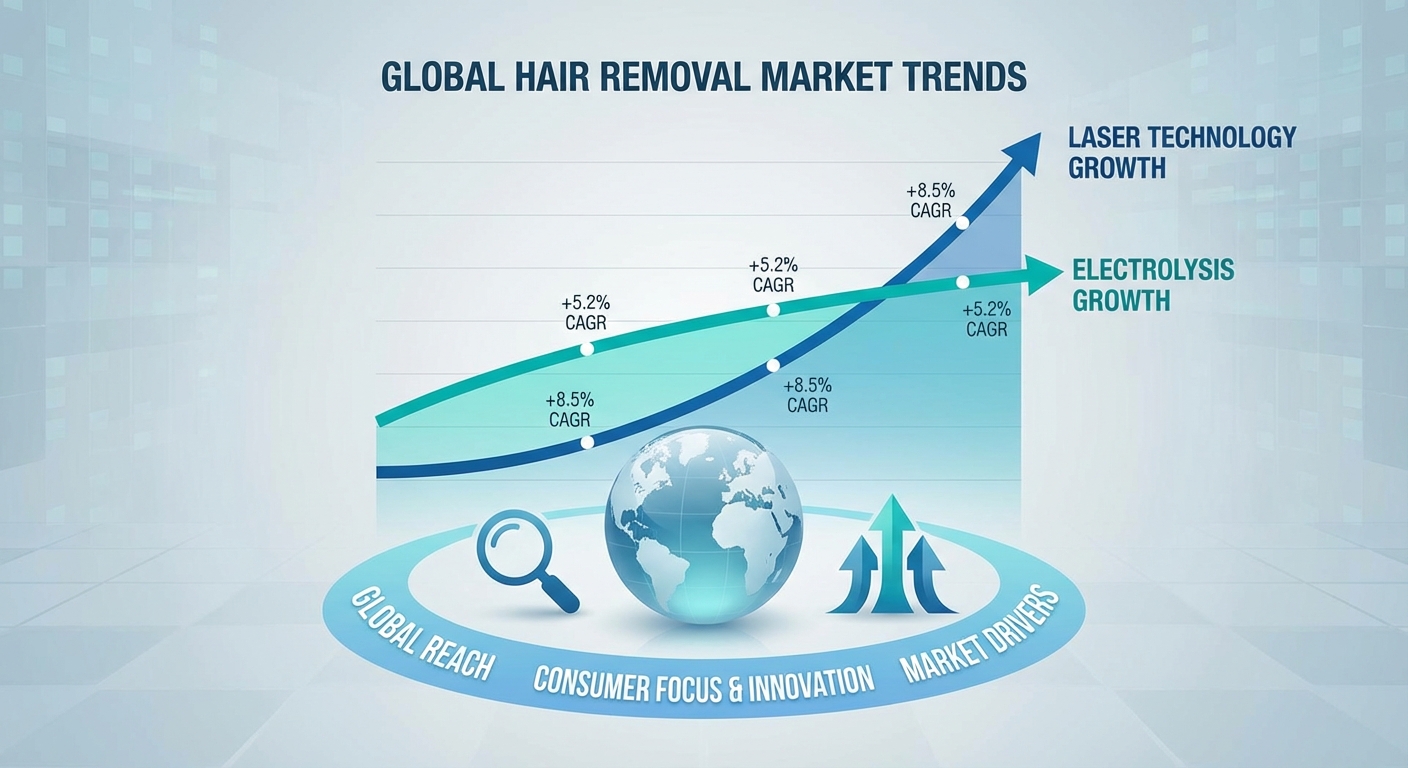
    For decades, laser hair removal has captured a significant portion of this growth. The global laser hair removal market, valued at approximately $1.0 billion in 2023, is projected to skyrocket to $7.7 billion by 2035, demonstrating an exceptional Compound Annual Growth Rate (CAGR) of 18.3% between 2025 and 2035 [7] [9]. This rapid expansion is primarily attributable to its non-invasive nature, speed in treating large areas, and continuous technological improvements [9].

    However, amidst the laser era, electrolysis is experiencing a powerful renaissance. Despite its smaller market footprint, with an estimated global valuation of around $891.8 million in 2024 and a projected growth to $1.4 billion by 2034 (a CAGR of approximately 5.2%) [10] [11], electrolysis is proving indispensable in scenarios where lasers fall short. Dermatologists universally affirm that electrolysis works on all hair colors and skin tones – a critical distinction given that lasers depend on pigment and are therefore ineffective on blonde, red, gray, or very fine hairs [12] [14]. This fundamental capability ensures electrolysis remains the preferred, and often the only, viable option for truly permanent results across the entire spectrum of client needs. Its unique FDA classification as “permanent” solidifies its position, meaning that once a hair follicle is successfully treated, it is irrevocably destroyed and cannot regrow [15].

    The renewed interest in electrolysis is also fueled by social media. “Dermatologists and influencers on platforms like Instagram and YouTube have been educating about electrolysis as the *truly permanent* method,” highlights a report from India Today [16]. Personal stories, such as that of “Jackie,” known as “@Your_Hairy_Godmother,” a woman with Polycystic Ovary Syndrome (PCOS) who found that laser treatments paradoxically worsened her facial hair but achieved complete clearance with electrolysis, have gone viral [17] [211]. These narratives underscore the method’s efficacy for challenging cases, pushing it into the mainstream consciousness of a younger, more informed demographic seeking definitive solutions.

    1.2. Pillars of Advanced Electrolysis: Technology, Speed, and Comfort

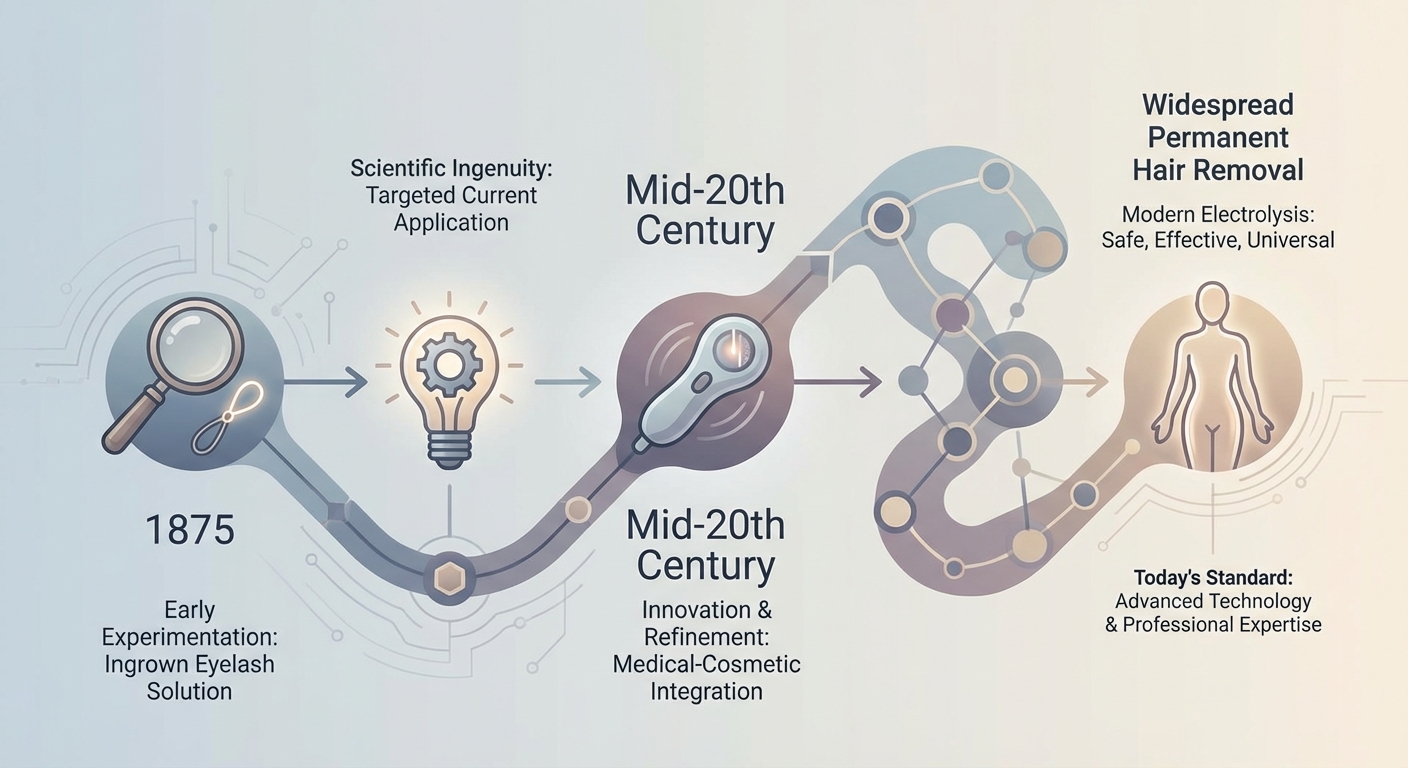
    The electrolysis of today is far removed from its historical origins in 1875 by Dr. Charles E. Michel [19]. Modern technological advancements have dramatically enhanced its speed, comfort, and efficacy. Key innovations include:

    • High-Frequency Devices: The adoption of 27.12 MHz radiofrequency current, particularly in advanced thermolysis machines like the Apilus xCell, allows for extremely rapid and precise heating of the follicle. This higher frequency minimizes heat spread to surrounding tissue, leading to more comfortable treatments, reduced skin irritation, and significantly faster hair removal [20].
    • Computerized Precision and Smart Probes: Modern devices feature intelligent algorithms that automatically adjust energy output based on skin moisture, hair thickness, and even impedance within the follicle [21]. This automation ensures optimal, consistent treatment for each hair, reducing technician variability and improving overall results.
    • Multi-Pulse and Microflash Techniques: These advanced thermolysis variations deliver rapid sequences of micro-pulses in a single insertion, ensuring comprehensive destruction of growth cells. One clinic reported an astounding 91% hair reduction after just 6 sessions using a microflash technique, nearly double the 50% reduction observed with older methods over the same period [22]. This dramatically shortens the overall treatment timeline for clients.
    • Enhanced Client Comfort: Innovations such as insulated probes, which concentrate energy at the follicle base and spare superficial skin layers, along with advanced cooling systems and ergonomic designs, have made electrolysis far more tolerable. These improvements are crucial in expanding the market to individuals who might have previously found the procedure too uncomfortable [23].

    These technological strides translate directly into improved client outcomes. While a typical course of electrolysis historically required 8–16 sessions spaced approximately four weeks apart [24] [25], the enhanced efficiency of advanced systems means clients reach permanent hair removal faster and with greater comfort. For instance, the transition to Multipulse Microflash has shown nearly a two-fold increase in efficacy, resulting in definitive clearance in fewer overall hours [26].

    1.3. Evolving Client Demographics and Inclusive Solutions

    The demand for permanent hair removal is expanding beyond its traditional demographic. Men now constitute a rapidly growing segment, with up to 38% of laser hair removal patients in the U.S. being male in recent years [27]. This trend is even more pronounced in electrolysis, with male treatments rising approximately 45% annually as grooming norms shift [28] [30]. Men seek permanent removal for various areas, including the back, chest, and beard lines, driven by a desire for reduced grooming effort and freedom from razor burn [30].

    Moreover, individuals facing specific hair growth challenges are increasingly turning to electrolysis. This includes an estimated 20% of women in India with PCOS, who often contend with hormonal hirsutism that lasers cannot effectively treat [31] [33]. For these clients, electrolysis offers a definitive solution. Similarly, transgender individuals undergoing gender-affirming surgeries rely heavily on electrolysis for meticulous hair clearance in surgical sites, where even a few remaining hairs can lead to complications [34] [35]. This demographic often benefits from a combined approach, using laser for initial bulk reduction, followed by electrolysis for complete, permanent removal [36].

    The inclusive nature of electrolysis—its effectiveness regardless of hair color, skin tone, or texture—addresses a crucial gap in the aesthetic market, ensuring that permanent hair removal is accessible to everyone. This inclusivity, coupled with effective results for challenging cases, is a significant driver of its sustained market growth.

    1.4. Client Outcomes, Costs, and Satisfaction

    Client outcomes with advanced electrolysis are overwhelmingly positive. The primary benefit is enduring permanence: once a follicle is treated, the hair is gone for good. While multiple sessions are required (typically 8–16 per area over several months) [37] [38], the investment yields a truly hair-free result without the need for future maintenance sessions characteristic of laser. In contrast, laser hair removal typically achieves 70–80% hair reduction after 6 sessions, often requiring annual touch-ups [39] [41].

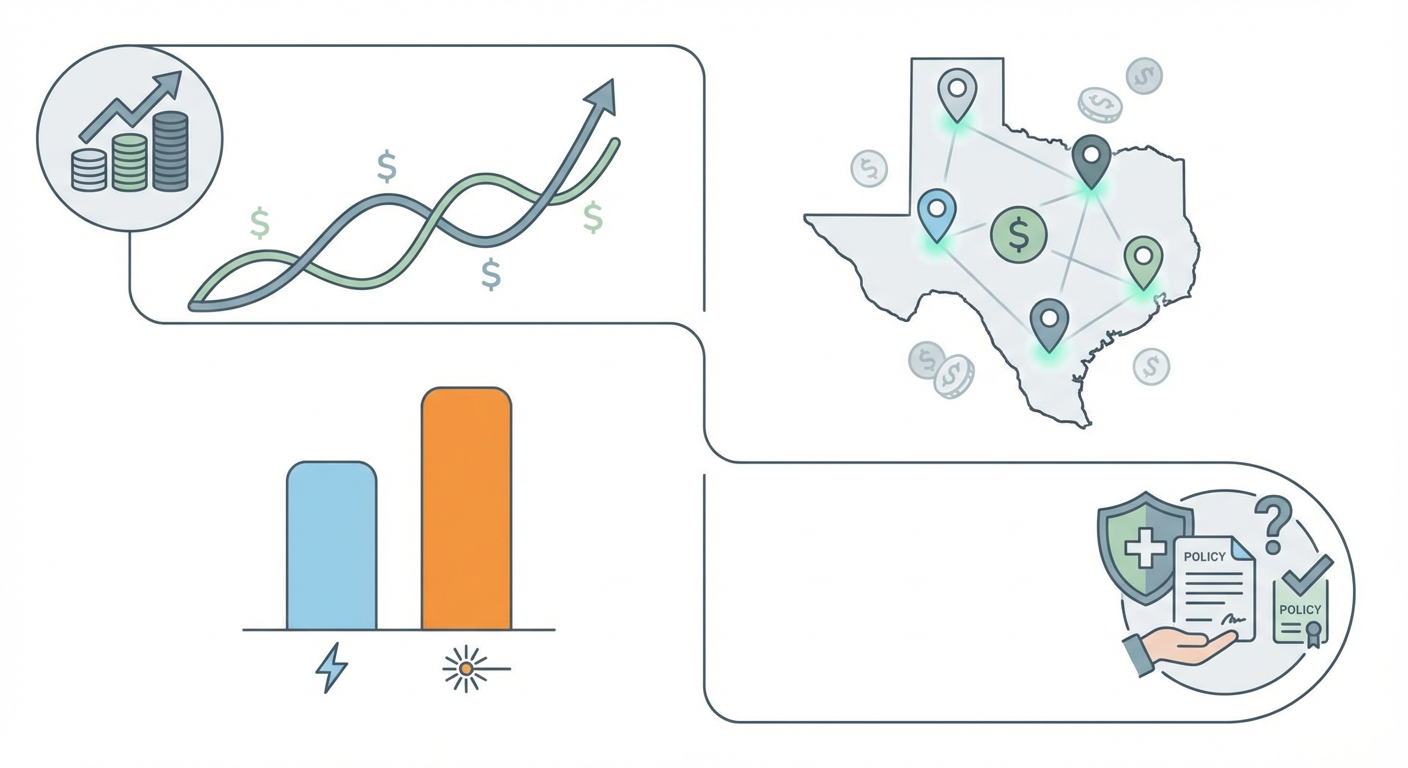
    The cost of electrolysis in the U.S. averages between $40–$200 per session [41]. For a small area like the chin, a complete treatment course might range from several hundred to over a thousand dollars. Although seemingly higher upfront than one-off waxing or shaving, electrolysis offers significant long-term cost-effectiveness. A full laser regimen might cost $1,500–$2,500 [42], but with the potential need for perpetual touch-ups, electrolysis ultimately eliminates ongoing expenses. For many, the value transcends mere cost-savings, translating into improved self-confidence and convenience [43].

    Side effects from electrolysis are generally mild and temporary, including redness, slight swelling, or minor scabbing, which typically resolve within days [44] [46]. Scarring is rare with skilled practitioners and modern equipment. Overall, client satisfaction is high, with patients viewing permanent smooth skin as a worthwhile investment in quality of life. For instance, 94% of patients reported satisfaction with laser hair removal results in one survey [46], and those undergoing electrolysis for challenging cases often report life-changing improvements in self-esteem.

    1.5. San Antonio: A Microcosm of Global Trends (2024-2025)

    The trends observed globally are vividly reflected in regional markets like San Antonio, Texas. Local med-spas are increasingly adopting a multi-modal approach to permanent hair removal. For example, Bio2 Laser Studio in San Antonio, a clinic primarily focused on laser treatments, announced in February 2026 the strategic integration of electrolysis services [47] [48]. This decision was explicitly driven by a desire to offer inclusive solutions for all hair colors and skin types—filling the gaps where laser technology was inadequate [49] [51].

    “Adding electrolysis allows us to cater to a broader client base, encompassing those with blonde, gray, red, or very fine hairs, as well as individuals with darker skin tones where laser may be limited or contraindicated,” stated a representative from Bio2 Laser Studio [51]. This strategic move aligns with a broader industry trend toward comprehensive aesthetic offerings, emphasizing tailored solutions that achieve genuine permanent results, rather than partial reductions [52].

    Anecdotal evidence from San Antonio clinics indicates that the combination approach is gaining traction. Many clients begin with laser hair removal for bulk reduction on larger areas, then transition to electrolysis to meticulously clear remaining stubborn hairs or address areas ill-suited for laser (e.g., shaping eyebrows, removing stray facial hairs). This collaborative strategy benefits the client by leveraging the strengths of both technologies, providing expedited bulk hair reduction followed by definitive, permanent elimination. This approach also allows clinics to address the specific needs of San Antonio’s diverse population, including military personnel seeking low-maintenance grooming, and individuals with hirsutism. The increasing client education efforts in San Antonio, especially given the state’s lack of electrologist licensing [53], foster greater understanding and commitment to treatment plans, leading to higher completion rates and patient satisfaction.

    1.6. Conclusion and Outlook for 2024-2025

    The period of 2024-2025 marks a pivotal era for permanent hair removal. While the laser market continues its rapid ascent, electrolysis has firmly re-established itself as an indispensable method, particularly due to significant technological advancements that enhance its speed, comfort, and efficacy. The global market is witnessing an expansion in demand driven by a more diverse clientele, including a growing male grooming segment and individuals with specific medical or transitional needs. Client outcomes are improving, characterized by higher clearance rates, reduced discomfort, and profound enhancements in quality of life. In dynamic regional markets like San Antonio, providers are demonstrating an acute awareness of these trends, strategically integrating advanced electrolysis alongside laser services to offer truly comprehensive and inclusive permanent hair removal solutions. This multi-modal approach is positioning clinics to capture broader market share and deliver superior, long-lasting results that meet the evolving expectations of today’s discerning consumers.

    The next sections of this report will delve deeper into each of these areas, providing a granular analysis of the technological advancements in electrolysis, a detailed comparison of outcome metrics, and a focused examination of specific case studies and market dynamics within San Antonio, further elaborating on the integrated approach foreseen for the future of permanent hair removal.
    Global Market Trends and Growth Drivers
    Global Market Trends and Growth Drivers – Visual Overview

    2. Global Market Trends and Growth Drivers

    The landscape of personal grooming and aesthetic services is experiencing a significant transformation, with permanent hair removal emerging as a cornerstone of this evolution. Driven by an escalating global focus on aesthetics, the pervasive influence of social media, and a growing consumer willingness to invest in long-term solutions, the hair removal market is on a robust upward trajectory. This section delves into the dynamics of this burgeoning market, providing a comprehensive analysis of its overall growth, the expanding segments of both laser and electrolysis, and the key factors underpinning these trends in 2024-2025.

    2.1 Overview of the Global Hair Removal Market

    The global hair removal market is characterized by rapid expansion, reflecting a fundamental shift in consumer preferences from temporary to permanent solutions. In 2024, the market was valued at an estimated $4.5 billion, a substantial figure that is projected to more than double, reaching over $11 billion by 2033[2]. This impressive growth trajectory signifies a Compound Annual Growth Rate (CAGR) of 10.5% between 2026 and 2033 [2]. The primary catalysts for this robust expansion are multifaceted, encompassing rising aesthetic awareness, the considerable impact of social media on beauty standards, and an increased disposable income among consumers who are now more inclined to invest in elective cosmetic procedures [1]. The traditional methods of hair removal, such as shaving and waxing, while still prevalent, are increasingly being superseded by advanced, longer-lasting alternatives. Shaving, for instance, remains the most common method, with surveys indicating that 72%–89% of people shave regularly [20]. However, the transient nature of these methods, coupled with drawbacks like razor burn, ingrown hairs, and constant upkeep, fuels the demand for more enduring solutions [20]. This desire for convenience and lasting smoothness is a powerful underlying current driving market demand.

    2.2 Market Segmentation and Growth Forecasts

    Within the broader hair removal market, both laser and electrolysis technologies are experiencing significant, albeit distinct, growth. Laser hair removal, due to its speed in treating larger areas and continuous technological advancements, currently dominates the growth narrative in terms of market size. Electrolysis, while a smaller segment, maintains its critical position as the only method offering truly permanent hair removal, filling crucial gaps where laser falls short.

    2.2.1 Laser Hair Removal Market Dynamics

    The global laser hair removal market is experiencing an unprecedented surge, positioning it as one of the fastest-growing categories within the aesthetics industry. Valued at approximately $1.0 billion in 2023, this segment is forecast to reach a staggering $7.7 billion by 2035[5]. This represents an exceptionally high CAGR of 18.3% from 2025 to 2035 [5]. Several factors contribute to this exponential growth: * **Technological Advancements:** Continuous innovations in laser technology, including faster diode lasers and Nd:YAG lasers designed for darker skin tones, have expanded the treatment’s accessibility and efficacy [6]. * **Non-Invasive Appeal:** The non-invasive nature of laser treatments, coupled with reduced downtime, appeals to a broad consumer base seeking effective hair reduction without surgical intervention [4]. * **Social Media Influence:** Platforms like Instagram and TikTok have amplified beauty standards, leading to increased demand for smooth, hair-free skin, often showcased through aspirational content by influencers [1]. * **Growing Consumer Awareness:** As more individuals become aware of the long-term benefits and convenience of laser hair removal compared to traditional methods, its adoption rates climb. The professional sector heavily drives laser hair removal revenues, with clinics and med-spas being the primary service providers. While home-use laser devices exist, professional treatments remain the gold standard for safety and efficacy.

    2.2.2 Electrolysis Hair Removal Market Dynamics

    Despite the considerable growth of laser hair removal, the electrolysis segment demonstrates steady and consistent expansion, underscoring its enduring relevance. The global electrolysis hair removal market was valued at approximately $891.8 million in 2024 and is projected to reach $1.4 billion by 2034[7]. This constitutes a steady CAGR of approximately 5.2%[7]. Electrolysis holds a unique position in the market as the only method officially recognized by the U.S. FDA for permanent hair removal[3]. Dermatologists widely confirm its efficacy across all hair colors and skin tones, successfully addressing critical limitations of laser technology [10]. Key drivers for electrolysis growth include: * **Unmatched Permanence:** The promise of truly permanent hair elimination, where treated follicles are destroyed and hair will not regrow, remains a powerful selling point [10]. * **Versatility:** Electrolysis is effective on all hair types (light, dark, coarse, fine) and skin tones, making it an indispensable solution for individuals for whom laser is unsuitable [10]. * **Technological Advances:** Modern electrolysis machines, featuring higher frequencies (e.g., 27 MHz devices) and smart probes, have significantly enhanced treatment speed, precision, and client comfort, leading to improved outcomes [11], [12]. Clinics leveraging these advanced technologies report up to 91% hair reduction after just six sessions using modern microflash techniques, almost double the clearance rate of older methods [14]. * **Social Media Resurgence:** Electrolysis is benefiting from a “comeback” on social media, where individuals, particularly those with conditions like Polycystic Ovary Syndrome (PCOS), share their successful permanent hair removal journeys after experiencing limitations with laser [25]. The electrolysis market revenue is predominantly generated by professional clinics and dermatology offices, accounting for approximately 65% of the global market share in 2025[8]. However, the home-use electrolysis device segment is also growing, with an 8.3% annual increase, partially fueled by recent FDA approvals of DIY gadgets [8], [9]. Despite this, professional treatments remain the industry benchmark for efficacy and safety.

    2.3 Regional Market Growth and Demographic Expansion

    The growth in the hair removal market is not uniform across all regions, nor is its clientele homogeneous. Significant regional disparities and demographic shifts are observable.

    2.3.1 Regional Growth Patterns

    * **Asia-Pacific Dominance:** While North America and Europe represent mature markets with steady annual growth rates of approximately 4–5%, the Asia-Pacific region stands out as the fastest-growing market for electrolysis, exhibiting a CAGR of roughly 7.8%[16]. Countries like India and China, experiencing rapid urbanization and a burgeoning middle class, are witnessing a boom in aesthetic services [17]. The Indian electrolysis market alone is projected to reach approximately $62.7 million by 2033, growing at a significant 9.6% annually [18]. This surge is attributed to increasing female workforce participation, rising disposable incomes, and greater access to professional training and service standardization [19]. Market Table: Global Electrolysis Hair Removal Market by Region (CAGR 2024-2034) | Region | Projected CAGR (2024-2034)[16] | Current Market Status | | :——————— | :———————————- | :——————– | | Asia-Pacific | ~7.8% | Fastest Growing | | North America & Europe | ~4–5% | Mature Markets |

    2.3.2 Expanding Demographics

    The perception of permanent hair removal as a service exclusively for women is rapidly diminishing. The client base is diversifying across various demographics: * **Male Grooming Market:** Men now constitute a significant and rapidly growing segment. Up to 38% of laser hair removal patients in the U.S. in recent years have been male [22]. More strikingly, male electrolysis treatments are seeing an annual rise of approximately 45%, reflecting evolving grooming norms and aspirational demand for a refined appearance [13], [23]. Men increasingly seek permanent hair removal for areas such as the back, chest, and to define beard lines, aiming to avoid constant shaving and razor burn [24]. * **Hormonal Conditions (e.g., PCOS):** Individuals with hormonal imbalances causing unwanted hair growth are turning to electrolysis as a definitive solution. For instance, an estimated 20% of women in India suffer from PCOS, a condition that leads to hirsutism [26]. Laser treatments often prove ineffective on the finer, hormone-driven hairs associated with PCOS and, in some cases, can even stimulate paradoxical hair growth [26]. * **Transgender Individuals:** The transgender community has a pronounced demand for permanent hair removal, particularly in preparation for gender-affirming surgeries where 100% hair clearance is medically necessary to prevent complications [28], [29]. Electrolysis is often the preferred method or a crucial follow-up to laser to ensure complete and permanent eradication of hair in surgical graft sites.

    2.4 Impact of Social Media and Post-Pandemic Trends

    Social media platforms have become powerful engines for market growth, creating new avenues for consumer education and influencing aesthetic perceptions. * **”Electrolysis Comeback”:** Electrolysis, a technique first used in 1875 [30], is experiencing a modern resurgence spurred by dermatologists and influencers on platforms like Instagram and YouTube. These channels educate consumers about electrolysis as the only truly permanent method, distinguishing it from laser’s “reduction” claims [25]. Personal stories, such as that of “Jackie AKA @Your_Hairy_Godmother,” a PCOS patient who found permanent relief through electrolysis after laser treatments failed, have gained significant traction, inspiring a new wave of clients who are digitally savvy and seeking authentic, effective solutions [27]. By late 2024, India Today highlighted this trend, noting that women disappointed with laser’s non-permanent results are rediscovering electrolysis [25]. * **Post-Pandemic Demand Surge:** The initial disruption caused by the COVID-19 pandemic, which led to at-home grooming, has since given way to a strong rebound in demand for professional aesthetic services. Med-spas reported a surge in bookings for both laser and electrolysis as consumers caught up on missed appointments. This pent-up demand, combined with the increased flexibility offered by remote work enabling more frequent treatment sessions, has contributed to a strong revenue recovery and continued growth in the hair removal sector from 2022 to 2023 [24]. The underlying desire for lasting smooth skin remains a consistent driver, immune to temporary market fluctuations.

    2.5 Comparison of Treatment Modalities: Laser vs. Electrolysis

    Understanding the distinct roles, results, and limitations of laser and electrolysis is crucial for comprehending their respective market positions and growth drivers. * **Permanence vs. Reduction:** The defining difference lies in their FDA classifications: electrolysis is recognized as permanent hair removal, while laser hair removal is for “permanent hair reduction” [31]. Electrolysis physically destroys hair growth cells, ensuring no regrowth from that follicle [32]. Laser, conversely, damages follicles, significantly reducing hair but sometimes necessitating maintenance sessions due to potential regrowth or new follicular activity [34]. Laser typically achieves 70-90% hair reduction, whereas electrolysis aims for 100% elimination per follicle [21]. * **Hair and Skin Type Compatibility:** Laser relies on targeting pigment in hair, making it most effective on coarse, dark hairs against fair skin [35]. It struggles with light-colored (blonde, red, gray) or fine hairs and requires caution on darker skin tones to prevent hyperpigmentation or burns [36], [37]. Electrolysis, however, is independent of hair color and skin tone; its direct electrical current precisely targets each follicle regardless of melanin content, making it a universal solution [38], [39]. * **Speed and Coverage:** Laser treatments excel in speed, covering large areas rapidly due to its broad pulse coverage. A full leg or back can be treated in under an hour [40]. Electrolysis is meticulous and time-consuming, treating one follicle at a time. This makes it ideal for smaller areas, fine-tuning after laser, or hairs that laser cannot target. This distinction often leads to a combination approach: laser for initial bulk reduction, followed by electrolysis for remaining stubborn hairs [42]. * **Pain and Comfort:** Both methods involve discomfort. Laser is often described as a “snapping rubber band” sensation, and modern devices include cooling systems [43]. Electrolysis involves a tingling or heat sensation per follicle, which can be managed with topical numbing creams [44]. Advances in electrolysis technology, such as insulated probes and higher frequencies, have generally improved comfort and tolerability compared to older methods [45]. * **Specialized Applications:** Electrolysis is often the preferred method for specialized cases such as hormonal hirsutism (e.g., PCOS), where laser may be ineffective or even counterproductive [46]. It is also indispensable for transgender individuals requiring 100% hair removal for gender-affirming surgeries [47]. The professional consensus, as echoed by dermatologists like Dr. Azadeh Shirazi and Dr. Blair Murphy-Rose, is that both methods have their strengths and are best utilized strategically. For efficiency in broad areas, laser is often preferred, but for definitive, permanent results on all hair types and skin tones, especially fine or light hairs, electrolysis is unparalleled [49], [50]. This understanding is leading to a growing trend of clinics offering both technologies to provide comprehensive client solutions [51].

    2.6 Technological Advancements in Electrolysis

    The sustained growth of electrolysis is partly attributable to significant technological advancements that have enhanced its efficacy, speed, and comfort. * **High-Frequency Devices:** The advent of 27 MHz radiofrequency thermolysis devices, like the Apilus xCell, has revolutionized electrolysis [52], [53]. This higher frequency allows for incredibly rapid and precise heating of the follicle, reducing treatment time and minimizing heat spread to surrounding tissue, making it “more efficient, rapid and comfortable than any other technology” [54]. * **Computerized Precision:** Modern electrolysis machines incorporate intelligent algorithms and pre-set programs, automatically adjusting energy output based on skin moisture and hair thickness [55]. This computerized precision ensures optimal treatment for each follicle, enhancing efficacy and safety by delivering adequate energy while protecting surrounding skin. * **Faster Multi-Pulse and Flash Methods:** Techniques like “Microflash” or “Multiplex” thermolysis utilize rapid sequences of micro-pulses within a single follicle insertion, targeting growth cells more completely. The Austin Medical Electrolysis Clinic, for instance, reported a substantial improvement: 91% hair reduction after 6 treatments with advanced microflash, compared to 50% with older thermolysis [14]. This efficiency significantly reduces the total sessions required for clients. * **Improved Comfort:** Innovations like insulated probes, which concentrate current at the follicle base and minimize surface irritation, along with advanced temperature control, have made electrolysis significantly more tolerable [45]. This expanded comfort level is opening the market to a wider demographic beyond highly pain-tolerant individuals. * **Safety Monitoring:** Alongside technological leaps, there has been a concerted effort to standardize safety protocols. Modern machines feature built-in safeguards, and professional associations mandate updated training and stringent hygiene standards, leading to extremely low rates of scarring or complications when performed by skilled practitioners [56].

    2.7 Client Outcomes, Satisfaction, and Long-Term Impact

    Client outcomes for permanent hair removal are generally positive, with high satisfaction rates stemming from both efficacy and improved quality of life. * **Treatment Timeline and Results:** While laser shows noticeable thinning after 2-3 sessions (typically requiring 6 sessions spaced 4-8 weeks apart), electrolysis demands greater patience, with 8-15 sessions over several months usually needed to clear an area permanently [57], [33]. However, once completed, electrolysis offers *true* permanence, eliminating the need for ongoing maintenance that laser sometimes requires [58]. * **Success Rates:** Electrolysis boasts a success rate of over 90% per treated follicle, leading to realistic expectations for a totally hair-free area. Laser hair removal offers 60-90% hair reduction, depending on individual factors [59]. For clients seeking absolute clearance, electrolysis serves as the crucial final step [60]. * **Side Effects and Recovery:** Both methods induce temporary side effects like redness and swelling. Laser may cause temporary pigment changes [61], while electrolysis results in tiny scabs that heal within days [62]. Proper aftercare is essential for optimal healing and minimizing rare complications [63]. * **Pain Management:** Topical numbing creams are widely used for both treatments, significantly enhancing client comfort, particularly for electrolysis [64]. Pain generally decreases as hair becomes sparser over the course of treatment. * **Satisfaction and Quality of Life:** High satisfaction rates are reported for both laser and electrolysis, with many clients valuing the convenience, improved self-confidence, and long-term cost benefits [65]. For individuals with PCOS or those undergoing gender transition, successful electrolysis can be life-changing, profoundly enhancing self-esteem and daily comfort. The shift from constant grooming to permanent hairlessness is often viewed as a worthwhile investment in personal well-being.

    2.8 San Antonio Spotlight: Local Trends and Innovations (2024-2025)

    San Antonio serves as a compelling microcosm of these global trends, demonstrating how local aesthetic providers are adapting to meet evolving client demands and leverage advanced hair removal technologies. * **Integrated Service Models:** Local establishments are increasingly adopting comprehensive service models. For example, San Antonio’s **Bio2 Laser Studio**, originally a laser-focused med-spa, expanded to include electrolysis services in February 2026 [66]. This strategic move was a direct response to client demand, allowing the studio to cater to **all hair colors and skin tones**, effectively addressing limitations of laser technology alone [67], [68], [69]. This integration facilitates personalized treatment plans, utilizing laser for general reduction and electrolysis for precise, permanent fine-tuning. * **Diverse Clientele and Outcomes:** San Antonio’s diverse demographics, including a significant Hispanic community, present a broad range of skin and hair types. While laser hair removal quickly gained popularity for large areas, a substantial number of clients ultimately transition to electrolysis for complete satisfaction, particularly for facial hair related to hormonal conditions like PCOS or menopause. Men, including military personnel and athletes, are also increasingly part of the client base, seeking solutions for back, chest, and beard lines, often combining laser and electrolysis for optimal results. These positive outcomes lead to robust word-of-mouth referrals. * **Collaborative Approach:** A notable trend in San Antonio is the collaborative spirit among practitioners. Initial laser treatment for bulk hair reduction is often followed by referrals to electrologists for permanent clearance of remaining hairs [42]. Conversely, electrologists may recommend laser for initial density reduction in large areas. This cross-referral system underscores a commitment to prioritizing client outcomes, utilizing the strengths of both modalities. * **Client Education:** Despite Texas lacking state-level licensing for electrologists [56], San Antonio providers emphasize transparent client education. Detailed explanations of the hair growth cycle, treatment timelines, and realistic expectations improve client compliance and significantly contribute to successful outcomes. This focus on informed consent ensures clients understand the process and remain committed to necessary multiple sessions. The San Antonio market in 2024-2025 is poised for continued growth, with more clinics expected to invest in advanced electrolysis technology and trained personnel. The city’s demographic profile further suggests a sustained demand for comprehensive hair removal solutions, solidifying San Antonio’s role in the evolving landscape of permanent aesthetics.

    2.9 Conclusion

    The global hair removal market is undergoing a profound evolution, characterized by significant growth across both laser and electrolysis segments. Fuelled by increasing aesthetic awareness, the pervasive influence of social media, and a willingness among consumers to invest in long-term solutions, the market projects a trajectory of substantial expansion through 2033. Advances in electrolysis technology, notably higher-frequency devices and intelligent algorithms, have dramatically improved efficacy, speed, and comfort, ensuring its continued relevance as the only truly permanent hair removal method. This, coupled with an expanding demographic base that includes men and individuals with hormonal conditions, solidifies the market’s robust future. As evidenced by trends in places like San Antonio, the integration of both laser and advanced electrolysis techniques allows clinics to offer comprehensive, inclusive solutions, leading to higher client satisfaction and superior, lasting outcomes. The era of permanent hair removal is truly here, driven by innovation and a deep understanding of diverse client needs. This comprehensive analysis of global market trends and growth drivers sets the stage for a more detailed examination of advanced electrolysis techniques and their specific client outcomes in San Antonio, which will be explored in the subsequent sections of this report. [1] [www.linkedin.com/pulse/hair-removal-market-insights-2025-key-metrics-d3krf/#:~:text=What%20are%20the%20key%20drivers,global%20hair%20removal%20market%20growth] [2] [www.linkedin.com/pulse/hair-removal-market-insights-2025-key-metrics-d3krf/#:~:text=,2%20Billion%20by%202033] [3] [www.yahoo.com/lifestyle/only-hair-removal-method-thats-130000750.html#:~:text=Unlike%20laser%20hair%20removal%2C%20electrolysis,still%20a%20highly%20effective%20option] [4] [laserspots.net/guides/laser-hair-removal-statistics/#:~:text=Several%20factors%20contribute%20to%20the,seeking%20effective%20hair%20removal%20options] [5] [www.globenewswire.com/news-release/2025/02/26/3032549/0/en/Laser-Hair-Removal-Market-to-Reach-7-7-billion-Globally-by-2035-at-18-3-CAGR-Allied-Market-Research.html#:~:text=at%20%241%20billion%20in%202023%2C,from%202025%20to%202035] [6] [laserspots.net/guides/laser-hair-removal-statistics/#:~:text=Current%20Market%20Size%20and%20Projections] [7] [www.emergenresearch.com/industry-report/electrolysis-hair-removal-market#:~:text=The%20Electrolysis%20Hair%20Removal%20Market,across%20developed%20and%20emerging%20markets] [8] [www.emergenresearch.com/industry-report/electrolysis-hair-removal-market#:~:text=advancements%20in%20electrolysis%20equipment%2C%20expanding,annually] [9] [www.emergenresearch.com/industry-report/electrolysis-hair-removal-market#:~:text=Recent%20FDA%20approvals%20for%20home,treatment%20options] [10] [my.clevelandclinic.org/health/treatments/8306-electrolysis#:~:text=remove%20irritating%20ingrown%20eyelash%20hairs,method%20for%20permanent%20hair%20removal] [11] [www.dectro.com/en/apilus#:~:text=,comfortable%20than%20any%20other%20technology] [12] [www.apilus.com.pl/en#:~:text=Intelligent%20algorithms%20automatically%20adjust%20to,work%20and%20enhancing%20final%20results] [13] [www.emergenresearch.com/industry-report/electrolysis-hair-removal-market#:~:text=The%20male%20grooming%20market%20represents,aspirational%20demand%20among%20general%20male] [14] [www.austinmedicalelectrolysisclinic.com/electrolysis-casestudies.html#:~:text=Our%20current%20modality%2C%20Multipulse%2FMicroflash%2C%20produces,to%20contact%20us%20by%20email] [15] [www.emergenresearch.com/industry-report/electrolysis-hair-removal-market#:~:text=multiple%20sessions%20for%20complete%20hair,method%20for%20permanent%20hair%20removal] [16] [www.emergenresearch.com/industry-report/electrolysis-hair-removal-market#:~:text=Geographic%20expansion%20patterns%20reveal%20North,China%2C%20and%20Southeast%20Asian%20nations] [17] [www.emergenresearch.com/industry-report/electrolysis-hair-removal-market#:~:text=Geographic%20expansion%20patterns%20reveal%20North,China%2C%20and%20Southeast%20Asian%20nations] [18] [www.grandviewresearch.com/horizon/outlook/electrolysis-hair-removal-market/india#:~:text=India%20Electrolysis%20Hair%20Removal%20Market,is%20expected%20of%20India] [19] [www.emergenresearch.com/industry-report/electrolysis-hair-removal-market#:~:text=populations%20and%20increasing%20female%20workforce,practitioner%20training%20and%20service%20standardization] [20] [bio2laserstudio.com/hair-removal-technologies-san-antonio/#:~:text=match%20at%20L927%20utilized%20regularly,This%20mechanism%20is] [21] [bio2laserstudio.com/hair-removal-technologies-san-antonio/#:~:text=,while%20shaved%20hair%20reappears%20within] [22] [zipdo.co/laser-aesthetics-industry-statistics/#:~:text=Laser%20Aesthetics%20Industry%3A%20ZipDo%20Education,born%201997%E2%80%932012%29%20accounting] [23] [www.emergenresearch.com/industry-report/electrolysis-hair-removal-market#:~:text=attitudes%20toward%20male%20grooming%20and,that%20influence%20broader%20consumer%20adoption] [24] [www.emergenresearch.com/industry-report/electrolysis-hair-removal-market#:~:text=benefit%20beauty%20service%20providers%20offering,electrolysis%20treatments] [25] [www.indiatoday.in/lifestyle/beauty/story/is-the-new-trend-electrolysis-better-for-hair-removal-than-laser-2629189-2024-11-09#:~:text=advertisement] [26] [www.indiatoday.in/lifestyle/beauty/story/is-the-new-trend-electrolysis-better-for-hair-removal-than-laser-2629189-2024-11-09#:~:text=Jackie%20isn%E2%80%99t%20alone,removal%20often%20doesn%E2%80%99t%20work%20well] [27] [www.indiatoday.in/lifestyle/beauty/story/is-the-new-trend-electrolysis-better-for-hair-removal-than-laser-2629189-2024-11-09#:~:text=especially%20on%20YouTube,of%20views%20on%20her%20videos] [28] [transcare.ucsf.edu/guidelines/hair-removal#:~:text=may%20seek%20services%3B%20a%20care,referral%20for%20care%2C%20it%20is] [29] [transcare.ucsf.edu/guidelines/hair-removal#:~:text=being%20when%20hairs%20are%20in,12] [30] [www.eastmemphiselectrolysis.net/about-electrolysis/#:~:text=Electrolysis%20,With%20this%20procedure%2C%20the%20field] [31] [www.yahoo.com/lifestyle/only-hair-removal-method-thats-130000750.html#:~:text=Unlike%20laser%20hair%20removal%2C%20electrolysis,still%20a%20highly%20effective%20option] [32] [my.clevelandclinic.org/health/treatments/8306-electrolysis#:~:text=the%20only%20FDA,hair%20will%20not%20grow%20back] [33] [www.yahoo.com/lifestyle/only-hair-removal-method-thats-130000750.html#:~:text=What%20to%20consider] [34] [www.yahoo.com/lifestyle/only-hair-removal-method-thats-130000750.html#:~:text=eight%20sessions%20to%20achieve%20the,on%20regrowth%20and%20hormonal%20factors] [35] [transcare.ucsf.edu/guidelines/hair-removal#:~:text=Laser%20Hair%20Removal%3AThe%20use%20of,thin%2C%20light%2C%20red%2C%20blonde%20or] [36] [www.yahoo.com/lifestyle/only-hair-removal-method-thats-130000750.html#:~:text=,the%20right%20tool%20for%20you] [37] [ventureworld.org/press-release/2026-02-04/29057/bio2-laser-studio-expands-services-with-the-addition-of-electrolysis-for-permanent-hair-removal#:~:text=Electrolysis%20is%20recognized%20by%20the,may%20be%20limited%20or%20contraindicated] [38] [www.yahoo.com/lifestyle/only-hair-removal-method-thats-130000750.html#:~:text=,the%20right%20tool%20for%20you] [39] [transcare.ucsf.edu/guidelines/hair-removal#:~:text=the%20treatment%20location%2C%20as%20the,9%2C11] [40] [www.yahoo.com/lifestyle/only-hair-removal-method-thats-130000750.html#:~:text=,%E2%80%9D] [41] [www.yahoo.com/lifestyle/only-hair-removal-method-thats-130000750.html#:~:text=,treatment%20areas%2C%20electrolysis%20takes%20significantly] [42] [ventureworld.org/press-release/2026-02-04/29057/bio2-laser-studio-expands-services-with-the-addition-of-electrolysis-for-permanent-hair-removal#:~:text=Electrolysis%20complements%20Bio2%20Laser%20Studio%E2%80%99s,laser%20technology%20cannot%20effectively%20target] [43] [bio2laserstudio.com/hair-removal-technologies-san-antonio/#:~:text=,tedious%20and%20itchy%20by%20users] [44] [www.yahoo.com/lifestyle/only-hair-removal-method-thats-130000750.html#:~:text=Side%20effects%20of%20electrolysis] [45] [www.emergenresearch.com/industry-report/electrolysis-hair-removal-market#:~:text=Market%20penetration%20remains%20concentrated%20in,tolerant%20consumers] [46] [www.indiatoday.in/lifestyle/beauty/story/is-the-new-trend-electrolysis-better-for-hair-removal-than-laser-2629189-2024-11-09#:~:text=especially%20on%20YouTube,of%20views%20on%20her%20videos] [47] [transcare.ucsf.edu/guidelines/hair-removal#:~:text=may%20seek%20services%3B%20a%20care,referral%20for%20care%2C%20it%20is] [48] [pubmed.ncbi.nlm.nih.gov/35914381/#:~:text=,1%20%7D%2C%20Alexandra] [49] [www.yahoo.com/lifestyle/only-hair-removal-method-thats-130000750.html#:~:text=electrolysis%20is%20ideal%20for%20individuals,colored%20hair.%E2%80%9D] [50] [www.yahoo.com/lifestyle/only-hair-removal-method-thats-130000750.html#:~:text=,the%20right%20tool%20for%20you] [51] [ventureworld.org/press-release/2026-02-04/29057/bio2-laser-studio-expands-services-with-the-addition-of-electrolysis-for-permanent-hair-removal#:~:text=%E2%80%9CAdding%20electrolysis%20allows%20us%20to,%E2%80%9D] [52] [www.dectro.com/en/apilus#:~:text=%2A%20Code%3A%2001,permanent%20hair%20removal] [53] [www.dectro.com/en/apilus#:~:text=match%20at%20L51%20,comfortable%20than%20any%20other%20technology] [54] [www.dectro.com/en/apilus#:~:text=,comfortable%20than%20any%20other%20technology] [55] [www.apilus.com.pl/en#:~:text=Intelligent%20algorithms%20automatically%20adjust%20to,work%20and%20enhancing%20final%20results] [56] [www.aielectrology.com/Texas.shtml#:~:text=Electrology%20Programs%20for%20Texas%20Course,you%20want%20to%20become%20an] [57] [www.yahoo.com/lifestyle/only-hair-removal-method-thats-130000750.html#:~:text=Laser%20hair%20removal%20also%20requires,it%20often%20takes%20four%20to] [58] [my.clevelandclinic.org/health/treatments/8306-electrolysis#:~:text=the%20only%20FDA,hair%20will%20not%20grow%20back] [59] [transcare.ucsf.edu/guidelines/hair-removal#:~:text=some%20extent%20on%20the%20timing,12] [60] [ventureworld.org/press-release/2026-02-04/29057/bio2-laser-studio-expands-services-with-the-addition-of-electrolysis-for-permanent-hair-removal#:~:text=Electrolysis%20complements%20Bio2%20Laser%20Studio%E2%80%99s,laser%20technology%20cannot%20effectively%20target] [61] [www.yahoo.com/lifestyle/only-hair-removal-method-thats-130000750.html#:~:text=Side%20effects%20of%20electrolysis] [62] [www.yahoo.com/lifestyle/only-hair-removal-method-thats-130000750.html#:~:text=Side%20effects%20of%20electrolysis] [63] [www.yahoo.com/lifestyle/only-hair-removal-method-thats-130000750.html#:~:text=Aftercare] [64] [www.yahoo.com/lifestyle/only-hair-removal-method-thats-130000750.html#:~:text=Electrolysis%20is%20a%20safe%20procedure%2C,treatment%20to%20help%20alleviate%20discomfort] [65] [www.yahoo.com/lifestyle/only-hair-removal-method-thats-130000750.html#:~:text=When%20deciding%20between%20laser%20hair,colored%20hair.%E2%80%9D] [66] [ventureworld.org/press-release/2026-02-04/29057/bio2-laser-studio-expands-services-with-the-addition-of-electrolysis-for-permanent-hair-removal#:~:text=for%20Permanent%20Hair%20Removal%20lh3,skin%20types%20and%20hair%20colors] [67] [ventureworld.org/press-release/2026-02-04/29057/bio2-laser-studio-expands-services-with-the-addition-of-electrolysis-for-permanent-hair-removal#:~:text=With%20this%20addition%2C%20Bio2%20Laser,remain%20after%20laser%20hair%20reduction] [68] [ventureworld.org/press-release/2026-02-04/29057/bio2-laser-studio-expands-services-with-the-addition-of-electrolysis-for-permanent-hair-removal#:~:text=Electrolysis%20is%20recognized%20by%20the,may%20be%20limited%20or%20contraindicated] [69] [ventureworld.org/press-release/2026-02-04/29057/bio2-laser-studio-expands-services-with-the-addition-of-electrolysis-for-permanent-hair-removal#:~:text=The%20addition%20of%20electrolysis%20also,standard%20in%20permanent%20hair%20removal]
    Electrolysis: The Resurgence of the Only FDA-Approved Permanent Method
    Electrolysis: The Resurgence of the Only FDA-Approved Permanent Method – Visual Overview

    3. Electrolysis: The Resurgence of the Only FDA-Approved Permanent Method

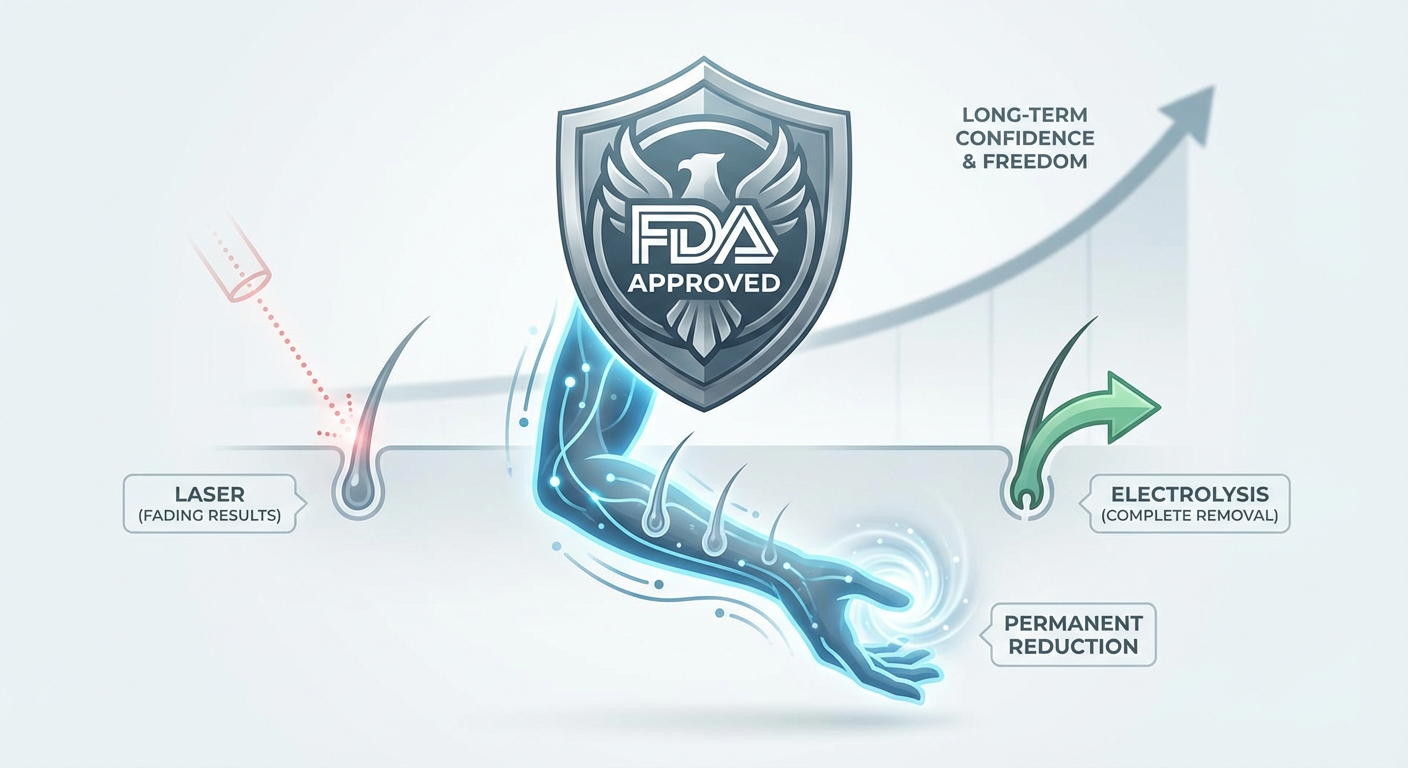
    In a rapidly expanding global hair removal market, projected to swell from approximately $4.5 billion in 2024 to over $11 billion by 2033, a surprising resurgence is underway for electrolysis, a method first introduced in 1875 by Dr. Charles E. Michel [34]. Despite the widespread popularity and aggressive marketing of laser hair removal, electrolysis stands distinctively as the **only hair removal technique recognized by the U.S. Food and Drug Administration (FDA) as “permanent”** [3][12]. This crucial distinction sets it apart from laser devices, which are generally marketed for “permanent hair reduction” [3]. This section will delve into the unique aspects of electrolysis, exploring how its unparalleled FDA classification, coupled with significant technological advancements and increased social media awareness, is fueling renewed interest and driving its adoption across diverse demographic groups, particularly in metropolitan areas like San Antonio. We will examine the core differences between electrolysis and laser hair removal, highlight the improvements in modern electrolysis techniques that enhance comfort and efficacy, and analyze compelling client outcomes.

    3.1. The “Permanent” Distinction: Electrolysis vs. Laser Hair Reduction

    The semantic difference between “permanent hair removal” and “permanent hair reduction” carries profound implications for consumers seeking lasting solutions to unwanted hair. This distinction is the bedrock of electrolysis’s unique position in the aesthetic market.

    3.1.1. FDA Classification and Mechanism of Action

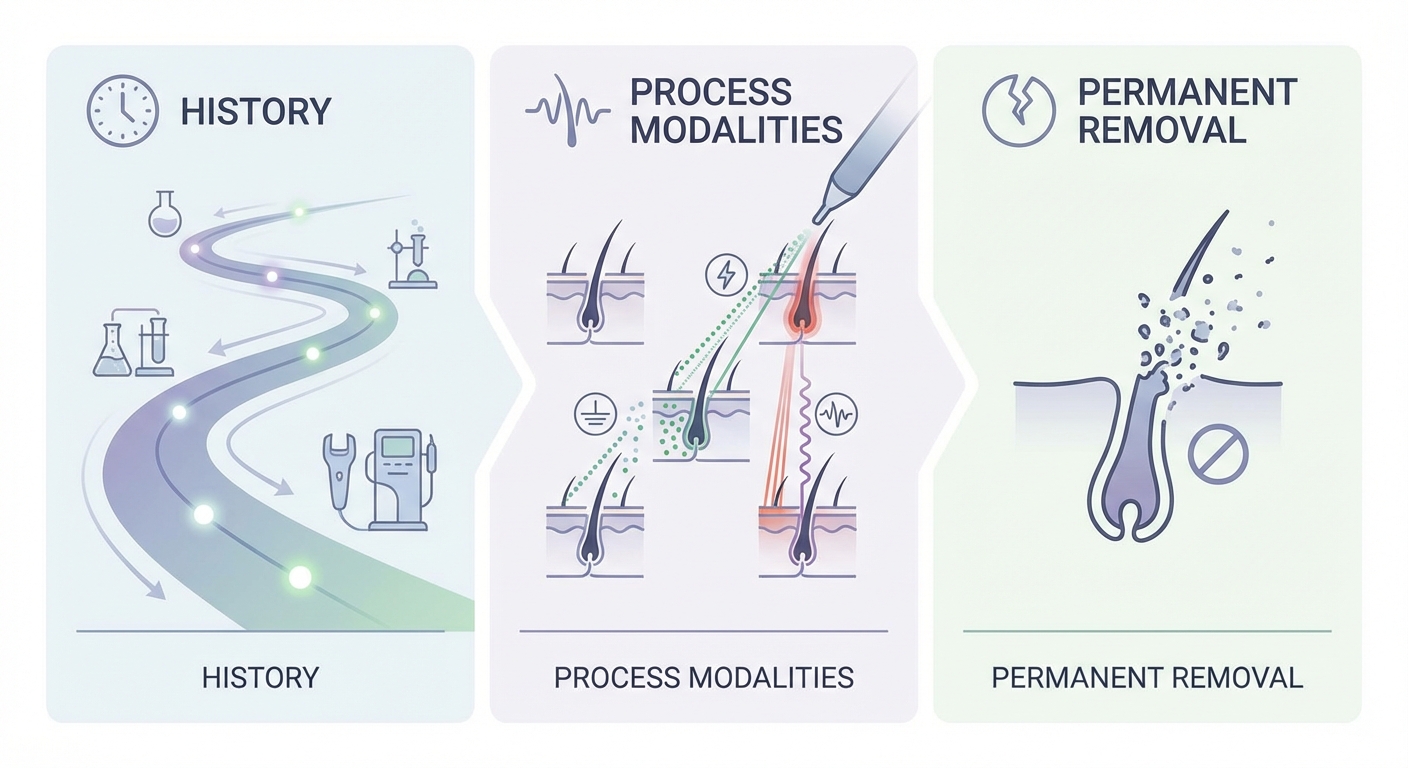
    Electrolysis, a method almost 150 years old, involves the insertion of a fine probe into each individual hair follicle. A small electrical current is then delivered, which permanently destroys the hair growth cells [12]. This process works by targeting the base of the follicle, coagulating the papilla and germinative cells responsible for hair regeneration. The Cleveland Clinic confirms that electrolysis “permanently destroys hair growth cells, ensuring treated hairs do not regrow” [12]. This direct and irreversible destruction of the growth mechanism is precisely why the FDA grants electrolysis its unique “permanent” classification [3]. In contrast, laser hair removal operates on a principle of selective photothermolysis, where concentrated light energy is absorbed by the melanin (pigment) in the hair follicle. This energy converts to heat, damaging the follicle and inhibiting future hair growth. While highly effective, laser treatments are approved for “permanent hair reduction” [3]. The term “reduction” signifies that while hair growth is significantly diminished, it is not always entirely eliminated, and some follicles may eventually recover or new ones may become active, particularly under hormonal influences [6]. Clinical data suggests laser hair removal typically achieves 70-80% reduction in hair regrowth after a full course of treatment [11]. Remaining hairs may be finer and lighter, but they might still require occasional touch-up sessions annually [6]. The table below summarizes the key differences in FDA classification and mechanism:

    FeatureElectrolysisLaser Hair Removal
    FDA ClassificationPermanent Hair RemovalPermanent Hair Reduction
    MechanismDestroys hair growth cells via electrical current (heat/chemical reaction) in each follicle [12]Damages follicles via targeted light absorption by melanin [3]
    TargetIndividual hair follicle (irrespective of color or skin tone)Melanin in hair (best on dark hair, light skin)
    ResultComplete and permanent elimination of treated hair [12]Significant reduction in hair growth; maintenance may be needed [6]

    3.1.2. Inclusivity for Diverse Hair and Skin Types

    One of the most compelling advantages of electrolysis, directly stemming from its mechanism, is its universal applicability across all hair colors and skin tones [2]. Laser technology relies on the chromophore melanin, meaning it is most effective on contrasted demographics: individuals with dark, coarse hair and lighter skin (Fitzpatrick skin types I-III). Lasers struggle with light blonde, red, gray, or white hairs due to insufficient pigment, making them notably ineffective [2]. Similarly, using lasers on darker skin tones (Fitzpatrick skin types IV-VI) carries a higher risk of adverse effects like hyperpigmentation or burns, as the laser can target melanin in the skin as well as the hair [4]. While advanced laser systems like Nd:YAG 1064 nm are considered safer for darker skin, they still require extreme caution and experienced technicians [22]. Electrolysis, however, is not dependent on pigment. It can permanently remove a fine white hair from an upper lip just as effectively and safely as a coarse black hair from a chin [2]. This makes it a crucial solution for a significant portion of the population for whom laser hair removal is either contraindicated or ineffective. As noted by dermatologists, electrolysis fills “crucial gaps where lasers fall short” [2]. This inherent inclusivity is a key driver of its current resurgence, appealing to a broader demographic seeking guaranteed results, regardless of their hair or skin characteristics.

    3.2. Resurgence Drivers: Technology, Social Media, and Evolving Demographics

    The renewed interest in electrolysis isn’t merely due to its FDA-approved permanence; it’s a confluence of technological advancements, enhanced social awareness driven by social media, and a diversifying client base with specialized needs.

    3.2.1. Technological Advancements in Electrolysis

    While the core principle of electrolysis dates back to 1875, modern advancements have dramatically improved the treatment experience, making it faster, more comfortable, and significantly more effective. The primary technological leaps include:

    • High-Frequency Devices (27 MHz): A major innovation is the shift to higher-frequency electrical currents. While traditional thermolysis devices operate at 13.56 MHz, state-of-the-art machines, such as the Apilus xCell, utilize 27.12 MHz radiofrequency [5]. This higher frequency allows for incredibly rapid and precise heating of the follicle, minimizing discomfort and spread of heat to surrounding tissues. Dectro International, a leading manufacturer, claims these devices are “more efficient, rapid and comfortable than any other technology” [5]. This increased speed means more hairs can be treated per session, reducing overall treatment time for clients.
    • Computerized Precision and Smart Settings: Modern electrolysis machines feature advanced computerization with touchscreens and pre-set programs tailored for different body areas and hair types. Intelligent algorithms can automatically adjust energy output based on factors like skin moisture or hair thickness, ensuring optimal treatment for each follicle [6]. This precision reduces technician-dependent variability, making results more consistent and reliable, and improving safety by preventing over-treatment of surrounding tissues.
    • Faster Multi-Pulse and Flash Methods: The evolution from older galvanic methods (which could take over a minute per hair) to rapid thermolysis, and now to advanced “Microflash” or “Multiplex” techniques, has revolutionized treatment speed. These methods deliver a rapid sequence of micro-pulses over multiple current bursts within a single follicle insertion [7]. This ensures complete destruction of all growth cells within the follicle. A compelling case study from the Austin Medical Electrolysis Clinic demonstrated a roughly **91% hair reduction after just 6 treatments** using a 27 MHz microflash technique, compared to approximately 50% reduction with older thermolysis methods [7]. This nearly doubled efficiency allows clients to achieve permanent results in significantly fewer sessions.
    • Improved Comfort and Tolerability: Innovations like insulated probes (needles coated with an insulating material except at the tip) prevent unnecessary heating of the skin surface, concentrating the electrical current solely at the follicle’s base. This leads to less surface trauma, reduced redness, and minimal scabbing. The targeted heating of high-frequency machines also results in a less painful sensation than older modalities [23]. These advancements have made electrolysis a more accessible option for individuals with lower pain thresholds, expanding its market beyond “highly pain-tolerant individuals” [23].

    3.2.2. The Impact of Social Media and Influencer Marketing

    Social media platforms have played a pivotal role in the “comeback” of electrolysis [14]. Influencers, dermatologists, and everyday users are utilizing platforms like YouTube, Instagram, and TikTok to share their personal journeys and educate the public on the science behind permanent hair removal. This digital word-of-mouth has directly countered misconceptions and raised awareness about electrolysis’s unique benefits. A prime example is “Jackie,” known as “@Your_Hairy_Godmother” on social media [14]. As a woman with Polycystic Ovary Syndrome (PCOS), she struggled with excessive facial hair. After years of trying various methods, including laser treatments — which she reported paradoxically made her hair worse in some areas [17] — she discovered electrolysis. Jackie documented her nearly three-year journey to finally achieve a hair-free chin and upper lip, amassing thousands of followers and inspiring countless others with similar experiences [17]. Her story, highlighted by *India Today*, underscored how many consumers find laser lacking the “permanent” results they seek, leading them to reconsider the “century-old method” with fresh eyes [14]. This candid sharing creates a sense of trust and community, driving direct inquiries to clinics and contributing to the overall market uptick.

    3.2.3. Diversifying Demographics and Specialized Needs

    The client demographic for permanent hair removal is rapidly diversifying beyond its traditional female base.

    • Male Grooming Market: Men now constitute a significant and growing segment. In recent years, men have accounted for up to 38% of laser hair removal patients in the U.S. [9]. For electrolysis, male treatments are rising by approximately 45% annually [10]. This surge is driven by evolving grooming norms, with men seeking permanent solutions for back, chest, and beard line hair to avoid constant shaving, razor burn, and achieve a sculpted look [10].
    • Hormonal Conditions (e.g., PCOS): Conditions like Polycystic Ovary Syndrome (PCOS), affecting an estimated 20% of women in India alone, cause hirsutism (excessive hair growth) [14]. For these individuals, the finer, hormonally-driven hairs are often ineffective targets for lasers, which can even stimulate paradoxical growth in some cases [14]. Electrolysis becomes the definitive solution, systematically eliminating these hairs despite hormonal challenges.
    • Transgender Individuals: Electrolysis is crucial for transgender individuals, particularly transgender women, preparing for gender-affirming surgeries such as vaginoplasty. For these procedures, 100% hair clearance is medically necessary in surgical sites to prevent post-operative complications like ingrown hairs or infections [13][22]. Laser may be used for initial bulk reduction if hair is dark, but electrolysis is often essential to achieve complete and permanent removal of all remaining hairs, including light or sparse ones, at critical sites [22]. The UCSF Transgender Health Program guidelines explicitly recommend this combined approach [22].

    These specialized needs, coupled with the desire for truly permanent results across *all* hair and skin types, position electrolysis as an indispensable service in the modern aesthetic landscape.

    3.3. Client Outcomes: Efficacy, Satisfaction, and Long-Term Impact

    The ultimate measure of any hair removal method lies in its client outcomes: the efficacy of treatment, patient satisfaction, and the long-term impact on their lives.

    3.3.1. Treatment Timelines and Success Rates

    Both electrolysis and laser hair removal require multiple sessions, spread over weeks or months, to achieve desired results. This is primarily due to the hair growth cycle, as hair follicles are most receptive to treatment during the anagen (growth) phase.

    • Electrolysis: Clients typically require 8-15 sessions per area, spaced approximately 4 weeks apart to catch hairs in their active growth phase [6][8]. While this commitment is significant, once a follicle is successfully treated, it is permanently disabled. This means that upon completion of the full treatment course for an area, active regrowth ceases, and no further maintenance is needed [12]. The success rate for permanently disabling individual follicles via electrolysis is very high, often cited as over 90% per treated follicle [12].
    • Laser Hair Removal: Laser treatments usually require around 6 sessions, often spaced 4-8 weeks apart, for optimal initial reduction [6]. While many experience significant reduction, achieving 100% hair elimination is rare, with 70-90% reduction being a more typical outcome [18][22]. Annual touch-ups are often recommended to maintain results, as some dormant follicles may reactivate, particularly due to hormonal fluctuations [6].

    For clients seeking absolute freedom from hair, the definitive permanence of electrolysis, despite its longer upfront commitment, often proves to be the deciding factor.

    3.3.2. Side Effects and Recovery

    Both methods are safe when performed by qualified professionals, with generally mild and temporary side effects.

    • Electrolysis: Common temporary side effects include localized redness, slight swelling, and the formation of tiny scabs or pinpoint crusts at the treated follicle sites [15]. These typically resolve within a few days with proper aftercare, which includes applying soothing agents like aloe vera and avoiding sun exposure or harsh exfoliants [15]. Scarring is rare with modern techniques and skilled practitioners.
    • Laser Hair Removal: Immediately following a laser session, clients often experience temporary redness and perifollicular edema (swelling around the follicles), akin to mosquito bites, which subsides within hours [15]. Temporary pigment changes (lightening or darkening) can occur, especially on darker skin tones or with sun exposure, but these typically resolve over weeks.

    Professional adherence to safety protocols, including sterilization and appropriate machine settings, is critical for minimizing risks for both treatments.

    3.3.3. Client Satisfaction and Quality of Life

    The growing global hair removal market, valued at $4.5 billion in 2024 and projected to reach $11.2 billion by 2033 [1], is a testament to the high satisfaction levels clients derive from permanent hair removal solutions. Patients view the investment in permanent smooth skin as a significant boost to confidence and convenience [16]. For many, electrolysis is truly life-changing. Individuals who have suffered from body hair dysphoria, such as transgender individuals seeking facial hair removal, or those with conditions like PCOS battling persistent facial hair, often report immense relief and improved self-esteem after successful electrolysis treatments. The psychological benefits of not worrying about daily hair removal, or the embarrassment of unwanted hair, are substantial. As the “Hairy Godmother” Jackie’s case illustrates, the emotional impact of finally achieving hair-free skin after years of struggle can be revolutionary [17]. Moreover, the financial long-term savings from eliminating a lifetime of shaving, waxing, or depilatory creams further contributes to overall client satisfaction, turning an initial upfront cost into a valued investment.

    3.4. San Antonio Spotlight: Local Innovations and Client Outcomes (2024–2025)

    The trends observed globally in the resurgence of electrolysis are evident within the San Antonio aesthetic market, with local clinics adapting to meet diverse client needs through integrated solutions.

    3.4.1. Integration of Services for Comprehensive Care

    San Antonio-based med-spas are increasingly adopting a multi-modality approach to hair removal. A notable example is Bio2 Laser Studio. Traditionally specializing in laser hair removal, Bio2 Laser Studio announced in February 2026 the integration of electrolysis services into their offerings [4]. This strategic expansion was driven by a commitment to “inclusive care” for the diverse San Antonio community, acknowledging that while lasers are effective, they cannot treat all hair colors or skin tones [4]. By adding FDA-recognized electrolysis, Bio2 Laser Studio positioned itself as a comprehensive center capable of serving clients with virtually any hair and skin profile [4]. This integration allows for tailored treatment plans. For example, a client with dense, dark hair on a large area might first undergo several laser sessions for bulk reduction, followed by electrolysis to meticulously remove any remaining lighter hairs or those that proved resistant to laser [11]. This “combination approach,” as seen in the UCSF Transgender Health Program guidelines [22], yields superior outcomes by leveraging the strengths of both technologies, providing initial speed with laser and definitive permanence with electrolysis.

    3.4.2. Positive Outcomes Across Diverse Clientèle

    San Antonio’s diverse population, including a significant Hispanic community and a robust military presence, presents a wide array of hair and skin types. Local providers report increasing demand for tailored permanent hair removal solutions. Hormonal Hair Cases: Electrolysis for facial hair, particularly for women experiencing PCOS or menopause-related hirsutism, has seen a growing demand. Local electrologists have witnessed clients experience dramatic improvements in self-confidence and quality of life after addressing chronic facial hair that often did not respond to other methods. Male Grooming: The rising trend in male grooming is also reflected in San Antonio. Men are increasingly seeking permanent hair removal for areas such as the back, chest, and to define beard lines. Many opt for initial laser sessions to thin out dense hair, then utilize electrolysis for precise sculpting and clearing of residual hairs, demonstrating the practical application of the combined approach. Transgender Community: For the transgender community in San Antonio, electrolysis provides medically necessary hair removal for gender-affirming surgeries, ensuring hair-free graft sites and helping align physical appearance with gender identity. These real-world applications underscore how local innovation in service integration translates directly into highly satisfying client outcomes across various personal and medical needs.

    3.4.3. Client Education and Professional Standards

    In Texas, where electrologists are not currently licensed at the state level [24], San Antonio providers emphasize robust client education and voluntary adherence to national best practices to build trust and ensure accountability. This involves:

    • Transparent Expectations: Clients are thoroughly educated about the hair growth cycle, the necessity of multiple treatment sessions, and realistic timelines for permanent removal (often 12-18 months for a given area).
    • Realistic Progress Mapping: Providers communicate what clients can expect after 3, 6, and successive sessions, helping manage expectations and encourage commitment to the full treatment plan.
    • Commitment to Training: Many San Antonio electrologists pursue national certifications and continuous education to stay abreast of advanced techniques and safety protocols, despite the lack of state-level mandates.

    This proactive educational approach leads to greater client compliance, fewer drop-offs mid-treatment, and ultimately, higher rates of successful, permanent hair removal. Satisfied clients, who understand the process and achieve their desired results, become strong advocates through word-of-mouth referrals, further fueling the resurgence of electrolysis in the local market. The outlook for 2024–2025 in San Antonio reflects global predictions: continued investment in advanced electrolysis technology, coupled with skilled practitioners and integrated service models, will lead to increasingly superior client outcomes. The city’s unique demographics and progressive aesthetic clinics are poised to both mirror and contribute to the evolution of permanent hair removal services, cementing electrolysis’s role as a cornerstone of truly lasting results. This comprehensive re-examination of electrolysis underscores its enduring value, distinguishing it clearly from laser hair reduction by virtue of its permanent status. The next section will delve deeper into the specific advanced electrolysis techniques currently employed, focusing on their mechanisms and how they contribute to improved efficiency and client experience. —

    References

    1. Brand Division Research. (2025, May 17). *Hair Removal Market Insights 2025: Key Metrics for Decision-Makers*. LinkedIn. [1]
    2. Underwood, B., & Balagam, I. (2025, February 9). *This Is The Only Hair Removal Method That’s Permanent, Says The FDA. Experts Explain.* Yahoo Lifestyle. [2]
    3. Underwood, B., & Balagam, I. (2025, February 9). *This Is The Only Hair Removal Method That’s Permanent, Says The FDA. Experts Explain.* Yahoo Lifestyle. [3]
    4. Brand News 24. (2026, February 4). *Bio2 Laser Studio Expands Services with the Addition of Electrolysis for Permanent Hair Removal*. VentureWorld. [4]
    5. Dectro International. (n.d.). *Apilus*. Retrieved from Dectro.com. [5]
    6. Underwood, B., & Balagam, I. (2025, February 9). *This Is The Only Hair Removal Method That’s Permanent, Says The FDA. Experts Explain.* Yahoo Lifestyle. [6]
    7. Austin Medical Electrolysis Clinic. (n.d.). *Electrolysis Case Study – Including Female Chin Hair Removal*. Retrieved from austinmedicalelectrolysisclinic.com. [7]
    8. Underwood, B., & Balagam, I. (2025, February 9). *This Is The Only Hair Removal Method That’s Permanent, Says The FDA. Experts Explain.* Yahoo Lifestyle. [8]
    9. ZipDo. (n.d.). *Laser Aesthetics Industry: ZipDo Education Reports 2026*. Retrieved from zipdo.co. [9]
    10. Emergen Research. (2025, October 24). *Electrolysis Hair Removal Market Size, Share, Growth | Emerging Trends [2024-2034]*. [10]
    11. Bio2 Laser Studio. (n.d.). *Laser Hair Removal Technologies*. Retrieved from bio2laserstudio.com. [11]
    12. Cleveland Clinic. (2021, January 5). *Electrolysis: Definition & Treatment*. Cleveland Clinic Health Library. [12]
    13. UCSF Department of Family Medicine. (2016, June 17). *Hair removal*. UCSF Transgender Care Guidelines. [13]
    14. Sharma, D. (2024, November 9). *Is the new trend electrolysis better than laser?* India Today. [14]
    15. Underwood, B., & Balagam, I. (2025, February 9). *This Is The Only Hair Removal Method That’s Permanent, Says The FDA. Experts Explain.* Yahoo Lifestyle. [15]
    16. Underwood, B., & Balagam, I. (2025, February 9). *This Is The Only Hair Removal Method That’s Permanent, Says The FDA. Experts Explain.* Yahoo Lifestyle. [16]
    17. Sharma, D. (2024, November 9). *Is the new trend electrolysis better than laser?* India Today. [17]
    18. UCSF Department of Family Medicine. (2016, June 17). *Hair removal*. UCSF Transgender Care Guidelines. [18]
    19. Emergen Research. (2025, October 24). *Electrolysis Hair Removal Market Size, Share, Growth | Emerging Trends [2024-2034]*. [19]
    20. Apilus.pl. (n.d.). *Apilus | Profesjonalne Urządzenia do Trwałego Usuwania Włosów*. Retrieved from apilus.com.pl. [20]
    21. Underwood, B., & Balagam, I. (2025, February 9). *This Is The Only Hair Removal Method That’s Permanent, Says The FDA. Experts Explain.* Yahoo Lifestyle. [21]
    22. UCSF Department of Family Medicine. (2016, June 17). *Hair removal*. UCSF Transgender Care Guidelines. [22]
    23. Emergen Research. (2025, October 24). *Electrolysis Hair Removal Market Size, Share, Growth | Emerging Trends [2024-2034]*. [23]
    24. American Institute of Electrology. (n.d.). *Electrology Licensing Program for Texas*. Retrieved from aielectrology.com. [24]
    25. East Memphis Electrolysis. (n.d.). *About Electrolysis History of Electrolysis Hair Removal East Memphis Electrolysis*. Retrieved from eastmemphiselectrolysis.net. [34]
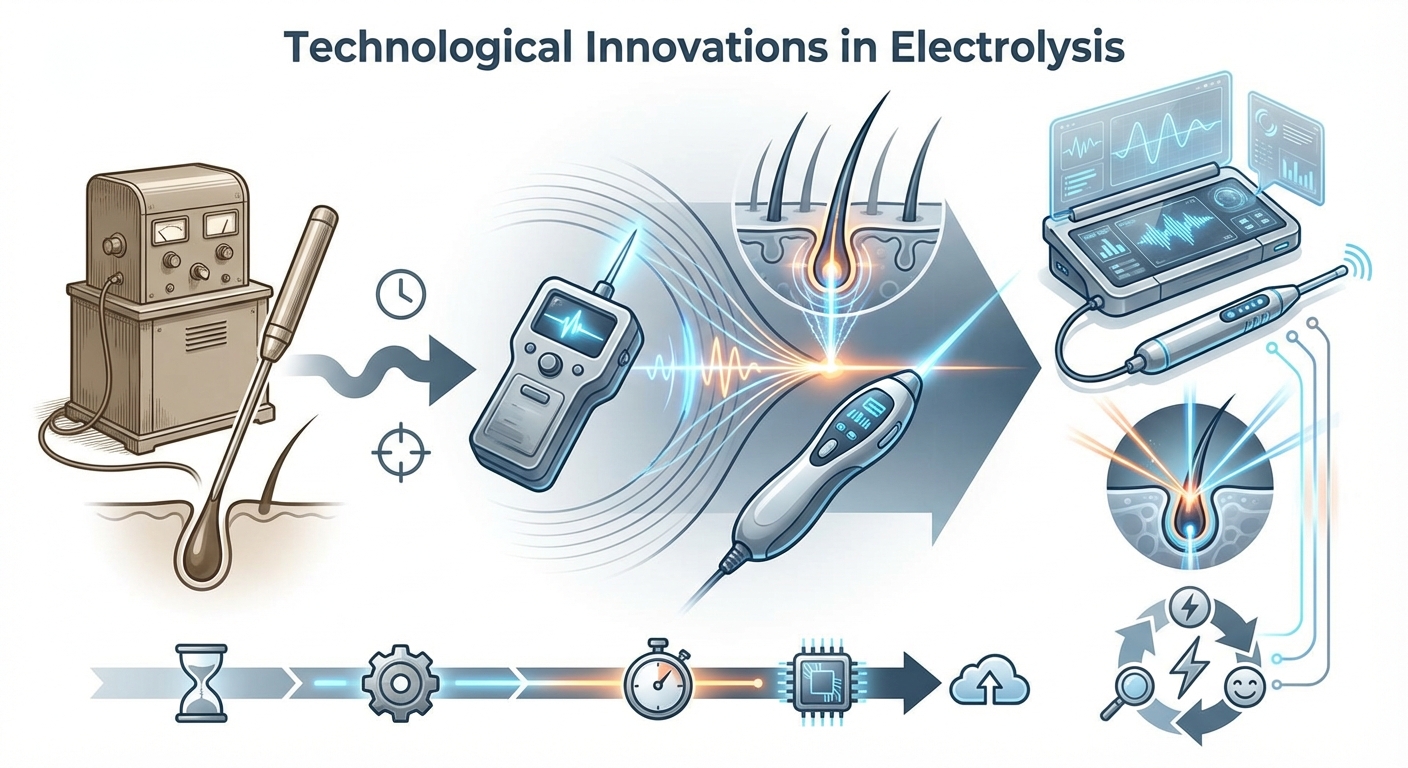
    Technological Innovations in Electrolysis
    Technological Innovations in Electrolysis – Visual Overview

    4. Technological Innovations in Electrolysis

    Electrolysis, a method for permanent hair removal first employed in 1875, has endured for over a century due to its fundamental efficacy in destroying hair follicles [54]. While the underlying principle of delivering electrical current to the hair follicle remains unchanged, the technology, particularly over the last two decades, has undergone significant transformation. Propelled by both scientific advancements and consumer demand for faster, more comfortable, and highly effective treatments, modern electrolysis devices are far more sophisticated than their predecessors. This section delves into the detailed technological innovations in electrolysis, exploring how high-frequency devices, computerized precision, and efficient multi-pulse/microflash methods have revolutionized treatment speed, comfort, and efficacy, ultimately enhancing client outcomes in San Antonio and beyond.

    4.1 The Evolution of Electrolysis Technology: From Direct Current to Advanced Radiofrequency

    The journey of electrolysis began with Dr. Charles E. Michel’s pioneering use of direct current (galvanic method) to remove an ingrown eyelash in 1875 [54]. This method, while effective, was notoriously slow, often requiring a minute or more per hair. Over time, thermolysis (also known as short-wave diathermy) emerged, utilizing alternating current (AC) at radiofrequencies to generate heat within the follicle, significantly speeding up the process to under a second per hair [34]. The blend method, combining both galvanic and thermolysis currents, further enhanced efficacy by leveraging the chemical and heat-based destruction mechanisms simultaneously. However, the most profound advancements in recent years stem from increasing the operating frequency of thermolysis devices and integrating smart, computerized controls.

    4.1.1 27 MHz High-Frequency Devices: Precision and Speed Amplified

    One of the most impactful technological innovations in modern electrolysis is the adoption of high-frequency devices operating at 27.12 MHz. This represents a significant leap from older machines that typically operated at 13.56 MHz [30]. Manufacturers of these advanced systems, such as Apilus, highlight their superiority, claiming they are “more efficient, rapid and comfortable than any other technology” [7]. The principle behind this enhancement lies in the physics of radiofrequency energy. Higher frequencies allow for extremely rapid oscillations of water molecules within the tissue, concentrating the heat generated more precisely at the tip of the probe and the base of the hair follicle [30]. This localized heating causes swift and complete coagulation of the follicular cells responsible for hair growth, minimizing thermal spread to surrounding tissues.

    The benefits of 27 MHz technology are multifold:

    • Increased Efficiency: The ultra-fast heating means that individual hairs can be treated in a fraction of a second. This drastically reduces the time required for each insertion, allowing electrologists to treat a greater number of hairs per session. This is a critical factor for both client convenience and clinic throughput [9].
    • Enhanced Precision: The highly localized thermal effect ensures that the destructive energy is contained within the follicle, sparing adjacent dermal tissues. This reduces the risk of skin irritation, redness, and potential scarring, which were more common concerns with older, less controlled thermolysis devices.
    • Improved Comfort: Because the energy delivery is so rapid and precise, clients report significantly less discomfort. The sensation is often described as a momentary heat or tingling, rather than a prolonged sting [34]. This enhanced tolerability means that longer sessions can be performed, leading to faster overall clearance, and a wider range of clients who might have previously found electrolysis too painful can now comfortably undergo treatment [34].
    • Reduced Skin Reaction: The precise targeting results in minimal superficial skin damage. This translates to less post-treatment redness, swelling, and scabbing, allowing clients to resume their normal activities more quickly and reducing the aftercare burden [34].

    The real-world impact of 27 MHz devices is evident in reports from clinics like the Austin Medical Electrolysis Clinic. They documented that with a new multipulse microflash protocol utilizing a 27 MHz device, they achieved approximately 91% hair reduction after just 6 treatments, a nearly twofold improvement compared to the ~50% reduction seen with their previous standard thermolysis method over the same number of sessions [9].

    4.2 Computerized Precision with Smart Probes and Intelligent Algorithms

    Beyond the raw frequency, modern electrolysis devices have integrated sophisticated computing power to optimize treatment parameters. This has ushered in an era of unprecedented precision and consistency.

    4.2.1 Intelligent Algorithms and Automated Adjustments

    Modern electrolysis machines are no longer simple power dials. They are equipped with intelligent algorithms that automatically adjust treatment settings in real-time. These algorithms can consider several factors to optimize energy delivery:

    • Skin Moisture Level: Electrical conductivity can be affected by skin hydration. Advanced devices can measure this and fine-tune the current to ensure consistent energy delivery regardless of variations in skin moisture.
    • Hair Thickness and Depth: Thicker, deeper hairs require more energy than finer, shallower ones. Smart probes, often paired with sophisticated software, can sometimes infer these characteristics and adjust the energy output accordingly, or allow electrologists to select pre-programmed settings tailored to specific hair types and body areas [8].
    • Impedance Measurement: Some cutting-edge systems can measure the electrical impedance within the follicle during insertion. This feedback mechanism allows the device to deliver precisely the right amount of energy needed to destroy the follicle, preventing both under-treatment (which leads to regrowth) and over-treatment (which can cause unnecessary tissue damage or discomfort).

    This level of automation significantly reduces the guesswork for the electrologist, improving the consistency and efficacy of treatments. Even less experienced practitioners can achieve excellent results by leveraging these smart presets, ensuring that each follicle receives optimal treatment the first time around [8].

    4.2.2 Touchscreen Interfaces and Pre-Set Programs

    The user experience for electrologists has also been streamlined. Modern machines feature intuitive touchscreen interfaces with pre-set programs for various body areas and different hair characteristics. This means:

    • Ease of Use: Practitioners can quickly select appropriate settings, reducing setup time and the potential for human error.
    • Reproducibility: Pre-set programs help standardize treatment across clients and even between different electrologists within a clinic, contributing to more predictable and consistent outcomes.
    • Training and Skill Transfer: The advanced functionalities make the learning curve for new electrologists less steep, as much of the complex parameter adjustment is handled by the machine’s intelligence.

    4.2.3 Smart Probes and Insulated Needle Technology

    The probes themselves have also seen advancements. Insulated probes, where the needle is coated with an insulating material except for the very tip, are a game-changer. This design feature:

    • Concentrates Energy: Ensures that the electrical current is delivered directly to the base of the follicle, where the growth cells are located, while minimizing energy dispersion to the upper layers of the skin.
    • Reduces Surface Trauma: By protecting the epidermis from unnecessary heat exposure, insulated probes significantly reduce post-treatment redness, swelling, and the tiny scabs that were once a common side effect of electrolysis [34].
    • Improves Client Comfort: Clients typically experience far less surface sensation and discomfort, leading to a more pleasant treatment experience [34].

    4.3 Efficient Multi-Pulse and Microflash Methods: Doubling Efficacy

    The drive for speed and thoroughness has led to the development of advanced treatment methodologies, specifically multi-pulse and microflash techniques, predominantly used with high-frequency thermolysis devices.

    4.3.1 Multiplex and Microflash Thermolysis

    Traditional thermolysis delivered a single, rapid pulse of energy to destroy the follicle. However, hair follicles are complex structures, and growth cells can be present at slightly different depths or locations within the follicular wall. Multi-pulse and microflash methods address this by delivering a rapid burst of multiple, extremely short pulses into the follicle with a single insertion of the probe [9]. This effectively creates a more comprehensive and thorough destruction of all the germinative cells.

    The “Microflash” technique, described by the Austin Medical Electrolysis Clinic as part of their Multipulse modality, exemplifies this innovation. By firing several micro-bursts of energy in quick succession, it ensures that the entire target area within the follicle is adequately coagulated [9]. The impact of this methodological shift is profound:

    • Dramatic Increase in Clearance Rates: As highlighted by the Austin Medical Electrolysis Clinic, the switch to a Multipulse Microflash protocol saw hair reduction nearly double, from approximately 50% to 91% after only 6 treatments [9]. This means clients are achieving near-complete hair clearance in significantly fewer overall sessions.
    • Reduced Regrowth: The more thorough destruction of the follicle cells ensures that treated hairs are far less likely to regrow, reinforcing electrolysis’s reputation as the only truly permanent hair removal method [6].
    • Faster Overall Treatment Time: While each individual probe insertion still takes a fraction of a second, the enhanced efficacy per treated hair means fewer retreatments are necessary over the entire course of therapy, leading to a shorter total treatment timeline for the client. This translates to faster achievement of permanent results.

    4.4 Improved Comfort and Client Outcomes through Innovation

    Beyond the technical specifications, the ultimate measure of these innovations lies in their impact on the client experience and outcomes. The advancements in 27 MHz technology, computerized precision, and multi-pulse methods collectively contribute to a significantly more comfortable, efficient, and effective treatment journey.

    4.4.1 Reduced Discomfort and Pain Perception

    The localized and rapid energy delivery of high-frequency and multi-pulse techniques, combined with insulated probes, fundamentally changes the sensation of electrolysis. Clients report less stinging and a more tolerable experience compared to older machines [34]. This is a critical psychological factor, as fear of pain is a common barrier to seeking electrolysis. The improved comfort broadens the appeal of electrolysis to a wider demographic, extending beyond just individuals with high pain tolerance [34].

    4.4.2 Minimized Side Effects and Faster Recovery

    The precision of modern electrolysis significantly reduces collateral damage to surrounding skin. Consequently, post-treatment side effects such as redness, swelling, and scabbing are greatly minimized and tend to resolve much faster, often within hours or a day [18]. This allows clients to return to their normal activities sooner, reducing downtime and making the treatment more convenient.

    4.4.3 Enhanced Efficacy and Predictable Permanence

    The primary goal of electrolysis is permanent hair removal, and technological advancements have made this goal more attainable and predictable. The higher clearance rates per session, as demonstrated by the Austin Medical Electrolysis Clinic’s 91% reduction after 6 treatments [9], mean clients see tangible results faster and require fewer overall sessions. This efficiency translates to significant cost and time savings for clients, reinforcing the value proposition of electrolysis as a permanent solution [11].

    The table below summarizes the key advancements and their impact on client experience:

    Technological InnovationImpact on Treatment SpeedImpact on ComfortImpact on Efficacy
    27 MHz High-Frequency DevicesSignificantly faster energy delivery per hair (fractions of a second)Highly localized heat, reduced thermal spread, less stinging sensationPrecise follicular destruction, minimized collateral damage
    Computerized Precision & Smart ProbesOptimized energy delivery reduces need for repeat insertionsAutomated settings prevent overtreatment, insulated probes reduce surface sensationConsistent, tailored energy for each follicle, higher first-pass destruction
    Multi-Pulse/Microflash MethodsMultiple bursts in one insertion, greater follicular destruction per probeRapid delivery minimizes perceived duration of discomfortUp to ~91% hair reduction in 6 sessions (vs. ~50% with older methods) [9]

    4.5 The Impact of Technological Innovations in San Antonio (2024-2025)

    The integration of these advanced electrolysis techniques is increasingly evident in markets like San Antonio. Local med-spas and clinics are recognizing the competitive advantage of offering state-of-the-art electrolysis, especially as consumer awareness of its unique benefits grows. For instance, Bio2 Laser Studio in San Antonio, historically a laser-focused establishment, expanded its services to include electrolysis in early 2026 [13]. The studio explicitly highlighted that this was to accommodate clients with “all hair colors and skin types,” which laser alone could not effectively treat, implying an investment in suitable advanced electrolysis equipment.

    This trend signifies a broader shift towards comprehensive, multimodal hair removal strategies. Clinics are no longer solely relying on one technology but are integrating the best capabilities of both laser and advanced electrolysis to provide optimal outcomes for every client’s unique needs. This integrated approach allows for:

    • Targeting All Hair Types: Electrolysis can treat blonde, grey, red, and fine vellus hairs that lasers cannot [44] [56].
    • Safety for All Skin Tones: Unlike some lasers, electrolysis is safe and effective on all Fitzpatrick skin types, from very fair to very dark, without the risk of pigmentation issues [56].
    • Finishing Laser Treatments: Electrolysis is often used to “clean up” the residual hairs that remain or are unaffected after a course of laser hair reduction, providing truly permanent results [56] [12].
    • Addressing Hormonal Hair: For conditions like PCOS, where hormonal fluctuations can stimulate new hair growth or render laser less effective, advanced electrolysis offers a definitive solution [17].

    In San Antonio, this means clients who might have previously been turned away or experienced suboptimal results from laser alone can now achieve complete and lasting hair removal. The case of Bio2 Laser Studio adding electrolysis services serves as a benchmark for local providers, illustrating the move towards inclusive cosmetic services that leverage the unique strengths of advanced electrolysis to ensure ultimate client satisfaction [13].

    4.6 Automation and Emerging Tools in Electrolysis

    While electrolysis remains fundamentally a manual skill requiring precise hand-eye coordination, the industry is seeing nascent developments towards automation and hybrid technologies, hinting at the future direction of the field.

    4.6.1 Robotic-Assisted Electrolysis (Future Prospects)

    Though not yet a widespread commercial reality, research and development are exploring robotic-assisted electrolysis. The goal is to enhance the speed and consistency of probe insertion, potentially reducing treatment times for electrologists and minimizing operator fatigue. Such systems would likely involve:

    • AI-Powered Follicle Identification: Advanced imaging and AI could help rapidly identify active hair follicles, optimizing the sequence of treatment.
    • Precision Insertion: Robotic arms could perform probe insertions with micro-precision, ensuring ideal depth and angle every time, further enhancing efficacy and reducing discomfort.
    • Human Supervision: It is highly probable that such systems would operate under the close supervision of a trained electrologist, who would monitor the process and intervene as needed, ensuring safety and adapting to individual client needs.

    While still in experimental stages, the potential for robotic assistance in electrolysis could drastically alter its scalability and accessibility in the long term.

    4.6.2 Blended Modalities and Electro-Optical Synergy

    Another area of innovation lies in combining different energy sources to create synergistic effects. Some devices are already exploring platforms that integrate laser and radiofrequency (RF) energy. In these systems, a laser pulse might first prime the follicle by causing initial damage or making it more receptive to subsequent energy. Then, an RF current, similar to that used in thermolysis, is delivered to achieve a more thorough and permanent destruction of the growth cells.

    This “electro-optical synergy” aims to combine the speed of laser with the permanent efficacy of electrical energy. While still evolving, these hybrid technologies suggest a future where a single pass with a device could achieve greater hair clearance with fewer sessions, bridging the gap between the speed of laser and the permanence of electrolysis.

    4.7 Safety Monitoring and Standards in the Age of Advanced Electrolysis

    Concurrent with technological advancements, there has been a significant emphasis on safety protocols and professional standards. Modern electrolysis machines often incorporate built-in safeguards, such as real-time feedback systems that prevent excessive current delivery if skin resistance drops too low, thereby preventing overtreatment and burns.

    Professional associations globally are updating their training curricula to instruct electrologists on the optimal use of these advanced machines. Best practices now emphasize:

    • Disposable Probes: Single-use, sterile probes are standard, drastically minimizing the risk of infection.
    • Strict Hygiene: Adherence to rigorous hygiene and sterilization protocols in clinics is paramount.
    • Client Education: Comprehensive client education about aftercare and realistic expectations for treatment timelines is crucial for optimal healing and satisfaction.

    The FDA’s enduring recognition of electrolysis as a “permanent” hair removal method comes with inherent oversight for device manufacturers and practitioners [6]. Consequently, the risk of serious complications like scarring, once a worry with less skilled practitioners or older equipment, is now exceedingly rare when advanced electrolysis is performed by a trained and certified professional [18]. Even in states like Texas, where electrologists are not state-licensed, leading clinics voluntarily adhere to national best practices and certifications, ensuring high standards of safety and efficacy [39].

    The continuous improvement in both technology and practitioner training ensures that advanced electrolysis provides effective results while maintaining an excellent safety profile, making it a reliable choice for permanent hair removal in 2024-2025.

    The continuous evolution of electrolysis technology, driven by innovations in high-frequency devices, computerized precision, and efficient multi-pulse methods, has profoundly enhanced the speed, comfort, and efficacy of permanent hair removal. These advancements are directly translating into improved client outcomes, characterized by faster clearance, reduced discomfort, and a higher degree of lasting permanence. This technological renaissance is positioning electrolysis not just as a traditional method, but as a cutting-edge solution for a diverse and growing clientele seeking definitive hair removal results.
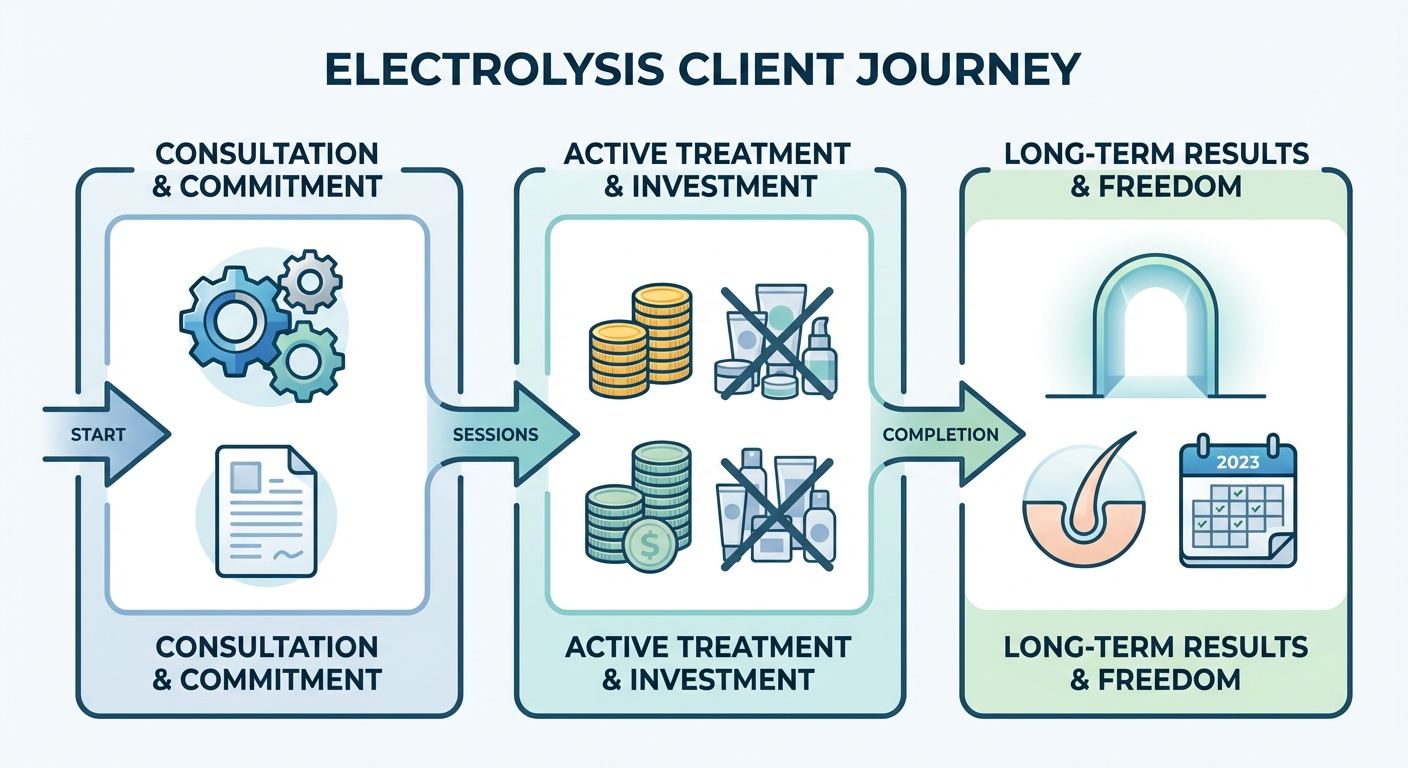
    Client Outcomes and Treatment Journey
    Client Outcomes and Treatment Journey – Visual Overview

    5. Client Outcomes and Treatment Journey

    The journey toward permanent hair removal is often a significant commitment for clients, entailing a series of treatments, financial investment, and diligent aftercare. However, for many, the prospective outcomes—lasting smoothness and freedom from constant hair management—represent a profoundly worthwhile investment in their confidence and convenience. This section provides a comprehensive overview of typical client experiences with advanced electrolysis techniques, detailing the number of sessions required, average costs in 2025, and expected results. It also juxtaposes the treatment commitment and long-term cost-effectiveness of electrolysis against other hair removal methods, including laser, shaving, and waxing, drawing on the latest research and market trends observed in 2024-2025.

    Customer Expectations and the Path to Permanence

    Achieving permanent hair removal through electrolysis is a process that demands patience and consistency. Unlike temporary methods that offer immediate but fleeting results, electrolysis targets individual hair follicles to permanently destroy their growth capabilities. This fundamental difference shapes the entire client journey, from initial consultation to final outcome.

    Understanding Treatment Duration and Sessions

    Clients embarking on an electrolysis treatment plan often underestimate the number of sessions required due to the cyclical nature of hair growth and the methodical, hair-by-hair approach of the technique. Hair grows in three main phases: anagen (growth), catagen (transitional), and telogen (resting). Electrolysis is most effective when hairs are in the active growth (anagen) phase, as the follicle is still attached to the blood supply, allowing the electrical current to effectively cauterize the dermal papilla responsible for hair nourishment. Since only a percentage of hairs in any given area are in the anagen phase at one time, multiple treatments are necessary to target all hairs as they cycle into this optimal stage. Research indicates that clients typically require about 8 to 16 electrolysis sessions per area to achieve complete and permanent results[7]. Dermatologists often estimate around 10 treatments on average for optimal outcomes on a specific area[7]. These sessions are usually spaced approximately four weeks apart, aligning with the typical hair growth cycles, ensuring that new anagen hairs are targeted as they emerge[10]. Larger treatment zones or areas with denser, hormonally-influenced hair (such as the chin or upper lip for individuals with PCOS) may necessitate more sessions, sometimes reaching up to 16 or more[10]. This commitment contrasts with laser hair removal, which often averages around 6 sessions[10]. However, laser treatments are generally for “permanent hair reduction” and may still require yearly touch-ups due to potential hair regrowth, particularly with hormonal shifts[11]. Electrolysis, on the other hand, aims for genuinely permanent results, meaning once a follicle is treated successfully, it is destroyed for good, and no further maintenance is needed for that specific hair[17]. This distinction is crucial for managing client expectations and reinforcing the long-term value of electrolysis.

    The Role of Advanced Electrolysis Techniques in Expediting Results

    Modern advancements in electrolysis technology have significantly improved treatment speed and efficacy, impacting the overall client journey. Technologies like microflash electrolysis, utilizing higher frequencies (e.g., 27 MHz radiofrequency), enable electrologists to treat hairs more rapidly and effectively. For instance, the Austin Medical Electrolysis Clinic reported a remarkable 91% hair reduction after just 6 sessions using a multipulse microflash technique, a significant improvement compared to the approximately 50% reduction observed with older thermolysis methods over the same number of sessions[13]. This nearly double efficiency means clients can achieve their permanent results in fewer total visits or with shorter treatment courses, enhancing satisfaction and increasing clinic throughput. These advanced machines, such as the Apilus xCell, deliver ultra-fast electrical pulses and often incorporate smart algorithms that auto-adjust energy output based on skin moisture levels and hair thickness[14]. This precision ensures optimal follicle destruction with minimal collateral tissue damage, leading to more consistent results and improved comfort for the client[15]. Insulated probes further concentrate the electrical current at the follicle’s base, reducing surface trauma and post-treatment irritation[44]. Such innovations shorten the overall treatment timeline and improve the client’s experience by reducing discomfort and visible side effects.

    Costs and Long-Term Value Proposition

    The financial aspect of permanent hair removal is a significant consideration for clients. While the upfront costs for treatments like electrolysis and laser can seem substantial, they often represent a long-term investment that can be more economical than a lifetime of temporary hair removal methods.

    Average Costs of Electrolysis in the U.S. (2025)

    As of 2025, electrolysis sessions in the U.S. typically range from **$40 to $200 per session**[12]. This wide range depends on various factors including:

    • Treatment Area Size: Smaller areas like the upper lip or eyebrows will generally cost less per session than larger areas like the back or legs.
    • Clinic Location: Prices can vary significantly between urban and rural areas, and between different states or regions.
    • Electrologist’s Experience: Highly experienced electrologists using advanced equipment may charge more.
    • Session Duration: Sessions are often billed by time (e.g., 15 minutes, 30 minutes, 1 hour).

    A full treatment course for a small area, such as the chin, might range from **$500 to $1,000** in total[12]. Considering the need for 8-16 sessions at an average of 30-minute intervals, the total investment for a permanent solution in a localized area can be significant.

    Comparative Cost-Effectiveness with Other Methods

    To truly understand the value proposition of electrolysis, it’s essential to compare its costs with other hair removal methods over a lifetime.

    MethodInitial Cost / Session Cost (2025 US)Frequency / DurationLong-Term Cost Estimate (Over 10 years)Permanence
    Electrolysis$40–$200 per session[12] (Total for area: $500–$2,000+)8–16+ sessions[7] (spread over 6-18 months)$500–$2,000+ (one-time investment per area)Permanent (FDA-approved)[4]
    Laser Hair Removal$45–$400 per session[18] (Total for package: $1,500–$2,500+)[19]6–8 sessions[11] (initial), then annual touch-ups$1,500–$2,500 (initial) + $200–$500/year (touch-ups) = $3,500–$7,500+Permanent Reduction (not 100% permanent)[30]
    Waxing (Professional)$30–$80 per session (per area)Monthly (12 times/year)$3,600–$9,600+Temporary (3-6 weeks)
    Shaving (DIY)$5–$20 per month (razors, creams)Daily/Weekly$600–$2,400+ (plus time cost)Temporary (1-3 days)

    As illustrated in the table, while electrolysis may appear more expensive upfront than temporary methods like shaving or waxing, its *permanent* nature makes it exceptionally cost-effective in the long run. The initial investment in a full course of electrolysis effectively eliminates recurring costs associated with these temporary methods. For instance, the ongoing expense and time commitment for regular waxing or the continuous purchase of shaving supplies accumulate significantly over years. A complete laser regimen, though initially priced higher than electrolysis for larger areas (e.g., $1,500–$2,500)[19], can necessitate ongoing touch-up sessions, adding to the cumulative cost. Thus, electrolysis, by offering a true “set it and forget it” solution, delivers unparalleled long-term value, freeing clients not just financially but also in terms of daily routines and mental load.

    Client Experience: Discomfort, Side Effects, and Recovery

    Understanding the client experience during and after electrolysis is crucial for managing expectations and ensuring high satisfaction. While often described as more precise and more tolerable than older methods, it’s not entirely without sensation or temporary side effects.

    Sensation and Pain Management

    Electrolysis targets each hair follicle individually, and clients typically feel a distinct sensation—often described as a tiny heat, tingling, or prickling—as the electrical current is delivered[20]. The intensity of this sensation varies significantly based on individual pain tolerance, the body area being treated (some areas are more sensitive than others), and the skill of the electrologist. Modern advancements, particularly high-frequency machines with ultra-fast pulses and insulated probes, have contributed to significantly reducing discomfort compared to older techniques[15]. Many clinics employ strategies to enhance client comfort:

    • Topical Anesthetic Creams: Lidocaine-based numbing creams are commonly applied 30-60 minutes before sessions, especially for sensitive areas like the upper lip or bikini line[21].
    • Cooling Measures: Some electrologists use ice packs or chilled air devices during the treatment to help minimize discomfort.
    • Adjustable Settings: Skilled practitioners will fine-tune the machine’s intensity and duration settings to align with the client’s comfort level while maintaining efficacy.

    It’s also worth noting that the perceived pain often decreases as treatment progresses, not only due to physiological adaptation but also because the hair becomes sparser, meaning fewer active follicles are treated per session.

    Typical Side Effects and Healing Process

    Immediately following an electrolysis session, clients can expect some temporary side effects localized to the treated area. These typically include:

    • Redness and Swelling: The skin around each treated follicle may appear red and mildly swollen, similar to small mosquito bites. This is a normal inflammatory response and usually subsides within a few hours to a day or two[20].
    • Pinpoint Scabs or Crusts: Tiny scabs or crusts may form over the treated follicles within 24-48 hours. These are part of the natural healing process and indicate that the follicle has been successfully treated. It is crucial for clients to avoid picking these scabs to prevent scarring or infection[23].
    • Minor Bruising: In rare cases, especially in delicate areas or with very fine skin, minor bruising can occur, which typically resolves within a week.

    Serious complications like hyperpigmentation (darkening of the skin), hypopigmentation (lightening of the skin), or scarring are exceedingly rare when electrolysis is performed by a trained and experienced professional using proper techniques and sterile equipment[20]. The use of disposable probes is standard to ensure hygiene. Proper aftercare, which typically includes applying soothing agents like aloe vera, avoiding direct sun exposure, and refraining from harsh exfoliants for a few days, is vital to promote optimal healing and prevent adverse reactions[24].

    Client Outcomes: Efficacy, Satisfaction, and Quality of Life Improvements

    The ultimate measure of success for any permanent hair removal method lies in its efficacy and the long-term satisfaction of the client. Electrolysis, with its FDA-approved status as a permanent solution, consistently delivers high rates of hair elimination and significant improvements in clients’ quality of life.

    High Efficacy and True Permanence

    Electrolysis boasts the highest success rate per hair of any removal method. Over 90% of successfully treated follicles will not produce new hair growth, and any follicles that show renewed activity can be retreated until permanently disabled[17]. This targeted, precise destruction of individual hair growth cells ensures that genuinely permanent hair removal is attainable for all hair types and skin tones, unlike laser, which relies on pigment and is more effective on dark hair against light skin[33]. This high efficacy is particularly beneficial for:

    • Individuals with Light/Fine Hairs: For blonde, red, gray, or fine vellus hairs that lasers struggle to treat due to lack of pigment, electrolysis is the only effective permanent method[32].
    • Hormonal Hair Growth: Conditions like Polycystic Ovary Syndrome (PCOS) can cause stubborn, hormone-driven hair growth (hirsutism) that often responds poorly to laser treatments and can sometimes even induce paradoxical growth[16]. Electrolysis becomes the definitive solution for these cases, though more sessions might be required to manage ongoing hormonal stimulation.
    • Pre-Surgical Clearance: For transgender individuals undergoing gender-affirming surgeries, 100% hair clearance at the surgical site is often medically necessary to prevent post-operative complications like internal hair growth or infection. Electrolysis is vital to ensure complete removal, especially after initial debulking with laser[25].

    Client Satisfaction and Quality of Life Impact

    Numerous reports and testimonials underscore the profound positive impact of permanent hair removal on clients’ lives. While laser hair removal patients report high satisfaction, valuing the significant reduction in hair density and ingrown hairs[26], electrolysis clients often describe a “life-changing” transformation. The ultimate freedom from daily shaving, painful waxing, or constant plucking translates into tangible improvements in confidence, self-esteem, and daily convenience. Jackie, an individual with PCOS who documented her electrolysis journey online, exemplifies this impact. After years of struggling with excessive facial hair that laser treatments failed to resolve and even exacerbated, electrolysis ultimately provided her with a hair-free chin and upper lip after approximately three years of consistent treatment[68]. Her experience demonstrates that while the process can be lengthy, the permanent resolution of a deeply personal and persistent aesthetic concern leads to immense satisfaction. This sentiment is echoed by many, particularly those with conditions causing unwanted hair, who gain back a sense of control and comfort in their own skin.

    San Antonio: A Case Study in Integrated Hair Removal Services (2024–2025)

    The hair removal market in San Antonio, Texas, mirrors broader national and global trends, with local providers increasingly adopting a multi-modal approach to meet diverse client needs and maximize outcomes.

    The Rise of Integrated Practices

    San Antonio’s aesthetic clinics are evolving to offer both laser and advanced electrolysis under one roof, recognizing that no single method is universally superior. A prime example is Bio2 Laser Studio, a prominent med-spa that, by February 2026, expanded its services to include electrolysis[5]. This strategic decision was driven by client demand and the understanding that electrolysis could address the limitations of laser-only treatments, such as ineffectiveness on light-colored hair or certain skin tones[5]. By integrating electrolysis, Bio2 Laser Studio aims to provide comprehensive, inclusive care, catering to clients of all hair colors and skin types[5]. This approach allows for personalized treatment plans, often combining laser for initial hair reduction and electrolysis for meticulous, permanent clearance of residual hairs.

    Diverse Clientele and Tailored Outcomes

    San Antonio’s diverse population, including a significant Hispanic community, presents a broad spectrum of hair types and skin tones, necessitating versatile hair removal solutions. While laser remains popular for its speed on larger areas, electrologists in the city report growing demand for electrolysis from clients with specific needs:

    • Women with Hormonal Hair: Electrolytic removal of facial hair (e.g., chin, upper lip) is a growing service for women experiencing hirsutism due to PCOS or hormonal changes.
    • Men Seeking Grooming Refinement: The rise in male grooming is evident in San Antonio, with men increasingly seeking permanent solutions for beard lines, back, and chest hair. Many opt for initial laser debulking followed by electrolysis for precision sculpting and permanent results.

    This combination approach facilitates excellent outcomes, providing immediate hair reduction from laser and ensuring total permanence with follow-up electrolysis. Clients often transition between the two modalities, benefiting from the strengths of each. For example, a client with dense dark arm hair might undergo a few laser sessions for bulk removal and then switch to electrolysis for the remaining 15-20% of hairs, including any finer, lighter ones that laser couldn’t target. This collaborative and client-centric approach by San Antonio practitioners underscores a commitment to optimal, lasting results.

    Client Education and Professional Standards

    Effective client education is an important element of the successful treatment journey in San Antonio. Given that Texas has historically not licensed electrologists at the state level (though this may be subject to change)[46], many local electrology professionals proactively build trust through transparent communication and adherence to national best practices and certifications. Clinics emphasize explaining the hair growth cycle, the necessity of multiple sessions, and realistic timelines (often 12-18 months for complete clearance in an area). This educational focus leads to better client adherence to treatment plans and ultimately, higher satisfaction rates. Clients who fully understand the process are more patient and appreciative of the permanent results, frequently becoming enthusiastic advocates for their chosen provider.

    Conclusion

    The future of permanent hair removal, as seen through the lens of advanced electrolysis techniques and client outcomes in San Antonio for 2024-2025, is characterized by innovation, specialization, and comprehensive care. Advances in electrolysis technology, such as high-frequency microflash devices, have dramatically improved efficacy and comfort, reducing the overall treatment burden for clients. While requiring a greater time commitment upfront compared to laser hair removal, electrolysis delivers unparalleled permanence and long-term cost-effectiveness. The increasing integration of electrolysis into med-spas and its vital role for diverse client needs—including those with specific hair/skin types or medical requirements—highlights its indispensable position in the evolving aesthetic market. Clients completing their electrolysis journey report profound improvements in confidence and quality of life, affirming the value of this lasting investment. The San Antonio market exemplifies these trends, with local businesses adapting to offer integrated solutions that prioritize individualized care and deliver truly permanent hair removal results for an increasingly diverse clientele. The next section will delve into the regulatory landscape governing electrolysis and laser hair removal, examining current standards, licensing requirements, and consumer protection measures.
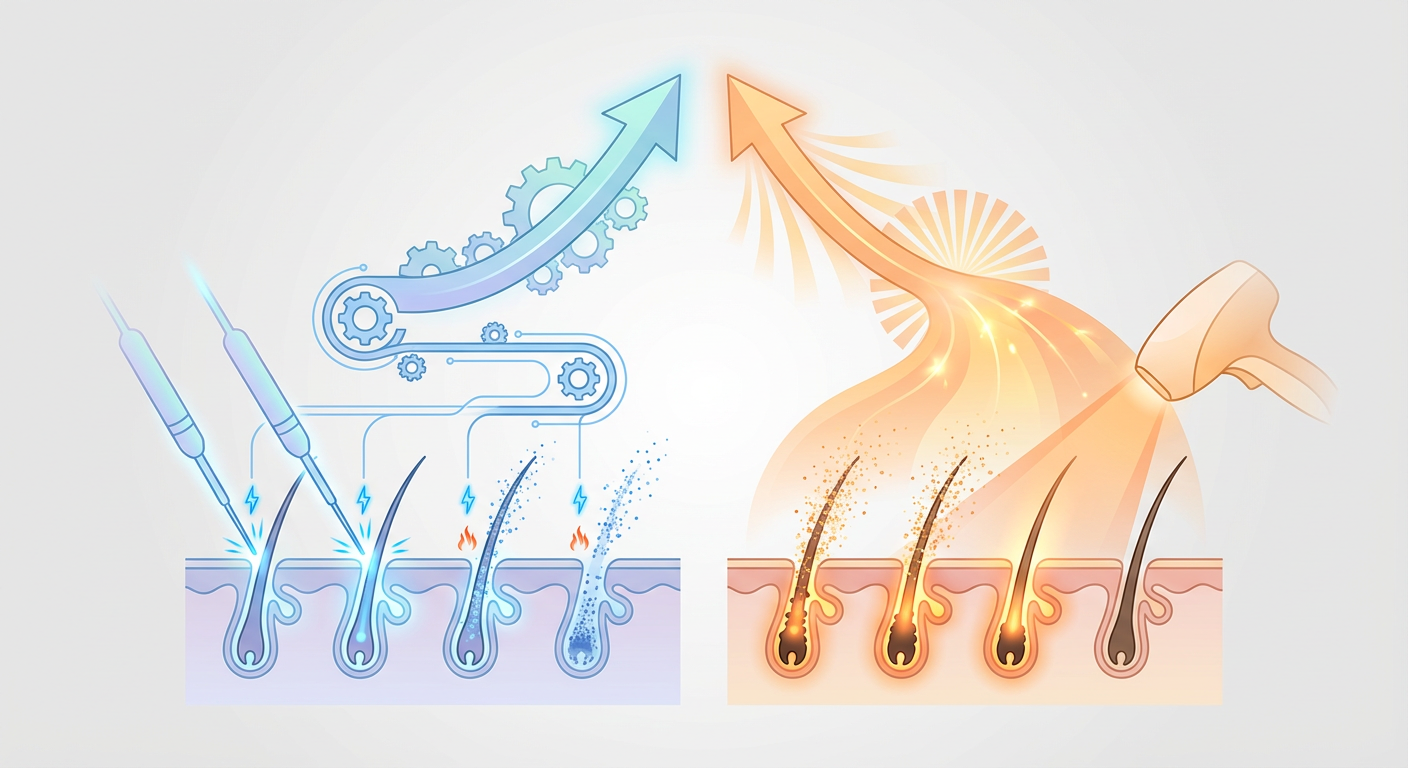
    Electrolysis vs. Laser: A Comparative Analysis
    Electrolysis vs. Laser: A Comparative Analysis – Visual Overview

    6. Electrolysis vs. Laser: A Comparative Analysis

    The pursuit of smooth, hair-free skin has driven innovation in cosmetic procedures for centuries, culminating in advanced permanent and long-term hair removal methods. Among these, electrolysis and laser hair removal stand out as the most prominent professional treatments. In the dynamic hair removal market, projected to escalate from an estimated **$4.5 billion in 2024 to over $11 billion by 2033** globally, fueled by rising aesthetic awareness and social media influence, understanding the distinct capabilities and limitations of each method is paramount for both practitioners and clients alike [1], [2]. While both modalities aim to reduce unwanted hair, their mechanisms, suitability for different hair and skin types, treatment speeds, and ultimately, their long-term outcomes, differ significantly. This section will delve into a head-to-head comparison of electrolysis and laser hair removal, dissecting their respective strengths and limitations in achieving permanence, their applicability across diverse client profiles, the practicalities of treatment including coverage speed and pain levels, and their crucial roles in specialized cases like Polycystic Ovary Syndrome (PCOS) or gender-affirming care. Recognizing these distinctions is essential for making informed decisions in an increasingly competitive and technologically advanced aesthetic landscape.

    6.1. Defining Permanence: FDA Classifications and Clinical Outcomes

    The understanding of “permanence” in hair removal is a critical differentiator between electrolysis and laser hair removal, directly influencing client expectations and outcomes. The U.S. Food and Drug Administration (FDA) plays a pivotal role in clarifying this distinction, affecting how these treatments are marketed and perceived [25].

    6.1.1. Electrolysis: The Only FDA-Approved Permanent Method

    Electrolysis holds a unique position as the **sole hair removal method officially recognized by the FDA as “permanent”** [3], [25], [26]. This classification is attributed to its mechanism of action: electrolysis directly destroys the hair growth cells within each individual hair follicle using a fine probe that delivers an electrical current [26]. This targeted destruction ensures that once a follicle is successfully treated, it is rendered incapable of producing hair ever again. The Cleveland Clinic affirms this, stating that properly performed electrolysis permanently destroys hair growth cells, ensuring treated hairs do not regrow [26]. This implies a near-100% success rate per follicle, meaning each treated hair is permanently eliminated [34]. The history of electrolysis dates back to **1875**, when Dr. Charles E. Michel, a St. Louis ophthalmologist, first used it to remove an ingrown eyelash [42]. This foundational concept of using electricity to destroy a hair follicle remains the basis of modern electrolysis, despite significant advancements in precision and comfort over the past 150 years [42].

    6.1.2. Laser Hair Removal: Permanent Hair Reduction

    In contrast, laser hair removal devices are classified by the FDA for **”permanent hair reduction,” not full removal** [3], [25]. Lasers work by emitting concentrated light that is absorbed by the pigment (melanin) in the hair follicle. This absorbed light converts to heat, damaging the follicle and impeding future hair growth [45]. While highly effective, laser treatments typically achieve around **70% to 90% reduction in hair regrowth** for the average patient after a full course of treatment [33]. Many patients experience a “permanent reduction,” but usually not 100% elimination. Some fine hairs may remain or regrow slowly, especially under hormonal influences [11], [45]. Consequently, maintenance sessions, often annually, may be required to address any regrowth and maintain optimal results [11]. This difference explains why electrolysis is frequently utilized to “finish off” the last stubborn hairs after laser therapy, aiming for complete removal [13], [46].

    6.1.3. Treatment Session Requirements

    The number of sessions required also highlights the difference in permanence and efficacy: * **Electrolysis:** Typically, **8 to 16 electrolysis sessions** are needed per area for complete removal, spaced approximately 4 weeks apart [8], [9], [27], [29]. Dermatologists estimate around **10 treatments** on average for optimal results [28]. While this can seem like a longer process upfront, once an area is fully cleared via electrolysis, no further maintenance is generally needed outside of addressing new hormonal growth [10]. * **Laser Hair Removal:** A full course of laser hair removal often averages around **6 sessions** [10], though more may be required. While offering quicker initial results, the need for potential yearly touch-ups makes it a long-term reduction strategy rather than a permanent eradication [12]. Many clients see noticeable thinning after just 2-3 sessions [48]. In essence, while laser hair removal offers significant long-term reduction with greater speed on large areas, electrolysis provides the definitive, permanent removal of individual hairs, making it the preferred choice for those seeking absolute hair elimination [25], [44].

    6.2. Suitability for Various Hair and Skin Types

    The effectiveness of hair removal methods is heavily contingent upon the client’s hair color, hair texture, and skin tone. This is where electrolysis and laser hair removal diverge significantly in their versatility.

    6.2.1. Hair Color and Texture

    * **Laser Hair Removal:** Laser technology fundamentally relies on the principle of selective photothermolysis, meaning it targets pigment (melanin) in the hair follicle [45]. This makes laser hair removal most effective on individuals with **coarse, dark hairs against fair skin**, where there is a strong contrast for the laser to effectively identify and heat the follicle [45]. Conversely, lasers struggle to treat lighter hair colors such as **blonde, red, gray, or white hairs** because these lack sufficient melanin to absorb the laser’s energy [4], [5], [44]. Fine vellus hairs also present a challenge for lasers. * **Electrolysis:** Electrolysis is a truly universal hair removal method because its efficacy is **independent of hair color or texture** [4], [44]. By inserting a fine probe directly into each hair follicle and delivering an electrical current, electrolysis bypasses the need for pigment altogether [44]. This means it can permanently remove any hair, whether it’s a prominent black hair, a fine blonde peach fuzz, or even an all-white mustache hair [44]. This advantage makes electrolysis invaluable for clients whose hair characteristics preclude them from successful laser treatment.

    6.2.2. Skin Tone

    * **Laser Hair Removal:** The interaction between laser light and skin pigment is a crucial consideration for safety and effectiveness. Lasers can be used on a range of skin tones, but require caution, particularly on darker skin types. Older or less versatile laser systems primarily targeted lighter skin tones (Fitzpatrick types I-III) due to the risk of hyperpigmentation (darkening of the skin) or hypopigmentation (lightening) on darker complexions, as the laser can inadvertently target melanin in the skin rather than just the hair [45]. * Advances in laser technology, such as Nd:YAG lasers (operating at 1064 nm wavelength), have made laser hair removal safer and more effective for darker skin tones (Fitzpatrick types IV-VI) [44], [45]. However, even with these advancements, a highly skilled and experienced technician is crucial to minimize risks on darker skin [44]. * **Electrolysis:** Electrolysis is considered **safe and effective for all skin tones** [5]. Because it delivers electrical current directly into the follicle rather than relying on light absorption by melanin in the skin, it eliminates the risk of pigmentary changes associated with laser treatment on darker complexions [5], [44]. This makes electrolysis a crucial solution for individuals with darker skin who may not be suitable candidates for all laser types or who face potential risks from laser hair removal. As Bio2 Laser Studio in San Antonio noted, adding electrolysis allows them to treat “all hair colors and skin types,” filling crucial gaps where lasers fall short [5], [17].

    FeatureElectrolysisLaser Hair Removal
    FDA ClassificationPermanent Hair Removal [3]Permanent Hair Reduction [3]
    MechanismDirect electrical current destroys follicle [26]Light energy targets melanin, damaging follicle [45]
    Hair Color SuitabilityAll hair colors (blonde, red, gray, white, dark) [4], [44]Most effective on dark hair, struggles with light/red/gray [45]
    Skin Tone SuitabilitySafe for all skin tones [5], [44]Effective on light to medium skin; specific lasers for dark skin (Nd:YAG) [44]
    Number of SessionsTypically 8-16 for complete clearance [8]Typically 6-8 for significant reduction, may need touch-ups [10]
    SpeedSlow, treats one hair at a time [47]Fast, covers large areas quickly [47]
    Pain LevelTingling/heat sensation, can be sensitive [39]“Snapping rubber band” sensation, often with cooling [38]

    6.3. Coverage Speed and Pain Levels

    Beyond the fundamental differences in permanence and suitability, practical considerations like treatment speed and perceived pain levels significantly impact a client’s choice and experience.

    6.3.1. Coverage Speed

    * **Laser Hair Removal:** Speed is arguably one of laser hair removal’s greatest advantages, especially for larger body areas. Laser devices utilize a wider treatment “spot size” and can deliver multiple pulses per second, allowing them to cover broad patches of skin efficiently [47]. A session for a large area such as full legs or an entire back can often be completed in under an hour [47]. This rapid coverage makes it an attractive option for clients seeking to reduce hair over extensive areas quickly. Dr. Brendan Camp, a dermatologist, notes that laser “quickly zaps larger sections” [47]. * **Electrolysis:** By design, electrolysis is a meticulous, hair-by-hair process. As each individual hair follicle must be targeted with a fine probe, it is inherently more time-consuming [47]. Clearing a large area like full legs could necessitate dozens of hours of work, spread across many appointments [47]. However, recent advancements in electrolysis technology, such as higher-frequency 27 MHz devices and Multiplex Microflash techniques, have significantly improved treatment speed and efficiency per follicle [6], [7], [31], [51]. One clinic reported achieving 91% hair reduction after just 6 sessions using a modern microflash method—nearly double the clearance of older techniques over the same period [7], [31]. Despite these improvements, electrolysis still remains a slower process for extensive areas compared to laser.

    6.3.2. Pain and Sensation

    Perceived pain is subjective and varies greatly among individuals, but both methods come with distinct sensations: * **Laser Hair Removal:** Pain associated with laser hair removal is commonly described as a “snapping rubber band” sensation or a brief stinging and heat with each pulse [38]. Modern laser devices often incorporate integrated cooling systems (such as chilled sapphire tips, air cooling, or cryogen sprays) that provide immediate relief, mitigating discomfort [38]. While the flashes can be intense, the overall duration of discomfort per session, especially for large areas, is relatively short due to the faster coverage [40]. * **Electrolysis:** The sensation during electrolysis is often described as a tiny **heat or tingling** within each follicle as the electrical current works [15]. Because it involves individual insertions, sensitive areas can become quite tender over the course of a session. To manage discomfort, topical numbing creams (e.g., lidocaine) are frequently applied before electrolysis treatments [39]. Technological advancements, such as higher-frequency machines and insulated probes, have made modern electrolysis more comfortable than older methods by localizing the heat effect and protecting surrounding skin [6], [52], [53], [54]. This enhanced comfort has broadened the appeal of electrolysis to a wider range of clients [40]. For extensive areas, many practitioners recommend **laser hair removal for initial “debulking”** to quickly reduce a significant volume of hair, followed by electrolysis to meticulously clear any remaining or resistant hairs [13]. This hybrid approach combines the speed of laser with the definitive permanence of electrolysis, offering a balanced solution for many clients.

    6.4. Roles in Special Cases: PCOS and Gender-Affirming Care

    Beyond general cosmetic hair removal, both electrolysis and laser play distinct, often complementary, roles in specific medical and personal circumstances. The efficacy of each method becomes particularly critical in cases like Polycystic Ovary Syndrome (PCOS) and gender-affirming care, where hair growth patterns or the need for absolute clearance dictate the treatment choice.

    6.4.1. Polycystic Ovary Syndrome (PCOS)

    PCOS is a common endocrine disorder affecting an estimated **20% of women in India** alone, frequently leading to hirsutism—excessive hair growth on the face and body [17]. The hair associated with PCOS is often fine, diffuse, and hormone-driven, making it particularly challenging to treat effectively. * **Laser Hair Removal and PCOS:** Lasers frequently struggle with the finer hair types seen in PCOS. Because laser efficacy depends on targeting pigment in coarse hair, fine, lighter hairs are less responsive [17]. Moreover, there have been documented instances of **paradoxical hair growth** where laser treatments on fine hormonal hair can, in rare cases, inadvertently stimulate more hair growth rather than reducing it [17], [41]. This phenomenon, highlighted by social media advocates like ‘Jackie’ (@Your_Hairy_Godmother), makes laser a less reliable option for many PCOS patients [59], [60]. * **Electrolysis and PCOS:** Electrolysis is generally the recommended and most effective treatment for PCOS-related hair growth [17]. Its ability to treat any hair color or texture and directly destroy the follicle cells makes it ideal for systematically eliminating these hormone-stimulated hairs. While new hairs may emerge over time due to ongoing hormonal influences, electrolysis can permanently remove existing follicles, providing definitive results where lasers fall short [17]. Jackie’s case is a prime example: after years of unsuccessful laser treatments that worsened her condition, electrolysis ultimately provided her with a completely hair-free chin and upper lip after nearly 3 years of consistent sessions [59], [60].

    6.4.2. Gender-Affirming Care

    For individuals undergoing gender-affirming transitions, permanent hair removal often plays a critical role, particularly in preparation for surgeries or to align physical appearance with gender identity, such as for transgender women seeking a smooth face. * **Combined Approach for Surgical Preparation:** The UCSF Gender Affirming Health Program provides guidelines that advocate a combined approach for hair removal in transgender patients [36], [64]. For areas requiring absolute hair clearance before surgery (e.g., graft sites for vaginoplasty), even a few remaining hairs can lead to complications like internal hair growth post-op [19], [41], [64]. * **Laser First (Debulking):** If the hair is dark and dense, laser hair removal is often used as a first-line treatment for **rapid bulk reduction** [35], [64]. This can significantly reduce the overall treatment time and cost by quickly eliminating a large percentage of hair. * **Electrolysis Second (Finishing):** Following laser, **electrolysis is then crucial to ensure 100% clearance** of any remaining hairs, including fine, light, or resistant follicles that the laser missed [19], [35], [64]. This meticulous second stage with electrolysis is vital for preventing post-operative complications and achieving the desired aesthetic outcome [19]. UCSF guidelines suggest that each method alone yields about **85-90% effectiveness**, but combining them provides the best possible result for completely hair-free skin [37], [65]. * **Facial Hair for Transgender Women:** For transgender women, facial hair removal is frequently a priority. While laser can significantly reduce dark facial hair, electrolysis is often indispensable for achieving lasting smoothness, especially for light-colored hairs or residual stubble, and for critically important areas like the upper lip, chin, and jawline where complete removal is desired for congruence with gender identity. In both PCOS and gender-affirming care, clients often exhibit a strong motivation for permanent hair removal, which helps them adhere to the rigorous treatment schedules required for electrolysis. These cases underscore that while laser offers efficiency, electrolysis remains the gold standard when absolute permanence and versatility across all hair and skin types are non-negotiable.

    6.5. Cost Analysis and Long-Term Value

    The financial investment in permanent hair removal is a crucial factor for clients. A direct comparison of session costs and the overall investment for a complete treatment course reveals different economic models for electrolysis and laser hair removal, emphasizing long-term value over initial outlay.

    6.5.1. Session Costs (USA, 2025)

    * **Electrolysis:** The average cost for an electrolysis session in the U.S. as of 2025 ranges from approximately **$40 to $200 per session** [12], [30]. This variability depends on factors such as the size of the area being treated (e.g., upper lip vs. chin), the clinic’s location, and the practitioner’s experience. Given that multiple sessions are required (typically 8–16 [8]), a full course for a smaller area like the upper lip or chin might total approximately **$500–$1,000** [30]. * **Laser Hair Removal:** Laser hair removal sessions generally range from **$45 to $400 per session** [30]. Similar to electrolysis, pricing is influenced by the treated area, provider, and geographical location. However, because lasers cover larger areas more quickly, the cumulative cost for a full treatment package for a significant area (like full legs) can be higher upfront, potentially reaching **$1,500–$2,500** [14], [30].

    6.5.2. Long-Term Cost-Effectiveness

    While initial costs for both advanced methods can seem substantial compared to temporary hair removal solutions (shaving, waxing), their long-term cost-effectiveness is a significant draw. * **Electrolysis:** Although electrolysis requires more sessions and thus a higher cumulative cost for larger areas than laser, its **truly permanent results** mean that once treatment is complete, there are generally no ongoing expenses for that treated area [10]. This negates the recurring costs of razors, shaving creams, waxing appointments, or depilatory products over a lifetime. This one-time investment for permanent hair removal can be highly cost-effective in the long run. * **Laser Hair Removal:** While a full laser regimen for a large area might cost **$1,500–$2,500**, it can still prove cheaper than years of traditional hair removal methods [14]. However, the caveat is that laser often requires occasional maintenance sessions for touch-ups [11], which adds to the long-term cost. Despite this, the convenience and significant reduction in daily grooming make it a worthwhile investment for many.

    6.5.3. Market Dynamics and Investment Trends

    The growing global hair removal market, projected to more than double from $4.5 billion in 2024 to $11.2 billion by 2033 [1], [2], indicates a strong consumer willingness to invest in lasting solutions. * The **laser hair removal market** alone reached **$1.0 billion in 2023** and is projected to skyrocket to **$7.7 billion by 2035** [22], [23], [67], demonstrating robust growth (18.3% CAGR). This signifies a strong consumer demand for long-term reduction options. * The **electrolysis hair removal market**, though smaller at an estimated **$891.8 million in 2024**, is also forecast to reach **$1.4 billion by 2034** with a steady 5.2% CAGR [24], [66]. This consistent growth shows a solid demand for truly permanent solutions, particularly among clients for whom other methods are insufficient. The general trend shows consumers are increasingly valuing long-term convenience and efficacy over lower upfront costs associated with temporary methods. Marketing strategies often frame these professional treatments as an “investment in oneself” that saves time, effort, and money over a lifetime [57].

    6.6. Client Outcomes: Efficacy, Satisfaction, and Long-Term Impact

    Evaluating client outcomes involves assessing the efficacy of hair removal, client satisfaction levels, and the overall long-term impact on their lives, including side effects and psychological well-being.

    6.6.1. Efficacy and Success Rates

    * **Electrolysis:** With modern techniques, electrolysis boasts a very high success rate per follicle, over **90% of treated follicles** will not produce hair again [51]. Those that do can be re-treated. The goal of electrolysis is **100% permanent hair removal** in a given area [26], [34]. Clinic data supports this: the Austin Medical Electrolysis Clinic, using advanced Multiplex Microflash methodology, reported up to **91% hair reduction after just 6 treatments** for certain areas [7]. This demonstrates that complete hair-free results are realistic with dedicated treatment. * **Laser Hair Removal:** A full course of laser hair removal typically achieves **60–90% reduction** in hair regrowth [33]. While significant, complete eradication is less common. The remaining hairs are often finer and lighter. Many clients find this level of reduction highly satisfactory, as it eliminates the need for daily shaving, but it does not promise complete hairlessness [33].

    6.6.2. Client Satisfaction

    Both methods demonstrate high client satisfaction, albeit for different reasons and target outcomes: * **Laser Hair Removal:** Surveys show high satisfaction rates for laser hair removal, with one reporting **94% of patients** being satisfied after completing treatment [18], [57]. Clients appreciate the substantial reduction in hair density, the smoother skin, and the freedom from frequent shaving or waxing. * **Electrolysis:** While harder to quantify with large-scale surveys, electrolysis caters to specific, often deeply motivated, client needs. Its ability to provide true permanence for all hair types and skin tones means it can be life-changing. For example, individuals with PCOS finally achieving hair-free skin, or transgender clients undergoing facial hair removal, often report immense relief and improved self-confidence [17], [59], [60]. The emotional and psychological benefits derived from finally eliminating chronic unwanted hair are a major driver of satisfaction.

    6.6.3. Side Effects and Recovery

    Both procedures are generally safe when performed by trained professionals, with mild, temporary side effects being common. * **Laser Hair Removal:** Immediately after a laser session, clients may experience mild redness and swelling around follicles, often resembling mosquito bites, which typically resolves within hours [15], [55]. Temporary pigment changes (darkening or lightening of skin) can occur but are usually transient and can be minimized with proper technique and sun protection [55]. * **Electrolysis:** Electrolysis often results in temporary redness and slight swelling for a day or two, and tiny scabs or pinpoint crusts may form as follicles heal [15], [56]. These typically disappear within days. Serious complications or scarring are rare with skilled practitioners and proper aftercare [16], [57].

    6.6.4. Pain Management and Comfort

    Pain tolerance is subjective, but significant advancements have been made in managing discomfort for both methods. * **Laser Hair Removal:** Many modern lasers incorporate cooling systems to minimize pain [38]. Topical numbing creams can also be used, especially for sensitive areas. * **Electrolysis:** Numbing creams are commonly used during electrolysis to enhance comfort [39], [58]. Advanced electrolysis machines with higher frequencies and insulated probes like the Apilus 27 MHz devices are designed to minimize discomfort compared to older equipment [6], [52], expanding its appeal to a broader client base [40]. Ultimately, the long-term impact for clients who complete their chosen treatment plan is overwhelmingly positive. Whether it’s significantly reduced hair with laser or totally eliminated hair with electrolysis, clients report enhanced confidence, convenience, and a better quality of life [57].

    6.7. San Antonio Spotlight: Local Trends and Integrated Approaches (2024-2025)

    The aesthetic market in San Antonio reflects the broader national and global trends in permanent hair removal, with a growing emphasis on comprehensive solutions that integrate both electrolysis and laser technologies. This integrative approach is becoming increasingly common to address the diverse needs of a varied client base.

    6.7.1. Integrated Services in Clinics

    San Antonio service providers are recognizing the limitations of offering only one modality, especially given the diverse demographics of the region. A prime example is **Bio2 Laser Studio**, a prominent med-spa in San Antonio. Historically focused on laser hair removal, Bio2 announced in **February 2026** its decision to expand services to include electrolysis [19], [62]. This strategic move was directly driven by client demand for addressing hair types and skin tones not optimally treated by laser, such as very light hair or dark skin tones [5], [19], [61]. * **Inclusive Care:** By incorporating FDA-recognized electrolysis, Bio2 positioned itself as a “one-stop” permanent hair removal center catering to **all hair colors and skin types** [19], [61]. This demonstrates a commitment to inclusive care for San Antonio’s diverse community, which includes a significant Hispanic population with a wide range of skin and hair characteristics [62], [63]. * **Personalized Treatment Plans:** Clinics like Bio2 are now able to develop personalized treatment plans that leverage the strengths of both modalities. Laser can be used for initial debulking of larger areas, followed by electrolysis for fine-tuning, eliminating residual hairs, or treating areas where laser was ineffective. This tailored approach ensures optimal outcomes and improved client satisfaction [19].

    6.7.2. Diverse Clientele and Combination Strategies

    San Antonio’s client base increasingly includes individuals seeking specialized or combination treatments: * **Hormonal Hair:** Local practitioners report a growing number of women seeking electrolysis for hormonal facial hair (e.g., due to PCOS or menopause), where laser often yields unsatisfactory results [17]. * **Male Grooming:** In 2024, there’s been a notable increase in men seeking permanent hair removal, particularly for back and chest hair, and beard lines. While many men opt for laser for initial reduction, some then transition to electrolysis for precise sculpting or to address resistant hairs [32]. Men accounted for **35-40% of U.S. laser hair removal clients in 2023** [16], [68], and male electrolysis treatments are surging year-over-year at approximately **45%** in the mid-2020s [17], [69]. * **Combination Case Example:** A common scenario involves a client starting with several laser sessions at a San Antonio clinic to reduce coarse, dark hair. If lighter or finer hairs remain, or if particular sensitive areas need absolute clearance, they are then referred for electrolysis to “finish the job.” This cross-referral network among local specialists highlights a collaborative environment geared towards achieving the best results for the client by utilizing the most appropriate technology.

    6.7.3. Client Education and Expectations

    Given that Texas previously lacked state licensing for electrologists [50] (a situation that is evolving nationwide), San Antonio practitioners often proactively provide thorough client education. They emphasize the hair growth cycle, the need for multiple sessions, and realistic timelines (often 12–18 months for complete removal in a persistent area). This transparency fosters greater client compliance and satisfaction, as clients understand the journey and are prepared for the commitment required. The success of these educational efforts leads to positive word-of-mouth referrals, further bolstering the industry. By 2024–2025, San Antonio is at the forefront of a trend where clinics blend advanced electrolysis with laser treatments to provide tailored solutions. This approach maximizes efficiency for initial hair reduction and ensures the permanent removal of recalcitrant hairs, thereby meeting diverse client needs and enhancing overall satisfaction. As the market matures, more clinics are expected to invest in state-of-the-art equipment and dual-modality expertise, cementing San Antonio’s position in advanced permanent hair removal.

    6.8. Conclusion: A Synergistic Future

    The comparative analysis of electrolysis and laser hair removal clearly delineates their distinct strengths and optimal applications. Electrolysis, with its FDA-approved status as “permanent hair removal,” offers an inclusive solution for all hair colors and skin types, making it indispensable for specific cases like PCOS-related hirsutism or critical surgical preparation in gender-affirming care. Its meticulous, follicle-by-follicle approach, though slower, guarantees complete and lasting eradication of treated hairs, particularly with the advent of advanced high-frequency and microflash technologies that enhance speed and comfort. Laser hair removal, on the other hand, excels in rapidly reducing hair over large areas, proving highly effective for clients with coarse, dark hair. While it offers “permanent hair reduction” and significant long-term convenience, it typically requires maintenance to address regrowth and has limitations regarding hair color and skin tone. The market trend in 2024-2025, exemplified by developments in San Antonio, points towards a synergistic future where clinics increasingly offer both modalities. This approach allows practitioners to tailor treatment plans, leveraging the speed of laser for initial debulking and the definitive permanence of electrolysis for comprehensive clearance. This integrated strategy addresses a wider demographic, caters to specialized needs, and ultimately leads to higher client satisfaction and superior, lasting outcomes. As technology continues to evolve and client expectations for truly permanent results grow, the combined expertise in both advanced electrolysis and laser techniques will become the gold standard in the permanent hair removal industry. The next section will delve into the specific advancements in electrolysis technology, examining how these innovations are transforming treatment efficacy and client experience. —

    References

    1. www.linkedin.com. Hair Removal Market Insights 2025: Key Metrics for Decision-Makers. [1], [20]
    2. www.linkedin.com. Hair Removal Market Insights 2025: Key Metrics for Decision-Makers. [2], [21]
    3. www.yahoo.com. This Is The Only Hair Removal Method That’s Permanent, Says The FDA. Experts Explain. [3], [25], [43]
    4. www.yahoo.com. This Is The Only Hair Removal Method That’s Permanent, Says The FDA. Experts Explain. [4], [44]
    5. ventureworld.org. Bio2 Laser Studio Expands Services with the Addition of Electrolysis for Permanent Hair Removal. [5], [19], [61]
    6. www.dectro.com. Apilus. [6], [52]
    7. www.austinmedicalelectrolysisclinic.com. Electrolysis Case Study – Including Female Chin Hair Removal. [7], [31]
    8. www.yahoo.com. This Is The Only Hair Removal Method That’s Permanent, Says The FDA. Experts Explain. [8], [27], [29]
    9. www.yahoo.com. This Is The Only Hair Removal Method That’s Permanent, Says The FDA. Experts Explain. [9]
    10. www.yahoo.com. This Is The Only Hair Removal Method That’s Permanent, Says The FDA. Experts Explain. [10]
    11. www.yahoo.com. This Is The Only Hair Removal Method That’s Permanent, Says The FDA. Experts Explain. [11]
    12. www.yahoo.com. This Is The Only Hair Removal Method That’s Permanent, Says The FDA. Experts Explain. [12], [30]
    13. ventureworld.org. Bio2 Laser Studio Expands Services with the Addition of Electrolysis for Permanent Hair Removal. [13], [46]
    14. bio2laserstudio.com. Laser Hair Removal Technologies – Bio2 Laser Studio. [14]
    15. www.yahoo.com. This Is The Only Hair Removal Method That’s Permanent, Says The FDA. Experts Explain. [15], [55], [56]
    16. zipdo.co. Laser Aesthetics Industry: ZipDo Education Reports 2026. [16], [68]
    17. www.indiatoday.in. Is the new trend electrolysis better for hair removal than laser? – India Today. [17], [59]
    18. www.yahoo.com. This Is The Only Hair Removal Method That’s Permanent, Says The FDA. Experts Explain. [18], [57]
    19. ventureworld.org. Bio2 Laser Studio Expands Services with the Addition of Electrolysis for Permanent Hair Removal. [19], [62], [63]
    20. www.linkedin.com. Hair Removal Market Insights 2025: Key Metrics for Decision-Makers. [20]
    21. www.linkedin.com. Hair Removal Market Insights 2025: Key Metrics for Decision-Makers. [21]
    22. www.globenewswire.com. Laser Hair Removal Market to Reach $7.7 billion, Globally,. [22], [67]
    23. laserspots.net. Laser Hair Removal Statistics: Key Trends and Insights for 2024 – LaserSpots. [23], [70], [71]
    24. www.emergenresearch.com. Electrolysis Hair Removal Market Size, Share, Growth | Emerging Trends [2024-2034]. [24], [66]
    25. www.yahoo.com. This Is The Only Hair Removal Method That’s Permanent, Says The FDA. Experts Explain. [25], [43], [45]
    26. my.clevelandclinic.org. Electrolysis: Definition & Treatment. [26], [40], [49]
    27. www.yahoo.com. This Is The Only Hair Removal Method That’s Permanent, Says The FDA. Experts Explain. [27], [48]
    28. www.yahoo.com. This Is The Only Hair Removal Method That’s Permanent, Says The FDA. Experts Explain. [28]
    29. www.yahoo.com. This Is The Only Hair Removal Method That’s Permanent, Says The FDA. Experts Explain. [29]
    30. www.yahoo.com. This Is The Only Hair Removal Method That’s Permanent, Says The FDA. Experts Explain. [30], [48]
    31. www.austinmedicalelectrolysisclinic.com. Electrolysis Case Study – Including Female Chin Hair Removal. [31], [51]
    32. www.emergenresearch.com. Electrolysis Hair Removal Market Size, Share, Growth | Emerging Trends [2024-2034]. [32]
    33. bio2laserstudio.com. Laser Hair Removal Technologies – Bio2 Laser Studio. [33]
    34. my.clevelandclinic.org. Electrolysis: Definition & Treatment. [34]
    35. pubmed.ncbi.nlm.nih.gov. Comparison of Permanent Hair Removal Procedures before Gender-Affirming Vaginoplasty: Why We Should Consider Laser Hair Removal as a First-Line Treatment for Patients Who Meet Criteria – PubMed. [35], [64]
    36. transcare.ucsf.edu. Hair removal | Gender Affirming Health Program. [36], [64]
    37. transcare.ucsf.edu. Hair removal | Gender Affirming Health Program. [37], [65]
    38. bio2laserstudio.com. Laser Hair Removal Technologies – Bio2 Laser Studio. [38]
    39. www.yahoo.com. This Is The Only Hair Removal Method That’s Permanent, Says The FDA. Experts Explain. [39], [58]
    40. www.emergenresearch.com. Electrolysis Hair Removal Market Size, Share, Growth | Emerging Trends [2024-2034]. [40]
    41. transcare.ucsf.edu. Hair removal | Gender Affirming Health Program. [41]
    42. www.eastmemphiselectrolysis.net. About Electrolysis History of Electrolysis Hair Removal East Memphis Electrolysis | East Memphis Electrolysis. [42]
    43. www.yahoo.com. This Is The Only Hair Removal Method That’s Permanent, Says The FDA. Experts Explain. [43]
    44. www.yahoo.com. This Is The Only Hair Removal Method That’s Permanent, Says The FDA. Experts Explain. [44]
    45. transcare.ucsf.edu. Hair removal | Gender Affirming Health Program. [45]
    46. ventureworld.org. Bio2 Laser Studio Expands Services with the Addition of Electrolysis for Permanent Hair Removal. [46]
    47. www.yahoo.com. This Is The Only Hair Removal Method That’s Permanent, Says The FDA. Experts Explain. [47]
    48. www.yahoo.com. This Is The Only Hair Removal Method That’s Permanent, Says The FDA. Experts Explain. [48]
    49. my.clevelandclinic.org. Electrolysis: Definition & Treatment. [49]
    50. www.aielectrology.com. Electrology Licensing Program for Texas. [50]
    51. www.austinmedicalelectrolysisclinic.com. Electrolysis Case Study – Including Female Chin Hair Removal. [51]
    52. www.dectro.com. Apilus. [52]
    53. www.apilus.com.pl. Apilus | Profesjonalne Urządzenia do Trwałego Usuwania Włosów. [53]
    54. www.austinmedicalelectrolysisclinic.com. Electrolysis Case Study – Including Female Chin Hair Removal. [54]
    55. www.yahoo.com. This Is The Only Hair Removal Method That’s Permanent, Says The FDA. Experts Explain. [55]
    56. www.yahoo.com. This Is The Only Hair Removal Method That’s Permanent, Says The FDA. Experts Explain. [56]
    57. www.yahoo.com. This Is The Only Hair Removal Method That’s Permanent, Says The FDA. Experts Explain. [57]
    58. www.yahoo.com. This Is The Only Hair Removal Method That’s Permanent, Says The FDA. Experts Explain. [58]
    59. www.indiatoday.in. Is the new trend electrolysis better for hair removal than laser? – India Today. [59]
    60. www.indiatoday.in. Is the new trend electrolysis better for hair removal than laser? – India Today. [60]
    61. ventureworld.org. Bio2 Laser Studio Expands Services with the Addition of Electrolysis for Permanent Hair Removal. [61]
    62. ventureworld.org. Bio2 Laser Studio Expands Services with the Addition of Electrolysis for Permanent Hair Removal. [62]
    63. ventureworld.org. Bio2 Laser Studio Expands Services with the Addition of Electrolysis for Permanent Hair Removal. [63]
    64. transcare.ucsf.edu. Hair removal | Gender Affirming Health Program. [64]
    65. transcare.ucsf.edu. Hair removal | Gender Affirming Health Program. [65]
    66. www.emergenresearch.com. Electrolysis Hair Removal Market Size, Share, Growth | Emerging Trends [2024-2034]. [66]
    67. www.globenewswire.com. Laser Hair Removal Market to Reach $7.7 billion, Globally,. [67]
    68. zipdo.co. Laser Aesthetics Industry: ZipDo Education Reports 2026. [68]
    69. www.emergenresearch.com. Electrolysis Hair Removal Market Size, Share, Growth | Emerging Trends [2024-2034]. [69]
    70. laserspots.net. Laser Hair Removal Statistics: Key Trends and Insights for 2024 – LaserSpots. [70]
    71. laserspots.net. Laser Hair Removal Statistics: Key Trends and Insights for 2024 – LaserSpots. [71]

    7. Expanding Demographics and Inclusivity

    The landscape of permanent hair removal is undergoing a profound transformation, evolving from a niche service primarily sought by a narrow demographic to a mainstream aesthetic and medical solution embracing a dramatically diversifying client base. This shift is particularly evident in the growing appeal of advanced electrolysis techniques, which offer unparalleled inclusivity in terms of hair color, skin tone, and underlying hormonal conditions. As the global hair removal market surges, projected to reach over $11 billion by 2033 from $4.5 billion in 2024, partly fueled by rising aesthetic awareness and social media influence, the demand for truly permanent and universally applicable methods like electrolysis is gaining significant traction [1] [2]. While laser hair removal has experienced its own boom, its inherent limitations—dependency on melanin pigment and potential risks for certain skin types—have concurrently highlighted the unique strengths of electrolysis. This section delves into the expanding demographics for permanent hair removal, with a particular focus on the significant rise in male grooming, the critical role of electrolysis in managing hormonal conditions like Polycystic Ovary Syndrome (PCOS), and its unmatched suitability for all hair colors and skin tones, thereby addressing crucial gaps where other technologies fall short.

    Historically, hair removal services were predominantly marketed toward and utilized by women desiring smoother skin on legs, underarms, and bikini areas. However, changing societal aesthetics, increasing male grooming standards, advancements in technology, and a broader understanding of hair growth disorders are collectively propelling a more diverse clientele into permanent hair removal clinics. Electrolysis, recognized by the FDA as the only method providing “permanent” hair removal, stands at the forefront of this inclusive revolution [3] [4]. Unlike laser treatments, which achieve “permanent hair reduction” by targeting melanin in the hair follicle, electrolysis directly and permanently destroys the hair germinating cells, rendering them incapable of regrowth [3] [6]. This fundamental difference makes electrolysis an indispensable tool for individuals previously underserved or unable to benefit from laser technology, ensuring effective treatment for everyone regardless of their unique physiological characteristics.

    7.1 The Surge in Male Grooming and Permanent Hair Removal

    One of the most significant demographic shifts in the permanent hair removal market is the dramatic increase in male clients. Gone are the days when hair removal was exclusively a feminine pursuit. Modern male grooming standards, influenced by media, athletic trends, and professional aesthetics, have led an increasing number of men to seek long-term solutions for unwanted body and facial hair. The data unequivocally supports this trend: men accounted for a substantial 35-40% of U.S. laser hair removal patients by 2023 [16], a noteworthy leap from previous decades. Moreover, industry reports indicate an astonishing ~45% year-over-year annual growth in male electrolysis treatments in the mid-2020s [17].

    This surge is driven by a variety of factors:

    • Aesthetic Preferences: A desire for a cleaner, more sculpted physique, often influenced by fitness culture and popular media. Many men now prefer a smooth back, chest, or defined beard line.
    • Athletic Demands: Athletes, including swimmers, bodybuilders, and cyclists, often opt for hair removal to enhance performance, improve hygiene, or facilitate massage and medical treatments.
    • Professional Grooming: For some professions, a meticulously groomed appearance is essential, and permanent hair removal offers a low-maintenance solution to avoid daily shaving and razor burn [18].
    • Comfort and Convenience: Eliminating the need for constant shaving, waxing, or trimming saves time and reduces skin irritation, ingrown hairs, and discomfort associated with temporary methods.

    Electrolysis plays a particularly crucial role in male grooming due to its precision and permanent results. While laser hair removal can effectively reduce hair on large areas like the back and chest, electrolysis is often preferred for intricate areas or to address specific hair characteristics where laser might fail. For instance, shaping beard lines, treating sensitive neck hair prone to ingrowns, or clearing scattered hairs that remain after laser treatments are ideal applications for electrolysis [19]. The ability of electrolysis to target individual follicles precisely makes it superior for achieving defined edges and addressing stubborn patches. This expanding male demographic represents a significant growth segment for clinics offering advanced electrolysis treatments, as male clients increasingly seek definitive, long-lasting solutions to their grooming needs [18].

    7.2 Electrolysis for Hormonal Conditions: Addressing PCOS and Hirsutism

    Beyond aesthetic considerations, electrolysis has proven to be an invaluable medical solution for individuals suffering from hormonal conditions that cause excessive or unwanted hair growth, known as hirsutism. One of the most common medical conditions benefiting from electrolysis is Polycystic Ovary Syndrome (PCOS).

    7.2.1 The Challenge of PCOS-Related Hirsutism

    PCOS affects a significant portion of the female population globally; for example, an estimated 20% of women in India are diagnosed with PCOS [20]. A primary symptom of PCOS is hirsutism, characterized by the growth of coarse, dark hair in areas typically associated with male hair patterns (e.g., upper lip, chin, chest, back, and abdomen). This can lead to significant distress, anxiety, and self-consciousness for affected individuals.

    Traditional hair removal methods, and even laser treatments, often prove ineffective or even counterproductive for PCOS-related hair growth:

    • Laser’s Limitations: Laser hair removal relies on targeting the pigment (melanin) in dark, coarse hair. While it can reduce some PCOS-related hair, many of the hormonally driven hairs are finer and lighter, making them poor targets for laser energy [20] [34]. Moreover, some patients, like Jackie (@Your_Hairy_Godmother), an online advocate, have reported paradoxical hair growth where laser treatments actually worsened their facial hair, making it thicker or stimulating dormant follicles [20] [63].
    • Hormonal Stimulation: Because PCOS is an ongoing hormonal condition, new hair follicles can be activated even after existing ones are treated. This means that while laser might offer temporary reduction, the underlying hormonal imbalance often leads to recurrence, requiring perpetual maintenance not conducive to true permanence.

    7.2.2 Electrolysis as the Definitive Solution for PCOS

    This is where electrolysis unequivocally excels. Since electrolysis directly destroys the hair follicle’s growth cells through electrical current, it is entirely independent of hair color, hair thickness, or hormonal status [3] [6]. Each treated follicle is permanently eliminated, regardless of whether it’s fine vellus hair or coarse terminal hair, or if it’s influenced by raging hormones. This makes electrolysis the most effective and often the only truly permanent treatment option for hirsutism caused by PCOS or other hormonal imbalances.

    The journey for PCOS patients often involves a longer treatment course compared to other hair removal clients, as new hairs may emerge over time due to hormonal fluctuations. However, the outcomes are profoundly life-changing. Jackie’s inspiring case, documented on her social media platforms between 2019 and 2022, exemplifies this. After experiencing frustration with various methods, including laser, she embarked on an electrolysis journey, consistently attending sessions over nearly three years. By 2022, she achieved a completely hair-free chin and upper lip, dramatically improving her self-confidence and inspiring thousands of followers with her transparent account [63] [64]. This commitment, while significant, ultimately provides a permanent solution to a chronic and emotionally taxing problem.

    7.3 Universal Efficacy: All Hair Colors and Skin Tones

    Perhaps the most compelling aspect of advanced electrolysis, and a primary driver for its expanding demographic reach, is its universal applicability. Electrolysis is the only method that effectively and safely removes hair regardless of its color or the client’s skin tone [4] [34]. This stands in stark contrast to laser hair removal, which has inherent limitations due to its mechanism of action.

    7.3.1 Overcoming Laser’s Limitations

    Laser and Intense Pulsed Light (IPL) technologies rely on the principle of selective photothermolysis, meaning they target the pigment (melanin) in the hair shaft to destroy the follicle [34]. This makes them most effective on individuals with dark, coarse hair and fair skin, where there is a strong contrast between the hair and skin pigment. For individuals falling outside this ideal profile, laser treatments present significant challenges:

    • Light-Colored Hair: Lasers are largely ineffective on blonde, red, gray, or white hairs because these hairs lack sufficient melanin to absorb the laser energy [4] [34]. For these individuals, electrolysis is the only viable permanent solution. Dermatologists emphasize that electrolysis can permanently remove an “all-white mustache hair just as easily as a black one” [35].
    • Darker Skin Tones: Treating darker skin tones with lasers requires extreme caution. Melanin is present in both hair and skin, so a laser that targets melanin can inadvertently heat the skin, leading to risks of burns, hypopigmentation (lightening), or hyperpigmentation (darkening) [5] [36]. While advanced lasers (e.g., Nd:YAG 1064 nm) are safer for darker skin types (Fitzpatrick types V and VI), they still require experienced technicians and precise settings [37]. For these clients, especially if they have mixed hair colors or conditions like PCOS, electrolysis offers a safer and more definitive path to permanent hair removal.

    7.3.2 The Inclusive Power of Electrolysis

    Electrolysis, by delivering an electrical current directly into each follicle via a fine probe, bypasses the need for pigment entirely [35]. The energy directly cauterizes the blood supply and germinating cells, ensuring permanent destruction regardless of the hair’s color or the surrounding skin’s pigmentation. This “color-blind” nature makes electrolysis inherently inclusive, opening up permanent hair removal to a vast demographic segment previously excluded from effective treatment. This includes:

    • Individuals with naturally blonde, red, gray, or white hair.
    • Clients with very dark skin tones who seek permanent removal without the risks associated with laser.
    • People with mixed hair colors on a single area, where some hairs are laser-resistant while others are not.
    • Those with fine vellus hair that lasers cannot effectively target.

    The foresight of San Antonio clinics like Bio2 Laser Studio in expanding their services to include electrolysis, as observed in February 2026, directly addresses these inclusivity needs. By offering both laser and FDA-recognized electrolysis, they can provide personalized treatment plans that cater to “all hair colors and skin types,” ensuring comprehensive solutions for their diverse clientele [5] [59]. This strategic integration is not merely a business decision but a testament to the growing understanding of electrolysis’s critical role in delivering equitable and effective permanent hair removal services.

    7.4 Supporting Transgender Individuals

    In addition to hormonal conditions, electrolysis plays a vital and often medically necessary role in supporting transgender individuals through their transitions. Hair removal is a crucial component of gender-affirming care for many, contributing significantly to their physical comfort and psychological well-being.

    For transgender women, removing facial and body hair is frequently a high priority to align their physical appearance with their gender identity. While hormone therapy can reduce some hair growth, it rarely eliminates it entirely, and dense, coarse facial hair often remains a persistent source of dysphoria. Laser hair removal may be a suitable initial step for reducing dark hair in larger areas. However, for complete and permanent clearance, especially for lighter hairs or to meticulously clear areas for facial feminization surgery, electrolysis becomes indispensable. The UCSF Transgender Health Program, for instance, provides care guidelines that highlight the combined use of laser and electrolysis, with electrolysis often serving as the meticulous “cleanup” phase to ensure 100% hair removal [21] [70].

    Similarly, transgender men undergoing gender-affirming surgeries, such as phalloplasty or metoidioplasty, require complete hair removal from skin grafts that will form internal urethral or genital structures. Any hair remaining in these areas can lead to significant post-operative complications, including infections, urinary tract issues, and discomfort. In these critical medical contexts, only the absolute permanence offered by electrolysis can ensure patient safety and optimal surgical outcomes. The UCSF guidelines stress that “even a few remaining hairs can cause post-op complications,” making electrolysis the preferred method for surgical site preparation due to its guarantee of 100% follicle destruction [22] [70].

    These specialized applications underscore electrolysis’s unique value in the broader healthcare spectrum, moving beyond purely cosmetic concerns to address essential aspects of physical and mental health for a vulnerable population.

    7.5 The Blended Approach: Optimizing Outcomes for a Diverse Clientele

    The evolving demographics and the unique strengths of both laser and electrolysis are driving a significant trend towards combining these modalities in modern aesthetic practices. Rather than viewing them as competing technologies, progressive clinics are recognizing their complementary nature to achieve optimal client outcomes for an increasingly diverse patient base.

    This blended approach generally involves:

    1. Initial Bulk Reduction with Laser: For clients with large areas of dark, coarse hair (e.g., male backs/chests, female legs/bikini), laser hair removal is often the first choice. Its speed and ability to cover extensive areas quickly make it highly efficient for achieving significant initial hair reduction (70-80% after 6 sessions) [11] [15]. This rapidly debulks the majority of the hair, making subsequent electrolysis more manageable.
    2. Electrolysis for Precision and Permanence: Once laser treatments have achieved their maximum reduction, electrolysis steps in to meticulously eliminate any remaining or resistant hairs. This is particularly effective for:
      • Light-colored hairs (blonde, red, gray, white) that the laser missed [5].
      • Hairs on darker skin tones prone to laser complications [5].
      • Fine hairs or areas of new growth stimulated by hormones (e.g., PCOS).
      • Defining precise lines or touching up small, intricate areas (e.g., eyebrows, upper lip, beard line).
      • Ensuring complete, 100% hair removal for critical needs like pre-surgical clearance [15] [21] [70].

    The San Antonio market provides a prime example of this integrated strategy. Bio2 Laser Studio’s decision in 2026 to add electrolysis services alongside its existing laser offerings demonstrates a commitment to “inclusive care” and comprehensive solutions for “all skin types and hair colors” [5] [59]. This move allows them to retain clients who might otherwise seek out another clinic for hard-to-treat hairs and caters to the city’s diverse population, including a large Hispanic community, which may include individuals with a wider range of skin tones [5]. Feedback from local electrologists and specialists indicates that clients who undergo this combined approach report high satisfaction, valuing the initial speed of laser and the definitive, permanent results of electrolysis [60].

    One anecdotal account from San Antonio highlights a client with stubborn upper lip hair, resistant to laser due to its light color. By switching to a local electrologist utilizing a modern Apilus machine, she achieved permanent clearance over approximately 12 treatments, expressing immense satisfaction with the freedom from worrying about unwanted hair. Conversely, another client with dense, coarse arm hair was advised by an electrologist to undergo laser first for bulk reduction, followed by electrolysis for the remaining 15-20% of hairs. This type of collaborative, cross-referral network among San Antonio practitioners ensures that clients receive tailored solutions, maximizing efficacy and ultimately leading to positive outcomes and referrals [61].

    This holistic approach not only expands market reach by serving previously excluded clienteles but also elevates the overall quality of permanent hair removal services. Clients are no longer forced to choose between “fast” and “permanent” but can pursue a customized journey that combines the best of both worlds, truly addressing their unique needs and contributing to broader market growth. The global hair removal market is projected to grow from $4.5 billion in 2024 to $11.2 billion by 2033, with a CAGR of 10.5% [1] [2]. This growth is undoubtedly propelled by the increasing inclusivity and efficacy offered by advanced electrolysis techniques, especially when integrated into broader treatment strategies.

    7.6 Client Education and Long-Term Impact

    As the demographics expand and treatment strategies become more nuanced, client education has emerged as a cornerstone of successful outcomes. Transparent communication about the hair growth cycle, the necessity of multiple sessions, and realistic timelines is crucial for managing client expectations and ensuring adherence to treatment plans. In regions like Texas, where electrolysis licensing is not state-mandated, reputable professionals go above and beyond to establish trust through thorough education and national certifications [62].

    Clients who are well-informed about the process—e.g., that hair must be treated in its active growth phase (anagen) and that consistency is key—are more likely to complete their treatment courses. This leads to higher satisfaction rates, which in turn generate positive word-of-mouth referrals and contribute to the industry’s continued expansion. For many, the long-term impact of permanent hair removal extends far beyond mere aesthetics; it translates into enhanced self-confidence, reduced daily grooming time, and an improved quality of life. The psychological relief for individuals with PCOS or gender dysphoria, having finally found a permanent solution to a deeply personal concern, is immeasurable. This profound positive impact solidifies permanent hair removal, particularly advanced electrolysis, as a valuable investment in personal well-being rather than just a cosmetic luxury.

    The expansion of permanent hair removal demographics, driven by factors such as rising male grooming trends, specific medical needs like PCOS, and the universal applicability of electrolysis across all hair and skin types, highlights a transformative period in the aesthetic industry. The integration of advanced electrolysis techniques into comprehensive treatment plans ensures that more individuals than ever before can achieve truly permanent hair reduction or elimination. This growing inclusivity not only broadens market opportunities but also reinforces the status of electrolysis as an essential and indispensable modality in the future of hair removal.

    The next section, “8. Regulatory Landscape and Ethical Considerations,” will delve into the critical aspects of professional standards, licensing, and patient safety that underpin this rapidly evolving industry.

    References

    1. LinkedIn. Hair Removal Market Insights 2025: Key Metrics for Decision-Makers. [R1]

    2. LinkedIn. Hair Removal Market Insights 2025: Key Metrics for Decision-Makers. [R2]

    3. Yahoo Lifestyle. This Is The Only Hair Removal Method That’s Permanent, Says The FDA. Experts Explain. [R3]

    4. Yahoo Lifestyle. This Is The Only Hair Removal Method That’s Permanent, Says The FDA. Experts Explain. [R4]

    5. VentureWorld. Bio2 Laser Studio Expands Services with the Addition of Electrolysis for Permanent Hair Removal. [R5]

    6. Cleveland Clinic. Electrolysis: Definition & Treatment. [R6]

    7. Dectro. Apilus. [R7]

    8. Apilus. Apilus | Profesjonalne Urządzenia do Trwałego Usuwania Włosów. [R8]

    9. Austin Medical Electrolysis Clinic. Electrolysis Case Study – Including Female Chin Hair Removal. [R9]

    10. Yahoo Lifestyle. This Is The Only Hair Removal Method That’s Permanent, Says The FDA. Experts Explain. [R10]

    11. Yahoo Lifestyle. This Is The Only Hair Removal Method That’s Permanent, Says The FDA. Experts Explain. [R11]

    12. Yahoo Lifestyle. This Is The Only Hair Removal Method That’s Permanent, Says The FDA. Experts Explain. [R12]

    13. Bio2 Laser Studio. Laser Hair Removal Technologies – Bio2 Laser Studio. [R13]

    14. Yahoo Lifestyle. This Is The Only Hair Removal Method That’s Permanent, Says The FDA. Experts Explain. [R14]

    15. VentureWorld. Bio2 Laser Studio Expands Services with the Addition of Electrolysis for Permanent Hair Removal. [R15]

    16. ZipDo. Laser Aesthetics Industry: ZipDo Education Reports 2026. [R16]

    17. Emergen Research. Electrolysis Hair Removal Market Size, Share, Growth | Emerging Trends [2024-2034]. [R17]

    18. Emergen Research. Electrolysis Hair Removal Market Size, Share, Growth | Emerging Trends [2024-2034]. [R18]

    19. Emergen Research. Electrolysis Hair Removal Market Size, Share, Growth | Emerging Trends [2024-2034]. [R19]

    20. India Today. Is the new trend electrolysis better for hair removal than laser? – India Today. [R20]

    21. UCSF Transgender Care Guidelines. Hair removal | Gender Affirming Health Program. [R21]

    22. UCSF Transgender Care Guidelines. Hair removal | Gender Affirming Health Program. [R22]

    23. Yahoo Lifestyle. This Is The Only Hair Removal Method That’s Permanent, Says The FDA. Experts Explain. [R23]

    24. Yahoo Lifestyle. This Is The Only Hair Removal Method That’s Permanent, Says The FDA. Experts Explain. [R24]

    25. East Memphis Electrolysis. About Electrolysis History of Electrolysis Hair Removal East Memphis Electrolysis | East Memphis Electrolysis. [R25]

    26. LinkedIn. Hair Removal Market Insights 2025: Key Metrics for Decision-Makers. [R26]

    27. LinkedIn. Hair Removal Market Insights 2025: Key Metrics for Decision-Makers. [R27]

    28. Bio2 Laser Studio. Laser Hair Removal Technologies – Bio2 Laser Studio. [R28]

    29. LaserSpots. Laser Hair Removal Statistics: Key Trends and Insights for 2024 – LaserSpots. [R29]

    30. LaserSpots. Laser Hair Removal Statistics: Key Trends and Insights for 2024 – LaserSpots. [R30]

    31. GlobeNewswire. Laser Hair Removal Market to Reach $7.7 billion, Globally,. [R31]

    32. Emergen Research. Electrolysis Hair Removal Market Size, Share, Growth | Emerging Trends [2024-2034]. [R32]

    33. Emergen Research. Electrolysis Hair Removal Market Size, Share, Growth | Emerging Trends [2024-2034]. [R33]

    34. UCSF Transgender Care Guidelines. Hair removal | Gender Affirming Health Program. [R34]

    35. Yahoo Lifestyle. This Is The Only Hair Removal Method That’s Permanent, Says The FDA. Experts Explain. [R35]

    36. UCSF Transgender Care Guidelines. Hair removal | Gender Affirming Health Program. [R36]

    37. UCSF Transgender Care Guidelines. Hair removal | Gender Affirming Health Program. [R37]

    38. Yahoo Lifestyle. This Is The Only Hair Removal Method That’s Permanent, Says The FDA. Experts Explain. [R38]

    39. Bio2 Laser Studio. Laser Hair Removal Technologies – Bio2 Laser Studio. [R39]

    40. Yahoo Lifestyle. This Is The Only Hair Removal Method That’s Permanent, Says The FDA. Experts Explain. [R40]

    41. Yahoo Lifestyle. This Is The Only Hair Removal Method That’s Permanent, Says The FDA. Experts Explain. [R41]

    42. Emergen Research. Electrolysis Hair Removal Market Size, Share, Growth | Emerging Trends [2024-2034]. [R42]

    43. India Today. Is the new trend electrolysis better for hair removal than laser? – India Today. [R43]

    44. PubMed. Comparison of Permanent Hair Removal Procedures before Gender-Affirming Vaginoplasty: Why We Should Consider Laser Hair Removal as a First-Line Treatment for Patients Who Meet Criteria – PubMed. [R44]

    45. Yahoo Lifestyle. This Is The Only Hair Removal Method That’s Permanent, Says The FDA. Experts Explain. [R45]

    46. Yahoo Lifestyle. This Is The Only Hair Removal Method That’s Permanent, Says The FDA. Experts Explain. [R46]

    47. Yahoo Lifestyle. This Is The Only Hair Removal Method That’s Permanent, Says The FDA. Experts Explain. [R47]

    48. Dectro. Apilus. [R48]

    49. Dectro. Apilus. [R49]

    50. Austin Medical Electrolysis Clinic. Electrolysis Case Study – Including Female Chin Hair Removal. [R50]

    51. AI Electrology. Electrology Licensing Program for Texas. [R51]

    52. Yahoo Lifestyle. This Is The Only Hair Removal Method That’s Permanent, Says The FDA. Experts Explain. [R52]

    53. Yahoo Lifestyle. This Is The Only Hair Removal Method That’s Permanent, Says The FDA. Experts Explain. [R53]

    54. Yahoo Lifestyle. This Is The Only Hair Removal Method That’s Permanent, Says The FDA. Experts Explain. [R54]

    55. VentureWorld. Bio2 Laser Studio Expands Services with the Addition of Electrolysis for Permanent Hair Removal. [R55]

    56. VentureWorld. Bio2 Laser Studio Expands Services with the Addition of Electrolysis for Permanent Hair Removal. [R56]

    57. VentureWorld. Bio2 Laser Studio Expands Services with the Addition of Electrolysis for Permanent Hair Removal. [R57]

    58. VentureWorld. Bio2 Laser Studio Expands Services with the Addition of Electrolysis for Permanent Hair Removal. [R58]

    59. VentureWorld. Bio2 Laser Studio Expands Services with the Addition of Electrolysis for Permanent Hair Removal. [R59]

    60. VentureWorld. Bio2 Laser Studio Expands Services with the Addition of Electrolysis for Permanent Hair Removal. [R60]

    61. VentureWorld. Bio2 Laser Studio Expands Services with the Addition of Electrolysis for Permanent Hair Removal. [R61]

    62. AI Electrology. Electrology Licensing Program for Texas. [R62]

    63. India Today. Is the new trend electrolysis better for hair removal than laser? – India Today. [R63]

    64. India Today. Is the new trend electrolysis better for hair removal than laser? – India Today. [R64]

    65. Austin Medical Electrolysis Clinic. Electrolysis Case Study – Including Female Chin Hair Removal. [R65]

    66. Austin Medical Electrolysis Clinic. Electrolysis Case Study – Including Female Chin Hair Removal. [R66]

    67. PubMed. Comparison of Permanent Hair Removal Procedures before Gender-Affirming Vaginoplasty: Why We Should Consider Laser Hair Removal as a First-Line Treatment for Patients Who Meet Criteria – PubMed. [R67]

    68. UCSF Transgender Care Guidelines. Hair removal | Gender Affirming Health Program. [R68]

    69. UCSF Transgender Care Guidelines. Hair removal | Gender Affirming Health Program. [R69]

    70. UCSF Transgender Care Guidelines. Hair removal | Gender Affirming Health Program. [R70]

    8. The San Antonio Market Landscape (2024-2025)

    The San Antonio market for permanent hair removal in 2024-2025 stands at a pivotal juncture, mirroring broader global trends while developing its own unique characteristics driven by local demographics and innovative med-spa practices. As the global hair removal market continues its rapid expansion, projected to reach over $11 billion by 2033 from an estimated $4.5 billion in 2024 (a robust 10.5% annual growth), San Antonio businesses are strategically responding to an increasingly discerning client base [1][2]. This section delves into how advanced med-spas in San Antonio are integrating sophisticated electrolysis techniques alongside established laser hair removal services to deliver comprehensive solutions, analyzing the nuanced local market trends, practitioner approaches, and evolving client expectations for permanent hair removal in the vibrant South Texas region.

    The overarching trend in San Antonio, much like other progressive aesthetic markets, is a shift away from singular technology offerings towards multi-modal approaches. This is primarily fueled by a growing understanding among both practitioners and consumers that no single hair removal method is universally superior across all hair types, skin tones, and desired outcomes [3]. While laser hair removal has experienced its own boom, with the global laser hair removal market valued at approximately $1.0 billion in 2023 and forecast to climb to $7.7 billion by 2035 (an impressive 18.3% CAGR) [4][5], the renewed interest in electrolysis is critical. Electrolysis, with a global market size of roughly $891.8 million in 2024, is projected to reach $1.4 billion by 2034 (a steady 5.2% CAGR), reflecting its enduring relevance as the sole FDA-approved method for “permanent” hair removal [6][7][8].

    8.1 Integration of Electrolysis and Laser Hair Removal in San Antonio Med-Spas

    San Antonio’s leading med-spas are proactively addressing the limitations of singular hair removal technologies by adopting a comprehensive, integrated service model. This model recognizes the distinct advantages of both laser and electrolysis, leveraging each to maximize client outcomes and broaden market reach. A salient example of this strategic integration is observed with Bio2 Laser Studio, a prominent San Antonio med-spa. Historically focused on laser treatments, Bio2 Laser Studio announced in February 2026 its expansion to include advanced electrolysis services [9]. This move signifies a broader trend in the market towards providing truly inclusive permanent hair removal options. As the studio articulated, the addition of FDA-recognized electrolysis allows them to effectively treat all hair colors and skin tones, thereby overcoming the inherent limitations of lasers, which are less effective on blonde, red, gray, or fine vellus hairs, and require careful application on darker skin tones [3][9].

    This integration is not merely about offering more services; it’s about creating synergistic treatment plans. For instance, laser hair removal often serves as an efficient initial “debulking” method for large areas with dense, dark hair, achieving a significant reduction of 70-80% hair regrowth [10]. Following this, electrolysis is then employed to “finish off” any remaining stubborn hairs that the laser could not effectively target, such as those that are too light in color or too fine, or to achieve a complete 100% permanent removal where essential [11]. This combination approach ensures that clients receive optimal results, blending the speed and broad coverage of laser with the precision and definitive permanence of electrolysis.

    8.1.1 The Rationale Behind Integrated Approaches

    • Addressing Hair and Skin Type Variances: Laser technology relies on melanin absorption, making it most effective for dark hair on light skin. However, San Antonio’s diverse population includes individuals with a wide spectrum of hair and skin types. Electrolysis, which directly targets the hair follicle regardless of pigment, fills this crucial gap, providing permanent solutions for blonde, gray, red, and fine hairs often missed by lasers [12].
    • Achieving True Permanence: While laser offers “permanent hair reduction,” electrolysis is the only method officially recognized by the U.S. FDA as “permanent hair removal” [8]. For clients demanding absolute hair elimination, particularly in sensitive areas or for specific medical reasons (e.g., transgender individuals preparing for gender-affirming surgeries requiring 100% hair clearance from surgical sites) [13], electrolysis is indispensable. The UCSF Transgender Health Program, for example, outlines protocols that combine laser for initial bulk reduction, followed by electrolysis to achieve full, permanent removal of all hairs crucial for surgical safety and success [14].
    • Enhanced Client Satisfaction: By offering both modalities, med-spas can tailor treatment plans to individual client needs, leading to higher satisfaction rates. Clients who combine treatments often express greater happiness with the outcome, enjoying both the immediate reduction provided by laser and the long-term, definitive results of electrolysis [15]. This tailored approach allows providers to address the diverse concerns of San Antonio’s clientele, from those seeking general convenience to those with chronic conditions like Polycystic Ovary Syndrome (PCOS) [16].

    8.2 Local Market Trends and Client Demographics in San Antonio

    The San Antonio market for permanent hair removal is experiencing several notable trends, driven by evolving aesthetic awareness, technological advancements, and a diversifying client base:

    8.2.1 Expanding Demographics: Male Grooming and Inclusivity

    The traditional perception of hair removal as a primarily female aesthetic concern is rapidly dissolving in San Antonio. The male grooming market is experiencing significant growth, with men increasingly seeking permanent hair removal services. Nationally, men constituted approximately 35-40% of U.S. laser hair removal clients by 2023 [17]. Industry reports indicate that male electrolysis treatments are surging by approximately 45% year-over-year [18][19]. San Antonio’s med-spas observe this trend directly, with more male clients seeking to permanently remove hair from their backs, chests, and to sculpt beard lines, aiming for improved aesthetics, comfort, and relief from shaving-related irritation [19]. This demographic expansion is a key driver for the adoption of integrated services, as male clients often benefit from initial laser treatment for dense body hair, followed by electrolysis for precision and complete removal.

    Furthermore, San Antonio’s diverse ethnic composition, including a significant Hispanic population, means clients present with a wide array of skin tones and hair types. Med-spas recognize the importance of inclusive care, understanding that laser devices often require specific settings for darker skin types to prevent hyperpigmentation, and may not be suitable for all [20]. Electrolysis, being color-blind to skin tone, ensures a safe and effective permanent solution for all complexions [12]. This focus on inclusivity is a competitive advantage for local providers offering a full spectrum of technologies.

    8.2.2 The Rise of “Finish-Off” and Corrective Electrolysis

    A prominent trend in San Antonio is the use of electrolysis to “finish off” residual hairs after a course of laser treatments. Many clients experience significant hair reduction with laser, but a few fine or light-colored hairs often remain. These “leftover” hairs can be a source of frustration, undermining the perceived permanence of the treatment. Electrolysis offers the perfect solution for these situations, allowing practitioners to precisely target and permanently remove individual hairs, achieving complete hairlessness in the treated area. This approach enhances overall client satisfaction, turning an “almost-there” result into a “fully permanent” one.

    In addition, “corrective electrolysis” is gaining traction, particularly for individuals who experienced suboptimal or even counterproductive outcomes from laser hair removal. Cases where laser treatments have paradoxically stimulated hair growth (known as paradoxical hypertrichosis), or where fine hairs were not effectively treated, are increasingly being addressed by electrologists. A notable example from research is “Jackie,” an influencer with PCOS, whose facial hair worsened with laser treatments, ultimately finding permanent relief only through consistent electrolysis over three years [16][21]. San Antonio practitioners are attuned to these scenarios, offering electrolysis as a reliable fallback or primary solution for such challenging cases, particularly those involving hormonal hair growth, common in conditions like PCOS (affecting an estimated 20% of women in India, indicating a global prevalence for such conditions) [16].

    8.3 Practitioner Approaches and Advanced Techniques

    San Antonio practitioners are increasingly investing in and adopting advanced electrolysis techniques and equipment to meet evolving client needs and improve treatment efficacy and comfort. The landscape is characterized by a strong emphasis on technology and continuous skill development.

    8.3.1 Investment in High-Frequency Technology

    The shift towards higher-frequency electrolysis devices is a significant development in San Antonio. Traditional electrolysis machines operate at 13.56 MHz, but newer systems, such as the Apilus xCell, utilize 27.12 MHz radiofrequency [22]. This higher frequency allows for incredibly rapid and precise heating of the hair follicle, resulting in faster and more comfortable treatments [23]. Dectro International, a leading manufacturer, asserts that their 27 MHz devices are “more efficient, rapid and comfortable than any other technology” [24]. This translates to several benefits for both practitioners and clients:

    • Increased Efficiency: The ability to treat each hair follicle in a fraction of a second means more hairs can be treated per session, reducing overall treatment time for the client and increasing throughput for the clinic.
    • Enhanced Comfort: The highly localized thermal effect minimizes discomfort and collateral damage to surrounding skin tissue, decreasing post-treatment redness, swelling, and scabbing [15]. This improvement in tolerability is crucial for expanding the client base beyond those with high pain thresholds [25].
    • Superior Efficacy: Real-world data from the Austin Medical Electrolysis Clinic, for example, demonstrated that switching to a 27 MHz Multipulse Microflash technique achieved a remarkable 91% hair reduction after just 6 treatments, nearly double the 50% reduction seen with older thermolysis methods [26]. This illustrates the dramatic improvement in client outcomes enabled by advanced technology.

    8.3.2 Computerized Precision and Smart Algorithms

    Many modern electrolysis machines utilized in San Antonio’s advanced med-spas are equipped with computerized precision and intelligent algorithms. These systems offer pre-set treatment programs for various body areas and hair types, and can even automatically adjust energy output based on skin moisture levels or hair thickness [27]. This technological sophistication standardizes treatment quality, reduces reliance on manual adjustments, and ensures optimal energy delivery to each follicle, leading to more consistent and effective results for clients.

    8.3.3 Importance of Practitioner Skill and Education

    Despite technological advancements, the skill of the electrologist remains paramount. In Texas, there is no state-level licensing for electrologists, which places greater responsibility on practitioners to pursue rigorous training and obtain national certifications [28]. San Antonio’s leading med-spas emphasize ongoing education and training for their staff to ensure proficiency with advanced techniques and equipment. This commitment to expertise is critical for maximizing the benefits of high-tech devices, minimizing side effects, and accurately assessing individual client needs. Experienced practitioners understand the nuances of hair growth cycles, skin reactions, and pain management, all of which contribute to superior client outcomes.

    8.4 Client Expectations and Outcomes in San Antonio

    Client expectations in San Antonio are largely aligned with global trends: a desire for effective, permanent, and comfortable hair removal solutions. The rise of social media has significantly influenced these expectations, with clients often seeking the “glass skin” or perfectly smooth aesthetic promoted online.

    8.4.1 Realistic Treatment Timelines and Commitment

    While clients desire quick results, experienced San Antonio practitioners emphasize the importance of understanding realistic treatment timelines. Both laser and electrolysis require multiple sessions attuned to the hair growth cycle. Laser hair removal typically involves around 6 sessions for effective reduction, with potential annual touch-ups [29]. Electrolysis, on the other hand, demands more patience, usually requiring 8-16 sessions per area (spaced approximately four weeks apart) for complete, permanent removal [31]. A full treatment course for an area like the chin might span many months, costing several hundred dollars, but ultimately results in genuinely permanent hair elimination with no further maintenance [33].

    Med-spas in San Antonio dedicate significant effort to client education, particularly given the absence of state licensing for electrologists [28]. This educational approach covers the hair growth cycle, the need for consistency, and what to expect at different stages of treatment. By setting clear expectations early, practitioners foster better client compliance and ultimately lead to higher satisfaction with the permanent results.

    8.4.2 Satisfaction and Quality of Life Improvements

    Client outcomes in San Antonio show high levels of satisfaction, consistent with national and international data. Studies indicate that a significant majority of patients report satisfaction with hair removal procedures, with some surveys reporting 94% satisfaction with laser hair removal results [15]. For electrolysis, while less extensively surveyed, the impact on clients seeking true permanence is often profound. Many individuals who have struggled with unwanted hair, particularly facial hair due to PCOS or hormonal imbalances, report a significant improvement in self-confidence and quality of life after successful electrolysis [16].

    Temporary side effects for both methods, such as redness, minor swelling, or pinpoint scabs for electrolysis, are generally mild and resolve within a few days when proper aftercare is followed [15][35]. Serious complications or scarring are rare, especially when treatments are performed by experienced professionals using modern equipment [37]. The ability to offer permanent smooth skin is viewed by clients as a worthwhile investment in confidence and convenience, eliminating the ongoing chore and cost of temporary hair removal methods [39].

    8.5 Future Outlook for San Antonio (2024-2025)

    The San Antonio market for permanent hair removal is poised for continued growth and innovation in 2024-2025. Several factors indicate a strong trajectory:

    • Increased Investment in Advanced Technology: More local clinics are expected to invest in state-of-the-art electrolysis machines and advanced laser platforms, enabling them to offer broader, more effective solutions. This investment directly translates into improved client outcomes through greater efficiency and efficacy.
    • Growing Demand Across Demographics: The expansion of the male grooming market, coupled with an increasing call for inclusive solutions for all skin tones and hair colors, will continue to drive demand. San Antonio’s unique military population, with its emphasis on meticulous grooming, also contributes to a steady client base.
    • Emphasis on Comprehensive Solutions: The trend towards integrating both laser and electrolysis will likely become the industry standard for advanced med-spas. This ensures that every client can receive a tailored approach to achieve their permanent hair removal goals, whether it requires initial laser “debulking” or precise electrolysis “finishing.”
    • Enhanced Client Education: With advancements in technology, practitioners will continue to prioritize educating clients on the science of hair growth and realistic expectations for treatment. This transparency builds trust and empowers clients, leading to greater commitment to long-term treatment plans and, ultimately, more satisfied customers.

    In essence, San Antonio is evolving into a sophisticated market where “permanent hair removal” means much more than just a single treatment. It represents a commitment to comprehensive, client-centric solutions that leverage the best of both advanced laser and cutting-edge electrolysis, delivering truly lasting results across a diverse clientele.

    The next section will delve deeper into the specific advanced electrolysis techniques themselves, examining their scientific underpinnings and practical applications that contribute to these positive client outcomes in markets like San Antonio.

    9. Frequently Asked Questions

    Understanding the nuances of permanent hair removal, particularly advanced electrolysis techniques, often leads individuals to a series of common questions regarding efficacy, safety, discomfort, financial investment, and suitability. This section aims to address these frequently asked questions by drawing upon the extensive research conducted for this report, providing clear, detailed, and authoritative answers to empower potential clients and practitioners in San Antonio and beyond with comprehensive knowledge. Given the rapid growth in the global hair removal market, projected to reach over **$11 billion by 2033** from **$4.5 billion in 2024** [1], and the renewed interest in electrolysis as the only FDA-approved permanent method [3], clarity on these concerns is paramount.

    9.1. Is Electrolysis Truly Permanent Hair Removal? How Does it Compare to Laser?

    Yes, electrolysis is unequivocally recognized as the only method for hair removal that the U.S. Food and Drug Administration (FDA) classifies as “permanent” [3]. This critical distinction sets it apart from other popular methods, including laser hair removal. The Cleveland Clinic further affirms that electrolysis permanently destroys hair growth cells, ensuring that treated hairs do not regrow [19]. The fundamental difference lies in their mechanisms of action and long-term outcomes:

    • Electrolysis: This method involves inserting a fine probe into each individual hair follicle and delivering a precisely controlled electrical current. This current either directly destroys the hair growth cells (galvanic method), heats them to critical temperatures (thermolysis method, including advanced microflash techniques), or combines both actions (blend method) [19]. The objective with electrolysis is the complete and irreversible destruction of the dermal papilla, bulge, and other germinative structures within the follicle. Once these cells are eliminated, the follicle is rendered incapable of producing hair, making the removal genuinely permanent for that specific follicle [19]. Modern advanced electrolysis machines, such as those operating at 27 MHz, utilize ultra-fast pulses and intelligent algorithms to adjust current automatically, significantly improving the efficacy and reducing discomfort compared to older methods [5][6]. For example, some clinics utilizing 27 MHz microflash techniques have reported up to **91% hair reduction after just 6 sessions**, nearly doubling the clearance rates of older thermolysis methods [7].
    • Laser Hair Removal: In contrast, laser hair removal is approved by the FDA for “permanent hair reduction,” not complete removal [3]. Laser devices emit concentrated light that is absorbed by the pigment (melanin) in the hair follicle. This absorbed light converts to heat, damaging the follicle and inhibiting future hair growth. While highly effective, leading to a significant reduction of **70-80% in hair regrowth** for the average patient [27], it doesn’t always guarantee the complete destruction of every hair-producing cell. This means that some follicles may recover over time, leading to eventual regrowth, often in finer, lighter form, or new hair cycles may activate, especially under hormonal influence [11]. Many individuals require periodic maintenance sessions (e.g., annual touch-ups) after an initial course of laser treatments [11].

    The choice between the two often depends on hair characteristics and desired outcome. Electrolysis works on all hair colors (including blonde, red, grey, and white) and all skin tones, since it targets the follicle directly, independent of pigment [4]. Laser, however, is most effective on dark, coarse hair against light skin, as it relies on pigment for heat absorption [38]. For areas requiring absolute hair eradication, such as before gender-affirming surgeries, electrolysis is often the preferred and necessary final step, even after laser has been used for bulk reduction [30].

    9.2. How Many Sessions Are Required and How Long Does Treatment Take?

    Both electrolysis and laser hair removal require multiple sessions because hair grows in cycles (anagen, catagen, telogen), and treatment is most effective on hairs in the active growth phase (anagen).

    • Electrolysis: The number of electrolysis sessions required to achieve permanent removal varies depending on the treatment area, hair density, hair growth cycle, and individual factors (such as hormonal influences). Generally, clients typically need around **8 to 16 electrolysis sessions per area** [8]. Dermatologists often estimate an average of **10 treatments** for optimal results on a given area [20]. Sessions are usually spaced approximately **4 weeks apart** to target hairs as they enter their active growth phase [9]. For larger areas or those with significant hormonal hair growth, such as due to Polycystic Ovary Syndrome (PCOS), the treatment course might extend beyond 16 sessions, potentially over 12-18 months for complete clearance [11][51]. For instance, an upper lip might take 6–12 months of regular visits to fully treat [51].
    • Laser Hair Removal: Laser typically requires fewer initial sessions. An average course of laser hair removal is around **6 sessions**, usually spaced 4-8 weeks apart [11]. However, as noted, these sessions result in permanent *reduction*, and maintenance sessions may be needed annually or semi-annually after the initial course to address any regrowth [11].

    While electrolysis requires more sessions upfront, particularly due to its follicle-by-follicle approach, the crucial advantage is that once a hair follicle is successfully treated, it is permanently disabled, eliminating the need for future maintenance in that specific area [11]. This ultimately means that for true permanence, electrolysis offers a definitive end point, whereas laser often entails ongoing (though infrequent) commitment.

    9.3. Is Electrolysis Painful? What Are the Side Effects?

    The sensation experienced during electrolysis can vary among individuals and depend on the area being treated, the electrologist’s skill, and the technology used. Many describe the feeling as a brief **heat or tingling sensation** in each follicle as the electrical current is applied [18]. While some find it mildly uncomfortable, others may experience it as prickly or stinging, especially in more sensitive areas like the upper lip or bikini line. However, advancements in electrolysis technology have significantly improved treatment comfort:

    • High-Frequency Machines: Modern devices, such as those operating at 27 MHz, deliver energy with much greater speed and precision. This allows for quicker destruction of the follicle, reducing the duration of discomfort per hair [5]. These advanced machines are often described as more comfortable than older technologies [5].
    • Insulated Probes: Many modern probes are insulated, meaning the electrical current is concentrated at the tip that enters the follicle, sparing the upper layers of the skin. This minimizes surface irritation and pain, leading to less redness and scabbing [46].
    • Pain Management: To further enhance comfort, electrologists commonly use **topical numbing creams** containing lidocaine, applied to the treatment area prior to the session [18]. Ice packs or chilled air streams can also be applied during the procedure. Pain generally decreases over time as the hair becomes sparser and fewer follicles need to be treated [55].

    Side Effects: When performed by a trained and experienced practitioner, electrolysis is very safe, and side effects are generally mild and temporary [18]. Common side effects include:

    • Redness and Swelling: Temporary redness and slight swelling are common responses at the treatment site, usually subsiding within a few hours to a day or two [18].
    • Pinpoint Scabs or Crusts: Tiny pinpoint scabs or crusts may form a day after treatment as the follicle heals. It is crucial not to pick these, as they will naturally fall off [53].
    • Temporary Pigmentation: In rare cases, especially with improper aftercare, temporary darkening or lightening of the skin (post-inflammatory hyperpigmentation or hypopigmentation) can occur, but this typically resolves over time [53].

    Serious complications, such as scarring or infection, are extremely rare when the procedure is performed correctly by a skilled professional following strict hygiene protocols [53]. Proper aftercare, including avoiding sun exposure, harsh exfoliants, and hot environments (like hot tubs) for 24-48 hours, is essential for optimal healing [54].

    9.4. What is the Cost of Electrolysis, and is it a Worthwhile Investment?

    The cost of electrolysis varies depending on the location, the practitioner’s experience, the size of the area being treated, and the duration of each session. In the U.S. as of 2025, individual electrolysis sessions typically range from **$40 to $200 per session** [12]. For a small area like an upper lip or chin, a full course of treatment might total approximately **$500 to $1,000** [12]. When considering the overall investment, it’s crucial to compare it with other hair removal methods:

    • Against Laser Hair Removal: A complete laser treatment package for a large area can cost between **$1,500 and $2,500** upfront [13]. While laser sessions (typically $45-$400 per session [14]) may initially seem more cost-effective due to fewer overall sessions, the need for occasional maintenance treatments should be factored in.
    • Against Temporary Methods: The long-term cost benefits of permanent hair removal become even clearer when compared to recurring temporary methods such as shaving, waxing, or depilatory creams. A lifetime of these methods incurs continuous expenses not just for products and services, but also in terms of time and convenience. For example, waxing appointments for an area can easily cost hundreds of dollars per year, accumulating significantly over decades. Shaving requires constant repurchase of razors and creams, adding up over time.

    From a financial perspective, many clients view electrolysis as a **one-time investment** that eliminates future costs and the daily hassle of hair removal [11]. The ability to achieve truly permanent results, especially for stubborn or unwanted hair, justifies the upfront cost for many. Research shows that clients often experience **high satisfaction rates**, considering the permanent smooth skin gained as a worthy investment in confidence and convenience [17][56]. For specific groups, like individuals with PCOS or those undergoing gender affirmation, the psychological and emotional benefits of permanent hair removal can be immeasurable, making the financial investment a transformative expenditure [32][30].

    The total cost should be discussed transparently with an electrologist during the initial consultation, which often includes a personalized treatment plan and estimated budget.

    MethodCost Per Session / EventTypical Full Course / Annual CostPermanenceKey Considerations
    Electrolysis$40 – $200$500 – $1,500 (per area, total for full clearance)Permanent (FDA-approved)Requires 8-16+ sessions; effective on all hair/skin types; diligent aftercare needed.
    Laser Hair Removal$45 – $400$1,500 – $2,500 (total for full course, per large area)Permanent Reduction (FDA-approved)Requires 6+ sessions; best on dark hair/light skin; may require touch-ups.
    Waxing (Professional)$30 – $100+$360 – $1,200+ (annual, for regular waxing)Temporary (3-6 weeks)Recurring cost and discomfort; potential for ingrown hairs.
    Shaving (DIY)Low up-front cost for supplies$100 – $300+ (annual, for supplies)Temporary (1-3 days)Daily routine; risk of razor burn, cuts, ingrown hairs.

    9.5. Who is a Suitable Candidate for Electrolysis?

    One of the significant advantages of electrolysis is its universal applicability across various individuals and hair characteristics. Unlike laser hair removal, which relies on hair pigment, electrolysis directly targets the hair follicle’s growth center, making it effective for nearly everyone [4]. This inclusivity means a wide range of individuals are suitable candidates for electrolysis:

    • All Hair Colors and Types: Electrolysis is the ideal solution for individuals with hair that cannot be effectively treated by laser, including:
      • Light-colored hairs: Blonde, red, gray, and white hairs [4].
      • Fine hairs: Vellus hairs that are too fine for laser to target.
    • All Skin Tones: Since electrolysis does not target pigment, it is safe and effective for individuals of all skin tones, from Fitzpatrick I to VI, without the risk of hyperpigmentation or hypopigmentation often associated with lasers on darker skin types [4][39]. This makes it a crucial option for diverse populations, including in San Antonio with its large Hispanic community [61].
    • Individuals with Hormonal Hair Growth: Those experiencing excess hair due to hormonal imbalances, such as Polycystic Ovary Syndrome (PCOS), menopause, or medication-induced hirsutism, are prime candidates for electrolysis. Laser hair removal often struggles with these hormone-driven hairs and can even, in rare cases, stimulate paradoxical hair growth [31]. Electrolysis offers a permanent solution by systematically eliminating these follicles, providing significant relief and improved quality of life [31]. An estimated **20% of women in India have PCOS**, illustrating a significant demographic benefit from electrolysis [16].
    • Transgender Individuals: Electrolysis plays a vital role in medical transitions, particularly for transgender individuals preparing for gender-affirming surgeries (e.g., vaginoplasty or phalloplasty), where hair removal at the surgical site is critical to prevent post-operative complications [30][32]. It is also highly effective for facial hair removal to achieve a smoother, more feminized appearance.
    • People Seeking Precision Hair Removal: Electrolysis is excellent for small, specific areas where precision is needed, such as shaping eyebrows, clearing stray chin hairs, or removing problematic hairs from moles.
    • Clients Finishing Laser Treatment: Many individuals who have undergone laser hair removal and achieved significant reduction but still have residual, lighter, or finer hairs often turn to electrolysis to achieve complete clearance [28]. This combined approach leverages the speed of laser for bulk reduction and the permanence of electrolysis for the final touches [30].

    While most individuals are suitable, a consultation with a qualified electrologist is recommended to assess individual health history, skin condition, and hair growth patterns to create a tailored treatment plan. Conditions that might require medical clearance include certain heart conditions (e.g., pacemakers), active infections, or recent use of photosensitizing medications (in the case of combination treatments with laser).

    9.6. What Should I Look for in an Electrolysis Practitioner or Clinic?

    Choosing a qualified and experienced electrologist is crucial for achieving optimal results and ensuring safety. As electrolysis involves direct interaction with the skin and hair follicles, the practitioner’s skill and the quality of their equipment significantly impact the outcome. For clients in San Antonio and other regions, here are key factors to consider:

    • Certification and Licensing: Look for practitioners who are certified by recognized professional bodies. While Texas does not state-license electrologists, many reputable practitioners voluntarily hold certifications from national organizations such as the American Electrology Association (AEA) or its international equivalents [48]. These certifications indicate adherence to rigorous training and ethical standards.
    • Experience and Expertise: Inquire about the electrologist’s years of experience and their specialization. An experienced practitioner will have a deep understanding of hair growth cycles, skin types, and effective treatment strategies for various body areas. They should be able to candidly discuss realistic timelines and expectations.
    • Advanced Technology: Prioritize clinics that utilize modern, high-frequency electrolysis machines (e.g., 27 MHz devices like Apilus systems) [5]. These advanced machines offer greater precision, speed, and comfort due to features like intelligent algorithms, multi-pulse modes (e.g., microflash), and insulated probes [6][7]. Older, less advanced equipment may lead to more discomfort and require more sessions.
    • Hygiene and Sterilization: Clinics must adhere to strict hygiene and sterilization protocols. All probes used should be pre-sterilized, disposable, and single-use. The practitioner should wear gloves and maintain a clean treatment environment to prevent infections.
    • Consultation and Customization: A reputable electrologist will offer a thorough initial consultation, including a skin and hair analysis. They should explain the procedure in detail, discuss potential side effects, outline a personalized treatment plan, and provide a clear cost estimate. They should address all your questions and concerns without pressure.
    • Client Testimonials and Reviews: Check online reviews, testimonials, and before-and-after photos (if available and ethically obtained) to gauge other clients’ experiences and satisfaction levels. Word-of-mouth referrals from satisfied clients are often a strong indicator of quality.
    • Integrated Services Approach: In San Antonio, clinics like Bio2 Laser Studio are increasingly adopting an integrated approach, offering both laser and electrolysis services [202]. A clinic offering both demonstrates a commitment to inclusive care and optimal outcomes for all hair and skin types [62].
    • Clear Aftercare Instructions: The practitioner should provide detailed post-treatment care instructions to minimize side effects and promote healing. This includes advice on sun protection, avoiding harsh products, and managing any temporary redness or scabbing [54].

    By thoroughly vetting practitioners and clinics based on these criteria, clients can increase their chances of a safe, effective, and satisfying permanent hair removal journey.

    9.7. Can Electrolysis Be Combined with Other Hair Removal Methods for Better Results?

    Absolutely. Combining electrolysis with other hair removal methods, particularly laser hair removal, is an increasingly popular and effective strategy to achieve superior and comprehensive results, especially for individuals with diverse hair and skin characteristics or specific goals [28]. This multimodal approach leverages the strengths of each technology while mitigating their respective limitations. The complementary nature of electrolysis and laser hair removal is particularly evident in these scenarios:

    • Initial Bulk Reduction with Laser, Final Clearance with Electrolysis: For individuals with dense, dark hair over large body areas (like the back, legs, or chest), starting with laser hair removal can significantly reduce the overall hair volume and density relatively quickly and efficiently. Laser’s ability to treat multiple follicles simultaneously makes it faster for “debulking” [41]. Once the hair is substantially reduced, the remaining lighter, finer, or more stubborn hairs – which laser might not effectively target – can then be meticulously treated with electrolysis for permanent eradication [28]. This “laser first, electrolysis second” strategy optimizes both speed and permanence. San Antonio clinics like Bio2 Laser Studio have adopted this approach, recognizing that it allows them to provide truly inclusive and effective care for all clients [31]. In these cases, electrolysis becomes the primary or supplementary method to definitively eliminate these resistant hairs. Many clients report turning to electrolysis after frustrating or incomplete results with laser on fine or light-colored hairs [16].
    • Pre-Surgical Hair Removal (e.g., Gender Affirmation): In medical contexts, such as preparing for gender-affirming surgeries, achieving **100% hair removal** in a specific area is often critical to prevent complications [30]. Medical guidelines, such as those from the UCSF Transgender Health Program, often recommend a combination approach: using laser for initial reduction if hair is dark, followed by careful, exhaustive electrolysis to ensure every single follicle is removed permanently [30][75].
    • Patchy Regrowth: After a full course of laser hair removal, some areas might still have patchy regrowth due to different hair growth cycles or missed follicles. Electrolysis can be used to precisely target and eliminate these remaining isolated hairs for a smoother finish.

    The decision to combine treatments should always be made in consultation with an experienced practitioner who can assess the client’s hair type, skin tone, treatment goals, and medical history. This tailored approach ensures that clients receive the most efficient, effective, and permanent outcome possible, reflecting a growing trend in the hair removal industry towards comprehensive, outcome-focused solutions [72].

    The landscape of permanent hair removal is continuously evolving, driven by technological advancements and increasing consumer demand for lasting solutions. These FAQs highlight the transformative potential of advanced electrolysis techniques, especially when integrated into a holistic treatment strategy, and emphasize the importance of informed decision-making for optimal client outcomes. The dedication to comprehensive care and client education in San Antonio-based practices mirrors broader trends aiming to meet these rising expectations.

    References

    1. Hair Removal Market Insights 2025: Key Metrics for Decision-Makers
    2. Hair Removal Market Insights 2025: Key Metrics for Decision-Makers
    3. This Is The Only Hair Removal Method That’s Permanent, Says The FDA. Experts Explain.
    4. This Is The Only Hair Removal Method That’s Permanent, Says The FDA. Experts Explain.
    5. Bio2 Laser Studio Expands Services with the Addition of Electrolysis for Permanent Hair Removal
    6. Apilus
    7. Apilus | Profesjonalne Urządzenia do Trwałego Usuwania Włosów
    8. Electrolysis Case Study – Including Female Chin Hair Removal
    9. This Is The Only Hair Removal Method That’s Permanent, Says The FDA. Experts Explain.
    10. This Is The Only Hair Removal Method That’s Permanent, Says The FDA. Experts Explain.
    11. This Is The Only Hair Removal Method That’s Permanent, Says The FDA. Experts Explain.
    12. This Is The Only Hair Removal Method That’s Permanent, Says The FDA. Experts Explain.
    13. This Is The Only Hair Removal Method That’s Permanent, Says The FDA. Experts Explain.
    14. Laser Hair Removal Technologies – Bio2 Laser Studio
    15. Laser Aesthetics Industry: ZipDo Education Reports 2026
    16. Electrolysis Hair Removal Market Size, Share, Growth | Emerging Trends [2024-2034]
    17. Is the new trend electrolysis better for hair removal than laser? – India Today
    18. This Is The Only Hair Removal Method That’s Permanent, Says The FDA. Experts Explain.
    19. This Is The Only Hair Removal Method That’s Permanent, Says The FDA. Experts Explain.
    20. Bio2 Laser Studio Expands Services with the Addition of Electrolysis for Permanent Hair Removal
    21. Bio2 Laser Studio Expands Services with the Addition of Electrolysis for Permanent Hair Removal
    22. Bio2 Laser Studio Expands Services with the Addition of Electrolysis for Permanent Hair Removal
    23. Bio2 Laser Studio Expands Services with the Addition of Electrolysis for Permanent Hair Removal
    24. Hair Removal Market Insights 2025: Key Metrics for Decision-Makers
    25. Hair Removal Market Insights 2025: Key Metrics for Decision-Makers
    26. Laser Hair Removal Market to Reach $7.7 billion, Globally,
    27. Laser Hair Removal Statistics: Key Trends and Insights for 2024 – LaserSpots
    28. Laser Hair Removal Statistics: Key Trends and Insights for 2024 – LaserSpots

    29. Electrolysis Hair Removal Market Size, Share, Growth | Emerging Trends [2024-2034]
    30. Electrolysis Hair Removal Market Size, Share, Growth | Emerging Trends [2024-2034]
    31. Electrolysis Hair Removal Market Size, Share, Growth | Emerging Trends [2024-2034]
    32. Electrolysis Hair Removal Market Size, Share, Growth | Emerging Trends [2024-2034]
    33. Electrolysis Hair Removal Market Size, Share, Growth | Emerging Trends [2024-2034]
    34. Electrolysis Hair Removal Market Size, Share, Growth | Emerging Trends [2024-2034]
    35. Electrolysis Hair Removal Market Size, Share, Growth | Emerging Trends [2024-2034]
    36. India Electrolysis Hair Removal Market Size & Outlook, 2033
    37. Electrolysis Hair Removal Market Size, Share, Growth | Emerging Trends [2024-2034]
    38. This Is The Only Hair Removal Method That’s Permanent, Says The FDA. Experts Explain.
    39. Electrolysis: Definition & Treatment
    40. This Is The Only Hair Removal Method That’s Permanent, Says The FDA. Experts Explain.
    41. This Is The Only Hair Removal Method That’s Permanent, Says The FDA. Experts Explain.
    42. This Is The Only Hair Removal Method That’s Permanent, Says The FDA. Experts Explain.
    43. This Is The Only Hair Removal Method That’s Permanent, Says The FDA. Experts Explain.
    44. This Is The Only Hair Removal Method That’s Permanent, Says The FDA. Experts Explain.
    45. This Is The Only Hair Removal Method That’s Permanent, Says The FDA. Experts Explain.
    46. This Is The Only Hair Removal Method That’s Permanent, Says The FDA. Experts Explain.
    47. Laser Hair Removal Technologies – Bio2 Laser Studio
    48. Electrolysis Case Study – Including Female Chin Hair Removal
    49. Electrolysis Case Study – Including Female Chin Hair Removal
    50. Laser Hair Removal Technologies – Bio2 Laser Studio
    51. Laser Hair Removal Technologies – Bio2 Laser Studio
    52. Laser Hair Removal Technologies – Bio2 Laser Studio
    53. Electrolysis: Definition & Treatment
    54. Bio2 Laser Studio Expands Services with the Addition of Electrolysis for Permanent Hair Removal
    55. Laser Aesthetics Industry: ZipDo Education Reports 2026
    56. Electrolysis Hair Removal Market Size, Share, Growth | Emerging Trends [2024-2034]
    57. Electrolysis Hair Removal Market Size, Share, Growth | Emerging Trends [2024-2034]
    58. Electrolysis Hair Removal Market Size, Share, Growth | Emerging Trends [2024-2034]
    59. Is the new trend electrolysis better for hair removal than laser? – India Today
    60. Is the new trend electrolysis better for hair removal than laser? – India Today
    61. Hair removal | Gender Affirming Health Program
    62. Hair removal | Gender Affirming Health Program
    63. This Is The Only Hair Removal Method That’s Permanent, Says The FDA. Experts Explain.
    64. This Is The Only Hair Removal Method That’s Permanent, Says The FDA. Experts Explain.
    65. About Electrolysis History of Electrolysis Hair Removal East Memphis Electrolysis | East Memphis Electrolysis
    66. Hair Removal Market Insights 2025: Key Metrics for Decision-Makers
    67. Hair Removal Market Insights 2025: Key Metrics for Decision-Makers
    68. Laser Hair Removal Technologies – Bio2 Laser Studio
    69. Laser Hair Removal Statistics: Key Trends and Insights for 2024 – LaserSpots
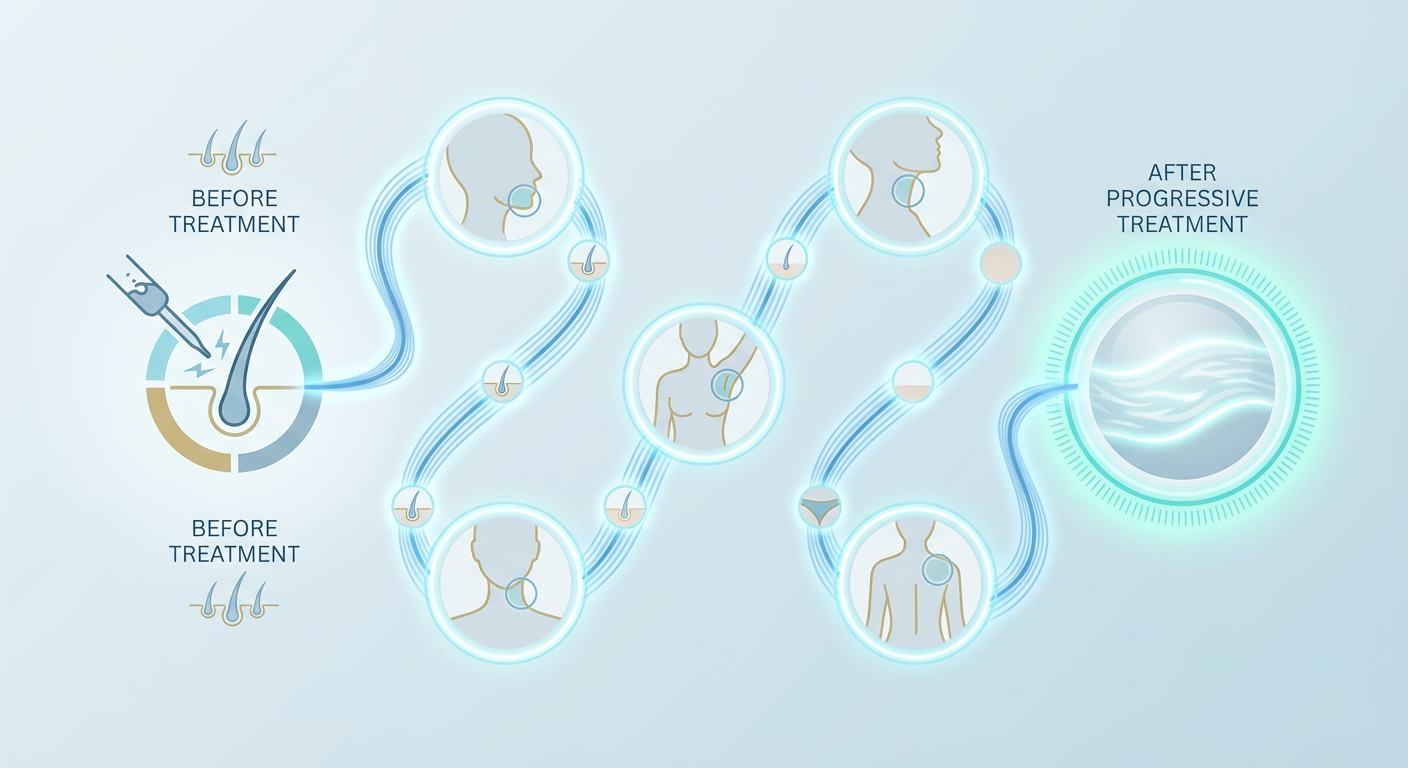
    70. Laser Hair Removal Statistics: Key Trends and Insights for 2024 – LaserSpots

    71. Laser Hair Removal Market to Reach $7.7 billion, Globally,
    72. Electrolysis Hair Removal Market Size, Share, Growth | Emerging Trends [2024-2034]
    73. Electrolysis Hair Removal Market Size, Share, Growth | Emerging Trends [2024-2034]
    74. Laser Aesthetics Industry: ZipDo Education Reports 2026
    75. Electrolysis Hair Removal Market Size, Share, Growth | Emerging Trends [2024-2034]
    76. Electrolysis Hair Removal Market Size, Share, Growth | Emerging Trends [2024-2034]
    77. Bio2 Laser Studio Expands Services with the Addition of Electrolysis for Permanent Hair Removal
    78. This Is The Only Hair Removal Method That’s Permanent, Says The FDA. Experts Explain.
    79. Electrolysis Hair Removal Market Size, Share, Growth | Emerging Trends [2024-2034]
    80. Is the new trend electrolysis better for hair removal than laser? – India Today
    81. Is the new trend electrolysis better for hair removal than laser? – India Today
    82. Is the new trend electrolysis better for hair removal than laser? – India Today
    83. Electrolysis Hair Removal Market Size, Share, Growth | Emerging Trends [2024-2034]
    84. This Is The Only Hair Removal Method That’s Permanent, Says The FDA. Experts Explain.
    85. Electrolysis: Definition & Treatment
    86. This Is The Only Hair Removal Method That’s Permanent, Says The FDA. Experts Explain.
    87. Hair removal | Gender Affirming Health Program
    88. This Is The Only Hair Removal Method That’s Permanent, Says The FDA. Experts Explain.
    89. Bio2 Laser Studio Expands Services with the Addition of Electrolysis for Permanent Hair Removal
    90. This Is The Only Hair Removal Method That’s Permanent, Says The FDA. Experts Explain.
    91. Hair removal | Gender Affirming Health Program
    92. This Is The Only Hair Removal Method That’s Permanent, Says The FDA. Experts Explain.
    93. This Is The Only Hair Removal Method That’s Permanent, Says The FDA. Experts Explain.
    94. Bio2 Laser Studio Expands Services with the Addition of Electrolysis for Permanent Hair Removal
    95. Hair removal | Gender Affirming Health Program
    96. Hair removal | Gender Affirming Health Program
    97. This Is The Only Hair Removal Method That’s Permanent, Says The FDA. Experts Explain.
    98. Bio2 Laser Studio Expands Services with the Addition of Electrolysis for Permanent Hair Removal
    99. Laser Hair Removal Technologies – Bio2 Laser Studio
    100. This Is The Only Hair Removal Method That’s Permanent, Says The FDA. Experts Explain.
    101. This Is The Only Hair Removal Method That’s Permanent, Says The FDA. Experts Explain.
    102. Electrolysis Hair Removal Market Size, Share, Growth | Emerging Trends [2024-2034]
    103. Is the new trend electrolysis better for hair removal than laser? – India Today
    104. Comparison of Permanent Hair Removal Procedures before Gender-Affirming Vaginoplasty: Why We Should Consider Laser Hair Removal as a First-Line Treatment for Patients Who Meet Criteria – PubMed
    105. Hair removal | Gender Affirming Health Program
    106. This Is The Only Hair Removal Method That’s Permanent, Says The FDA. Experts Explain.
    107. This Is The Only Hair Removal Method That’s Permanent, Says The FDA. Experts Explain.
    108. This Is The Only Hair Removal Method That’s Permanent, Says The FDA. Experts Explain.
    109. This Is The Only Hair Removal Method That’s Permanent, Says The FDA. Experts Explain.
    110. Bio2 Laser Studio Expands Services with the Addition of Electrolysis for Permanent Hair Removal
    111. Bio2 Laser Studio Expands Services with the Addition of Electrolysis for Permanent Hair Removal
    112. Apilus
    113. Apilus
    114. Apilus
    115. Apilus | Profesjonalne Urządzenia do Trwałego Usuwania Włosów
    116. Electrolysis Case Study – Including Female Chin Hair Removal
    117. Electrolysis Hair Removal Market Size, Share, Growth | Emerging Trends [2024-2034]
    118. Electrology Licensing Program for Texas
    119. This Is The Only Hair Removal Method That’s Permanent, Says The FDA. Experts Explain.
    120. This Is The Only Hair Removal Method That’s Permanent, Says The FDA. Experts Explain.
    121. This Is The Only Hair Removal Method That’s Permanent, Says The FDA. Experts Explain.
    122. This Is The Only Hair Removal Method That’s Permanent, Says The FDA. Experts Explain.
    123. Electrolysis: Definition & Treatment
    124. Electrolysis: Definition & Treatment
    125. Hair removal | Gender Affirming Health Program
    126. Bio2 Laser Studio Expands Services with the Addition of Electrolysis for Permanent Hair Removal
    127. This Is The Only Hair Removal Method That’s Permanent, Says The FDA. Experts Explain.
    128. This Is The Only Hair Removal Method That’s Permanent, Says The FDA. Experts Explain.
    129. This Is The Only Hair Removal Method That’s Permanent, Says The FDA. Experts Explain.
    130. This Is The Only Hair Removal Method That’s Permanent, Says The FDA. Experts Explain.
    131. This Is The Only Hair Removal Method That’s Permanent, Says The FDA. Experts Explain.
    132. Bio2 Laser Studio Expands Services with the Addition of Electrolysis for Permanent Hair Removal
    133. Bio2 Laser Studio Expands Services with the Addition of Electrolysis for Permanent Hair Removal
    134. Bio2 Laser Studio Expands Services with the Addition of Electrolysis for Permanent Hair Removal
    135. Bio2 Laser Studio Expands Services with the Addition of Electrolysis for Permanent Hair Removal
    136. Bio2 Laser Studio Expands Services with the Addition of Electrolysis for Permanent Hair Removal
    137. Electrology Licensing Program for Texas
    138. Bio2 Laser Studio Expands Services with the Addition of Electrolysis for Permanent Hair Removal
    139. Bio2 Laser Studio Expands Services with the Addition of Electrolysis for Permanent Hair Removal
    140. Bio2 Laser Studio Expands Services with the Addition of Electrolysis for Permanent Hair Removal
    141. Bio2 Laser Studio Expands Services with the Addition of Electrolysis for Permanent Hair Removal
    142. Bio2 Laser Studio Expands Services with the Addition of Electrolysis for Permanent Hair Removal
    143. Is the new trend electrolysis better for hair removal than laser? – India Today
    144. Is the new trend electrolysis better for hair removal than laser? – India Today
    145. Is the new trend electrolysis better for hair removal than laser? – India Today
    146. Is the new trend electrolysis better for hair removal than laser? – India Today
    147. Electrolysis Case Study – Including Female Chin Hair Removal
    148. Electrolysis Case Study – Including Female Chin Hair Removal
    149. Hair removal | Gender Affirming Health Program
    150. Comparison of Permanent Hair Removal Procedures before Gender-Affirming Vaginoplasty: Why We Should Consider Laser Hair Removal as a First-Line Treatment for Patients Who Meet Criteria – PubMed
    151. Hair removal | Gender Affirming Health Program
    152. Electrolysis Hair Removal Market Size, Share, Growth | Emerging Trends [2024-2034]
    153. Electrolysis Hair Removal Market Size, Share, Growth | Emerging Trends [2024-2034]
    154. This Is The Only Hair Removal Method That’s Permanent, Says The FDA. Experts Explain.
    155. This Is The Only Hair Removal Method That’s Permanent, Says The FDA. Experts Explain.
    156. Laser Hair Removal Market to Reach $7.7 billion, Globally,
    157. Is the new trend electrolysis better for hair removal than laser? – India Today
    158. Is the new trend electrolysis better for hair removal than laser? – India Today
    159. Bio2 Laser Studio Expands Services with the Addition of Electrolysis for Permanent Hair Removal
    160. Bio2 Laser Studio Expands Services with the Addition of Electrolysis for Permanent Hair Removal
    161. Electrolysis: Definition & Treatment
    162. Electrolysis: Definition & Treatment
    163. Electrolysis Case Study – Including Female Chin Hair Removal
    164. Hair removal | Gender Affirming Health Program
    165. Hair removal | Gender Affirming Health Program
    166. Hair Removal Market Insights 2025: Key Metrics for Decision-Makers
    167. Hair Removal Market Insights 2025: Key Metrics for Decision-Makers
    168. Laser Hair Removal Statistics: Key Trends and Insights for 2024 – LaserSpots
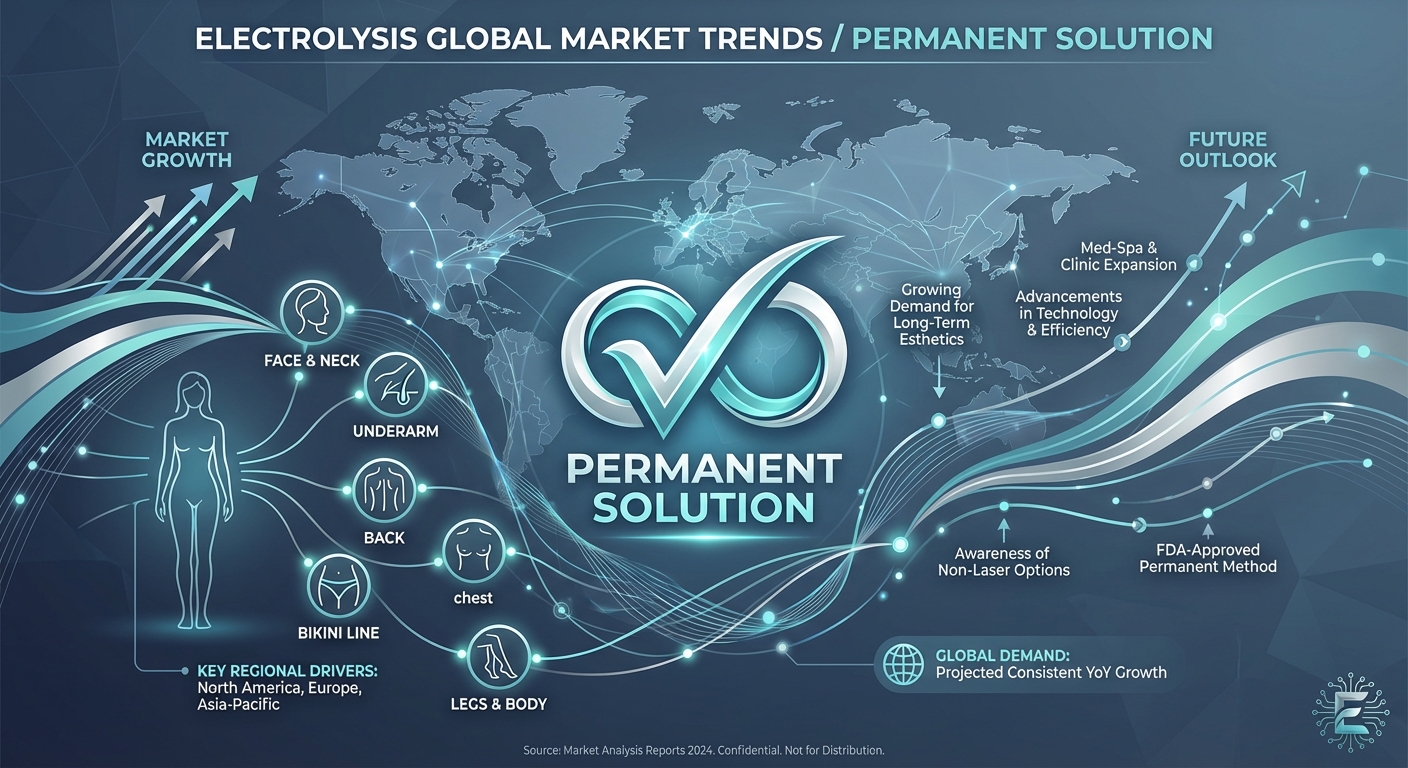
    169. Laser Hair Removal Statistics: Key Trends and Insights for 2024 – LaserSpots
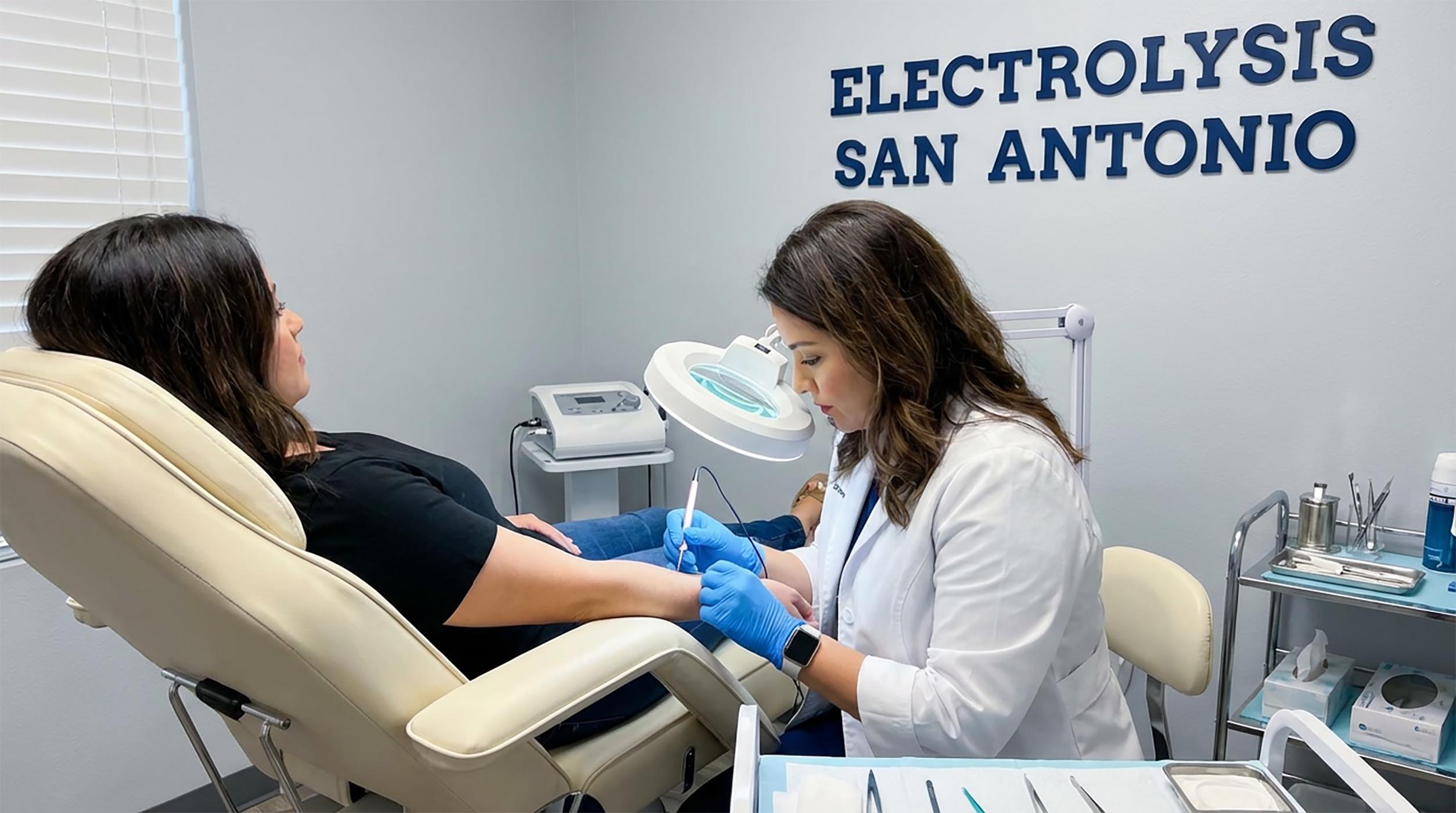
  • Electrolysis: The Definitive Guide to Permanent Hair Removal – Market Trends & Versatility Report

    Electrolysis: The Definitive Guide to Permanent Hair Removal – Market Trends & Versatility Report

    Electrolysis stands as the unparalleled gold standard in hair removal.

    San antonio, Texas 2026

    Distinguished by its unique classification from the U.S. Food and Drug Administration (FDA) as the only truly permanent method. Unlike other widely marketed techniques, such as laser hair removal, which achieve mere long-term reduction, electrolysis guarantees the complete and lasting eradication of hair growth. This comprehensive report delves into the foundational aspects of electrolysis, tracing its rich 140-year history, showcasing its unmatched versatility across all hair types, skin tones, and body areas, and affirming its robust safety profile meticulously honed over generations of medical and cosmetic application.

    Beyond its scientific and historical merits, this report provides a thorough analysis of the global electrolysis market. Currently valued at approximately $847.7 million in 2024, the market is poised for significant expansion, projected to reach $1.33 billion by 2033. This growth trajectory is fueled by evolving consumer beauty standards, increasing grooming expenditures, and continuous technological advancements that enhance both efficacy and client comfort. Herein, we examine the core benefits and dynamic market forces propelling electrolysis to the forefront of permanent hair removal solutions, offering an in-depth understanding of its enduring relevance and rapidly expanding adoption worldwide.

    Key Takeaways:

    • Electrolysis is the only FDA-recognized method for permanent hair removal, setting it apart from all other techniques, including laser, which only offers long-term reduction.
    • It offers unparalleled versatility, effectively treating all hair colors (including blond, red, grey, white) and all skin types, making it universally applicable.
    • Electrolysis can be performed on virtually any body area, from delicate facial features like eyebrows to large areas such as the back and bikini line.
    • With over 140 years of proven efficacy and safety since its inception in 1875, electrolysis boasts a long-standing track record of reliability.
    • The global electrolysis market is robust, valued at approximately $847.7 million in 2024, and is projected to grow to $1.33 billion by 2033, driven by increased consumer demand.
    • Clients commit to multiple sessions over time for permanent results, with each hair follicle individually treated during its growth phase.

    1. Executive Summary

    Electrolysis stands as the singular hair removal method recognized by the U.S. Food and Drug Administration (FDA) as truly permanent, a distinction that positions it as the unequivocal gold standard for individuals seeking lasting hair removal solutions[2]. Unlike other popular methods such as laser hair removal, which achieve long-term hair reduction, electrolysis offers guaranteed eradication of hair growth. This report provides an in-depth understanding of electrolysis, detailing its historical context, unparalleled versatility across all hair types and body areas, and its robust safety profile honed over 140 years of medical and cosmetic application[11]. We will explore the current state of the global electrolysis market, valued at approximately $847.7 million in 2024, and project its steady growth to $1.33 billion by 2033, driven by increasing consumer grooming expenditures, evolving beauty standards, and technological advancements[4]. This executive summary serves as a comprehensive overview of the key findings, outlining the unique benefits and market dynamics that underscore the enduring relevance and growing adoption of electrolysis as a definitive solution for unwanted hair.

    Electrolysis: The Only FDA-Recognized Permanent Hair Removal Method

    The defining characteristic that sets electrolysis apart from all other hair removal techniques is its official classification by the FDA as a permanent method[2]. This is a critical distinction that often goes unappreciated by consumers. While laser hair removal is widely marketed, it is, by regulatory definition, considered a method for “long-term hair reduction,” meaning it reduces hair growth over time but does not guarantee its complete and permanent cessation[2]. Electrolysis, on the other hand, works by directly destroying the hair follicle’s growth cells through the application of a small amount of electrical energy delivered via a fine probe inserted into the follicle[13]. Once a follicle is properly treated, it is permanently unable to produce hair[5].

    This permanence is not a recent discovery; the efficacy of electrolysis has been proven over a profound historical timeline. Its first recorded medical application dates back to 1875 when Dr. Charles Michel, an ophthalmologist, successfully used it to remove an ingrown eyelash, providing permanent relief to his patient[11]. This pioneering intervention laid the groundwork for electrolysis to evolve into a globally recognized cosmetic procedure with a track record of safety and effectiveness that spans more than a century and a half[5]. The method has been continually refined since then, with modern techniques and equipment enhancing both its efficiency and client comfort, without compromising its core principle of permanent follicle destruction.

    The implications of this FDA classification are significant for both consumers and practitioners. For consumers seeking a definitive end to unwanted hair, electrolysis represents the only technology that can deliver on that promise. For practitioners, this official recognition provides a strong assurance of the method’s scientific validity and long-term results, solidifying its position as an essential offering in the aesthetic and medical hair removal landscape. It underscores the unique value proposition of electrolysis in a market saturated with various hair removal options, many of which offer only temporary or partial solutions.

    Unparalleled Versatility: Treating All Hair Types, Skin Tones, and Body Areas

    A cornerstone of electrolysis’s appeal is its universal applicability. Unlike laser therapies that depend on the presence of pigment (melanin) in hair for effective targeting, electrolysis operates independently of hair color or skin tone[2]. This makes it the only viable permanent hair removal solution for individuals with:

    • Light-colored hairs: Blond, red, gray, and white hairs, which are often impervious or unresponsive to laser treatment due to their lack of pigment[2].
    • Any skin tone: Electrolysis safely and effectively treats all skin tones, from very light to very dark, without the risk of pigmentation changes or burns that can be a concern with laser therapy, especially on darker skin types[13].

    This inclusivity broadens the demographic for whom permanent hair removal is an option, providing a crucial service to a diverse clientele previously underserved by other methods. Professional electrologists routinely treat a vast array of body areas, demonstrating the method’s remarkable versatility[3]. These areas include, but are not limited to:

    • Face: Upper lip, chin, cheeks, jawline, and delicate areas like eyebrows and hairline[3]. Electrolysis is particularly favored for shaping eyebrows and clearing stray hairs in areas too close to the eyes for laser procedures[12].
    • Neck and Decolletage: Often targeted for hormonal hair growth or for clients seeking a cleaner aesthetic.
    • Underarms: A common area for permanent hair removal to eliminate the need for shaving or waxing.
    • Bikini and Brazilian Areas: Allows for precise shaping or complete clearance based on client preference, without issues related to skin sensitivity or tattoo interference[12].
    • Abdomen and Chest: Popular among both men and women seeking to manage or remove unwanted hair.
    • Back: Especially common for men desiring a smooth back.
    • Extremities: Including arms, legs, fingers, and toes, for fine vellus hairs or coarse growth patterns[3].

    The precision of electrolysis, treating each hair follicle individually, makes it ideal for small, contoured, or sensitive areas where detail and safety are paramount[12]. This meticulous approach is invaluable for tasks such as creating clean beard lines, removing individual ear or nose hairs, or addressing ingrown hairs that cause skin irritation. For individuals with medically sensitive situations, such as trichiasis (ingrown eyelashes, as was the original use case[11]) or those with dermatological conditions like melasma where heat from lasers could exacerbate pigmentation, electrolysis presents a safer, lower-risk alternative[12]. While large areas require more time and numerous sessions, the ability to address virtually any unwanted hair, regardless of its location or characteristics, solidifies electrolysis’s position as a uniquely comprehensive hair removal solution.

    Market Landscape and Growth Trends

    The global electrolysis hair removal market is experiencing steady growth, reflecting an increasing consumer demand for permanent and effective solutions. In 2024, the market was valued at approximately $847.7 million, with projections indicating a rise to $1.34 billion by 2033, representing a Compound Annual Growth Rate (CAGR) of roughly 5.2% annually between 2025 and 2033[4]. This consistent expansion is underpinned by several key drivers:

    • Rising Grooming Expenditures: Consumers are increasingly willing to invest in personal grooming and aesthetic enhancements. In the U.S. alone, quarterly spending on hair removal and personal care products and services saw an increase from $113.3 billion in Q1 2023 to $122.5 billion in Q4 2024, and further to $123.8 billion by Q1 2025[10]. This trend indicates a strong and sustained commitment to appearance, which directly fuels the growth of permanent solutions like electrolysis.
    • Changing Demographics: The clientele for electrolysis is diversifying significantly. While traditionally dominated by women, men now constitute a growing segment of hair removal clients. For instance, approximately 38% of laser hair removal patients in the U.S. in 2023 were male, indicating a broader acceptance of male body grooming[9]. Electrolysis benefits from this trend, with increasing demand from men for back, chest, neck, and beard-line hair removal. Furthermore, transgender individuals and those with hormonal conditions such as Polycystic Ovary Syndrome (PCOS) rely heavily on electrolysis for its permanent results, especially for facial hair, representing a significant and growing market segment.
    • Regional Dynamics: North America currently leads the global electrolysis market, accounting for approximately 38-43% of total revenue in 2024[4], [16]. This dominance is attributed to high disposable incomes, a well-established aesthetic industry, and strong cultural emphasis on grooming. However, the Asia-Pacific region is emerging as the fastest-growing market, projected to expand at an impressive 7.8% CAGR through 2034[17], [18]. This rapid growth is driven by increasing urbanization, rising beauty awareness, and the burgeoning middle-class populations in countries like China, India, and Southeast Asia. Europe also holds a significant share, with steady growth driven by similar factors.
    • Technological Advancements: Continuous innovations in electrolysis equipment are enhancing treatment speed, precision, and client comfort. Modern devices, such as the Apilus xCell Pro launched by Dectro International in September 2024, feature computerized precision, ultra-short pulse delivery, and integrated cooling systems, which significantly reduce discomfort and improve efficacy across various hair types and skin conditions[20], [21]. These advancements make electrolysis more attractive to a wider audience and empower practitioners to deliver more efficient and pleasant treatment experiences.
    • Dominance of Thermolysis: Among the different electrolysis modalities (galvanic, thermolysis, and blend), thermolysis (short-wave radiofrequency) has become the most widely used, accounting for approximately 52% of procedures in 2024[19]. Its popularity stems from its ability to treat hair follicles more quickly per hair, contributing to faster individual sessions and potentially reducing the overall treatment timeline.
    • Application Focus: Facial hair removal remains the single largest application segment for electrolysis, representing about 45% of all treatments in 2024[22]. This high demand underscores the importance of electrolysis for visible areas that significantly impact personal confidence.

    These market trends indicate a robust future for the electrolysis industry. As consumers become more educated about the distinct benefits of permanent hair removal and technology continues to improve, the demand for electrolysis services is expected to climb steadily. The expansion into new geographic regions and evolving demographic profiles further solidify its position as a critical player in the global aesthetic market.

    Electrolysis vs. Other Methods: A Comparative Analysis

    Understanding the value proposition of electrolysis necessitates a comparison with other prevalent hair removal methods. While each method has its advantages, electrolysis stands out due to its claim of true permanence and universal applicability:

    1. Laser Hair Removal:

    • Advantages: Laser hair removal is highly popular for its speed and ability to cover large body areas quickly. Over 893,000 laser hair removal procedures were performed in the U.S. in 2009 alone[8], demonstrating significant demand. It offers substantial hair reduction, typically between 80-90% after a full course of treatment[6].
    • Limitations: Laser is officially classified as “long-term reduction” by the FDA, not permanent removal[2]. It is less effective on light-colored (blonde, red, gray, white) hairs and certain skin types, as it relies on pigment for targeting. Maintenance sessions are often required to manage regrowth[6]. Laser also carries risks of burns or pigmentation changes, especially on darker skin tones if not performed correctly[13], and is generally not safe for areas directly around the eyes.
    • Electrolysis Complementarity: Many individuals utilize laser first to achieve broad hair reduction, then follow up with electrolysis to eliminate the remaining stubborn, fine, or light-colored hairs for a completely smooth and permanent result[13].

    2. Waxing, Threading, and Plucking:

    • Advantages: These methods provide immediate removal of hair from the root, offering temporary smoothness. They can be relatively inexpensive per session and widely accessible.
    • Limitations: Hair always grows back because the follicle is not destroyed. This necessitates frequent, repetitive treatments, leading to ongoing costs and time commitments. Potential side effects include pain, skin irritation, and ingrown hairs.
    • Electrolysis Contrast: Electrolysis offers a permanent exit from this cycle of regrowth, eliminating the need for ongoing, often painful, maintenance.

    3. Depilatory Creams and Shaving:

    • Advantages: These are the quickest and most accessible methods, with minimal upfront cost. Shaving cuts hair at the skin’s surface, and creams dissolve it just above, making them painless (aside from nicks or chemical burns). Roughly 89% of people who remove hair have tried shaving[14].
    • Limitations: The results are very short-lived, with hair reappearing in a matter of days. This leads to constant maintenance, potential stubble, razor burn, or chemical irritation. Long-term costs of blades, creams, and associated products can ironically surpass the one-time investment in electrolysis.
    • Electrolysis Contrast: Electrolysis, though a higher upfront investment, provides a permanent solution that frees individuals from the never-ending routine and recurring costs associated with these temporary methods.

    Discomfort and Side Effects: Pain perception is subjective, but modern electrolysis techniques are designed for minimal discomfort. The sensation is often described as a brief sting or warmth. Electrolysis and laser often have comparable pain levels, both responsive to topical anesthetics[13]. A key advantage of electrolysis is its minimal and temporary side effects (slight redness or swelling) when performed by a skilled professional, with virtually no risk of scarring. Unlike laser, which has specific contraindications (e.g., during pregnancy, for certain conditions, or on specific body areas), electrolysis is generally more universally applicable and considered safe by dermatologists for even delicate areas[5].

    In essence, election hair removal often becomes the choice for individuals prioritizing absolute permanence, universal applicability (all hair colors, skin types), precision, and its robust safety profile. While slower and more labor-intensive than laser for large areas, its definitive results mean an end to lifelong hair management. Many clients make a calculated decision, viewing electrolysis as a long-term investment that saves time, money, and hassle over several years, justifying the commitment of multiple sessions over time. This patient-centric view, matching specific client needs with the unique capabilities of electrolysis, drives its sustained demand.

    Commitment and Investment: The Path to Permanent Results

    Achieving permanent hair removal with electrolysis requires a dedicated commitment from the client, a factor that differentiates it from quick, superficial treatments. Each hair follicle must be treated during its active growth phase (anagen) for the treatment to be effective[5]. Since not all hairs are in this phase simultaneously, multiple sessions are essential to target new cycles of hair as they emerge. Typical treatment ranges for areas include:

    • Face: Approximately 10-20 sessions[23]
    • Bikini Line: 8-15 sessions[23]
    • Legs or Arms: 15-30 sessions[23]

    These sessions are typically spaced 1-2 weeks apart and can range from 15 minutes to an hour per appointment, depending on the area and hair density[24]. While this indicates a significant time investment, the payoff is unparalleled: once the series of treatments is completed, the hair is permanently removed and does not grow back[5]. This long-term benefit transforms electrolysis from a mere cosmetic procedure into a meaningful lifestyle investment.

    The cost of electrolysis varies depending on location, electrologist experience, and the size of the area being treated. Individual sessions typically cost between $30 to $100[24]. While small areas like the upper lip might total $150-$300 for complete clearance, larger areas such as full legs or the back can accumulate costs ranging from $4,500 to $10,000 over the entire treatment course[25]. For an extensive area like a dense beard, the total treatment might exceed 100-300 hours, potentially costing well into five figures[26]. Although the upfront cost can be substantial, many consumers view it as a worthwhile investment when compared to the perpetual expenses and inconvenience of lifelong shaving, waxing, or repeated laser touch-ups. The average total spend for a typical client is around $500[27], illustrating that while it can be expensive for large areas, it’s often more affordable for targeted, smaller corrections.

    The commitment extends beyond just time and money; it requires patience. While clients often observe a noticeable reduction in hair density after just a few treatments (one case study noted a 91% reduction in hair regrowth after six sessions with a newer technique[28], compared to a historical ~50% reduction[29]), complete clearance takes time. The ongoing nature of the treatment plan is essential to ensure that every follicle is caught in its growth cycle and effectively disabled. Clients who persevere through the full recommended course report immense satisfaction, finding the permanent freedom from hair removal routines to be invaluable. The promise of never having to shave, wax, or pluck again provides a powerful incentive that outweighs the initial demands of the treatment.

    Technological Innovations and Future Outlook

    The electrolysis industry, while rooted in a centuries-old principle, is continually evolving through technological advancements that enhance treatment speed, comfort, and efficacy. Modern epilators, such as the Apilus xCell Pro launched in 2024, are highly computerized, delivering precise energy pulses with integrated cooling systems that significantly reduce client discomfort and optimize results[20], [21]. These innovations allow electrologists to perform treatments more rapidly and with greater precision, potentially shortening the overall treatment timeline for clients. For example, some practitioners report clearing 15-20 hairs per minute with advanced technology, compared to 5-10 hairs per minute with older equipment. This increased efficiency makes electrolysis more appealing for clients and profitable for practitioners.

    The prevalence of thermolysis (short-wave radiofrequency) as the dominant modality, accounting for over 52% of treatments in 2024, underscores the industry’s shift towards faster, heat-based destruction of follicles[19]. The blend method, combining galvanic and thermolysis currents, also offers advantages by maximizing effectiveness. Continuous research and development in probe design (e.g., insulated probes) further concentrate energy at the follicle base, improving efficacy and minimizing skin irritation.

    The industry is also responding to global demand by scaling up manufacturing and improving training standards. For instance, Sterex International expanded its production capacity by 40% in 2024 to meet growing global orders for electrolysis equipment and needles[30]. Standardized training curricula, often developed in partnership with international certification bodies, are crucial for ensuring that new practitioners globally uphold high standards of safety and effectiveness, fostering consumer trust and expanding the market. Furthermore, the rise of at-home electrolysis devices, while offering limited efficacy compared to professional treatment, contributes to increasing consumer awareness and interest in permanent hair removal, often leading individuals to seek professional care after attempting DIY solutions.

    The future outlook for electrolysis is bright, characterized by steady growth, technological refinement, and an expanding, diverse clientele. With ongoing advancements making treatments faster and more comfortable, and with its unwavering status as the only truly permanent hair removal method, electrolysis will continue to fill a critical and unique niche in the ever-growing global beauty and wellness market. Its inclusivity, safety, and definitive results ensure its enduring relevance, complementing other hair reduction methods while serving as the ultimate solution for those seeking a lifetime free from unwanted hair.

    Defining Electrolysis: The Permanent Hair Removal Standard
    Defining Electrolysis: The Permanent Hair Removal Standard – Visual Overview

    2. Defining Electrolysis: The Permanent Hair Removal Standard

    In the dynamic landscape of aesthetic procedures, where the pursuit of long-lasting beauty and convenience drives innovation, electrolysis stands as a cornerstone of permanent hair removal. Unique among its counterparts, electrolysis holds the distinction of being the only hair removal method officially classified as permanent by the U.S. Food and Drug Administration (FDA)[2]. This critical designation sets it apart from other popular techniques, such as laser hair removal, which are categorised merely as methods for long-term hair *reduction*[2]. The permanence offered by electrolysis is not a recent discovery; its efficacy has been validated over 140 years of consistent use and refinement, tracing back to its pioneering medical application in 1875[11]. This enduring track record underscores its reliability, safety, and effectiveness across a diverse range of clients and hair types. The core mechanism of electrolysis involves the precise delivery of electrical energy directly into individual hair follicles, permanently disabling their ability to produce hair[1]. This direct-to-follicle approach endows electrolysis with unparalleled versatility, making it effective for any hair color and skin type, in virtually any body area–even those sensitive spots often inaccessible or unsuitable for other methods[3]. As a result, electrolysis has emerged as the definitive solution for individuals seeking truly lasting hair removal results, including those with light-colored, gray, or red hair that laser treatments frequently miss[2]. The global market for electrolysis is experiencing steady growth, projected from approximately $847.7 million in 2024 to $1.34 billion by 2033, reflecting an annual growth rate (CAGR) of about 5.2%[4]. This expansion is fueled by rising consumer grooming expenditures, a growing demand for permanent aesthetic solutions, and increasing awareness of its broad applicability and effectiveness. While the process demands commitment, requiring multiple sessions over time to address all hair growth cycles, the payoff is total permanence, eliminating the continuous need for shaving, waxing, or repetitive laser treatments. This section will delve deep into the defining characteristics of electrolysis, elucidate its mechanisms, compare it with alternative hair removal methods, and examine the market trends and technological innovations driving its continued prominence.

    2.1. The Mechanism of Permanent Hair Removal

    At the heart of electrolysis’s unparalleled position as the permanent hair removal standard is its fundamental mechanism of action. Unlike methods that merely remove hair temporarily (like shaving or waxing) or reduce its growth (like laser hair removal), electrolysis targets and eliminates the hair follicle’s regenerative capabilities.

    2.1.1. Core Principle: Direct Follicle Destruction

    The procedure of electrolysis involves the insertion of a very fine, sterile probe—often thinner than the hair itself—into the natural opening of the hair follicle, alongside the hair shaft[1]. Once the probe reaches the root of the follicle, a precisely controlled amount of electrical energy is delivered. This electrical current generates heat or a chemical reaction (depending on the modality used) that physically destroys the papilla (the blood supply and nutrient source for hair growth), the germinative cells responsible for hair production, and the surrounding cellular structures vital for hair regeneration[1]. Once adequately treated, that specific hair follicle is permanently incapable of producing another hair[1]. Brendan Camp, MD, a board-certified dermatologist, affirms that “Electrolysis is truly a permanent hair removal option because it effectively destroys the hair follicle”[2]. This definitive destruction is what earns electrolysis its unique FDA classification as the only permanent hair removal method[2].

    2.1.2. The Role of Hair Growth Cycles and Multiple Sessions

    While the destruction of a single hair follicle is immediate, achieving complete and permanent hair removal over a larger area is a process that requires patience and multiple treatment sessions. This necessity stems from the cyclical nature of hair growth, which includes three primary phases:

    • Anagen (Active Growth Phase): This is the ideal phase for electrolysis, as the hair is actively growing, and the follicle is fully connected to its blood supply and germinative cells. Targeting the follicle during anagen ensures maximum efficacy of the electrical current in destroying these vital structures.
    • Catagen (Transitional Phase): During this short phase, hair growth ceases, and the follicle begins to shrink.
    • Telogen (Resting Phase): In this phase, the hair follicle is dormant, and the hair may shed. Electrolysis is ineffective on telogen hairs because the follicle is not actively connected to its growth mechanisms.

    At any given time, only a certain percentage of hair follicles on a particular body area are in the active anagen phase. Other hairs are either dormant, transitioning, or too new to be visible above the skin’s surface. Therefore, electrologists must treat the area repeatedly over several months or even years to “catch” each hair follicle during its active growth phase as it emerges. For example, clients typically need anywhere from 8 to 30 sessions per area. Facial hair often requires 10–20 sessions, while larger areas like legs might need 15–30 sessions[10]. These sessions are usually brief, lasting between 15 minutes to an hour, and are scheduled weekly or bi-weekly[6]. This staggered treatment approach is crucial because it ensures that every individual follicle is definitively targeted and destroyed when it is most vulnerable. The commitment to these multiple sessions is a testament to the thoroughness required for 100% permanent removal, transforming the ongoing burden of temporary hair removal into a one-time investment in lasting smoothness.

    2.1.3. Evolution of Electrolysis Modalities

    Since Dr. Charles Michel’s pioneering work in 1875, the techniques for delivering electrical energy for electrolysis have evolved, leading to increased speed, efficiency, and comfort:

    • Galvanic Electrolysis: This was the original method, utilizing direct current (DC) to create a chemical reaction (lye) within the follicle, destroying cells. While highly effective and permanent, it is the slowest modality, as the chemical reaction takes time to fully disable the follicle.
    • Thermolysis (High-Frequency or Short-Wave): Introduced later, thermolysis uses alternating current (AC), which creates heat (diathermy) within the follicle, coagulating and destroying the papilla and germinative cells. Thermolysis is significantly faster than galvanic electrolysis, treating each follicle in a fraction of a second[8]. Its speed has made it the most popular modality, accounting for approximately 52% of electrolysis procedures in 2024[8].
    • Blend Method: As the name suggests, the blend method combines both galvanic (DC) and thermolysis (AC) currents. This combination leverages the speed of thermolysis and the chemical destruction efficacy of galvanic, often resulting in quicker and more thorough destruction, especially for stubborn hairs.

    Modern electrolysis devices, such as the Apilus xCell Pro launched in 2024, further enhance these modalities with computer-controlled precision and integrated cooling systems, significantly reducing discomfort and improving treatment speed and accuracy[16]. These technological advancements ensure that while the fundamental principle of permanent follicle destruction remains, the client experience has become increasingly refined and efficient.

    2.2. Unmatched Versatility: Treating All Hair, Skin, and Body Areas

    One of the most significant advantages of electrolysis, and a key differentiator from other hair removal methods, is its universal applicability. Electrolysis is truly inclusive, capable of treating any type of hair, on any skin tone, and across virtually all body regions, including sensitive and precise areas.

    2.2.1. Effectiveness Across All Hair Colors and Skin Tones

    A crucial limitation of laser hair removal is its reliance on melanin (pigment) in the hair shaft to absorb light energy. This means laser is most effective on dark hair against light skin and can be less efficacious or even risky for individuals with light-colored hair (blonde, red, gray, white) or darker skin tones[2]. Electrolysis completely bypasses this limitation.

    • Any Hair Color: Because electrolysis directly targets the follicle with electrical current, the pigment of the hair is irrelevant to its effectiveness. This makes it the only viable permanent solution for individuals with blonde, red, gray, or white hairs that lasers cannot effectively detect or treat[2].
    • Any Skin Tone: Similarly, electrolysis does not target skin pigment. This feature makes it safe and effective for individuals of all skin tones, from Fitzpatrick I to VI, without the risk of hyperpigmentation or hypo-pigmentation that can sometimes occur with laser treatments on darker skin if improper settings are used. This broad applicability ensures that every individual, regardless of their hair or skin characteristics, can achieve permanent hair removal safely[3].

    2.2.2. Comprehensive Body Area Treatment

    Electrolysis can be performed on virtually any part of the body where unwanted hair grows. This versatility extends to areas that are often challenging, unsafe, or simply not recommended for other hair removal methods:

    • Face: This remains the largest primary application, accounting for about 45% of all electrolysis treatments in 2024[9]. Areas include the upper lip, chin, cheeks, jawline, and eyebrows. For instance, electrolysis is uniquely suited for precise eyebrow shaping or removing stray hairs around the hairline, areas where laser treatment is generally avoided due to proximity to the eyes[3].
    • Neck and Body: The neck, underarms, bikini line (including full Brazilian), abdomen, chest, and back are all routinely treated areas[3].
    • Delicate and Specialized Areas: Electrolysis is also safely used on toes and fingers, areolas, or even within the ears and nose periphery, which are often too awkward or risky for laser[3]. The ability to precisely target single hairs is invaluable for clients seeking to permanently clean up razor bumps around a beard line or remove coarse ear hairs.

    This extensive range of treatable areas, combined with its effectiveness across all hair and skin types, solidifies electrolysis as the most universally applicable method for permanent hair removal.

    2.2.3. Safety and Track Record of Over 140 Years

    The safety and long-term efficacy of electrolysis are not theoretical but are borne out by its extensive history. First used successfully by Dr. Charles Michel in 1875 to treat an ingrown eyelash, it has since amassed over 140 years of continuous use and refinement[11]. When performed by a trained and certified professional, electrolysis has no long-lasting side effects[1]. Any minor, temporary side effects, such as slight redness, swelling, or tiny scabs, are part of the normal healing process and typically resolve within a few hours to days. The procedure’s safety is particularly notable for sensitive skin types or in medically sensitive situations, where the heat from lasers or harsh chemicals might be contraindicated. For instance, electrolysis is often recommended for pregnant women who wish to remove facial hair, as laser treatments are generally avoided during pregnancy as a precaution. Furthermore, for individuals with conditions like melasma, where heat can trigger pigmentation, electrolysis presents a safer alternative. This long track record, coupled with modern advancements in equipment and training, makes electrolysis a thoroughly vetted and highly trusted procedure worldwide.

    2.3. Electrolysis in the Market: Growth, Demographics, and Cost-Benefit

    The electrolysis hair removal market is a steadily expanding segment within the broader aesthetics industry, driven by increasing consumer demand for permanent solutions, evolving beauty standards, and technological advancements.

    2.3.1. Market Size and Growth Trajectory

    The global electrolysis hair removal market was valued at an estimated $847.7 million in 2024[4]. Projections indicate consistent growth, with the market expected to reach approximately $1.34 billion by 2033, representing a compound annual growth rate (CAGR) of 5.2% annually between 2025 and 2033[4]. This positive outlook is fueled by several factors:

    • Rising Grooming Expenditures: Consumers are increasingly willing to invest in personal grooming and aesthetic treatments. Quarterly spending on hair removal and personal care in the U.S., for example, rose from $113.3 billion in Q1 2023 to $122.5 billion in Q4 2024, hitting $123.8 billion by Q1 2025[12]. This trend indicates a cultural shift towards prioritizing and financing long-term beauty and wellness solutions.
    • Demand for Permanent Solutions: As awareness of electrolysis’s permanent nature grows, consumers are increasingly seeking it to eliminate the ongoing hassle and cost of temporary methods.
    • Technological Advancements: Innovations in electrolysis equipment, such as the Apilus xCell Pro, are improving treatment speed and comfort, making the procedure more appealing to a broader client base[16].

    2.3.2. Regional Dynamics and Emerging Markets

    Globally, North America maintains the largest share of the electrolysis market, accounting for approximately 42.9% of global revenue in 2024[5]. This dominance is attributed to high disposable incomes, established aesthetic industries, and ingrained grooming norms. However, the Asia-Pacific region is emerging as the fastest-growing market, with a projected CAGR of about 7.8% through 2034[6]. This accelerated growth is propelled by:

    • Rapid Urbanization: Increasing populations in urban centers with greater access to aesthetic services.
    • Growing Middle Class: Rising incomes enable more individuals to afford premium and permanent hair removal solutions.
    • Increasing Beauty Awareness: A growing focus on personal aesthetics and grooming trends across countries like China, India, and Southeast Asian nations[6].

    This regional shift indicates significant future opportunities for electrolysis equipment manufacturers and training providers in these burgeoning markets.

    2.3.3. Diversifying Client Demographics

    The client base for electrolysis is broadening significantly beyond its traditional segment.

    • Men: There’s a notable increase in male clientele seeking permanent hair removal for areas such as the back, shoulders, neck, and to define beard lines. Men comprised about 38% of laser hair removal patients in the U.S. in 2023[13], and electrologists confirm a similar trend in electrolysis, driven by evolving male grooming trends.
    • Transgender Individuals: Electrolysis is a critical component of gender affirmation for many transgender individuals, particularly trans women seeking permanent beard and body hair removal. Its ability to treat all hair types and permanently eliminate growth makes it indispensable for these clients.
    • Hormonal Conditions: Women experiencing hirsutism due to hormonal imbalances, such as those with Polycystic Ovary Syndrome (PCOS), frequently turn to electrolysis. For these individuals, unwanted facial and body hair is a significant concern, and electrolysis offers a permanent solution when medical treatments may not fully resolve the issue.

    This expanded demographic base underscores electrolysis’s role not just as a cosmetic procedure, but as a vital service addressing deeply personal and confidence-related needs across various communities.

    2.3.4. Cost-Benefit Analysis and Long-Term Value

    Electrolysis treatments involve a significant upfront time and financial commitment. Individual sessions typically cost between $30 to $100 for 15 to 60 minutes, depending on the location and practitioner[6]. The total cost for complete removal varies widely based on the size and density of the treated area:

    • Small Areas (e.g., upper lip): $150–$300 total cost[6].
    • Medium Areas (e.g., bikini line): Potentially several hundred to a few thousand dollars.
    • Large Areas (e.g., full legs, back, dense beard): Can range from $4,000 to $10,000 or even higher, with extensive beard removal potentially requiring over 100-300 hours of treatment[6].

    Despite these costs, many individuals view electrolysis as a wise long-term investment. When compared to the lifelong expenses and time commitment associated with recurring temporary methods such as shaving (razors, creams), waxing (salon visits), or even repeat laser maintenance sessions, electrolysis often proves to be more cost-effective over the client’s lifetime. The value proposition is the promise of truly hair-free skin, eliminating the need for any further hair removal efforts in the treated area, thus saving time, money, and inconvenience in the long run.

    2.4. Electrolysis vs. Other Hair Removal Methods

    To fully appreciate the unique standing of electrolysis, it is essential to compare it against other prevalent hair removal methods, highlighting its distinct advantages and the contexts in which it serves as the superior choice.

    2.4.1. Laser Hair Removal: Reduction vs. Permanence

    Laser hair removal is a popular method, evidenced by the over 893,000 procedures performed in the U.S. in 2009 alone[7]. It offers speed and efficiency for covering large areas, often treating an entire underarm in minutes. However, a key distinction lies in its classification: laser hair removal is considered for “long-term hair reduction,” not permanent removal[2].

    • Mechanism: Lasers use pulsed light to target melanin in the hair follicle, heating and damaging it to inhibit future growth.
    • Efficacy: Typically achieves 80-90% hair reduction after a full course of treatment[14]. Regrowth is usually finer and lighter but maintenance sessions are often required to manage it[14].
    • Limitations: Less effective on light-colored (blonde, red, gray, white) or fine vellus hair due to insufficient melanin pigment[2]. Can pose risks of pigmentation changes or burns on darker skin tones if not performed with suitable laser technology and expertise. Also generally not used for sensitive areas like eyebrows or very close to the eyes[2].
    • Complementary Use: Many clients opt for laser hair removal first to “debulk” large areas of dark hair efficiently, then transition to electrolysis to permanently eliminate the remaining lighter, finer, or resistant hairs that laser cannot address. This combined approach leverages the strengths of both technologies.

    2.4.2. Temporary Methods: Shaving, Waxing, Plucking, and Depilatory Creams

    These methods provide immediate, though transient, relief from unwanted hair. They are generally accessible and cost-effective per session, but their effectiveness is short-lived, necessitating continuous repetition.

    • Shaving: Cuts hair at the skin’s surface. While painless and quick, hair reappears within days, often causing stubble, razor burn, or ingrown hairs.
    • Depilatory Creams: Chemically dissolve hair at or just below the skin’s surface. They are pain-free but temporary, with hair growing back within days, and can sometimes cause skin irritation or allergic reactions.
    • Waxing and Threading: Remove hair from the root, providing longer-lasting results (typically weeks) compared to shaving or creams. However, they are often painful, can lead to ingrown hairs, folliculitis, or skin irritation, and require hair to be grown out to a certain length before treatment. The hair follicle remains intact and eventually regenerates the hair.

    The fundamental difference with electrolysis is that these temporary methods never address the root cause of hair growth – the active follicle. For someone seeking to escape the endless cycle of managing hair regrowth, electrolysis offers a definitive exit strategy. The investment in electrolysis yields freedom from lifelong maintenance, which for many, outweighs the initial time and cost commitment of the procedure.

    2.4.3. Comparison of Features

    To illustrate the unique position of electrolysis, the following table summarizes key comparisons:

    FeatureElectrolysisLaser Hair RemovalWaxing/ThreadingShaving/Depilatory Creams
    PermanencePermanent (FDA-classified)[2]Permanent ReductionTemporaryTemporary
    Hair Color EfficacyAll hair colors (blonde, red, gray, white)[2]Best on dark hair; less effective on light/fine hairAll hair colors (as long as it can be grasped)All hair colors
    Skin Tone EfficacyAll skin tones (safe)[3]Best on light skin; specific lasers for darker skin, some riskAll skin tonesAll skin tones
    Treated AreasVirtually all body areas, including sensitive spots (brows, ears)[3]Most body areas; usually avoids eyes/browsMost body areasMost body areas
    Treatment PaceHair-by-hair (slower, meticulous)Fast (covers large areas quickly)Fast (covers small/medium areas quickly)Very fast
    Required SessionsMultiple (8-30) over months/years[10]Multiple (6-8) over months, plus maintenanceRecurring every 3-6 weeksDaily/every few days
    Discomfort LevelMild to moderate (brief sting)Mild to moderate (snapping rubber band)Moderate to high (sharp pull)Minimal (except nicks/burns)
    Cost (Total)High upfront (thousands), zero long-termModerate to high upfront (hundreds/thousands), plus maintenanceLow per session, high long-termVery low per session, high long-term
    Potential Side EffectsTemporary redness/swelling, minimal risk of scarring with skilled practitioner[1]Temporary redness/swelling, risk of burns, hyper/hypopigmentationTemporary redness/bumps, ingrown hairs, skin irritationRazor burn, cuts, ingrown hairs, chemical irritation
    FDA StatusPermanent Hair Removal[2]Permanent Hair ReductionN/AN/A

    This comparison clearly outlines that while other methods offer advantages such as speed or low individual session cost, none provide the universal applicability and definitive permanence that electrolysis does. It is the only method that promises a truly hair-free future.

    2.5. Innovations and the Future Outlook for Electrolysis

    The field of electrolysis, despite its venerable history, is not static. Continuous innovation in technology and professional practices is enhancing its efficiency, comfort, and accessibility.

    2.5.1. Technological Advancements in Equipment

    Modern electrolysis machines are a far cry from Dr. Michel’s battery-powered needles. Today’s devices incorporate sophisticated electronics and software to optimize treatment delivery:

    • Computerized Precision: Advanced epilators, like the Apilus xCell Pro, use microprocessors to control the electrical current, timing, and pulse duration with extreme accuracy[16]. This precision allows electrologists to customize settings for different hair types, skin sensitivities, and body areas, leading to more effective follicle destruction with less discomfort.
    • Integrated Cooling Systems: Newer machines often feature integrated cooling or numbing modalities to enhance client comfort during treatment. This can significantly reduce sensation, making longer sessions more tolerable.
    • Faster Modalities: The prevalence of thermolysis (52% of treatments in 2024[8]) and blend methods underscores the industry’s drive for speed. Innovations focus on delivering energy in ultra-short pulses (“microflash” or “multipulse” techniques) to increase efficiency, allowing more hairs to be treated per minute. One clinic utilizing a newer Multipulse Microflash technique reported a 91% reduction in hair regrowth after just six sessions on a client with dense chin and neck hair, a significant improvement over previous methods[17].
    • Smart Probes: Research into insulated probes is ongoing, aiming to concentrate electrical energy precisely at the base of the follicle, minimizing collateral heating of surrounding skin and further improving efficacy and comfort.

    These technological advancements are making electrolysis faster and more comfortable, thereby broadening its appeal and enhancing the overall client experience.

    2.5.2. Professional Standards and Training

    As the market expands, so does the emphasis on professional training and regulation.

    • Licensing and Certification: In many regions, electrologists are required to be licensed or certified, necessitating rigorous training in anatomy, physiology, hygiene, and practical application. Organizations like the American Electrology Association (AEA) and the International Board of Electrologist Certification (IBEC) set high standards for education and practice[15].
    • Global Expansion of Training: Training infrastructure is expanding into new markets, with IBEC partnering to establish standardized curricula in regions like Asia and Latin America[18]. This ensures consistent quality of service and builds consumer trust in emerging markets.

    The continuous professionalization of electrolysis ensures that treatments are performed safely and effectively, upholding the method’s reputation for superior results.

    2.5.3. Industry Investment and Growth Indicators

    The steady growth in demand is prompting significant investment within the electrolysis industry. For example, Sterex International, a leading UK-based manufacturer of electrolysis needles and machines, expanded its production capacity by 40% in January 2024 to meet rising global demand[19]. This kind of capital investment signifies strong confidence in the market’s trajectory and indicates a healthy, growing sector. The outlook for electrolysis remains robust. Its unique status as the only FDA-recognized permanent hair removal method, coupled with its universal applicability and ongoing technological enhancements, positions it as an irreplaceable solution in the aesthetic and personal care industries. As evolving social norms and increasing personal grooming expenditures continue to fuel demand, electrolysis is poised for continued growth, serving an ever-widening demographic seeking definitive, long-lasting hair removal results.

    The next section of this report will delve into the various conditions and motivations that lead individuals to seek electrolysis, exploring the specific challenges it addresses and the benefits it offers across diverse client profiles.

    3. Versatility of Electrolysis: Treating Any Area, Hair Color, and Skin Type

    Electrolysis stands as a singular solution in the vast landscape of hair removal, distinguished by its unparalleled versatility and effectiveness across all hair and skin types, as well as virtually any body area. Unlike other methods that often come with caveats concerning hair color, skin tone, or treatment zones, electrolysis offers a truly inclusive approach to permanent hair removal. This section will delve into the multifaceted adaptability of electrolysis, illustrating why it is often regarded as the gold standard for individuals seeking definitive, lasting results, especially in cases where other modalities fall short. This inherent flexibility is not just a technological advantage; it underpins the growing global demand for electrolysis, positioning it as a fundamental component of the expanding aesthetic and personal grooming market. Its proven track record, spanning over 145 years since its first documented use for ingrown eyelashes in 1875 by Dr. Charles Michel, speaks to its foundational efficacy and continuous refinement [11]. The ability of electrolysis to effectively treat virtually any hair, regardless of its pigmentation, or any skin type, ranging from the fairest to the darkest, is a critical differentiator. This makes it an invaluable option for a diverse clientele, including those with blonde, red, gray, or white hairs, which are notoriously difficult for laser hair removal systems to target due to their lack of melanin [2]. Furthermore, the precision of electrolysis allows for effective and safe treatment of delicate and contoured areas, from the eyebrows and upper lip to the bikini line and extremities like fingers and toes [3]. This section will meticulously examine these aspects, providing detailed insights into the mechanism, application, and market implications of electrolysis’s remarkable versatility, highlighting its unique position as the only method recognized by the FDA as providing permanent hair removal [1].

    3.1 Unparalleled Inclusivity: Treating All Hair Colors and Skin Tones

    One of the most significant advantages of electrolysis, and a core component of its versatility, is its ability to permanently remove hair irrespective of its color or the client’s skin tone. This attribute sets it apart from laser and intense pulsed light (IPL) therapies, which rely on the principle of selective photothermolysis – targeting melanin (pigment) in the hair follicle.

    3.1.1 Efficacy Across All Hair Pigmentations

    Electrolysis operates on a fundamentally different principle than light-based therapies. Instead of targeting melanin, it introduces a fine, sterile probe into each hair follicle, delivering a controlled electrical current that destroys the actual growth cells responsible for hair production [16]. This direct assault on the follicle’s germinative cells means that the presence or absence of pigment in the hair shaft is entirely irrelevant to the treatment’s success. This mechanism ensures that electrolysis is equally effective on:

    • Blonde and Red Hair: These hair colors contain pheomelanin, which is less detectable by lasers and often results in suboptimal or no reduction with laser treatments [2]. Electrolysis reliably treats these hairs.
    • Gray and White Hair: As hair loses all pigment, turning gray or white, it becomes completely invisible to laser devices. For such hairs, electrolysis is not merely an option but often the *only* viable path for permanent removal [2]. This is particularly relevant for an aging population or individuals whose hair grays prematurely.
    • Vellus Hair (“Peach Fuzz”): Fine, light-colored vellus hairs (often found on the face, breasts, or abdomen) are generally untreatable by lasers due to their minimal pigment. Electrolysis is capable of precisely targeting and eliminating even these delicate hairs, offering comprehensive smoothness [33].

    This broad applicability means that electrolysis caters to a segment of the population that is underserved by other permanent hair reduction methods. Individuals who have invested in laser treatments only to find resistant blonde, gray, or fine hairs often turn to electrolysis to achieve complete clearance, highlighting its role as a complementary, and often final, solution.

    3.1.2 Safety and Effectiveness for All Skin Types

    The versatility of electrolysis extends to all skin tones, from Fitzpatrick I (very fair) to Fitzpatrick VI (very dark), without the elevated risks associated with laser treatments on darker skin. Laser hair removal, by design, targets melanin. On darker skin types, the high concentration of melanin in the epidermis can absorb the laser energy, potentially leading to burns, hyperpigmentation (dark spots), or hypopigmentation (light spots) [32]. While advancements in laser technology have introduced safer options for darker skin, the risk remains higher compared to electrolysis. Electrolysis, conversely, bypasses the skin’s surface and directly targets the follicle. This direct approach significantly minimizes the risk of adverse reactions related to skin pigmentation [13]. As a result, individuals with richly melanated skin, who might be unsuitable candidates for laser treatment or have experienced complications, can safely and effectively undergo electrolysis for permanent hair removal. This inclusivity is a crucial factor contributing to its growing global demand, particularly in diverse populations where a wide range of skin tones is prevalent. The market insight points to regions like Asia-Pacific experiencing rapid growth in electrolysis, partly due to increasing beauty awareness and the method’s universal applicability [6]. This makes electrolysis a uniquely democratic option in cosmetic treatments, aligning with broader trends toward inclusive beauty standards.

    3.2 Comprehensive Body Application: From Delicate Facial Areas to Extensive Body Zones

    Beyond hair and skin type, electrolysis distinguishes itself through its capability to treat virtually any area of the body. Its meticulous, hair-by-hair approach allows for extreme precision, making it suitable for both highly sensitive zones and larger, more extensive regions, which are often challenging for other methods.

    3.2.1 Precision for Sensitive and Contoured Areas

    The fine detail work possible with electrolysis positions it as the ideal, and often only, method for shaping and clearing hair in sensitive or highly visible areas where other methods are either unsafe or imprecise.

    • Face: Facial hair removal is the single largest application of electrolysis, accounting for approximately 45% of all treatments in 2024 [15]. This includes delicate areas such as [3]:
      • Upper Lip and Chin: Common areas for unwanted hair, often exacerbated by hormonal changes.
      • Eyebrows: Unlike laser, which is generally not used near the eyes due to safety risks, electrolysis can meticulously shape and define eyebrows, removing stray hairs permanently [33].
      • Forehead and Hairline: Used to refine hairlines, remove widow’s peaks, or eliminate fine vellus hair that might otherwise be noticeable.
      • Ears and Nose: Precisely targets coarse hairs around the ear rims or at the periphery of the nostrils, areas often too awkward or risky for other methods [33].
    • Neck and Back of Neck: For cleaning up necklines, especially for men, or removing “unruly” hairs that extend onto clothing collars.
    • Underarms: A common area for permanent hair removal, easily treated by electrolysis.
    • Bikini and Brazilian: Electrolysis allows for highly customized removal, from cleaning up the bikini line to full Brazilian treatments, offering precise shaping without concern for skin tone or the presence of tattoos that might interfere with laser treatments [33].
    • Abdomen and Chest: Both fine and coarse hairs on these areas can be permanently removed.
    • Back: While extensive, electrolysis can be performed on the back, often in combination with strategies like “debulking” with laser first, followed by electrolysis for complete clearance [33].
    • Toes and Fingers: Small, often overlooked areas where unwanted hair can be a source of self-consciousness, easily handled by electrolysis.

    The ability to target single hairs with pinpoint accuracy makes electrolysis invaluable for addressing specific cosmetic concerns, such as permanently eliminating ingrown hairs that cause razor bumps, particularly in beard areas for men [33]. This level of control ensures that electrologists can customize the treatment precisely to a client’s aesthetic goals, an advantage unmatched by broader, less discriminating hair removal technologies.

    3.2.2 Adaptability for Extensive and Medical Applications

    While often lauded for its precision in small areas, the versatility of electrolysis also extends to larger body zones. However, treating extensive areas like full legs or a dense back requires significant time and commitment due to the hair-by-hair nature of the process. For instance, obtaining complete clearance on a large area might involve 15-20 months of regular visits, and clearing a dense beard could require over 100-300 hours of treatment [19]. Despite the extended timeline and higher cumulative cost (potentially $4,000–$10,000 for full legs or back) compared to single-session temporary methods [18], the permanent results justify the investment for many clients. Electrolysis is also uniquely positioned for medically sensitive situations. Its origins lie in treating ingrown eyelashes (trichiasis) in 1875 [11], a testament to its safety and efficacy in delicate medical contexts. Today, it is recommended for individuals with specific dermatological conditions where heat from lasers could exacerbate issues, such as melasma, or for those with high risk of keloid scarring, as it offers a lower-risk profile [33]. This medical versatility underscores electrolysis as a trusted and safe option, even for pregnant women who may opt for electrolysis on facial hair since lasers are generally avoided during pregnancy as a precaution.

    3.3 The Mechanism of Permanence: Patience and Precision

    The true power of electrolysis lies in its mechanism, which ensures irreversible destruction of the hair follicle. This commitment to permanent results, however, necessitates a methodical approach, often requiring multiple sessions.

    3.3.1 One-by-One Follicle Destruction for 100% Permanence

    Electrolysis permanently disables hair growth by targeting the individual follicle’s growth cells [16]. The process involves:

    1. Probe Insertion: A trained electrologist carefully inserts a very fine, sterile probe (typically thinner than a hair) into the natural opening of each hair follicle.
    2. Electrical Current Delivery: A small amount of electrical energy is delivered through the probe to the base of the follicle. This energy can be in the form of galvanic current (chemical destruction), thermolysis (heat destruction through high-frequency current), or a blend of both [14].
    3. Cell Destruction: The electrical current denatures the germinative cells responsible for hair growth. Once these cells are successfully destroyed, the treated follicle loses its ability to produce hair, leading to permanent removal [16].

    This meticulous, hair-by-hair approach ensures that once a follicle is treated correctly, that hair is eliminated forever. This differentiates electrolysis from methods that merely reduce hair or offer temporary solutions. It is this fundamental, irreversible damage to the follicle’s growth mechanism that has earned electrolysis its distinction as the only hair removal method recognized by the FDA as permanent [1].

    3.3.2 The Necessity of Multiple Sessions

    Achieving complete and permanent clearance with electrolysis is not an instantaneous process and typically requires a series of treatments over time. This is primarily due to the cyclical nature of hair growth. Human hair grows in three main stages:

    • Anagen (Active Growth): The hair follicle is active and producing hair. This is the optimal stage for electrolysis, as the growth cells are most receptive to treatment.
    • Catagen (Transition): A brief transitional phase where hair growth stops.
    • Telogen (Resting): The hair follicle is dormant, and the hair may eventually shed.

    At any given time, only a certain percentage of hairs in a treatment area are in the active (anagen) growth phase. Hairs in the catagen or telogen phases are not effectively treated by electrolysis because their growth cells are not fully active or are not anatomically positioned for successful destruction. Therefore, multiple sessions spaced over weeks or months are necessary to ensure that every hair follicle in the targeted area is treated during its optimal anagen phase as it emerges. For facial hair, clients typically need 10-20 sessions, while areas like the bikini line might require 8-15 sessions, and legs or arms 15-30 sessions [15]. Skipping sessions can allow dormant follicles to cycle back into growth without being treated, potentially prolonging the overall process. This commitment to the treatment schedule, guided by a professional electrologist, is crucial for achieving the promised 100% permanent results.

    3.4 Comparative Advantage: Electrolysis vs. Other Hair Removal Methods

    To fully appreciate the versatility of electrolysis, it’s essential to understand how it contrasts with other popular hair removal methods, each with its own benefits and limitations.

    3.4.1 Electrolysis vs. Laser Hair Removal

    FeatureElectrolysisLaser Hair Removal
    FDA ClassificationPermanent hair removal [1]Permanent hair reduction [1]
    Hair Color EfficacyAll hair colors (blonde, red, gray, white) [2]Best on dark hair; less effective on light/red/gray/white hair [32]
    Skin Tone EfficacyAll skin tones (light to dark) [13]Risks of burns/pigmentation on darker skin tones [32]
    Area CoverageHair-by-hair precision; suitable for small, intricate areas (e.g., eyebrows) [33]Fast for large areas; less precise [32]
    Typical Reduction/Removal100% permanent removal [14]80-90% reduction, often requires maintenance [14]
    Speed of TreatmentSlower (individual hairs)Faster (can treat large areas in minutes)
    Cost ImplicationsHigher initial cost, but true permanence offers long-term savings [18]Moderate initial cost, but potential for ongoing maintenance costs [6]

    While laser hair removal is popular for its speed in treating large areas (over 893,000 laser hair removal procedures were performed in the U.S. in 2009 alone) [9], it offers *reduction* rather than true *removal*. It typically achieves 80-90% hair reduction, and maintenance sessions are often required [14]. Its reliance on melanin also means it’s less effective on lighter hair and poses risks on darker skin. Electrolysis, in contrast, offers 100% permanent hair removal for all hair and skin types. Many professionals recommend a combination approach: starting with laser for broad hair reduction, then using electrolysis for the remaining, stubborn, or light-colored hairs to achieve complete, lasting smoothness [33].

    3.4.2 Electrolysis vs. Temporary Hair Removal Methods

    Temporary methods such as shaving, waxing, threading, and depilatory creams offer immediate results but do not affect the hair follicle’s ability to regrow hair.

    • Shaving and Depilatory Creams: These methods remove hair at or just below the skin’s surface, leading to rapid regrowth (within days). They are convenient and inexpensive per use, but require constant repetition, often leading to issues like razor burn, ingrown hairs, or chemical irritation. The cumulative cost and time investment over a lifetime can be substantial.
    • Waxing, Plucking, and Threading: These methods remove hair from the root, providing smoothness for several weeks. However, they are often painful, can cause skin irritation, and contribute to ingrown hairs. The follicle remains intact, ensuring the hair will regrow. While effective for short-term smoothness, they represent an endless cycle of maintenance.

    Electrolysis breaks these cycles entirely. For individuals seeking to escape the continuous burden of temporary hair removal, electrolysis offers a permanent solution, eliminating the need for daily or monthly maintenance. Over time, this translates to significant savings in effort, money, and discomfort, making the upfront investment in electrolysis a wise long-term decision.

    3.5 Market Trends and Client Profiles Driving Electrolysis Demand

    The versatility of electrolysis directly contributes to its growing market presence and appeal to diverse client demographics.

    3.5.1 Broadening Client Demographics

    The client base for electrolysis has evolved significantly beyond traditional female facial hair concerns:

    • Men: A growing segment of electrolysis clients are men seeking permanent hair removal for areas like the back, shoulders, beard shaping, or ears and nose. Men comprised approximately 38% of laser hair removal patients in the U.S. in 2023 [10], indicating a wider acceptance of male grooming that extends to permanent solutions.
    • Transgender Individuals: Electrolysis is a critical component of gender affirmation for many transgender individuals, particularly trans women seeking to achieve a hair-free face and body. The method’s ability to treat all hair types and colors makes it invaluable in these comprehensive transformations.
    • Hormonal Conditions: Women with hormonal imbalances, such as Polycystic Ovary Syndrome (PCOS), often experience hirsutism (excessive hair growth) on the face and body. Electrolysis provides a permanent solution for managing this unwanted hair, significantly improving self-confidence and quality of life when medical treatments alone cannot fully resolve the issue.
    • Individuals with Light/Gray Hair: As mentioned, these clients have few other permanent options, making electrolysis their primary choice.

    This broadening clientele contributes to the steady growth of the electrolysis market, which was valued at approximately $847.7 million in 2024 and is projected to reach $1.34 billion by 2033, growing at a CAGR of roughly 5.2% annually [4].

    3.5.2 Technological Innovations Enhancing Versatility

    Ongoing advancements in electrolysis technology further amplify its versatility and appeal:

    • Advanced Epilator Machines: Modern devices, such as the Apilus xCell Pro launched by Dectro International in 2024, feature computerized precision, ultra-short pulses, and integrated cooling systems [8]. These innovations enhance client comfort and accelerate treatment times, allowing electrologists to clear more hairs per session with less discomfort.
    • Refined Modalities: Thermolysis (short-wave radiofrequency) accounted for about 52% of electrolysis procedures in 2024, favored for its speed [14]. Blend methods combine galvanic and thermolysis currents, offering the benefits of both for resistant hairs. These advancements improve efficacy across diverse hair and skin characteristics.
    • Standardized Training: As the market expands globally, particularly in regions like Asia-Pacific (projected 7.8% CAGR through 2034) [6], there’s a growing emphasis on standardized training and certification for electrologists. This ensures consistent quality, safety, and effectiveness, maintaining the versatility and reliability of the method [33].

    These innovations and expanding market reach confirm that electrolysis, despite its age, continues to evolve, making it an increasingly attractive option for individuals worldwide seeking definitive, versatile, and permanent hair removal solutions. The demand is further fueled by rising consumer grooming expenditures, which saw a surge from $113.3 billion in Q1 2023 to $122.5 billion in Q4 2024 in the U.S. alone [12], reflecting a greater willingness to invest in long-term aesthetic solutions. In conclusion, the unparalleled versatility of electrolysis—its ability to effectively treat any hair color, any skin type, and virtually any body area with permanent results—solidifies its unique position in the hair removal industry. This inclusivity and precision cater to a broad and diverse clientele, filling a vital niche that other methods cannot fully address. Its historical efficacy, coupled with continuous technological advancements and expanding market demand, ensures that electrolysis remains the gold standard for those seeking truly permanent hair removal, offering a lasting solution to a deeply personal concern. The next section will further explore the technological underpinnings of electrolysis, examining the various modalities and their respective benefits in achieving permanent hair removal.

    The Electrolysis Treatment Process: Sessions, Commitment, and Results
    The Electrolysis Treatment Process: Sessions, Commitment, and Results – Visual Overview

    4. The Electrolysis Treatment Process: Sessions, Commitment, and Results

    Electrolysis stands alone in the realm of permanent hair removal, distinguished by its unique scientific foundation and its official recognition by regulatory bodies. Unlike temporary solutions or even long-term reduction methods, electrolysis offers a definitive end to unwanted hair. This section delves into the intricate process of electrolysis treatment, exploring the necessary commitment from clients, the scientific principles underpinning its efficacy, typical session parameters, and the ultimate, permanent results. It also addresses prevalent concerns regarding discomfort and safety, emphasizing the critical role of trained professionals in ensuring successful outcomes.

    4.1 The Scientific Foundation of Permanent Hair Removal

    At its core, electrolysis is the only hair removal method classified as permanent by the U.S. FDA [1]. This distinction is crucial, as it sets electrolysis apart from other popular techniques like laser hair removal, which is categorized as a “long-term hair reduction” method [1]. The permanence of electrolysis stems from its direct action on individual hair follicles, which are the biological structures responsible for hair growth.

    4.1.1 Mechanism of Action: Targeting the Follicle

    The process of electrolysis involves inserting a very fine, sterile probe, often no thicker than the hair itself, into the natural opening of the hair follicle [2]. This precise insertion is critical; the probe follows the hair shaft down to its root, where the germinative cells responsible for hair production reside. Once in position, the electrologist delivers a small amount of electrical energy [3]. This electrical current, depending on the modality used (galvanic, thermolysis, or blend), generates heat or a chemical reaction that permanently destroys the hair follicle’s growth cells [3]. Once these cells are properly treated and destroyed, the follicle is no longer capable of producing hair [4]. This one-by-one approach ensures that each treated hair is permanently eliminated, preventing any future regrowth from that specific follicle [4]. This mechanism literally denatures the source of the hair, preventing it from regenerating [5].

    The earliest documented application of this principle dates back to 1875 when Dr. Charles Michel, an ophthalmologist, successfully used electrolysis to permanently remove an ingrown eyelash (trichiasis) [6]. His pioneering work laid the groundwork for what has evolved into a sophisticated and widely practiced cosmetic procedure with a track record of over 145 years [7].

    4.1.2 The Hair Growth Cycle: Why Multiple Sessions are Essential

    The requirement for multiple electrolysis sessions is rooted in the cyclical nature of human hair growth. Hair follicles do not all grow simultaneously; instead, they cycle through three main phases:

    • Anagen (Growth Phase): This is the active growth stage where the hair follicle is producing a hair shaft. It is during this phase that the hair follicle is most vulnerable and responsive to electrolysis treatment, as its growth cells are actively dividing and accessible to the electrical current [8].
    • Catagen (Transition Phase): A short transitional phase where hair growth stops, and the follicle shrinks.
    • Telogen (Resting Phase): The follicle is dormant, and the old hair prepares to shed. New hair growth will begin in the anagen phase once the telogen phase concludes.

    At any given time, only a fraction of visible hairs are in the active anagen phase. Many others are either dormant beneath the skin or in transitional phases. Therefore, an electrologist cannot effectively treat all existing hairs in a single session because many follicles are not actively producing hair and thus are not accessible for treatment [8]. To achieve comprehensive and permanent removal, clients must undergo a series of treatments spread out over several months. This staggered approach ensures that as new hair cycles enter the anagen phase and become detectable, they too can be effectively treated and permanently disabled [8]. This scientific reality underscores the need for patience and adherence to the treatment schedule. Skipping too many weeks can allow previously dormant follicles to recover or new hairs to emerge fully, prolonging the overall treatment duration.

    4.2 The Electrolysis Treatment Course: Sessions, Duration, and Commitment

    Embarking on an electrolysis journey requires a significant commitment of time and consistency. The entire process, from initial consultation to final clearance, typically spans several months, or even years for larger areas [9]. However, the ultimate reward is a genuinely permanent, hair-free result.

    4.2.1 Number of Sessions Required

    The total number of electrolysis sessions needed varies considerably based on several factors, including the treated area, hair density, hair coarseness, the client’s individual hair growth cycle, and previous hair removal methods employed. Clients typically require anywhere from 8 to 30 sessions per area [9]. Specific ranges provided by industry sources are as follows:

    • Facial Hair (e.g., upper lip, chin, eyebrows): Approximately 10–20 sessions [9]. This high number reflects the common desire for complete clearance in highly visible areas and the density of facial hair.
    • Bikini Line: Typically 8–15 sessions [9].
    • Legs or Arms: Can range from 15–30 sessions due to the larger surface area and density [9].

    For extensive or very dense areas, such as a full beard, the commitment can be even more substantial, potentially requiring over 100–300 hours of treatment [10].

    4.2.2 Session Duration and Frequency

    Electrolysis sessions are generally shorter than what might be imagined for a procedure that treats individual hairs. Most appointments last between 15 minutes to 1 hour [11]. The short duration allows clients to integrate treatments into busy schedules. Sessions are typically scheduled weekly or bi-weekly [12]. This frequent scheduling is crucial for effectively targeting hairs as they enter their active growth phase. Consistent adherence to this schedule is paramount for achieving optimal results in the shortest possible timeframe [13]. As an example, an upper lip might need weekly 15-minute sessions for 6-12 months to treat every follicle that produces hair in that area [13].

    4.2.3 The Commitment and Patience Required for Permanent Results

    Electrolysis is not an instantaneous solution; it is a gradual process that demands patience and unwavering commitment. While clients may begin to observe a noticeable reduction in hair density after a few treatments, complete clearance takes time [14]. For instance, one clinic utilizing a “Multipulse Microflash” technique observed a 91% reduction in hair regrowth after just six treatments in a case study, a significant improvement over the historical average of 50% reduction with older methods [15]. Even with accelerated techniques, the remaining hairs still require subsequent treatment to ensure complete, permanent removal [15].

    The commitment asked of clients is a crucial investment, often viewed as a trade-off: a focused period of consistent appointments for a lifetime free from the daily chore of shaving, frequent waxing, or costly laser touch-ups. Once all necessary sessions are completed and the follicles are permanently incapacitated, the treated area remains smooth indefinitely, requiring zero ongoing maintenance [4]. This long-term freedom from hair removal routines is a major driving factor for individuals who choose electrolysis despite its intensity and duration.

    The table below summarizes typical session requirements and commitment for different areas:

    Body AreaTypical Sessions NeededTypical Session DurationOverall Treatment Duration
    Upper Lip / Chin10-2015-30 minutes6-18 months
    Eyebrows8-1515-30 minutes6-12 months
    Underarms12-2030-45 minutes12-24 months
    Bikini Line8-1530-60 minutes9-18 months
    Lower Legs15-3060 minutes+18-30 months
    Back / Chest20-30+60 minutes+24-36 months+

    Note: These are average ranges; individual results and timelines may vary based on various factors.

    4.3 Perceived Discomfort and Safety Considerations

    Concerns about discomfort and safety are natural when considering any cosmetic procedure. While electrolysis involves the insertion of a probe and the application of an electrical current, modern techniques and professional standards ensure that it is generally well-tolerated and, when performed correctly, remarkably safe.

    4.3.1 Discomfort Levels

    The sensation during electrolysis is often described as a brief warming, tingling, or a slight stinging “zap” when the electrical current is delivered [16]. While individual pain thresholds vary, many people find the procedure tolerable, sometimes comparing it to a quick pinch or the plucking of a single hair. The insertion of the fine probe into the follicle opening is typically not felt, as the electrologist is trained to follow the natural path of the hair [16]. The perception of discomfort has also significantly reduced with technological advancements.

    • Technological Advancements: Modern electrolysis devices, especially those using thermolysis or blend currents, are faster and more comfortable than older techniques [17]. For example, the Apilus xCell Pro, launched by Dectro International in 2024, incorporates computerized precision, ultra-short pulses of energy, and an integrated cooling system designed to numb the treatment area, thereby enhancing client comfort [18]. This allows for more efficient treatment and often reduces the cumulative sensation.
    • Topical Anesthetics: For particularly sensitive areas or for clients with lower pain tolerance, topical anesthetic creams can be applied prior to treatment to further minimize discomfort.

    The Cleveland Clinic states that the procedure “is not painful and has no long-lasting side effects” [16], reinforcing the advancements in technique and technology.

    4.3.2 Safety and Side Effects

    Electrolysis has a long and robust safety record, with over 140 years of use after its first application in 1875 [19]. When performed by a trained and certified professional, electrolysis is considered extremely safe with no long-term side effects [16]. The localized nature of the treatment, directly targeting the follicle without affecting surrounding tissues significantly, contributes to its safety profile.

    Common, Temporary Side Effects:

    • Redness and Swelling: Immediately after a session, it is common to experience slight redness and mild swelling in the treated area. This is a normal inflammatory response and typically subsides within a few hours to a day [20].
    • Tiny Scabs: In some cases, minute scabs may form at the site of treatment. These are part of the natural healing process and should not be picked, falling off naturally within a few days [20].
    • Dryness: Temporary dryness in the treated area is also possible.

    These temporary effects can be managed with proper aftercare, such as applying soothing agents like aloe vera or witch hazel, avoiding sun exposure, and refraining from makeup application for a short period [20].

    Professional Training and Regulation: The safety and efficacy of electrolysis are heavily reliant on the expertise of the practitioner. Because the procedure involves inserting a probe into the skin, professional training and adherence to strict hygienic protocols are paramount. In many regions, electrologists are required to be licensed or certified, necessitating comprehensive training in:

    • Hair follicle anatomy and physiology.
    • Different electrolysis modalities (galvanic, thermolysis, blend).
    • Proper probe insertion techniques.
    • Sterilization and cross-contamination prevention.
    • Client assessment and aftercare [21].

    This rigorous training ensures that electrologists possess the knowledge and skills to perform treatments safely, minimizing the risk of complications such as skin irritation, infection, or scarring. The use of sterile, disposable probes for each client is a standard practice that eliminates the risk of disease transmission [20]. Consequently, consumers are strongly advised to seek out certified or licensed electrologists to ensure both safety and optimal results [22].

    4.4 Versatility and Inclusivity of Electrolysis

    One of the most compelling aspects of electrolysis is its unparalleled versatility. It can effectively treat virtually any hair color, skin type, and body area, making it a truly inclusive hair removal solution where other methods often fall short.

    4.4.1 Universal Applicability: All Hair Colors and Skin Tones

    Unlike laser hair removal, which relies on targeting pigment (melanin) in the hair and is therefore less effective or unsuitable for light-colored (blonde, red, gray, white) or very dark hair on dark skin tones, electrolysis has no such restrictions [23]. The direct insertion of the probe and delivery of electrical energy directly affects the follicle, regardless of hair pigment [23]. This makes electrolysis the ideal, and often only, permanent option for individuals with:

    • Light-colored hair: Blond, red, gray, or white hairs that lasers cannot detect or effectively treat [23].
    • All skin tones: Safe and effective for all Fitzpatrick skin types, from very fair to very dark, as it targets the follicle directly rather than relying on skin pigment for energy absorption [24]. This is a significant advantage for individuals with darker skin who might face a higher risk of hyperpigmentation or burns with certain laser treatments.

    This broad applicability allows electrologists to serve a diverse clientele, including those who have been deemed unsuitable candidates for laser hair removal.

    4.4.2 Treatment on Virtually Any Body Area

    Electrolysis can be performed safely and effectively on almost any part of the face or body where unwanted hair grows [25]. This includes both common and highly sensitive or precise areas:

    • Face: Upper lip, chin, cheeks, jawline, eyebrows, hairline (e.g., removing stray hairs or widow’s peaks) [25]. Electrolysis is particularly valuable for eyebrow shaping, an area where laser is generally not used due to safety risks near the eyes [26]. Facial hair removal is the single largest application of electrolysis, representing about 45% of all treatments in 2024 [27].
    • Neck: Both front and back, often for beard line definition for men or to remove fine vellus hairs.
    • Body: Underarms, arms, chest, back, abdomen, bikini and Brazilian areas, fingers, toes, and breasts [25]. For the bikini and Brazilian area, electrolysis offers precise shaping or total clearance, regardless of skin tone or the presence of tattoos that might interfere with laser treatments [28].

    The precision of electrolysis allows for targeting single hairs, which is invaluable for detailing or removing isolated coarse hairs [28]. While large areas like full legs or a dense back require numerous and lengthy sessions, they are entirely treatable. Electrologists can also prioritize “problem spots” within larger areas, offering flexible treatment plans [28].

    4.4.3 Suitability for Sensitive Skin and Medical Conditions

    Due to its precise, follicle-specific action, electrolysis is often recommended for individuals with sensitive skin or certain dermatological conditions [29]. For example:

    • Clients with melasma, where heat from lasers could exacerbate pigmentation issues, often find electrolysis a safer alternative [29].
    • Individuals prone to keloid scarring may also opt for electrolysis as a lower-risk method.
    • The original medical use for ingrown eyelashes highlights its gentle yet effective nature [6].

    This makes electrolysis a trusted option for dermatologists and endocrinologists to recommend, particularly for patients with hormone-related hirsutism (such as those with Polycystic Ovary Syndrome – PCOS) or individuals undergoing gender affirmation therapy, where permanent hair removal is a critical component of their transition [30].

    4.5 Cost of Electrolysis and Long-Term Value

    While electrolysis treatments require an upfront and ongoing financial commitment during the treatment phase, many clients consider it a sound investment due to its permanent results and the elimination of future hair removal expenses.

    4.5.1 Session and Total Costs

    The cost of electrolysis varies depending on the session duration, the electrologist’s rates, and geographic location. Most sessions cost between approximately $30 to $100 per 15-60 minute appointment [11]. The total cost for a complete treatment course can range widely:

    • Small areas (e.g., upper lip): Might total $150–$300 for complete clearance [31].
    • Larger areas (e.g., full legs, back): Can range from $4,500 to $10,000 for comprehensive treatment [32].
    • Extensive areas (e.g., dense beard): May exceed five figures, potentially costing $12,000 or more for 100-300 hours of treatment [10].

    Despite these figures, the average total spend for a typical client has been estimated at around $500 [33], suggesting that many clients seek treatment for smaller, targeted areas rather than extensive body HairRemoval. The labor-intensive, one-by-one nature of the procedure makes it more expensive per treated area than mass-coverage methods like laser hair removal, but its permanence offers a different value proposition.

    4.5.2 Long-Term Economic Value

    When evaluated over a lifetime, the upfront investment in electrolysis can be economically favorable compared to the cumulative costs of ongoing temporary hair removal methods or even maintenance sessions required for laser hair reduction. Consider the recurring expenses associated with:

    • Shaving: Razors, shaving creams, aftershaves, and the time spent daily or every few days.
    • Waxing/Threading/Plucking: Regular salon appointments or DIY products, which, while cheaper per session, add up over years, along with the associated discomfort and potential for ingrown hairs.
    • Laser Hair Reduction: Initial course of several thousand dollars, plus annual or biennial touch-up sessions, which can cost hundreds of dollars each.

    For example, the continuous purchase of razors and shaving cream can easily exceed the cost of a several hundred dollar electrolysis treatment for a small area over a few years [34]. From a consumer perspective, electrolysis represents an investment that eliminates future expenses and the perpetual inconvenience of hair removal, ultimately saving both time and money in the long run. This perspective contributes to the steady growth in demand for permanent solutions, aligning with rising consumer grooming expenditures, which saw quarterly spending on hair removal and personal care products in the U.S. climb from $113.3 billion in Q1 2023 to $122.5 billion in Q4 2024, and $123.8 billion by Q1 2025 [35].

    The next section of this report will delve into the market trends and demand drivers that are contributing to the steady growth and evolving landscape of the electrolysis industry, exploring its global footprint and the diverse clientele it serves.

    Electrolysis vs. Other Hair Removal Methods: A Comparative Analysis
    Electrolysis vs. Other Hair Removal Methods: A Comparative Analysis – Visual Overview

    5. Electrolysis vs. Other Hair Removal Methods: A Comparative Analysis

    The pursuit of smooth, hair-free skin has driven innovation in hair removal techniques for centuries. From rudimentary methods to advanced technological solutions, consumers today have a myriad of options to choose from. However, when evaluating these methods, particularly for long-term and permanent results, a clear hierarchy emerges. This section provides an in-depth comparative analysis of electrolysis against other prevalent hair removal methods, including laser hair removal, waxing, threading, plucking, depilatory creams, and shaving. The comparison will focus on efficacy, permanence, speed, cost implications, suitability for different hair and skin types, and their alignment with individual aesthetic goals. Understanding these distinctions is crucial for both consumers making informed choices and industry professionals seeking to position electrolysis within the competitive aesthetics market.

    Electrolysis stands out immediately as the only hair removal method recognized by the U.S. Food and Drug Administration (FDA) as truly permanent. In contrast, laser hair removal, despite its popularity, is categorized as providing “long-term reduction” rather than permanent removal[2]. This fundamental difference in classification underscores electrolysis’s unique value proposition as the “gold standard” for those seeking definitive and lasting results. Its historical provenance, dating back to 1875 when Dr. Charles Michel first used it to treat an ingrown eyelash, further attests to its proven track record and foundational effectiveness[11].

    The Foundational Advantage: Electrolysis as the Only FDA-Approved Permanent Solution

    The distinction of permanence is arguably the most significant factor differentiating electrolysis from all other hair removal methods. The U.S. FDA’s classification of electrolysis as the sole method capable of permanent hair REMOVAL, as opposed to hair REDUCTION, is not merely semantic; it speaks to the fundamental mechanism of the procedure. Electrolysis works by inserting a very fine, sterile probe into the hair follicle opening and delivering a small amount of electrical energy directly to the root, destroying the growth cells responsible for hair production. Once these cells are successfully treated, the follicle is permanently disabled, and that specific hair will never grow back[1]. This one-by-one, follicular-level destruction sets it apart.

    Contrast this with laser hair removal, which uses concentrated light energy to target the melanin (pigment) in the hair follicle. While highly effective at disabling a significant percentage of follicles, typically achieving 80-90% hair reduction after a full course of treatment, it does not guarantee the complete and permanent cessation of hair growth. Some follicles may regenerate over time, or new hair growth can be stimulated by hormonal changes, necessitating periodic maintenance sessions dubbed “touch-ups”[13]. Therefore, while laser is excellent for reducing hair density and coverage, electrolysis is the definitive choice for complete elimination.

    This enduring permanence is supported by electrolysis’s long and safe history. First documented in 1875, it has been refined over 145 years into a commonly practiced and safe cosmetic procedure with no long-lasting side effects when performed correctly by a trained professional[1]. The modern electrolysis industry is built upon this established safety and efficacy, which continues to drive its steady global market growth, projected to reach $1.33 billion by 2033 from $847.7 million in 2024[4].

    Electrolysis vs. Laser Hair Removal: A Detailed Comparison

    Laser hair removal and electrolysis are often considered the two most advanced methods for long-term hair removal. While both aim to reduce or eliminate unwanted hair, their approaches, ideal candidates, and outcomes differ significantly.

    Efficacy and Permanence

    • Electrolysis: Offers 100% permanent hair removal. Each treated follicle is destroyed and cannot produce hair again[10]. This is why it’s the only FDA-approved permanent hair removal method[2].
    • Laser Hair Removal: Provides permanent hair reduction, typically achieving 80-90% reduction after a series of treatments[13]. However, regrowth often occurs due to dormant follicles awakening or hormonal changes, necessitating maintenance sessions.

    Suitability for Hair and Skin Types

    • Electrolysis: Universally applicable. It works on all hair colors (blonde, red, gray, white, dark) and all skin tones, as it targets the follicle directly and does not rely on pigment contrast[3]. This makes it ideal for individuals with light-colored hair, dark skin, or conditions sensitive to light-based treatments. It is also safe for sensitive skin and medically sensitive situations[12].
    • Laser Hair Removal: Most effective on dark hair against light skin, as the laser energy is absorbed by the melanin in the hair. It has reduced efficacy or can be risky on light-colored (blonde, red, gray, white) hairs or very dark skin types, which carry a higher risk of burns or pigmentation changes. While newer lasers are improving efficacy for a broader range of skin types, a contrast between hair and skin color is generally still preferred[2].

    Speed and Area Coverage

    • Electrolysis: Labor-intensive and meticulous. It treats one follicle at a time, making it generally slower. Sessions can range from 15 minutes to an hour, and multiple sessions (8 to 30 per area) are required over several months to catch hairs in their growth phases[6]. Large areas like full legs or a dense beard can require over 100-300 hours of treatment over an extended period[7].
    • Laser Hair Removal: Much faster for large areas. A laser device can treat hundreds of follicles simultaneously. Large areas such as the back or full legs can be covered quickly, often in minutes, making it popular for those seeking quick coverage. For instance, over 893,000 laser hair removal procedures were performed in the U.S. in 2009 alone, reflecting its high demand for speed and convenience[9].

    Cost Implications

    The total cost for both methods can vary significantly based on the area treated, geographic location, and the number of sessions required. However, the cost structures differ.

    • Electrolysis: Generally costs $30-$100 per session[6]. Total costs for small areas like an upper lip might be $150-$300, while large areas like full legs can range from $4,500 to $10,000 for complete treatment over many sessions[6]. While the upfront investment for large areas can be substantial, it’s a one-time cost for permanent results.
    • Laser Hair Removal: Session costs can be comparable or higher than electrolysis, but fewer sessions might be needed initially for large areas. However, the long-term cost can accumulate due to lifetime maintenance sessions to manage regrowth.

    Side Effects and Discomfort

    • Electrolysis: Modern techniques are generally well-tolerated. The sensation is often described as a brief warming or tingling sting. Temporary redness and minor swelling are common immediately after treatment but subside within hours. Scarring is rare when performed by a trained professional.
    • Laser Hair Removal: Pain is often described as a snapping or stinging sensation. Risks include temporary discomfort, redness, swelling, and in rare cases, burns, blistering, or changes in skin pigmentation (hypo- or hyperpigmentation), especially if inappropriate settings are used for skin type.

    A common strategy recommended by dermatologists is to use laser hair removal first to “debulk” hair on large areas if the client is a suitable candidate (dark hair, light skin), and then finish with electrolysis for any remaining, stubborn, or light-colored hairs to achieve a truly smooth and permanent outcome. This approach combines the speed of laser with the complete permanence of electrolysis, as evidenced by clients who combine laser hair removal with electrolysis treatments for their specific hair removal needs[8].

    Comparative Analysis Table: Electrolysis vs. Other Hair Removal Methods

    To further illustrate the distinctions, the table below provides a comprehensive comparison of electrolysis against other common hair removal methods.

    FeatureElectrolysisLaser Hair RemovalWaxingThreadingPlucking (Tweezing)Depilatory CreamsShaving
    PermanencePermanent Removal (FDA approved)[2]Permanent ReductionTemporary (3-6 weeks)Temporary (2-6 weeks)Temporary (2-6 weeks)Temporary (Days to 1 week)Temporary (Hours to 1 day)
    Hair Color SuitabilityAll colors (light, dark, red, gray, white)[3]Best on dark hair, less effective on light/red/gray/white hair[2]All colorsAll colorsAll colorsAll colorsAll colors
    Skin Tone SuitabilityAll skin tones (no pigment reliance)[3]Best on light skin, can be risky on dark skin without specialized lasersAll skin tonesAll skin tonesAll skin tonesAll skin tones (patch test recommended)All skin tones
    Speed/ConvenienceSlow, meticulous (hair-by-hair), multiple sessions over months/yearsFast for large areas, multiple sessions over monthsFast for large areas, quick in-salon processFast for small, precise areas (face)Slow (hair-by-hair), convenient for touch-upsQuick application, few minutes waitVery fast, daily/every other day
    Cost (Per Session/Process)$30-$100/session, total $150-$10,000+[6]Variable, often higher/session, recurring costs for touch-ups$15-$70+ (depending on area)$10-$30 (face)Minimal (tweezers)Low ($5-$15/tube)Very low ($0.5-$5/razor)
    Pain LevelMild to moderate stinging/tingling[1]Mild to moderate snapping/stingingModerate to high, sharp pullMild to moderate, plucking sensationMild to moderate, sharp pullPainless (unless irritation occurs)Painless (unless nicks/cuts)
    Potential Side EffectsTemporary redness, swelling; rare scarring if improperly doneTemporary redness, swelling; rare burns, blisters, pigmentation changesRedness, bumps, ingrown hairs, skin irritation, mild burnsRedness, irritation, ingrown hairsRedness, irritation, ingrown hairsChemical burns, irritation, allergic reactionsRazor burn, cuts, nicks, ingrown hairs
    Body Area SuitabilityAny area, including eyebrows, sensitive areas, and small fine hairs[3]Most body areas, generally not near eyesMost body areas, not ideal for fine facial hairMainly facial hair (eyebrows, upper lip)Small areas, touch-ups (eyebrows, stray hairs)Most body areas (patch test critical for face)Any body area

    Traditional Temporary Methods: Waxing, Threading, Plucking, Depilatory Creams, and Shaving

    Each of these methods offers immediate, albeit temporary, hair removal. Their appeal lies in their accessibility, lower upfront cost, and ease of use for many consumers.

    • Waxing, Threading, and Plucking: These methods remove hair from the root, providing smoothness for several weeks.
      • Pros: Hair grows back softer and finer over time; relatively inexpensive per session; results last longer than shaving.
      • Cons: Painful; can cause ingrown hairs, redness, or skin irritation; repetitive and time-consuming over a lifetime; the follicle is not destroyed, so hair always regrows.
      For a client frustrated by the unending cycle of regrowth, the permanent solution offered by electrolysis is a powerful draw. An investment in electrolysis eliminates the lifelong burden of these temporary methods.
    • Depilatory Creams and Shaving: These are the most common and accessible hair removal methods, primarily due to their painlessness (creams) or speed (shaving) and very low immediate cost.
      • Pros: Easy, fast, readily available, inexpensive per use. Shaving is practiced by nearly 89% of people who remove hair at some point in their lives[14].
      • Cons: Hair regrows within days; methods only remove hair at or just above the skin surface; can cause skin irritation, razor burn, nicks, or ingrown hairs; requires constant upkeep, which accumulates significantly in terms of time and cost over a lifetime.
      The recurring purchase of razors, blades, and depilatory creams can financially outweigh the higher upfront cost of electrolysis for a given area over many years. This long-term cost-benefit analysis often convinces those seeking a permanent escape from daily maintenance to consider electrolysis.

    The Intersection of Goals and Consumer Profiles

    The “best” hair removal method is highly subjective and depends on individual goals, priorities, and physical characteristics. From a practitioner’s standpoint, guiding clients involves understanding these factors:

    • For those seeking absolute permanence: Electrolysis is the undisputed choice, especially for individuals with light-colored hair, any skin tone, or specific hairs that resist other treatments. It’s also ideal for intricate shaping (e.g., eyebrows) or treating specific problem areas like ingrown hairs or hormonal growth.
    • For bulk hair reduction on large areas: Laser hair removal can be an efficient first step, provided the client has suitable hair and skin characteristics. Many opt for this and then turn to electrolysis for the remaining hairs.
    • For short-term, low-cost solutions: Shaving, depilatory creams, waxing, threading, or plucking remain viable options for temporary results, special events, or budget constraints. However, these methods come with the understanding of continuous maintenance.

    The evolving hair removal market shows a clear trend towards more permanent solutions. Growing consumer spending on personal grooming (e.g., U.S. quarterly spending on hair removal and personal care rose from $113.3 billion in Q1 2023 to $122.5 billion in Q4 2024, hitting $123.8 billion by Q1 2025) indicates a willingness to invest more in long-term aesthetic solutions[12]. Moreover, a broadening clientele, including men (38% of laser hair removal patients in the U.S. in 2023 were male) and transgender individuals, are increasingly seeking permanent body and facial hair removal, often turning to electrolysis for its definitive results where others fall short[10].

    In conclusion, while numerous hair removal methods exist, electrolysis uniquely offers permanent hair removal for all hair and skin types on virtually any body area. Its precision and permanence make it an invaluable option, particularly for individuals where other methods prove ineffective or inappropriate. The slower pace and higher upfront investment are offset by the promise of a lifetime free from unwanted hair, a compelling proposition that continues to drive its steady growth in the global aesthetic market.

    Global Market Trends and Demand Drivers for Electrolysis
    Global Market Trends and Demand Drivers for Electrolysis – Visual Overview

    6. Global Market Trends and Demand Drivers for Electrolysis

    The global landscape of beauty and personal care is continuously evolving, marked by significant consumer interest in long-term and permanent solutions for various aesthetic concerns. Within this dynamic environment, electrolysis stands out as the only hair removal method recognized as truly permanent by regulatory bodies such as the U.S. Food and Drug Administration (FDA)1. This unique attribute positions electrolysis as the “gold standard” for individuals seeking definitive hair removal, distinguishing it from methods like laser hair removal, which is classified as long-term hair *reduction*2. The market for electrolysis, while historically considered niche, is currently undergoing steady expansion, driven by a confluence of factors including rising consumer grooming expenditures, a growing emphasis on inclusive beauty standards, and increasing demand from diverse demographic groups. This section provides a comprehensive analysis of the global electrolysis market, its size and projected growth, key regional dynamics, and the underlying demand drivers shaping its future.

    6.1. Global Market Size and Projected Growth

    The global electrolysis hair removal market demonstrates robust and consistent growth. In 2024, the worldwide industry was valued at approximately $847.7 million3. Projections indicate a substantial increase, with the market expected to reach $1.33 billion to $1.34 billion by 20334. This trajectory implies a Compound Annual Growth Rate (CAGR) of approximately 5.2% annually between 2025 and 20335. Such steady growth underscores increasing global demand for permanent hair removal solutions, fueled by rising beauty consciousness and consumers’ growing willingness to invest in long-term aesthetic treatments. While the electrolysis market is significant, it is important to contextualize its position within the broader hair removal industry. For instance, the laser hair removal market, while offering only reduction, currently commands a larger share of the overall permanent hair reduction space, estimated at around $1.0 billion to $1.1 billion in 2023 and growing at double-digit rates6. However, electrolysis firmly occupies a complementary and indispensable niche. It addresses the limitations of laser technology, particularly its inability to effectively treat light-colored (blonde, red, gray, white) hairs or certain skin types7. This dynamic illustrates a market expansion where both technologies thrive, with lasers attracting mass-market clients for broad hair reduction and electrolysis catering to those who require absolute permanence or have specific hair and skin characteristics that render laser ineffective. Many clinics now offer both treatments, creating a comprehensive suite of hair removal options and fostering a collaborative referral ecosystem between dermatologists, laser technicians, and electrologists. The demand for permanent hair removal services is further validated by its ranking among the top three most popular non-surgical aesthetic procedures globally, alongside Botox and dermal fillers8. Millions of hair removal treatments are performed worldwide each year, with over 3.1 million “skin treatments” (including laser hair removal and IPL) recorded in the U.S. in 2024 alone9. This high volume confirms that hair removal is a core component of the burgeoning beauty and wellness industry, driving continued investment and innovation across all modalities, including electrolysis.

    6.2. Regional Dominance and Emerging Markets

    The global electrolysis market exhibits distinct regional trends, with established markets demonstrating continued growth and emerging regions showing accelerated expansion.

    6.2.1. North America: A Mature and Dominant Market

    North America currently holds the largest share of the global electrolysis market. In 2024, the region accounted for approximately 38% to 43% of the global electrolysis market revenue, specifically 42.9% according to some reports10. This dominance is attributed to several factors: * High Disposable Incomes: Consumers in North America generally have higher disposable incomes, enabling them to invest in long-term aesthetic treatments that, while initially more expensive, offer significant long-term value compared to recurring temporary solutions11. * Established Aesthetic Industry: The region possesses a well-developed aesthetic industry with numerous professional clinics, trained practitioners, and a mature regulatory framework. * Cultural Grooming Norms: A strong cultural emphasis on personal grooming and a clean-shaven or hair-free aesthetic in certain areas contributes to consistent demand. * High Consumer Awareness: There is a relatively high level of consumer awareness regarding the benefits and permanence of electrolysis, often cultivated through professional associations and educational initiatives. Growth in North America remains steady, driven by new generations entering the market and an increasing understanding that electrolysis addresses specific hair removal needs that laser treatment cannot fulfill. This market maturity also means a higher concentration of specialized electrolysis clinics and a robust training infrastructure for electrologists.

    6.2.2. Asia-Pacific: The Fastest-Growing Region

    While North America leads in overall market size, the Asia-Pacific (APAC) region is projected to be the fastest-growing market for electrolysis. Forecasts indicate a remarkable CAGR of approximately 7.8% through 2034 for the Asia-Pacific electrolysis market, outpacing other regions12. Several powerful drivers underpin this accelerated growth: * Rapid Urbanization: Increasing urbanization across countries like China, India, and Southeast Asian nations leads to greater exposure to global beauty trends and a greater emphasis on personal appearance. * Growing Middle Class and Disposable Income: The expansion of the middle class in these economies translates to higher disposable incomes and a greater capacity for discretionary spending on premium beauty and grooming services. * Increasing Beauty Awareness: A rising awareness of beauty standards, coupled with the influence of social media and global trends, is fueling demand for advanced aesthetic treatments. * Emerging Infrastructure: The development of new aesthetic clinics, medical spas, and professional training programs in the region is improving access to electrolysis services. This rapid expansion in Asia-Pacific signifies a significant opportunity for market penetration and growth, with increasing numbers of consumers seeking permanent solutions for unwanted hair. Similarly, parts of Latin America are also showing emerging growth, as cosmetic procedures become more accessible and culturally accepted.

    6.2.3. Other Regions

    Europe also represents a significant portion of the global electrolysis market, with established practices and a steady client base. In the Middle East, cultural preferences for hair removal and high consumer spending power contribute to a robust market for both laser and electrolysis, with electrolysis often being the choice for clients whose hair or skin types are not suitable for laser treatments. The overall trend points towards a gradual shift in the geographical revenue mix, with Asia-Pacific expected to claim a larger share of the global electrolysis market in the coming years.

    6.3. Key Demand Drivers

    Beyond market size and regional dynamics, several fundamental drivers are propelling the demand for electrolysis services worldwide.

    6.3.1. Rising Consumer Grooming Expenditures

    A primary driver for the electrolysis market is the sustained and increasing global consumer spending on personal grooming and beauty. Consumers are allocating a larger portion of their income to aesthetic treatments and personal care products. For instance, in the United States alone, quarterly consumer spending on hair, shaving, and related grooming products rose from $113.3 billion in Q1 2023 to $122.5 billion in Q4 2024, further climbing to **$123.8 billion by Q1 2025**13. This represents an increase of over 8% in just two years, signaling a broad trend of consumers investing more substantially in their appearance. This upward trend in grooming expenditures bodes well for permanent hair removal services like electrolysis. As consumers become more invested in their personal presentation, they are increasingly viewing permanent solutions as a worthwhile long-term investment, analogous to other personal care regimens or aesthetic procedures. The desire to eliminate the ongoing time, hassle, and cost associated with temporary methods (shaving, waxing, plucking) drives many to seek permanent alternatives.

    6.3.2. Inclusive Beauty Standards and Diversifying Clientele

    The traditional perception of hair removal as primarily a female concern is rapidly changing. The beauty industry is increasingly embracing more inclusive standards, leading to a significant diversification of the electrolysis client base.

    6.3.2.1. Growing Male Clientele

    Men are constituting an increasingly significant demographic in the hair removal market. Statistics indicate that men comprised approximately 38% of laser hair removal patients in the U.S. in 202314, a trend mirrored in electrolysis. Electrologists report a rising number of male clients seeking permanent hair removal for various areas, including: * Back and Shoulders: For aesthetic reasons and comfort. * Neck and Beard Line: To achieve a clean, defined look and reduce irritation from shaving, especially for those prone to razor bumps. * Ears and Nose: To permanently eliminate coarse, visible hair in these often-problematic areas. This trend is intertwined with the broader male grooming market, where body grooming is becoming normalized and even expected in certain social and professional contexts.

    6.3.2.2. Transgender and Gender Affirmation Clients

    The transgender community represents a particularly significant and growing segment for electrolysis. For transgender women undergoing gender affirmation, permanent hair removal, particularly of facial hair (beard), is often a crucial step in aligning their external appearance with their gender identity. Electrolysis is frequently the preferred or necessary method due to its permanent results and ability to treat all hair types and colors, which is critical for dense, coarse beard hair that may not fully respond to laser or may include light-colored strands. Many electrolysis clinics have reported that serving transgender clients, who often require extensive and long-term treatment, has become a meaningful and dedicated portion of their practice.

    6.3.2.3. Clients with Hormonal Conditions

    Women experiencing hirsutism (excessive hair growth) due to hormonal imbalances, such as those associated with Polycystic Ovary Syndrome (PCOS), also represent a substantial and consistent demand segment for electrolysis. Unwanted facial and body hair can be a source of significant distress for these individuals. When medical treatments do not fully resolve hirsutism, or when permanent physical removal is desired, electrolysis offers a reliable solution. Its ability to target and permanently destroy individual hair follicles regardless of a hormonal growth pattern makes it invaluable for these clients. These expanding demographics highlight that electrolysis fulfills not just cosmetic desires but also deeply personal, psychological, and quality-of-life needs for a diverse range of individuals. Clinics that are sensitive, inclusive, and provide specialized services for these client groups are experiencing loyalty and strong referral growth.

    6.3.3. Recognition of Electrolysis’s Unique Permanence and Versatility

    A core demand driver is the scientific and regulatory affirmation of electrolysis as the *only* truly permanent hair removal method. This undeniable fact sets it apart from all other options: * FDA Classification: The U.S. FDA officially recognizes electrolysis as causing “permanent hair removal”1. In contrast, laser hair removal is deemed “permanent hair reduction”2, meaning treated hair may partially regrow, or new hair may emerge. This distinction is crucial for consumers seeking definitive results. * Universal Applicability: Electrolysis works on all hair colors (blonde, red, gray, white) and all skin types and tones, unlike laser which relies on melanin pigment and is less effective on lighter hair or higher risk on darker skin tones15. This broad applicability ensures that no client is excluded based on their natural hair or skin characteristics. * Targeted Precision: The ability to treat individual hair follicles with pinpoint accuracy makes electrolysis ideal for small, sensitive, or contoured areas such as eyebrows, upper lip, chin, ears, nose, and the bikini/Brazilian area. It can also be used for detailed hair sculpting or to finalize areas after laser treatment. Its precision allows for targeted removal of specific nuisance hairs without affecting surrounding areas. As consumer education and awareness of these distinct advantages grow, more individuals are turning to electrolysis, either as their primary method or as a complementary treatment to achieve truly hair-free results in specific areas or for specific hair types that laser cannot address.

    6.3.4. Technological Advancements and Improved Client Experience

    While electrolysis is a mature technology tracing back to 187516, ongoing technological advancements are significantly enhancing its appeal: * Modern Epilator Machines: Contemporary electrolysis devices (epilators) feature sophisticated computer controls that allow for precise timing and intensity of electrical current delivery. For instance, the Apilus xCell Pro, launched by Dectro International in September 2024, integrates ultra-short pulse technology and a cooling system to minimize discomfort, making treatments faster and more tolerable17. These innovations can reduce the sensation to a mild warmth or tingling, a significant improvement over older, more painful methods. * Refined Modalities: The current dominant modality, thermolysis (short-wave radiofrequency), heats and destroys the follicle in fractions of a second, making it significantly faster than the older galvanic method. Thermolysis now accounts for approximately 52% of all electrolysis procedures18. Blend methods combine galvanic and thermolysis for maximum efficacy. These advancements mean that sessions can be more efficient, reducing the overall time commitment for clients. * Enhanced Comfort: Integrated cooling systems, more ergonomic probes, and advanced software algorithms contribute to a more comfortable client experience. This helps to overcome the historical perception of electrolysis as a painful and lengthy procedure, making it more attractive to a wider audience. These technological improvements translate directly into better client experience, making electrolysis a more viable and appealing option for individuals seeking permanent hair removal.

    6.4. Competitive Landscape and Synergies with Other Methods

    The hair removal market presents a diverse range of options, each with its own advantages and limitations. Understanding the competitive landscape helps illuminate why electrolysis continues to hold its unique position and how it often synergizes with other methods.

    Table 6.1: Comparison of Hair Removal Methods and Electrolysis’s Unique Value Proposition

    MethodMechanismPermanenceKey AdvantageLimitationsSynergy with Electrolysis
    ElectrolysisElectric current destroys folliclePermanent (FDA certified)Works on all hair colors/skin types; High precision; 100% effectiveness.Time-consuming for large areas; Can be costly upfront.N/A (The ultimate solution)
    Laser Hair RemovalLaser targets melanin, damaging follicleReduction (FDA certified)Fastest for large pigmented areas.Not effective on light hair (blonde, red, gray, white); Risks with dark skin; Hair regrows partially.Electrolysis often used to remove residual light hairs or fine hairs after laser, or to clear areas laser cannot treat.
    Waxing / Threading / PluckingHair pulled from rootTemporary (Weeks)Inexpensive per session; Widely available.Hair always regrows; Can cause ingrown hairs, irritation; Painful.Clients transition to electrolysis when tired of continuous temporary removal, or for precision shaping.
    Shaving / Depilatory CreamsHair cut at surface/dissolvedVery temporary (Days)Quick, painless (shaving); Low cost; DIY.Frequent regrowth; Stubble, razor burn, chemical irritation.Consumers seek electrolysis to escape the endless cycle of daily/weekly maintenance.

    While laser hair removal currently commands a larger market share in terms of revenue for “permanent hair reduction,” electrolysis maintains its distinct and expanding role. Many clients initiate hair removal with laser, particularly for large areas with dark hair, and then transition to electrolysis for the remaining light, fine, or resistant hairs, or for precision work on areas like defining beard lines or shaping eyebrows. This combined approach leverages the speed of laser for bulk reduction and the thoroughness of electrolysis for complete and permanent elimination. This symbiotic relationship ensures that as the overall demand for hair removal grows, both segments benefit, with electrolysis retaining its status as the specialist solution for total permanence and universality.

    6.5. Business Outlook and Future Trends

    The positive market trends are reflected in the business activities of manufacturers and service providers within the electrolysis sector. * Industry Investment and Expansion: Manufacturers of electrolysis equipment and consumables are scaling up. For example, Sterex Electrolysis International, a UK-based producer of needles and machines, expanded its production capacity by 40% in 2024 to meet surging global demand19. This investment signals strong confidence in the long-term growth trajectory of the electrolysis market. * Professionalization and Training: As electrolysis expands into new markets, there is a parallel growth in standardized training and certification programs. Organizations like the International Board of Electrologist Certification (IBEC) are collaborating to establish consistent training curricula in emerging regions such as Asia-Pacific and Latin America20. This focus on professionalization ensures high standards of practice, which is critical for client safety and optimal treatment outcomes, thereby building greater consumer trust. * Digital Integration and Marketing: Modern electrolysis clinics are increasingly adopting digital tools for booking, client management, and marketing. Social media platforms are utilized to educate potential clients about the benefits of electrolysis and to showcase dramatic before-and-after results, particularly for challenging cases where other methods have failed. * Sustainability and Inclusivity as Selling Points: Electrolysis can be positioned as a sustainable choice given its “one-and-done” nature, significantly reducing the waste associated with disposable razors and other temporary hair removal products. Moreover, its inherent inclusivity (effective for all hair and skin types) aligns perfectly with the beauty industry’s growing emphasis on “beauty for all,” making it an attractive option for diverse clienteles. The global electrolysis market is set for sustained growth, driven by an expanding and diversifying client base seeking the definitive permanence and versatility that only electrolysis can offer. Bolstered by technological advancements and greater professionalization, electrolysis is poised to not only maintain its unique position but also capture an increasing share of the booming global beauty and wellness economy. The next section will delve deeper into the specific body areas treated by electrolysis, highlighting its comprehensive applicability and suitability for varied client needs.

    7. Innovations and Business Outlook in the Electrolysis Industry

    The electrolysis industry, while rooted in a technique first introduced in 1875 by Dr. Charles Michel to remove an ingrown eyelash, is far from static [11]. In recent decades, and especially in the 2020s, it has witnessed significant technological advancements that are profoundly impacting its efficiency, client comfort, and overall market position. These innovations, coupled with evolving consumer preferences and a growing understanding of electrolysis’s unique advantages, are shaping a dynamic business landscape. The global electrolysis hair removal market, valued at approximately $847.7 million in 2024, is projected to reach $1.33 billion by 2033, demonstrating a steady annual growth rate of about 5.2% [4]. This expansion is fueled by rising consumer grooming expenditures and an increasing desire for truly permanent hair removal solutions, positioning electrolysis as a crucial player in the broader aesthetic industry. This section delves into the technological improvements enhancing electrolysis, the growing presence of at-home devices, and the competitive environment in which electrolysis operates, highlighting its sustained relevance and promising future.

    Technological Advancements: Enhancing Speed, Precision, and Comfort

    Modern electrolysis is a significantly different experience from its early iterations, primarily due to sophisticated technological advancements in epilator machines and treatment modalities. These innovations have directly addressed historical perceptions of electrolysis as a slow and uncomfortable procedure, making it more appealing to a broader clientele.

    Modern Epilator Machines and Computerized Precision

    The core instrument of electrolysis, the epilator machine, has undergone a substantial evolution. Contemporary devices are now highly computerized, offering unprecedented levels of precision and control over the electrical current delivered to the hair follicle. These machines integrate advanced software and hardware to optimize treatment parameters, tailor settings to individual hair and skin types, and enhance the overall client experience. A prime example of this technological leap is the 2024 launch of the **Apilus xCell Pro** by Dectro International, a leading manufacturer in the field [17]. This flagship device boasts several cutting-edge features:

    • Highly Computerized Timing System: The xCell Pro delivers energy in ultra-short pulses, precisely controlled in milliseconds. This minimizes the duration of current application while maximizing follicular destruction [17].
    • Integrated Cooling Modality: To significantly reduce client discomfort, the machine incorporates an internal cooling system that numbs the treatment area, alleviating the sensation of heat or stinging [17].
    • Programmable Profiles: Electrologists can preset or create customized programs for different hair types (e.g., fine vellus hair, coarse terminal hair) and skin conditions. This allows the machine to automatically adjust settings when transitioning, for instance, from a coarse chin hair to a finer neck hair, optimizing efficacy and comfort for each specific follicle [17].

    Clinics adopting devices like the Apilus xCell Pro have reported marked improvements. For example, some electrologists noted a 15–20% reduction in overall treatment time for a given area, potentially shortening the total number of sessions required for complete clearance. Clients also experienced less post-treatment redness and discomfort, which enables longer, more efficient sessions without compromising safety or tolerance. These advancements allow practitioners to handle a greater volume of clients and provide a superior service, ultimately contributing to business growth. Another notable innovation comes from “Hi” which, in March 2024, introduced devices further enhancing treatment rates for professional clinic applications [18]. Such continuous improvements signify a robust and forward-looking manufacturing sector within the electrolysis industry, responding to the demand for better, faster, and more comfortable treatments.

    Evolution of Treatment Modalities: Thermolysis and Blend Current Methods

    Historically, electrolysis primarily utilized galvanic current, which, while effective, was a slow process, often requiring several seconds per hair. The field has largely shifted towards more efficient modalities:

    ModalityPrincipleAdvantagesMarket Share (2024)
    GalvanicChemical decomposition of the follicle via direct current, creating sodium hydroxide (lye).Very effective, particularly for distorted follicles; less reliant on perfect probe insertion.Minority share
    Thermolysis (Short-wave)Rapid heating of the follicle tissue by high-frequency alternating current.Significantly faster (fractions of a second per hair), leading to quicker sessions and more widespread adoption.~52% of procedures [8]
    BlendCombines both galvanic and thermolysis currents simultaneously or sequentially.Leverages the speed of thermolysis and the chemical effectiveness of galvanic, providing a comprehensive destruction of the follicle.Remaining share (after thermolysis)

    Thermolysis has emerged as the dominant modality, accounting for approximately **52% of all electrolysis procedures in 2024** [8]. Its popularity stems from its ability to treat hair follicles in a fraction of a second, dramatically improving treatment speed. Ongoing innovation in thermolysis focuses on even greater precision, for example, through the use of insulated probes. These probes concentrate the electrical energy exactly at the base of the follicle, minimizing heat spread to the surrounding skin and thereby preventing discomfort and potential damage. The blend method, combining the strengths of both galvanic and thermolysis, offers a synergistic approach for difficult-to-treat hairs. The overarching trend is towards achieving higher efficacy with each “shot” or energy pulse. This means fewer total insertions are needed over the course of treatment, leading to an overall reduction in total client time and enhanced comfort. The advertising of “fast electrolysis” or “pain-free electrolysis,” once considered an oxymoron, is now becoming a realistic expectation for clients, driven by these continuous technological and methodological advancements. These improvements are critical for attracting new clients and retaining existing ones in a competitive market.

    The Rise of At-Home Devices and Their Impact

    The accessibility of permanent hair removal has broadened with the introduction of at-home electrolysis devices. These consumer-grade gadgets, typically priced lower than professional treatments, aim to tap into the market of individuals seeking DIY solutions.

    Market Presence and Limitations of At-Home Solutions

    At-home devices come in various forms, from stylus-like tools that users apply to individual hairs to patch-based systems with multiple tiny probes. While the market is still dominated by professional-grade machines (approximately 53.6% of sales in 2024), personal-use and at-home devices constituted a significant **46% of the electrolysis equipment sales by value** [7]. However, the efficacy and safety of DIY electrolysis are considerably limited compared to professional treatments:

    • Difficulty in Targeting: An untrained individual often struggles to correctly insert the fine probe into the hair follicle opening, which is crucial for delivering the electrical current precisely to the growth cells. Imprecise insertion can lead to ineffective treatment or, worse, potential skin damage.
    • Safety Concerns: Lack of proper training in hygiene, skin anatomy, and device operation increases the risk of infection, skin irritation, or superficial burns.
    • Partial or Temporary Results: Due to the challenges in accurate targeting, many DIY users achieve only partial hair removal or temporary reduction rather than true permanence. This often leads to frustration and ultimately, a search for professional help.

    From an industry perspective, the rise of at-home devices has not significantly harmed professional electrologists. In fact, many experts believe these devices serve to educate consumers about electrolysis as a concept. Those who are dissatisfied with the limited results or safety concerns of DIY solutions often become clients for professional treatments, having already understood the fundamental principles of electrolysis. This dynamic suggests that at-home devices primarily serve a niche market, while the professional segment maintains dominance due to its superior results, safety, and expertise.

    Evolving Competitive Landscape and Business Strategies

    The electrolysis industry operates within a dynamic hair removal market, competing and complementing other methods while adapting to shifting consumer demands and global trends.

    Competition with Laser Hair Removal

    Laser hair removal, offering faster treatment for large body areas, has gained immense popularity, with over 893,000 procedures performed in the U.S. in 2009 alone [9]. The global market for laser hair removal was estimated around $1.0–1.1 billion in 2023, growing at double-digit rates [19]. However, laser treatment provides **permanent hair reduction** (typically 80–90%), rather than guaranteed permanent removal, often requiring maintenance sessions [13]. Its effectiveness is also limited to certain hair/skin combinations, struggling with light-colored hairs and posing risks for very dark skin [2]. Electrolysis distinctly fills the gaps left by laser:

    • 100% Permanence: It remains the only hair removal method recognized as permanent by the FDA [1], physically destroying the growth cells of each follicle [1].
    • Universal Applicability: Electrolysis works on all hair colors (blonde, red, gray, white) and all skin tones, making it effective where lasers fail [2].
    • Precision: It can target individual hairs, making it ideal for sensitive areas like eyebrows, irregular hairlines, or fine facial hair [3].

    Many dermatologists recommend a **combination approach**: using laser for initial “debulking” of large areas with dark hair, and then finishing with electrolysis for the remaining, lighter, or stubborn hairs to achieve a completely smooth, permanent result. This collaborative rather than purely competitive dynamic allows both methods to thrive, with electrolysis serving as the specialist solution for definitive permanence and inclusivity.

    Broader Hair Removal Market and Consumer Trends

    The overall hair removal market is booming, driven by rising consumer grooming expenditures. Quarterly spending on hair removal and personal care in the U.S. climbed from $113.3 billion in Q1 2023 to $122.5 billion in Q4 2024, reaching $123.8 billion by Q1 2025 [12]. This significant increase underscores a growing willingness among consumers to invest in aesthetic and grooming treatments. Key demographic shifts are also boosting electrolysis demand:

    • Male Grooming: Men are increasingly seeking permanent hair removal, accounting for about 38% of laser hair removal patients in the U.S. in 2023 [10]. This trend extends to electrolysis for areas like the back, shoulders, beard lines, and ears.
    • Transgender Community: Transgender individuals, particularly trans women, represent a significant and growing segment for electrolysis, often requiring extensive facial and body hair removal as part of gender affirmation.
    • Medical Conditions: Women with hormonal conditions like Polycystic Ovary Syndrome (PCOS) often turn to electrolysis for the permanent removal of unwanted facial and body hair (hirsutism), which medical treatments may not fully resolve.

    These expanding client demographics highlight that electrolysis addresses not just cosmetic preferences but also deeply personal and confidence-related needs. Clinics that offer inclusive, specialized services are poised for significant growth through these communities.

    Industry Professionalization and Expansion

    As electrolysis gains broader acceptance, the industry is investing in professionalization and global expansion.

    • Training and Standards: Organizations like the International Board of Electrologist Certification (IBEC) are partnering to establish standardized training curricula in emerging markets such as Asia and Latin America [20]. This ensures high-quality training, which in turn builds consumer trust and demand. Electrologists are now expected to be proficient not only in technique but also in leveraging advanced machine features.
    • Regulatory Oversight: More regions are introducing or strengthening licensing requirements for electrologists to ensure public safety and maintain high standards as the practice expands.
    • Manufacturing Growth: Equipment suppliers are scaling up to meet demand. For instance, Sterex Electrolysis International, a UK-based manufacturer, expanded its production capacity by 40% in 2024, signaling strong confidence in the market’s potential [21]. This expansion also facilitates market entry into new regions by providing equipment packages to training institutes.

    This professionalization reinforces electrolysis’s reputation as a safe and effective treatment, differentiating it from less reliable methods and even from uncertificated laser providers.

    Outlook for Electrolysis

    The business outlook for electrolysis is one of steady growth and increasing integration within the broader aesthetic and wellness industry.

    • Complementary Role: Electrolysis will continue to serve as the definitive permanent solution, especially for areas and hair types that laser cannot treat. Many clinics offer both services, providing a comprehensive hair removal solution.
    • Enhanced Client Experience: Ongoing technological improvements will make treatments faster, more comfortable, and more precise, reducing the time commitment for clients and attracting those previously deterred by older methods.
    • Diversified Clientele: The growing male grooming market, the transgender community, and individuals with hormonal conditions will continue to be significant drivers of demand, expanding the traditional client base.
    • Global Expansion: Emerging markets, particularly in Asia-Pacific (projected 7.8% CAGR through 2034) [6], present substantial growth opportunities as beauty awareness and disposable incomes rise.
    • Sustainability and Inclusivity: Electrolysis can be positioned as a sustainable choice given its “one-and-done” nature reducing long-term waste, and its universal applicability aligns with modern “beauty for all” marketing initiatives.

    The strategic investments in technology, training, and manufacturing capacity indicate a mature yet dynamically evolving industry. Electrolysis, an established practice, is skillfully integrating modern innovations to meet contemporary consumer expectations, ensuring its enduring relevance in the permanent hair removal landscape. The discussion of innovations and business outlook in electrolysis sets the stage for a deeper dive into specific market dynamics, regional variations, and the economic factors influencing client choice, which will be explored in the subsequent sections.

    8. Cost-Benefit Analysis and Client Investment

    The decision to pursue permanent hair removal, particularly through electrolysis, represents a significant financial and time investment for clients. Unlike temporary methods that demand recurring costs and continuous effort, electrolysis offers a definitive, one-time solution recognized by the U.S. FDA as truly permanent1. This section delves into a comprehensive cost-benefit analysis of electrolysis, examining the financial outlays for individual sessions and total treatment plans across various body areas. By contrasting these upfront costs with the cumulative expenses and inconveniences of temporary hair removal methods over a lifetime, this analysis frames electrolysis as a strategic long-term economic investment rather than a short-term expenditure. The global electrolysis hair removal market, valued at approximately $847.7 million in 2024, is projected to reach $1.34 billion by 2033, demonstrating a steady annual growth rate of about 5.2% (2025–2033)2. This growth is underpinned by rising consumer grooming expenditures and an increasing desire for permanent beauty solutions3. While the initial investment in electrolysis can seem substantial, a closer examination reveals that its permanent nature can lead to considerable savings in both time and money over the client’s lifetime, alongside significant improvements in quality of life and confidence.

    Understanding the Financial Commitment: Session Costs and Total Treatment

    Electrolysis is a meticulous process that necessitates multiple sessions to achieve permanent hair removal because it targets individual hair follicles in their active growth phase4. The financial investment is therefore not a one-off payment but a cumulative sum spread across several months or even years.

    Per-Session Costs

    Electrolysis appointments typically range from 15 minutes to 1 hour in duration5. The cost per session can vary significantly based on geographic location, the electrologist’s experience, the technology used, and the size of the area being treated.

    • Most sessions cost approximately $30 to $1005.
    • For shorter, focused sessions on small areas like the upper lip or eyebrows, costs might be at the lower end of this range.
    • Longer sessions for larger areas or denser hair growth will command higher per-session rates.

    These individual session costs, while seemingly manageable, add up over the course of a complete treatment plan.

    Total Treatment Costs by Body Area

    The total cost of electrolysis is directly proportional to the amount of hair being removed and the number of sessions required. Each hair follicle must be treated during its active growth phase, meaning repeated treatments are essential to catch all hairs as they cycle through their growth phases4. The number of sessions required varies by body area and individual hair growth patterns.

    Typical ranges for sessions and total costs for various body areas:

    • Face (e.g., Upper Lip, Chin, Eyebrows): Facial hair is the single largest application of electrolysis, representing about 45% of all treatments in 20246. For these areas, clients typically require 10–20 sessions7. A small area like an upper lip might cost a total of $150–$3005. For a dense beard clearance, which is a common request particularly among transgender individuals, the process can be extensive, requiring over 100–300 hours of treatment and potentially costing well into five figures8.
    • Bikini Line/Brazilian: This area usually requires 8–15 sessions7. The total cost can vary significantly depending on the extent of removal (e.g., a simple bikini line vs. full Brazilian).
    • Underarms: Similar to facial areas, underarms typically need multiple sessions.
    • Legs or Arms: Larger body areas like full legs or arms demand more extensive treatment, often ranging from 15–30 sessions on average7. The total cost for large areas such as full legs or the back can range from $4,500 to $10,000 for complete treatment5.
    • Chest/Back: These areas, especially for men with dense hair growth, can also fall into the higher cost range due to the volume of hair and surface area.
    • Toes and Fingers: These smaller, more precise areas would be comparable to an upper lip in terms of total duration and cost concentration.

    The average total client spend for a typical electrolysis treatment is around $5005, though this figure is broad and heavily dependent on the area and extent of treatment. It is crucial for clients to understand that these are not instantaneous processes; treatments are usually spaced 1–2 weeks apart, meaning a full course can span several months to over a year7.

    The labor-intensive nature of electrolysis contributes to its cost. Each hair must be individually targeted, a process that requires considerable skill and patience from the electrologist. While technological advancements, such as modern computerized thermolysis machines, have improved speed and comfort9, the fundamental one-by-one approach remains. For example, the Apilus xCell Pro, launched by Dectro International in 2024, offers enhanced precision and integrated cooling, potentially reducing overall treatment time and client discomfort1011. Such innovations help streamline the process but do not negate the necessary hours of skilled work.

    Table 8.1: Estimated Total Electrolysis Costs and Sessions by Body Area

    Body AreaTypical Sessions RequiredEstimated Total Cost RangeNotes
    Upper Lip / Chin / Eyebrows10-20$150 – $300Small, precise areas; high priority for many clients.
    Underarms10-20$300 – $1,000Moderately sized, generally responds well.
    Bikini Line / Brazilian8-15$500 – $2,500+Varies significantly based on the extent of removal.
    Arms (half/full)15-30$2,000 – $6,000Larger areas; total cost heavily depends on hair density.
    Legs (half/full)15-30$4,500 – $10,000Extensive treatment; one of the highest total cost areas.
    Chest / Back15-30+$4,000 – $10,000+Often dense; can require significant hours and cost.
    Dense Beard Clearance (e.g., Transgender clients)100-300+ hours (cumulative across sessions)$10,000 – $30,000+Very extensive and long-term commitment.

    Electrolysis as a Long-Term Economic Investment

    The true value proposition of electrolysis emerges when its upfront costs are weighed against the cumulative, ongoing expenses and associated inconveniences of temporary hair removal methods over a lifetime. This perspective transforms the perceived “cost” of electrolysis into a strategic “investment.”

    The Cumulative Cost of Temporary Methods

    Most individuals engage in some form of temporary hair removal throughout their lives. The most common methods include shaving, waxing, threading, and depilatory creams. While inexpensive per instance, their costs accumulate significantly over decades.

    Consider the cumulative costs for a lifespan of hair removal:

    • Shaving: Requires regular purchase of razors, blades, shaving cream, and aftershave. Daily or bi-daily shaving for decades can lead to substantial expenses. Over 89% of people who remove hair have tried shaving12. The continuous need for supplies and the time spent shaving each day (which could be minutes to over an hour across the body) represent an ongoing drain on both financial and time resources.
    • Waxing: Typically performed every 3-6 weeks, a single waxing session can cost anywhere from $20-$100+ depending on the area. Over a year, this can amount to hundreds or even thousands of dollars. Over 10-20 years, these costs become significant, besides the repeated discomfort and time spent in salons.
    • Depilatory Creams: Similar to shaving, these require continuous repurchase of products. While less frequent than shaving, they are still a recurring expense with short-lived results.
    • Laser Hair Reduction (vs. Electrolysis): While laser treatment can be faster for large areas and offers significant reduction (80-90% of hair)13, it is typically considered “long-term reduction” rather than permanent hair removal by the FDA1. This means that many clients will require maintenance sessions post-initial treatment, which then become a recurring, though less frequent, cost.

    From an economic standpoint, the “total cost of ownership” for temporary methods is perpetual. There is no endpoint where the expense ceases. For example, if a person spends an average of $50 per month on waxing and related products for 40 years, that equates to $24,000. If they opt for a laser hair reduction package costing $3,000, but then spend $200 annually on touch-ups for 30 years, that’s an additional $6,000, bringing the total to $9,000. These figures illustrate that electrolysis, despite its higher upfront cost, can be financially advantageous in the long run.

    The Value of Permanence: Time and Convenience Savings

    Beyond the direct financial comparison, the intangible benefits of electrolysis—the savings in time, emotional labor, and increased convenience—are substantial.

    • Time Saved: Daily or weekly rituals of shaving, waxing appointments, or threading sessions consume countless hours over a lifetime. Once electrolysis treatment is complete, that time is permanently reclaimed. This can translate to hundreds, if not thousands, of hours over many years, which can be reallocated to work, leisure, or other personal pursuits.
    • Enhanced Confidence & Reduced Emotional Stress: For many, unwanted hair is a source of anxiety, self-consciousness, and even social discomfort. The permanent removal of hair can be profoundly liberating, improving body image and mental well-being. Individuals with conditions like PCOS or those undergoing gender affirmation often find electrolysis to be life-changing, as exemplified by cases like Jenney, a 30-year-old marketing professional who achieved permanent facial hair removal after previous laser treatment failures, dramatically boosting her confidence14. The absence of unwanted hair means no more worrying about stubble, ingrown hairs, razor bumps, or the embarrassment of visible hair.
    • Freedom from Maintenance: The constant need to plan hair removal around social events, vacations, or daily routines disappears. This freedom from ongoing maintenance is a major draw for clients seeking a definitive solution.
    • Skin Health Benefits: Eliminating temporary methods often leads to improved skin health, reducing issues like ingrown hairs, razor burn, and irritation, which can also translate to fewer expenses on treating such conditions.

    The “price of permanence” with electrolysis is an investment that stops the clock on recurring costs and begins to pay dividends in terms of freedom and confidence. Many consumers “consider it an investment compared to a lifetime of waxing or shaving costs”8.

    Market Trends and Investment Justification

    The growing global demand for electrolysis, with a market size of approximately $847.7 million in 2024 and projected growth to $1.34 billion by 2033, indicates a strong market belief in its enduring value2. This trend is fueled by several factors that further justify the client’s investment:

    Rising Grooming Expenditures

    Consumer spending on personal grooming is on the rise. In the United States, quarterly spending on hair, shaving, and related grooming products escalated from $113.3 billion in Q1 2023 to $122.5 billion in Q4 2024, even reaching $123.8 billion by Q1 20251516. This over 8% increase in just two years highlights a broader willingness to invest in appearance and well-being. As consumers allocate more budget to personal care, permanent solutions like electrolysis become more attractive as savvy long-term decisions.

    Broadening Client Demographics

    The client base for permanent hair removal is no longer solely women. Men comprised roughly 38% of laser hair removal patients in 2023 in the U.S.17, and electrolysis clinics also report a growing male clientele seeking permanent solutions for backs, necks, and beard lines. Furthermore, transgender individuals and those with hormonal conditions like PCOS often choose electrolysis for its reliable, permanent results, as it addresses needs that other methods cannot fulfill. This expanding demographic signifies a wider acceptance and understanding of electrolysis’s unique value, driving demand and solidifying its position as a legitimate investment in personal grooming.

    Electrolysis as a Complement to Other Methods

    It is also common for clients to use electrolysis as a complementary service to laser hair reduction. Laser can efficiently “debulk” hair over large areas, but it performs less effectively on light-colored, fine, or residual hairs. Electrolysis is then used to target these remaining hairs, ensuring 100% permanent removal and addressing the limitations of laser technology18. This combined approach maximizes efficiency for clients with diverse hair types and extensive needs, making the overall investment more comprehensive and effective.

    Professional Standards and Investment Protection

    The efficacy and safety of electrolysis are heavily dependent on the skill of the practitioner. This reliance on professional expertise further validates the financial investment clients make. Many regions regulate electrolysis as a professional service, requiring practitioners to be licensed or certified after extensive training in anatomy, hygiene, and technique. This ensures that clients receive high-quality, safe, and effective treatment, protecting their investment in permanent hair removal. The absence of long-lasting side effects when performed correctly, as noted by the Cleveland Clinic, underscores the safety of the procedure in competent hands19. Innovations in training programs and equipment manufacturing, such as Sterex International’s 40% production capacity expansion in 2024 to meet global demand, and the development of new devices like the Apilus xCell Pro, signify ongoing industry confidence and a commitment to improving client experience and outcomes. These advancements safeguard the client’s investment by ensuring access to state-of-the-art procedures and skilled practitioners who can deliver increasingly efficient and comfortable treatments201011.

    Conclusion of Cost-Benefit Analysis

    In conclusion, embarking on an electrolysis treatment plan is a non-trivial financial commitment due to its labor-intensive nature and the multiple sessions required. However, viewing electrolysis solely through the lens of upfront cost would be a superficial assessment. When approached as a long-term investment, the benefits of electrolysis—permanent hair removal, significant time savings, enhanced confidence, and freedom from perpetual maintenance—far outweigh the cumulative costs and inconveniences of temporary alternatives. The initial investment frees clients from a lifetime of recurring expenses, skin irritations, and emotional burdens associated with unwanted hair. As consumer grooming spending continues to rise and the demand for permanent solutions expands across diverse demographics, electrolysis stands as a robust, economically sound choice for those seeking definitive and lasting results. It is an investment not just in appearance, but in future convenience, self-assurance, and reclaimed personal time. The next section will explore the various technical modalities and equipment used in electrolysis, providing a deeper understanding of the processes that contribute to its efficacy and safety.

    9. Frequently Asked Questions

    Electrolysis, a method of permanent hair removal that has been refined over more than a century, often generates a set of common inquiries from individuals considering the treatment. These questions typically revolve around its efficacy, applicability, the experience of undergoing treatment, potential side effects, and how it compares to other hair removal options. As the only hair removal method recognized as permanent by the U.S. Food and Drug Administration (FDA)[2], electrolysis holds a unique position in the aesthetic and dermatological landscape. Understanding the nuances of this treatment is crucial for prospective clients, practitioners, and industry observers alike. This section addresses these frequently asked questions with detailed, research-backed answers, aiming to provide a comprehensive overview of what electrolysis entails and why it remains a pertinent and growing solution in the modern grooming industry.

    Is Electrolysis Truly Permanent?

    One of the most significant and attractive aspects of electrolysis is its classification by the FDA as the only method of permanent hair removal[2]. This distinction sets it apart from other popular methods, such as laser hair removal, which is typically described as offering “long-term hair reduction” rather than complete permanence[2]. The permanence of electrolysis stems from its fundamental mechanism: it directly destroys the hair follicle’s growth cells. The process involves inserting a very fine, sterile probe into the opening of the hair follicle. A controlled electrical current is then delivered through this probe, targeting and destroying the cells responsible for hair growth at the base of the follicle. Once these cells are adequately treated, the follicle’s ability to produce hair is irrevocably eliminated, meaning the hair will not grow back from that specific follicle[26]. This stands in stark contrast to methods like shaving, waxing, or threading, which only remove the hair above or at the skin surface, or pull it from the root, respectively, but do not destroy the follicle itself. With temporary methods, new hair is invariably regenerated by the intact follicle. The journey to complete permanence through electrolysis requires patience and consistency, primarily due to the natural hair growth cycle. Hair follicles do not all grow simultaneously; rather, they cycle through different phases: anagen (active growth), catagen (transitional), and telogen (resting)[10]. For electrolysis to be effective, the hair must be in its active growth (anagen) phase, as this is when the follicle is most susceptible to destruction. Hairs in the catagen or telogen phases are not fully formed or are detached from the dermal papilla, making treatment less effective. Because only a fraction of hairs are in the anagen phase at any given time (for instance, on the scalp, about 85-90% of hairs are in anagen phase, but on the face or body, this percentage can be much lower), multiple sessions are necessary to “catch” each hair when it is actively growing[27]. This is why clients typically need a series of treatments spread over several months to achieve total clearance in a given area. For example, facial hair might require approximately 10 to 20 sessions, while larger areas like the legs could demand 15 to 30 sessions[16]. Sessions are often spaced weekly or bi-weekly, depending on the client’s hair growth cycle and the area being treated[17]. This commitment ensures that virtually every hair-producing follicle is targeted and permanently incapacitated over time. While the “one-by-one” nature of electrolysis makes it labor-intensive, particularly for large areas, the ultimate outcome is a smooth, hair-free area that requires no further maintenance. This long-term freedom from daily shaving or regular waxing is often regarded as a worthwhile investment by individuals seeking a definitive solution to unwanted hair.

    On Which Areas of the Body Can Electrolysis Be Used?

    One of the significant advantages of electrolysis is its exceptional versatility, allowing it to be safely and effectively performed on virtually any area of the body where unwanted hair grows. This broad applicability is a key differentiator compared to other hair removal methods, particularly laser hair removal, which has certain limitations. Electrolysis works by targeting individual hair follicles, regardless of their location, hair color, or skin type. This means it can treat areas ranging from small, delicate spots to larger, more expansive regions. Commonly treated areas include[3]:

    • Face: This is a primary application for electrolysis, encompassing the upper lip, chin, cheeks, jawline, and eyebrows. The precision of electrolysis allows for meticulous shaping of eyebrows and the removal of stray hairs in areas where laser treatment might be impractical or unsafe due to proximity to the eyes[21]. It is also highly effective for addressing hormonal facial hair common in conditions like Polycystic Ovary Syndrome (PCOS).
    • Neck: Both the front and back of the neck can be treated to remove unwanted hair, define hairlines, or eliminate ingrown hairs.
    • Underarms: A popular area for permanent hair removal, electrolysis in the underarms can save clients from the hassle of regular shaving or waxing.
    • Bikini and Brazilian Areas: Due to the sensitivity and often darker skin tones in these regions, electrolysis is a preferred method for many, allowing for precise shaping or complete hair removal without the risks associated with certain laser wavelengths on darker skin.
    • Abdomen and Chest: Both men and women seek electrolysis for these areas to remove excess hair, especially fine “peach fuzz” or coarser terminal hairs.
    • Back: While traditionally a larger area often initially treated with laser, electrolysis can be used for complete clearance, particularly for remaining stubborn hairs or those with light pigmentation.
    • Arms and Legs: Full arm and leg hair removal are possible, though due to the large surface area, these treatments require significant time and commitment.
    • Toes and Fingers: Small, often overlooked areas where unwanted hair can be precisely removed.
    • Other Specific Areas: This includes areas like the ears (for coarse hair along the rim), nose periphery, and nipples, where hair can be particularly bothersome and difficult to remove by other means.

    An important aspect of electrolysis’s versatility is its effectiveness on all hair colors and skin types[3]. Unlike laser hair removal, which relies on the pigment (melanin) in hair to absorb light energy, electrolysis bypasses this need entirely. The electrical current targets the follicle directly, making it equally effective for blonde, red, gray, or white hairs that lasers often miss or cannot treat[42]. Similarly, individuals with dark skin tones, who may be at higher risk of side effects like hyperpigmentation or burns with some laser treatments, can safely undergo electrolysis, as the method does not rely on skin pigmentation[13]. This inclusive characteristic makes electrolysis the only viable permanent solution for a diverse demographic of clients, ensuring that no hair color or skin tone is excluded from achieving permanent hair removal. The ability to treat single hairs with utmost precision in even the smallest or most contoured areas (like shaping a tricky eyebrow arch or clearing the fine vellus hairs on the cheeks) is another strength. This allows electrologists to perform very detailed work, such as cleaning up a beard line without leaving any shadow or removing just a few specific hairs that contribute to a persistent ingrown hair problem. This adaptability ensures that clients seeking meticulous or universal hair removal can find a solution in electrolysis.

    Does Electrolysis Hurt? What Are the Side Effects?

    The question of pain and discomfort is a common concern for anyone considering hair removal, particularly methods involving needles or electricity. While pain perception is subjective and can vary significantly from person to person, modern electrolysis techniques are generally well-tolerated. The sensation is often described as a brief warming, tingling, or quick “sting” as the electrical current is delivered to the follicle[28]. It’s typically not the insertion of the fine probe into the follicle opening that causes discomfort, as the probe is designed to slide into the natural opening without piercing the skin. Several factors influence the level of sensation experienced during electrolysis:

    • Area of Treatment: More sensitive areas, such as the upper lip or bikini line, may feel more intense than less sensitive areas like the legs or underarms.
    • Individual Pain Threshold: Some individuals naturally have a higher tolerance for pain than others.
    • Hair Coarseness and Density: Coarser, deeper hairs may require a stronger current and can be slightly more uncomfortable.
    • Electrologist’s Skill and Equipment: An experienced electrologist using modern computerized epilator machines can greatly enhance client comfort. Advanced machines, like the Apilus xCell Pro (launched in 2024), feature ultra-short pulse durations and integrated cooling systems, which can significantly reduce discomfort and improve the overall experience[47].
    • Treatment Modality: Modern thermolysis, which uses high-frequency currents, is quicker per hair than older galvanic methods, leading to less prolonged sensation and often greater comfort[48].

    For clients particularly sensitive to pain, topical anesthetic creams can be applied to the treatment area beforehand to numb the skin, making the session more comfortable. Short session durations (often 15 to 60 minutes) also help manage discomfort over time[18]. In terms of side effects, electrolysis typically has minimal and temporary reactions, particularly when performed by a professionally trained and certified electrologist. According to the Cleveland Clinic, the procedure “is not painful and has no long-lasting side effects”[28]. Common temporary side effects include:

    • Redness (Erythema): The treated area may appear red immediately after a session. This usually subsides within a few hours to a day.
    • Swelling (Edema): Slight swelling around the treated follicles is also common and typically resolves within a day.
    • Pinpoint Scabbing: Tiny scabs, sometimes called “pinpoint crusts,” may form over the treated follicles. These are a normal part of the healing process and should not be picked or scratched, as this can lead to infection or scarring. They generally fall off naturally within a few days to a week.
    • Temporary Dryness or Flaking: The skin may feel a bit dry or flaky as it heals.

    Serious or long-lasting side effects are extremely rare when electrolysis is performed correctly by a qualified professional. Improper technique, unsterile probes, or inadequate aftercare, however, could potentially lead to:

    • Infection: A risk if proper hygiene and sterilization protocols are not followed. Modern practices mandate the use of sterile, disposable probes for each client[30].
    • Scarring: A very rare occurrence, typically only if the treatment is performed by an untrained individual who uses excessive current or causes skin damage.
    • Hyperpigmentation or Hypopigmentation: Temporary darkening or lightening of the skin in the treated area, more common in individuals with darker skin tones if inappropriate settings are used or proper aftercare (like sun protection) is neglected. These changes are usually temporary and resolve over time.

    Proper aftercare is essential for minimizing side effects and ensuring optimal healing. This usually includes keeping the treated area clean, avoiding makeup or harsh products for 24-48 hours, applying soothing agents like aloe vera or witch hazel, and protecting the skin from sun exposure. The robust regulation and certification requirements for electrologists in many regions underscore the importance of professional training in ensuring client safety and efficacy[30]. Overall, the discomfort and side effects of electrolysis are manageable and temporary, particularly given the permanent benefit it provides.

    How Many Sessions are Required and How Long Does it Take?

    The number of electrolysis sessions required to achieve permanent hair removal, and thus the total duration of the treatment process, is a critical inquiry for prospective clients. It’s important to set realistic expectations from the outset, as electrolysis is a commitment that plays out over several months to a couple of years, depending on various factors. The primary reason for multiple sessions is the hair growth cycle. Hair follicles cycle through stages:

    1. Anagen (Growing Phase): This is the phase when the hair is actively growing from the follicle and is connected to the blood supply, making it the ideal time for electrolysis.
    2. Catagen (Transitional Phase): The hair growth stops, and the follicle shrinks.
    3. Telogen (Resting Phase): The hair is dormant and eventually sheds, making way for a new anagen hair.

    At any given time, only a certain percentage of hair follicles in an area are in the anagen phase. Hairs in the catagen or telogen phases cannot be effectively treated for permanent removal, as the follicle’s growth cells are not fully active or are detached. Therefore, an electrologist must treat the area repeatedly over time to “catch” each individual hair as it cycles into its active growth phase[27]. The total number of sessions and overall treatment duration are highly variable and depend on several individual factors:

    • Area Being Treated: Smaller areas with less dense hair (e.g., upper lip, fingers) will require fewer sessions than larger, denser areas (e.g., full back, legs, dense beard area).
    • Hair Density and Coarseness: Individuals with very coarse, dense hair will generally require more sessions.
    • Hormonal Influences: Unwanted hair resulting from hormonal conditions (e.g., PCOS, menopause, gender affirmation) can be more persistent and may require a longer course of treatment.
    • Prior Hair Removal Methods: If a client has habitually waxed or tweezed, it can stimulate blood supply to the follicles, making them stronger and potentially requiring more treatments initially.
    • Client Consistency: Adherence to the treatment schedule recommended by the electrologist is crucial. Skipping appointments allows hairs to grow and complete their cycle untreated, potentially prolonging the overall process.
    • Electrologist’s Skill and Equipment: A highly skilled electrologist using advanced equipment can work more efficiently, potentially reducing the total hours needed. Modern epilators and techniques can achieve quicker and more effective destruction per follicle.

    Typical Session Ranges: While precise numbers vary, the research provides typical ranges for common treatment areas:

    • Face (e.g., upper lip, chin): Approximately 10 to 20 sessions[16]. For dense facial hair, such as a full beard, it could require 100-300 hours of treatment[19].
    • Bikini Line: Around 8 to 15 sessions[16].
    • Legs or Arms: 15 to 30 sessions[16].

    Each individual session usually lasts between 15 minutes to 1 hour, depending on the size of the area and the density of the hair being treated[17]. These sessions are typically scheduled weekly or bi-weekly. The overall duration to achieve complete, permanent clearance can range from several months for very small areas (like eyebrows) to 1 to 2 years (or even longer for extensive areas like full body or dense beards) for larger or more stubborn hair growth areas. For instance, a female client with dense chin and neck hair achieved 91% reduction after six sessions with a “Multipulse Microflash” technique, leading to complete clearance by session 12, a process that might have taken 18+ sessions with older methods[59]. Electrolysis is an investment in time, but the payoff is considerable: once the full course of treatment is completed, the treated hair follicles are permanently unable to produce hair, eliminating the need for any future hair removal efforts in those areas. This can ultimately save significant time, effort, and money over a lifetime compared to recurring temporary methods.

    Why is Electrolysis Chosen Over Other Hair Removal Methods?

    Individuals opt for electrolysis over other hair removal methods for a variety of compelling reasons, primarily centered on its unique promise of genuine permanence and its universal applicability. While other methods offer benefits like speed or cost-effectiveness, they often come with limitations that electrolysis overcomes.

    Permanence and FDA Classification

    The most substantial reason for choosing electrolysis is its status as the only hair removal method classified as permanent by the U.S. FDA[2]. This is a crucial distinction that no other method, including laser hair removal, can claim. Laser is deemed “long-term reduction,” meaning that while it can significantly reduce hair growth (typically 80-90% reduction), some regrowth often occurs, necessitating maintenance sessions[31]. For individuals seeking an absolute, definitive end to unwanted hair, electrolysis is the gold standard. This deeply held desire for a “one-and-done” solution, despite the longer treatment pathway, is a primary motivator.

    Universal Applicability: All Hair Colors and Skin Tones

    A major advantage of electrolysis is its ability to treat any hair color on any skin tone[3]. Laser hair removal relies on the melanin pigment in hair to target follicles, making it most effective on dark hair on light skin[32]. It is significantly less effective, or even ineffective, on light-colored hairs such as blonde, red, gray, or white hairs because they lack sufficient pigment for the laser to absorb[42]. For individuals with these hair types, electrolysis remains the only viable permanent solution. Similarly, those with darker skin tones face increased risks of burns or pigmentation changes with certain laser types, whereas electrolysis, by targeting the follicle directly rather than skin pigment, is safe for all skin shades[13]. This inclusivity makes electrolysis a crucial option for a diverse client base.

    Precision for Sensitive and Specific Areas

    Electrolysis offers unmatched precision. The ability to treat individual hair follicles allows for very specific and detailed work, which is particularly valuable for:

    • Facial Hair: Electrolysis is ideal for shaping eyebrows, clearing stray hairs on the upper lip, chin, or jawline, and managing hormonal hair growth where precision is paramount and laser might be too dangerous near the eyes[21].
    • Delicate Areas: It can be performed safely on highly sensitive zones like the bikini line, nipples, ears, or nose periphery, where other methods might be too aggressive or carry greater risks.
    • Targeting Stubborn Hairs: Many clients turn to electrolysis after laser treatment has removed most of their dark hair, only to find themselves left with lighter, finer hairs that the laser couldn’t target. Electrolysis can effectively clear these residual hairs for a completely smooth result.

    Addressing Specific Conditions and Client Demographics

    Electrolysis serves critical needs for specific client demographics:

    • Hormonal Imbalances: Women with conditions like Polycystic Ovary Syndrome (PCOS) often experience hirsutism (excessive hair growth) that can be thick and pervasive. Electrolysis provides a permanent solution for this emotionally distressing issue, even if hormonal therapy is ongoing or ineffective at stopping hair growth.
    • Transgender Individuals: Electrolysis is frequently a vital part of gender affirmation for transgender women, particularly for permanent beard and body hair removal. The guarantee of permanence is paramount for these clients.
    • Ingrown Hairs: For individuals prone to painful ingrown hairs (folliculitis), especially from shaving or waxing, eliminating the offending follicle with electrolysis can prevent recurrence. This was, in fact, the original medical application of electrolysis in 1875 by Dr. Charles Michel for ingrown eyelashes[11].

    Long-Term Cost-Effectiveness and Convenience

    While the upfront cost of electrolysis can be substantial, especially for large areas (e.g., $4,500 to $10,000 for full legs or back)[18], many clients view it as a worthwhile investment. Over a lifetime, the recurring costs of temporary methods (razors, shaving cream, waxing appointments, depilatory creams) can accumulate to be much higher than the one-time investment in electrolysis. Furthermore, the convenience of never having to shave, wax, or pluck again provides an invaluable return in terms of saved time, effort, and freedom from ongoing maintenance. The cumulative cost and psychological burden of temporary hair removal methods over decades often steer consumers toward permanent solutions. In conclusion, electrolysis is chosen for its undeniable permanence, its versatility across all hair and skin types, its precision for delicate areas, and its ability to address specific medical or personal needs. While it requires commitment and patience, the promise of a truly hair-free future makes it an unparalleled choice for many. The increasing demand, particularly from diverse client groups and in emerging markets, underscores its continued relevance and importance in the modern beauty and wellness landscape. The next section will delve into the market trends and demand drivers for electrolysis, exploring its growth within the broader hair removal industry and factors influencing its adoption.

    References

    1. This Is The Only Hair Removal Method That’s Permanent, Says The FDA. Experts Explain.
    2. This Is The Only Hair Removal Method That’s Permanent, Says The FDA. Experts Explain.
    3. Where can I receive electrolysis | American Electrology Association
    4. 150 Years of Electrolysis Excellence
    5. 150 Years of Electrolysis Excellence
    6. Electrolysis: Definition & Treatment
    7. Electrolysis Hair Removal Market Size | Industry Report 2033
    8. Electrolysis Hair Removal Market Size | Industry Report 2033
    9. Electrolysis Hair Removal Market Size | Industry Report 2033
    10. Electrolysis Hair Removal Market Size | Industry Report 2033
    11. Electrolysis Hair Removal Market Size, Share, Growth | Emerging Trends [2024-2034]
    12. Electrolysis Hair Removal Market Size, Share, Growth | Emerging Trends [2024-2034]
    13. Electrolysis Hair Removal Market Size, Share, Growth | Emerging Trends [2024-2034]
    14. Electrolysis Hair Removal for different body areas
    15. How Much Does Electrolysis Cost? (See Prices Near You) | AEDIT
    16. Electrolysis: Definition & Treatment
    17. How Much Does Electrolysis Cost? (See Prices Near You) | AEDIT
    18. Beard Removal 100-300Hrs=12k USD OR Full Electrologist Cert + Machine = 12k USD – Hair removal – Susan’s Place Transgender Resources
    19. Laser hair removal continues to top charts | Laser Focus World
    20. Electrolysis vs. Laser Hair Removal: The Complete Guide – Healthy Beautiful
    21. This Is The Only Hair Removal Method That’s Permanent, Says The FDA. Experts Explain.
    22. Electrolysis Hair Removal Market Size | Industry Report 2033
    23. Laser Aesthetics Industry: ZipDo Education Reports 2026
    24. Electrolysis Hair Removal Market Size, Share, Growth | Emerging Trends [2024-2034]
    25. Electrolysis Hair Removal Market Size, Share, Growth | Emerging Trends [2024-2034]
    26. Electrolysis Hair Removal Market Size, Share, Growth | Emerging Trends [2024-2034]
    27. This Is The Only Hair Removal Method That’s Permanent, Says The FDA. Experts Explain.
    28. 150 Years of Electrolysis Excellence
    29. 150 Years of Electrolysis Excellence
    30. Where can I receive electrolysis | American Electrology Association
    31. This Is The Only Hair Removal Method That’s Permanent, Says The FDA. Experts Explain.
    32. Electrolysis Is Safe For All Types Of Skin, Hair, And Color Tones – HealthLocal
    33. Electrolysis Hair Removal Market Size | Industry Report 2033
    34. Electrolysis Hair Removal Market Size | Industry Report 2033
    35. Electrolysis Hair Removal Market Size, Share, Growth | Emerging Trends [2024-2034]
    36. Electrolysis Hair Removal Market Size, Share, Growth | Emerging Trends [2024-2034]
    37. Electrolysis Hair Removal Market Size, Share, Growth | Emerging Trends [2024-2034]
    38. Electrolysis Hair Removal Market Size | Industry Report 2033
    39. Electrolysis Hair Removal Market Size, Share, Growth | Emerging Trends [2024-2034]
    40. Electrolysis Hair Removal Market Size, Share, Growth | Emerging Trends [2024-2034]
    41. Electrolysis Hair Removal for different body areas
    42. How Much Does Electrolysis Cost? (See Prices Near You) | AEDIT
    43. How Much Does Electrolysis Cost? (See Prices Near You) | AEDIT
    44. How Much Does Electrolysis Cost? (See Prices Near You) | AEDIT
    45. Electrolysis Hair Removal Market Size | Industry Report 2033
    46. Electrolysis Hair Removal Market Size | Industry Report 2033
    47. Laser Aesthetics Industry: ZipDo Education Reports 2026
    48. Electrolysis vs. Laser Hair Removal: The Complete Guide – Healthy Beautiful
    49. Global Survey 2022: Full Report and Press Releases | ISAPS
    50. Interest in Aesthetic Health Remained Consistent Despite Economic Uncertainty in 2024, According to New Report from American Society of Plastic Surgeons | ASPS
    51. Where can I receive electrolysis | American Electrology Association
    52. This Is The Only Hair Removal Method That’s Permanent, Says The FDA. Experts Explain.
    53. 150 Years of Electrolysis Excellence
    54. Electrolysis: Definition & Treatment
    55. This Is The Only Hair Removal Method That’s Permanent, Says The FDA. Experts Explain.
    56. Electrolysis Hair Removal for different body areas
    57. Electrolysis Case Study – Including Female Chin Hair Removal
    58. Electrolysis Case Study – Including Female Chin Hair Removal
    59. Electrolysis: Definition & Treatment
    60. Electrolysis vs. Laser Hair Removal: The Complete Guide – Healthy Beautiful
    61. This Is The Only Hair Removal Method That’s Permanent, Says The FDA. Experts Explain.
    62. Hairy & Happy? How the nation feels about body hair – SmoothSkin
    63. Electrolysis Hair Removal Market Size | Industry Report 2033
    64. Electrolysis Hair Removal Market Size, Share, Growth | Emerging Trends [2024-2034]
    65. Electrolysis Hair Removal Market Size | Industry Report 2033
    66. Laser Aesthetics Industry: ZipDo Education Reports 2026
    67. Electrolysis Hair Removal Market Size, Share, Growth | Emerging Trends [2024-2034]
    68. Laser Hair Removal Statistics: Key Trends and Insights for 2024 – LaserSpots
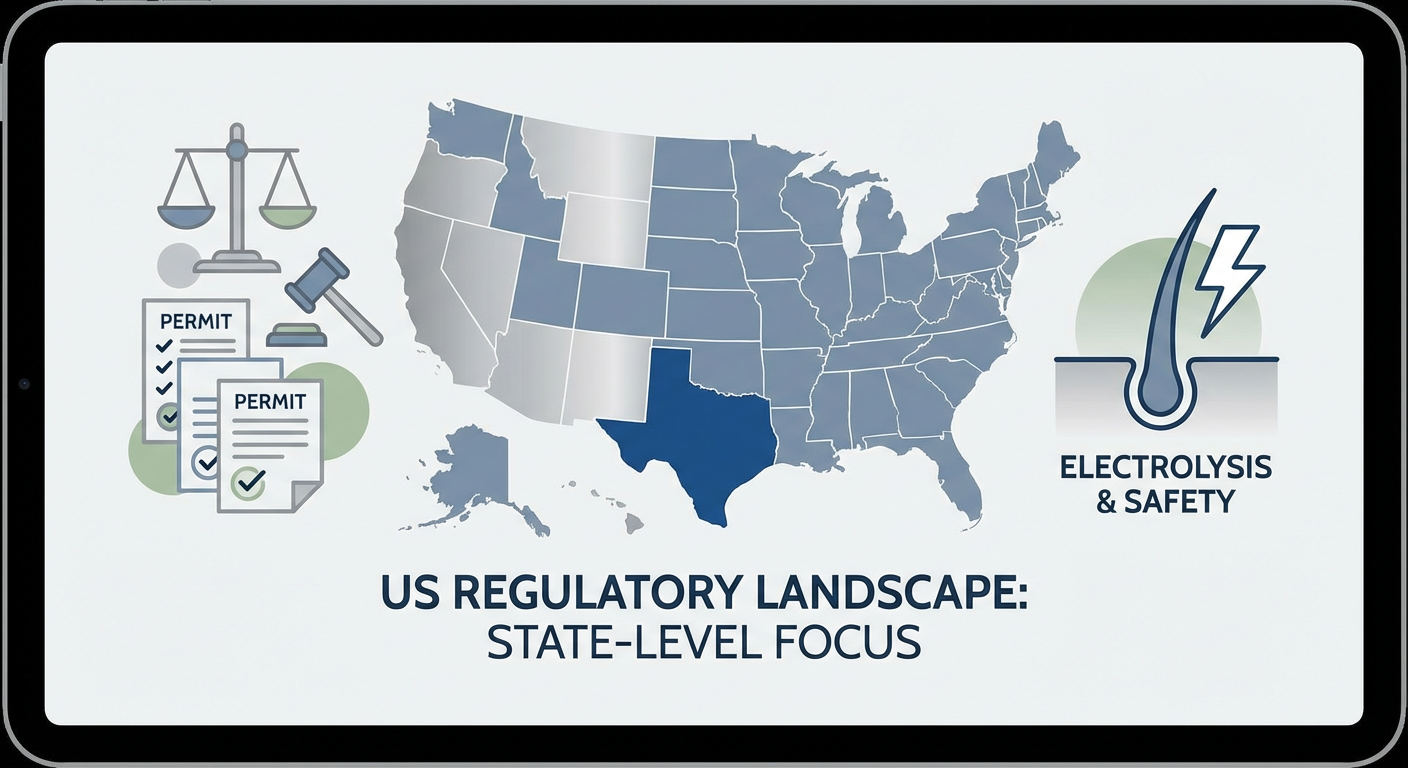
    69. Electrolysis Hair Removal Market Size, Share, Growth | Emerging Trends [2024-2034]
    70. Electrolysis Hair Removal Market Size, Share, Growth | Emerging Trends [2024-2034]
    71. Electrolysis Hair Removal Market Size, Share, Growth | Emerging Trends [2024-2034]
    72. Electrolysis Hair Removal Market Size | Industry Report 2033
    73. Electrolysis Hair Removal Market Size, Share, Growth | Emerging Trends [2024-2034]
    74. Electrolysis Hair Removal Market Size, Share, Growth | Emerging Trends [2024-2034]
    75. 150 Years of Electrolysis Excellence
    76. 150 Years of Electrolysis Excellence
    77. Electrolysis Hair Removal Market Size, Share, Growth | Emerging Trends [2024-2034]
    78. Electrolysis Hair Removal Market Size, Share, Growth | Emerging Trends [2024-2034]
    79. Electrolysis Case Study – Including Female Chin Hair Removal
    80. Electrolysis Hair Removal Market Size, Share, Growth | Emerging Trends [2024-2034]
    81. Case Study ( A Satisfied Client – Electrolysis Hair Removal Treatment Completed from Doreen Electrolysis Hair Removal Centre – Sharjah – UAE )   – Doreen Permanent Hair Removal
    82. Case Study ( A Satisfied Client – Electrolysis Hair Removal Treatment Completed from Doreen Electrolysis Hair Removal Centre – Sharjah – UAE )   – Doreen Permanent Hair Removal
  • A Patchwork of Oversight: An In-Depth Analysis of US State Regulations for Electrolysis Hair Removal with a Focus on Texas

    A Patchwork of Oversight: An In-Depth Analysis of US State Regulations for Electrolysis Hair Removal with a Focus on Texas

    San Antonio, Texas Regulations

    The landscape governing electrolysis hair removal in the United States is characterized by a complex and often contradictory patchwork of state-level regulations. Unlike many other professions that have achieved some degree of national standardization or interstate reciprocity, the practice of electrology – the only FDA-approved method for permanent hair removal – remains subject to widely divergent rules across the 50 states and the District of Columbia. This inconsistency creates significant disparities in practitioner qualifications, safety oversight, and consumer protection, directly impacting both the industry’s growth and the public’s access to safe, professional services. This report provides a comprehensive overview of this fragmented regulatory environment, highlighting key variations in licensing, training, and oversight, with a specific focus on the deregulated approach in Texas as a contrasting case study against more stringent states.

    As of 2025, a majority of U.S. jurisdictions, specifically 32 states and the District of Columbia, mandate that electrologists hold a professional license to practice. Conversely, 18 states, including populous ones such as Texas, New York, Pennsylvania, and Georgia, operate without any state-level licensing requirements for electrology. This fundamental division sets the stage for a wide spectrum of requirements regarding education, examination, and ongoing competency. The impact of this regulatory disparity extends beyond individual practitioners to influence business development, market competition, and ultimately, consumer safety. The inconsistencies reflect a long-standing debate between the perceived benefits of robust occupational licensing for consumer protection and the economic arguments for reducing barriers to entry and fostering market accessibility.

    Key Takeaways:

    • Regulatory Disparity: US electrolysis regulation is a fragmented patchwork; 32 states require licensing, while 18 (including Texas) do not, creating significant inconsistencies.
    • Texas’s Deregulated Market: Texas has no specific state license for electrologists, operating under broader cosmetology definitions without dedicated oversight for the invasive procedure.
    • Varied Training Standards: Licensed states show extreme variation in mandatory training hours, from 300 in Delaware to 1,100 in Massachusetts, reflecting no national standard.
    • Consumer & Practitioner Impact: This regulatory inconsistency impacts consumer safety (requiring diligent vetting in unregulated states) and creates challenges for practitioners in terms of multi-state operation and baseline competency assurance.
    • Economic & Safety Implications: Deregulation lowers barriers to entry but shifts risk to consumers, while robust licensing aims for higher safety standards but can increase service costs and limit market entry.

    1. Executive Summary

    The landscape governing electrolysis hair removal in the United States is characterized by a complex and often contradictory patchwork of state-level regulations. Unlike many other professions that have achieved some degree of national standardization or interstate reciprocity, the practice of electrology – the only FDA-approved method for permanent hair removal [15] – remains subject to widely divergent rules across the 50 states and the District of Columbia. This inconsistency creates significant disparities in practitioner qualifications, safety oversight, and consumer protection, directly impacting both the industry’s growth and the public’s access to safe, professional services. This section provides a comprehensive overview of this fragmented regulatory environment, highlighting key variations in licensing, training, and oversight, with a specific focus on the deregulated approach in Texas as a contrasting case study against more stringent states.

    As of 2025, a majority of U.S. jurisdictions, specifically 32 states and the District of Columbia, mandate that electrologists hold a professional license to practice. Conversely, 18 states, including populous ones such as Texas, New York, Pennsylvania, and Georgia, operate without any state-level licensing requirements for electrology [2]. This fundamental division sets the stage for a wide spectrum of requirements regarding education, examination, and ongoing competency. The impact of this regulatory disparity extends beyond individual practitioners to influence business development, market competition, and ultimately, consumer safety. The inconsistencies reflect a long-standing debate between the perceived benefits of robust occupational licensing for consumer protection and the economic arguments for reducing barriers to entry and fostering market accessibility [7].

    1.1. The Diverse Regulatory Landscape for Electrolysis Across US States

    The regulation of electrolysis hair removal across the United States is marked by extreme variation, forming a “patchwork” system rather than a unified national standard [1]. This lack of uniformity means that the prerequisites for practicing electrolysis differ drastically from one state border to the next, creating a complex environment for professionals and consumers alike.

    1.1.1. Uneven State Licensing Across the Nation

    The most striking disparity lies in the fundamental requirement for a license. A significant majority, 32 states plus Washington D.C., currently require electrologists to be licensed [2]. This group encompasses states with varying populations and geographical locations, implying a broad, though not universal, consensus on the need for formal oversight. However, a substantial minority of 18 states, including major economic hubs and populous areas like Texas, New York, Pennsylvania, and Georgia, do not impose any specific state licensing for electrologists [2]. This leaves millions of residents in areas where electrology services are legally provided without direct state certification or mandated training tailored to the profession [2].

    This uneven distribution of licensing requirements means that professional standards, even among “licensed” practitioners, can fluctuate wildly. For instance, an electrologist in Florida must complete 320 hours of approved training and pass an exam, regulated by the Florida Department of Health’s Electrolysis Council [6]. In stark contrast, a practitioner in neighboring Georgia has no such state-mandated requirements for education or examination. These differences are not merely bureaucratic; they reflect fundamentally different approaches to assessing the risk associated with electrolysis and the necessary level of public protection. As one industry source aptly puts it, “The only constant among states requiring electrologist licenses is that there is no constant!” [3].

    The origins of this patchwork are rooted in individual state legislative actions over decades. States independently evaluated the potential public health risks of electrolysis and decided whether to enact licensing laws, often influenced by professional associations and consumer advocacy groups. Those adopting licensing frequently did so between the 1980s and 2000s [1]. Other states, citing low incident rates, anti-regulatory philosophies, or a classification of electrolysis as a general cosmetic service (which may fall under broader cosmetology licenses), opted to not introduce specific electrology licenses [1].

    1.1.2. Implications for Quality, Safety, and Market Dynamics

    The diverse regulatory landscape carries significant implications for service quality, consumer protection, and market competition. In states with robust licensing, proponents argue that mandated training and exams ensure a baseline of professional competence, theoretically safeguarding clients from unqualified practitioners. Electrolysis, which involves inserting a fine probe into hair follicles to destroy them with an electric current, punctures the skin barrier and carries a risk of infection or scarring if performed improperly [10]. Licensing aims to mitigate these risks by enforcing education in areas like infection control, skin anatomy, and proper technique [10].

    Conversely, in unregulated states, while many reputable electrologists voluntarily pursue advanced training or national certifications (such as the Certified Professional Electrologist (CPE) designation from the American Electrology Association), there is no legal impediment for untrained individuals to perform the service [3]. This situation places a greater burden on consumers to diligently vet their providers’ qualifications, as the state provides no official assurance of competence or safety. An electrologist practicing in Arizona, an unlicensed state, cautions consumers: “Without one doubt the state licensed & registered [electrologist] is your best and only choice to achieve safe permanent hair removal” [12].

    From an economic standpoint, the regulatory variations influence market dynamics. States with extensive training and licensing requirements often have higher barriers to entry for new practitioners, leading to potentially higher labor costs and service prices. A clinic in heavily regulated Massachusetts, for instance, faces higher costs associated with training and maintaining licensed staff compared to a similar business in unregulated Texas. This can influence where clinics choose to establish themselves and how competitive service pricing can be. The market was estimated at $198 million in 2018 and is projected to exceed $430 million by 2033, growing at 4-5% annually [13]. However, industry analysts note that these “regulatory hurdles and licensing requirements” act as a significant “restraint” on the U.S. electrolysis market, hindering faster growth and making multi-state expansion challenging [7].

    1.2. Texas: An Anomalous Deregulated Market

    Texas stands as a prime example of a state that has largely adopted a deregulated approach to electrolysis hair removal. This contrasts sharply with many other states and even with its own internal regulatory framework for related services.

    1.2.1. Absence of Specific Electrologist Licensing

    In Texas, there is no specific license or certification required by the state exclusively for electrologists to perform permanent hair removal [4]. This places Texas among the 18 states nationwide that do not directly regulate electrology as a distinct profession [2]. Consequently, individuals can legally perform electrolysis in Texas without undergoing specialized state-mandated training, passing a dedicated electrology exam, or adhering to specific facility licensure tied to electrolysis. Electrology programs in Texas often train individuals to meet the standards of other regulated states, acknowledging the void in state-specific credentials [4].

    While Texas law broadly defines “hair removal” as an act of cosmetology, encompassing procedures using “depilatories, tweezers, or other devices,” [5] this general classification does not translate into specific electrology oversight. A general cosmetology or esthetician license is required for body hair removal services falling under the Texas Department of Licensing and Regulation (TDLR) [5]. However, there is no specialized “electrologist” credential or examination offered by TDLR. This means that a practitioner with a basic esthetician license, focused on skin care and temporary hair removal methods, could legally perform electrolysis without any specific training in the intricate and invasive nature of the procedure itself. Many electrologists in Texas therefore operate within a regulatory gray area, some holding general cosmetology licenses, others operating with only private training and no state credential at all.

    1.2.2. Pros and Cons of the Texas Model

    The deregulated environment in Texas offers several advantages, primarily reduced barriers to entry for practitioners. Individuals can establish an electrolysis practice more easily, often after attending private training institutions or through apprenticeships, without the financial and time investments required for state-mandated licensing and examinations. This flexibility can foster entrepreneurial activity and potentially lead to a greater supply of providers, which could in turn offer more competitive pricing for consumers. For instance, the American Institute of Education (AIE) Electrology Programs highlights the time and cost savings for Texas students due to the state’s no-license status [4].

    However, this model also presents significant drawbacks, particularly concerning consumer protection. The absence of state oversight means there’s no official mechanism to verify an electrologist’s training, competence, or adherence to sanitation standards. Consumer advocates and professional electrologists express concerns that “uneducated unlicensed” providers might offer electrolysis without adequate training, increasing the risks of complications such as skin burns, infections, scarring, or ineffective treatment [12]. This places the onus entirely on the consumer to research and vet potential practitioners, a task that can be difficult without clear state-mandated credentials.

    1.2.3. Contrast with Laser Hair Removal Regulation in Texas

    Interestingly, Texas maintains a much stricter regulatory stance on laser hair removal, which provides an insightful contrast to its hands-off approach to electrolysis. Since 2010, Texas has mandated that laser hair removal can only be performed by a certified technician under the direct supervision of a physician, with clinics and practitioners registered through the Department of State Health Services [8]. This stringent regulation was enacted due to documented safety concerns regarding lasers, which can cause severe burns, pigment changes, and eye damage if operated improperly [8].

    This dual approach highlights how Texas calibrates its regulatory efforts based on perceived risk. While both electrolysis and laser hair removal aim for permanent hair reduction, Texas legislators apparently deemed laser technology to be significantly higher risk, warranting comprehensive medical oversight. Electrolysis, which uses a fine probe and electrical current, is traditionally considered lower risk when performed with proper hygiene and technique, perhaps explaining its comparative lack of regulation. This is part of a broader trend in Texas to deregulate services deemed lower risk, including services like eyebrow threading in 2017 [5].

    1.2.4. Impact on Texas Practitioners

    For electrology professionals in Texas, the deregulated environment presents a mixed bag. On one hand, it offers ease of entry and entrepreneurial freedom. Skilled individuals from other states can quickly establish a practice, and local beauty professionals can integrate electrolysis into their service offerings without additional state-specific licensure. On the other hand, the absence of a state license can challenge professional credibility. Many Texas electrologists proactively seek voluntary credentials, such as graduation certificates from prominent electrology schools (often those meeting California’s stringent curriculum standards), or obtain the Certified Professional Electrologist (CPE) designation from the American Electrology Association (AEA) [3]. These voluntary certifications serve as a means for practitioners to signal their commitment to high standards and competence in a market where state validation is absent. The Electrology Association of Texas, an AEA affiliate, also plays a role in promoting best practices and informal standards, attempting to fill some of the gaps left by the lack of state regulation.

    1.3. Wide Variations in Licensing Requirements: Training, Exams, and More

    Beyond the fundamental question of whether a license is required, states that do mandate licensing for electrologists exhibit vast differences in their specific requirements for training, examinations, and ongoing professional development. This further compounds the complexity of the national regulatory landscape.

    1.3.1. Disparity in Training Hours: From 300 to 1,100 Hours

    Perhaps the most significant variation lies in the mandated practical and theoretical training hours. The range is astonishingly wide, indicating a profound lack of consensus on the minimum education required for safe and effective practice. For example, Delaware requires only 300 hours of classroom training (or a 600-hour apprenticeship) for licensure [13]. Similarly, Florida sets its requirement at 320 hours [6]. These figures contrast starkly with Massachusetts, which mandates an extensive 1,100 hours of instruction – the highest in the nation [1]. This is nearly a full year of intensive, full-time study and more than triple the hours required in Delaware. Many other licensed states typically cluster around the 500-600 hour mark, including California, Illinois, and Ohio [1].

    These disparities often reflect historical context, the influence of state professional associations, or different regulatory philosophies. Some states may align electrolysis with other cosmetology specialties, which typically have shorter training requirements. Others view it more akin to allied health professions, thus demanding more extensive education. For both consumers and practitioners, this means that the phrase “licensed electrologist” can represent vastly different levels of foundational training; a newly licensed electrologist in Massachusetts will have significantly more state-mandated education than one in Florida or Delaware.

    1.3.2. Examination and Certification Standards

    Most states that license electrologists require candidates to pass a rigorous examination to demonstrate competency. However, the nature and standardization of these exams also vary. Over a dozen states require candidates to pass the International Board of Electrologist Certification (IBEC) exam, a standardized national exam developed with input from the industry [1]. States like Connecticut, Florida, Illinois, and Massachusetts include the IBEC exam in their licensing criteria [1]. The IBEC exam typically assesses both theoretical knowledge (e.g., hair biology, basic electricity, skin health, infection control) and sometimes a practical component.

    However, the IBEC exam is not universally adopted. Some states administer their own state-specific examinations, while others may add additional tests. For example, New Jersey requires candidates to pass the IBEC exam *and* a state jurisprudence exam covering local laws and regulations [1]. North Dakota is a notable outlier, requiring 600 hours of training but explicitly stating “no examination” for initial licensure [1]. The lack of a single, universally adopted standard exam means that licensure in one state does not automatically translate to the ability to practice in another. Limited reciprocity typically means a licensed electrologist moving to a new state must apply for a new license, often proving equivalent training hours and passing the new state’s specific exam [14].

    1.3.3. Age, Education Prerequisites, and Alternative Pathways

    Standard prerequisites commonly include a minimum age of 18 years and a high school diploma or GED [1]. However, some states, like Delaware, allow licensure at age 16 with a 10th-grade education [13]. On the higher end, Oklahoma sets the minimum age at 21 and uniquely mandates that electrologist candidates hold a Bachelor’s degree in an approved field, in addition to completing a 600-hour internship [1]. This makes Oklahoma an extreme outlier, reflecting a view of electrology as a highly specialized, quasi-medical profession rather than a trade [1].

    Several states also offer alternative pathways to licensure, most commonly through apprenticeships. California, for instance, allows a two-year apprenticeship under a licensed electrologist as an alternative to 600 classroom hours [1]. Delaware offers a 600-hour apprenticeship alternative to its 300-hour school program [13]. These apprenticeship options can broaden access for individuals who prefer on-the-job training or who live in areas without formal electrology schools. However, the quality of apprenticeship training can vary based on the mentor, and the availability of qualified mentors can be a limiting factor [3].

    1.3.4. Continuing Education and Renewal Requirements

    Many licensed states require electrologists to complete periodic continuing education (CE) for license renewal, aiming to keep practitioners’ skills and knowledge current. Common requirements range from 10 to 20 hours every two years, with states like Illinois and New Jersey mandating 20 hours biennially [1]. Massachusetts requires 10 hours of CE every two years [1]. These CE requirements often cover topics such as sanitation, infection control, new technologies, or relevant medical updates.

    However, a significant number of licensed states, including prominent ones like California, do not currently require continuing education for electrologists. This means that once licensed, practitioners in these jurisdictions are not legally compelled to refresh their knowledge, leading to a potential disparity in ongoing competency. The presence or absence of CE requirements signifies another philosophical divergence in state regulation: some states actively manage ongoing practitioner competency, while others primarily focus on initial qualification.

    1.4. Regulatory Oversight: Cosmetology Boards vs. Medical Boards

    The governmental body responsible for overseeing electrology also varies significantly from state to state, reflecting different classifications of the profession and influencing the regulatory standards applied.

    1.4.1. Cosmetology Boards: Classifying Electrology as a Beauty Service

    In roughly half of the states that license electrologists, oversight falls under boards traditionally responsible for cosmetology, barbering, or similar beauty services [1]. In these instances, electrology is often treated as a specialized license within the broader cosmetology umbrella. Examples include California, Arkansas, Michigan, and Wisconsin, where the licensing process (including facility inspections and hygiene rules) tends to align with those for other salon services [13]. This model frequently means that electrologists are subject to the same general salon regulations as manicurists or cosmetologists, which can offer consistency across personal care establishments. However, some electrologists argue that their profession, involving invasive procedures and medical considerations, warrants more specialized oversight than general beauty boards might provide [13].

    1.4.2. Health/Medical Boards: Treating Electrology as Allied Health

    A smaller but significant number of states place electrology under the purview of health departments or medical boards, signifying a classification of the profession as allied health. Florida’s Electrolysis Council operates under its Department of Health’s Board of Medicine [1]; New Jersey’s Electrologist Advisory Council is part of its State Medical Board [1]; and Ohio regulates electrologists through its State Medical Board [1], and Connecticut has a Board of Examiners of Electrologists operating under its health department [13]. These nuances dictate business models, investment in infrastructure, and ongoing compliance requirements.

    1.5. Safety, Consumer Protection, and the Rationale Behind Regulation

    The core rationale underpinning electrolysis regulation, where it exists, is consumer protection and public safety. Electrolysis is an invasive procedure, making proper training and adherence to hygiene protocols critical.

    1.5.1. Invasive Nature and Associated Risks

    As the only FDA-approved method for permanent hair removal, electrolysis involves inserting a fine needle or probe into individual hair follicles and delivering electrical current to destroy the follicle [15]. This process necessarily breaks the skin barrier, creating a potential pathway for infection if sterilization techniques are insufficient. Risks include bacterial, viral, or fungal infections, skin irritation, hyperpigmentation or hypopigmentation, and scarring if the procedure is performed improperly or with incorrect settings [11]. Licensing proponents argue that without mandatory training in areas such as single-use probe protocols, effective sterilization (e.g., proper use and monitoring of autoclaves), bloodborne pathogen prevention, and proper probe insertion techniques, clients are exposed to unnecessary risks [10]. Some states even mandate specific equipment, such as an autoclave and regular (e.g., monthly) spore testing of that autoclave, to ensure truly sterile instruments [11]. This case, though involving a laser, underscored how practicing beyond one’s scope and inadequate credentialing can lead to significant patient harm [11]. In another anecdotal instance from an AEA conference, a client experienced a minor skin infection because a practitioner reused probes without proper sterilization – a preventable incident with basic training [10]. Such examples reinforce the argument that standardized training and oversight are vital to prevent lasting consequences for clients.

    1.5.3. Professional Standards and Consumer Trust

    Beyond preventing physical harm, regulation contributes significantly to fostering consumer trust and professionalizing the electrology field. A client’s confidence is often enhanced by knowing their practitioner is “state licensed” or “registered,” implying a verified level of skill and adherence to established standards. This builds credibility for the individual practitioner and elevates the perception of the profession as a whole. Conversely, in unregulated states like Texas, the onus is on the consumer to perform extensive due diligence (e.g., checking for voluntary certifications like CPE, reviewing training certificates, and seeking testimonials) to ensure their electrologist is qualified [3].

    1.5.4. Balancing Accessibility and Safety: The Ongoing Debate

    The regulation of electrolysis often involves a balancing act between ensuring public safety and maintaining accessibility to services. Proponents of robust licensing emphasize the need for standardized training due to the invasive nature of the procedure and the potential for serious complications. They also highlight that electrologists often work on sensitive areas of the body, where mistakes can have significant psychological and cosmetic impact. Opponents, however, contend that overly strict licensing can create artificial barriers to entry, increasing costs for both practitioners and consumers, and potentially limiting service availability, especially in rural areas. They argue that the costs of compliance may outweigh the actual safety benefits for a procedure considered relatively low-risk when performed competently and that self-regulation and voluntary certification could achieve similar consumer confidence without the economic burden of state mandates. This tension between public protection and economic opportunity remains at the heart of legislative debates surrounding occupational licensing across many professions, including electrology.

    1.6. Business and Market Impact: How Regulation Affects the Industry

    The heterogeneous regulatory landscape profoundly shapes the business environment for electrolysis services, influencing market entry, expansion capabilities, workforce mobility, and pricing strategies.

    1.6.1. Barriers to Entry and Workforce Mobility

    For aspiring electrologists, the requirements for entering the profession vary dramatically by state. In heavily regulated states such as Massachusetts (1,100 hours of training) [1] or New Jersey (600 hours plus IBEC exam and state jurisprudence exam) [1], individuals must invest significant time (months to over a year) and financial resources (often thousands of dollars in tuition) before becoming licensed and legally able to earn an income. This stands in stark contrast to completely unregulated states like Texas, where an individual can potentially begin practicing after a private short course, without state certification [4]. This discrepancy creates uneven playing fields for new entrants. While deregulation in Texas fosters easier entry, it may lead to a workforce with highly variable skill levels. For businesses, this impacts recruitment and expansion, as finding qualified, license-eligible staff who can seamlessly transfer across state lines becomes a significant hurdle. A 2025 market analysis identified “regulatory hurdles and licensing requirements” as a “major restraint” on the U.S. electrolysis market, complicating both new market entry and business expansion [7].

    1.6.2. Challenges for Multi-State Business Expansion

    Electrolysis businesses, particularly growing clinics or med-spas, face substantial challenges when attempting to expand their operations across state borders. A company established in an unregulated state like Colorado, for example, encounters entirely new compliance requirements if it wishes to open a branch in licensed Nebraska (which demands 600 hours of training and a state exam) [13]. This often necessitates sending existing staff for additional training, engaging in costly licensure-by-endorsement processes, or hiring new, local licensed electrologists. Industry sources suggest that preparing for multi-state compliance can take 6 to 12 months, incurring thousands of dollars in legal fees, training costs, and delayed revenue [7]. Consequently, many electrolysis businesses tend to remain local or regional, as the administrative and financial burdens of navigating diverse state regulations outweigh the benefits of broader expansion. The lack of standardized licensing or interstate compacts, analogous to those in nursing, severely limits labor mobility and business scalability [14].

    The “Electrolysis LLC” case demonstrates this effectively: a business thriving in deregulated Texas faced significant delays and over $15,000 in additional costs to open a single location in regulated Florida, due to mandatory training and facility inspections . The limited supply in such areas can drive up service prices, as clients pay a premium for verified expertise. Economists often argue that overly restrictive licensing can create an artificially constrained supply, leading to inflated consumer costs. However, proponents argue that such premiums are justified by the assurance of higher-quality and safer services.

    The U.S. electrolysis market is projected to reach over $430 million by 2033 [13]. If states move towards more balanced and harmonized regulations, it could foster a more competitive market by “encouraging new entrants and expanding service availability,” ultimately benefiting consumers through potentially lower prices and greater access [7].

    1.6.4. Adaptability and Compliance Costs

    Existing electrolysis clinics must remain adaptable to regulatory changes. When Illinois first mandated electrologist licenses in 2005, many long-practicing individuals were required to seek additional training or obtain grandfathered status to continue legal practice [9]. Similar “sunset” provisions, as seen in Illinois’s Electrologist Licensing Act, require periodic legislative review of professional licenses, providing opportunities to reassess relevance and necessity [9]. The Illinois legislature’s decision in 2023 to extend electrology licensure to 2029, following a positive review that highlighted its “low-cost regulation that provides consumer confidence,” indicates a continued perceived value of oversight in certain states [9].

    Compliance also involves ongoing costs: licensed establishments typically pay initial and renewal fees, and must adhere to state-mandated sanitary codes, often incurring inspection costs. While unlicensed states spare businesses these direct governmental compliance expenses, many reputable establishments voluntarily adopt similar high standards to manage liability risks and meet client expectations. Insurance providers, for example, may offer better rates to licensed electrologists or those demonstrably adhering to industry best practices, creating an indirect financial incentive to meet regulatory-level standards even where not legally mandated. In essence, regulation introduces overhead but also professionalizes the field, and businesses must navigate these dynamics to thrive in the growing electrolysis market.

    The diverse, often fragmented regulatory framework for electrolysis hair removal across the U.S. represents a complex interplay of consumer protection, public health concerns, economic considerations, and varying state philosophies. Texas’s largely deregulated approach provides a stark contrast to states with stringent licensing mandates, highlighting both the opportunities and potential risks associated with the absence of formal state oversight. The absence of a national standard or widespread reciprocity means that the industry continues to operate as a collection of localized markets, impacting everything from practitioner training and mobility to business expansion strategies and consumer choice. As the electrolysis market continues to grow, there is an ongoing push from industry associations and some state regulators toward greater standardization and enhanced consumer protections, aiming to strike a balance that supports both professional excellence and widespread access to safe services.

    Introduction to Electrolysis Regulation in the US
    Introduction to Electrolysis Regulation in the US – Visual Overview

    2. Introduction to Electrolysis Regulation in the US

    The landscape of cosmetic and personal care services in the United States is characterized by a complex tapestry of state-level regulations. Among these, the professional practice of electrolysis hair removal stands out as a prime example of this inconsistent and often fragmented regulatory environment. Electrolysis, recognized by the U.S. Food & Drug Administration (FDA) as the only permanent method of hair removal, involves the insertion of a fine probe into individual hair follicles, through which an electric current is delivered to destroy the hair growth cells[15]. Given its invasive nature, which breaks the skin barrier and exposes clients to potential risks such as infection, scarring, or tissue damage if performed improperly, the question of robust regulation has naturally arisen across jurisdictions[11], [12]. However, as of 2025, there is no unified national standard governing the practice of electrolysis in the United States. Instead, electrologists operate within a “patchwork of state regulations” where licensing requirements, training mandates, and oversight structures vary dramatically from one state to another[1], [2]. This section delves into this inconsistent regulatory framework, examining the stark differences in licensing requirements, educational pathways, and supervisory authorities across the fifty states and the District of Columbia. We will highlight states that mandate licenses versus those that do not, analyze the wide spectrum of training standards (from a mere 300 hours in some states to a demanding 1,100 hours in others), and explore how these disparities impact practitioners, businesses, and, ultimately, consumer safety and access to services. Through a detailed comparison, with a particular focus on the unique, deregulated approach taken by Texas, this analysis seeks to illuminate the challenges and opportunities presented by the current decentralized regulatory model in the electrolysis industry.

    2.1 The Patchwork of State Regulations: A Lack of National Standard

    The most striking feature of electrolysis regulation in the U.S. is its profound inconsistency. The notion of a single, overarching national standard for electrologists is entirely absent. Instead, states have independently determined the necessity, scope, and intensity of regulation, leading to a highly varied environment for both practitioners and consumers. This “patchwork” translates into significant differences in the legal prerequisites for performing electrolysis, affecting everything from basic training hours to continuing education requirements and the type of examinations mandated[3]. As of February 2025, the majority of U.S. states and the District of Columbia—specifically, 32 states plus D.C.—require prospective electrologists to obtain a professional license before they can legally practice[1], [2]. These states typically outline specific educational curricula, practical experience thresholds, and often require successful completion of one or more examinations. In contrast, a substantial minority of 18 states have opted for a deregulated approach, where no state-level licensing or certification is required for electrology services[1], [2]. This group includes economically significant states such as Texas, New York, Pennsylvania, and Georgia, which combined represent tens of millions of residents within regions where electrology is not directly regulated by the state[1], [2]. The implications of this disparity are manifold. For example, in New York, a heavily populated state, an individual can practice electrolysis with no state credential, relying solely on private training or self-acquired skills[1], [2]. Conversely, in Florida, electrologists must complete at least 320 hours of approved training and pass a mandated state exam to be legally cleared for practice[6]. Even adjacent states can present stark differences; while Texas imposes no dedicated electrology license, its neighbor Arkansas requires 600 hours of education and an examination[3]. This fragmented regulatory landscape has primarily evolved over several decades, with individual states making autonomous decisions based on perceived public risk, lobbying efforts from professional associations, and differing governmental philosophies regarding occupational licensing. There is no federal oversight for electrology; all regulation rests at the state level[3]. As observed by one industry source, “The only constant among states requiring electrologist licenses is that there is no constant!”[3]. This variability poses challenges for businesses considering multi-state expansion and for practitioners seeking career mobility across state lines, often necessitating additional training, fees, and examinations to comply with local laws[7]. The market analysis conducted by Emergen Research specifically cites varying state licensing rules as a “major restraint” on the U.S. electrolysis market, hindering new entrants and limiting service expansion[7]. The ongoing debate surrounding this regulatory patchwork often centers on the balance between consumer protection and economic accessibility. Proponents of robust licensing argue that it ensures a baseline of training and competence, safeguarding clients from potential harm associated with an invasive procedure[10], [12]. They advocate for stringent standards to prevent complications like infections and scarring, which can arise from improper technique or inadequate sanitation[11]. On the other hand, critics argue that excessive licensing creates undue barriers to entry, increases costs for practitioners, and can limit the availability of services, particularly in underserved areas. They suggest that voluntary certifications and market demand for quality could adequately protect consumers without the need for extensive state intervention.

    Table 1: State Licensing Status for Electrolysis Hair Removal (as of Feb 2025)

    Regulatory StatusNumber of States/JurisdictionsExamples of States
    Requires License32 States + D.C.Massachusetts, Florida, California, Illinois, New Jersey, Ohio, Connecticut, Tennessee, Nebraska
    No License Required18 StatesTexas, New York, Pennsylvania, Georgia, Wyoming, Colorado, Mississippi, Missouri, South Carolina, South Dakota, Virginia, Washington, West Virginia, Kentucky, Minnesota, New Mexico, North Carolina, Arizona

    Source: Electrology.edu, 2025; Professionals.electrology.com, 2026.[1], [2], [1] Despite the prevailing inconsistency, there is a gradual trend towards greater standardization. Organizations like the American Electrology Association (AEA) actively campaign for licensure in unregulated states, aiming to “secure legislative protection across all states”[7]. Furthermore, some states are exploring inter-state compacts or reciprocity agreements to ease cross-state credentialing, which could “foster a more competitive market” and encourage new entrants[7]. While progress is slow, the industry appears to be moving towards a future with clearer and more uniform regulations.

    2.2 Texas as a Case Study: A Deregulated Approach

    Texas serves as a compelling case study of a deregulated environment for electrolysis hair removal. Distinct from many states, Texas does not require a specific license or direct regulation for electrologists to practice[4]. This positions Texas as one of the states where individuals can legally perform electrolysis without a specialized state-issued credential, directly contrasting with the stringent licensing requirements found in many other beauty and personal care professions within the state. Under Texas law, the removal of “superfluous hair from a person’s body using depilatories, tweezers, or other devices” is broadly defined as an act of cosmetology[5]. This statutory language implies that a general Cosmetology Operator or Esthetician license might be required to perform body hair removal using various methods, including electrolysis[5]. However, in practice, Texas does not have a dedicated mechanism to license, test, or certify specifically for electrolysis skills. This creates a regulatory gray area where many electrologists in Texas choose to hold a general cosmetology or esthetician license to cover broader hair removal services, while others may operate without such a license, capitalizing on the absence of specific electrolysis oversight. Effectively, practitioners in Texas are subject to no state-mandated electrology-specific training hours or examinations, diverging sharply from states that require specialized education and testing for this invasive procedure. This deregulated approach in Texas presents both advantages and disadvantages. On one hand, it significantly lowers barriers to entry for individuals interested in providing electrolysis services. Entrepreneurs can establish an electrolysis business with greater ease, and practitioners can gain skills through private courses or apprenticeships without the time and financial burden associated with state-mandated training programs and examinations. This flexibility has potentially contributed to a higher concentration of electrolysis clinics in major urban centers across Texas. However, the absence of specific licensing also carries notable trade-offs, particularly concerning consumer protection. Without state oversight, consumers in Texas shoulder a greater responsibility in vetting the qualifications of their electrologist. Critics argue that this environment allows “uneducated unlicensed” providers to offer electrolysis services without proper training in crucial areas such as sterilization, skin anatomy, and proper technique, thereby increasing the risk of adverse outcomes like burns, infections, or scarring[12]. The state essentially relies on market forces and consumer diligence to ensure service quality and safety. Adding an interesting layer to Texas’s regulatory stance is its stringent approach to laser hair removal. In stark contrast to electrolysis, Texas has, since 2010, mandated that laser hair removal be performed only by certified technicians under the direct supervision of a physician, with both facilities and practitioners requiring registration through the Department of State Health Services[8]. This divergent regulatory philosophy highlights how Texas calibrates its oversight based on the perceived risk level of a procedure. While electrolysis, which uses electrical current via a fine probe, is generally considered lower-risk when proper hygiene is maintained, laser devices were deemed higher risk due to their potential for burns and pigment damage, thus warranting tight control[8]. This shows a broader trend in Texas towards deregulating what it views as lower-risk beauty services, such as the deregulation of eyebrow threading in 2017[5], while maintaining strict control over more hazardous procedures. For electrology professionals in Texas, this environment is a double-edged sword. While it offers unparalleled ease of entry, it also places the onus on them to establish and maintain professional credibility in the absence of state-sanctioned verification. Many reputable electrologists in Texas voluntarily pursue supplementary credentials, such as certificates from out-of-state electrology schools or the nationally recognized Certified Professional Electrologist (CPE) designation, to signal their competence and instill client confidence[3]. Industry organizations, such as the Electrology Association of Texas (an affiliate of the American Electrology Association), also play a crucial role in advocating for best practices and promoting high standards within the deregulated market. This ensures that even without state mandates, many Texas-based professionals strive for excellence, underscoring the industry’s capacity for self-regulation where formal governmental oversight is absent.

    2.3 Wide Variations in Licensing Requirements: Training, Exams, and More

    Beyond the fundamental question of whether a license is required, the states that do mandate licensure for electrologists exhibit striking variations in their specific requirements. These differences encompass the number of training hours, the nature of examinations, age and education prerequisites, and the availability of alternative pathways such as apprenticeships. These variations underscore the absence of a consensus on what constitutes adequate preparation for safely and effectively performing electrolysis.

    2.3.1 Training Hours: A Spectrum from 300 to 1,100 Hours

    The most prominent divergence lies in the number of mandatory training hours. Some states demand a relatively modest duration of schooling, while others require extensive educational commitments. * **Lowest Requirements:** States such as Delaware set their minimum training at just **300 hours** of classroom instruction, while also offering a 600-hour apprenticeship alternative[3]. Florida is another example with a requirement of **320 hours** of state-approved training[6]. Iowa mandates 425 hours[3]. These lower-hour requirements are among the least demanding in the nation. For perspective, Delaware’s 300-hour mandate is approximately 27% of the highest requirement nationwide[3]. * **Highest Requirements:** At the other end of the spectrum, Massachusetts stands out with the nation’s most stringent requirement, mandating **1,100 hours** of instruction for licensure, which translates to almost a year of full-time study[1]. This significantly higher number reflects Massachusetts’s conservative approach to consumer safety and professional competence. * **Common Range:** Many other licensing states cluster around a middle ground, typically requiring between **500 and 600 hours** of training. Examples include California, Illinois, and Ohio. This wide range reflects different philosophical approaches: some states align electrolysis more closely with cosmetology, where shorter training periods are common for specialized services, while others view it more akin to allied health professions, warranting more extensive preparational education. A direct consequence is that two individuals holding “licensed electrologist” titles in different states may have vastly different levels of foundational training, impacting their initial skill sets and understanding of complex cases.

    2.3.2 Examination and Certification

    While most licensing states require an examination, the type and format of these tests also vary. * **Standardized Exams:** A significant number of states, over a dozen, utilize the **International Board of Electrologist Certification (IBEC) exam** as part of their licensure process[1]. Developed with industry input, the IBEC exam serves as a standardized measure of theoretical knowledge in areas such as hair biology, electricity, skin health, and infection control. States like Connecticut, Florida, Illinois, Massachusetts, and New Jersey all specify the IBEC exam in their licensing criteria[1]. * **State-Specific Exams and Additions:** Some states employ their own proprietary examinations, while others combine the IBEC exam with additional state-specific components. For instance, New Jersey requires candidates to pass the IBEC exam *and* a state jurisprudence exam covering local laws and regulations governing electrology practice[1]. Tennessee offers flexibility, allowing candidates to choose between the IBEC exam or one administered by another recognized electrology organization (SCMHR)[1]. * **No Exam Requirement:** Notably, a few states are outliers in not requiring an examination at all. North Dakota, for example, issues an electrologist license based solely on the completion of 600 hours of training and continuing education, with “no examination” required for initial licensure[1]. This approach, which focuses entirely on verified training hours rather than a competency test, is rare among regulating states. The lack of universal reciprocity between state licenses further complicates matters. An electrologist licensed in one state typically cannot automatically practice in another without meeting the new state’s specific requirements, which often include passing their local examination or demonstrating equivalency of training. This restricts workforce mobility and can create barriers for skilled practitioners.

    2.3.3 Age and Education Prerequisites

    General eligibility criteria also show minor but significant differences: * **Common Requirements:** The most common prerequisites include a minimum age of **18 years** and at least a **high school diploma or General Educational Development (GED)** equivalent[1]. * **Lower Age/Education:** Delaware is more permissive, allowing licensure at **16 years of age** with a minimum of a 10th-grade education[3]. * **Higher Age/Education:** On the more restrictive end, Oklahoma mandates a minimum age of **21 years** and uniquely requires candidates to possess a **Bachelor’s degree in an approved field**, in addition to 600 hours of internship, before they can be licensed as an electrologist[1]. This requirement is an extreme outlier, as no other state imposes a general college degree for entry into the electrology profession.

    2.3.4 Apprenticeships vs. Formal Schooling

    Several states offer apprenticeship programs as an alternative or supplementary pathway to licensure, reflecting a pragmatic approach to training: * **Apprenticeship Options:** States like California permit a **2-year apprenticeship** under a licensed electrologist as an alternative to completing 600 classroom hours[1]. Delaware similarly allows for a **600-hour apprenticeship**, which is twice its formal school requirement but provides a hands-on learning route[3]. Kansas and Hawaii also feature apprenticeship pathways, though these typically require more total hours than school-based programs. These apprenticeship routes are designed to provide flexibility for aspiring practitioners who may not have access to formal electrology schools (which are often few and far between) or who prefer an earn-as-you-learn model. However, the success of such programs often hinges on the availability of qualified mentors and the consistency of the training provided, factors that can be difficult to standardize.

    2.3.5 Continuing Education (CE) and Renewal Requirements

    Licensure often is not a one-time event; many states require ongoing professional development to maintain a license: * **Mandatory CE:** Approximately half of the states with licensure mandate **continuing education (CE)** for license renewal[1]. Common requirements range from **10 to 20 hours** every two years. For example, Illinois and New Jersey both require 20 hours of CE biennially[1], [1], while Massachusetts requires 10 hours every two years[1]. These CE courses often cover critical updates in sanitation, infection control, new technologies, and sometimes basic life support. * **No Mandatory CE:** In contrast, other states that license electrologists, such as California, do not impose mandatory CE requirements for license renewal. In these jurisdictions, renewal typically involves paying a fee and demonstrating continued practice without the need for periodic knowledge updates. The presence of CE requirements signifies a state’s commitment to ensuring ongoing competency and adaptation to evolving industry standards, particularly in a field where technology and safety protocols can advance. Its absence, conversely, places the entire onus of staying current solely on the individual practitioner. In summary, the sheer breadth of variations in training hours, examination formats, eligibility requirements, and continuing education expectations across the U.S. demonstrates a profound lack of uniformity in how electrologists are prepared and overseen. This inconsistency shapes the competency profile of the national electrology workforce and significantly impacts professional mobility and business development strategies.

    2.4 Who Regulates Electrolysis? Cosmetology vs. Medical Boards

    The regulatory authority responsible for overseeing electrolysis also varies significantly from state to state. This departmental assignment often reflects how a state fundamentally perceives the practice of electrolysis—whether it is viewed primarily as a beauty service, an allied health procedure, or a specialized profession deserving of its own governing body. These distinctions have practical implications for the scope of practice, sanitation standards, and overall enforcement rigor.

    2.4.1 Cosmetology Boards: Treating Electrolysis as a Beauty Service

    In a substantial number of states, electrology falls under the purview of boards that also regulate other personal care services such as cosmetology, esthetics, and barbering. Approximately 20 states utilize this model, frequently designating electrolysis as a specialty license within the broader cosmetology regulatory framework, often denoted as a “Licensed Electrologist (LE)” or “Registered Electrologist (RE)”[1], [1]. States such as California, Arkansas, Michigan, and Wisconsin exemplify this approach. In these states, the process for obtaining an electrology license typically mirrors that for other beauty professionals: candidates complete a prescribed curriculum and pass a board examination, aligning electrology with general esthetic or barbering standards[3]. The primary implication of this oversight model is that electrologists are often subject to the same general salon regulations, including facility inspections and hygiene rules, that apply to beauty establishments. While this can foster consistency within the personal care industry, some electrologists express concern that their practice, which involves invasive procedures with needles and electrical currents, may not receive the specialized attention to health and clinical standards that it warrants under a broader cosmetology board.

    2.4.2 Health/Medical Boards: Treating Electrolysis as Allied Health

    A significant minority of states categorize electrolysis under the domain of state health departments or medical boards, signifying a view of the practice as an allied health procedure with inherent medical considerations. For instance: * Florida: Electrologists in Florida are regulated by the Department of Health’s Electrolysis Council, which operates under the Board of Medicine[1]. * New Jersey: An Electrologist Advisory Committee functions under New Jersey’s State Medical Board of Examiners, providing oversight for the profession[1], [1]. * Ohio: The State Medical Board of Ohio is responsible for licensing electrologists in the state[1]. * Oklahoma: As previously noted, Oklahoma’s exceptionally high educational and age requirements stem from its placement under the State Board of Medical Licensure, reflecting a perception of electrology as a specialized, quasi-medical field[1]. This regulatory assignment typically arises from concerns regarding the invasive nature of electrolysis, the potential for infection, and the need for stringent infection control protocols. States operating under medical board oversight often impose more rigorous training requirements (e.g., specific blood-borne pathogen training) and may regulate the scope of practice more tightly, such as requiring physician supervision for electrologists who also perform laser hair removal. The underlying philosophy is that because electrolysis permanently alters body tissue, it demands a higher standard of healthcare-level oversight rather than general beauty industry regulation. The impact on practitioners often means more clinically oriented scrutiny, stricter sterilization requirements, and potentially closer collaboration with dermatologists or medical settings.

    2.4.3 Dedicated Electrology Boards: A Blended Approach

    A smaller number of states have established standalone boards or commissions specifically for electrology, granting the profession its own dedicated voice and regulatory body. * Massachusetts: The state boasts a Board of Registration of Electrologists, which operates independently to oversee the profession[1]. * Connecticut: Electrologists are regulated by a Board of Examiners of Electrologists, which functions under the state’s health department infrastructure[1]. These dedicated boards typically comprise experienced electrologists and sometimes other healthcare professionals who focus exclusively on issues pertinent to electrology, ranging from curriculum development to consumer complaint resolution. The advantage of this model is specialized attention and the ability to tailor regulations to the unique aspects of the profession. For instance, Massachusetts’s board has been instrumental in updating regulations to mandate modern sterilization techniques (like autoclave use) and maintaining high educational standards. While potentially more administratively costly for a smaller profession, these independent boards demonstrate a strong valuation of electrology as a distinct and specialized field.

    2.4.4 Impact on Practitioners: Cultures of Regulation

    The choice of regulatory authority significantly shapes the daily practice and business environment for electrologists. An electrologist operating under a cosmetology board might be subject to inspections focused on general salon ambiance, cleanliness, and the display of licenses. In contrast, one under a medical board could face audits scrutinizing consent forms, adherence to patient privacy laws, and more detailed infection control protocols. Disciplinary actions can also differ, with medical boards often imposing more severe penalties for transgressions related to patient health. For businesses, strategic planning must account for the specific regulatory body. In Florida, a spa offering electrolysis must adhere to the Department of Health’s clinic standards, potentially necessitating a medical-spa model. Conversely, in Illinois, which is cosmetology-regulated, a standard salon setup is often sufficient. These nuanced differences determine not only operational protocols but also the fundamental business model and staffing requirements, making cross-state expansion a complex regulatory puzzle.

    2.5 Safety, Consumer Protection, and the Rationale Behind Regulation

    The debate over electrolysis regulation fundamentally revolves around patient safety, consumer protection, and the appropriate level of governmental oversight for an invasive procedure. Electrolysis, as the only FDA-approved method for permanent hair removal, necessitates breaking the skin barrier through the insertion of a fine probe into hair follicles[3], [15]. This action carries inherent risks, including infection, scarring, hyper/hypopigmentation, and other adverse skin reactions, if performed by untrained or improperly equipped individuals.

    2.5.1 Invasive Procedure Considerations

    The invasive nature of electrolysis is a cornerstone argument for its regulation. The process involves direct contact with and penetration of the skin, making proper sanitation, sterilization, and knowledge of skin anatomy paramount. Licensing advocates consistently argue that without mandatory training in these areas, electrologists could inadvertently cause harm. Critical aspects of training often include: * **Sterilization Techniques:** Proper cleaning and sterilization of equipment (especially reusable probes if applicable, though single-use disposable probes are now standard and often mandated), and disinfection of the treatment area. Many state regulations explicitly require practices like autoclave use for any reusable instruments and mandate monthly spore testing of these autoclaves to ensure efficacy[53530]. * **Infection Control:** Understanding blood-borne pathogens, cross-contamination prevention, and proper disposal of biohazardous waste. * **Skin Anatomy and Physiology:** Knowledge of different skin types, hair growth cycles, and potential reactions to treatment to personalize procedures and avoid damage. Cases of actual harm, while relatively rare compared to the volume of procedures performed, underscore the need for these precautions. For example, a case study reported by MedPro Group highlighted a situation where an unqualified provider (an esthetician using a laser hair removal device, analogous in its invasive risk to electrolysis due to improper use) caused permanent skin damage and scarring, leading to a malpractice lawsuit and settlement[11]. Such incidents, whether involving electrolysis probes or related hair removal devices, serve as powerful reminders for regulators that mistakes can have lasting consequences for clients.

    2.5.2 Professional Standards and Consumer Trust

    Beyond preventing direct physical harm, regulation plays a vital role in building consumer confidence and professionalizing the industry. The presence of a state license signals to the public that a practitioner has met certain verified standards of training and competence. In deregulated states, this assurance is absent, placing a heavier burden on consumers to perform due diligence. Kimberly Williams, a licensed electrologist practicing in both rigorously regulated Massachusetts and unregulated Arizona, advises consumers to specifically seek out practitioners with licenses from other states or national certifications (like Certified Professional Electrologist – CPE) when operating in unregulated markets. She states, “Without one doubt the state licensed & registered [electrologist] is your best and only choice to achieve safe permanent hair removal”[12]. This sentiment reflects how licensing can become a de facto quality assurance mark. Conversely, without regulation, individuals with minimal or even no formal training can claim to be electrologists, potentially undermining the reputation of legitimate professionals. This phenomenon pushes many electrologists in unlicensed states to voluntarily pursue certifications from national bodies like the American Electrology Association (AEA) or to obtain licenses from neighboring regulated states to differentiate themselves and reassure clients[3].

    2.5.3 Balancing Access and Safety: The Ongoing Debate

    The core of the regulatory debate often revolves around finding the optimal balance between ensuring safety and maintaining accessibility to services. * **Arguments for Strict Regulation:** Proponents highlight that electrologists work with specialized equipment and often treat individuals with sensitive conditions (e.g., hormonal imbalances causing hirsutism), making competency critical for positive outcomes. They also point out that procedures on visible or intimate areas (face, bikini line) mean errors are not only physically damaging but can be psychologically distressing. From this perspective, rigorous training and ongoing oversight are non-negotiable for public health. * **Arguments Against Excessive Regulation:** Critics, including some policy analysts and economists, contend that overly strict licensing, particularly mandates for hundreds of hours of training, can be an “overkill” for a procedure they consider low-risk, especially when compared to other occupations with similar or greater inherent risks that have lighter or no regulation at all. They argue that high entry barriers increase costs for practitioners (tuition, fees), which can reduce the supply of electrologists, drive up service prices for consumers, and limit access, especially in rural or economically disadvantaged areas. There’s a concern that such barriers create an artificial monopoly, benefiting existing practitioners while hindering new entrants and consumer choice. The political process grapples with these competing viewpoints. Recent efforts in states like Texas to “deregulate” certain personal care services, such as threading in 2017[5], reflect a broader legislative push to reduce occupational licensing requirements where the public benefit is not clearly demonstrated. The electrology field, therefore, sits at a crucial intersection of these debates, requiring careful consideration of both consumer protection and professional opportunity.

    2.5.4 Recent Trends in Safety Standards

    Despite regulatory inconsistencies, a positive trend across the industry is a voluntary movement towards higher safety standards. The AEA publishes comprehensive Standards of Practice and a Code of Ethics, which provide guidelines on aspects like annual sterilization equipment checks, proper glove use, safe probe disposal, and adherence to one’s scope of competence[10]. Many conscientious electrologists, regardless of state mandates, voluntarily adopt these best practices to ensure client safety and professional reputation. Furthermore, several states have updated their regulations to mandate modern safety measures, such as the exclusive use of single-use, pre-sterilized needles/probes, effectively banning older, less sanitary practices. Even in states like Texas with no dedicated licensure, many established practitioners adhere to these industry best practices to mitigate liability risks and maintain client trust. This continuous evolution, driven by both governmental regulation and professional self-regulation, aims to minimize risks while expanding access to this valued permanent hair removal service.

    2.6 Business and Market Impact: How Regulation Affects the Industry

    The decentralized and highly variable regulatory environment for electrolysis hair removal in the U.S. profoundly impacts the business dynamics of the industry, influencing everything from market entry and expansion strategies to practitioner mobility and service pricing. The lack of a uniform national standard creates a complex operational landscape for businesses and professionals alike.

    2.6.1 Barrier to Entry for Practitioners

    One of the most immediate effects of diverse regulations is the creation of disparate barriers to entry for aspiring electrologists. In states with stringent licensing requirements, such as California or New Jersey, individuals must invest substantial time and financial resources into comprehensive training programs, often costing between \$5,000 and \$10,000+, alongside several months of dedicated study or apprenticeship, followed by rigorous examinations and licensing fees[3]. Only after successfully navigating these hurdles can they legally begin to earn income from electrolysis services. In sharp contrast, an individual in an unlicensed state like Texas faces no such state-mandated pathway. Theoretically, one could begin practicing after attending a private, often shorter, course or even through self-training, although market demand usually pushes for some verifiable training. This disparity can lead to an uneven distribution of qualified professionals; highly regulated states may experience a relative shortage of new electrologists due to the high entry costs, while unregulated markets might see a greater influx of practitioners, albeit with varying degrees of initial training and skill. A 2024 market analysis by Emergen Research explicitly identified these varied licensing requirements as “barriers to entry for new service providers” and a “major restraint” on the overall growth of the U.S. electrolysis market[7].

    2.6.2 Difficulty Expanding Across States

    For businesses, particularly clinics or med-spas aiming to operate in multiple states, the regulatory patchwork presents significant logistical and financial challenges. A company established in a deregulated state, for instance, Colorado, intending to expand into a licensed state like Nebraska, will quickly discover that Nebraska requires electrologists to be state-licensed after completing 600 hours of training and passing a state exam[3]. This often necessitates sending existing staff for additional training, recruiting new licensed professionals within the target state, or managing complex reciprocation processes. Multi-state chains frequently prioritize laser hair removal services (which also have their own complex regulatory landscape) over electrolysis precisely because the inconsistent licensing requirements for electrologists make scaling operations across state lines difficult and costly. Businesses report that compliance preparation for launching a new location in a different regulatory environment can take anywhere from **6 to 12 months** and incur costs in the thousands of dollars, attributable to training, fees, and delays in generating revenue. These “regulatory hurdles” effectively act as a strong disincentive for large-scale, national expansion, tending to keep most electrolysis businesses localized or regional[7].

    2.6.3 Reciprocity and License Portability Issues

    Electrology licenses currently enjoy very limited reciprocity between states. Unlike some professions with interstate compacts, a license obtained in one state rarely grants automatic permission to practice in another. When an electrologist relocates, they typically must apply for a new license in the new state, which often involves demonstrating that their prior training hours and examination standards are “substantially equivalent” to the new state’s requirements[14]. This can mean undergoing additional training to meet a higher hourly mandate or re-taking examinations. The absence of universal license portability directly impacts the labor pool in states with strict regulations, making it challenging for them to attract experienced practitioners from states with less demanding requirements. For businesses, this complicates hiring strategies, as an experienced electrologist from an unlicensed state cannot easily be brought in to practice in a tightly regulated state without first investing in their local licensing process. This issue is a recurring point of discussion within the industry, with calls for the development of an interstate compact for electrology to streamline credentialing and enhance professional mobility, though no such agreement is currently established.

    2.6.4 Supply, Demand, and Pricing

    The regulatory environment also has an indirect but tangible impact on the supply of electrologists and, consequently, the pricing of services. In states like New York, where there are no licensing requirements, the absence of high entry barriers facilitates a larger number of practitioners. This increased supply, even amidst high demand in urban centers like New York City, can foster competition and help keep prices for electrolysis services relatively moderate. Conversely, in highly regulated states such as Massachusetts, where the demanding 1,100-hour training requirement limits new entrants, the pool of actively licensed electrologists is smaller (e.g., approximately 30–40 statewide as per 2022 data). This constrained supply, coupled with steady client demand, often translates into longer wait times and higher service prices. Economists frequently argue that overly stringent licensing can create an artificial scarcity of professionals, driving up costs for consumers. Consumers in these states may pay a premium, but they also arguably receive a service provided by extensively vetted professionals. The U.S. electrolysis hair removal market, estimated at \$198 million in 2018, is projected to reach over \$430 million by 2033, with an annual growth rate of 4-5%[13]. Industry analysts believe that the current “regulatory hurdles and licensing requirements” are a factor restraining even faster growth[7]. A move towards moderating and standardizing regulations across states is anticipated to “encourage new entrants” and expand service availability, potentially fostering greater competition and making electrolysis more accessible and affordable in the long run[7].

    2.6.5 Business Adaptability and Compliance Costs

    Existing electrology clinics must regularly adapt to regulatory changes, which can impose significant compliance costs. For example, when Illinois first mandated licenses in 2005, many long-practicing electrologists were required to undergo additional training or prove their experience to be “grandfathered in” under the new laws[9]. This represented a substantial investment in time and money for those professionals and businesses. Licensed establishments incur direct compliance costs such as initial licensing fees and recurring renewal fees, typically ranging from \$50 to several hundred dollars. They must also consistently adhere to sanitary codes, facility inspection standards, and sometimes insurance mandates. While businesses in unlicensed states escape these direct governmental costs, many voluntarily adopt similar standards (e.g., hospital-grade disinfectants, professional liability insurance) to attract clientele and manage reputational or legal risks. Insurers may also offer preferential rates to licensed electrologists or those following state-recommended guidelines, providing an indirect financial incentive to meet professional standards even where not legally required. In essence, while regulation adds operational overhead, it can also confer legitimacy and professionalize the sector, which in turn can build consumer trust and market demand. As the industry continues its projected growth, the ongoing evolution of regulatory frameworks—whether towards greater standardization or deliberate deregulation—will undeniably shape its future trajectory, influencing where and how electrolysis services are delivered across the country. The exploration of these diverse regulatory environments forms a critical foundation for understanding the operational intricacies and market dynamics of the electrology profession. The ensuing sections will delve deeper into specific state requirements and their direct impact on both the practice and public perception of electrolysis.

    Texas: A Case Study in Deregulation
    Texas: A Case Study in Deregulation – Visual Overview

    3. Texas: A Case Study in Deregulation

    The landscape of professional regulation in the United States is characterized by a complex and often inconsistent patchwork, particularly evident in specialized fields such as electrolysis hair removal. While a significant majority of US states and the District of Columbia (32 states + D.C. as of 2025) mandate specific licensing for electrologists, a substantial minority, comprising 18 states, including populous ones like New York, Pennsylvania, and Georgia, operate without such dedicated state-level oversight [1], [2]. This creates a highly varied regulatory environment, where requirements for practicing electrolysis can differ drastically from one state border to the next. Texas emerges as a prominent example within this deregulated cohort, offering a unique perspective on the implications of a hands-off approach to a specialized beauty service. Unlike many states that impose stringent training hours, rigorous examinations, and ongoing professional development requirements, Texas has consciously opted out of a dedicated electrologist licensing system [4]. This section will delve into the specifics of Texas’s regulatory model for electrolysis, examining its categorization under existing cosmetology laws, and analyzing the multifaceted implications of this deregulation for both current practitioners and the consumer base. By comparing Texas’s approach with the more stringent frameworks found in other states, we can illuminate the ongoing debate between ensuring consumer safety through robust regulation and fostering market accessibility through reduced barriers to entry.

    3.1 The Texan Regulatory Framework for Electrolysis

    Texas’s regulatory posture towards electrolysis is distinctive in its absence of a specific occupational license for electrologists. This places it in stark contrast to states that have established comprehensive licensing programs. As of 2025, Texas is officially identified as an “unlicensed state” for electrology [4], meaning that individuals are not required to obtain a specific state-issued electrology credential or pass a specialized exam to legally perform electrolysis procedures. This policy, or lack thereof, significantly reduces the barrier to entry for individuals aspiring to practice electrolysis within the state.

    3.1.1 Categorization under Cosmetology

    While Texas does not have a dedicated electrologist license, its existing legal framework implicitly touches upon hair removal services. Under Texas law, the act of removing “superfluous hair from a person’s body using depilatories, tweezers, or other devices” is broadly defined as an act of cosmetology [5], [12]. This classification means that, in a strict interpretation, a general Cosmetology Operator or Esthetician license issued by the Texas Department of Licensing and Regulation (TDLR) *could* be considered applicable to individuals performing hair removal services, including electrolysis [5], [12]. However, the critical distinction lies in the specificity and enforcement. Texas has “no mechanism to license or test specifically for electrolysis skills” [12]. Consequently, while many electrologists in Texas might hold general cosmetology or esthetician licenses, others operate without any cosmetology license at all, leveraging the ambiguities and enforcement gaps inherent in a deregulated market [12]. This effective deregulation translates to zero hours of state-mandated electrology training specific to the modality and no specialized examination. The onus is therefore placed largely on general cosmetology training, individual practitioner responsibility, and consumer diligence to ensure skill and safety [4].

    3.1.2 Contrast with Laser Hair Removal Regulation

    Interestingly, Texas adopts a considerably more stringent and direct regulatory approach for laser hair removal, which stands in stark contrast to its policy on electrolysis. Since 2010, Texas law has mandated that laser hair removal procedures must be performed by a certified technician operating under the direct supervision of a physician [8], [13]. Facilities offering laser hair removal, as well as the practitioners themselves, must be registered through the Department of State Health Services. This stringent regulation was a direct response to safety concerns associated with lasers, such as the potential for burns and pigment damage [8], [13]. This divergent approach highlights Texas’s philosophy of calibrating regulation based on perceived risk. Electrolysis, which involves using a fine probe and electrical current, is generally considered a low-risk procedure when proper hygiene and technique are employed [12]. Lasers, conversely, are viewed as carrying a higher inherent risk, thus warranting tight control and medical oversight. This distinction underscores Texas’s broader trend towards deregulating what it views as lower-risk beauty services (e.g., threading was deregulated in 2017 [9], [14]) while maintaining strict controls over procedures deemed higher risk.

    3.2 Implications of Deregulation in Texas

    The deregulated environment in Texas for electrolysis creates a unique set of circumstances for practitioners, consumers, and the industry at large.

    3.2.1 Lowered Barriers to Entry and Market Accessibility

    One of the most immediate effects of deregulation is the significant reduction in barriers to entry for aspiring electrologists. Without the need for specific state-mandated training hours, examinations, or licensing fees, individuals can enter the profession more easily and quickly. This flexibility allows entrepreneurs to establish electrolysis businesses with fewer bureaucratic hurdles and capital requirements initially. For beauty professionals already holding cosmetology or esthetician licenses, adding electrolysis services becomes a straightforward extension of their existing practice, rather than requiring a wholly new credentialing process [12]. This relative ease of entry may contribute to a more diverse and accessible market for consumers, potentially fostering competition and keeping service prices moderate [16]. This is exemplified by the hypothetical multi-state clinic “Electrolysis LLC” mentioned in the research. Founded in Houston, Texas, in 2018, the company faced *zero* licensing hurdles, enabling a quick launch with two electrologists holding private training certificates. This contrasts sharply with the experience of expanding into Florida, which mandated specific licensure, additional training, and a state exam, resulting in a 6-month delay and approximately \$15,000 in compliance costs [18].

    3.2.2 Consumer Protection and Safety Concerns

    While deregulation can enhance market accessibility, it also introduces potential vulnerabilities for consumers. In the absence of state-mandated training and testing specific to electrolysis, there is a risk of “uneducated unlicensed” providers offering services without proper knowledge of sterilization, skin anatomy, and safe techniques [12], [10]. Electrolysis is an invasive procedure, involving the insertion of a fine probe into hair follicles and the application of electrical current, which breaks the skin barrier [15]. Improper technique or unsterile practices can lead to significant complications, including skin burns, scarring, or infections [11], [10]. Consumer advocates and professional electrologists often voice concerns that the Texas model places the entire burden of vetting practitioners on the clients. Unlike in licensed states where a state-issued credential serves as a baseline assurance of competence, clients in Texas must diligently research a practitioner’s training, certifications, and reputation [12]. This “buyer beware” environment necessitates increased consumer education and vigilance to ensure safe and effective treatment. A notable incident in New York (another unlicensed state) highlighted these risks. In 2017, an unlicensed individual advertising as an electrologist reportedly used improper techniques and unsterile needles, leading to reports of severe skin infections (folliculitis) among several clients [20]. While no specific Texas-based example was provided, such cases in other unregulated markets underscore the potential dangers of practices by untrained individuals.

    3.2.3 Professional Credibility and Voluntary Certification

    For electrology professionals in Texas, the deregulated environment presents a dual challenge. While it offers ease of entry, it simultaneously necessitates proactive measures to establish professional credibility. Many Texas electrologists voluntarily pursue advanced training, obtain certificates from reputable out-of-state electrology schools, or seek national certifications such as the Certified Professional Electrologist (CPE) designation [12]. The CPE, administered by the American Electrology Association’s (AEA) credentialing board, is a popular voluntary certification that helps practitioners demonstrate competency in the absence of state licensure [6]. It is estimated that approximately 15-20% of electrologists nationwide hold a CPE or similar certification, with this number being notably higher in unlicensed states like Texas and Arizona [6]. These voluntary credentials serve as a market-driven alternative to state regulation, allowing practitioners to signal their commitment to high standards and attract clients seeking qualified providers. The Electrology Association of Texas, an affiliate of the AEA, also plays a role in educating practitioners on best practices and advocating for high standards, even without formal state regulation. This internal push highlights the industry’s attempt to self-regulate and maintain standards where governmental oversight is absent [12].

    3.2.4 Workforce Mobility and Business Expansion Challenges

    The absence of a standardized licensing framework in Texas, when viewed in the context of the national patchwork of regulations, creates significant challenges for workforce mobility and multi-state business expansion. An electrologist trained and practicing in Texas, for example, would encounter substantial hurdles if they wished to relocate to a licensed state like Florida, which mandates 320 hours of training and specialized exams [6], [19]. They would likely need to invest in additional training, pass the new state’s exams, and incur associated fees to comply with local laws. This lack of reciprocity and portability across state lines can restrict the geographic movement of skilled professionals and complicate the growth strategies of electrolysis businesses aiming to operate in multiple jurisdictions. A market analysis noted that varying state licensing rules act as a “major restraint” on the U.S. electrolysis market, making it harder for new providers to enter and expand [7], [16]. Conversely, an electrologist from a state with very strict requirements might find Texas a highly attractive environment due to the absence of licensing complexities.

    3.3 Comparison with Other State Regulations

    To fully appreciate Texas’s deregulated model, it is crucial to compare it with the diverse regulatory approaches adopted by other states across the U.S. These comparisons reveal the wide spectrum of philosophies and standards applied to electrolysis.

    3.3.1 Training Hour Requirements: Extreme Variance

    The most striking difference across states with licensing relates to the required training hours. While Texas mandates zero specific hours for electrolysis, licensed states vary wildly:

    • Massachusetts: Requires a staggering 1,100 hours of instruction, the highest in the nation [3], [19]. This represents nearly a year of full-time study and reflects a highly stringent approach to practitioner competence and consumer safety.
    • Delaware: Conversely, requires only 300 hours of schooling (or a 600-hour apprenticeship), one of the lowest formal education requirements [3], [19].
    • Florida: Mandates 320 hours [3], [19].
    • Illinois and California: Require approximately 500-600 hours [3].

    This extreme range—from 0 hours in Texas to 1,100 hours in Massachusetts—underscores the lack of national consensus on what constitutes adequate training for electrolysis. It also implies a significant disparity in the baseline skill and knowledge level of a “licensed electrologist” depending on their state of origin.

    3.3.2 Licensing Examinations and Certification

    Most licensing states require candidates to pass an examination to demonstrate competency. The most common is the International Board of Electrologist Certification (IBEC) exam, a standardized national assessment adopted by at least a dozen states, including Connecticut, Florida, New Jersey, and Massachusetts [3], [19]. This exam tests theoretical knowledge in areas such as hair biology, electricity, and skin health. However, some states supplement or use their own state-specific tests. For instance, New Jersey requires the IBEC exam *plus* a state jurisprudence exam covering local laws and regulations [3]. In a rare exception, North Dakota does not mandate an examination at all, relying solely on 600 hours of training and continuing education [3]. Texas, of course, has no specific electrolysis exam currently [4].

    3.3.3 Age and Education Prerequisites

    While most states require electrology candidates to be at least 18 years old and possess a high school diploma or GED, there are notable deviations [19]. Delaware, for example, allows licensing at age 16 with a 10th-grade education [19]. On the other end of the spectrum, Oklahoma stands out for its exceptionally high requirements: a minimum age of 21 and a Bachelor’s degree in an approved field (e.g., science or health-related) in addition to a 600-hour internship and the IBEC exam [3], [19]. This positions Oklahoma’s regulation of electrology closer to that of a specialized medical profession than a beauty service, reflecting a fundamentally different interpretation of the practice’s inherent risks and demands. In contrast, Texas has no such specific educational prerequisites for electrolysis practitioners.

    3.3.4 Apprenticeship Pathways

    Several states offer apprenticeship routes as an alternative to formal schooling, providing flexibility for those who prefer on-the-job learning. California allows a two-year apprenticeship under a licensed electrologist in lieu of 600 classroom hours [3], [19]. Delaware also permits a 600-hour apprenticeship (compared to 300 hours of schooling) [3], [19]. These pathways are absent in Texas for electrolysis, as there is no formal licensing structure to support such regulated apprenticeships.

    3.3.5 Continuing Education Requirements

    Maintaining competency through continuing education (CE) is a common requirement in about half of the licensed states. New Jersey and Illinois, for instance, mandate 20 hours of CE every two years for license renewal [3], [19]. Florida requires 20 hours per two-year renewal cycle [3], [19]. These requirements ensure practitioners stay updated on new techniques, safety protocols, and industry advancements. Texas, as an unlicensed state, has no formal CE requirements for electrologists, placing the responsibility on individual practitioners to pursue ongoing professional development voluntarily. A summary table highlights some of these key differences:

    Regulatory AspectTexas (Deregulation)Massachusetts (Stringent)Delaware (Less Stringent)Oklahoma (Rigorous)
    Dedicated License Required?No [4]Yes [3]Yes [3]Yes [3]
    Mandatory Training Hours0 (no specific electrology license) [4]1,100 hours [3]300 hours (or 600 hr app.) [3]600 hours (internship) [3]
    State Exam RequiredNo (for electrolysis) [4]Yes (IBEC) [3]Yes [3]Yes (IBEC) [3]
    Minimum AgeVaries by general cosmetology rules18 [3]16 [3]21 [3]
    Education PrerequisiteTypically High School/GED (for cosmetology)High School/GED [3]10th Grade [3]Bachelor’s Degree in approved field [3]
    Continuing Education (CE)No formal requirement10 hours/2 years [3]No [3]Yes (periodic) [3]
    Regulating AuthorityTDLR (General Cosmetology) [5]Board of Registration of Electrologists [3]Board of Cosmetology and BarberingState Board of Medical Licensure [3]

    3.4 The Broader Context: Deregulation vs. Consumer Protection

    Texas’s deregulated approach to electrolysis is part of a broader philosophical debate concerning the balance between fostering economic opportunity and ensuring consumer safety. Proponents of deregulation argue that it reduces unnecessary burdens on entrepreneurs, encourages market entry, and can potentially lead to lower service costs for consumers due to increased competition [7], [16]. The ability for individuals to start an electrolysis business in Texas without extensive prior licensing processes exemplifies this argument. Conversely, advocates for licensing emphasize the inherent risks of invasive procedures like electrolysis. They argue that standardized training, examinations, and continuing education are essential to protect the public from unskilled or unsafe practices [10]. The potential for burns, scarring, or infections, though relatively rare, underscores the importance of foundational knowledge in areas such as sterilization, skin biology, and proper technique [11], [10]. Moreover, some argue that licensing elevates the professional standing of electrologists, instilling greater consumer confidence [10], [17]. Texas’s decision to deregulate certain beauty services, including threading in 2017 [9], [14], reflects a legislative inclination to reduce occupational licensing where perceived risks are low. However, this stance is continuously evaluated, as demonstrated by other states like Illinois, which periodically reviews its Electrologist Licensing Act through sunset clauses and has repeatedly affirmed the need for regulation for consumer protection [9], [14], [20].

    3.5 Conclusion on Texas’s Approach

    Texas’s approach to electrolysis hair removal is a compelling case study in deregulation. By not having a specific electrologist license, the state prioritizes ease of entry and market freedom, arguably fostering a more accessible and competitive service landscape. Practitioners benefit from fewer bureaucratic hurdles, while consumers may find lower prices due to increased supply. However, this model places a significant burden on consumers to verify the qualifications of their providers and introduces potential risks if practitioners lack adequate training in critical areas such as hygiene and technique. The bifurcated regulatory strategy in Texas—strict oversight for laser hair removal juxtaposed with deregulation for electrolysis—highlights a risk-based assessment inherent in its legislative decisions. While professional associations and many practitioners in Texas pursue voluntary certifications and adhere to high standards to build credibility, the absence of state-mandated minimums leaves a gap that could potentially impact consumer safety and consistent service quality. As the electrolysis market continues to grow, the ongoing debate in Texas and other unregulated states will likely center on whether the benefits of deregulation truly outweigh the perceived value of standardized professional oversight and robust consumer protection. The variations observed across states, particularly when comparing Texas to those with highly structured licensing frameworks, underscore the urgent need for greater national consistency or, at minimum, clearer guidelines to benefit both practitioners’ mobility and consumer safety across the United States. This ongoing disparity informs wider discussions within the industry and among policymakers about the ideal balance between professional access and public welfare in specialized services.

    Comparative Analysis of Licensing Requirements Across States
    Comparative Analysis of Licensing Requirements Across States – Visual Overview

    4. Comparative Analysis of Licensing Requirements Across States

    The regulatory landscape governing the practice of electrolysis hair removal in the United States presents a complex and varied picture, characterized by a distinct “patchwork” approach rather than a unified national standard. This section provides an in-depth comparative analysis of state-specific licensing requirements, highlighting the significant disparities and their implications for practitioners, businesses, and consumers. From vastly differing mandated training hours to diverse examination types, age and education prerequisites, and the availability of apprenticeship alternatives, the requirements for becoming a licensed electrologist can change dramatically from one state to another. A detailed examination of these variations reveals not only the differing philosophical stances states adopt towards occupational licensing but also the practical challenges and opportunities that arise from this fragmented regulatory environment.

    As of February 2025, the division is nearly two-thirds to one-third, with 32 U.S. states and the District of Columbia mandating a professional license for electrologists, while 18 states have no specific licensing requirements for the profession [2]. This division means that a majority of American residents live in jurisdictions where electrologists must be state-certified, indicating a prevalent belief in the necessity of regulation for this service. However, a significant minority, including populous states such as Texas, New York, Pennsylvania, and Georgia, operate without state-level electrology licenses, leaving tens of millions of individuals in areas where the practice is effectively unregulated by the state [2]. This fundamental divergence forms the core of the comparative analysis, with Texas serving as a crucial case study of a deregulated approach, juxtaposed against states with stringent licensing frameworks like Massachusetts.

    4.1 The Fundamental Divide: Licensed vs. Unlicensed States

    The most striking aspect of electrolysis regulation in the U.S. is the binary distinction between states that require a license and those that do not. This creates a regulatory dichotomy that profoundly influences the professional landscape. The impetus for licensing often stems from concerns over public safety due to the invasive nature of electrolysis, which involves inserting a fine probe into hair follicles and applying electric current [55]. This process breaks the skin barrier, posing risks of infection or scarring if performed improperly [56]. Proponents of licensing argue that standardized training in sterilization, skin anatomy, and proper technique is crucial to mitigate these risks [55]. Conversely, states without licensing often take a more laissez-faire approach, sometimes classifying electrolysis as a lower-risk aesthetic service, or relying on broader cosmetology regulations.

    The implications of this fundamental divide are extensive. In licensed states, consumers generally have a baseline assurance of a practitioner’s training and adherence to safety protocols, as evidenced by their state credential. In unlicensed states, however, the burden of due diligence falls entirely on the consumer. As one veteran electrologist advised, emphasizing the consumer’s role in unregulated markets, individuals should seek practitioners with credentials from other states or national certifications to ensure competence [60]. The “CPE” (Certified Professional Electrologist) designation, administered by the American Electrology Association (AEA), serves as a popular voluntary credential in these states, with approximately 15-20% of electrologists nationwide holding such certifications, a figure notably higher in unlicensed states [27].

    The existence of this regulatory patchwork has significant effects on new market entrants and overall market dynamics. States with stringent licensing often face higher entry costs for practitioners (tuition, fees, extensive training) compared to their unlicensed counterparts, which can influence the geographical distribution of clinics and service pricing [64]. For example, a market analysis conducted in 2024 flagged these licensing hurdles as a “major restraint” on the U.S. electrolysis market’s growth, making it harder for new providers to enter and expand [7].

    4.2 Texas: A Case Study in Deregulation

    Texas stands as a notable example of an unlicensed state for electrology. In Texas, there is no specific professional license required for electrologists, setting it apart from the majority of states that mandate specialized training and testing [3]. This means that, unlike many other beauty trades in Texas which require strict licensing, anyone can legally practice electrolysis without a dedicated electrologist license [15].

    Under Texas law, the act of removing “superfluous hair…using…tweezers, or other devices” is broadly defined as cosmetology [4]. Consequently, performing electrolysis could arguably fall under the purview of a general Cosmetology Operator or Esthetician license [5]. However, crucially, Texas has no specific mechanism or examination to license or test for electrolysis skills. This leads to a situation where many Texas electrologists might be dually licensed as cosmetologists or estheticians, but some may operate without any cosmetology license, exploiting a grey area in enforcement [32]. Effectively, practitioners in Texas face zero hours of state-mandated electrology training and no electrolysis-specific examination, which undoubtedly lowers barriers to entry into the profession [15].

    The Texas model presents both advantages and disadvantages. On the one hand, it fosters ease of entry, allowing entrepreneurs to establish electrolysis businesses more readily and enabling beauty professionals to incorporate electrolysis services without encountering additional licensing requirements [32]. This flexibility might contribute to a greater number of clinics and increased accessibility in major Texan cities. On the other hand, the absence of specific oversight raises concerns among consumer advocates, who warn that “uneducated, unlicensed” providers may offer electrolysis without adequate training, potentially elevating the risks of burns, infections, or other complications due to a lack of knowledge in sterilization and proper technique [11].

    A striking contrast emerges when comparing Texas’s approach to electrolysis with its regulation of laser hair removal. Since 2010, Texas has implemented rigorous regulations for laser hair removal, requiring certification under physician supervision and facility registration with the Department of State Health Services [8]. This divergence highlights that Texas calibrates its regulatory efforts based on perceived risk. While electrolysis is considered generally low-risk when conducted hygienically, lasers were deemed higher risk due to potential for burns or pigment damage, thus warranting tight control [33]. This approach aligns with a broader trend in Texas to deregulate what it considers lower-risk beauty services, such as eyebrow threading, which was deregulated in 2017 [9].

    For electrology professionals in Texas, the deregulated environment presents a dual reality. While offering ease of entry, it also necessitates proactive measures to establish professional credibility. Many Texas electrologists voluntarily seek credentials like the CPE certification or out-of-state training certificates to reassure clients [34]. This pursuit of voluntary certifications underscores a self-regulatory impulse within the Texan electrology community to maintain high standards despite the absence of state mandates.

    4.3 Mandated Training Hours: The Widest Variations

    Among states that do license electrologists, the requirements for didactic and practical training hours exhibit the most extreme variations, indicating a profound lack of national consensus on what constitutes adequate preparation for the profession. This disparity is a central theme in the comparative analysis of licensing requirements.

    The range of mandated training hours is staggering:

    • Massachusetts: At the zenith of stringency, Massachusetts demands 1,100 hours of instruction for electrologist licensure [6]. This requirement, one of the highest in the nation, reflects a very conservative approach to ensuring practitioner competence and consumer safety. It translates to nearly a full year of intensive, full-time study for aspiring electrologists. Massachusetts also mandates 10 hours of continuing education every two years for license renewal [16].
    • Delaware: On the opposite end of the spectrum, Delaware licenses electrologists with just 300 hours of schooling, or alternatively, a 600-hour apprenticeship [17]. This represents less than a third of Massachusetts’s requirement, showcasing a significantly more lenient stance on initial training. Delaware’s minimal age (16 years) and schooling (10th grade education) prerequisites further underscore its lower barrier to entry [18].
    • Mid-Range States: Many states fall within a common range of 500–600 hours of training. Examples include California (600 hours or a two-year apprenticeship) [19], Illinois, and Ohio [37]. Other states like Florida (320 hours) [20] and Iowa (425 hours) [21] further illustrate the lack of uniform standards even within the relatively lower-hour tiers.

    This wide divergence in training hours means that the fundamental definition of a “licensed electrologist” can vary significantly across state lines. A newly licensed practitioner in Delaware likely has three times less formal training than their counterpart in Massachusetts. According to industry analysis, “The only constant among states requiring electrologist licenses is that there is no constant!” [26]. These discrepancies often stem from historical legislative decisions, varying interpretations of the public risk associated with electrolysis, and the influence of professional associations in lobbying for specific standards. States that regulated earlier or faced particular safety concerns tended to implement higher hour requirements [37]. The philosophical split also plays a role, with some states aligning electrology more closely with cosmetology (where a few hundred hours are typical for specialties) and others viewing it as more akin to an allied health field, thus warranting more extensive education [37].

    The practical implications for practitioners seeking to relocate are substantial. Moving from a low-hour state to a high-hour state often necessitates additional training to meet the new jurisdiction’s requirements [65]. This lack of reciprocity and standardization can hinder workforce mobility and limit the expansion capabilities of multi-state businesses [66].

    4.4 Examination Types and Certification

    Beyond training hours, the methods used to assess competency for licensure also vary considerably across states. While most licensing states require candidates to pass an examination, the specific type, content, and administration of these exams differ.

    4.4.1 The International Board of Electrologist Certification (IBEC) Exam

    A significant trend towards standardization is observed in the adoption of the International Board of Electrologist Certification (IBEC) exam. At least a dozen states utilize the IBEC exam as a core component of their licensure process [22]. States such as Connecticut, Florida, New Jersey, Illinois, and Massachusetts all include the IBEC exam in their licensing criteria [23]. This standardized national exam, developed in collaboration with the American Electrology Association, covers theoretical knowledge in areas like hair biology, electricity, skin health, and safety protocols, and often includes a practical component [38]. The widespread adoption of the IBEC exam helps ensure a consistent baseline of fundamental knowledge and practical skills among electrologists across participating states, promoting a degree of inter-state comparability in competency levels.

    4.4.2 State-Specific and Supplemental Examinations

    Despite the growing influence of the IBEC exam, some states still employ their own state-specific examinations or augment the IBEC with additional tests. For example, New Jersey requires candidates to pass the IBEC exam *and* a state jurisprudence exam, which assesses knowledge of local laws and regulations pertinent to electrology [24]. Similarly, Tennessee offers candidates a choice between the IBEC exam or a test administered by another electrology organization (SCMHR) [39]. The varying nature of these examinations means that even a licensed electrologist transitioning from one state to another may need to undertake further testing to meet the new jurisdiction’s specific examination requirements, reflecting the limited reciprocity inherent in the current system [67].

    4.4.3 States with No Exam Requirement

    In a rare departure from the norm, North Dakota stands out as a licensing state that does not mandate a licensing examination for electrologists [25]. Qualification for licensure in North Dakota is based solely on the completion of 600 hours of training and ongoing continuing education (5 hours annually), with “no examination” required for initial licensure [25]. This makes North Dakota one of the least restrictive licensing states, outside of those with no licensure at all. This approach suggests a state focus on verifiable training hours and ongoing competency through continuing education, rather than a one-time assessment of knowledge and skills via examination [25].

    4.5 Age, Education, and Apprenticeship Alternatives

    In addition to training hours and examinations, states often impose age and educational prerequisites, which also vary, and some provide alternative pathways to licensure through apprenticeships.

    4.5.1 Age and Education Prerequisites

    Most states establish a minimum age for licensure—typically 18 years—along with a requirement for at least a high school diploma or GED [40]. However, exceptions exist; Delaware permits licensing at age 16 for individuals with a 10th-grade education [41]. At the other extreme, Oklahoma and New Mexico set the minimum age at 21 [42], with Oklahoma uniquely requiring a Bachelor’s degree in an approved field in addition to 600 hours of internship [28]. This makes Oklahoma’s requirements arguably the most stringent nationwide, viewing electrology as a specialized, quasi-medical field that warrants a higher level of academic preparation [28].

    Oklahoma’s mandate for a Bachelor’s degree is a significant outlier; no other state imposes such a general higher-education requirement for electrologists [43]. This requirement places electrology under the State Board of Medical Licensure, reflecting a perception of the profession as allied health rather than a skilled trade [28]. While this might limit the number of practitioners, it aims to ensure a highly educated workforce.

    4.5.2 Apprenticeship Alternatives

    Recognizing that formal schooling may not be universally accessible or preferred, several states offer apprenticeship routes as an alternative to traditional classroom instruction. This flexibility allows individuals to gain the necessary skills through on-the-job training under the supervision of experienced electrologists [68].

    • California: A prominent example is California, which accepts a two-year apprenticeship under a licensed electrologist as an alternative to completing 600 classroom hours at an electrology school [29].
    • Delaware: Similarly, Delaware allows licensure after a 600-hour apprenticeship, which is twice the hour requirement for its school-based route [30].
    • Kansas and Hawaii: These states also provide apprenticeship options, although they typically require a greater total number of hours compared to school programs. For instance, Kansas accepts a 1,000-hour apprenticeship as an alternative to 500 hours of schooling [31].

    Apprenticeship programs can broaden access to the profession, particularly for those who prefer practical, hands-on learning or face geographical barriers to accessing formal electrology schools, which can be few and far between [44]. However, challenges such as finding qualified mentors, varying quality of training depending on the mentor, and potentially longer total hours compared to school programs, mean apprenticeships are not without their complexities [44].

    4.6 Regulatory Oversight: Cosmetology vs. Medical Boards

    The authority responsible for regulating electrology also varies significantly among states, influencing the specific rules, standards of practice, and enforcement mechanisms. This oversight can fall under cosmetology boards, health/medical boards, or even dedicated electrology boards, each bringing a different regulatory culture to the profession.

    4.6.1 Cosmetology Boards

    In over 20 states, electrologists are regulated by boards that also oversee cosmetologists, estheticians, and barbers [45]. Under this model, electrology is typically classified as a specialty license within the broader cosmetology umbrella, often designated as “Licensed Electrologist” (LE) or “Registered Electrologist” (RE) [45]. States like California, Arkansas, Michigan, and Wisconsin exemplify this approach [46]. The licensing process often emphasizes practical skills and sanitation, aligning with the standards applied to other beauty professions [47]. This can ensure regulatory consistency across personal care services but may also lead to a perception among electrologists that their work, which involves invasive procedures, warrants more specialized oversight than typical cosmetology services [47].

    4.6.2 Health/Medical Boards

    A notable minority of states, approximately 5-7, position electrology under health departments or medical boards. These states typically view electrolysis as an allied health service due to its invasive nature and potential health implications, particularly concerning infection control [48].

    • Florida: Electrologists are regulated by the Department of Health’s Electrolysis Council, operating under the Board of Medicine [10].
    • New Jersey: Features an Electrologist Advisory Council under its State Medical Board [12].
    • Ohio: Licenses electrologists through its State Medical Board [14].

    Regulation by medical boards often translates to more rigorous requirements, including stricter sterilization protocols, mandatory blood-borne pathogen training, and specific rules regarding physician oversight, especially for the use of laser devices by electrologists [49]. This approach underscores a perspective that electrology, by altering body tissue, should adhere to health-care-level standards [49]. Practitioners in these states may work more closely with dermatologists or in medical settings, fostering a different professional culture compared to cosmetology-regulated environments where standalone electrology studios are more common [49].

    4.6.3 Dedicated Electrology Boards

    A few states, such as Massachusetts and Connecticut, have established entirely independent electrology boards or councils [13]. These dedicated boards provide specialized attention to the unique aspects of the electrology profession, from setting training curricula to addressing consumer complaints. The advantage lies in having experts explicitly focused on electrology issues, which can lead to higher standards and more tailored regulations. For instance, Massachusetts’s Board of Registration of Electrologists has been instrumental in updating rules to require modern sterilization techniques like autoclave use [50]. The drawback can be the administrative cost associated with maintaining a separate board for a relatively small profession [50].

    The type of regulatory body significantly influences the day-to-day practice for electrologists, dictating the nature of inspections (general salon compliance vs. clinical audits), the stringency of disciplinary actions, and the required facility standards [50]. This means businesses must align their operational models—whether a typical salon or a medical spa—with the specific regulatory environment of each state in which they operate.

    4.7 Continuing Education and Renewal Requirements

    Licensure is often not a one-time event; many states require electrologists to engage in ongoing professional development to maintain their licenses. This ensures practitioners remain updated on the latest techniques, safety guidelines, and technological advancements in the field.

    • Mandatory Continuing Education: Approximately half of the states that license electrologists mandate continuing education (CE) for license renewal [51]. Common requirements range from 10 to 20 hours of CE every two years. For example, New Jersey and Illinois require 20 hours biennially [52], while Massachusetts requires 1 CEU (equivalent to 10 hours) every two years [53]. These CE courses often cover critical areas such as sanitation, infection control, new epilation techniques, and CPR refreshers.
    • Florida’s Example: Florida, for instance, requires 20 hours of CE every renewal cycle (two years) [54].
    • States Without CE Requirements: Conversely, many licensed states, and all unlicensed states like Texas, do not impose formal continuing education requirements. In these jurisdictions, renewal typically involves paying a fee and, in some cases, providing proof of continued practice.

    The presence of CE requirements reflects a commitment to ongoing practitioner competency, ensuring that electrologists adapt to new knowledge and technologies. Critics, however, sometimes argue that mandatory CE can be burdensome. Nevertheless, advocates emphasize its importance in a field that sees continuous innovation in equipment and techniques, especially given the invasive nature of the procedure.

    4.8 Table: Comparative Overview of Key Licensing Parameters in Select States

    To summarize the diversity in requirements, the following table provides a comparative overview of key licensing parameters for electrologists across a selection of U.S. states, including Texas for contrast.

    StateLicensing Required?Mandated Training Hours (School)Apprenticeship Alternative?Type of ExaminationMinimum AgeMinimum EducationRegulatory OversightContinuing Education (CE)
    TexasNo specific license, but hair removal defined as cosmetology [4]0 (state-specific electrolysis) [15]N/ANone (state-specific electrolysis) [15]N/AN/ATDLR (Cosmetology) for general hair removal [5]None
    MassachusettsYes1,100 hrs [6]NoIBEC [23]18 yrs [40]High school or GED [40]Board of Registration of Electrologists [13]10 hrs/2 yrs [16]
    DelawareYes300 hrs [17]Yes (600 hrs) [17]State Exam (e.g., IBEC) [17]16 yrs [18]10th Grade Education [18]Board of Cosmetology and BarberingVaries (often none)
    FloridaYes320 hrs [20]NoIBEC [20]18 yrsHigh school or GEDBoard of Medicine, Electrolysis Council [10]20 hrs/2 yrs [54]
    IllinoisYes600 hrsNoIBEC [23]18 yrsHigh school or GEDDepartment of Financial and Professional Regulation20 hrs/2 yrs [52]
    New JerseyYes600 hrsNoIBEC + State Jurisprudence [24]18 yrsHigh school or GEDElectrologist Advisory Council under Medical Examiners [12]20 hrs/2 yrs [52]
    OklahomaYes600 hrs (internship) [28]Yes (internship) [28]IBEC [28]21 yrs [28]Bachelor’s degree in approved field [28]State Board of Medical Licensure [28]Periodic CE
    New YorkNo0N/ANoneN/AN/ANoneNone

    This table underscores the profound differences in regulatory approaches, from the complete absence of specific licensing in Texas and New York to the highly specialized and stringent requirements in Massachusetts and Oklahoma. The market impact, as previously noted, is considerable; a U.S. electrolysis hair removal market projected to reach over $430 million by 2033 is nonetheless held back by these “regulatory hurdles and licensing requirements” [7]. Efforts to standardize and streamline these regulations could stimulate significant growth by encouraging new entrants and expanding service availability [7].

    4.9 Conclusion and Transition

    The comparative analysis of electrologist licensing requirements across U.S. states reveals a fragmented and inconsistent regulatory landscape. This “patchwork” system, with its wide variations in training hours, examination procedures, educational prerequisites, and oversight bodies, poses significant challenges for practitioners and businesses while creating an uneven playing field for consumer protection. While some states like Massachusetts and Oklahoma have established rigorous standards aimed at ensuring high levels of competence and safety, others, including Texas and New York, have opted for a deregulated environment, trusting market forces and voluntary certifications to maintain quality. The ongoing debate between consumer protection and economic accessibility continues to shape legislative efforts, with trends towards standardization and periodic review of existing regulations suggesting an evolving landscape. Understanding these nuanced differences is crucial for anyone navigating the professional or commercial aspects of electrolysis hair removal in the United States.

    The next section will delve deeper into the specific impacts of these varying regulations on market dynamics, business expansion strategies, and workforce mobility within the electrolysis industry, further exploring how the regulatory environment shapes the economic realities of this specialized field.

    Regulatory Oversight Bodies: Cosmetology vs. Medical Boards
    Regulatory Oversight Bodies: Cosmetology vs. Medical Boards – Visual Overview

    5. Regulatory Oversight Bodies: Cosmetology vs. Medical Boards

    The landscape of electrolysis regulation in the United States is characterized by a significant divergence in oversight authorities, presenting a complex and often inconsistent framework for practitioners and consumers alike. The specific state agency responsible for regulating electrolysis—whether a cosmetology board, a medical board, or a dedicated electrology board—profoundly impacts the standards of practice, training requirements, scope of permissible services, and the overall professional standing of electrologists within that jurisdiction. This section delves into these distinctions, examining how the designation of electrolysis as either a beauty service or an allied health procedure shapes its regulatory environment, with a particular focus on Texas’s unique position and comparisons to other states’ approaches. Historically, the regulation of personal care services has evolved in a piecemeal fashion across the U.S., with states independently determining the necessity and appropriate level of oversight for various professions. Electrolysis, being the only FDA-approved method for permanent hair removal, occupies a unique position, involving invasive procedures that break the skin barrier and carry potential health risks if not performed correctly [15]. These inherent risks, coupled with the cosmetic benefits, have led to a regulatory split: some states align electrolysis with other aesthetic services under cosmetology boards, while others categorize it closer to medical procedures, placing it under health or medical boards [9]. The primary implication of this varied oversight is the establishment of fundamentally different regulatory cultures. Cosmetology boards typically focus on general salon sanitation, aesthetic technique, and consumer satisfaction within a beauty services context. In contrast, medical or health boards tend to impose stricter clinical standards, emphasizing infection control, patient safety protocols, and often requiring more extensive training on human anatomy and physiology. This section will explore these regulatory models, their specific requirements, and the consequences for the electrology profession, including the challenges of interstate mobility and the broader market implications.

    5.1. The Regulatory Mosaic: A State-by-State Overview

    As of 2025, the regulation of electrolysis exhibits a “patchwork” characteristic across the United States. While 32 states and the District of Columbia require electrologists to be licensed, 18 states, including populous ones like Texas, New York, Pennsylvania, and Georgia, do not impose specific state-level licensing for the profession [2]. This fundamental divergence creates a vast spectrum of operational environments for electrologists. Within the states that do mandate licensure, the identity of the regulatory authority is a critical factor. Broadly, these authorities can be categorized into three main types:

    1. Cosmetology or Barber Boards: These boards oversee a wide range of beauty and personal care services, implicitly classifying electrolysis as an aesthetic service.
    2. Health-focused Agencies or Medical Boards: These entities typically regulate professions with direct health implications, thus categorizing electrolysis as an allied health service due to its invasive nature.
    3. Dedicated Electrology Boards: A smaller number of states have established specific boards solely for electrology, signaling a recognition of its distinct professional identity.

    A survey indicates that over 20 states regulate electrologists through cosmetology boards, often issuing a specialty license (e.g., “Licensed Electrologist” or “Registered Electrologist”) under the broader cosmetology umbrella [9]. This approach means that electrologists operating in these states are often subject to similar facility inspection, hygiene, and business regulations as hairstylists or estheticians. For example, California’s Barbering & Cosmetology Board oversees electrology licensing, requiring applicants to complete a prescribed curriculum and pass a board exam, mirroring the processes for other beauty professionals [26]. Conversely, at least 5 to 7 states assign oversight of electrology to health-related boards [9]. A prime example is Florida, where the Electrolysis Council operates under the Department of Health’s Board of Medicine [17]. Similarly, New Jersey’s electrologists are regulated by an Electrologist Advisory Council under its State Medical Board [18], and Ohio licenses electrologists through its State Medical Board [19]. This regulatory model tends to bring more stringent requirements, such as stricter sterilization protocols, mandatory blood-borne pathogen training, and sometimes limitations on practices like laser use without explicit physician supervision. Oklahoma, for instance, requires electrologists to possess a Bachelor’s degree in an approved field and complete a 600-hour internship, placing it under the State Board of Medical Licensure, reflecting a view of electrology as a specialized, quasi-medical field [13]. A few states have opted for standalone boards or councils specifically dedicated to electrology. Massachusetts, with its Board of Registration of Electrologists [20], and Connecticut, with a Board of Examiners of Electrologists under its health department [25], exemplify this approach. These dedicated boards allow for focused attention on the unique aspects of the electrology profession, often leading to comprehensive training curricula and specific handling of consumer complaints relevant to the practice.

    5.2. Texas: An Outlier in Regulatory Philosophy

    Texas stands as a notable example of an “unlicensed state” for electrology [4]. Unlike the majority of U.S. states, Texas does not require a specific license or certification for individuals to practice electrolysis. This means that, unlike many other beauty trades in Texas, there are no state-mandated training hours, no dedicated electrology credential, and no specific state examination for electrologists [6]. This deregulated approach streamlines market entry for practitioners but places a significant onus on consumers for due diligence. Under Texas law, the removal of “superfluous hair… using… tweezers, or other devices” falls under the broad definition of cosmetology [5]. Therefore, a general esthetician or cosmetologist license from the Texas Department of Licensing and Regulation (TDLR) would technically cover body hair removal [6]. However, this general license does not entail specialized training or testing for electrolysis itself. Consequently, many electrologists in Texas are dual-licensed as cosmetologists or estheticians, but some may operate without any cosmetology license, benefiting from the ambiguity in enforcement regarding specific electrolysis credentials [6]. A key insight is that Texas practitioners effectively face “0 hours of state-mandated electrology training” and no specific exam, fostering a market reliant on general cosmetology training and individual responsibility for skill and safety [6]. This approach reflects a broader philosophical stance in Texas towards certain beauty services. The state has, for instance, deregulated services like eyebrow threading in 2017, signaling a move to reduce occupational licensing where perceived risks are low [8]. The distinction becomes particularly stark when comparing electrolysis regulation to that of laser hair removal in Texas. Since 2010, laser hair removal has been heavily regulated, requiring certified technicians, physician supervision, and registration through the Department of State Health Services, primarily due to heightened safety concerns regarding potential burns and pigment damage [8]. This divergence highlights how Texas calibrates regulation based on the perceived risk level of the procedure: electrolysis, despite being an invasive procedure, is viewed as lower risk than laser treatments and thus subject to minimal specific oversight. The implications for practitioners in Texas are mixed. On one hand, the absence of specific licensing reduces barriers to entry, making it easier for individuals to start an electrolysis business or for cosmetology professionals to add electrolysis to their service offerings. This flexibility may contribute to the growth of clinics, particularly in major urban centers. On the other hand, the lack of a state credential means that professional credibility often relies on voluntary certifications, such as the Certified Professional Electrologist (CPE) designation from the American Electrology Association (AEA) or proof of training from out-of-state schools [23]. Consumers in Texas must exercise greater due diligence, as the state does not guarantee a baseline of specialized electrolysis training. Professional associations, like the Electrology Association of Texas (an AEA affiliate), play a crucial role in promoting best practices and advocating for high standards even in the absence of formal state regulation.

    5.3. Impact of Regulatory Bodies on Training and Scope of Practice

    The nature of the regulating authority directly influences the practical aspects of an electrologist’s profession, including training requirements, examination standards, and the permitted scope of practice.

    5.3.1. Training Hour Disparities

    One of the most vivid illustrations of regulatory variation is the vast difference in mandated training hours for electrologists across states. This disparity often correlates with whether the regulating body is a cosmetology or a medical board.

    StateRequired Training HoursRegulatory Body ContextNotes
    Massachusetts1,100 hoursDedicated Electrology BoardHighest in the nation; reflects a stringent approach [1]
    Delaware300 hours (600 hr apprenticeship alternative)— (licenses awarded via state board)Among the lowest formal education requirements [7]
    Florida320 hoursBoard of Medicine’s Electrolysis CouncilHealth-focused, yet relatively low hours [17]
    California600 hours (2-year apprenticeship alternative)Barbering & Cosmetology BoardCommon standard for cosmetology oversight [11]
    Oklahoma600-hour internship + Bachelor’s degreeState Board of Medical LicensureOutlier, quasi-medical credentialing [13]
    Texas0 (no specific license)(General cosmetology license covers hair removal)Deregulated approach for electrolysis [6]

    States where electrology falls under cosmetology boards often align training hours with those for other beauty specialties, which can be a few hundred hours. In contrast, states with dedicated electrology boards or medical oversight, such as Massachusetts, may impose significantly more rigorous requirements, demanding 1,100 hours of instruction—more than double the requirement in many other licensing states [1]. Delaware, conversely, licenses electrologists with just 300 hours of schooling or a 600-hour apprenticeship, representing roughly 27% of Massachusetts’s requirement [7]. These disparities underscore fundamental philosophical differences. Some regulators view electrolysis primarily as a cosmetic procedure, akin to esthetics, warranting several hundred hours of training. Others emphasize its invasive nature, the use of electricity, and potential for bloodborne pathogen transmission, thus demanding more extensive education akin to an allied health profession.

    5.3.2. Examination and Certification Standards

    An electrologist’s path to licensure is also shaped by the type of examination required, which again often reflects the regulatory philosophy of the governing board. Most licensing states require candidates to pass an examination after completing their training [10]. The International Board of Electrologist Certification (IBEC) exam is a widely adopted standardized assessment, used by over a dozen states including Connecticut, Florida, New Jersey, Illinois, and Massachusetts [10]. The IBEC exam, administered in coordination with the American Electrology Association (AEA), aims to ensure a consistent baseline of knowledge and skills, encompassing theoretical aspects of hair biology, electricity, skin health, and practical application. However, some states supplement this national standard with their own requirements. New Jersey, for instance, mandates the IBEC exam along with a state jurisprudence exam covering local laws and rules [10]. Other states may utilize their own state-specific tests or integrate the electrology examination into the broader testing systems of their cosmetology boards. The absence of a universal exam means that licensure in one state does not automatically translate to the ability to practice in another, creating significant challenges for license portability and practitioner mobility. In deregulated states like Texas, where no state exam is required, electrologists frequently pursue voluntary certifications like the Certified Professional Electrologist (CPE) designation [23]. This serves as a market signal to clients, demonstrating a commitment to professional standards and a baseline of knowledge, even without state compulsion.

    5.3.3. Scope of Practice and Operational Requirements

    The regulatory body dictates not only who can practice but also how they can practice.

    • Under Cosmetology Boards: Electrologists are typically integrated into general salon regulations. This means their facilities are subject to standard cleanliness and sanitation inspections common to beauty establishments. Their scope of practice is generally limited to permanent hair removal through galvanic, thermolysis, or blend methods. Emphasis is placed on client comfort, aesthetic outcomes, and hygiene consistent with other personal care services. For example, in Illinois, regulated by a cosmetology board, a standard salon license is sufficient for a business offering electrolysis [29].
    • Under Health/Medical Boards: Regulation is often more clinically oriented. These boards might mandate stricter sterilization protocols, such as requiring on-site autoclaves and monthly spore testing, viewing electrolysis as a procedure that could transmit bloodborne pathogens [16]. Training on bloodborne pathogens and medical waste disposal is more common. The scope of practice might also be more explicitly defined, with closer oversight on any adjunctive treatments. In states like Florida, where electrologists are regulated by the Board of Medicine, there are explicit rules regarding their ability to use lasers (often requiring additional certification and, in some cases, physician oversight) [17]. Disciplinary actions under medical boards can also be more severe, reflecting a higher standard of care expected for health-related professions.
    • Under Dedicated Electrology Boards: These boards often blend aspects of both. They can establish robust training and examination standards, often leading to high educational requirements (e.g., Massachusetts’ 1,100 hours) [25]. They prioritize the unique safety and efficacy standards specific to electrolysis, often updating rules to reflect the latest technology and best practices. For instance, Massachusetts’ board has ensured modern sterilization techniques are mandatory for licensees [20].

    The type of oversight also impacts facility requirements. A medical board may require a separate treatment room that meets clinical standards, whereas a cosmetology board might permit electrolysis within a general salon environment, provided basic sanitation rules are followed. This directly affects business models; a spa in a health-regulated state might need to adopt a “medical-spa” model with attendant infrastructure and personnel, while a similar business in a cosmetology-regulated state could operate as a conventional salon.

    5.4. Continuing Education and Professional Development

    Beyond initial licensing, regulatory bodies also influence ongoing professional development through continuing education (CE) requirements. Approximately half of the states that license electrologists mandate continuing education for license renewal [21]. Common requirements range from 10 to 20 hours of CE every two years. For example, Illinois and New Jersey require 20 CE hours biennially [22], while Massachusetts requires 1 CEU (10 hours) every two years [17]. These CE hours often cover critical topics such as sanitation, infection control, new techniques, and sometimes even CPR refreshers. The rationale is to ensure practitioners stay current with evolving best practices and technological advancements in the field, thereby enhancing client safety and service quality. For instance, electrology machines have seen technological updates, and CE helps ensure practitioners understand how to operate newer models safely. However, a number of licensing states, and all unregulated states (like Texas, New York, Pennsylvania), do not have formal CE requirements [2]. In these jurisdictions, once licensed (or practicing without a license), there is no state-mandated periodic review of a practitioner’s knowledge or skills. This places the burden of staying updated on the individual electrologist, who may choose to pursue voluntary training or certifications for professional integrity and client confidence. Critics of mandatory CE argue it can be burdensome and costly for practitioners, while proponents assert its necessity for maintaining competency in an evolving, invasive field. The presence or absence of CE requirements illustrates another layer of regulatory philosophy: some states actively manage ongoing practitioner competency, while others focus solely on initial qualification.

    5.5. The Crucial Role of Regulatory Oversight in Safety and Consumer Protection

    The debate regarding regulatory oversight bodies inevitably circles back to consumer safety and protection. Electrolysis is an invasive procedure that involves the insertion of a fine probe into hair follicles and the application of an electric current [16]. This process necessarily bypasses the skin barrier, creating a potential risk of infection if proper sterilization and hygiene protocols are not meticulously followed. Furthermore, improper technique can lead to skin damage, such as burns, scarring, or hyperpigmentation [16]. Licensing advocates, particularly those in health-regulated states, argue that robust training in sterilization, cross-contamination prevention, and skin anatomy is paramount to mitigate these risks. Cases of injury, such as skin burns or infections from unsterile practices, reinforce this argument [16]. For example, a case detailed in a MedPro insurance risk report described an unqualified individual performing laser hair removal (mistakenly referred to as electrolysis by the esthetician) using overly aggressive settings, leading to a permanent scar on a patient’s chin [33]. While this specific case involved a laser, it highlights the risks of allowing individuals to perform invasive hair removal procedures without proper training and adherence to scope of practice. Although such severe adverse outcomes are relatively rare in traditional electrolysis, the potential for harm forms the core rationale for state regulation. The very choice of regulatory body—cosmetology board versus medical board—reflects a state’s primary concern. A medical board’s involvement signals a heightened emphasis on public health, infection control, and the “quasi-medical” nature of electrode insertion. These boards are more likely to mandate specific sterilization technologies (like autoclaves), require blood-borne pathogen training, and enforce clinical best practices to prevent the transmission of infections. In contrast, states where cosmetology boards oversee electrolysis might implicitly weigh the cosmetic benefits and economic accessibility more heavily. While these boards also enforce sanitation, their standards may sometimes differ from those of medical boards, focusing more on general salon hygiene rather than specialized clinical sterility. For consumers, the presence of a state license, particularly one issued under a health or medical board, can instill greater confidence. It implies that the practitioner has met a state-defined minimum standard of training and competence, and that there is an official avenue for complaints and recourse. In unlicensed states like Texas, the onus is almost entirely on the consumer to verify an electrologist’s qualifications, training, and adherence to safety protocols [12]. While many electrologists in these states voluntarily pursue high standards and certifications like the CPE, the absence of a legal mandate means varied quality and safety. In essence, the regulatory body choice reflects a state’s balancing act between promoting industry accessibility and ensuring public safety. The trend towards standardization and possible interstate compacts, though gradual, suggests an ongoing desire to find a common ground that protects consumers while fostering a viable and growing profession [14]. **Transition to the next section:** The varied regulatory oversight bodies and their differing approaches to training and practice standards have significant implications for the professional identity and operational environment of electrologists. The next section will delve deeper into how these regulations directly impact the professional scope and autonomy of electrologists, further examining the differences in qualifications, allowed procedures, and the interaction with other related professions.

    Continuing Education and License Renewal Practices
    Continuing Education and License Renewal Practices – Visual Overview

    6. Continuing Education and License Renewal Practices

    The landscape of electrolysis regulation in the United States is characterized by a significant disparity among states, particularly concerning the requirements for continuing education (CE) and license renewal. While approximately 32 states and the District of Columbia mandate some form of licensure for electrologists, the ongoing obligations for practitioners to maintain their credentials vary widely [2]. This creates a complex environment where an electrologist in one state may be required to complete regular CE hours, pass renewal exams, and adhere to specific renewal cycles, while a colleague in an adjacent state, or in an unregulated state like Texas, faces virtually no such formal mandates. This section will delve into the intricacies of these differing requirements, highlighting the typical hour requirements and renewal cycles in states that mandate ongoing education, and contrasting them directly with states, including Texas, where no such obligations exist. The implications of this regulatory patchwork for practitioner competency, consumer safety, workforce mobility, and market dynamics are substantial, touching upon fundamental questions of professional standards versus ease of entry into the profession.

    6.1. The Duality of Continuing Education Mandates

    The requirement for continuing education (CE) is a cornerstone of professional licensure in many fields, designed to ensure that practitioners remain current with evolving techniques, technologies, and safety protocols. In the realm of electrolysis, the presence or absence of CE mandates reflects differing philosophies among states regarding ongoing professional competency and consumer protection. In states that do mandate licensure for electrologists, roughly half impose specific continuing education requirements for license renewal [10]. These mandates typically involve a specified number of hours to be completed within a defined renewal period, which is most often biennial. The general requirement often falls within the range of 10 to 20 hours of CE every two years [10]. For instance, both New Jersey and Illinois require electrologists to complete 20 hours of continuing education every two years to maintain their licenses [25][24]. Similarly, Florida stipulates 20 hours of CE within each two-year renewal cycle [26]. Massachusetts, a state known for its stringent initial training requirements, also necessitates at least 10 hours of continuing education every two years for license renewal [19]. These CE requirements often cover critical topics such as sanitation, infection control, bloodborne pathogens, and sometimes even updates on new technologies or advanced epilation techniques, ensuring that electrologists are adequately prepared to prevent risks like skin burns, scarring, or infections [10]. The objective behind these requirements is clearly to uphold and periodically refresh the practitioner’s knowledge and skills, thereby enhancing client safety and the overall quality of service. Conversely, a significant number of states, despite having initial licensure requirements, do not impose any formal continuing education mandates for electrologists. This category includes major states such as California, which requires 600 hours of initial training, and New York, which as of 2025, remains an unlicensed state for electrolysis altogether [30][27]. In these jurisdictions, once an electrologist obtains their initial license, there is no state-mandated obligation to periodically update their knowledge or skills. This places the entire responsibility for staying current on the individual practitioner, relying on their professional ethics and commitment to self-improvement. Critics of this approach argue that in a field involving invasive procedures and potential health risks, the absence of mandatory CE can lead to a gradual degradation of knowledge and adherence to best practices over time, potentially compromising client safety. Advocates, however, might argue that CE can be burdensome and that market forces, combined with voluntary professional development, are sufficient to maintain high standards. The renewal cycles themselves are fairly consistent among states that require licensure, typically operating on a biennial (two-year) basis. During this period, licensed electrologists must not only complete their mandated CE hours but also submit a renewal application and pay associated fees. Some states, like Tennessee, require 10 hours annually, which can be fulfilled through various professional seminars or courses [28].

    6.2. Texas: An Absence of Formal Ongoing Professional Development

    Texas stands as a prime example of a state that does not regulate electrologists with specific licensing requirements, and consequently, has no mandates for continuing education or specific license renewal practices for this particular profession [4]. This position is part of a broader deregulated approach to certain hair removal services in the state. Under Texas law, the act of removing “superfluous hair…using…tweezers, or other devices” is broadly defined as cosmetology [5]. As a result, a practitioner performing electrolysis might technically fall under the umbrella of requiring a general Esthetician or Cosmetology Operator license [6]. However, there is no dedicated electrology credential or specialized exam in Texas. This means there are effectively zero hours of state-mandated electrology training required, and as a natural extension, no formal continuing education or renewal obligations specific to electrolysis skills. This deregulated environment in Texas has a pronounced impact on practitioners. While it lowers barriers to entry, allowing individuals to practice after private training or apprenticeships without state oversight, it also means there is no state mechanism to ensure that electrologists remain updated on the latest techniques, safety protocols, or infection control measures. The onus is entirely on the individual practitioner to pursue voluntary professional development. Many reputable electrologists in Texas choose to seek voluntary credentials, such as the Certified Professional Electrologist (CPE) designation, administered by the American Electrology Association (AEA)’s credentialing board [42]. Obtaining CPE status often requires passing a comprehensive exam and may also encourage, or even technically require, ongoing professional development to maintain the certification, though not mandated by the state of Texas. For consumers in Texas, this means a higher degree of due diligence is necessary to verify the qualifications and current knowledge of their chosen electrologist, as the state provides no official assurance of ongoing competency through CE.

    6.3. Comparative Analysis of CE Requirements Across States

    The disparate approaches to continuing education for electrologists across the United States can be best understood by comparing requirements, or lack thereof, in a tabulated format. This approach highlights the variability and the states’ differing commitments to post-licensure professional development.

    StateLicensing Required for ElectrologyContinuing Education (CE) RequiredCE Hours & Cycle (Typical)Renewal CycleRegulatory Body
    TexasNo specific license (falls under general cosmetology, but no electrolysis-specific CE) [4]No (for electrolysis) [4]N/AN/ATexas Dept. of Licensing & Regulation (for cosmetology) [6]
    New JerseyYes [25]Yes [10]20 hours biennially [25]Biennial (2 years) [25]Electrologist Advisory Council under State Medical Board [22]
    IllinoisYes [24]Yes [10]20 hours biennially [24]Biennial (2 years) [24]Illinois Department of Financial and Professional Regulation
    FloridaYes [26]Yes [10]20 hours per renewal cycle [26]Biennial (2 years) [26]Board of Medicine’s Electrolysis Council [21]
    MassachusettsYes [19]Yes [19]10 hours every 2 years (1 CEU) [19]Biennial (2 years) [19]Board of Registration of Electrologists [23]
    TennesseeYes [28]Yes [10]10 hours annually [28]Annual [28]Tennessee Board of Electrolysis
    North DakotaYes [34]Yes [35]5 hours annually [36]Annual [36]North Dakota State Board of Cosmetology
    CaliforniaYes [27]No [10]N/ABiennial (2 years)Board of Barbering and Cosmetology [39]
    New YorkNo license required [2]N/AN/AN/ANone (for electrology) [2]
    PennsylvaniaNo license required [2]N/AN/AN/ANone (for electrology) [2]

    As the table demonstrates, the range of requirements is considerable. While states like New Jersey, Illinois, and Florida emphasize ongoing learning with 20 hours biennially, Massachusetts maintains a robust initial training requirement (1,100 hours) supplemented by a moderate 10 hours of CE every two years [19]. North Dakota presents a unique case with 5 hours of annual CE, but notably, does not mandate an initial licensing exam [36], placing a greater emphasis on continued learning over initial comprehensive testing. The presence of continuing education requirements often correlates with the regulatory body overseeing electrologists. States where the profession falls under medical or health-related boards (e.g., Florida, New Jersey) tend to have more robust CE mandates, signifying a view of electrolysis as an allied health service requiring continuous updating of medical and safety knowledge [21][22]. Conversely, states where electrology is governed by cosmetology boards, or those with no specific licensure (like Texas and New York), may have less emphasis on ongoing learning specific to the nuances of electrology, although general cosmetology licenses might have their own CE stipulations that are not directly related to electrolysis.

    6.4. Implications for Practitioners and the Industry

    The striking variations in continuing education and renewal practices have significant ramifications for individual electrologists, the industry at large, and ultimately, consumer safety. For practitioners, the presence or absence of CE requirements directly impacts their professional development trajectory. In states with mandatory CE, electrologists are routinely exposed to refreshed knowledge on infection control, technological advancements, and best practices. “Continuing education ensures practitioners stay up-to-date on the latest techniques and safety guidelines,” [10] a point often made by proponents of CE. This can lead to a more consistently high standard of service across the licensed workforce in those states. However, mandatory CE also represents a compliance cost, both in terms of time and financial investment, which can be perceived as burdensome by some practitioners [10]. In contrast, in unregulated states like Texas, practitioners face no such state-imposed financial or time commitments for ongoing learning related to electrolysis. This might reduce overhead for electrologists and, arguably, lower barriers to entry. However, it places the onus entirely on individual initiative for professional development. While many electrologists in Texas are highly dedicated and seek voluntary certifications like the CPE [42], there is no state mechanism to ensure that *all* practitioners maintain up-to-date knowledge and skills. This variability in ongoing competency can be a concern for consumer safety. As one veteran electrologist remarked, “Without one doubt the state licensed & registered [electrologist] is your best and only choice to achieve safe permanent hair removal” [12], underscoring the perceived value of state mandates. From an industry perspective, the lack of uniformity in CE and renewal practices acts as a barrier to workforce mobility and business expansion [7]. An electrologist licensed in a state with robust CE requirements moving to a state with less stringent or no CE requirements might find it easier to practice, but the reverse can be challenging. A professional from an unregulated state like Texas, moving to New Jersey, would not only need to meet initial training requirements but also then commit to ongoing biennial CE. This lack of license portability complicates geographical expansion for multi-state clinics and can lead to a less efficient distribution of skilled professionals. The absence of a national standard means a qualified electrologist moving states isn’t guaranteed easy transferability of their credentials [14]. The debate over continuing education directly connects to the broader discussion of balancing consumer protection with professional opportunity [16]. Advocates for mandatory CE argue that it is critical for ensuring client safety in a procedure that involves inserting probes into follicles and dealing with potential bloodborne pathogens [16]. They point to cases of skin burns, scarring, or infections resulting from improper hair removal as justification for strong oversight, including ongoing education [8][9]. Conversely, those who argue against extensive regulation, or for reliance on voluntary mechanisms, suggest that excessive CE requirements can be an unnecessary barrier to entry, increasing costs for both practitioners and consumers, and limiting the availability of services. The market analysis confirms that “regulatory hurdles and licensing requirements” are a “major restraint” on the U.S. electrolysis market, hindering new providers and expansion [7]. While this often refers to initial training and licensing, CE requirements also contribute to this complexity and cost. However, the trajectory for the industry suggests that “more states standardize and clarify rules,” it could “foster a more competitive market” by encouraging new entrants and expanding service availability [7]. This includes a potential move towards more consistent, yet not overly burdensome, continuing education frameworks. Finally, the periodic “sunset reviews” in states like Illinois (which recently extended its electrology licensing and associated CE mandates to 2029) [13] exemplify how regulatory bodies continuously evaluate the necessity and impact of licensure, including ongoing education. These processes indicate a dynamic, rather than static, approach to professional oversight, aiming to strike a balance between maintaining high standards and avoiding undue burdens on professionals. The subsequent section will explore the examination and certification processes, which are closely intertwined with initial training and can sometimes substitute for, or supplement, continuing education requirements in ensuring practitioner competency.

    7. Impact of Inconsistent Regulation on the Electrolysis Industry

    The varied and often contradictory landscape of electrolysis regulation across the United States presents a complex challenge for the industry, influencing everything from business expansion strategies and workforce mobility to consumer protection and market access. While the core service of electrolysis—permanent hair removal through electrical current—remains consistent, the rules governing its practice shift dramatically from one state to the next. This inconsistency creates a “patchwork” of regulations, with significant operational, financial, and ethical implications that reverberate throughout the industry and directly affect both providers and consumers alike [1]. This section delves deep into the broader implications of these fragmented state-level regulations. It will examine the specific hurdles faced by businesses aspiring to operate across state lines, analyze the constraints on workforce mobility for electrologists, and critically assess the delicate balance between ensuring consumer protection through stringent oversight and facilitating market access and innovation by reducing regulatory burdens. Through detailed analysis of training hour disparities, examination requirements, and differing oversight authorities, this section aims to provide a comprehensive understanding of how regulatory heterogeneity shapes the U.S. electrolysis market.

    7.1 The “Patchwork” Regulatory Landscape: A Fundamental Challenge

    As of 2025, the regulation of electrolysis for permanent hair removal in the U.S. is anything but uniform [1]. A significant majority of states, specifically 32 states plus the District of Columbia, mandate that electrologists be licensed to practice [2]. These states typically impose distinct requirements for education, training hours, and competency examinations. However, a considerable minority, comprising 18 states, including populous ones like Texas, New York, and Pennsylvania, have no state-level licensing requirements for electrologists [2]. This fundamental divergence forms the bedrock of the industry’s regulatory challenges. The “patchwork” nature means that what is considered legal, safe, and professional practice in one state may be entirely unregulated in another, or even fall under a different regulatory framework. For instance, in Florida, electrologists are explicitly licensed under the Board of Medicine’s Electrolysis Council, requiring 320 hours of training and the successful completion of the International Board of Electrologist Certification (IBEC) exam [15]. Conversely, in neighboring Georgia, there are no state-specific licensing requirements for electrologists whatsoever [2]. This creates a scenario where consumers in Florida benefit from state-verified standards, while those in Georgia must rely on practitioner credentials or voluntary certifications for assurance of quality and safety. The origin of this disparity is rooted in the individual legislative histories of each state. Over decades, states have independently decided whether electrolysis posed sufficient public risk to warrant occupational licensing [3]. Many states that introduced licensing did so between the 1980s and 2000s, often influenced by professional associations advocating for higher standards and consumer safety. Other states, particularly those emphasizing deregulation or with fewer reported incidents, opted against specific licenses [3]. This bottom-up approach has led to a situation where, as one industry source aptly notes, “The only constant among states requiring electrologist licenses is that there is no constant!” [4]. The absence of federal oversight or a national licensure system further solidifies this state-centric variability [3]. The implications of such a fractured regulatory environment are multifaceted. For consumers, it translates to uneven levels of protection and varying degrees of assurance regarding practitioner competence. In licensed states, consumers have a baseline guarantee that their electrologist has met minimum training and examination requirements. In unlicensed states, the onus falls entirely on the consumer to vet a practitioner’s qualifications, potentially leading to increased risks if due diligence is not performed [12]. For businesses, the inconsistency introduces complexities in market entry, expansion, and staffing, directly impacting operational efficiency and growth potential.

    7.2 Disparities in Training Hours and Examination Standards

    One of the most striking illustrations of inconsistent regulation involves the vast differences in mandated training hours and examination requirements across states. These disparities directly affect the perceived and actual competence of licensed practitioners, their mobility, and entry barriers into the profession.

    7.2.1 Extreme Range in Baseline Training Hours

    The required instructional hours for electrologists vary dramatically among states that do mandate licensing. This range spans from a few hundred hours to over a thousand: * Massachusetts stands out with the highest training requirement in the nation, mandating 1,100 hours of instruction for licensure [5]. This extensive curriculum necessitates nearly a year of full-time study, reflecting a very stringent approach to practitioner competence and consumer safety. * In stark contrast, states like Delaware require just 300 hours of schooling (or a 600-hour apprenticeship) [6], which is less than a third of Massachusetts’s requirement. Similarly, Florida mandates 320 hours of approved training [7], and Iowa requires 425 hours[13]. * Many other states cluster around a middle ground, typically requiring 500 to 600 hours of training. Examples include California, Illinois, and Ohio [8]. These diverse requirements stem from differing philosophical views on where electrology fits within the professional landscape. Some states align it more closely with cosmetology, where relatively lower hour requirements are common for specialized services. Others, viewing it as an invasive procedure with potential health risks, categorize it closer to allied health professions, thus demanding more extensive education. The historical context also plays a role; states that regulated early, or those with strong professional lobbying efforts, often settled on higher hour requirements. The practical impact of this extreme range is significant. A newly licensed electrologist in Delaware may have received three times less formal training than their counterpart in Massachusetts, despite both holding a state-issued license. This difference can lead to variations in skill sets, understanding of advanced techniques, and knowledge of complex skin conditions or potential complications.

    7.2.2 Diverse Examination and Certification Pathways

    Beyond training hours, the methods used to assess competency also differ significantly. Most licensing states require candidates to pass a rigorous examination post-training [9]. * A growing number of states, over a dozen according to industry sources, utilize the International Board of Electrologist Certification (IBEC) exam[9]. This standardized national exam, developed with industry input, assesses theoretical knowledge across various domains, including hair biology, electricity, skin health, and sanitation practices. States like Connecticut, Florida, New Jersey, Illinois, and Massachusetts include the IBEC exam as part of their licensing criteria [10]. The adoption of the IBEC exam introduces a degree of consistency in the baseline knowledge of electrologists across these states. * However, some states supplement or entirely replace the IBEC with their own state-specific tests. For example, New Jersey requires the IBEC exam alongside a state-specific jurisprudence exam covering local laws and regulations [9]. * A rare exception is North Dakota, which does not mandate a licensing exam for electrologists. Instead, it issues licenses based solely on the completion of 600 hours of training and ongoing continuing education, without a formal skills assessment [11]. This atypical approach suggests a focus on verified training and continuous learning rather than a one-time examination of competency. Apprenticeship programs offer an alternative route to licensure in at least seven states [14]. California, for instance, permits a two-year apprenticeship under a licensed electrologist as an alternative to 600 classroom hours [14]. Similarly, Delaware accepts a 600-hour apprenticeship for licensure [6]. While these pathways offer flexibility and “earn-as-you-learn” opportunities, they often require a longer total time commitment and depend on the availability of qualified mentors. These varying examination standards and alternative pathways highlight the inherent challenges in ensuring uniform professional competence. The absence of universal reciprocity means that an electrologist licensed in one state typically cannot directly transfer their credentials to another state without undergoing additional training or examinations to meet the new jurisdiction’s specific requirements [14]. This significantly impedes workforce mobility and creates administrative burdens for skilled professionals seeking to relocate.

    7.3 Texas as a Deregulated Case Study

    Texas presents a compelling case study in the impact of a deregulated approach to electrolysis. While most states have some form of licensing, Texas currently has no specific license or regulatory framework for electrologists, positioning it as an “unlicensed state” for this profession [16]. This contrasts sharply with many other states and even with Texas’s own stringent regulations concerning other hair removal modalities like laser treatment.

    7.3.1 Absence of Specific Electrolysis Licensing

    In Texas, an individual can legally practice electrolysis without any special state-issued electrologist license or certification. While state law defines hair removal using “depilatories, tweezers, or other devices” as an act of cosmetology, requiring a general Cosmetology Operator or Esthetician license [17], there is no Texas-specific credential or examination for electrolysis skills [18]. This means that while some electrologists in Texas might hold a general cosmetology or esthetician license, many operate without one, exploiting a gray area in enforcement. Fundamentally, Texas mandates 0 hours of state-mandated electrology training and no specific exam for electrolysis [1].

    7.3.2 Pros and Cons of Deregulation

    The deregulated model in Texas offers both advantages and disadvantages. * Pros: * Lower Barriers to Entry: Entrepreneurs can establish electrolysis businesses more easily, and practitioners can begin their careers after private training or apprenticeships without the significant financial and time investments required for state licensing and exams [18]. This flexibility may foster more rapid growth in local markets and increase service availability. * Market-Driven Accountability: In theory, competition among providers in an unregulated market incentivizes quality service, as practitioners rely on reputation and client referrals. * Cons: * Variable Standards and Consumer Risk: Without state-mandated training or exams, there is no assurance of a baseline level of competence, hygiene, or safety. Consumer advocates warn that “uneducated unlicensed” providers might offer electrolysis without proper training, increasing risks of burns, scarring, or infections due to inadequate sterilization or technique [12]. * Increased Due Diligence for Consumers: Consumers in Texas must bear the burden of thoroughly vetting an electrologist’s qualifications, training certificates, and reputation, as the state provides no official stamp of approval [12]. * Professional Credibility Challenges: For reputable electrologists in Texas, the absence of state licensing can make it harder to differentiate themselves from less qualified practitioners. Many voluntarily pursue credentials from out-of-state electrology schools or national certifications like the Certified Professional Electrologist (CPE) designation to bolster their professional standing [19].

    7.3.3 Contrast with Texas Laser Regulations

    Notably, Texas adopts a significantly stricter stance on laser hair removal. Since 2010, the state has mandated that laser hair removal procedures can only be performed by certified technicians under the direct supervision of a physician [20]. Clinics and practitioners offering laser services must be registered with the Department of State Health Services, and facilities must adhere to strict procedural and protocol guidelines [21]. This rigorous approach was a direct response to safety concerns associated with lasers, which carry a higher risk of burns and skin damage if misused. This divergent regulatory philosophy highlights how Texas calibrates regulation based on perceived risk. Electrolysis, while invasive, uses a fine probe and is generally considered low-risk when proper hygiene is observed. Lasers, by contrast, involve more powerful energy and were quickly identified as requiring tight government control. Texas’s deregulation of threading in 2017 further underscores a broader trend in the state to reduce occupational licensing for what it deems lower-risk beauty services [22]. The Texas model showcases a tension between fostering market entry and ensuring consumer safety. While the ease of market access can benefit entrepreneurs, it places a greater burden on consumers to identify qualified providers, and leaves the industry susceptible to varying standards of practice.

    7.4 Workforce Mobility and Business Expansion Across State Lines

    The inconsistent regulatory landscape creates substantial barriers for electrologists seeking to practice in different states and for businesses aiming to expand their operations regionally or nationally.

    7.4.1 Hindrances to Workforce Mobility

    For individual practitioners, moving from one state to another often means navigating a fresh set of requirements, even if they are already experienced and licensed in their previous state. * Additional Training and Exams: An electrologist moving from an unregulated state like Texas to a regulated one such as California or Florida will typically need to complete state-mandated training hours, pass required examinations (like the IBEC exam), and pay licensing fees [23]. This can involve significant investments of time and money, acting as a deterrent to relocation. * Limited Reciprocity: Unlike some professions with interstate compacts, electrology licenses have limited reciprocity. While some states offer “licensure by endorsement” if a previous state’s requirements are deemed “substantially equivalent” [24], the bar for equivalence can be high given the wide variations in training hours and examination content [14]. For example, an electrologist trained in a 300-hour state would likely need to complete additional coursework if moving to a 600-hour state. * Impact on Labor Pool: This lack of seamless license portability directly limits the labor pool available in states with strict regulations, potentially leading to practitioner shortages and longer waiting lists for consumers. A spa in a licensed state cannot easily recruit experienced electrologists from an adjacent unlicensed state without significant investment in their re-credentialing, further complicating hiring efforts.

    7.4.2 Challenges for Multi-State Business Expansion

    Electrolysis businesses, particularly those aspiring to grow beyond a single state, encounter significant operational and strategic hurdles due to the regulatory patchwork. * Legal and Financial Complexities: A business accustomed to operating in an unregulated state like Colorado faces entirely new legal and financial obligations if it seeks to open a branch in Nebraska, where electrologists must be licensed after 600 hours of training and a state exam [13]. This often requires sending existing staff for additional training, hiring new license-eligible staff, and adapting business models to meet local regulatory nuances. * Delayed Market Entry and Increased Costs: Industry analysts have identified varying state licensing rules as a “major restraint” on the U.S. electrolysis market, noting that these regulations make it difficult for new providers to enter and expand [25]. Entrepreneurs report that preparing for compliance in a new, strictly regulated state can take 6 to 12 months, incurring thousands of dollars in compliance costs before any revenue can be generated [13]. * Localizing Business Strategies: The burden of regulatory compliance often compels electrolysis businesses to remain local or regional. This contrasts with other industries where national growth is more commonplace, hindering the economies of scale and brand consistency that multi-state operations can offer. * Example: Electrolysis LLC (Hypothetical): Consider Electrolysis LLC, a hypothetical company that successfully launched in Houston, Texas, in 2018. With no specific licensing requirements in Texas, the business commenced operations quickly with privately trained electrologists. However, when the owner attempted to expand into Florida in 2021, they faced mandatory licensing requirements including 320 hours of training and a state exam [26]. This forced the company to hire Florida-licensed electrologists and fund additional training and licensing for one of their Texas staff members. The Florida location opened six months behind schedule, and incurred approximately $15,000 in additional costs due to training, fees, and lost revenue from the delay [26]. This case vividly illustrates how strategic expansion must be tailored to each state’s distinct regulatory environment. The market impact of these inconsistencies is clear: while the U.S. electrolysis market is projected to grow to over $430 million by 2033 (a 4-5% annual growth rate) [27], regulatory hurdles act as a significant drag on even faster expansion [28]. Rationalized and more consistent regulations are widely expected to “encourage new entrants” and facilitate the expansion of services, ultimately fostering a more competitive and accessible market [29].

    7.5 The Balance: Consumer Protection vs. Market Access

    The varied approach to electrolysis regulation across states fundamentally stems from an ongoing debate about the appropriate balance between consumer protection and market access. This tension is central to understanding the industry’s landscape.

    7.5.1 Arguments for Strong Regulation and Consumer Protection

    Proponents of robust licensing frameworks emphasize several key points: * Invasive Nature of the Procedure: Electrolysis involves inserting a fine probe into individual hair follicles and delivering an electrical current to destroy the root, effectively breaking the skin barrier [30]. This process carries inherent risks, including infection, scarring, burns, and hyperpigmentation, if not performed with precision and proper hygiene [31]. * Risk of Bloodborne Pathogens: The invasive nature means contact with blood is possible, necessitating strict adherence to sterilization protocols (e.g., disposable probes, autoclavable equipment, and comprehensive disinfection practices) to prevent the transmission of bloodborne pathogens [30]. States with strong regulations often mandate specific sterilization procedures, such as requiring an autoclave on-site and monthly spore testing to ensure equipment sterility [32]. * Preventing Harm: Advocacy groups and professional associations argue that minimum training standards are critical for public safety. Cases of adverse outcomes, such as permanent scars from improper technique or infections due to unsterile equipment, are often cited as justification for strong oversight [33]. One MedPro insurance risk report details a case where an unqualified provider using a hair removal device improperly resulted in permanent skin damage for a patient, leading to a malpractice settlement [34]. While this incident involved a laser, it underscores the risks of allowing individuals to operate beyond their trained scope. * Professional Standards and Trust: Licensing provides a baseline of professional competence that can enhance public confidence in the service. Consumers may feel more secure knowing their electrologist has been vetted by a state authority [12]. Industry professional bodies, like the American Electrology Association (AEA), reinforce these arguments by publishing Standards of Practice and a Code of Ethics that emphasize hygiene, client assessment, and ethical conduct despite state mandates [35].

    7.5.2 Arguments for Deregulation and Market Access

    Conversely, critics of stringent licensing, including some policymakers and economists, contend that excessive regulation creates unnecessary barriers and limits market access: * Economic Opportunity Barriers: High training hour requirements, costly tuition, and lengthy examination processes can deter aspiring practitioners from entering the field, particularly those from lower-income backgrounds. This reduced supply of electrologists can lead to higher service costs for consumers and longer wait times [36]. Economists argue that overly strict licensing artificially constrains the supply of labor, driving up prices. * “Low-Risk” Procedure Argument: Some argue that electrolysis, while invasive, is a relatively low-risk cosmetic procedure compared to other medical or even beauty services (like tattooing or some forms of piercing) that may have either fewer requirements or none at all in certain jurisdictions. * Market-Driven Quality: Advocates for deregulation suggest that market forces—consumer reviews, reputation, word-of-mouth—are sufficient to ensure quality and safety. In unlicensed states like New York, a robust industry exists where many practitioners voluntarily seek additional training or certifications (like CPE) to attract clients and maintain a competitive edge [37]. * Legislative Trends: Some states, like Texas, have actively pursued deregulation of certain beauty services (e.g., eyebrow threading in 2017) [22], reflecting a broader push to reduce occupational licensing where it is deemed overly burdensome or unnecessary.

    7.5.3 The Evolving Debate and Search for Balance

    The electrology profession sits squarely at the intersection of these conflicting perspectives. States are constantly re-evaluating their regulatory stance. Illinois, for example, has built “sunset clauses” into its Electrologist Licensing Act, requiring periodic review and renewal of the law [38]. Its latest review in 2023, while noting zero major injuries, recommended extending licensure to 2029, citing it as “a low-cost regulation that provides consumer confidence” [39]. This demonstrates a conscious effort to justify licensing based on demonstrable public benefit and ensure it remains relevant. The industry also sees trends towards standardization. Professional associations like the AEA actively lobby for licensure in currently unregulated states, aiming to “secure legislative protection across all states” [40]. There are also nascent discussions about inter-state compacts or reciprocity agreements to ease workforce mobility without compromising safety [41]. These initiatives aim to strike a better balance, creating more consistent standards across jurisdictions that protect consumers while also fostering a more accessible and competitive market. The long-term trajectory appears to favor a move towards clearer and more uniform regulations, which industry analysts believe will ultimately benefit both practitioners and consumers by expanding service availability and building greater trust in the profession [29]. **Transition to next section:** The varied state-level regulation discussed in this section highlights critical operational and ethical challenges for the electrolysis industry. Understanding how these regulations impact business growth, practitioner mobility, and consumer safety is crucial. The next section will build upon this by examining specific regulatory requirements in detail, providing a comparative analysis of key aspects such as training hours, examination procedures, and continuing education. —

    References

    1. “Summary.” (Accessed Feb. 2026).
    2. Electrology.edu. “Unlicensed States (as of Feb 1, 2025).” Feb. 2025.
    3. Cosmetology-License.com. “How to Become an Electrologist: Licensing Requirements by State.” (n.d., updated 2021).
    4. Cosmetology-License.com. “The only constant among states requiring electrologist licenses is that there is no constant!” (n.d., updated 2021).
    5. American Electrology Association. “Electrology Licensure by State.” (Accessed Feb. 2026).
    6. ElectroPro. “Electrology Licensing Requirements (Tabulated).” (2024 update).
    7. American Electrology Association. “Florida Electrolysis Licensure FAQ.” (2022).
    8. Cosmetology-License.com. “While some states require electrologist, training before issuing a license.” (n.d., updated 2021).
    9. American Electrology Association. “Visit Website Requirements 600 hrs; Examination: IBEC.” (Accessed Feb. 2026).
    10. American Electrology Association. “Requirements 320 hrs; Examination: IBEC.” (Accessed Feb. 2026).
    11. American Electrology Association. “No Examination is required for initial licensure, but 5 hours of continuing education annually.” (Accessed Feb. 2026).
    12. Boston-Electrolysis.com. “AZ Licensed vs Unlicensed Electrologist?” (Kimberly Williams, RE) (Oct. 2020).
    13. ElectroPro. “Delaware and Iowa Electrology Licensing Requirements.” (2024 update).
    14. Cosmetology-License.com. “Apprenticeship pathways.” (n.d., updated 2021).
    15. American Electrology Association. “Electrology licensing boards and requirements | American Electrology Association.” (Accessed Feb. 2026).
    16. AIE (American Institute of Education) Electrology Programs. “Electrology Licensing Program – Texas.” (2019).
    17. Texas Legislature Online. “OCCUPATIONS CODE CHAPTER 1603. REGULATION OF BARBERING AND COSMETOLOGY.”
    18. Texas Department of Licensing & Regulation (TDLR). “Who Regulates What? (Hair Removal).” (2023).
    19. Cosmetology-License.com. “Certified Professional Electrologist (CPE) designation.” (n.d., updated 2021).
    20. Texas 81st Legislature, Bill Analysis. “HB 449 – Regulation of Laser Hair Removal.” (May 2009).
    21. Texas 81st Legislature, Bill Analysis. “certified professional, each facility.” (May 2009).
    22. Texas Department of Licensing & Regulation (TDLR). “Texas deregulated eyebrow threading in 2017.” (2023).
    23. American Electrology Association. “Requirements 320 hrs; Examination: IBEC; 18 yrs; High school or equiv.” (Accessed Feb. 2026).
    24. Texas Legislature Online. “Sec. 1603.201. Examination; Issuance of License.”
    25. Emergen Research. “Emerging Trends in US Electrolysis Hair Removal Market (2024–2034).” (2025 report).
    26. “Notable Examples – Texas vs. Florida – Business Expansion and Compliance.” (Accessed Feb. 2026).
    27. Grand View Research. “U.S. Electrolysis Hair Removal Market Size & Outlook, 2033.”
    28. Emergen Research. “One of the major restraints, regarding the practice of electrolysis.” (2025 report).
    29. Emergen Research. “ongoing efforts to “standardize licensing requirements” are expected to “encourage new entrants and [expand] service availability.”” (2025 report).
    30. Cosmetology-License.com. “Electrolysis remains the only method approved by the FDA for permanent hair removal.” (n.d., updated 2021).
    31. MedPro Group. “It was ultimately determined that, costs in the low range.” (Laura M. Cascella) (2016).
    32. Texas Legislature Online. “Sec. 1603.2504. Sterilization Procedures.”
    33. MedPro Group. “Numerous common risk factors that, for the patient’s adverse outcome.” (Laura M. Cascella) (2016).
    34. MedPro Group. “Case Study – Improper Electrolysis Performance.” (Laura M. Cascella) (2016).
    35. American Electrology Association. “Standards of Practice & Code of Ethics (Electrology).” (2018).
    36. Emergen Research. “barriers to entry for new service providers.” (2025 report).
    37. “Notable Examples – New York – A Longstanding Regulatory Void and Attempts to Fill It.” (Accessed Feb. 2026).
    38. Illinois General Assembly. “Illinois Electrologist Licensing Act sunsets to 2024.” (2013).
    39. Illinois General Assembly. “Senate Bill 2058 (2023) passed, extending the electrology licensure law to 2029.” (2023).
    40. Electrology.edu. “Battleground states remain a pressing.” (Accessed Feb. 2025).
    41. Emergen Research. “permanent hair removal solutions.” (2025 report).

    8. Trends Towards Standardization and Future Outlook

    The regulatory landscape governing electrolysis hair removal in the United States is currently characterized by a fragmented, state-by-state approach, which creates significant disparities in practitioner qualifications, consumer safety, and market dynamics nationwide. This “patchwork of state regulations” [1], as of 2025, sees 32 states and the District of Columbia mandating licensure for electrologists, while 18 states, including populous ones like Texas, New York, and Pennsylvania, operate without any specific state licensing requirements for the profession [2]. Such a diverse regulatory environment naturally leads to inconsistencies in training hours, examination standards, and oversight bodies, presenting both challenges and opportunities for the industry. However, amidst this varied terrain, there is a discernable trend towards greater standardization, driven by professional associations, market forces, and a growing recognition of the need for uniform safety and competence benchmarks. This section delves into the ongoing efforts and potential future trajectories aimed at increasing regulatory consistency in the electrolysis industry, examining the role of professional organizations and the prospects for interstate reciprocity. ### 8.1 The Current State of Regulatory Heterogeneity The United States currently exhibits an extreme range in its regulatory philosophy for electrolysis. This is best illustrated by contrasting states like Massachusetts and Texas. Massachusetts imposes the nation’s highest training requirement at 1,100 hours of instruction, alongside mandatory continuing education (10 hours every two years) and the International Board of Electrologist Certification (IBEC) exam [4]. This stringent approach positions electrolysis as a highly specialized, quasi-medical service requiring substantial investment in education. In stark contrast, Texas has no dedicated electrology license or exam requirements [3]. While the state’s cosmetology laws technically define body hair removal as a cosmetology act requiring a general esthetician or cosmetologist license [5], there is no specific credential for electrolysis itself. This means, in practice, Texas practitioners face “0 hours of state-mandated electrology training” [14] specific to electrolysis, lowering barriers to entry but potentially increasing reliance on self-regulation and individual practitioner integrity. This regulatory inconsistency is not merely a matter of state philosophy; it translates into tangible differences across various aspects of the profession: * **Training Hours:** The mandated training hours fluctuate wildly, from a mere 300 hours in Delaware (or a 600-hour apprenticeship) to Massachusetts’ 1,100 hours [6]. Many states fall in the 500-600 hour range, demonstrating “no national standard” [7][8]. Oklahoma even mandates a college degree plus 600 hours of internship [10], an outlier highlighting how some states view electrolysis as an allied health profession rather than solely a cosmetic service. * **Examination Requirements:** Most licensing states require a rigorous exam, with the IBEC exam emerging as a “de facto standard” [14] for many, including Connecticut, Florida, Illinois, and New Jersey [9]. However, some states, like North Dakota, remarkably do not require a licensing exam at all [11], focusing instead on training hours and continuing education. * **Regulatory Authority:** Oversight varies significantly, with about half of the licensing states placing electrology under cosmetology or barber boards [12], while others, like Florida and New Jersey, regulate it under health-focused agencies, such as the Board of Medicine’s Electrolysis Council [13] or the State Board of Medical Examiners [13]. A few states, such as Massachusetts, maintain “standalone boards” specifically for electrologists [13]. This choice of regulatory body influences the emphasis on clinical standards, infection control, and scope of practice. * **Continuing Education:** Post-licensure, requirements for continuing education (CE) also diverge. States like New Jersey and Illinois require 20 hours of CE every two years [15], while Florida mandates 20 hours per renewal cycle [15]. Conversely, other licensed states, and all unlicensed states, have no formal CE requirements, leaving ongoing professional development to the discretion of the individual practitioner [15]. This intricate, non-uniform regulatory framework creates substantial challenges for workforce mobility, business expansion, and consumer protection, contributing to what market analysts describe as a “major restraint” on the U.S. electrolysis market [16]. ### 8.2 Driving Forces for Standardization Despite the current heterogeneity, several forces are pushing the electrolysis industry towards greater regulatory consistency and standardization. These include the advocacy of professional associations, the demands of a growing market, and a nuanced re-evaluation of occupational licensing in general. #### 8.2.1 Role of Professional Associations Professional organizations, most notably the American Electrology Association (AEA), play a pivotal role in advocating for elevated and standardized practices within the industry. The AEA actively lobbies for licensing in unregulated states to “secure legislative protection across all states” [17]. Their efforts are rooted in a dual concern for consumer safety and professional recognition. Electrolysis, involving the insertion of a fine probe into hair follicles and the application of electrical current, is an invasive procedure that breaks the skin barrier. Without proper training in sterilization and skin anatomy, there is a risk of infection or scarring [18]. The AEA publishes critical documents such as the *Standards of Practice* and a *Code of Ethics* [27], which serve as benchmarks for hygiene, client assessment, and ethical conduct. These standards, while not legally binding in all states, influence state regulations and guide voluntary compliance, especially in unregulated markets. For example, in states like Texas and Arizona, where no license specific to electrology is required, many practitioners voluntarily seek the **Certified Professional Electrologist (CPE)** designation, administered by the AEA’s credentialing board [19]. Approximately 15-20% of electrologists nationwide hold a CPE or similar certification, with higher numbers in unlicensed states where it serves as a “de facto standard where a legal standard is absent” [19]. This voluntary certification not only boosts client confidence and professional credibility but also demonstrates a grassroots effort within the profession to self-regulate and ensure competence in the absence of state mandates. #### 8.2.2 Market Dynamics and Economic Incentives The growth of the U.S. electrolysis hair removal market, estimated at $198 million in 2018 and projected to exceed $430 million by 2033 with an annual growth rate of 4-5% [20], also acts as a catalyst for standardization. Market analysts note that regulatory hurdles and varied licensing requirements are currently a “major restraint” on this growth [21]. The challenges faced by businesses expanding across state lines, as illustrated by the hypothetical “Electrolysis LLC” case study, underscore this point. A company starting in unregulated Texas, for instance, would encounter significant compliance costs and delays when attempting to open a branch in Florida, where strict licensing, training, and state exams are mandatory [22]. Conversely, standardization is expected to “encourage new entrants and expand service availability” [23][24]. When qualifications are more uniform and licenses are more portable, businesses can scale more efficiently, and practitioners can relocate more easily. This could lead to a more competitive market, potentially moderating prices and increasing consumer access to services. Economic arguments against overly stringent licensing often highlight that high barriers to entry can restrict the supply of practitioners, driving up costs for consumers. Therefore, a balance between robust safety standards and reasonable accessibility is sought. #### 8.2.3 Legislative Review and Deregulation Trends Some states regularly review their occupational licensing laws through mechanisms like “sunset clauses,” which require re-evaluation and legislative renewal of regulations after a set period. Illinois provides a relevant example: its Electrologist Licensing Act, established in 2005, has undergone periodic reviews and extensions, most recently in 2023, when legislators passed SB 2058 to extend the law until 2029 [25][26]. These reviews offer opportunities to assess the continued relevance and effectiveness of licensing, ensuring it aligns with public interest without imposing undue burdens. However, a broader push for deregulation in some sectors, as seen in Texas’s recent deregulation of threading services in 2017 [18], illustrates a counter-trend. This philosophical debate pits consumer protection against economic liberty and access. In electrolysis, the discussion often centers on whether the invasive nature of the procedure warrants stringent regulation or if voluntary certification and market forces are sufficient to ensure safety. ### 8.3 Potential Pathways to Standardization The path towards greater standardization in electrolysis regulation involves several key strategies, ranging from enhanced reciprocity to the adoption of national minimum standards. #### 8.3.1 Reciprocity and Interstate Compacts The current lack of license portability is a significant impediment to workforce mobility. An electrologist licensed in one state often faces an uphill battle to transfer their credentials to another, typically requiring them to undergo additional training, exams, and fees to meet the new state’s specific requirements. This is particularly challenging for professionals moving from an unlicensed state like Texas to a regulated one [18]. Efforts to standardize licensing criteria and ease cross-state credentialing are gaining momentum. While no federal oversight for electrology exists, and no interstate compact akin to those in nursing (which allow nurses to practice in multiple compact states with a single license) is currently in place for electrologists, industry dialogues are exploring such possibilities. Reciprocity agreements, where states mutually recognize each other’s licenses based on “substantially equivalent” requirements [28], could significantly streamline the process. However, the wide variance in training hours (e.g., 300 hours in Delaware vs. 1,100 hours in Massachusetts) poses a challenge to defining “substantial equivalency.” A more likely near-term solution might involve: * **Endorsement Pathways:** States could universally adopt robust endorsement processes that allow licensed practitioners from other states to obtain a new license if their previous training and experience meet or exceed the receiving state’s current requirements, potentially with a jurisprudence exam to cover local laws. * **Waiver of Examinations:** For states that rely on standardized national exams like IBEC, it would be logical to waive the examination requirement for candidates who have already passed it in another state, focusing instead on state ethics and jurisprudence. #### 8.3.2 Adoption of National Minimum Standards A national minimum standard for training hours and competency would represent a major step towards consistency. While full federal regulation is unlikely, professional associations, in collaboration with state licensing boards, could advocate for and develop a consensual set of baseline requirements. This could include: * **Core Curriculum Consensus:** Developing a universally accepted core curriculum for electrology training, perhaps requiring a minimum of 500-600 hours, which covers essential theoretical knowledge (hair biology, skin anatomy, electricity, infection control) and practical skills. This would respect states’ rights to impose higher standards while ensuring a nationwide floor. * **Universal Exam Adoption:** Greater adoption of the IBEC exam as a mandatory national competency assessment would ensure a consistent baseline of knowledge and skills for all licensed electrologists, regardless of their training location. * **Standardized Scope of Practice:** Defining a clearer, more consistent scope of practice for electrologists would reduce ambiguities and ensure that practitioners across states understand their boundaries, particularly concerning invasive procedures and collaboration with medical professionals. This would help prevent incidents like the MedPro case study, where an esthetician performed laser hair removal beyond her legal scope, resulting in patient harm [29]. #### 8.3.3 The Role of Technology and Continuing Education Technological advancements in electrolysis equipment and techniques necessitate ongoing education. The trend towards mandatory continuing education (CE) for license renewal in many states (e.g., 20 hours biennially in New Jersey [15]) reflects this need. Expanding these requirements uniformly across all licensed states, and encouraging voluntary CE in unlicensed states, would help ensure that practitioners remain current with best practices, including evolving infection control protocols and new epilation methods. Online learning platforms and virtual CE courses could make such requirements less burdensome for practitioners. ### 8.4 Comparing Texas with Trends Towards Standardization Texas provides an interesting case study in the broader debate about standardization. As an “unlicensed state” for electrology [3], it represents the extreme end of deregulation. Here’s a comparison with the trends discussed: * **Absence of Formal Standards:** Texas currently lacks the formal training hour requirements, specific examinations, and continuing education mandates that are the hallmarks of regulated states. This means electrologists in Texas operate largely without state-imposed standardization, relying on general cosmetology definitions (which lump electrolysis with other hair removal methods like waxing [5]) or self-regulation. * **Voluntary Self-Regulation:** In the absence of state regulation, Texas electrologists often pursue voluntary credentials like the CPE certification or internal professional guidelines. The Electrology Association of Texas, an AEA affiliate, advocates for high standards, demonstrating the professional community’s desire for quality even without a legal mandate. This echoes the broader trend of professional associations driving standardization from within. * **Contrast with Laser Hair Removal:** Texas’s strict regulation of laser hair removal (requiring certified technicians under physician supervision since 2010 [18]) highlights a calibration of regulation based on perceived risk. This suggests that if the perceived risks of electrolysis were to increase, or if strong advocacy emerged from professional groups highlighting safety concerns, Texas might consider implementing specific licensing. * **Market Impact:** Texas’s deregulated environment likely contributes to a more accessible market for practitioners and potentially lower entry costs for businesses. However, it also places a greater onus on consumers to vet practitioners, as highlighted by expert opinions from licensed electrologists in other unregulated states [27]. For Texas, a move towards standardization could involve: 1. **Introducing a specialty license** under the existing Texas Department of Licensing and Regulation (TDLR) framework for cosmetology, similar to how estheticians or nail technicians are licensed. 2. **Mandating a minimum number of training hours** specific to electrolysis, perhaps aligning with the 500-600 hour median seen in other states. 3. **Requiring a competency exam**, possibly the IBEC exam, to ensure a baseline of knowledge and skills. Such changes would bring Texas more in line with the majority of US states, providing greater consumer protection and professional recognition, while still potentially allowing for flexibility in training pathways (e.g., apprenticeships). ### 8.5 Future Outlook The trajectory of electrolysis regulation in the U.S. points towards a gradual but steady increase in standardization. While a unified federal approach is improbable, market demands, safety concerns, and the advocacy of professional bodies like the AEA will likely continue to push states towards more consistent regulatory frameworks. * **Increased Licensure:** The AEA’s active lobbying suggests a continued effort to introduce licensing in the remaining 18 unregulated states. As the market grows and the invasiveness of electrolysis is better understood by policymakers, more states may opt for licensing, aligning with the majority trend. * **Enhanced Reciprocity:** As more states implement licensure, the pressure to facilitate interstate practice will grow. This could lead to a broader adoption of “substantially equivalent” endorsement pathways or even the exploration of an interstate compact for electrology. * **Refinement of Standards:** Existing licensed states may refine their training requirements and continuing education mandates, often influenced by the AEA’s *Standards of Practice* [27], to ensure robust but not overly burdensome oversight. There may be a convergence towards a widely accepted range of training hours (e.g., 500-800 hours). * **Technology Integration:** Future regulations will likely need to address advancements in equipment and techniques, ensuring that training and continuing education keep pace with technological evolution in the field. The interplay between electrolysis and other hair removal technologies, particularly lasers, will also continue to be a regulatory focal point, as demonstrated by Texas’s stringent laser regulations [18]. The goal is to balance consumer protection with market accessibility and professional mobility. “Clearer and more uniform electrology regulations” are anticipated to foster a “more competitive market” by encouraging new entrants and expanding service availability, ultimately benefiting both practitioners and consumers [17][24]. In conclusion, the American electrolysis industry stands at a critical juncture. The current regulatory environment is a complex tapestry of varied requirements, with states like Texas embodying a deregulated approach. However, the overarching trend suggests a move towards harmonization and clearer standards. This shift, driven by a confluence of professional advocacy, market efficiency, and public safety considerations, portends a future where electrologist qualifications and consumer protections are more consistent across state lines, paving the way for a more robust and trusted industry.

    9. Frequently Asked Questions

    The landscape of electrolysis regulation in the United States is complex and, at times, contradictory, leading to a myriad of questions for both aspiring practitioners and consumers seeking permanent hair removal solutions. The lack of a uniform national standard means that understanding the rules often requires a state-by-state investigation. This section aims to address some of the most frequently asked questions regarding electrolysis regulation, shedding light on licensing requirements, mandatory training, professional oversight, and consumer safety concerns across different states, with a particular focus on the unique situation in Texas compared to other jurisdictions. The goal is to provide clarity on this “patchwork” system and its profound implications for the industry and its clients.

    9.1 What is the general regulatory landscape for electrolysis hair removal in the U.S.? Is it uniform across all states?

    The general regulatory landscape for electrolysis hair removal in the U.S. is anything but uniform; it is best described as a “patchwork of state regulations” 1. As of 2025, the regulation of electrolysis, which is the only hair removal method recognized as permanent and approved by the FDA 75, varies significantly across the country 1. While **32 states and the District of Columbia require electrologists to be licensed**, a substantial minority of **18 states, including major ones like Texas, New York, and Pennsylvania, have no state-level licensing for this profession** 1,11. This fundamental divergence means that the requirements for practicing electrolysis differ drastically depending on geographical location 1. The absence of a federal oversight or a national licensing standard for electrologists means that each state has individually decided whether or not electrolysis poses enough public risk to warrant regulation 42,43. These decisions have evolved over decades, often influenced by pressure from professional associations, reported safety concerns, or, conversely, anti-regulation sentiments 45. The result is a regulatory environment where even adjacent states can have vastly different rules 45. For example, a practitioner in an unregulated state like New York can operate without a state credential, whereas a practitioner in neighboring Florida must complete state-approved training (at least 320 hours) and pass exams 41. Arkansas, bordering Texas, requires 600 hours of education and an exam, starkly contrasting with Texas’s unregulated approach to electrolysis 46. This variability is so profound that one industry source quipped, “The only constant among states requiring electrologist licenses is that there is no constant!” 44. This inconsistent approach has significant implications for both service quality and market dynamics. In regulated states, licensure is often presented as a guarantee of a minimum standard of training, thereby protecting clients from potentially unqualified operators 67. In unregulated states, while many reputable electrologists pursue voluntary credentials, such as the Certified Professional Electrologist (CPE) designation 67, to signal their competence, less qualified individuals can also practice unchecked, increasing the onus on consumers to perform due diligence 67. From a business perspective, heavily regulated states impose higher entry costs (tuition for training, licensing fees, etc.) which can impact where clinics establish themselves and how services are priced. For instance, a comparison between an electrolysis studio in unregulated Georgia and one in licensed Tennessee might reveal lower labor costs and potentially a pricing edge in Georgia 45. The ongoing debate revolves around balancing consumer protection and safety with accessibility and professional opportunity. While proponents of licensing emphasize the invasive nature of electrolysis and the risks associated with improper technique and sanitation 19,55, opponents argue that excessive regulation creates unnecessary barriers to entry and increases costs 20. Efforts are being made by industry associations like the American Electrology Association (AEA) to lobby for consistent licensure across all states 21, and some states are exploring reciprocity agreements to standardize licensing and facilitate cross-state credentialing 23,24. However, the path towards a more uniform regulatory framework is gradual, reflecting the deep-seated philosophical differences in the approach to occupational licensing within the U.S.

    Regulatory StatusNumber of StatesNotable Examples
    Require License32 States + D.C.Massachusetts, Florida, California, Illinois, New Jersey
    No License Required18 StatesTexas, New York, Pennsylvania, Georgia, Colorado

    Table 9.1: U.S. States with and without Electrolysis Licensing Requirements (as of 2025) 1,11

    9.2 How does Texas regulate electrolysis hair removal, and how does this compare to other states?

    Texas stands as a prominent example of a state with a deregulated approach to electrolysis hair removal. Unlike the majority of U.S. states, **Texas does not license or directly regulate electrologists** 3,12. This means that, as an “unlicensed state,” there is no dedicated electrology credential or specific exam required to practice electrolysis within its borders 3. This places Texas in a distinct category alongside 17 other states that also do not require specific electrologist licenses 11. While Texas law defines removing “superfluous hair…using…tweezers, or other devices” as cosmetology, potentially requiring a general esthetician or cosmetologist license for “body hair removal” 4,5,48, there is no specialized oversight for the practice of electrolysis itself. This effectively translates to **zero hours of state-mandated electrology training** and no electrolysis-specific examination for practitioners in Texas 12. This model significantly lowers the barrier to entry for individuals wishing to perform electrolysis within the state 47. In practice, many electrologists in Texas may hold general cosmetology or esthetician licenses, but some operate without any cosmetology license at all, navigating what is often described as a “gray area” of enforcement 48. Comparing Texas to other states reveals a stark contrast:

    • Training Hours: While Texas has no specific training hour requirements for electrolysis, many other states mandate extensive education. Massachusetts, for instance, requires a national high of **1,100 hours** of instruction 6, 13. Other states commonly require between 500-600 hours, such as California, Illinois, and Ohio 49. Even states with lower requirements, like Delaware (300 hours) or Florida (320 hours), still impose a foundational level of formal training that is entirely absent in Texas 7, 14, 41.
    • Examinations: Most licensing states require candidates to pass a rigorous exam, often the standardized International Board of Electrologist Certification (IBEC) exam, or a state-specific test 8, 15. Texas has no such specific exam for electrolysis 3.
    • Regulatory Oversight: In roughly half of the states, electrology falls under cosmetology or barber boards 9, 10, 25, 71. However, numerous states (5-7) place it under health-focused agencies, like Florida’s Board of Medicine or New Jersey’s State Board of Medical Examiners 17, 18, 26. A few even have standalone electrology boards, such as Massachusetts 19, 27. Texas, by contrast, has no direct regulatory authority specifically for electrologists 3.
    • Continuing Education: Many licensing states require ongoing continuing education (CE) for license renewal, typically 10-20 hours every two years, to ensure practitioners stay updated 20, 28, 29. Texas has no formal CE requirements for electrologists .

    An interesting juxtaposition within Texas is its approach to laser hair removal. While electrolysis is unregulated, Texas has a much stricter regulatory framework for laser hair removal, requiring certified technicians, physician supervision, and facility registration through the Department of State Health Services 63,64. This highlights Texas’s philosophy of calibrating regulation to perceived risk—laser hair removal, with its potential for burns and pigment damage, was deemed higher risk than electrolysis, which involves inserting a fine probe and applying electric current 51. The deregulated model in Texas offers both advantages and disadvantages. It lowers barriers for entrepreneurs and practitioners, allowing for quicker market entry and greater flexibility in learning through private courses or apprenticeships 47. However, it also places a significant burden on consumers to vet practitioners’ qualifications independently 47. Consumer advocates warn that “uneducated unlicensed” providers could pose risks of burns or infection 50. Many Texas electrologists, recognizing this, voluntarily seek credentials like the Certified Professional Electrologist (CPE) designation 52 or certificates from schools in regulated states to build client trust and professional credibility 47,53.

    9.3 What are the mandatory training requirements for electrologists, and how drastically do they differ by state?

    Mandatory training requirements for electrologists vary drastically across the United States, reflecting a lack of national consensus on the necessary level of education to safely and effectively perform the profession. The range is extreme, from states with no specific electrology license or training mandate to those requiring extensive curricula spanning well over a thousand hours 1,11. Let’s break down the disparities:

    • Minimum Training Hours: On the lower end, states like **Delaware** mandate as little as **300 hours** of classroom training for licensure. Alternatively, Delaware offers a 600-hour apprenticeship option 7, 14. Similarly, **Florida** requires **320 hours** 16, 41. Iowa is another example with 425 hours 14. These figures represent the baseline for formal education in some of the most lenient licensing states.
    • Maximum Training Hours: At the opposite end of the spectrum is **Massachusetts**, which sets the highest training-hour requirement in the nation at an intensive **1,100 hours** of instruction 6, 13. This demanding curriculum is more than double the requirement of many other licensing states and has been a consistent standard since at least the 1990s 13. Completing such a program would typically involve nearly a year of full-time study 49.
    • Common Range: Many licensing states fall into a middle ground, requiring approximately **500–600 hours** of training 2. Examples include California, Illinois, and Ohio 49. Even New York, an currently unlicensed state, had proposed requirements in this range during past legislative attempts to introduce regulation 49.
    • No Specific Requirements: States like **Texas** have no specific training hours mandated for electrologists, as there is no dedicated license for the profession 3, 12. In these states, a general cosmetology or esthetician license might cover hair removal in a broad sense, but there are no specific hour requirements for the practice of electrolysis itself 5, 12. This situation places “0 hours of state-mandated electrology training” on practitioners 12.

    This extreme variability stems from different philosophical approaches to regulating the profession 49. Some states may align electrolysis with other cosmetology specialties, which typically have training requirements in the few hundreds of hours. Others view electrolysis as closer to an allied health field due to its invasive nature, warranting more extensive training akin to medical professions 49. Earlier regulatory actions, specific incidents, or lobbying efforts from active electrologist associations have also historically influenced these hour requirements 49. The implications of these disparities are substantial. A newly licensed electrologist in Delaware, with 300 hours of training, will have received three times less formal instruction than a newly licensed electrologist in Massachusetts 49. This raises questions about consistent competency levels among “licensed” professionals across states. For practitioners, this means navigating widely different educational investments depending on where they choose to practice or move. For consumers, it means that even a “licensed electrologist” might represent a vastly different level of foundational training depending on the state where the license was issued 49.

    StateRequired Training HoursNotes
    Massachusetts1,100 hoursHighest in the nation; often includes CE.6, 13
    California600 hours (school)2-year apprenticeship alternative.8, 15
    Illinois600 hours20
    Ohio600 hours26
    Florida320 hoursLower end of requirements, typically under health boards.16, 41
    Delaware300 hoursLowest formal training in the U.S. (school); 600-hour apprenticeship.7, 14
    Texas0 hours (specific to electrolysis)No specific electrology license. Covered by general cosmetology/esthetician license (variable training).3, 12

    Table 9.2: Examples of State-Specific Electrology Training Hour Requirements

    9.4 Are specialized exams required, and do states offer alternative pathways like apprenticeships?

    Yes, specialized exams are almost universally required in states that license electrologists, and many states also offer alternative pathways, most notably apprenticeships, to meet licensure requirements. However, as with training hours, the specifics vary considerably.

    9.4.1 Specialized Examinations

    The majority of states that license electrologists mandate passing an exam to ensure a baseline of knowledge and skill 2. The most prevalent standardized examination is the **International Board of Electrologist Certification (IBEC) exam** 8,15. This exam, developed with significant input from the industry, tests theoretical knowledge in areas such as hair biology, electricity, skin health, and sanitation protocols, and sometimes includes a practical component 15. At least a dozen states, including Connecticut, Florida, New Jersey, Illinois, and Massachusetts, incorporate the IBEC exam into their licensing criteria 15,16. The widespread adoption of the IBEC exam helps establish a de facto national standard of competence, even in the absence of federal regulation 15. However, not all states rely solely on the IBEC. Some use their own state-specific examinations, or a combination of tests. For example, **New Jersey** requires the IBEC exam, but also tacks on a state jurisprudence exam to assess knowledge of local laws and rules specific to the practice of electrology 8,15. **Tennessee** offers candidates a choice between the IBEC exam or an exam from another electrology organization (SCMHR) 28. A few states integrate the electrolysis exam into their broader cosmetology board testing systems. Interestingly, a rare outlier is **North Dakota**, which notably does *not* mandate a licensing exam for electrologists 20,21. Instead, North Dakota issues a license based solely on the completion of 600 hours of training and requires 5 hours of continuing education annually 22. This makes North Dakota one of the least restrictive licensing states, prioritizing verified training hours and ongoing competency over a one-time examination 22.

    9.4.2 Alternative Pathways: Apprenticeships

    Beyond formal schooling and examinations, several states recognize apprenticeships as a legitimate pathway to licensure 7,16. This option caters to individuals who prefer on-the-job learning or may not have access to a formal electrology school, which can be geographically scarce in some regions 51.

    Notable examples of states offering apprenticeship routes include:

    • California: Allows a **two-year apprenticeship** as an alternative to completing 600 classroom hours at an electrology school 8, 16, 51. This hands-on experience under a licensed electrologist can be highly valuable.
    • Delaware: Offers licensure after a **600-hour apprenticeship**, which is double the hours of its formal school program but still a recognized alternative 7, 14, 51.
    • Kansas: Accepts a **1,000-hour apprenticeship** under a licensed electrologist as an equivalent to 500 hours of school-based training 16.
    • Hawaii: Also provides an apprenticeship option, typically with a higher total hourly commitment than school programs 51.

    While apprenticeships provide valuable practical experience and can make the profession more accessible, they come with their own set of considerations. They often require a greater total hourly commitment than school programs 51. The availability of qualified mentors can also be a limiting factor, as some states cap the number of apprentices an electrologist can supervise 51. Furthermore, the quality of training can vary significantly among mentors, which is why some regulators favor standardized school curricula 51. In contrast, states like Texas, which have no specific licensure for electrologists, naturally have no state-mandated exams or apprenticeship pathways for electrolysis. Any training received would be through private institutions or self-study, without state oversight 3. This highlights the varied approaches to ensuring practitioner competence, with some states relying on standardized testing, others on supervised practical experience, and a few on minimal or no direct state intervention.

    9.5 Who regulates electrologists: cosmetology boards, medical boards, or standalone entities?

    The regulatory authority overseeing electrologists varies significantly from state to state, reflecting different perceptions of the profession—either as primarily a beauty service, an allied health profession, or a specialized field deserving its own dedicated oversight. The choice of regulatory board has profound implications for the scope of practice, sanitation standards, and enforcement rigor.

    9.5.1 Cosmetology Boards: Treating Electrology as a Beauty Service

    In a considerable number of states—over **20 states**—electrologists are regulated by the same boards that govern cosmetologists, estheticians, and often barbers 9,10,25. These boards typically issue a specialty license for electrology (sometimes designated as “Licensed Electrologist” or “Registered Electrologist”) under the broader cosmetology umbrella 25. States like **California, Arkansas, Michigan, and Wisconsin** employ this model 25,71. Under cosmetology boards, the licensing process often emphasizes practical skills and rigorous sanitation standards, similar to other beauty professions. For instance, California’s Barbering & Cosmetology Board licenses electrologists, requiring them to complete a prescribed curriculum and pass a board exam, much like manicurists or cosmetologists 71,72. This alignment means electrologists are typically subject to the same salon regulations, including facility inspections and general hygiene rules, that apply to other beauty establishments 56. While this approach can promote consistency across personal care services, some electrologists argue that their invasive work, involving needles and electricity, might benefit from more specialized oversight 56.

    9.5.2 Health/Medical Boards: Treating Electrology as Allied Health

    A significant minority of states, approximately **5 to 7**, categorize electrology under health departments or medical boards 25. This classification generally stems from concerns regarding invasive procedures, the potential for bloodborne pathogens, and the importance of stringent infection control.

    • Florida: Electrologists are regulated by the Department of Health’s Electrolysis Council, which operates under the Board of Medicine 17, 26.
    • New Jersey: Features an Electrologist Advisory Committee that falls under its State Board of Medical Examiners 18, 26.
    • Ohio: Licenses electrologists through its State Medical Board 26.
    • Oklahoma: Requires a college degree and a 600-hour internship, placing it under the State Board of Medical Licensure, reflecting its view of electrology as a specialized, quasi-medical field 19.

    States regulated by medical boards often impose more rigorous standards. For example, Florida and New Jersey not only require continuing education but also have specific rules, sometimes involving physician oversight, for how electrologists may utilize laser devices 57. The underlying philosophy in these states is that electrolysis, despite not being a surgical procedure, involves permanently altering body tissue and thus necessitates health-care-level standards 57. This can lead to stricter sterilization protocols, mandatory blood-borne pathogen training, and closer collaboration with medical professionals like dermatologists 57.

    9.5.3 Dedicated Electrology Boards: A Blended Approach

    A select few states have opted for standalone boards or commissions specifically for electrology, granting the profession its own dedicated voice and regulatory body.

    • Massachusetts: Operates a Board of Registration of Electrologists 19, 27.
    • Connecticut: Has a Board of Examiners of Electrologists, positioned under the health department 58.

    These dedicated boards typically include experienced electrologists and other healthcare professionals who focus exclusively on issues pertaining to their field, from setting training curricula to handling consumer complaints 58. The advantage is specialized attention and the ability to implement rules that directly address the unique aspects of electrology, such as requiring modern sterilization techniques like autoclave use and spore testing 58.

    9.5.4 Impact on Practitioners

    The type of regulatory body significantly influences the daily practice and business operations of electrologists. Under a cosmetology board, an electrologist might face inspections focused on general salon compliance. Conversely, under a medical board, inspections might be more clinically oriented, examining documentation like consent forms and adherence to health privacy rules 59. Disciplinary actions can also be more stringent under medical boards for infractions. Businesses offering electrolysis must align their operations with the specific requirements of their state’s regulating authority, whether that means establishing a medical-spa model or a standard salon setup 59. In **Texas**, the absence of a specific electrology board or designation under a health or medical board means that electrologists operate in a largely unregulated environment 3. While general cosmetology licenses might apply to broad hair removal services 5, the detailed oversight found in other states under specialized boards is not present. This lack of focused oversight contributes to the unique market dynamics in Texas, where practitioners must often uphold voluntary standards to build and maintain professional credibility.

    9.6 What are the consumer safety concerns related to electrolysis, and how do regulations aim to address them?

    Electrolysis, despite being the only FDA-approved method for permanent hair removal, is an invasive procedure that involves the insertion of a fine probe into hair follicles and the application of an electric current 54,55,75. This process necessarily breaches the skin barrier, creating inherent risks that regulations are designed to mitigate. The primary consumer safety concerns and how regulations aim to address them include:

    9.6.1 Infection and Disease Transmission

    • The Concern: Any procedure that breaks the skin carries a risk of infection, including bacterial, fungal, or even bloodborne pathogens if proper sterilization and sanitation protocols are not meticulously followed. Improper reuse of probes or inadequate disinfection of equipment can directly lead to client infections 61.
    • Regulatory Response: Licensing advocates strongly argue that minimum training in sterilization (e.g., proper use of autoclaves for needles) and bloodborne pathogen prevention is critical 19. Many state regulations explicitly mandate strict sterilization procedures. For example, some states require electrology clinics to have an **autoclave on-site** and conduct **monthly spore testing** to verify its effectiveness 55. Required training often covers infection control, proper hygiene, and the safe disposal of single-use needles (probes) 60. Professional bodies like the AEA also publish stringent “Standards of Practice” and a “Code of Ethics” that emphasize meticulous hygiene, use of gloves, and proper probe disposal, which influence both state laws and voluntary compliance 60, 61.

    9.6.2 Skin Damage: Burns, Scarring, and Pigmentation Changes

    • The Concern: Improper technique, such as using excessive current, incorrect probe insertion, or treating skin that is not suitable for electrolysis, can result in adverse outcomes like localized skin burns, pitting, permanent scarring, or hyper-/hypopigmentation (darkening/lightening of the skin) 19, 55. These issues can be debilitating, especially if they occur on visible areas like the face 60.
    • Regulatory Response: Regulations typically mandate extensive training in skin anatomy, physiology, and pathology to ensure practitioners can assess skin conditions, identify contraindications, and apply appropriate techniques 60. Training hours often include substantial practical experience under supervision to hone precise probe insertion and current application 49. States also define the “scope of practice” to ensure that practitioners do not perform procedures for which they are not adequately trained. For instance, a notable malpractice case highlighted how an esthetician using a laser beyond her scope led to permanent scarring, underscoring the importance of clear regulatory boundaries 73, 74.

    9.6.3 Lack of Professional Standards and Consumer Trust

    • The Concern: In the absence of regulation, consumers face difficulty discerning qualified practitioners from untrained individuals. This can lead to dissatisfaction with results, financial loss, or worse, actual harm from unqualified providers 67.
    • Regulatory Response: Licensing ensures that practitioners meet minimum educational, examination, and ethical standards, thereby instilling greater public confidence 67. As a veteran electrologist from an unregulated state advises, consumers should actively seek out licensed or nationally certified practitioners, stating, “Without one doubt the state licensed & registered [electrologist] is your best and only choice to achieve safe permanent hair removal” 67. Furthermore, requiring continuing education, as in New Jersey (20 hours biennially) or Massachusetts (10 hours biennially), ensures that electrologists remain current with best practices, new technologies, and safety protocols 20, 28, 29. The oversight by state boards provides a mechanism for consumer complaints and disciplinary action against practitioners who violate regulations or ethical standards.

    9.6.4 Balancing Safety vs. Accessibility

    The entire debate around electrolysis regulation often weighs consumer safety against accessibility and economic opportunity 20.

    • Pro-Regulation Argument: Proponents emphasize that given the invasive nature and potential for lasting harm, standardized training is essential for public protection, especially since many clients may be vulnerable (e.g., seeking treatment for hormonal conditions) 20.
    • Anti-Regulation Argument: Opponents, particularly those with libertarian views, argue that extensive schooling requirements are excessive for what they consider a low-risk cosmetic procedure 20. They suggest that self-regulation and voluntary certification, coupled with consumer vigilance, could be sufficient, reducing barriers to entry and potentially making services more affordable 20.

    States like **Texas**, by not licensing electrologists, essentially place the onus on the consumer for due diligence and rely on market forces to dictate quality and safety 47. This contrasts sharply with states like Illinois, which periodically reviews and extends its licensing laws, continuously reaffirming the necessity of regulation for consumer confidence in this permanent cosmetic procedure 65,66. While serious adverse events remain relatively rare, the regulations aim to minimize these occurrences and ensure a professional, safe experience for all clients.

    9.7 How does the lack of uniformity in electrolysis regulation impact businesses and practitioners?

    The lack of uniformity in electrolysis regulation across U.S. states creates a significant and multifaceted impact on both businesses and individual practitioners, primarily presenting **”regulatory hurdles and licensing requirements”** as major restraints on the U.S. electrolysis market 7,31.

    9.7.1 Barriers to Entry for Practitioners

    The initial journey for an aspiring electrologist varies dramatically based on state regulations:

    • High-Regulation States: In states like California or New Jersey, a significant investment is required for lengthy training programs (often costing $5,000–$10,000+) and several months (4-8+) in school or apprenticeship, followed by rigorous exams and licensing fees 68. This substantial upfront commitment can deter potential practitioners, potentially leading to a shortage of qualified electrologists in these areas.
    • Low-Regulation States (e.g., Texas): In contrast, states like Texas, where no specific electrology license is required, present a much lower barrier to entry 3, 12. An individual can potentially begin practicing after a private short course or even through self-training, allowing for quicker entry into the profession 68. While this fosters more entrants, it also leads to a varied skill set within the practitioner base 68.

    This disparity impacts the labor supply: highly regulated states might face challenges in attracting and retaining new talent due to the arduous entry process, while unregulated states might see a higher, albeit less consistent, influx of practitioners 68.

    9.7.2 Challenges for Multi-State Business Expansion

    Electrolysis businesses aiming to expand beyond a single state face substantial hurdles:

    • Navigating Diverse Rules: A business that thrives in an unregulated state like Colorado, for example, would encounter stringent licensing requirements in Nebraska (600 hours of training and a state exam) if it wished to open a branch there 69. This often necessitates sending existing staff for additional training or hiring new, already licensed electrologists in the target state 69.
    • Compliance Costs and Delays: Entrepreneurs report that achieving compliance to open a new location in a different state can take 6–12 months, involving significant costs for training, fees, and potential delays in revenue generation 69. A hypothetical multi-state clinic expanding from Texas (unlicensed) to Florida (licensed) experienced approximately \$15,000 in additional costs due to training, fees, and delayed opening 62. This capital and time investment often limits electrology businesses to remain local or regional 69.
    • Focus on Other Services: Some multi-state hair removal chains may even choose to focus more on laser services, which, while having their own regulatory complexities, might offer a more streamlined multi-state compliance path compared to the fragmented electrolysis regulations 69.

    9.7.3 Limited Reciprocity and License Portability

    Unlike some professions with interstate compacts, electrologist licenses generally have limited reciprocity 77. When practitioners move between states:

    • They typically must apply for a new license in the new state 77.
    • States often require proof of “substantially equivalent” or greater training hours and passing the local exam 77, 78. This can mean making up training hour differences or undergoing new examinations, which is a significant hurdle 77.

    The lack of uniform standards means a qualified electrologist from one state is not assured mobility, which can reduce the available labor pool, particularly in states with stringent requirements 77. This complicates hiring for businesses, as they cannot easily recruit experienced practitioners from neighboring states without having them re-qualify 69. While industry discussions about an interstate compact exist, no such agreement is currently in place 69.

    9.7.4 Impact on Supply, Demand, and Pricing

    Regulations directly influence the supply of practitioners and, consequently, pricing:

    • Unregulated Markets: In an unregulated market like New York City, the absence of legal entry barriers allows a large number of electrologists to practice, fostering competition that can keep prices moderate despite high demand 70.
    • Regulated Markets: In contrast, highly regulated states like Massachusetts, with demanding requirements, tend to have a smaller pool of actively licensed electrologists (e.g., 30–40 statewide in 2022) 70. This limited supply often leads to higher prices for electrolysis services, a premium for what is arguably vetted expertise 70.

    Some economists argue that overly strict licensing artificially constrains supply, driving up consumer costs 70. However, a move towards moderate, consistent regulation could balance safety with an expanded practitioner supply, potentially lowering prices and increasing access to services for consumers. Market analysts project that standardizing licensing requirements could “encourage new entrants and expand service availability,” thus benefiting the overall industry 23,32.

    9.7.5 Business Adaptability and Compliance Costs

    Existing clinics must also adapt to regulatory changes (e.g., when Illinois first required licenses, long-practicing electrologists had to seek grandfathering or additional schooling) 68. Licensed establishments incur direct compliance costs, including initial and renewal fees (from $50 to hundreds of dollars) and the ongoing expense of maintaining sanitary facilities 69. While businesses in unregulated states like Texas avoid these direct costs, many voluntarily adopt similar standards (e.g., hospital-grade disinfectants, liability insurance) to meet client expectations and mitigate legal risks 69. Insurance companies often offer more favorable rates to licensed practitioners or those adhering to sanctioned guidelines, creating an indirect financial incentive for compliance even where not legally mandated 69. In summary, the decentralized regulatory framework for electrolysis poses significant challenges including varied entry barriers, restricted interstate expansion, and limited professional mobility. While adding overhead, regulation can also professionalize the field, ultimately benefiting both practitioners and consumers through increased trust and potential market growth, projected at 4–5% annually in the U.S., reaching over $430 million by 2033 30,69. This comprehensive overview addresses the most common inquiries regarding electrolysis regulation in the U.S. and Texas. The subsequent section will delve into detailed state-by-state comparisons of specific licensing requirements, providing a more granular look at the variations discussed here.

    References

    1. Unlicensed States
    2. Unlicensed States
    3. Electrology Licensing Program for Texas
    4. OCCUPATIONS CODE CHAPTER 1603. REGULATION OF BARBERING AND COSMETOLOGY
    5. Who Regulates What? | Barbering and Cosmetology | TDLR.Texas.gov
    6. Electrology licensing boards and requirements | American Electrology Association
    7. ElectroPro | Electrology Licensing by State
    8. How to Become an Electrologist | Certification and Licensing Requirements by State
    9. How to Become an Electrologist | Certification and Licensing Requirements by State
    10. Electrology licensing boards and requirements | American Electrology Association
    11. Electrology licensing boards and requirements | American Electrology Association
    12. Electrology licensing boards and requirements | American Electrology Association
    13. Electrology licensing boards and requirements | American Electrology Association
    14. Electrology regulations by state – HairFacts | Hair Removal Information
    15. Electrology regulations by state – HairFacts | Hair Removal Information
    16. Electrology licensing boards and requirements | American Electrology Association
    17. Electrology licensing boards and requirements | American Electrology Association
    18. Electrology licensing boards and requirements | American Electrology Association
    19. Electrology licensing boards and requirements | American Electrology Association
    20. Electrology licensing boards and requirements | American Electrology Association
    21. ElectroPro | Electrology Licensing by State
    22. Electrology licensing boards and requirements | American Electrology Association
    23. US Electrolysis Hair Removal Market Size, Share, Growth | Emerging Trends [2024-2034]
    24. Electrology licensing boards and requirements | American Electrology Association
    25. Electrology Licensing Program for Texas
    26. Boston Electrolysis® – AZ Licensed Electrologist vs Unlicensed Electrologist? Which is the best?
    27. CASE STUDY: Electrolysis Treatment Removes Unwanted Hair but Causes Another Unsightly Outcome | MedPro Group
    28. CASE STUDY: Electrolysis Treatment Removes Unwanted Hair but Causes Another Unsightly Outcome | MedPro Group
    29. Who Regulates What? | Barbering and Cosmetology | TDLR.Texas.gov
    30. Unlicensed States
    31. US Electrolysis Hair Removal Market Size, Share, Growth | Emerging Trends [2024-2034]
    32. US Electrolysis Hair Removal Market Size, Share, Growth | Emerging Trends [2024-2034]
    33. Unlicensed States
    34. Unlicensed States
    35. Unlicensed States
    36. Electrology Licensing Program for Texas
    37. Who Regulates What? | Barbering and Cosmetology | TDLR.Texas.gov
    38. Electrology licensing boards and requirements | American Electrology Association
    39. Electrology licensing boards and requirements | American Electrology Association
    40. ElectroPro | Electrology Licensing by State
    41. ElectroPro | Electrology Licensing by State
    42. Electrology licensing boards and requirements | American Electrology Association
    43. ElectroPro | Electrology Licensing by State
    44. Electrology licensing boards and requirements | American Electrology Association
    45. Electrology licensing boards and requirements | American Electrology Association
    46. Electrology licensing boards and requirements | American Electrology Association
    47. Electrology licensing boards and requirements | American Electrology Association
    48. Electrology licensing boards and requirements | American Electrology Association
    49. How to Become an Electrologist | Certification and Licensing Requirements by State
    50. How to Become an Electrologist | Certification and Licensing Requirements by State
    51. Electrology licensing boards and requirements | American Electrology Association
    52. ElectroPro | Electrology Licensing by State
    53. Electrology licensing boards and requirements | American Electrology Association
    54. Electrology licensing boards and requirements | American Electrology Association
    55. Electrology licensing boards and requirements | American Electrology Association
    56. Electrology licensing boards and requirements | American Electrology Association
    57. Electrology licensing boards and requirements | American Electrology Association
    58. Electrology regulations by state – HairFacts | Hair Removal Information
    59. Electrology regulations by state – HairFacts | Hair Removal Information
    60. Electrology licensing boards and requirements | American Electrology Association
    61. Electrology licensing boards and requirements | American Electrology Association
    62. Electrology licensing boards and requirements | American Electrology Association
    63. Electrology licensing boards and requirements | American Electrology Association
    64. Electrology licensing boards and requirements | American Electrology Association
    65. Electrology licensing boards and requirements | American Electrology Association
    66. Electrology licensing boards and requirements | American Electrology Association
    67. Electrology licensing boards and requirements | American Electrology Association
    68. How to Become an Electrologist | Certification and Licensing Requirements by State
    69. Public Act 0363 98TH GENERAL ASSEMBLY
    70. Public Act 0363 98TH GENERAL ASSEMBLY
    71. Public Act 0363 98TH GENERAL ASSEMBLY
    72. SB2058 103RD GENERAL ASSEMBLY
    73. The United States Electrolysis Hair Removal Market Size & Outlook, 2033
    74. US Electrolysis Hair Removal Market Size, Share, Growth | Emerging Trends [2024-2034]
    75. US Electrolysis Hair Removal Market Size, Share, Growth | Emerging Trends [2024-2034]
    76. Unlicensed States
    77. Unlicensed States
    78. Electrology licensing boards and requirements | American Electrology Association
    79. ElectroPro | Electrology Licensing by State
    80. How to Become an Electrologist | Certification and Licensing Requirements by State
    81. How to Become an Electrologist | Certification and Licensing Requirements by State
    82. How to Become an Electrologist | Certification and Licensing Requirements by State
    83. How to Become an Electrologist | Certification and Licensing Requirements by State
    84. Electrology Licensing Program for Texas
    85. OCCUPATIONS CODE CHAPTER 1603. REGULATION OF BARBERING AND COSMETOLOGY
    86. Who Regulates What? | Barbering and Cosmetology | TDLR.Texas.gov
    87. Boston Electrolysis® – AZ Licensed Electrologist vs Unlicensed Electrologist? Which is the best?
    88. 81(R) HB 449 – Engrossed version – Bill Analysis
    89. 81(R) HB 449 – Engrossed version – Bill Analysis
    90. Who Regulates What? | Barbering and Cosmetology | TDLR.Texas.gov
    91. How to Become an Electrologist | Certification and Licensing Requirements by State
    92. ElectroPro | Electrology Licensing by State
    93. Electrology licensing boards and requirements | American Electrology Association
    94. Electrology licensing boards and requirements | American Electrology Association
    95. Electrology licensing boards and requirements | American Electrology Association
    96. Electrology licensing boards and requirements | American Electrology Association
    97. Electrology licensing boards and requirements | American Electrology Association
    98. Electrology licensing boards and requirements | American Electrology Association
    99. Electrology licensing boards and requirements | American Electrology Association
    100. ElectroPro | Electrology Licensing by State
    101. Electrology licensing boards and requirements | American Electrology Association
    102. Electrology licensing boards and requirements | American Electrology Association
    103. Electrology licensing boards and requirements | American Electrology Association
    104. ElectroPro | Electrology Licensing by State
    105. ElectroPro | Electrology Licensing by State
    106. Electrology licensing boards and requirements | American Electrology Association
    107. Electrology licensing boards and requirements | American Electrology Association
    108. Electrology regulations by state – HairFacts | Hair Removal Information
    109. ElectroPro | Electrology Licensing by State
    110. ElectroPro | Electrology Licensing by State
    111. Electrology licensing boards and requirements | American Electrology Association
    112. Electrology licensing boards and requirements | American Electrology Association
    113. Electrology licensing boards and requirements | American Electrology Association
    114. Electrology licensing boards and requirements | American Electrology Association
    115. Electrology licensing boards and requirements | American Electrology Association
    116. How to Become an Electrologist | Certification and Licensing Requirements by State
    117. OCCUPATIONS CODE CHAPTER 1603. REGULATION OF BARBERING AND COSMETOLOGY
    118. CASE STUDY: Electrolysis Treatment Removes Unwanted Hair but Causes Another Unsightly Outcome | MedPro Group
    119. CASE STUDY: Electrolysis Treatment Removes Unwanted Hair but Causes Another Unsightly Outcome | MedPro Group
    120. Boston Electrolysis® – AZ Licensed Electrologist vs Unlicensed Electrologist? Which is the best?
    121. Electrologist Code of Ethics | American Electrology Association
    122. Standards of Practice for Electrology Professionals | American Electrology Association
    123. US Electrolysis Hair Removal Market Size, Share, Growth | Emerging Trends [2024-2034]
    124. US Electrolysis Hair Removal Market Size, Share, Growth | Emerging Trends [2024-2034]
    125. OCCUPATIONS CODE CHAPTER 1603. REGULATION OF BARBERING AND COSMETOLOGY
    126. OCCUPATIONS CODE CHAPTER 1603. REGULATION OF BARBERING AND COSMETOLOGY
    127. US Electrolysis Hair Removal Market Size, Share, Growth | Emerging Trends [2024-2034]
    128. The United States Electrolysis Hair Removal Market Size & Outlook, 2033
    129. Electrology licensing boards and requirements | American Electrology Association
    130. Public Act 0363 98TH GENERAL ASSEMBLY
    131. Public Act 0363 98TH GENERAL ASSEMBLY
    132. Public Act 0363 98TH GENERAL ASSEMBLY
    133. SB2058 103RD GENERAL ASSEMBLY
    134. CASE STUDY: Electrolysis Treatment Removes Unwanted Hair but Causes Another Unsightly Outcome | MedPro Group
    135. CASE STUDY: Electrolysis Treatment Removes Unwanted Hair but Causes Another Unsightly Outcome | MedPro Group
    136. CASE STUDY: Electrolysis Treatment Removes Unwanted Hair but Causes Another Unsightly Outcome | MedPro Group
    137. CASE STUDY: Electrolysis Treatment Removes Unwanted Hair but Causes Another Unsightly Outcome | MedPro Group
    138. CASE STUDY: Electrolysis Treatment Removes Unwanted Hair but Causes Another Unsightly Outcome | MedPro Group
    139. CASE STUDY: Electrolysis Treatment Removes Unwanted Hair but Causes Another Unsightly Outcome | MedPro Group
    140. Electrology licensing boards and requirements | American Electrology Association
    141. Electrology licensing boards and requirements | American Electrology Association
    142. Unlicensed States
    143. Unlicensed States
    144. How to Become an Electrologist | Certification and Licensing Requirements by State
    145. How to Become an Electrologist | Certification and Licensing Requirements by State
    146. Electrology Licensing Program for Texas
    147. Electrology Licensing Program for Texas
    148. Who Regulates What? | Barbering and Cosmetology | TDLR.Texas.gov
    149. Who Regulates What? | Barbering and Cosmetology | TDLR.Texas.gov
    150. Electrology licensing boards and requirements | American Electrology Association
    151. Electrology licensing boards and requirements | American Electrology Association
    152. US Electrolysis Hair Removal Market Size, Share, Growth | Emerging Trends [2024-2034]
    153. US Electrolysis Hair Removal Market Size, Share, Growth | Emerging Trends [2024-2034]
    154. 81(R) HB 449 – Engrossed version – Bill Analysis
    155. 81(R) HB 449 – Engrossed version – Bill Analysis
    156. Public Act 0363 98TH GENERAL ASSEMBLY
    157. SB2058 103RD GENERAL ASSEMBLY
    158. Boston Electrolysis® – AZ Licensed Electrologist vs Unlicensed Electrologist? Which is the best?
    159. Electrologist Code of Ethics | American Electrology Association
    160. CASE STUDY: Electrolysis Treatment Removes Unwanted Hair but Causes Another Unsightly Outcome | MedPro Group
    161. CASE STUDY: Electrolysis Treatment Removes Unwanted Hair but Causes Another Unsightly Outcome | MedPro Group
    162. Boston Electrolysis® – AZ Licensed Electrologist vs Unlicensed Electrologist? Which is the best?
    163. Boston Electrolysis® – AZ Licensed Electrologist vs Unlicensed Electrologist? Which is the best?
    164. ElectroPro | Electrology Licensing by State
    165. ElectroPro | Electrology Licensing by State
    166. OCCUPATIONS CODE CHAPTER 1603. REGULATION OF BARBERING AND COSMETOLOGY
    167. OCCUPATIONS CODE CHAPTER 1603. REGULATION OF BARBERING AND COSMETOLOGY
    168. Bio2 Laser Studio, San Antonio, Texas

  • San Antonio – Electrolysis Hair Removal

    San Antonio – Electrolysis Hair Removal

    A Comprehensive Guide to its Origins, Applications, Costs, and Permanent Efficacy

    Electrolysis stands as the definitive solution for permanent hair removal, a testament to nearly 150 years of scientific advancement and proven efficacy. Originating in 1875 as a medical breakthrough, it remains the only method recognized by the U.S. Food and Drug Administration (FDA) for truly permanent hair elimination. Unlike laser hair removal, which offers long-term reduction, electrolysis meticulously targets and destroys individual hair follicles, ensuring that treated hairs are gone for good. This makes it an indispensable choice for those seeking absolute permanence on all hair colors, textures, and skin types – a versatility unmatched by other hair removal technologies.

    This report delves into the intricate world of electrolysis, tracing its historical roots from a medical necessity to its evolution into a sophisticated cosmetic and medical procedure. We will explore its scientific basis, detailing the three primary modalities (galvanic, thermolysis, and blend) that underpin its effectiveness. Furthermore, we will examine the growing market dynamics, shed light on the average costs across various Texas cities, dissect the complex issue of insurance coverage, and address frequently asked questions to provide a holistic understanding of this enduring and powerful method of hair removal.

    Key Takeaways

    • FDA-Approved Permanent Hair Removal: Electrolysis is the only method officially recognized by the FDA for permanent hair elimination, unlike laser which offers permanent reduction.
    • Universal Effectiveness: Works on all hair colors, types, and skin tones, including blonde, gray, and fine vellus hairs that laser treatments often cannot address.
    • Historical & Scientific Foundation: Developed in 1875, its core principle of destroying the hair follicle’s growth cells remains the gold standard, enhanced by modern galvanic, thermolysis, and blend techniques.
    • Growing Market: The global electrolysis market is projected to reach $1.4 billion by 2034, driven by demand for permanent solutions and at-home device adoption.
    • Significant Time & Financial Commitment: Requires 15-30 sessions over 12-18 months due to follicle-by-follicle treatment; total costs can range from $1,193 to $4,000+ for full treatment.
    • Variable Costs in Texas: Average hourly rates in Texas range from $90-$180, with specific city averages like Dallas (~$92/hr), Houston (~$125/hr), and Austin (~$105/hr).
    • Limited Insurance Coverage: Generally not covered by insurance unless for specific medical indications, such as pre-surgical gender-affirming care.

    1. Executive Summary

    Electrolysis hair removal is a time-tested and universally effective method for achieving permanent elimination of unwanted hair. Originating in 1875 as a medical treatment for ingrown eyelashes, it has evolved over nearly 150 years into the only hair removal technique recognized by the U.S. Food and Drug Administration (FDA) as truly permanent[1]. Unlike laser hair removal, which offers long-term reduction, electrolysis permanently destroys the hair follicle, ensuring that treated hairs do not regrow[2]. This distinct advantage stems from its mechanism, which involves the precise insertion of a fine probe into individual hair follicles, delivering an electrical current that eradicates the hair growth cells[3]. This method is effective on all hair colors, thicknesses, and skin types, including blonde, gray, and fine vellus hairs that laser technologies often miss, making it a crucial solution for a broad spectrum of individuals[4].

    The global electrolysis hair removal market is a robust and growing sector, valued at approximately $892 million in 2024, with projections indicating a rise to $1.407 billion by 2034, driven by a compound annual growth rate (CAGR) of 5.2%[5]. This growth is fueled by increasing consumer demand for guaranteed permanent solutions and the expanding availability of at-home electrolysis devices, catering to a burgeoning DIY beauty trend[6]. Despite its proven efficacy and permanency, electrolysis is a labor-intensive process due to its follicle-by-follicle treatment approach. Clients typically require 15 to 30 sessions over a period of 12 to 18 months to achieve full clearance of a given area, as hair must be treated during its active growth phase[7][8]. This considerable time commitment and corresponding financial investment are key factors influencing patient satisfaction and market uptake.

    The cost of electrolysis varies significantly based on geographic location, practitioner experience, and the size and density of the treatment area. In the U.S., average hourly rates for sessions range from $90 to $180 as of 2024[9]. For example, in Texas, hourly rates can range from about $92 in Dallas to $125 in Houston, with Austin seeing rates up to $105 per hour for longer sessions[10][11][12]. The total investment for a full course of treatment can range widely, with RealSelf patients reporting an average expenditure of $1,193, while more extensive treatments can cost $4,000 or even up to $10,000 for large or particularly challenging areas[14][16]. A major financial consideration for prospective clients is the lack of insurance coverage; a 2020 study revealed that 95.4% of health policies excluded permanent hair removal, with coverage only available under very limited medical indications, such as pre-surgical requirements for gender-affirming care[18][20]. Thus, electrolysis is largely an out-of-pocket expense for most individuals.

    Patient satisfaction, while generally positive, is somewhat mixed compared to laser hair removal. RealSelf data shows a 67% “Worth It” rating for electrolysis, versus 87% for laser, often reflecting the commitment required for electrolysis versus the faster, though less permanent, results of laser hair removal[22]. Nevertheless, electrolysis is particularly valued in use cases requiring absolute permanence, precision, or treatment of hair types not amenable to laser. These include individuals with hormone-related conditions like Polycystic Ovary Syndrome (electrolysis for PCOS), transgender patients seeking gender-affirming care, and those requiring meticulous hair shaping for eyebrows or removal of light-colored hairs[24]. Modern technological advancements, including three primary modalities (galvanic, thermolysis, and blend), have enhanced the efficiency and comfort of treatments, making the process more tolerable and effective than in its earliest days[26][28]. This executive summary provides a foundational understanding of electrolysis, outlining its historical significance, unique advantages, market dynamics, cost considerations, and primary applications, setting the stage for a deeper exploration of each aspect.

    The Enduring Legacy and Scientific Basis of Electrolysis

    The journey of electrolysis began not as a cosmetic enhancement, but as a critical medical intervention. In 1875, Dr. Charles Michel, an ophthalmologist in St. Louis, pioneered the technique to address a debilitating condition known as trichiasis – ingrown eyelashes that caused chronic irritation and threatened vision[30]. Faced with recurrent and ineffective temporary solutions, Dr. Michel ingeniously adapted a fine needle connected to a galvanic battery. By inserting this electrified needle into the eyelash follicle and applying a weak electrical current for a few minutes, he discovered he could permanently destroy the hair root, allowing the offending lash to be painlessly removed and preventing its regrowth[28]. This groundbreaking work, published in October 1875, marked the birth of electrolysis and established its fundamental principle: the permanent destruction of hair growth cells within the follicle through targeted electrical energy[32]. This nearly 150-year-old method, while refined with modern technology and techniques, operates on the same core principle, maintaining its position as the gold standard for permanent hair removal.

    The scientific basis of electrolysis is rooted in its ability to permanently disable the hair follicle. The U.S. FDA, the leading authority on medical device classifications, officially recognizes electrolysis as the only method for “permanent hair removal”[2]. This is a crucial distinction from laser hair removal, which is categorized as “permanent hair reduction” because, while highly effective in diminishing hair growth, it often requires maintenance sessions and may not achieve 100% hair elimination[2]. Electrolysis achieves this permanency by directly targeting the germinal papilla and other hair growth cells responsible for hair production. There are three primary modalities through which this is accomplished:

    • Galvanic Electrolysis: This is the original method discovered by Michel. It uses a direct current (DC) to create a chemical reaction within the follicle, forming sodium hydroxide (lye). The lye chemically destroys the entire follicle, making it very effective, particularly for coarse, deep hairs. However, it is the slowest method, potentially taking 10 or more seconds per follicle[25].
    • Thermolysis (Diathermy): Introduced in the 1920s, thermolysis uses a high-frequency alternating current (AC) to generate heat within the follicle. This heat coagulates and destroys the hair growth cells. Thermolysis is significantly faster than galvanic, often requiring only fractions of a second per follicle, making it more suitable for treating larger areas more quickly[27].
    • Blend Method: As the name suggests, the blend method combines both galvanic (DC) and thermolysis (AC) currents. This synergistic approach aims to leverage the benefits of both: the chemical action of galvanic electrolysis provides thorough destruction, while the heat from thermolysis accelerates the process and enhances the breakdown of tissue, making the lye formation more effective. This method is often preferred for its versatility and efficacy across different hair types and depths[25].

    Modern computerized epilators used today offer precise control over the current intensity and duration, dramatically improving the efficiency and comfort compared to the early, rudimentary devices. A single follicle, which might have taken a few minutes to treat in the 19th century, can now be cleared in mere fractions of a second with advanced thermolysis techniques[27][28]. Despite these technological advancements, the fundamental principle of individualized follicle destruction remains, ensuring the unparalleled permanence of electrolysis.

    Market Dynamics and Growth Drivers

    The global electrolysis hair removal market is experiencing steady and significant growth, underscoring its continued relevance in the beauty and personal care industry. Valued at nearly $900 million in 2024, the market is projected to reach approximately $1.4 billion by 2034, demonstrating a robust compound annual growth rate (CAGR) of 5.2%[5]. This positive trajectory is attributed to several key factors:

    • Increasing Demand for Permanent Solutions: Consumers are increasingly seeking definitive, long-term solutions for unwanted hair, moving away from temporary methods that require constant upkeep. Electrolysis’s FDA-backed claim of permanent removal positions it uniquely in this market segment[5].
    • Universal Applicability: Unlike laser hair removal, which has limitations based on hair and skin color, electrolysis effectively treats all hair types and colors on all skin tones. This broad applicability ensures a consistent customer base, including individuals with light-colored or grey hair who are not candidates for laser treatment[4].
    • Expanding At-Home Device Market: The rise in DIY beauty trends has led to a growing market for at-home electrolysis devices. While professional treatment remains the benchmark, these devices offer a more accessible, albeit potentially less effective and complex, option for consumers looking for personal hair removal solutions[6].
    • Rising Beauty Consciousness and Disposable Income: Globally, an increased focus on personal aesthetics, coupled with rising disposable incomes in many regions, contributes to higher spending on cosmetic procedures like electrolysis[5].
    • Technological Advancements: Continuous improvements in epilator technology, including computerization, insulated probes, and advanced modalities like microflash thermolysis, have made treatments faster, more comfortable, and more efficient, enhancing the appeal of professional electrolysis services.

    Despite competition from laser and IPL (Intense Pulsed Light) technologies, electrolysis maintains its vital niche. Its capability to address specific needs, such as precise hair shaping and treating hair types unresponsive to light-based methods, ensures its ongoing demand. This market stability and growth trajectory suggest a sustained confidence in the efficacy and value of electrolysis as a permanent hair removal solution.

    The Process: Sessions, Time Commitment, and Effectiveness

    Achieving permanent hair removal through electrolysis is a methodical process that necessitates patience and consistent dedication from the client. The treatment differs fundamentally from other hair removal techniques due to its meticulous, follicle-by-follicle approach. This labor-intensive nature means that achieving complete and permanent clearance of an area requires multiple sessions over an extended period.

    • Individual Follicle Treatment: Each hair follicle targeted by electrolysis must be treated individually. A trained electrologist carefully inserts a very fine, sterile probe into the opening of the hair follicle, alongside the hair shaft. An electrical current is then delivered directly to the follicle, destroying the cells responsible for hair growth[3]. Once the follicle is sufficiently treated, the hair is gently removed with tweezers, typically sliding out without resistance. Since only the treated follicle is affected, surrounding skin tissue remains unharmed.
    • Multiple Sessions Required: The need for multiple sessions stems from the cyclical nature of hair growth. Human hair grows in three primary phases:
      1. Anagen (Active Growth Phase): This is when the hair is actively growing and the follicle is most receptive to electrolysis, as the growth cells are vigorously dividing and can be most effectively targeted and destroyed.
      2. Catagen (Transitional Phase): Hair stops growing, and the follicle shrinks.
      3. Telogen (Resting Phase): The hair is dormant, and eventually, the old hair sheds.
      At any given time, only a certain percentage of hairs in an area are in the active anagen phase. Electrolysis is most effective on hairs in this specific phase. Therefore, to treat all hairs as they cycle into their active growth phase, repeated treatments are necessary. Clients typically require anywhere from 15 to 30 sessions to achieve complete permanent hair removal for a specific area, such as the upper lip, chin, or bikini line[7].
    • Treatment Duration and Frequency: These numerous sessions are spread out over a period that often ranges from 12 to 18 months, and sometimes even longer for very dense areas or those influenced by strong hormonal activity[8]. Initial sessions might be more frequent (e.g., weekly or bi-weekly) and longer in duration to “clear” the area of as many active hairs as possible. As hair growth diminishes, sessions become shorter and less frequent, typically focusing on new growth or previously dormant hairs transitioning into anagen. A typical session can range from 15 minutes to an hour, depending on the size of the area and the density of hair. For instance, a 15-minute session might suffice for a few stray chin hairs, while an hour would be needed for a larger facial area or a portion of a leg.
    • Pain and Comfort: While the idea of a needle might sound daunting, most individuals tolerate electrolysis well. The Cleveland Clinic notes that the procedure “is not painful and has no long-lasting side effects”[35]. Sensations can vary, often described as a brief warming, stinging, or quick electrical zap. Sensitive areas like the upper lip or bikini line may be more uncomfortable. Electrologists employ ultra-fine, sterile, disposable probes and carefully adjusted current settings to minimize discomfort. Topical numbing creams or ice can also be used to enhance patient comfort.
    • No Downtime: A significant advantage of electrolysis is the lack of downtime. After a session, clients may experience temporary redness, slight swelling, or minor pinpoint scabbing, similar to a mild sunburn. These effects typically resolve within a few hours to a few days. Patients can immediately resume their normal activities, making it a convenient treatment option for those with busy schedules.

    The effectiveness of electrolysis is its hallmark; once a hair follicle is properly treated and destroyed, it cannot produce hair again. This permanence makes the long-term investment in time and money worthwhile for many, especially for those who have found other hair removal methods ineffective or unsatisfactory.

    Cost Considerations and Regional Variations in Texas

    The financial investment required for electrolysis is a significant factor for prospective clients, particularly given its labor-intensive nature and the lack of widespread insurance coverage. Costs are typically structured on a pay-per-session model, with rates varying based on duration, location, and practitioner expertise.

    • Average Session Costs: In the United States, current data from 2024 indicates that an electrolysis session typically ranges from $90 to $180 per hour[9]. Shorter sessions, such as 15 or 30 minutes, are often priced proportionally, though sometimes with a slightly higher minute-by-minute rate. For example, a 15-minute session might cost $30-$60.
    • Total Treatment Costs: Because multiple sessions are required (typically 15-30 over 12-18 months), the cumulative cost can be substantial. RealSelf, a platform for patient experiences, reports an average total expenditure of $1,193 for electrolysis to achieve desired results. However, this figure can range widely, with some individuals investing $4,000 or more for extensive or challenging treatment areas[14]. Industry estimates suggest an even broader spectrum, with average treatment courses around $500, but an extreme range from approximately $30 up to $10,000 for very large body areas or dense hair growth[16]. For instance, clearing a dense beard for gender-affirming care can easily accumulate costs upwards of $10,000 due to the extensive hours required at average rates[16].

    Average Cost in Texas by City

    As with many services, the price of electrolysis in Texas exhibits regional variations influenced by local cost of living, demand, and competition among practitioners. Here’s a breakdown of average hourly rates for specific Texas cities, based on available data:

    CityAverage 1-Hour Session Cost (Approx.)Source
    Houston$125 (approx. $45 for 15 minutes)Houston Electrolysis Clinic[11]
    Dallas$92Sandra’s Electrolysis[12]
    San Antonio~$105-$155 (ranging from ~$35 for 15 min)Bio2 Laser Studio

    These figures illustrate that even within a single state, significant price differences exist. Houston, with its higher cost of living and potentially greater demand for certain specialized services, appears to have higher rates compared to Dallas, for example. Austin falls within a similar range, with options for shorter, more budget-friendly sessions. These variations highlight the importance of prospective clients researching local providers and obtaining detailed quotes tailored to their specific treatment needs.

    Use Cases and Patient Satisfaction

    Electrolysis serves a diverse clientele, differentiated from laser hair removal by its universal effectiveness and guaranteed permanence. While the “Worth It” rating on RealSelf for electrolysis (67%) is lower than for laser hair removal (87%)[22], this often reflects the longer treatment duration and higher overall cost. However, for specific use cases, electrolysis is not merely beneficial but often the only viable or preferred option, leading to high satisfaction among those for whom it is perfectly suited.

    • Universal Effectiveness (All Hair & Skin Types): This is perhaps the most significant advantage. Electrolysis does not discriminate based on hair color or skin tone. This makes it indispensable for individuals with:
      • Blonde, Red, Gray, or White Hair: These hair colors lack the melanin pigment that laser hair removal targets, rendering laser ineffective. Electrolysis is the only permanent solution for these hair types[4].
      • Darker Skin Tones: While newer lasers have improved safety for darker skin, electrolysis carries no risk of hyperpigmentation or burns related to skin pigment, as the current targets the follicle directly, not the melanin in the skin.
    • Precision Work and Delicate Areas: The ability to treat individual follicles with pinpoint accuracy makes electrolysis ideal for:
      • Eyebrow Shaping: Electrologists can meticulously sculpt eyebrows, removing stray hairs without affecting the surrounding ones, a task too risky for broad-beam lasers near the eyes.
      • Small Areas and “Clean-up”: It’s perfect for removing a few unwanted hairs on the upper lip, chin, around moles, or from ears and nose, where lasers cannot safely or effectively be used. It’s also frequently used as a “clean-up” method after laser hair removal has reduced the bulk of dark hair, targeting any remaining fine, light, or stubborn hairs.
      • Ingrown Hairs (Pseudofolliculitis): For individuals prone to painful ingrown hairs, particularly in beard areas or pubic regions, electrolysis resolves the issue by permanently preventing hair growth from those problem follicles.
    • Hormonal Hair Growth (Hirsutism) & PCOS: Women experiencing hirsutism due to hormonal imbalances, such as Polycystic Ovary Syndrome (PCOS) or menopause, often develop coarse facial hair (chin, upper lip, neck). Electrolysis offers a permanent, life-changing solution for these individuals, eliminating the constant need for temporary measures like shaving or waxing, which can exacerbate skin issues. Many report significant improvements in confidence and quality of life after successful treatment[37].
    • Gender-Affirming Care for Transgender Individuals: Electrolysis plays a critical, often medically necessary, role in transgender transitions, particularly for trans women (MTF). Facial hair removal is a common goal to alleviate gender dysphoria, and electrolysis is indispensable for achieving smooth, permanent results, especially on lighter or finer hairs that laser may miss. Furthermore, pre-surgical hair removal, such as on the genital area prior to vaginoplasty or on donor sites for phalloplasty, is essential to prevent post-operative complications like infections or hair growth within reconstructed tissues[39][41]. The World Professional Association for Transgender Health (WPATH) standards often recommend electrolysis (or laser) for this purpose.
    • Seeking Total Permanence: Ultimately, many clients turn to electrolysis because they desire unequivocal, 100% permanent hair removal and have tried other methods that fell short of this goal. While the journey is longer, the assurance that the treated hair will never regrow offers lasting peace of mind and often represents the end of a long struggle with unwanted hair.

    Insurance Coverage Landscape

    A significant barrier for many individuals considering electrolysis is the prevalent lack of insurance coverage. Despite its proven medical origins and potential for therapeutic benefits in specific contexts, electrolysis is largely classified as a cosmetic procedure by insurance providers.

    • “Cosmetic” vs. “Medical Necessity”: Health insurance policies generally aim to cover treatments deemed medically necessary to diagnose, treat, or prevent illness or injury. Procedures performed solely to improve appearance, without underlying medical indication, are typically excluded. Since unwanted hair is rarely considered a life-threatening medical condition, electrolysis often falls under the “cosmetic” umbrella.
    • Overwhelming Exclusion Rates: A comprehensive 2020 study published in JAMA Dermatology, which analyzed 174 health insurance policies (including private Affordable Care Act plans and state Medicaid plans), revealed a stark reality: 95.4% of these policies provided no coverage for permanent hair removal (either electrolysis or laser)[18].
    • Limited “Medical Indication” Exceptions: Of the few policies that did offer some form of coverage, most did so with severe restrictions. Approximately 85% of the policies allowing coverage only did so for pre-operative hair removal in the context of gender-affirming surgery[20]. Even then, coverage was typically limited to specific surgical sites (e.g., genital area before vaginoplasty) to prevent complications, rather than general cosmetic hair removal for transgender individuals.
      • Only 4.6% of the surveyed policies provided hair removal coverage without such restrictive criteria[20].
      • Private insurance plans in states with transgender-inclusive coverage mandates were slightly more likely to cover electrolysis (13% did), compared to only 2.4% in states without such protections[43].
      • Medicaid policies showed the lowest rates of coverage; only 1 out of 51 state Medicaid plans provided non-surgical electrolysis coverage[20].
    • Out-of-Pocket Expense: The implication of these statistics is clear: the vast majority of individuals seeking electrolysis should prepare to pay for the treatment entirely out-of-pocket. While some rare medical conditions (e.g., severe pilonidal cysts, recurrent folliculitis caused by hair) might warrant a letter of medical necessity from a physician, these are very specific cases, and even then, approvals are not guaranteed.
    • Advocacy and Assistance Programs: Recognizing this significant financial burden, especially for medically necessary hair removal in gender-affirming care, some non-profit organizations have stepped in. For example, the Point of Pride Electrolysis Support Fund has awarded nearly $1.4 million in aid to hundreds of transgender individuals since 2017 to cover electrolysis costs, demonstrating the critical need for such support and the often prohibitive costs associated with obtaining this treatment[45].

    In summary, while it is always advisable to contact one’s insurance provider directly to inquire about specific policy details, the overwhelming evidence suggests that electrolysis is largely an uninsured expense for most individuals, cementing it as a significant personal financial investment.

    Frequently Asked Questions (FAQs) about Electrolysis Hair Removal

    To provide a clear and concise overview for individuals exploring electrolysis, here are answers to commonly asked questions:Is electrolysis hair removal permanent? Yes, absolutely. Electrolysis is the only hair removal method the FDA recognizes as “permanent hair removal”[2]. The process permanently destroys the hair growth cells within the follicle, meaning once a hair is properly treated by electrolysis, it will not grow back from that specific follicle[2]. In contrast, laser hair removal is classified as “permanent hair reduction,” significantly reducing hair growth but often not achieving 100% removal or requiring periodic touch-ups[4]. Does electrolysis hurt, or does it cause scars? Most individuals tolerate electrolysis well, finding the sensation manageable. The Cleveland Clinic states the procedure “is not painful and has no lasting side effects” when performed correctly[35]. You might feel a brief warming, stinging, or a quick zap as the current is applied to the follicle. Sensitivity varies by individual and body area (e.g., the upper lip is often more sensitive). Any temporary redness or slight swelling post-treatment typically resolves within hours or a few days. With proper technique, sterile, single-use probes, and a skilled electrologist, serious complications like scarring or infection are exceedingly rare. Topical numbing creams can be used to enhance comfort for sensitive clients. How many sessions will I need? Electrolysis requires multiple sessions because hairs grow in different cycles (active, transitional, resting). Only hairs in the active (anagen) growth phase are effectively treated. Therefore, repeated treatments are necessary to catch all hairs as they enter this phase. For complete and permanent clearance of an area, 15 to 30 sessions are commonly required[7]. These sessions are typically scheduled weekly or bi-weekly over a period of 12 to 18 months, sometimes extending beyond a year and a half for larger or denser areas[8]. The exact number depends on the size of the area, hair density, hair growth cycle, previous hair removal methods used, and hormonal factors. Is electrolysis better than laser hair removal? Neither is inherently “better”; it depends entirely on your specific needs and hair characteristics.

    • Electrolysis: Is the gold standard for permanent removal [4] , works on all hair colors (blonde, gray, red, white) and all skin types without issue, and is precise enough for detailed shaping (e.g., eyebrows). It’s ideal for those seeking 100% eradication and for hairs not treatable by laser[4]. The downside is it’s slower and more labor-intensive per area.
    • Laser Hair Removal: Is much faster per session for large areas and is excellent for significant hair reduction. However, it works best on dark hair against light skin (as it targets pigment) and is classified as “permanent reduction” rather than total removal[4]. It may not work on light-colored hairs and can pose risks for certain skin tones.

    Many people utilize a combination: using laser to quickly reduce the bulk of dark hair over large areas, then switching to electrolysis to permanently eliminate any remaining light, fine, or resistant hairs for a perfectly smooth finish. Will health insurance cover electrolysis? In most cases, no. Health insurance providers typically classify electrolysis as a cosmetic or elective procedure, meaning it is not considered medically necessary. A study of 174 health policies found that 95.4% excluded coverage for permanent hair removal[18]. The rare exceptions usually involve very specific medical indications, such as pre-surgical hair removal for gender-affirming surgery, where it is deemed necessary to prevent post-operative complications[20]. However, even then, coverage is often limited and requires extensive documentation and pre-authorization. For the vast majority of individuals, electrolysis will be an out-of-pocket expense.

    Having provided a comprehensive overview of electrolysis hair removal, its historical context, market presence, procedural details, cost implications, and frequently asked questions, the subsequent section will delve deeper into the specific operational methodology, detailing the different types of electrolysis and their applications, as well as the equipment and techniques employed by electrologists to achieve permanent hair removal.

    Introduction and Historical Context of Electrolysis
    Introduction and Historical Context of Electrolysis – Visual Overview

    2. Introduction and Historical Context of Electrolysis

    Electrolysis hair removal, a method often celebrated for its unparalleled permanence, stands as a testament to scientific ingenuity applied to medical and cosmetic needs. Unlike many modern aesthetic procedures that have emerged in recent decades, electrolysis boasts a rich history spanning nearly 150 years, tracing its origins to a specific medical dilemma faced by an ophthalmologist in the late 19th century [1]. What began as a precise solution for ingrown eyelashes quickly evolved into a widely recognized and utilized technique for permanent hair removal, establishing itself as the gold standard in definitive hair eradication [2]. This section delves into the fascinating origins of electrolysis, exploring its invention by Dr. Charles Michel in 1875 and its rapid adoption for broader cosmetic applications. We will examine the core principles that have allowed electrolysis to remain relevant and effective for generations, its evolution through various technological advancements, and the diverse use cases that underscore its continued importance in the hair removal landscape. Furthermore, we will address common questions, dissect the procedural intricacies, analyze the contemporary market, and discuss the nuances of costs and insurance coverage, providing a comprehensive overview of this enduring hair removal modality.

    2.1 The Genesis of Electrolysis: Dr. Charles Michel’s Innovation

    The invention of electrolysis was a direct response to a challenging medical problem rather than a quest for cosmetic enhancement. In 1875, Dr. Charles E. Michel, an ophthalmologist based in St. Louis, Missouri, published the first definitive report outlining a revolutionary method for permanently removing ingrown eyelashes [3]. This condition, known as trichiasis, involved eyelashes growing inwards, irritating the cornea, and potentially leading to severe vision impairment or even blindness [4]. Prior to Michel’s innovation, existing treatments such as manual plucking or crude cauterization offered only temporary relief, with the offending lashes inevitably regrowing [5]. Michel’s ingenuity lay in adapting a primitive battery-powered needle, typically used in general surgery for cauterization, to target individual hair follicles. Around 1869, he conceived the idea of inserting a fine gilded needle into the hair follicle, reaching the germinal papilla at its base. He then applied a weak direct (galvanic) electrical current. This current initiated a chemical reaction within the follicle, producing sodium hydroxide (lye), which effectively destroyed the hair-producing cells [6], [7]. After a few minutes of this galvanic current application, the treated eyelash could be easily removed, and crucially, it would never regrow [8], [9]. Published in the *St. Louis Clinical Record* in October 1875, Michel’s work, titled “Trichiasis and distichiasis; with an improved method for their radical treatment,” marked a pivotal moment [3]. It provided the first documented evidence of permanent hair removal through electrolysis. This medical breakthrough was significant because it offered a definitive cure for a persistent and debilitating condition, showcasing the power of precise electrosurgical intervention. The success with ingrown eyelashes immediately demonstrated the technique’s potential for permanently altering hair growth, laying the foundation for its subsequent application in cosmetic removal and establishing a treatment modality that would endure for well over a century [1]. The core principle—destroying the hair follicle’s growth cells—remains unchanged despite modern refinements [10].

    2.2 Rapid Adoption and Early Cosmetic Applications

    News of Dr. Michel’s successful technique quickly spread beyond the ophthalmological community, particularly among dermatologists who were grappling with solutions for excessive hair growth (hirsutism) that plagued many patients. Just two years after Michel’s publication, by 1877, dermatologists like Dr. W.A. Hardaway began experimenting with electrolysis for cosmetic purposes [11], [12]. This marked the shift from a specialized medical treatment to a broader application in dermatology clinics for aesthetic concerns. One of the most notable early cases highlighting the efficacy of electrolysis for cosmetic hair removal was Hardaway’s treatment of “Miss X.” This 22-year-old woman suffered from a pronounced dark beard, a condition that caused her immense distress and for which previous temporary removal methods had proven ineffective and even exacerbated hair growth [12], [13]. Hardaway, along with a colleague, undertook the monumental task of treating every individual hair follicle on her face using Michel’s galvanic method. The process for “Miss X” was arduous and time-intensive, underscoring the labor-intensive nature that still characterizes electrolysis today. Hardaway reported conducting sessions lasting 1 to 2 hours each, sometimes up to nine sessions per week [12]. In total, over **350 treatments** were performed on Miss X’s face over approximately 8 to 9 months [12]. Despite the demanding schedule, the results were transformative. Hardaway proudly presented the outcome to the American Dermatological Association, proclaiming it a “radical cure of hirsuties” with “brilliant results” [12]. This case was groundbreaking, providing compelling evidence that electrolysis could permanently resolve even extensive cosmetic hair growth. The successful treatment of “Miss X” and similar cases fueled broader adoption. By 1889, a Detroit physician reported having treated over **1,500 cases** of unwanted hair using electrolysis [14], [15]. This rapid uptake within a mere 14 years of its invention demonstrated electrolysis’s effectiveness and the significant demand for permanent hair removal solutions in the late 19th century. It solidified electrolysis’s position as a valuable and accessible cosmetic procedure, laying the groundwork for its widespread use that continues globally today.

    2.3 Evolution of Techniques and Modern Enhancements

    While the fundamental principle of electrolysis remains consistent with Dr. Michel’s original innovation, the technology and techniques have undergone significant evolution, enhancing efficacy, speed, and patient comfort.

    2.3.1 Early Devices and the Introduction of Galvanic Modality

    The earliest electrolysis devices were rudimentary, consisting of a simple galvanic battery connected to a fine needle [16]. Michel’s original galvanic method relied on a direct electrical current to trigger a chemical reaction within the hair follicle, producing sodium hydroxide (lye), which then destroyed the hair germ cells [17]. While effective, this process was slow, often requiring several minutes per follicle to achieve complete destruction [18]. Over time, practitioners improved upon these early setups by developing multiple-needle galvanic devices, allowing for several follicles to be treated simultaneously, albeit still a slow process [19].

    2.3.2 The Advent of Thermolysis and High-Frequency Current

    A significant leap forward came in the 1920s with the introduction of **thermolysis** (also known as short-wave diathermy or high-frequency method) by Dr. Henri Bordier [19]. Thermolysis utilizes a high-frequency alternating current to generate heat within the hair follicle, effectively coagulating and destroying the hair-producing cells instantly [20]. This method was dramatically faster than galvanic electrolysis, reducing treatment time per follicle from minutes to mere fractions of a second. This speed improvement allowed electrologists to treat many more hairs in a single session, making it a more practical option for larger areas.

    2.3.3 The Blend Method and Computerized Epilators

    Further refinement occurred in 1948 when Arthur Hinkel and Henri St. Pierre developed the first commercial **blend** epilator [19]. The blend method ingeniously combines both galvanic (DC) and thermolysis (AC) currents simultaneously. This approach aims to leverage the advantages of both: the caustic chemical action of galvanic current and the rapid heat production of thermolysis. The heat from thermolysis accelerates the chemical reaction created by the galvanic current, making the treatment more potent and often more effective, especially for stubborn hairs. Hinkel and St. Pierre also patented the foot-switch controlled electronic epilator, further standardizing and improving the efficiency of the procedure [19]. Today, modern electrolysis machines are sophisticated, computerized epilators offering precise control over the current’s timing and intensity [19]. Advanced thermolysis techniques, such as “microflash,” can destroy a follicle in as little as 0.01 to 0.1 seconds, a stark contrast to the original galvanic method that demanded 2-3 minutes per follicle [21]. These technological advancements have profoundly impacted the comfort and efficiency of treatments, making them faster, more controlled, and more tolerable for clients while maintaining the core principle of permanent follicle destruction.

    2.4 Permanent Hair Removal: The FDA’s Official Classification

    One of the most critical distinctions of electrolysis, setting it apart from other hair removal methods, is its official classification by the U.S. Food and Drug Administration (FDA) as the **only method of “permanent hair removal”** [22]. This designation is not granted lightly and reflects the treatment’s ability to definitively eliminate the hair follicle’s capacity to produce new hair. Once a hair follicle is properly treated by electrolysis, it is permanently destroyed, and hair will not regrow from that follicle [22], [23]. In contrast, laser hair removal, despite its popularity, is categorized by the FDA merely as “permanent hair reduction” [22]. While lasers can significantly reduce hair growth, often achieving an impressive 70-90% reduction, they typically do not guarantee 100% hair eradication, and some regrowth can occur over time, necessitating periodic touch-up sessions [24]. This difference in FDA designation highlights the higher efficacy standard met by electrolysis. For individuals seeking a definitive and absolute end to unwanted hair, electrolysis remains the unrivaled choice due to this unparalleled guarantee of permanence [22].

    2.5 Universal Effectiveness and Key Use Cases

    A significant advantage that has ensured the longevity and continued relevance of electrolysis is its universal effectiveness. Unlike laser hair removal, which relies on the pigment (melanin) in the hair to absorb light energy, electrolysis directly targets and destroys the hair follicle regardless of hair color, texture, or the client’s skin type [25]. This makes it an invaluable option for a broad spectrum of individuals.

    2.5.1 Ideal for All Hair and Skin Types

    Electrolysis can permanently remove: * **Blonde, red, gray, or white hairs:** These hair colors lack sufficient melanin for laser treatments to be effective, making electrolysis the only viable permanent solution [25]. * **Fine vellus hairs:** Lasers often miss these delicate, fine hairs, but electrolysis can meticulously target them [25]. * **All skin tones:** Since electrolysis does not target pigment, it carries a lower risk of pigmentary changes (like hyperpigmentation or hypopigmentation) and burns on darker skin types compared to some laser types, making it a safer option for individuals with rich complexions [25].

    2.5.2 Precision Work and Small, Delicate Areas

    Electrolysis excels in situations requiring pinpoint precision that broad-beam lasers cannot offer. * **Eyebrow Shaping:** Electrologists can meticulously sculpt eyebrows by removing individual hairs, a task too risky for lasers due to their proximity to the eyes [25]. * **Stray Hairs:** It is ideal for removing isolated hairs in sensitive or hard-to-reach areas such as those in moles, ears, or nasal passages. * **Post-Laser Cleanup:** Many clients who undergo laser hair reduction often use electrolysis to permanently eliminate any remaining sporadic, fine, or light-colored hairs that the laser missed, achieving a truly smooth finish [25].

    2.5.3 Hormonal Hair Growth and Medical Conditions

    Electrolysis is frequently the preferred method for individuals experiencing hair growth due to hormonal imbalances or specific medical conditions. * **Polycystic Ovary Syndrome (PCOS):** Women with PCOS often develop hirsutism, characterized by coarse, dark hair on the face, chest, or abdomen. Electrolysis offers a permanent and often life-changing solution for this distressful symptom [26]. Nicole Cook, a modern electrologist, shared her personal journey, wherein electrolysis permanently cleared her PCOS-related facial hair after years of ineffective temporary methods, profoundly boosting her confidence and leading her to become an electrologist herself [27]. * **Preventing Ingrown Hairs (Pseudofolliculitis):** For individuals prone to painful ingrown hairs or razor bumps, particularly in areas like the beard region, electrolysis can permanently eliminate the problem by destroying the follicle at its root [28].

    2.5.4 Transgender and Gender-Affirming Care

    Electrolysis plays a crucial, often medically necessary, role in gender-affirming care for transgender individuals. * **Facial Hair Removal for Trans Women (MTF):** Permanent facial hair removal is frequently a high priority for trans women to alleviate gender dysphoria, reduce the need for constant shaving, and feminize their appearance [29]. Surveys indicate that up to 85% of trans women seek hair removal [29]. * **Pre-Surgical Hair Removal:** Electrolysis is indispensable for preparing areas for gender-affirming surgeries, such as vaginoplasty or phalloplasty [29], [30]. To prevent post-operative complications like infection or hair growth within surgically reconstructed tissues, donor sites (e.g., scrotal or penile skin for vaginoplasty, forearm/thigh grafts for phalloplasty) must be thoroughly and permanently cleared of hair. Electrolysis is often mandated several months prior to these procedures to ensure complete hair eradication. In these scenarios, electrolysis is not merely cosmetic but a critical component of medical treatment, ensuring the success and safety of complex surgeries [29], [30]. The non-profit Point of Pride’s Electrolysis Support Fund, which has awarded nearly **$1.4 million in aid** to hundreds of transgender individuals, demonstrates the significant need for and impact of accessible electrolysis in this community [31]. These diverse use cases underscore that while electrolysis may be time-consuming, its universal applicability and guarantee of permanence make it an indispensable solution that caters to highly specific and often profound personal and medical needs.

    2.6 Market Dynamics and the Investment in Permanence

    The electrolysis hair removal market, despite its established history and the emergence of newer technologies like laser hair removal, continues to demonstrate steady growth. The global electrolysis hair removal market is valued at approximately **$892 million in 2024** and is projected to reach **$1.407 billion by 2034**, reflecting a compound annual growth rate (CAGR) of **5.2%** [32], [34]. This sustained growth is driven by increasing beauty consciousness, rising disposable incomes, and a consumer preference for definitive, one-time solutions to unwanted hair [32]. The expansion of at-home electrolysis devices, catering to the DIY beauty trend, also contributes to market buoyancy, though professional treatment remains the gold standard [35].

    2.6.1 Cost Structure and Regional Variations

    Electrolysis is typically billed per session, primarily by time increments ranging from 15 minutes to an hour. In the United States, hour-long sessions typically average between **$90 and $180** as of 2024 [36]. Shorter sessions, such as 15 minutes, often carry a proportionally higher rate. Prices can vary significantly based on geographic location, practitioner experience, and local demand. For instance, in Texas: * In **Houston**, one clinic lists an hour session at approximately **$125**, with a 15-minute session costing around $45 [37]. * In **Dallas**, an hour session at one practice is priced at about **$92** [38]. * In **Austin**, typical rates range from approximately **$35 for a 15-minute session to $105 for an hour** [39]. These differences highlight how the cost of living and regional market dynamics influence pricing, making upfront research essential for prospective clients.

    2.6.2 Total Investment and Time Commitment

    Achieving permanent hair removal with electrolysis is a gradual process requiring multiple sessions spread over an extended period. This is because hair grows in cycles (anagen, catagen, and telogen phases), and electrolysis is most effective when targeting hairs in their active growth (anagen) phase [40]. Consequently, clients typically need between **15 to 30 sessions** for complete clearance of a given area, with appointments often scheduled weekly or bi-weekly over **12 to 18 months** [40], [41]. The total cost over a complete treatment course can range widely. RealSelf patient-reported data indicates an average total expenditure of **$1,193**, with some individuals investing over **$4,000** for extensive treatments [42], [43]. Other industry estimates suggest an average treatment course around **$500**, but with an extreme range spanning from **$30 to $10,000**, depending on the treated area, hair density, and number of sessions required [44]. For large areas (e.g., full beard or full legs), the cumulative cost can indeed run into thousands of dollars, as illustrated by patients receiving grants of **$10,000 or more** for extensive electrolysis [46]. Recognizing this significant investment, many electrology clinics offer pay-as-you-go options or packages with slight discounts [48].

    2.6.3 Insurance Coverage: A Rarity

    A critical factor influencing the cost burden for clients is the severe lack of insurance coverage. Electrolysis is overwhelmingly considered a **cosmetic procedure** by most insurance providers. A 2020 study in *JAMA Dermatology* analyzing 174 health insurance policies found that **95.4% explicitly excluded coverage for permanent hair removal**, including electrolysis [50], [52]. Only a meagre 4-5% of plans offered any coverage without severe restrictions [50]. Even in cases where electrolysis might be considered medically necessary, such as for gender-affirming care, coverage remains exceptionally limited. The *JAMA Dermatology* study further revealed that among the few policies that did cover hair removal for gender-affirming care, 85% restricted it to pre-surgical preparation (e.g., clearing a donor site for surgery) and did not cover general facial hair removal [50]. Medicaid policies were even less likely to provide coverage [50]. This means the vast majority of individuals pursuing electrolysis must anticipate paying out-of-pocket. This financial burden underscores the dedication and careful budgeting required by clients committed to achieving permanent hair removal through electrolysis.

    2.7 FAQs about Electrolysis Hair Removal

    To provide a quick reference and address common queries, here is an FAQ section summarizing key information about electrolysis: * **Is electrolysis hair removal permanent?** Yes, electrolysis is the only hair removal method recognized by the U.S. FDA as truly permanent [57]. It works by permanently destroying the hair growth cells within each follicle, ensuring that treated hairs will not regrow [57]. This differs from laser hair removal, which is classified as “permanent hair reduction” and may require touch-ups [25]. * **Does electrolysis hurt or cause scars?** Most individuals tolerate electrolysis well. The Cleveland Clinic states that the procedure “is not painful and has no long-lasting side effects” when performed correctly [60]. You might feel a brief warming, stinging, or tingling sensation as the current is applied. Temporary redness or slight swelling, akin to a mild sunburn, can occur immediately after treatment but typically subsides quickly. With a skilled practitioner using sterile, disposable probes, scarring or infection is extremely rare [60]. Topical numbing creams can be used to enhance comfort for sensitive areas. * **How many sessions will I need?** Electrolysis requires multiple sessions because hair grows in cycles (anagen, catagen, telogen phases), and only hairs in the active growth (anagen) phase can be effectively treated [40]. The exact number of sessions varies greatly by individual, the treated area, and hair density, but common estimates range from **15 to 30 sessions** for complete clearance [40]. Sessions are typically scheduled weekly or bi-weekly over a period of **12 to 18 months**, or even longer for very dense or hormonally driven hair growth [41]. * **Is electrolysis better than laser hair removal?** “Better” depends on individual needs. Electrolysis offers universal effectiveness, working on **all hair colors (including blonde, gray, red, white) and all skin types** with 100% permanence [25]. It is ideal for precision work and for individuals not suitable for laser due to hair or skin characteristics. Laser hair removal, on the other hand, is generally much faster per session for large areas and excels at reducing dense, dark hair [25]. However, it is primarily effective on pigmented hair and is classified as “hair reduction,” not total removal [58]. Many find a combination approach beneficial: using laser for initial bulk reduction, then electrolysis for stubborn or light hairs and achieving complete permanence. While laser users report higher satisfaction (87% “Worth It”) compared to electrolysis (67% “Worth It”) on RealSelf, this often reflects the quicker apparent results of laser [65]. For absolute permanence and versatility, electrolysis is the gold standard. * **Will insurance cover electrolysis?** In most cases, **no**. Insurance companies generally consider electrolysis a cosmetic or elective procedure, so typical health plans exclude coverage [50]. A study found that **95% of policies do not cover permanent hair removal** [50], [52]. The notable exception may be for medically necessary reasons, such as pre-surgical hair removal for gender-affirming surgeries, and even then, coverage is often restricted and requires extensive documentation and pre-authorization [50], [52]. Patients should therefore budget for out-of-pocket costs.

    2.8 Conclusion of Historical Context

    The journey of electrolysis from a niche ophthalmological solution in 1875 to a globally recognized, FDA-approved method for permanent hair removal showcases its enduring principles and adaptability. Its universal efficacy across all hair and skin types, coupled with its unparalleled promise of permanence, ensures its continued relevance in an evolving aesthetic market. While demanding a significant investment of time and money, and largely unfunded by insurance, electrolysis remains the definitive choice for those seeking an absolute and permanent end to unwanted hair. The next section will delve into the *specific process of electrolysis hair removal*, including the different modalities, what to expect during a session, and the critical factors influencing treatment efficacy and patient experience. —

    1. Doreen Electrolysis Center Blog. “The Origins of Electrolysis: A Century-Old Solution Still Going Strong.” DoreenElectrolysisCenter.com (May 2025).
    2. doreenelectrolysiscenter.com.
    3. Michel, CE. “Trichiasis and distichiasis; with an improved method for their radical treatment.” – St. Louis Clinical Record (Oct 1875).
    4. hairfacts.com.
    5. peachclinics.com.au.
    6. peachclinics.com.au.
    7. electrolysisbyalison.com.
    8. peachclinics.com.au.
    9. peachclinics.com.au.
    10. thervo.com.
    11. peachclinics.com.au.
    12. DoreenElectrolysisCenter.com.
    13. peachclinics.com.au.
    14. peachclinics.com.au.
    15. peachclinics.com.au.
    16. DoreenElectrolysisCenter.com.
    17. aedit.com.
    18. peachclinics.com.au.
    19. doreenelectrolysiscenter.com.
    20. aedit.com.
    21. peachclinics.com.au.
    22. pmc.ncbi.nlm.nih.gov.
    23. thervo.com.
    24. realself.com.
    25. realself.com.
    26. pcosdiva.com.
    27. pcosdiva.com.
    28. electrolysisbyalison.com.
    29. pmc.ncbi.nlm.nih.gov.
    30. pmc.ncbi.nlm.nih.gov.
    31. pointofpride.org.
    32. emergenresearch.com.
    33. kenresearch.com.
    34. kenresearch.com.
    35. kenresearch.com.
    36. thervo.com.
    37. houstonelectrolysisclinic.com.
    38. sandraselectrolysis.com.
    39. aedit.com.
    40. laserhairremovalo.com.
    41. my.clevelandclinic.org.
    42. realself.com.
    43. realself.com.
    44. aedit.com.
    45. pointofpride.org.
    46. pointofpride.org.
    47. houstonelectrolysisclinic.com.
    48. sandraselectrolysis.com.
    49. pmc.ncbi.nlm.nih.gov.
    50. pmc.ncbi.nlm.nih.gov.
    51. pmc.ncbi.nlm.nih.gov.
    52. pmc.ncbi.nlm.nih.gov.
    53. pmc.ncbi.nlm.nih.gov.
    54. pmc.ncbi.nlm.nih.gov.
    55. pmc.ncbi.nlm.nih.gov.
    56. pmc.ncbi.nlm.nih.gov.
    57. pmc.ncbi.nlm.nih.gov.
    58. realself.com.
    59. my.clevelandclinic.org.
    60. my.clevelandclinic.org.
    61. laserhairremovalo.com.
    62. my.clevelandclinic.org.
    63. realself.com.
    64. realself.com.
    65. realself.com.
    66. pmc.ncbi.nlm.nih.gov.
    67. inlaserhairremoval.com.
    68. pmc.ncbi.nlm.nih.gov.
    69. inlaserhairremoval.com.
    The Process and Modalities of Electrolysis
    The Process and Modalities of Electrolysis – Visual Overview

    3. The Process and Modalities of Electrolysis

    Electrolysis hair removal, a method often celebrated for its permanence and versatility, represents a cornerstone in the field of aesthetic and medical cosmetology. Unlike many contemporary hair removal techniques, electrolysis distinguishes itself through its fundamental principle of permanent follicle destruction, a characteristic that has allowed it to endure and evolve for nearly 150 years. This section will delve into the intricate process of electrolysis, exploring its historical origins, the scientific mechanisms behind its three primary modalities, the practicalities of individual follicle treatment, and the necessary commitment to multiple sessions. Furthermore, it will address common questions, examine its popular use cases, analyze current costs in Texas cities, and discuss the nuances of insurance coverage, providing a comprehensive understanding of this unique and time-tested procedure.

    3.1. Origins and Evolution of Electrolysis Hair Removal

    The journey of electrolysis began not as a cosmetic enhancement, but as a crucial medical intervention. Its invention directly stemmed from a need to address a debilitating ocular condition in the late 19th century. In **1875**, Dr. Charles Michel, an ophthalmologist based in St. Louis, published the seminal report detailing his method for permanently removing ingrown eyelashes, a condition known as trichiasis. Prior to Michel’s innovation, repeated plucking or cauterization offered only temporary relief, leaving patients vulnerable to ongoing irritation and potential vision impairment due to eyelashes rubbing against the cornea constantly[19][21]. Michel’s ingenious solution involved adapting a battery-powered gilt needle, which he carefully inserted into each eyelash follicle. By applying a weak direct electrical current for several minutes, he induced a localized chemical reaction that permanently destroyed the hair growth cells, allowing the treated lash to be removed and, crucially, preventing its regrowth[20][21]. This pioneering application marked the birth of electrolysis as a medical treatment for permanent hair removal, a method that would soon transcend its initial ophthalmological purpose. The efficacy of Michel’s technique quickly garnered attention within the medical community. By **1877**, prominent dermatologists, such as Dr. W.A. Hardaway, began exploring electrolysis for cosmetic applications, specifically for patients suffering from hirsutism—excessive facial hair growth that caused significant distress. One of Hardaway’s notable early cases involved a 22-year-old woman, “Miss X,” who presented with a full, dark beard. Her prior attempts at managing her condition with temporary methods like depilatory powders had proven ineffective and often exacerbated her hair growth[23][24]. Hardaway and a colleague undertook the arduous task of systematically removing each hair from Miss X’s beard using electrolysis. This required intense commitment, with sessions lasting one to two hours, conducted up to nine times a week. Over an eight to nine-month period, they performed **over 350 treatments** to achieve complete and permanent clearance of her facial hair[25][26]. Hardaway proudly presented this “radical cure” to the American Dermatological Association, highlighting its “brilliant results” and affirming electrolysis’s potential beyond ingrown eyelashes[25]. The rapid adoption of the technique is further evidenced by a report from an 1889 Detroit physician who stated he had treated **over 1,500 cases** of superfluous hair, underscoring its swift integration into common medical and cosmetic practice[27][28]. Since these early days, electrolysis has undergone significant technological advancements while retaining its core principle. The initial crude galvanic battery setups evolved first into dedicated electrolysis machines and then, in the **1920s**, received a major efficiency boost with Dr. Henri Bordier’s introduction of **thermolysis** (high-frequency alternating current), previously known as “diathermy.” This new modality utilized heat to coagulate and destroy the follicle, dramatically speeding up the treatment process compared to the slower chemical action of galvanic electrolysis[29]. Further innovation occurred in **1948** when Arthur Hinkel and Henri St. Pierre developed the first commercial **blend** epilator, combining both galvanic (DC) and thermolysis (AC) currents to leverage the advantages of both methods. They also invented the iconic foot-switch-controlled electronic epilator. Modern computerized epilators now offer unparalleled precision in timing and intensity, making treatments more efficient and comfortable. A single follicle, which once took “a few minutes per hair” with Michel’s original galvanic method, can now be treated in as little as 0.1 seconds via advanced thermolysis techniques like “microflash”[9][10]. Despite the emergence of various competing hair removal technologies, such as lasers and IPL since the 1990s, electrolysis has not been rendered obsolete. Its ability to permanently eliminate hair, regardless of color or type, ensures its continued relevance. The American Electrology Association (AEA) is even celebrating **150 years of electrolysis in 2025**, a testament to its enduring efficacy and safety[30]. This extensive history provides electrolysis with a proven track record, making it a reliable and trusted solution for permanent hair removal.

    3.2. The Individual Follicle Treatment Approach

    Electrolysis operates on a meticulously targeted principle: the treatment of one hair follicle at a time. This distinguishes it from methods like laser hair removal, which can target multiple follicles simultaneously. The core of the electrolysis procedure involves the precise insertion of an ultra-fine, sterile probe (often referred to as a “needle,” though it is not sharp like a hypodermic needle) directly into the opening of the hair follicle, alongside the hair shaft, reaching the root structure. Once the probe is correctly positioned, a controlled electrical current is applied for a brief period, ranging from fractions of a second to several seconds, depending on the modality used[12]. This electrical current generates either heat or a chemical reaction (or both) within the follicle, specifically targeting and permanently destroying the germinative cells responsible for hair growth[13]. Once these cells are eliminated, the treated hair follicle loses its ability to produce new hair. The electrologist then gently removes the treated hair with tweezers; if the follicle has been successfully destroyed, the hair should slide out effortlessly without any resistance. The meticulous, follicle-by-follicle approach ensures that each treated hair is permanently removed, leading to the **FDA classification of electrolysis as the only method for “permanent hair removal”** [2]. In contrast, laser hair removal is recognized only for “permanent hair reduction,” meaning it reduces hair but does not guarantee 100% elimination or prevent potential regrowth over time[2][17]. The precision of this individual treatment allows electrolysis to be effective on **all hair colors and types**, including blonde, gray, red, and fine vellus hairs that laser technology often cannot target due to their lack of pigment[3][31]. It also works on **all skin tones**, as the energy bypasses the superficial skin layers, minimizing the risk of pigmentation changes or burns common with certain lasers on darker skin types. This versatility makes electrolysis an invaluable solution for individuals excluded from other hair removal options.

    3.3. The Three Primary Modalities

    Modern electrolysis practitioners have three distinct modalities at their disposal, each leveraging a different form of electrical energy to destroy the hair follicle. The choice of modality often depends on the client’s hair type, skin sensitivity, treatment area, and the electrologist’s expertise, allowing for tailored and optimized results[11][1].

    3.3.1. Galvanic Electrolysis

    Galvanic electrolysis is the oldest and original method, invented by Dr. Charles Michel. It utilizes a **direct current (DC)** to create a chemical reaction within the hair follicle. When the DC current passes through the conductive salt water (naturally present in tissue fluids) surrounding the probe, it converts the water and salt into lye (sodium hydroxide) and hydrogen gas through a process called galvanism. This newly formed lye is a caustic chemical that chemically destroys the germinative cells of the hair follicle[14][15]. * **Mechanism:** Chemical decomposition of the follicle by lye. * **Speed:** This process is relatively slow, often requiring 10-30 seconds of current application per follicle. This is significantly slower than modern techniques, where Michel’s original method could take 2-3 minutes per hair[11][29]. * **Effectiveness:** Highly effective, particularly for coarse, deep, or distorted follicles, as the chemical lye spreads to thoroughly destroy the entire growth area. * **Sensation:** Often described as a mild, effervescent tingling or bubbling sensation as the chemical reaction occurs, or sometimes a slight warmth.

    3.3.2. Thermolysis (High-Frequency / Short-Wave)

    Thermolysis, also known as high-frequency or short-wave electrolysis, was introduced by Dr. Henri Bordier in the **1920s**. This method employs a **high-frequency alternating current (AC)** that vibrates water molecules in the surrounding tissue, generating heat. This heat then coagulates and cauterizes the cells responsible for hair growth at the base of the follicle, effectively destroying it. * **Mechanism:** Thermal coagulation of the follicle by heat generated from rapidly vibrating water molecules. * **Speed:** Significantly faster than galvanic, typically requiring only fractions of a second (e.g., 0.1 to 1 second) per follicle. Modern computerized epilators can achieve near-instantaneous follicle destruction[9]. * **Effectiveness:** Very quick and efficient for many hair types, especially finer to medium hairs. It relies on precise probe insertion and a well-trained electrologist to ensure the heat is concentrated optimally at the follicle base. * **Sensation:** Often described as a quick “zap” or “prick” of heat.

    3.3.3. The Blend Method

    Developed in **1948** by Arthur Hinkel and Henri St. Pierre, the Blend method combines both galvanic (DC) and thermolysis (AC) currents simultaneously or sequentially. The AC current generates heat, which accelerates the lye production from the DC current and enhances its caustic effect. The heat also helps to expand the follicle, allowing the lye to penetrate more effectively and quickly to destroy the germinative cells[14][15]. * **Mechanism:** Combines chemical action (lye from galvanic) with thermal coagulation (heat from thermolysis) for enhanced, synergistic destruction. * **Speed:** Faster than galvanic alone, but generally slightly slower than pure thermolysis, typically ranging from 2-10 seconds per follicle. * **Effectiveness:** Highly effective for stubborn, coarse, or deeply rooted hairs, offering the comprehensive destruction of galvanic with increased efficiency due to thermolysis. It is often considered a versatile option that balances speed and thoroughness. * **Sensation:** A combination of the galvanic tingling and thermolysis heat, often described as a warm, stinging sensation. Electrologists are trained to assess hair and skin type, as well as client comfort levels, to select the most appropriate modality or adjust settings during a session. This ability to adapt ensures optimal results and minimizes discomfort for the client.

    3.4. Necessity for Multiple Sessions: Understanding Hair Growth Cycles

    One of the most frequently asked questions about electrolysis revolves around the number of sessions required[18]. The need for multiple appointments is not due to a lack of efficacy, but rather a direct consequence of the complex, cyclical nature of hair growth. Human hair follicles cycle through three main phases: 1. **Anagen (Active Growth Phase):** This is the phase where the hair actively grows from the follicle. The hair bulb is well-nourished, and the germinative cells are rapidly dividing. Electrolysis is most effective during this phase because the probe can reach the actively growing cells at the base of the follicle, allowing for their permanent destruction[14]. 2. **Catagen (Transition Phase):** A short transitional phase where hair growth stops, the follicle shrinks, and the hair detaches from the blood supply, preparing to shed. 3. **Telogen (Resting Phase):** The hair follicle is completely at rest, and the old hair is shed. A new hair typically begins to grow in the anagen phase within the same follicle after this resting period. At any given time, only a certain percentage of hair follicles on a particular body area are in the active (anagen) growth phase. The remaining follicles are in either the catagen or telogen phases, lying dormant beneath the skin’s surface and not actively producing hair. Electrolysis can only successfully treat hairs that are visible and sufficiently connected to the structures targeted for destruction. If a hair is in the catagen or telogen phase during a treatment session, the electrical current may not effectively reach or destroy the critical growth cells, meaning the hair might regrow later. Therefore, multiple sessions are essential to ensure that every hair follicle in the targeted area is treated during its crucial anagen phase. Clients typically attend sessions **weekly or biweekly over a period of 12 to 18 months** to achieve complete and permanent clearance of an area[5][6][14]. The exact number of sessions can vary significantly based on several factors, including: * **Area being treated:** Larger areas or areas with dense hair growth (e.g., beard, full legs) require more time and sessions. * **Hair density and coarseness:** Denser or coarser hair often necessitates more intensive treatment and potentially longer session durations. * **Hair growth cycles:** Different body areas have varying hair growth cycles (e.g., facial hair cycles faster than leg hair). * **Hormonal factors:** Conditions like Polycystic Ovary Syndrome (PCOS) or hormonal fluctuations can stimulate new hair growth, prolonging treatment. * **Previous hair removal methods:** Prior plucking, waxing, or threading can distort follicles and make them more challenging to treat. * **Client consistency:** Regular attendance at scheduled appointments is crucial for effectively targeting hairs as they enter the anagen phase. Skipping appointments can extend the overall treatment timeline. Most clients will require **15 to 30 sessions** for complete and permanent elimination of hair in a specified area[5][14]. While this represents a significant time commitment, it is the pathway to truly permanent results, justifying the investment for many individuals seeking definitive hair removal.

    3.5. Cost Implications and Insurance Coverage

    The cost of electrolysis is primarily influenced by the time required for treatment, which, as established, necessitates multiple sessions due to the follicle-by-follicle approach and hair growth cycles. Session duration and frequency directly impact the total expenditure, making it a considerable investment for many seeking permanent hair removal.

    3.5.1. Average Cost and Regional Variations

    In the U.S., electrolysis is typically priced per session, with rates varying based on the duration of the appointment. As of 2024, the average cost ranges from approximately **$90 to $180 per hour** [7]. Shorter sessions, such as 15 minutes, are often proportionally more expensive per minute than longer sessions. A significant factor in pricing is geographic location, with substantial variations even within the same state. In Texas, for instance, there’s a noticeable difference: * In **Houston**, a typical price at one clinic is **$125 for a one-hour session**, with a 15-minute session costing around $45[8]. * Conversely, in **Dallas**, an hour of electrolysis can be found for approximately **$92** at some practices[33]. * **Austin** presents a range, with 15-minute sessions estimated at around $35, escalating to about **$105 for an hour** [16]. These regional disparities reflect differences in the cost of living, local competition among practitioners, and demand for services. The **total cost** to achieve permanent hair removal can range widely, from a few hundred dollars for very small areas (like the upper lip or eyebrows) to several thousand for larger or denser areas. RealSelf patients report an **average total expenditure of $1,193** for a complete course of electrolysis, though some individuals may invest **$4,000 or more** for extensive treatment series[34]. An industry guide also estimates an average treatment course around $500 but notes an extreme range from $30 up to $10,000, underscoring the highly individualized nature of total costs[35][16]. For example, a transgender individual undergoing facial hair clearance before surgery might require over 100 hours of treatment, easily accumulating costs exceeding $10,000 at typical hourly rates.

    3.5.2. Insurance Coverage Landscape

    A critical consideration for prospective clients is the almost universal lack of insurance coverage for electrolysis. The vast majority of insurance plans, including many ACA (Affordable Care Act) policies and state Medicaid programs, **do not cover electrolysis**, categorizing it as a cosmetic or elective procedure[20][36]. A comprehensive **2020 study published in *JAMA Dermatology*** analyzed 174 health insurance policies (a mix of private ACA plans and state Medicaid plans). The findings were stark: * **95.4% of these policies explicitly excluded permanent hair removal** (both electrolysis and laser) or only allowed it under severely restricted medical indications[17][37][38]. * Only **8 policies (4.6%)** offered coverage without significant restrictive criteria[37]. * Even when coverage was available, it was largely conditional. Approximately **85% of policies that covered hair removal did so only if it was pre-operative for gender-affirming surgery** [39]. This meant coverage for areas like the genital region (to prevent post-surgical complications) but typically not for general facial hair removal, even for transgender patients struggling with dysphoria. * Medicaid plans were particularly restrictive, with only 1 out of 51 state Medicaid policies allowing non-surgical electrolysis coverage[40]. These statistics clearly indicate that individuals considering electrolysis should budget for **out-of-pocket expenses** unless they fall into a very specific, rare medical necessity category. While practitioners or advocates might argue for medical necessity in cases like severe hirsutism (e.g., PCOS) or for transgender individuals experiencing debilitating gender dysphoria related to hair, securing insurance coverage remains an uphill battle, often requiring extensive pre-authorization processes, appeals, and letters of medical necessity from healthcare providers. Some federal programs or specific state Medicaid plans are beginning to cover electrolysis for transgender patients if certain criteria are met, but these remain exceptions rather than the norm.

    3.6. Popular Use Cases and When Electrolysis is Preferred

    Electrolysis maintains a distinct and valuable niche in the hair removal market, particularly for individuals whose specific needs are not met by other methods, such as laser hair removal. Its universal effectiveness and precision make it the preferred, and often the only, viable solution for several key use cases.

    3.6.1. Universal Effectiveness for All Hair & Skin Types

    One of electrolysis’s most compelling advantages is its **ability to treat any hair color, texture, or thickness, on any skin type** [3][14]. Unlike laser hair removal, which relies on targeting the melanin pigment in the hair shaft, electrolysis directly destroys the follicle by electrical current, bypassing the need for pigment altogether. This makes it the unparalleled choice for: * **Blonde, gray, white, or red hairs:** These hair colors lack sufficient pigment for lasers to effectively target, making electrolysis the only truly permanent solution[31]. * **Fine vellus hairs:** Often too fine and light for lasers, these hairs can still be individually targeted and permanently removed by electrolysis. * **All skin tones:** Since the electrical current bypasses the skin’s surface and targets the follicle directly, there’s no risk of pigmentation changes or burns that can occur with certain lasers on darker skin types. This universal applicability ensures that practically anyone seeking permanent hair removal, regardless of their hair or skin characteristics, can be a candidate for electrolysis.

    3.6.2. Facial Hair and Hormonal Conditions

    Electrolysis is frequently sought after for managing **facial hirsutism**, particularly when driven by hormonal imbalances such as **Polycystic Ovary Syndrome (PCOS)** or menopause. Women with PCOS often experience the distress of coarse, dark hair growth on the chin, upper lip, and cheeks, areas highly visible and often resistant to temporary hair removal methods. In fact, temporary methods like waxing or plucking can sometimes irritate the skin or even stimulate more robust hair growth over time[32]. The permanence offered by electrolysis provides a life-changing solution for these individuals. The success story of Nicole Cook, a woman who struggled with PCOS-induced facial hair, exemplifies this. After years of waxing and plucking that led to scarring and hyperpigmentation, electrolysis finally cleared her face of unwanted hair, restoring her confidence to such an extent that she became a certified electrologist herself[41][42]. For countless individuals, the ability to permanently eliminate embarrassing facial hair contributes significantly to their confidence and quality of life.

    3.6.3. Precision Shaping and Delicate Areas

    The individual follicle treatment approach makes electrolysis exceptionally suited for **precision work and delicate areas** where broader hair removal methods would be unsuitable or dangerous. * **Eyebrow Shaping:** Electrologists can meticulously sculpt eyebrows by removing only specific hairs, a level of precision impossible with lasers, which use wider beams and pose risks near the eyes. * **Stray Hairs:** Unwanted hairs around moles, in the ears, or within nasal passages can be safely and permanently removed with electrolysis, unlike lasers or razors that cannot safely access these areas. * **”Cleanup” After Laser:** Many individuals opt for laser hair removal to quickly reduce a large volume of dark hair on body areas. However, laser often leaves behind fine, light, or stubborn hairs. Electrolysis is then used as a “cleanup” method to permanently eliminate these remaining hairs, achieving a completely smooth finish.

    3.6.4. Transgender and Gender-Affirming Care

    Electrolysis plays a crucial, often medically necessary, role in **gender-affirming care for transgender and gender-diverse individuals**. * **Facial Hair Removal for Trans Women (MTF):** For trans women, permanent facial and body hair removal is a vital step in alleviating gender dysphoria. Surveys indicate that up to **85% of trans women desire permanent removal of excess facial/body hair** [33][34]. Electrolysis or laser hair removal are the recommended methods. * **Pre-surgical Hair Removal:** Electrolysis is often mandated as a prerequisite for certain gender-affirming surgeries, such as vaginoplasty or phalloplasty. Hair-bearing skin grafts used in these procedures must be completely cleared of hair beforehand to prevent severe post-operative complications like infection, abscess formation, or painful ingrown hairs in newly formed tissues[34][35][36]. Surgeons often require several months of electrolysis in these areas to ensure complete hair follicle destruction. In these scenarios, electrolysis transcends cosmetic concerns and becomes a critical component of medical treatment, with its permanence unmatched by any other method. The financial burden of electrolysis for gender-affirming care has led to initiatives like the **Point of Pride Electrolysis Support Fund**, which has awarded nearly **$1.4 million in aid to 694 recipients** by 2025[37][38]. This highlights the indispensable nature of electrolysis for this population and the significant cost barriers.

    3.6.5. Seeking Total Permanence and Resolution of Skin Issues

    Ultimately, individuals who commit to electrolysis are often those who prioritize **total permanence** and seek a definitive end to unwanted hair and associated problems. This includes people who have tried and been disappointed by temporary methods (e.g., waxing, depilatories) or even laser hair reduction that has resulted in patchy regrowth. It is also the solution for chronic issues like **ingrown hairs (pseudofolliculitis)** or recurrent cysts caused by hair, where permanently removing the offending follicles provides lasting relief. The commitment to electrolysis stems from the desire for the long-term freedom of never having to worry about hair removal in the treated area again.

    3.7. Common Questions (FAQ)

    Navigating the world of hair removal can be complex, and prospective clients often have several key questions about electrolysis. Google’s typical “People also ask” section often addresses these directly.

    • Is electrolysis hair removal permanent? Yes. Electrolysis is the only method recognized by the FDA as truly permanent hair removal because it completely destroys the hair growth cells. Once a follicle is properly treated, that specific hair will not grow back. This contrasts with laser hair removal, which is classified as “permanent hair reduction” and may require periodic touch-ups.[17] [18]
    • Does electrolysis hurt or cause scars? While everyone’s pain tolerance differs, most people tolerate electrolysis well. The Cleveland Clinic notes that the procedure “is not painful” for the majority and has “no long-lasting side effects” when performed correctly.[19] [20] You might experience a brief warming, tingling, or stinging sensation during treatment. Temporary redness or slight swelling, similar to a mild sunburn, can occur immediately afterward but typically subsides within hours. With proper technique, using sterile, disposable probes, scarring, or infection is exceedingly rare. Topical numbing creams can be applied to sensitive areas to enhance comfort.
    • How many sessions will I need? The number of sessions varies significantly per individual and the area being treated. Hair grows in cycles (anagen, catagen, telogen), and electrolysis is only effective on hairs in the active (anagen) growth phase. Therefore, multiple sessions are required to target all hairs as they enter this phase. Most sources suggest that **15 to 30 sessions** are commonly needed for complete and permanent clearance of a given area.[14] [18] Sessions are usually scheduled weekly or biweekly and can extend for **12 to 18 months or more** until all hair cycles have been addressed.[20]
    • Is electrolysis better than laser hair removal? “Better” depends on individual needs. Electrolysis works universally on **any hair color, thickness, or skin tone**, and provides **100% permanent removal**. Laser hair removal is faster for large areas and very effective for dark, coarse hair on lighter skin, but it only achieves “permanent hair reduction” and is ineffective on light-colored hair (blonde, gray, red). For those with light hair, or who desire absolute permanent removal of every hair, electrolysis is the gold standard. A common approach is to use laser for bulk reduction of dark hair, followed by electrolysis for finishing off remaining or lighter hairs.[17] [18]
    • Will insurance cover electrolysis? Generally, **no**. Insurance companies almost universally classify electrolysis as a cosmetic procedure. A 2020 study found that **95% of health plans excluded coverage** for permanent hair removal.[36] Exceptions are rare and typically involve documented medical necessity, such as pre-operative hair removal for gender-affirming surgeries to prevent complications. Even in these cases, extensive documentation and pre-authorization are often required. Most individuals should expect to pay for electrolysis entirely out-of-pocket.[37] [38]

    In conclusion, electrolysis, with its rich history dating back to Dr. Michel’s innovation in 1875, remains arguably the most definitive solution for permanent hair removal. Its meticulous, follicle-by-follicle treatment across three distinct modalities—Galvanic, Thermolysis, and Blend—allows for unparalleled precision and universal effectiveness, regardless of hair color or skin type. While it demands a significant time commitment, often spanning 12-18 months and numerous sessions due to hair growth cycles, the payoff for many, especially those with hormonal conditions or undergoing gender-affirming care, is life-altering permanence. The financial investment is considerable, with costs varying significantly by location and insurance coverage being exceptionally rare. However, for those seeking the ultimate solution to unwanted hair, electrolysis stands as a proven, reliable, and deeply impactful treatment, a true legacy of nearly 150 years of refined practice. The next section will further explore the most popular use cases for electrolysis and discuss patient satisfaction and quality of life improvements.

    Key Advantages and Popular Use Cases
    Key Advantages and Popular Use Cases – Visual Overview

    4. Key Advantages and Popular Use Cases

    Electrolysis has stood the test of time as a reliable method for permanent hair removal, distinguishing itself through unique benefits and a diverse range of applications. While newer technologies like laser hair removal have emerged, electrolysis continues to thrive due to its universal effectiveness, precision, and critical role in addressing specific hair-related conditions and needs. This section delves into the core advantages that maintain electrolysis’s relevance, explores its most popular use cases, and provides detailed insights into its cost, insurance coverage, and practical considerations.

    The Enduring Appeal: Universal Effectiveness and Permanent Results

    One of the most significant advantages of electrolysis is its unparalleled versatility and ability to deliver truly permanent results. Electrolysis is the only hair removal technique classified by the U.S. Food and Drug Administration (FDA) as “permanent hair removal”[2]. This stands in contrast to laser hair removal, which is typically approved only for “permanent hair reduction”[2]. The distinction is crucial: once a hair follicle is properly treated by electrolysis, it is permanently destroyed, and the hair will not regrow[17]. This definitive outcome makes it a unique solution for individuals seeking absolute hair removal. The universal effectiveness of electrolysis is another critical differentiator. Unlike laser hair removal which primarily targets dark pigment in hair follicles, electrolysis works on all hair colors, including blonde, gray, red, and fine vellus hairs that lasers often miss because they lack sufficient melanin[3]. This makes electrolysis the preferred, and often the only, viable option for individuals with light-colored hair who desire permanent removal. Furthermore, electrolysis is safe and effective for all skin types and tones, as it does not rely on skin pigment. This avoids the risks of hyperpigmentation or burns that can be associated with laser treatments on darker skin tones, cementing its position as a universally applicable method[3]. The genesis of electrolysis itself underscores its medical efficacy and capacity for lasting results. First performed in 1875 by Dr. Charles Michel, an ophthalmologist, the technique was developed to permanently eliminate ingrown eyelashes (trichiasis) which caused chronic irritation and threatened vision[1]. Dr. Michel’s innovative use of a fine electrified needle to destroy the eyelash follicle achieved a “radical cure” that traditional methods had failed to provide, with the treated hairs reportedly “never [growing] back”[20]. This origin as a medical solution for a persistent problem laid the foundation for its subsequent application in cosmetic hair removal, demonstrating its profound and enduring impact since the 19th century[13]. Despite the labor-intensive nature of electrolysis—treating one follicle at a time—its ability to achieve permanent removal for any hair type and skin tone has maintained its relevance, even as the global electrolysis hair removal market continues to grow, projected to reach approximately $1.4 billion by 2034 with a 5.2% Compound Annual Growth Rate (CAGR) from its nearly $900 million valuation in 2024[4]. This steady growth is driven by consumer demand for one-time solutions and specialized use cases that only electrolysis can address effectively[4], [5].

    Precision and Versatility: Shaping, Delicate Areas, and Adjunctive Treatment

    Electrolysis truly excels in situations demanding meticulous precision and gentleness in sensitive areas. Its follicle-by-follicle approach enables electrologists to perform highly accurate and artistic hair removal, which is impossible with broader-beam laser technologies. One primary use case for this precision is **eyebrow shaping**. Electrologists can meticulously sculpt eyebrows by selectively removing individual hairs to achieve the desired shape and density. This precision is critical because using laser near the eyes is generally considered unsafe due to the risk of eye damage. Therefore, electrolysis remains the safest and most effective method for permanent eyebrow definition and removal of unibrows or stray hairs in this delicate facial region. For instance, a skilled electrologist can thin out a dense unibrow without leaving a noticeable line or remove just a few hairs to perfect a brow arch. Beyond eyebrows, electrolysis is ideally suited for other **delicate or small areas** where laser treatment is either impractical or risky. This includes: * Stray hairs on the upper lip, chin, and sideburns. * Hair removal around **moles, tattoos, or scars**, where maintaining skin integrity is paramount. * Clearing hairs from the **ears and nostrils**, areas inaccessible or unsafe for laser devices. Moreover, electrolysis often serves as a crucial **adjunctive treatment** to laser hair removal. Many individuals in the hair removal journey opt for laser first, especially for larger body areas with dark, coarse hair, due to its speed and cost-effectiveness for bulk reduction. However, laser hair removal typically achieves only 70-90% hair reduction, and it frequently leaves behind fine, light-colored, or resistant hairs that cannot be effectively targeted by the laser. In these scenarios, electrolysis steps in to provide the “last mile” of permanent clearance. For example, after undergoing laser sessions on the legs, a few remaining fine or lighter hairs can be permanently eliminated with electrolysis to achieve completely smooth skin[19]. This complementary approach can offer the best balance of efficiency and thoroughness, potentially lowering the total overall cost compared to using electrolysis for the entire process on large areas.

    Addressing Hormonal Hair Conditions and Gender-Affirming Care

    Electrolysis plays a particularly vital and often life-changing role for individuals experiencing hormone-related hirsutism and for those seeking gender-affirming care. These use cases highlight the medical, rather than purely cosmetic, necessity of permanent hair removal. For women suffering from conditions like **Polycystic Ovary Syndrome (PCOS)**, hormonal imbalances can lead to hirsutism, characterized by the growth of coarse, dark hair in typically male patterns, such as on the chin, upper lip, neck, chest, and abdomen[31]. This unwanted hair can be a significant source of distress, embarrassment, and body image issues. Temporary methods like shaving, waxing, or depilatories often exacerbate the problem by causing skin irritation, ingrown hairs, or even stimulating coarser regrowth over time. Electrolysis offers a definitive solution for these individuals, providing permanent removal of hormonally driven hair growth. Nicole Cook’s story exemplifies this transformational impact: after years of struggling with PCOS-induced facial hair and the emotional toll of constant plucking and temporary fixes, she found permanent relief and renewed confidence through electrolysis, so much so that she became a certified electrologist herself to help others[32], [33]. For millions of women with PCOS, electrolysis offers not just hair removal, but a significant boost in quality of life and psychological well-being. In the realm of **gender-affirming care**, electrolysis is often considered medically necessary and is a cornerstone of many transgender individuals’ transitions. For transgender women (MTF), permanent facial hair removal is frequently a top priority to alleviate gender dysphoria, align their appearance with their gender identity, and eliminate the need for daily, often painful, shaving that can cause skin irritation and stubble inconsistent with their affirmed gender. Studies show a high demand, with up to 85% of trans women seeking to remove excess facial and body hair[34]. Similarly, transgender men (FTM) may opt for electrolysis to remove hair from donor sites for phalloplasty surgery. Crucially, electrolysis is indispensable in **pre-surgical preparation** for gender-affirming surgeries, particularly vaginoplasty. Hair in the surgical area (often derived from genital or perineal skin that naturally grows hair) must be permanently removed prior to surgery to prevent serious post-operative complications such as ingrown hairs, infections, cysts, or abscesses in the newly created vaginal canal[35]. The World Professional Association for Transgender Health (WPATH) standards of care recommend permanent hair removal for these sites[35]. No other hair removal method provides the guaranteed permanence required for such critical medical contexts, making electrolysis an essential and medically mandated procedure in many cases. Surgeons typically require several months of consistent electrolysis on these specific areas to ensure complete hair eradication before surgery can proceed.

    Cost, Time, and Insurance Coverage Factors

    While the benefits of electrolysis are compelling, prospective clients must also consider the investment of time and money, as well as the limited insurance coverage.

    Average Cost in Texas by Cities

    Electrolysis is typically billed on a per-session basis, with costs varying significantly depending on the duration of the session, the electrologist’s experience, the clinic’s location, and regional economic factors. In the United States, average hourly rates for electrolysis sessions in 2024 range from approximately $90 to $180[6]. Shorter sessions, such as 15 minutes, often have a proportionally higher rate. Within Texas, pricing exhibits notable variation across major cities: * In **Houston**, one clinic charges approximately $125 for a one-hour session, with a 15-minute session costing around $45[8]. This equates to roughly $2.08 per minute. * In **Dallas**, an hour-long session is typically priced around $92 at one popular practice[9], which is about $1.53 per minute. * **Austin** shows rates commonly ranging from about $35 for a 15-minute session up to $105 for an hour[10]. These figures illustrate that the cost per minute can fluctuate from approximately $1.50 to over $2.00, influenced by local demand, cost of living, and number of available practitioners. The total cost for a full course of electrolysis treatment can be substantial. RealSelf patient-reported data indicates an average total cost of $1,193 for electrolysis (across all sessions) in the U.S., with some individuals investing $4,000 or more for extensive treatment series[11]. Industry estimates further suggest an average treatment course around $500, though this can range dramatically from as little as $30 for minor touch-ups to $10,000 or more for large areas with dense hair growth, such as full-body removal or extensive facial clearing for gender-affirming care[12]. The time commitment is also considerable, with many clients requiring 15–30 sessions over 12–18 months to achieve full clearance, as hair must be treated during its active growth phase[7].

    Insurance Coverage

    A significant challenge for individuals seeking electrolysis is the near-universal lack of insurance coverage. Electrolysis is overwhelmingly classified as a “cosmetic procedure” rather than a medical necessity by most health insurance providers. A comprehensive 2020 study published in *JAMA Dermatology* examined 174 health insurance policies and revealed a stark reality: 95.4% of these policies provided no coverage for permanent hair removal, whether electrolysis or laser[15]. Only a tiny fraction (4.6%) offered any coverage without severe restrictions[16]. Even when coverage is available, it is often limited to very specific medical indications. For instance, some policies may cover electrolysis when it is deemed medically necessary as part of pre-surgical preparation for gender-affirming surgery, primarily to prevent post-operative complications from hair growth in reconstructed tissues[15]. However, coverage for general facial or body hair removal, even for transgender patients, remains rare and highly restricted. Approximately 85% of policies that did allow hair removal coverage only did so if it was specifically pre-operative for gender-affirming surgery, with strict criteria[45]. Consequently, individuals planning to undergo electrolysis should almost always anticipate paying for the treatment entirely out-of-pocket. There are, however, some initiatives working to address this financial barrier. The non-profit organization Point of Pride, for example, operates an Electrolysis Support Fund that has awarded nearly $1.4 million in aid to hundreds of transgender individuals to help cover hair removal costs, demonstrating the critical need for such assistance[36], [37].

    Frequently Asked Questions (FAQ) about Electrolysis Hair Removal

    Based on common inquiries, here are answers to key questions about electrolysis: * Is electrolysis hair removal permanent? Yes, electrolysis is the only method officially recognized by the FDA as permanent hair removal. It works by destroying the hair growth cells in each follicle, ensuring that treated hairs do not regrow[17]. In contrast, laser hair removal is classified as “permanent hair reduction,” meaning it can significantly decrease hair growth but may not eliminate all hairs and often requires touch-ups[18]. * Does electrolysis hurt or cause scars? The Cleveland Clinic states that electrolysis “is not painful and has no long-lasting side effects” for most individuals[14]. During treatment, a brief warming or stinging sensation may be felt as the electrical current targets the follicle. Afterward, minor temporary redness or swelling, similar to a mild sunburn, can occur. With proper technique by a skilled and licensed electrologist, and adherence to sterile practices, scarring or infection is exceedingly rare[14]. Topical numbing creams can be used to enhance comfort for sensitive areas. * How many sessions will I need? Electrolysis is a gradual process that requires multiple sessions over time because hair grows in cycles, and only hairs in the active growth (anagen) phase can be effectively treated[24]. Most clients need between 15 to 30 sessions for complete and permanent clearance of a specific area[7]. These sessions are typically scheduled weekly or biweekly over a period of 12 to 18 months to ensure all follicles are treated as they cycle through their growth phases[25]. Smaller areas like the upper lip might clear faster, while larger or hormonally influenced areas may require longer treatment courses. * Is electrolysis better than laser hair removal? The choice between electrolysis and laser hair removal depends on individual needs. Electrolysis is universally effective on all hair colors, thicknesses, and skin types, offering 100% permanent removal[3]. Laser is faster for large areas and can achieve significant hair reduction but works best on dark hair and lighter skin, and is not suitable for light-colored (blonde, gray, red) hair[19]. Many find laser hair removal faster and less time-consuming per session, which can contribute to higher patient satisfaction ratings (87% for laser vs. 67% for electrolysis on RealSelf)[20]. However, for those with light hair, darker skin, or a desire for absolute and guaranteed permanent removal of every single hair, electrolysis is the gold standard. Often, a combination of both methods yields optimal results, with laser reducing bulk and electrolysis finishing remaining or resistant hairs. * Will insurance cover electrolysis? Generally, no. Most insurance plans classify electrolysis as a cosmetic procedure and do not cover its cost[44]. A study found that 95% of health policies exclude coverage for permanent hair removal, except in very specific, medically necessary circumstances[15]. An notable exception might be for some gender-affirming care, where electrolysis is required pre-surgically to prevent complications[15]. However, even in these cases, coverage is often limited and requires extensive documentation and pre-authorization. Patients should anticipate out-of-pocket expenses and consult their insurer directly for specific policy details.

    Conclusion

    Electrolysis continues to be an invaluable and indispensable method for permanent hair removal, marked by its unique capability to treat all hair and skin types and its unwavering precision. From addressing sensitive areas like the eyebrows and upper lip, to providing critical services in gender-affirming care and managing hormonal hair conditions, its advantages remain clear. While the process demands a significant investment of time and financial resources, with insurance coverage being an exception rather than the rule, the promise of true permanence and the profound impact on individuals’ confidence and well-being underscore its enduring value. As other hair removal technologies evolve, electrolysis maintains its vital niche, often working in conjunction with newer methods, to ensure comprehensive and lasting results for millions worldwide.

    Cost Analysis and Investment Considerations
    Cost Analysis and Investment Considerations – Visual Overview

    5. Cost Analysis and Investment Considerations

    Understanding the financial implications of electrolysis hair removal is paramount for prospective clients, as the journey to permanent hair removal often represents a significant personal and monetary commitment. This section provides a comprehensive breakdown of typical electrolysis costs, including average per-session rates, total estimated treatment expenses, and a comparative analysis against alternative methods like laser hair removal. Special attention will be given to regional price variations, particularly within key cities in Texas, alongside a critical examination of insurance coverage policies. This detailed exploration aims to equip individuals with realistic expectations regarding the investment required for achieving permanent hair removal through electrolysis. From initial consultations to the cumulative cost of a complete treatment plan, every facet of expenditure will be scrutinized to offer a clear financial roadmap.

    5.1. Typical Electrolysis Costs: Per-Session Rates and Total Investment

    Electrolysis operates on a pay-per-session model, with costs primarily determined by the duration of each appointment and the overall number of sessions required to achieve permanent hair removal. This contrasts with package-based pricing often seen in laser hair removal. In the United States, current average rates for electrolysis sessions in 2024 range from approximately $90 to $180 per hour[8]. However, prices are often tiered, meaning shorter sessions (e.g., 15 or 30 minutes) may have a proportionally higher per-minute cost compared to a full hour. For instance, some clinics might charge around $30-$60 for a 15-minute session[11].

    The total investment for a complete electrolysis treatment course is highly variable, influenced by several critical factors, including the area being treated, the hair’s density and coarseness, and the individual’s hair growth cycles. While individual session costs might seem modest, they accumulate over time due to the labor-intensive nature of electrolysis, which treats one hair follicle at a time. Clients typically require anywhere from 15 to 30 sessions to achieve permanent clearance in a given area[6]. These sessions are usually spaced weekly or bi-weekly, extending the treatment period to between 12 to 18 months or even longer[7].

    Patient-reported data through platforms like RealSelf indicate that the average total cost for a full course of electrolysis treatment is approximately $1,193[12]. However, this average can be misleading, as considerable expenditure variations exist based on individual needs. Some patients report investing as much as $4,000 or more for extensive treatment series[12]. Industry guides corroborate this wide range, estimating an average treatment course around $500, but noting an extreme range from as low as $30 (for very minor areas or stray hairs) to as much as $10,000 for comprehensive and dense hair removal across larger body areas[13]. For example, clearing a dense beard for a transgender individual can easily incur costs exceeding $10,000 due to the large number of hours required for treatment[44]. Conversely, treating a few stray hairs on the chin or upper lip might only require a few hundred dollars. This highlights that the total cost is profoundly individualized, often directly proportional to the “clearance” time needed.

    The global electrolysis hair removal market is substantial, valued at nearly $900 million in 2024 and projected to grow to approximately $1.4 billion by 2034, with a Compound Annual Growth Rate (CAGR) of 5.2%[4]. This steady growth, despite the significant time and cost investment, underscores the increasing consumer demand for permanent hair removal solutions and the perceived value of electrolysis results.

    5.2. Regional Price Variations, Specifically in Texas

    The cost of electrolysis services is markedly influenced by geographic location, reflecting differences in local demand, cost of living, practitioner experience, and competition. This regional variability is clearly evident within the state of Texas, where prices can differ significantly from one major city to another. Understanding these local nuances is crucial for individuals seeking to budget for their electrolysis journey.

    As of 2024, hourly rates for electrolysis in Texas cities demonstrate a distinct spectrum:

    • Houston: One prominent clinic in Houston lists its rates at approximately $125 for a one-hour session. Shorter sessions are also available, with a 15-minute appointment costing around $45[9]. This suggests a per-minute rate of approximately $2.08 for an hour session.
    • Dallas: In Dallas, a well-known electrologist offers a more competitive rate of approximately $92 for a one-hour session[10]. This translates to roughly $1.53 per minute, making it comparatively more affordable than Houston for longer sessions.
    • Austin: Austin’s pricing structure shows rates ranging from about $35 for a 15-minute session up to $105 for an hour[11]. This indicates flexibility in session lengths and pricing, potentially catering to clients with varying needs and budgets.

    To illustrate these variations, consider the following table:

    Texas CityEstimated 15-Minute Session CostEstimated 1-Hour Session CostApproximate Per-Minute Rate (for 1-hour session)
    Houston~$45[9]~$125[9]~$2.08
    DallasN/A (often higher proportional rate)~$92[10]~$1.53
    Austin~$35[11]~$105[11]~$1.75

    These local differences underscore that individuals considering electrolysis should research and compare prices from multiple providers in their specific area. Factors like clinic reputation, practitioner experience, and the use of advanced equipment can also influence these local rates. For instance, a highly experienced electrologist using the latest computerized epilators might command higher prices than a newer practitioner or one utilizing older equipment.

    5.3. Comparison with Laser Hair Removal Costs

    When considering permanent hair removal, electrolysis is often compared with laser hair removal (LHR) concerning cost, efficacy, and suitability. While both aim to reduce unwanted hair, their mechanisms and consequently their cost structures and long-term value differ significantly.

    5.3.1. Fundamental Differences in Efficacy and FDA Classification

    The primary distinction lies in their official FDA classifications: electrolysis is recognized as the only method for “permanent hair removal,” meaning that once a follicle is treated, it is permanently destroyed and will not regrow hair[2]. Laser hair removal, on the other hand, is approved only for “permanent hair reduction,” implying a significant decrease in hair growth but not necessarily 100% removal, and often requiring periodic touch-up sessions[2].

    5.3.2. Cost and Time Efficiency

    For large body areas, laser hair removal often appears more cost-effective and time-efficient initially. A laser can treat hundreds of follicles simultaneously, covering expansive areas like the back or legs in a mere fraction of the time electrolysis would require[2]. A typical course of 6 laser sessions for both legs might range from $1,000 to $1,500 and can be completed within six months. In contrast, fully clearing both lower legs with electrolysis could demand dozens, if not hundreds, of hours of treatment spread over more than a year, potentially costing many times the laser equivalent.

    However, for smaller, more precise areas, or for hair types unresponsive to laser, electrolysis’s cost-efficiency can become more favorable. Removing a few specific hairs from around a mole, or addressing stray hairs on the upper lip, might cost only a few hundred dollars with electrolysis. Laser clinics often have minimum charges or package deals that might make small-area treatment disproportionately expensive. Moreover, if an individual’s hair characteristics (e.g., blonde, grey, red, or very fine hair) make them an unsuitable candidate for laser, any investment in laser treatments would be ineffective, highlighting the superior versatility of electrolysis, which works on all hair colors and skin types[3].

    5.3.3. Patient Satisfaction and Perceived Value

    Patient satisfaction ratings on platforms like RealSelf provide further insight. Electrolysis holds a 67% “Worth It” rating among users, while laser hair removal boasts a higher 87% “Worth It” rating[14]. This discrepancy often stems from the faster perceived results and fewer sessions associated with laser hair removal, despite its non-permanent nature. However, for individuals seeking absolute, definitive hair removal, especially for specific conditions or hair types (e.g., hormonal hair growth, light-colored hairs, or precision shaping), the long-term permanent result of electrolysis often outweighs the extended time and cost commitment.

    5.3.4. Combined/Hybrid Approaches

    A growing trend involves a “hybrid” approach, combining both laser and electrolysis treatments. Dermatologists and practitioners increasingly recommend using LHR to initially reduce the bulk of dark, coarse hair on larger areas due to its speed and cost-effectiveness for such cases. Subsequently, electrolysis can be employed to permanently clear any remaining fine, light-colored, or resistant hairs that the laser could not effectively target. This strategy can optimize both time and total cost, leveraging the strengths of each method[43]. For example, one 2022 study suggested that for transgender patients preparing for vaginoplasty, laser should be considered first-line to reduce hair, reserving electrolysis for the remaining hairs that laser may miss[43].

    5.4. Insurance Coverage for Electrolysis

    One of the most significant financial considerations for individuals pursuing electrolysis is the near-universal lack of insurance coverage. Electrolysis is typically viewed as a cosmetic procedure, falling outside the purview of standard health insurance benefits, which primarily cover medically necessary treatments.

    5.4.1. Cosmetic vs. Medical Classification

    Health insurance plans generally categorize electrolysis as an elective aesthetic service, designed to improve appearance rather than address a medical condition. The American Medical Association (AMA) distinguishes between cosmetic (appearance-enhancing) and medically necessary (dysfunction-correcting) procedures. Since unwanted hair is rarely considered a medical illness needing intervention in the traditional sense, electrolysis is usually not covered.

    5.4.2. Low Incidence of Coverage

    A comprehensive study published in *JAMA Dermatology* in 2020 analyzed 174 health insurance policies, including private ACA plans and state Medicaid policies, revealing a stark reality: 95.4% of these policies explicitly excluded coverage for permanent hair removal, encompassing both electrolysis and laser treatments[17]. Only a meager 4.6% of plans offered any coverage without severe restrictions[18].

    • The vast majority of the few policies that did allow coverage for hair removal (approximately 85%) did so almost exclusively for pre-operative procedures related to gender-affirming surgery[46]. This means insurance might cover electrolysis on areas destined for surgical reconstruction (e.g., genital hair removal before vaginoplasty) to prevent post-operative complications like infection or hair growth within new tissues[47], but not for general facial or body hair removal, even for transgender patients experiencing gender dysphoria.
    • Private insurance plans in states with legislative protections against transgender exclusions were slightly more likely to offer coverage (13% vs. 2.4% in states without such protections)[48].
    • State Medicaid programs showed the lowest propensity for coverage, with only 1 out of 51 policies allowing non-surgical electrolysis coverage[49].

    These statistics unequivocally demonstrate that individuals seeking electrolysis should almost always anticipate paying for treatments out-of-pocket, unless they fall into a very specific, medically necessary category with stringent documentation.

    5.4.3. Medical Necessity Exceptions and Advocacy

    While rare, exceptions for medical necessity do exist. A dermatologist or endocrinologist might provide documentation arguing that permanent hair removal is crucial for health or well-being. Examples include:

    • Individuals with severe hirsutism (excessive hair growth) due to conditions like Polycystic Ovary Syndrome (PCOS), where hair removal alleviates significant psychological distress or recurrent skin infections. Nicole Cook’s story (mentioned in the research text) is a testament to the life-changing impact of electrolysis for PCOS patients[54].
    • Patients suffering from chronic ingrown hairs (pseudofolliculitis) or pilonidal cysts, where hair removal can prevent recurrent infections and inflammation.
    • Transgender individuals, where facial or body hair contributes significantly to gender dysphoria. Although general facial hair removal for gender dysphoria is less commonly covered, pre-surgical hair removal is a more viable exception[47].

    Even with such medical documentation, securing insurance coverage often involves a complex and lengthy process of pre-authorization, appeals for denied claims, and extensive communication between the patient, provider, and insurer. Some federal and state programs are beginning to recognize the importance of electrolysis in gender-affirming care, offering pathways for coverage, but these remain exceptions rather than the norm[50].

    5.4.4. Financial Aid and Support Programs

    Recognizing the significant financial burden and the lack of insurance coverage, various non-profit organizations and community initiatives have emerged to provide financial assistance. A notable example is the Point of Pride Electrolysis Support Fund. Since 2017, this program has awarded over $1.39 million in aid to 694 transgender individuals to cover electrolysis or laser hair removal costs[44]. These grants can range from hundreds to thousands of dollars, making a life-altering difference for recipients who otherwise could not afford treatment. This highlights an important aspect of the electrolysis landscape: while it remains largely an out-of-pocket expense, community-driven support systems are working to bridge the accessibility gap for those in critical need.

    5.5. Frequently Asked Questions (FAQ) about Electrolysis Costs and Coverage

    Is electrolysis hair removal permanent?

    Yes. Electrolysis is the only hair removal method officially recognized by the U.S. FDA as “permanent hair removal.” It works by permanently destroying the hair growth cells within each follicle. Once a hair follicle is properly treated, that hair will not grow back[2].

    Does electrolysis hurt or cause scars?

    Most individuals tolerate electrolysis well. While you might experience a brief warming or stinging sensation during treatment, the Cleveland Clinic states the procedure is not painful and has no long-lasting side effects[15]. Temporary redness or slight swelling, similar to a mild sunburn, can occur immediately afterward. With proper technique and a sterile environment, scarring or infection is exceedingly rare. Topical numbing creams can be used to enhance comfort, particularly in sensitive areas.

    How many sessions will I need, and how long does it take?

    Electrolysis requires multiple sessions over time because hair grows in cycles, and only hairs in their active growth phase can be effectively treated. Most individuals need between 15 to 30 sessions for complete and permanent clearance of a specific area[6]. These sessions are typically scheduled weekly or bi-weekly over a period of 12 to 18 months, or sometimes longer, to catch all hairs as they enter their active growth phase[7].

    Is electrolysis better than laser hair removal?

    The “better” method depends entirely on individual needs and hair characteristics. Electrolysis is superior because it works on any hair color, thickness, or skin type, including blonde, gray, or very fine hairs that laser hair removal cannot effectively target due to its reliance on melanin pigment[3]. Electrolysis guarantees 100% permanent removal for treated follicles. Laser hair removal, while much faster for large areas and often preferred for dark, coarse hair on lighter skin, is classified as “permanent hair reduction” and may require touch-ups. Many practitioners recommend a hybrid approach: initially using laser for bulk reduction of dark hair, followed by electrolysis for fine-tuning and permanent removal of remaining or untargeted hairs.

    Will insurance cover electrolysis?

    Generally, no. Most insurance companies consider electrolysis a cosmetic or elective procedure and do not provide coverage. A 2020 study found that 95.4% of insurance policies exclude coverage for permanent hair removal[17]. Exceptions are rare and typically involve medically necessary situations, such as pre-surgical hair removal for gender-affirming surgeries, where it is required to prevent complications[47]. Even in these cases, coverage is not guaranteed and often requires extensive documentation and pre-authorization. Therefore, clients should budget for electrolysis as an out-of-pocket expense.

    5.6. Conclusion and Transition

    In conclusion, the cost of electrolysis represents a significant, yet often worthwhile, investment for those seeking genuinely permanent hair removal. While per-session rates in the U.S. average $90-$180 per hour, the cumulative total for a full treatment course can range from a few hundred to over $10,000, depending heavily on the area, hair density, and individual factors. Regional variations, such as those observed across Texas cities, further underscore the need for localized cost research. Compared to laser hair removal, electrolysis demands a greater time commitment and often a higher total cost for extensive areas, but it offers the unparalleled benefit of true permanence for all hair and skin types. The challenge of limited insurance coverage means that most clients will fund treatments out-of-pocket, necessitating careful financial planning. As we proceed to the next section, we will delve into the practical aspects of preparing for electrolysis, focusing on how individuals can maximize their treatment efficacy and ensure a comfortable experience, building upon the financial considerations explored here.

    Electrolysis Cost in Texas by City
    Electrolysis Cost in Texas by City – Visual Overview

    6. Electrolysis Cost in Texas by City

    The decision to pursue permanent hair removal, while often driven by personal preference, medical necessity, or a combination of both, inevitably leads to a critical consideration: cost. Electrolysis, recognized by the FDA as the only truly permanent hair removal method, represents a significant time and financial investment. Understanding the economic landscape of electrolysis is crucial for prospective clients to plan effectively. This section delves into the specific financial realities of electrolysis in Texas, examining average hourly or session costs across major metropolitan areas like Houston, Dallas, and Austin, and highlighting the regional variations that influence pricing. Furthermore, it will explore the broader financial implications, including typical total treatment costs, the scarcity of insurance coverage, and commonly asked questions regarding the financial commitment required for this time-tested procedure. Electrolysis services operate on a pay-per-session model, with costs primarily determined by the duration of each treatment. While the national average for an hourly electrolysis session in the U.S. ranges from approximately $90 to $180 as of 2024[14], prices can fluctuate considerably based on factors such as the clinic’s location, the electrologist’s experience level, and the specific market dynamics of a given city. These variations are particularly evident within a large and diverse state like Texas, where major urban centers present distinct pricing structures that reflect their respective costs of living, demand, and competitive environments.

    6.1. General Cost Structure of Electrolysis Sessions

    Electrolysis treatments are typically structured around timed sessions, offered in increments such as 15, 30, 45, or 60 minutes. The pricing for these sessions can vary, with shorter durations sometimes having a higher proportional rate. For instance, a 15-minute session might be priced at $30–$60, while a full hour could range from $90–$120 or more[34]. It is important for clients to understand that the total cost of electrolysis is not merely the per-session fee, but the cumulative expense over many months, or even years, of regular appointments. Electrolysis is a labor-intensive process, treating one hair follicle at a time. This precision is what makes the method permanently effective, but it also dictates the need for multiple sessions to clear an area completely. Many clients require between 15 to 30 sessions over a period of 12 to 18 months to achieve full clearance, as hair must be treated during its active growth phase[10][11]. This extended treatment timeline means that even modest per-session fees can accumulate into a substantial total investment. For example, a weekly 30-minute session costing $60 would result in an annual expenditure of approximately $3,120, illustrating the long-term financial commitment involved. The average total cost for a full course of electrolysis treatment, according to patient-reported data on RealSelf, is around $1,193. However, this figure can range widely, with some individuals spending upwards of $4,000 for more extensive treatments[16]. Industry estimates provided by AEDIT suggest an average treatment course cost of about $500, but highlight an extreme range from as low as $30 to as high as $10,000, depending on the area, hair density, and number of required sessions[18]. This broad spectrum underscores the highly individualized nature of electrolysis costs, where treating a small, sparse area will naturally incur a much lower total cost than addressing dense hair growth over a large expanse.

    6.2. Regional Price Differences in Texas

    Texas, a state with diverse economies and populations, exhibits notable variations in electrolysis pricing across its major cities. These regional differences are influenced by various factors, including the local cost of living, the density of service providers, and the competitive market landscape for personal care services. Analyzing the average costs in Houston, Dallas, and Austin provides a clear picture of these city-specific pricing structures.

    6.2.1. Houston Electrolysis Costs

    Houston, as one of the largest cities in Texas and the United States, represents a significant market for electrolysis services. Data from local clinics indicate a specific pricing model. For example, one Houston-based clinic charges approximately $125 for a one-hour electrolysis session. Shorter sessions are also pro-rated, with a 15-minute session costing around $45[15]. This hourly rate translates to roughly $2.08 per minute. Given the need for multiple sessions, especially for larger areas or dense hair, securing permanent hair removal in Houston can amount to a considerable sum. For instance, a client requiring 20 hours of treatment over the course of a year would be looking at a total expenditure of around $2,500 based on this hourly rate.

    6.2.2. Dallas Electrolysis Costs

    In Dallas, another major Texan metropolis, electrolysis pricing can be somewhat more competitive than in Houston, reflecting different market dynamics. One prominent Dallas electrologist, for example, offers an hourly session for approximately $92[14][17]. This rate is notably lower than the Houston example, equating to about $1.53 per minute. Such a difference could make Dallas a more attractive option for individuals seeking more extensive treatments, depending on the travel logistics and overall convenience. A full course of treatment requiring 20 hours would cost approximately $1,840 at this Dallas clinic, representing a saving of $660 compared to the Houston example.

    6.2.3. Austin Electrolysis Costs

    Austin, known for its vibrant culture and rapidly growing tech sector, presents another distinct pricing profile for electrolysis services. In Austin, typical rates for electrolysis sessions range from approximately $35 for a 15-minute session up to $105 for an hour[14][19]. This hourly rate of $105 sits between the reported prices for Houston and Dallas, equating to $1.75 per minute. The availability of diverse pricing points, including relatively affordable shorter sessions, allows clients in Austin to tailor their treatment schedules and financial outlays more precisely to their needs and budget. For a 20-hour treatment plan, the cost in Austin would be around $2,100, positioning it as a mid-range option compared to its Texan counterparts. The following table summarizes the reported hourly rates for electrolysis in these major Texas cities, providing a clear comparison:

    CityAverage Hourly Rate (Approx.)Cost Per Minute (Approx.)Source
    Houston$125$2.08Houston Electrolysis Clinic[15]
    Dallas$92$1.53Sandra’s Electrolysis[17]
    Austin$105$1.75AEDIT[19]

    These regional differences highlight the importance of thorough research when considering electrolysis. Prospective clients should consult with multiple providers in their area to compare pricing, assess the electrologist’s experience and credentials, and obtain a personalized estimate for their specific treatment needs.

    6.3. Total Treatment Costs and Long-Term Value

    While individual session costs provide a snapshot, the true financial commitment of electrolysis lies in the total cost of a complete treatment course. As previously noted, this can vary dramatically, from a few hundred dollars for small, targeted areas to several thousand for extensive hair removal. RealSelf patient data indicates an average total expenditure of $1,193, with some patients reporting costs up to $4,000 for comprehensive treatment series[16]. Industry guides even suggest that in extreme cases, especially for near full-body hair removal, costs could reach $10,000 or more[18]. For example, a transgender woman undergoing extensive facial and neck hair removal prior to gender-affirming surgery might require well over 100 hours of treatment. At an average rate of $100 per hour, this would amount to $10,000, underscoring the significant financial planning required for such a transition. Despite the upfront investment, many electrologists and long-term clients frame electrolysis as a worthwhile investment. The “permanence” aspect means that once hair is removed, the ongoing costs associated with temporary methods like shaving, waxing, or laser touch-ups are eliminated. Over a lifetime, these recurring expenses can accumulate significantly. For an individual who consistently spends money on monthly waxing appointments, or replaces razors and shaving creams regularly, the long-term cumulative cost can easily surpass the one-time investment in electrolysis. A common strategy to manage these costs is a hybrid approach, combining laser hair removal with electrolysis. For individuals with large areas of dark, dense hair, laser can be a more time and cost-efficient initial step to reduce the bulk of hair. Once the hair is thinned and any remaining lighter or finer hairs are present, electrolysis can then be utilized to achieve complete and permanent removal[44]. This mixed modality approach can potentially lower the overall cost by reducing the total number of electrolysis hours required. While comparative data suggests laser hair removal often has a higher “Worth It” rating (87% vs. 67% for electrolysis on RealSelf) due to its speed for large areas, electrolysis remains the gold standard for absolute permanence and for individuals with hair types not amenable to laser treatment (e.g., blonde, gray, red hair)[13][22].

    6.4. Insurance Coverage for Electrolysis

    One of the most significant financial challenges for individuals pursuing electrolysis is the almost universal lack of insurance coverage. Electrolysis is primarily classified by insurance companies as a cosmetic or elective procedure, meaning it is not considered medically necessary and, therefore, is typically excluded from coverage. This requires the vast majority of patients to absorb the full cost of treatment out-of-pocket, which can be a substantial financial burden. A comprehensive study published in *JAMA Dermatology* in 2020 meticulously analyzed 174 health insurance policies, including private Affordable Care Act (ACA) plans and state Medicaid programs, to assess coverage for permanent hair removal[20]. The findings were stark: an overwhelming 95.4% of these policies explicitly excluded coverage for permanent hair removal, encompassing both electrolysis and laser treatments[21]. Only a minuscule 4.6% of the policies offered any form of coverage without severe restrictions[22]. Further analysis of these limited coverage policies revealed that when coverage was provided, it was almost exclusively tied to medically necessary situations, particularly for gender-affirming care. Specifically, approximately 85% of policies that did allow for hair removal coverage did so only when it was pre-operative preparation for gender-affirming surgery[46]. This means insurance might cover electrolysis for areas that will be part of a surgical site (e.g., genital hair removal before vaginoplasty) to prevent post-operative complications, but not for general facial hair removal, even for transgender patients struggling with gender dysphoria. State Medicaid programs were even more restrictive, with only one out of 51 state Medicaid policies allowing coverage for non-surgical electrolysis[48]. These statistics underscore a critical reality: anyone considering electrolysis should budget for the entire cost independently, as securing insurance coverage is highly unlikely unless specific, strict medical necessity criteria are met and documented by medical professionals. Even in cases where medical necessity can be argued (e.g., severe hirsutism due to PCOS, chronic ingrown hairs causing infection), insurers often require extensive pre-authorization processes and may still deny claims. However, it is always advisable to check with one’s individual insurance provider, as policies can vary, and some progress is being made in advocating for coverage in gender-affirming care.

    6.5. Affordability and Support Mechanisms

    Recognizing the significant financial barrier that electrolysis can present, many electrology clinics and non-profit organizations are striving to make treatments more accessible. Clinics often offer flexible payment options, such as pay-as-you-go systems per session, which can help clients manage ongoing costs without a large upfront payment. Some clinics also provide package deals or discounts for purchasing multiple hours or sessions in advance, which can reduce the per-hour rate over time. While spacing appointments too far apart can prolong the treatment timeline, it can also be a viable strategy for clients on tighter budgets. Beyond individual clinics, non-profit initiatives like the Point of Pride Electrolysis Support Fund play a crucial role in providing financial assistance to individuals who otherwise could not afford permanent hair removal. Specifically targeting transgender individuals, this fund has awarded nearly $1.4 million in aid to 694 recipients for electrolysis or laser hair removal costs by 2025[42][43]. These grants, which can range from hundreds to over ten thousand dollars depending on the extent of treatment needed, highlight the profound need for financial support for those seeking medically necessary or gender-affirming hair removal. The overwhelming demand for such programs underscores the financial strain individuals face in accessing these services. This type of support mechanism is vital because, for many, electrolysis is not merely a cosmetic choice but a critical component of their physical and mental well-being and gender affirmation.

    6.6. Conclusion

    The cost of electrolysis in Texas, much like across the United States, is a multifaceted issue influenced by geographic location, the intensity of treatment, and the prevailing market conditions. While national averages exist, a closer examination of major Texas cities reveals distinct pricing structures: Houston tending towards the higher end ($125/hour), Dallas offering more competitive rates ($92/hour), and Austin falling in the middle ($105/hour)[15][17][19]. These hourly rates, when multiplied by the 15-30 sessions required for permanent clearance, translate into a substantial financial commitment that can range from hundreds to several thousands of dollars, with patient-reported averages around $1,193 for a full course of treatment[16]. A critical aspect of the financial landscape is the near-total absence of insurance coverage for electrolysis, as it is largely deemed a cosmetic procedure. A 2020 study revealed that over 95% of health policies exclude permanent hair removal, with rare exceptions primarily tied to pre-operative gender-affirming care[20][21]. This necessitates that most individuals budget for and entirely self-fund their treatments. However, the long-term value proposition of permanent hair removal, coupled with increasing availability of payment plans and philanthropic support like the Point of Pride fund, can mitigate some of these financial barriers. Ultimately, understanding these cost factors, including regional variances and insurance limitations, is indispensable for anyone considering electrolysis as a pathway to permanent freedom from unwanted hair. **FAQ about Electrolysis Cost**

    Is electrolysis hair removal permanent?[25]

    Yes. Electrolysis is the only method recognized by the FDA as truly permanent hair removal. It works by destroying the hair growth cells, preventing treated hairs from ever growing back. Laser hair removal, by contrast, is classified as permanent *reduction* and may require touch-ups[26].

    Does electrolysis hurt or cause scars?[27]

    Most people tolerate electrolysis well, describing a brief warming or stinging sensation per follicle. The Cleveland Clinic states it is generally “not painful” and has “no lasting side effects”[27]. Temporary redness or swelling can occur, but with proper technique and sterile probes, scarring or infection is exceedingly rare. Topical numbing creams can be used to enhance comfort.

    How many sessions will I need?[28]

    The exact number varies, but most clients require between 15 to 30 sessions to achieve complete permanent clearance of an area. This is because hair grows in cycles, and only hairs in the active growth phase can be effectively treated. Sessions are typically scheduled weekly or biweekly over 12–18 months[29] to catch hairs as they cycle through to the active phase.

    Is electrolysis better than laser hair removal?[30]

    It depends on individual needs. Electrolysis works on all hair colors and skin types, even blonde, gray, or fine hairs that lasers miss, and achieves 100% permanent removal[31]. Laser is faster for large areas and effective for pigmented hair but is considered “permanent reduction.” Many combine both: laser first for bulk reduction of dark hair, then electrolysis for lighter hairs or total clearance[30]. While laser often has higher patient satisfaction ratings due to speed, electrolysis is the gold standard for absolute permanence regardless of hair characteristics[32].

    Will insurance cover electrolysis?[33]

    Usually not. Most insurance plans classify electrolysis as a cosmetic procedure and explicitly exclude coverage. A 2020 study found over 95% of policies did not cover permanent hair removal (electrolysis or laser)[20]. Rare exceptions may include medically necessary situations, such as pre-surgical hair removal for gender-affirming procedures, but even then, policies are often very restrictive[33][45]. Most patients should plan for out-of-pocket expenses.

    7. Insurance Coverage and Medical Necessity

    The journey to permanent hair removal through electrolysis often involves a significant investment of time and money, leading many prospective clients to inquire about insurance coverage. Unfortunately, for the vast majority of individuals, electrolysis is considered a cosmetic procedure by health insurance providers, and as such, it is rarely covered. This classification places the financial burden squarely on the patient, necessitating out-of-pocket payment in most instances. However, there are limited, yet crucial, exceptions where medical necessity, particularly in the context of gender-affirming care or specific medical conditions, can open avenues for partial or even full coverage. Understanding these nuances is critical for individuals navigating the cost implications of electrolysis.

    The perception of electrolysis primarily as an aesthetic enhancement, rather than a medical treatment, largely dictates insurer policies. This perspective contrasts with the historical origins of electrolysis, which was first utilized by Dr. Charles Michel in 1875 to treat a genuine medical condition: ingrown eyelashes (trichiasis) that threatened a patient’s vision [1]. While its effectiveness in addressing such medical issues was proven from its inception, its rapid adoption for addressing superfluous hair quickly shifted its primary application into the cosmetic realm. Today, despite its proven efficacy and FDA classification as the only method for permanent hair removal [2], insurance companies maintain a restrictive stance.

    This section will delve into the intricacies of insurance coverage for electrolysis, examining the predominant reasons for exclusion, outlining the rare scenarios where coverage may apply, and discussing the ongoing advocacy for its recognition as medically necessary in certain contexts, particularly for transgender individuals. We will also touch upon the financial implications for patients given the current insurance landscape.

    7.1. The Predominant Exclusion: Electrolysis as a Cosmetic Procedure

    The overwhelming consensus among health insurance providers is that electrolysis falls under the category of cosmetic or elective procedures. This distinction serves as the primary barrier to coverage for most individuals seeking permanent hair removal. Cosmetic procedures are generally those performed to improve appearance without addressing an underlying medical condition or functional impairment. Since unwanted hair, in most cases, is not deemed a medical illness or a threat to health, insurance companies typically exclude electrolysis from their covered benefits.

    A comprehensive study conducted in 2019-2020 critically examined 174 different health insurance policies, including private Affordable Care Act (ACA) plans and state Medicaid programs, to assess their coverage of permanent hair removal, encompassing both electrolysis and laser hair removal [16]. The findings were stark: a staggering 95.4% of these policies explicitly excluded coverage for permanent hair removal or imposed such severe restrictions that coverage was practically non-existent [17]. This demonstrates an almost universal policy position among insurers to deny claims for these procedures. Only a minuscule 4.6% of plans offered any coverage without considerable restrictions [18]. This data underscores that patients should, by default, expect to finance electrolysis procedures entirely out-of-pocket unless they meet very specific, narrow criteria for medical necessity.

    The American Medical Association (AMA) defines cosmetic procedures as those performed solely to enhance aesthetic appeal, contrasting them with medically necessary procedures that aim to correct a dysfunction or treat a disease. Within this framework, superfluous hair, while potentially causing psychological distress or inconvenience, is generally not classified as a medical pathology by insurers. Consequently, the onus is on the individual to absorb the costs, which can be substantial given the nature of electrolysis as a time-intensive, session-based treatment. RealSelf patients, for example, report an average total cost of $1,193 for a complete course of electrolysis, with some investing $4,000 or more for extensive treatment areas [13]. Industry estimates for a full treatment course span an even broader range, from approximately $500 to potentially $10,000, depending on the area, density of hair, and number of sessions required [14]. These figures highlight the significant financial barrier posed by the lack of insurance coverage.

    7.2. Medical Necessity: Rare Pathways to Coverage

    Despite the general reluctance of insurers to cover electrolysis, certain rare circumstances can elevate the procedure from a cosmetic one to a medically necessary treatment, thereby opening a limited pathway to insurance coverage. These exceptions typically require extensive documentation and advocacy from medical professionals and the patient. While still uncommon, these instances represent critical avenues for individuals facing genuine health concerns or those undergoing significant medical transitions.

    7.2.1. Gender-Affirming Care

    One of the most prominent and increasingly recognized areas where electrolysis gains medical necessity status is within the context of gender-affirming care, particularly for transgender individuals. For trans women (MTF), permanent facial hair removal is often a deeply personal and medically beneficial step in alleviating gender dysphoria. The presence of facial hair can be a significant source of distress, affecting mental health and hindering social integration in their affirmed gender. Up to 85% of transgender women express a desire for permanent hair removal to align their physical appearance with their gender identity [34].

    More critically, electrolysis is deemed medically necessary when required as a preparatory step for certain gender-affirming surgeries, such as vaginoplasty or phalloplasty [35]. In these procedures, any hair-bearing skin used for reconstruction (e.g., from the scrotum or penile skin for vaginoplasty, or forearm/thigh grafts for phalloplasty) must be thoroughly cleared of hair to avert severe post-operative complications [36]. These complications can include hair growing internally, leading to cysts, infections, pain, and hygiene issues in reconstructed genital areas. The World Professional Association for Transgender Health (WPATH) Standards of Care recommend hair removal prior to such surgeries to mitigate these risks [35]. In these specific pre-surgical contexts, electrolysis is not merely cosmetic; it is a vital component of successful and complication-free surgical outcomes. Surgeons often mandate several months of preparatory electrolysis for the donor sites.

    The 2020 *JAMA Dermatology* study illustrated this critical distinction in insurance policies. While 95.4% of plans generally excluded permanent hair removal, the study found that approximately 85% of the policies that did offer some form of hair removal coverage restricted it solely to pre-operative contexts for gender-affirming surgery [44]. This implies coverage would extend to electrolysis on, for example, genital skin prior to vaginoplasty, but not on facial hair for a transgender patient even if it is a significant source of gender dysphoria. Moreover, the study noted that private insurance plans in states with anti-discrimination laws protecting transgender individuals were slightly more likely to provide coverage (13%) than those in states without such protections (2.4%) [45]. State Medicaid programs were notably less comprehensive, with only 1 out of 51 state Medicaid policies allowing non-surgical electrolysis coverage [46].

    Advocacy efforts have led to some federal and state programs, including certain state Medicaid plans, explicitly covering electrolysis for transgender patients when specific medical criteria for gender dysphoria treatment are met [47]. However, these are still considered exceptions and require a rigorous pre-authorization process, including letters of medical necessity from referring physicians or mental health professionals. Despite these limited successes, significant disparities in access and coverage persist.

    7.2.2. Medically Relevant Conditions

    Beyond gender-affirming care, electrolysis may also be considered medically necessary for individuals suffering from specific conditions where unwanted hair causes legitimate health problems. These scenarios are even rarer but can include:

    • Severe Hirsutism Related to Polycystic Ovary Syndrome (PCOS) or other Endocrine Disorders: While most cases of hirsutism are treated as cosmetic, in instances where excess hair growth is particularly severe, causing recurrent skin infections, abscesses, or significant psychological distress documented by a physician, a case for medical necessity might be made. For example, Nicole Cook, a woman with PCOS, experienced such severe facial hirsutism that it led to scarring and hyperpigmentation from constant temporary hair removal methods [63]. Her successful treatment with electrolysis ultimately led her to become a certified electrologist herself [64].
    • Pilonidal Cysts and Recurrent Infections: Hair in certain body areas, particularly the sacrococcygeal region, can lead to the formation of pilonidal cysts and severe recurrent infections. In such cases, permanent hair removal could be prescribed as a preventive medical intervention to eliminate the root cause of these painful and debilitating conditions.
    • Trichiasis and Distichiasis: As mentioned, the very first application of electrolysis by Dr. Michel was for trichiasis (ingrown eyelashes) [1]. These conditions, where eyelashes grow inwards or in abnormal directions, can scratch the cornea, leading to chronic irritation, pain, infection, and potentially vision impairment. In such cases, electrolysis is unequivocally a medical necessity to protect eye health.
    • Hair Growth Causing Surgical Complications: Similar to gender-affirming surgeries, other reconstructive or medical procedures might require de-hairing of a skin graft site to prevent complications. For example, skin flaps taken from hairy parts of the body for nasal or oral cavity reconstruction might necessitate electrolysis to prevent hair growth in the new anatomical location, which could cause irritation or hygiene issues.

    Even in these medically relevant scenarios, obtaining insurance coverage remains an uphill battle. It typically requires detailed letters of medical necessity from dermatologists, endocrinologists, or other specialists, outlining the specific medical condition, previous failed treatments, and why electrolysis is the most appropriate and medically necessary intervention. Insurers often employ stringent criteria and a lengthy pre-authorization and appeals process, making it challenging for patients and providers alike.

    7.3. Financial Implications and Assistance Programs

    Given the limited insurance coverage, most individuals pursuing electrolysis must prepare for significant out-of-pocket expenses. The total cost can accumulate quickly due to the labor-intensive, follicle-by-follicle nature of the treatment, which requires multiple sessions over an extended period. Many clients need 15–30 sessions over 12–18 months for complete clearance of an area [7][8].

    7.3.1. Cost Breakdown

    In the U.S., the average cost for an electrolysis session ranges from $90 to $180 per hour as of 2024 [9]. However, prices vary considerably by location and clinic. For instance, in Texas:

    • A Houston clinic charges approximately $125 for a one-hour session, with a 15-minute session costing around $45 [10].
    • In Dallas, some electrologists offer an hour-long session for about $92 [11].
    • Austin rates typically range from around $35 for a 15-minute session up to $105 for an hour [12].

    When considering that a full course of treatment can span many hours, the cumulative costs become substantial. For example, if a client attends weekly 30-minute sessions at $60 per session for a year, the total amounts to over $3,000. For more extensive or dense areas, the total can reach $4,000 or more, and in extreme cases, an industry guide estimates up to $10,000 [14]. This financial commitment highlights why insurance coverage, even partial, is so eagerly sought.

    Comparison with laser hair removal costs often reveals that laser can be initially cheaper for large areas because it treats many follicles simultaneously. A package of 6 laser sessions for both legs, for instance, might cost $1,000–$1,500. However, laser only achieves “permanent reduction” and is limited by hair color and skin type, whereas electrolysis offers true “permanent removal” for all hair types [2]. Many practitioners suggest a blended approach, using laser to reduce bulk hair first, then finishing with electrolysis on remaining or finer hairs to optimize cost-effectiveness and achieve complete permanence [56].

    7.3.2. Patient Resources and Assistance

    Recognizing the financial strain, many electrolysis clinics offer various payment options, including pay-per-session models or package discounts for multiple sessions. While this helps manage costs, it doesn’t alleviate the overall burden. In response to this need, particularly within the transgender community where electrolysis is often central to medical transition, non-profit organizations have stepped in to provide financial aid.

    A notable example is the Point of Pride Electrolysis Support Fund. Since its inception, this program has awarded nearly $1.4 million in financial assistance to 694 transgender individuals specifically for electrolysis or laser hair removal [65]. These grants range from hundreds to over $10,000, depending on the recipient’s needs and the extent of hair removal required [66][67]. For persons like “Aqua,” who received nearly $11,000, such assistance is life-changing, enabling access to treatments that would otherwise be financially out of reach [68]. This initiative not only provides tangible support but also underscores the significant and often unmet need for financial assistance for procedures deemed medically necessary by the community but not by most insurers.

    7.4. FAQ about Insurance Coverage for Electrolysis

    Google often features direct answers to common questions at the beginning of search results. Here’s how FAQs relevant to electrolysis insurance coverage might appear:

    • Will insurance cover electrolysis?Usually not. Most insurance companies classify electrolysis as a cosmetic or elective procedure and explicitly exclude it from coverage. A 2020 study found that 95% of health plans do not cover permanent hair removal (electrolysis or laser), except in very specific, restrictive circumstances [21].
    • When might electrolysis be covered by insurance? – Coverage is rare but possible in cases of medical necessity. The most common exception is for hair removal required pre-operatively for gender-affirming surgeries (like vaginoplasty or phalloplasty) to prevent post-surgical complications [22]. Rarely, severe medical conditions causing problematic hair growth (e.g., specific cases of hirsutism leading to infection, pilonidal cysts, or trichiasis) may also qualify if a doctor provides strong medical justification and letters of necessity.
    • Does my insurance cover electrolysis for gender dysphoria? – Some, but not all, insurance plans may cover electrolysis if it is explicitly deemed medically necessary as part of gender-affirming care for gender dysphoria. However, coverage is often limited to specific areas (e.g., pre-surgical sites) and may require extensive documentation, pre-authorization, and appeals. It’s crucial to contact your specific insurer directly and review your policy fine print.
    • How do I find out if my insurance covers electrolysis? – You should directly contact your insurance provider (the number is usually on your insurance card) and inquire about coverage for “permanent hair removal” or specific CPT codes that your electrologist might use. It is important to ask about medical necessity criteria, pre-authorization requirements, and any exclusions related to cosmetic procedures. Obtaining this information in writing is advisable.
    • What if my insurance denies coverage? – If your claim for electrolysis is denied, you typically have the right to appeal the decision. This often involves submitting additional documentation, including detailed letters of medical necessity from your doctors explaining why the procedure is essential for your health or well-being, not just cosmetic. Some legal and patient advocacy organizations can assist with the appeals process.

    7.5. The Future of Coverage and Advocacy

    The current landscape for electrolysis insurance coverage is largely dictated by its classification as cosmetic, leaving most patients to bear the full financial burden. However, advocacy efforts, particularly within the transgender healthcare movement, are continually working to shift this paradigm. Recognizing electrolysis as a crucial component of medically necessary care for gender dysphoria, or for other documented medical conditions, is an ongoing struggle.

    The very limited coverage offered by some policies for pre-surgical electrolysis in gender-affirming care, as highlighted by the *JAMA Dermatology* study, represents a crack in the wall of cosmetic exclusion [44]. As medical understanding of gender dysphoria deepens and more robust clinical guidelines emerge, there is hope for broader recognition of the medical necessity of hair removal in such contexts. Organizations like Point of Pride exemplify how community action is filling critical gaps in coverage, providing financial lifelines to those in need [65].

    Ultimately, a significant change in insurance policy would likely require a re-evaluation by professional medical organizations and policymakers to officially classify electrolysis as a reimbursable medical procedure under specific, well-defined circumstances. Until then, prospective electrolysis clients must remain diligent in researching their individual insurance policies, understanding the rare pathways to coverage, and planning for out-of-pocket expenses while exploring available financial assistance programs.

    The evolution of electrolysis, from a medical necessity for ingrown eyelashes to a widely used cosmetic procedure, and now back to being recognized for its medical necessity in specialized contexts, reflects a dynamic interplay between medical advancement, societal needs, and economic realities. Navigating this intricate landscape requires informed decision-making and preparedness for the financial investment involved.

    8. Market Trends and Patient Satisfaction

    The landscape of permanent hair removal is characterized by a dynamic interplay of technological advancements, evolving consumer preferences, and rigorous clinical validation. Within this environment, electrolysis has not only sustained its foundational role despite being a century-old method but continues to demonstrate steady market growth, reflecting its unique position as the only FDA-approved method for permanent hair removal [2]. This section delves into the current market trends shaping the electrolysis hair removal industry, including its global market expansion and the rise of at-home devices, while also providing a comprehensive analysis of consumer satisfaction ratings and the multifaceted factors influencing patient perceptions. Understanding these trends and individual experiences is crucial for grasping electrolysis’s enduring appeal and challenges in a competitive aesthetic market. ### 8.1 Global Market Growth and Emerging Trends The global electrolysis hair removal market is experiencing robust and consistent growth, underscoring a persistent demand for definitive hair removal solutions. Valued at approximately **$892 million in 2024**, this market is projected to expand significantly, reaching an estimated **$1.407 billion by 2034**, at a Compound Annual Growth Rate (CAGR) of **5.2%** [8]. This growth trajectory is fueled by several key factors, including rising beauty consciousness, increasing disposable incomes, and a growing consumer preference for long-term or permanent solutions over temporary ones [8]. This upward trend occurs even amidst intense competition from other hair removal modalities, particularly laser hair removal and intense pulsed light (IPL). The resilience of the electrolysis market can be attributed to its fundamental advantages: it is universally effective across all hair colors, thicknesses, and skin types, making it an indispensable option for individuals for whom laser is not suitable, such as those with blonde, gray, or red hair [3]. #### 8.1.1 Drivers of Market Expansion Several factors are propelling the growth of the electrolysis market: * **Demand for Permanent Solutions:** Consumers are increasingly seeking solutions that offer true permanence, avoiding the continuous expense and effort associated with temporary methods like shaving, waxing, or even laser hair reduction which often requires periodic touch-ups [1]. Electrolysis, with its FDA classification as “permanent hair removal,” meets this critical consumer need [2]. * **Universal Applicability:** Unlike laser hair removal, which relies on melanin pigment to target hair follicles and is thus less effective on lighter hair colors and can pose risks for certain skin tones, electrolysis’s mechanism directly destroys the hair follicle regardless of hair color or skin type [3]. This broad applicability ensures a consistent client base, including individuals with hormonal hair growth (e.g., PCOS patients) or those in gender-affirming care who require comprehensive hair removal regardless of hair pigment [14]. * **Technological Advancements:** Modern electrolysis machines incorporate sophisticated technologies, including various modalities (galvanic, thermolysis, and blend) and computerized controls that enhance precision, speed, and patient comfort [19]. These refinements have made the procedure more appealing and efficient than historical practices, where a single hair could take “a few minutes” to treat [20]. Contemporary computerized epilators can now destroy a follicle in a fraction of a second, significantly improving the overall treatment experience [20]. * **Increasing Awareness and Acceptance:** As awareness of transgender health and gender-affirming care grows, so does the demand for electrolysis. Hair removal is a critical step for many transgender individuals, especially for facial hair or pre-surgical preparation, where its permanence is medically necessary to prevent post-operative complications [38]. This demographic represents a significant and medically-driven subset of the market. * **Rise of At-Home Devices:** A notable trend contributing to overall sector growth is the increasing popularity of at-home electrolysis devices [9]. These devices cater to a DIY beauty trend and offer a more private, cost-effective alternative for some consumers. While professional treatment remains the gold standard due to the precision and skill required, these at-home options broaden market accessibility, albeit with potential variations in efficacy and safety. Experts, however, caution that proper user training is essential for both safety and achieving effective results with these devices [17]. #### 8.1.2 Market Categorization and Segments The global market growth can be segmented by various factors, including application, end-use, and region. While detailed segmentation data is beyond the current scope, the increasing adoption of electrolysis in aesthetic clinics, dermatology centers, and specialized electrolysis salons worldwide contributes to its consistent performance. North America and Europe remain significant markets, reflecting established beauty industries and advanced healthcare systems that facilitate access to such procedures [9]. Emerging markets are also contributing, driven by rising beauty consciousness and disposable incomes. ### 8.2 Average Cost of Electrolysis in Texas: A City-by-City Analysis The cost of electrolysis is a significant consideration for many prospective patients, especially given that insurance coverage is rare. In the United States, the average hourly session cost for electrolysis typically ranges from **$90 to $180** as of 2024 [11]. However, these figures can vary substantially based on geographical location, the experience of the electrologist, and the specific clinic’s pricing structure [12]. Texas provides a pertinent example of this regional variation, with distinct price differences observed across its major cities. This highlights how local economic conditions, competition among practitioners, and the cost of living influence service fees. | City (Texas) | Average 1-Hour Session Cost | Note | Source | | :———– | :————————– | :————————————— | :——————- | | **Houston** | ~$125 | Approximately $45 for 15 minutes [13] | Houston Electrolysis Clinic [13] | | **Dallas** | ~$92 | Rates can vary by practice [14] | Sandra’s Electrolysis [14] | | **Austin** | ~$105 | Ranges from ~$35 for 15 minutes [15] | AEDIT [15] |

    Table 8.1: Average Electrolysis Session Costs in Major Texas Cities (as of 2024) As seen in Table 8.1, Dallas appears to offer a slightly more economical hourly rate compared to Houston and Austin. These differences are generally tied to local demand, the availability of qualified practitioners, and the general operating costs for businesses in those metropolitan areas. For instance, a Houston clinic charging $125 for an hour equates to roughly $2 per minute [13], whereas a Dallas electrologist offering an hour for $92 is approximately $1.50 per minute [14]. Austin’s pricing structure, which explicitly lists both 15-minute (~$35) and hourly (~$105) rates, demonstrates a common practice where shorter sessions may sometimes carry a slightly higher proportional cost [15]. It is crucial to consider that these are per-session costs. The total investment for complete permanent hair removal is significantly higher due to the labor-intensive nature of electrolysis. Patients typically require **15 to 30 sessions** over a period of **12 to 18 months** to fully clear a given area [16],[17]. RealSelf patients report spending an average of **$1,193** for a full course of electrolysis treatments, though this can range upwards of **$4,000** for more extensive or challenging cases [18]. An industry guide even estimates a potential range from ~$30 up to $10,000 depending on the area and hair density [19]. This substantial total investment, spread over numerous appointments, underlies the importance of clear pricing and expectation setting during initial consultations. ### 8.3 Insurance Coverage: A Significant Hurdle Despite its proven efficacy and designation as a permanent hair removal method, electrolysis is rarely covered by health insurance plans. This remains a significant barrier to access for many individuals seeking this treatment. #### 8.3.1 Cosmetic vs. Medical Classification The primary reason for the lack of coverage stems from how most insurance providers classify electrolysis: as a **cosmetic or elective procedure** [23]. Health insurance is typically designed to cover medically necessary services that treat illness or injury. Since unwanted hair is generally not considered a disease, electrolysis falls outside the scope of most standard benefits. This stance is largely consistent across the industry, even for procedures that can significantly improve quality of life or mental health. #### 8.3.2 Research Findings on Coverage Gap A comprehensive study conducted between 2019 and 2020, which analyzed 174 health insurance policies (including both private Affordable Care Act (ACA) plans and state Medicaid programs), revealed a stark reality: * **95.4% of policies explicitly excluded coverage for permanent hair removal**, encompassing both electrolysis and laser treatments [21],[22]. * Only a meager **4.6% of policies** offered any coverage for hair removal without implementing restrictive criteria [21]. * Among the few policies that did provide coverage, approximately **85% limited it to pre-operative preparation for gender-affirming surgeries** [51]. This means coverage would apply to areas like genital skin prior to vaginoplasty (to prevent hair-related complications) but generally not for facial hair removal, even for transgender patients experiencing severe gender dysphoria [52]. * Private plans in states with legislative protections against transgender exclusions showed a slightly higher (13%) likelihood of coverage compared to states without such protections (2.4%) [53]. * Medicaid programs proved to be the least supportive, with only 1 out of 51 state Medicaid policies allowing non-surgical electrolysis coverage [54]. These statistics underscore a clear pattern: individuals seeking electrolysis should almost always budget for **out-of-pocket expenses** [23]. Recouping costs through insurance is an exception, typically requiring stringent medical justification and a lengthy pre-authorization and appeals process. #### 8.3.3 Medical Necessity Exceptions Despite the widespread exclusion, there are very specific scenarios where electrolysis may be deemed medically necessary, potentially opening a pathway for coverage: * **Gender-Affirming Care:** As highlighted by the JAMA Dermatology study, electrolysis for pre-surgical hair removal (e.g., genital electrolysis before vaginoplasty or phalloplasty) is the most common medical indication. This is because hair growth in skin grafts can lead to serious post-operative complications like infection, abscess formation, or foreign body reactions [38],[39]. Some federal and state programs are beginning to recognize facial hair removal for trans patients as medically necessary for treating gender dysphoria, but this is still inconsistent and often requires robust documentation from mental health and medical providers [54]. * **Hirsutism Secondary to Medical Conditions:** In cases where excessive hair growth (hirsutism) is a symptom of a severe medical condition, such as Polycystic Ovary Syndrome (PCOS) or certain adrenal disorders, and causes recurrent infections, significant skin irritation, or psychological distress, a medical professional might advocate for electrolysis. However, convincing an insurer of medical necessity for cosmetic hair removal in these instances remains challenging. * **Pilonidal Cysts or Recurrent Folliculitis:** For individuals suffering from recurrent pilonidal cysts or severe folliculitis caused by ingrown hairs, permanent hair removal in the affected area might be prescribed to prevent repeat infections and inflammation. Even in these “medical necessity” cases, the process of obtaining insurance approval is arduous, often involving multiple letters of medical necessity, detailed treatment plans, and navigating bureaucratic appeals. Financial aid programs, such as the Point of Pride Electrolysis Support Fund, have emerged to address this significant gap, providing critical assistance to transgender individuals who cannot afford the out-of-pocket costs of medically necessary electrolysis [46]. As of 2025, this fund has awarded nearly **$1.4 million in aid to 694 recipients** [46]. ### 8.4 Patient Satisfaction and Contributing Factors Patient satisfaction is a crucial metric within the aesthetic industry, providing insights into the perceived value and overall experience of a treatment. For electrolysis, patient satisfaction ratings, while generally positive, reflect the unique characteristics and demands of the procedure. On RealSelf, a prominent platform for patient reviews in the aesthetics industry, electrolysis garners a **”Worth It” rating of 67%** [24]. This figure, though respectable, stands in contrast to laser hair removal, which enjoys a higher “Worth It” rating of 87% [24]. This discrepancy offers valuable insights into consumer perceptions and the factors that drive satisfaction for each method. #### 8.4.1 Factors Contributing to Electrolysis Patient Satisfaction 1. **Permanence of Results:** The single most compelling factor for high satisfaction in electrolysis is its **complete and permanent elimination of hair** [25]. For individuals who have long struggled with unwanted hair, particularly those with conditions like PCOS or transgender individuals seeking full clearance, the definitive end to waxing, shaving, or tweezing is a profound and life-changing relief [34]. The FDA’s classification reinforces this expectation, and when achieved, it leads to very high satisfaction. 2. **Universal Applicability:** Patients with hair colors untreatable by laser (blonde, gray, red, white) or those with skin tones susceptible to laser complications find immense value in electrolysis, as it is often their only viable path to permanent hair removal [26]. Knowing they have an option that works contributes significantly to their positive experience. 3. **Precision and Customization:** The ability of electrolysis to target individual hair follicles allows for highly precise work, such as shaping eyebrows, removing stray hairs from moles, or clearing small, delicate areas [36]. This level of control is appreciated by those seeking meticulous results. 4. **No Long-Term Side Effects:** When performed correctly by a skilled practitioner, electrolysis carries no permanent side effects, with only mild, transient redness or swelling typically observed [27]. The Cleveland Clinic notes that the procedure is “not painful” and has “no long-lasting side effects” [27]. This strong safety profile builds confidence and contributes to a positive patient experience. #### 8.4.2 Factors Contributing to Lower Comparative Satisfaction The slightly lower “Worth It” rating compared to laser hair removal suggests certain aspects of the electrolysis experience can lead to reduced satisfaction: 1. **Time Commitment and Number of Sessions:** Electrolysis is a gradual and labor-intensive process, treating one hair at a time [58]. Achieving full clearance for an area can require **15 to 30 sessions** spread over **12 to 18 months**, or even longer for larger or hormone-influenced areas [16],[17]. This extended timeline and frequent visits can be perceived as tedious and demanding, testing patience and potentially leading to dropout if expectations are not managed well. 2. **Cost:** While the cost per session might appear moderate ($90–$180/hour) [11], the cumulative total cost for a full course of treatment can range from several hundreds to thousands of dollars, averaging $1,193 on RealSelf [18], and potentially reaching **$4,000 or more** [18]. This significant financial outlay, especially without insurance coverage, can be a source of dissatisfaction if the perceived value doesn’t align with the monetary investment. 3. **Discomfort and Pain:** While many tolerate electrolysis well, individual sensitivity varies. Some patients describe the sensation as a brief sting or heat prick [59]. Although topical numbing creams and skilled practitioners can mitigate discomfort, the repetitive nature of treating individual hairs for extended periods can be trying [59]. This can influence satisfaction, particularly for those with low pain thresholds or sensitive body areas. 4. **Comparison to Laser Speed:** Laser hair removal’s ability to treat large areas quickly is a major draw for many consumers [60]. Patients who have experienced the speed of laser may find the slower pace of electrolysis frustrating, even if electrolysis offers a truly permanent outcome for all hair types. This highlights a trade-off between speed/convenience in the short term (laser) versus absolute permanence and universal applicability in the long term (electrolysis). #### 8.4.3 Role of Expectation Management and Communication Patient satisfaction is heavily influenced by how thoroughly expectations are managed during consultations. Practitioners who clearly explain the process’s duration, the number of sessions required, the typical discomfort level, and the total financial commitment generally foster higher satisfaction. Educating clients about hair growth cycles and the need for consistency is paramount to prevent frustration over perceived slow progress [30]. An illuminating modern example is Nicole Cook, a woman with PCOS who experienced severe hirsutism. After years of temporary and unsatisfactory hair removal methods, including waxing and tweezing, she turned to electrolysis. The permanent clearance of her facial hair was so transformative that she became a certified electrologist herself, opening her own clinic to help others [45]. Her story exemplifies how, despite the challenges, the permanent freedom from unwanted hair can lead to profound satisfaction and improved quality of life. In conclusion, the global electrolysis market is marked by steady growth, propelled by its unique permanence and universal effectiveness, even as at-home devices gain traction. While the cost—especially in regions like Texas—and the time commitment can be substantial and are rarely eased by insurance coverage, the enduring promise of truly permanent hair removal continues to attract a significant and satisfied patient base, particularly those for whom other methods fall short. The nuanced satisfaction ratings underscore the need for clear communication and realistic expectations regarding the electrolysis journey. * * *

    This thorough examination of market trends and patient satisfaction provides a vital context for understanding the commercial and experiential dimensions of electrolysis hair removal. The following section will further delve into the regulatory landscape, ethical considerations, and the professional standards governing the practice of electrolysis.

    9. Frequently Asked Questions

    Electrolysis hair removal, a method first introduced in 1875, remains a cornerstone of permanent hair removal nearly 150 years later, adapting to modern advancements while retaining its core efficacy [1]. Despite its long history and FDA classification as the only truly permanent hair removal method [2], many prospective clients still harbor numerous questions about its process, permanence, safety, cost, and how it compares to other popular hair removal techniques, particularly laser hair removal. This section will address these common inquiries, providing a comprehensive overview based on current research and industry insights. Understanding these frequently asked questions is crucial for individuals considering electrolysis, empowering them to make informed decisions and set realistic expectations for their treatment journey. From the mechanics of follicle destruction to the nuanced differences in cost and session requirements across various cities in Texas, this deep dive aims to demystify electrolysis and highlight its unique position in the aesthetic and medical landscape. The global electrolysis hair removal market, valued at nearly $900 million in 2024 and projected to reach $1.4 billion by 2034 [3], underscores a sustained and growing interest in this time-tested solution, driven by consumer demand for definitive results [4].

    Is electrolysis hair removal permanent?

    Yes, electrolysis hair removal is unequivocally permanent. This is the most significant and defining characteristic of electrolysis, a claim backed by the U.S. Food and Drug Administration (FDA), which recognizes electrolysis as the **only method of truly permanent hair removal** [2]. The permanence stems from the fundamental mechanism of electrolysis: it works by permanently destroying the hair growth cells within each individual hair follicle [5]. Once a follicle is correctly treated by electrolysis, its ability to produce hair is irrevocably disabled, meaning the treated hair will not grow back [5]. This stands in stark contrast to other popular hair removal methods, most notably laser hair removal. While laser hair removal can achieve a significant and long-lasting reduction in hair growth (often reducing hair by 70-90%), it is officially classified by the FDA only as “permanent hair reduction” [6]. This distinction is vital: laser hair removal targets the pigment (melanin) in the hair, damaging the follicle and inhibiting future growth, but it doesn’t always lead to complete and total destruction of the follicle’s regenerative capacity [6]. Consequently, individuals who undergo laser hair removal may experience some regrowth of finer or lighter hairs over time and often require periodic touch-up sessions to maintain their results [7]. For individuals seeking absolute and definitive elimination of unwanted hair, electrolysis is the gold standard. Whether dealing with a few stray, stubborn hairs that resist other treatments, or extensive hair growth on a specific area, the commitment to electrolysis is rewarded with the assurance that once a follicle is effectively treated, it is gone for good. This permanence is a key reason why electrolysis, despite being a labor-intensive and time-consuming process, has maintained its relevance and continues to attract clients seeking a definitive solution to their hair removal needs.

    Does electrolysis hurt or cause scars?

    The sensation experienced during electrolysis is often described as a brief warming, stinging, or tiny heat prick in the hair follicle [8]. While individual pain tolerance varies, and certain areas of the body (such as the upper lip or bikini line) tend to be more sensitive, the procedure is generally well-tolerated by most people. The Cleveland Clinic, a reputable medical source, states that the electrolysis procedure “is not painful and has no long-lasting side effects” [9]. This statement underscores the modern reality of electrolysis, where advancements in equipment and practitioner technique have significantly minimized discomfort. Immediately after a session, it is common to experience temporary side effects similar to a mild sunburn. These can include:

    • Redness: The treated area may appear red and flushed [10].
    • Slight Swelling: Minor puffiness around the treated follicles is also possible [10].
    • Tenderness: The skin might feel sensitive to touch [10].

    These transient effects typically subside within a few hours to a day or two [10]. Proper aftercare, which usually involves keeping the area clean, avoiding makeup for a short period, and not scratching or picking, is crucial for optimal healing. Regarding scarring, with proper technique and sterile practices, scarring from electrolysis is exceedingly rare [9]. Modern electrologists use ultra-fine, sterile, single-use probes inserted precisely into the natural opening of the hair follicle. The brief application of electric current is designed to destroy the papilla (the blood supply and growth center) without damaging the surrounding skin [10]. The American Electrology Association (AEA) and other professional bodies emphasize rigorous training and adherence to strict hygiene and safety protocols, including the use of disposable probes and gloves, to prevent infection and minimize skin trauma. For sensitive individuals or those undergoing treatment in delicate areas, several pain management strategies are available:

    • Topical Numbing Creams: Many electrologists offer or recommend over-the-counter or prescription-strength topical anesthetic creams to apply before the session [10].
    • Ice Packs: Applying ice to the area before or after treatment can help reduce sensation and swelling [10].
    • Adjustable Settings: A skilled electrologist can adjust the intensity and duration of the current to match a client’s comfort level [10].
    • Distraction Techniques: Listening to music or engaging in conversation can also help divert attention from the sensation [10].

    The goal of a reputable practitioner is to make the experience as comfortable as possible, ensuring that clients can tolerate the necessary number of sessions to achieve permanent hair removal without undue distress. If excessive pain or persistent skin reactions occur, it is important to communicate this with the electrologist, who can adjust the approach or refer to a dermatologist if needed.

    How many sessions will I need?

    Electrolysis is a process that requires **multiple sessions over an extended period** to achieve complete and permanent hair removal [11]. The exact number of sessions and the overall duration of treatment vary significantly among individuals, depending on several factors:

    1. Hair Growth Cycles: Hair grows in distinct cycles (anagen – active growth, catagen – transitional, and telogen – resting). Electrolysis is only effective when performed on hairs that are in their active growth (anagen) phase [11]. At any given time, only a certain percentage of hairs in an area are in the anagen phase, while others are dormant beneath the skin. Therefore, repeated sessions are necessary to treat each follicle as it cycles into its active growth stage [11].
    2. Area Being Treated: Larger areas with dense hair growth (e.g., legs, back) will naturally require more total treatment time and sessions than smaller areas (e.g., upper lip, eyebrows) [12].
    3. Hair Density and Texture: Individuals with very coarse, dense hair will require more extensive treatment.
    4. Hormonal Factors: Hormonal imbalances (such as those associated with PCOS or menopause) or hormonal changes (like those experienced by transgender individuals) can stimulate new hair growth, prolonging the treatment timeline for certain areas [13].
    5. Previous Hair Removal Methods: If a client has a history of waxing, plucking, or frequent shaving, the hair follicles may have been stimulated or distorted, potentially requiring more sessions to treat effectively.
    6. Individual Response: Each person’s body responds differently to treatment, affecting the speed at which follicles are permanently disabled.

    Multiple sources indicate that clients typically require **15 to 30 sessions** for complete permanent clearance of a single area [11]. These sessions are often scheduled weekly or bi-weekly. The overall duration of treatment can range from **12 to 18 months, or even longer** for extensive areas or persistent hair growth [14]. Example Treatment Timelines:

    • Upper Lip/Chin: Smaller areas with less density might take a few months to clear initially, with follow-up sessions to catch new growth.
    • Facial Hair (Hirsutism/Transgender Patients): For extensive facial hair due to hormonal conditions or gender transition, the process can be significantly longer, potentially exceeding a year of regular, consistent visits [13].

    An initial course might involve longer, more frequent sessions to clear the majority of the visible hair. As hair growth diminishes and becomes finer, sessions can be spaced further apart and shortened in duration. It is crucial for prospective clients to understand that electrolysis is an investment of time and patience. Consistent adherence to the treatment schedule recommended by a qualified electrologist is key to achieving optimal and permanent results. During the initial consultation, a skilled electrologist can provide a more personalized estimate of the number of sessions and the expected timeline based on a comprehensive assessment of the client’s hair and skin characteristics.

    Is electrolysis better than laser hair removal?

    The question of whether electrolysis is “better” than laser hair removal is nuanced, as each method has distinct advantages and disadvantages, making them suitable for different individuals and needs. Often, they are not competing but rather complementary technologies.

    Key Differences:

    FeatureElectrolysisLaser Hair Removal
    PermanencePermanent Hair Removal (FDA-classified) – destroys the follicle entirely; hair does not regrow. Works on 100% of treated hairs [2].Permanent Hair Reduction (FDA-classified) – damages follicles to inhibit growth, leading to significant reduction (70-90%). Some regrowth possible, often requires touch-ups [7].
    Hair & Skin TypeUniversal effectiveness: Works on all hair colors (blonde, gray, red, white, dark) and all skin types (light to dark) because it targets the follicle directly, not pigment [7].Pigment-dependent: Most effective on light skin and dark, coarse hair. Less effective on blonde, gray, or red hair as it requires melanin target. Can be risky for very dark skin types with older laser models due to potential burns or hyperpigmentation [15].
    Speed & Area CoverageSlow and meticulous: Treats one hair follicle at a time. Ideal for small, precise areas (eyebrows, upper lip, chin) or “cleanup” after laser [16].Fast and efficient: Treats many follicles simultaneously with each pulse. Ideal for large areas (legs, back, chest) [17].
    Number of SessionsTypically requires 15-30 sessions over 12-18 months for complete clearance [11].Typically requires 6-8 sessions over 6-9 months for significant reduction, with potential for maintenance sessions [18].
    Pain SensationBrief, localized “zap,” “prick,” or “sting” per hair [8]. Repetitive but often manageable.“Rubber band snap” or “hot pinch” over a broader area. Can be intense for a brief moment, but quick [19].
    PrecisionHighly precise, allowing for detailed shaping (e.g., eyebrows) and removal of individual hairs [16]. Safe for areas near eyes or moles.Less precise due to broader beam; not suitable for areas very close to the eyes (e.g., eyebrow shaping) [16].
    Cost-EffectivenessPotentially higher total cost for large areas due to per-hair treatment. Better cost-per-hair for small, stubborn areas.Generally more cost-effective for large areas. Cost can increase with maintenance sessions if reduction isn’t 100%.
    Satisfaction Rate (RealSelf)67% “Worth It” rating [20].87% “Worth It” rating [20].

    Conclusion:

    It’s not about one being inherently “better” but rather which method is better suited to an individual’s specific needs and characteristics.

    • Choose **electrolysis** if you have:
      • Blonde, gray, white, or red hair [7].
      • Darker skin tones prone to laser complications (though modern lasers are safer for all skin types).
      • Need hair removed from sensitive areas like around the eyes or moles [16].
      • Desire **100% permanent hair removal** and are willing to commit to the time and numerous sessions [2].
      • Are addressing hormonal hair growth that may return after other treatments [13].
    • Choose **laser hair removal** if you have:
      • Dark, coarse hair and relatively light skin.
      • Large body areas where you want significant hair reduction quickly [17].
      • Are looking for a faster, less time-intensive series of treatments.
      • Are comfortable with potentially needing occasional touch-up sessions in the future.

    Many individuals opt for a **combined approach**: starting with laser hair removal to reduce the bulk of dark hair quickly from large areas, then transitioning to electrolysis to permanently remove any remaining lighter, finer, or resistant hairs. This hybrid strategy can optimize both cost and results. Ultimately, a consultation with a qualified professional (or professionals offering both services) can help determine the most effective treatment plan for your unique situation.

    Will insurance cover electrolysis?

    For the vast majority of individuals, **electrolysis is not covered by health insurance**, as it is typically classified as a cosmetic or elective procedure [21]. This classification means that, in most cases, individuals should anticipate paying for electrolysis costs entirely out-of-pocket. A comprehensive analysis of health insurance policies in the U.S. published in *JAMA Dermatology* in 2020 revealed a striking lack of coverage for permanent hair removal, including electrolysis [22]. The study examined 174 health insurance policies (including private Affordable Care Act plans and state Medicaid policies) and found that:

    • A staggering **95.4% of policies provided no coverage** for permanent hair removal (electrolysis or laser) across various contexts [23].
    • Only a mere **4.6% of plans offered any coverage without significant restrictions** [24].

    Exceptions and Medical Necessity:

    Despite the general exclusion, there are very specific and narrow circumstances where insurance coverage for electrolysis may be possible:

    • Gender-Affirming Care (Pre-Surgical): This is the most common exception. Many policies, particularly in states with laws against transgender exclusions, may cover electrolysis if it is deemed **medically necessary as part of gender-affirming surgery preparation** [25]. For procedures like vaginoplasty or phalloplasty, hair removal from the graft site is crucial to prevent post-operative complications such as infections, ingrown hairs, and fistulas [25]. The *JAMA Dermatology* study found that approximately **85% of the policies that did allow hair removal coverage only did so if it was pre-operative for gender-affirming surgery** [26]. Even in these cases, coverage is often limited to the specific surgical site and does not extend to general facial or body hair removal for cosmetic reasons, even for transgender individuals experiencing gender dysphoria related to hair growth [25].
    • Other Medical Indications: In very rare instances, a dermatologist or endocrinologist may be able to provide documentation certifying that permanent hair removal is medically necessary for conditions other than gender-affirming surgery. Examples might include severe hirsutism (excessive hair growth) causing chronic skin infections (e.g., folliculitis, pilonidal cysts) or significant psychological distress documented by a mental health professional [27]. However, even with strong medical justification, insurers frequently deny such claims, viewing less expensive, temporary methods as sufficient first-line treatments.

    Navigating Potential Coverage:

    If you believe your situation warrants medical coverage, these steps are recommended:

    1. Contact Your Insurer Directly: Inquire about their specific policies regarding electrolysis and any criteria for “medical necessity.” Obtain this information in writing if possible.
    2. Obtain Documentation: If applicable, secure letters of medical necessity from your doctors (e.g., endocrinologist, gender-affirming care specialist, dermatologist, mental health professional). These letters should clearly outline why electrolysis is crucial for your health or well-being.
    3. Prepare for Pre-Authorization and Appeals: Even with strong documentation, many insurance companies require pre-authorization and may initially deny claims. Be prepared to appeal these decisions, providing all necessary medical evidence.

    It’s worth noting that Medicaid policies were found to be particularly restrictive, with only 1 out of 51 state Medicaid policies allowing non-surgical electrolysis coverage in the *JAMA Dermatology* study [28]. Given these realities, it is prudent for most prospective electrolysis clients to budget for the full cost of treatment and treat any potential insurance coverage as an unexpected bonus rather than an expectation. Non-profit organizations, such as the Point of Pride Electrolysis Support Fund, offer financial assistance for transgender individuals seeking hair removal, highlighting the significant financial barrier the lack of insurance coverage creates [29].

    Average cost in Texas, broken down by cities?

    The cost of electrolysis is primarily billed by time, and rates can vary significantly based on geographic location, practitioner experience, and clinic reputation. In the United States, the average cost for an electrolysis session (typically 30-60 minutes) ranges from **$90 to $180 per hour** as of 2024 [30]. Shorter sessions, such as 15 minutes, often have a proportionally higher per-minute rate. In Texas, the pricing reflects this national variability, with noticeable differences between major cities. Below is a breakdown of average hourly and 15-minute rates in key Texas cities, based on available data:

    City15-Minute Session (Approx.)1-Hour Session (Approx.)Source
    Houston$45$125Houston Electrolysis Clinic [31]
    DallasN/A (often part of an hourly rate)$92Sandra’s Electrolysis [32]
    Austin$35$105AEDIT [33]

    Hourly Rate Comparison Across Texas Cities:

    • Houston: An hourly session averages around **$125** [31]. This is relatively higher, potentially reflecting the city’s larger metropolitan economic factors.
    • Dallas: In Dallas, an hourly session might cost approximately **$92** [32]. This suggests a slightly more competitive or lower-cost market compared to Houston.
    • Austin: Rates in Austin typically range up to **$105 per hour**, with a 15-minute session costing around $35 [33].

    These figures illustrate that even within the same state, cost differentials can be significant. Factors contributing to these regional differences include:

    • Cost of Living: Higher operational costs (rent, utilities, wages) in larger, more expensive cities like Houston often translate to higher service prices.
    • Market Competition: The number of electrolysis providers in a given city can influence pricing. Areas with more competition might see slightly lower rates.
    • Practitioner Experience and Specialization: Highly experienced or specialized electrologists may command higher fees.
    • Clinic Overhead: Luxury clinics with extensive amenities may have higher prices than more modest settings.

    Total Cost of Treatment:

    It’s crucial to remember that these are per-session costs. The total investment for permanent hair removal through electrolysis can range widely. RealSelf patient-reported data shows an **average total cost of $1,193** for a full course of treatment, with some individuals spending **$4,000 or more** for extensive areas [34]. Industry estimates further reveal an average treatment course around **$500**, but with an extreme range from **~$30 to $10,000**, depending heavily on the body area, hair density, and required number of sessions [35]. For example, a small area like an upper lip might be cleared for a few hundred dollars over several months, while extensive facial hair clearance (e.g., for a transgender patient) could easily run into several thousands of dollars over one to two years of consistent weekly or bi-weekly appointments. Prospective clients should obtain a personalized quote during a consultation for a realistic understanding of the total financial commitment.

    Additional Common Questions about Electrolysis

    What is the “Blend” method in electrolysis?

    Modern electrolysis employs three main modalities: galvanic, thermolysis, and blend [36].

    • Galvanic Electrolysis: This is the original method, using a direct current (DC) to create a chemical reaction in the follicle, producing sodium hydroxide (lye), which destroys the hair growth cells [37]. It’s highly effective but relatively slow, requiring several seconds per follicle [37].
    • Thermolysis (Short-Wave): This method uses a high-frequency alternating current (AC) to generate heat, which cauterizes and destroys the follicle [37]. It is much faster than galvanic, treating a follicle in fractions of a second [37].
    • Blend Electrolysis: The “Blend” method combines both galvanic (DC) and thermolysis (AC) currents simultaneously or sequentially [37]. The synergy between the two currents aims to leverage the best aspects of each: the heat from thermolysis accelerates the chemical reaction created by the galvanic current, making the process faster than galvanic alone and potentially more effective than thermolysis alone, especially for coarser, deep-rooted hairs. This combination can result in a more thorough destruction of the follicle with fewer re-treatments [37]. Many electrologists prefer the blend method for its versatility and efficacy.

    Are at-home electrolysis devices effective?

    The market for at-home electrolysis devices is growing, catering to DIY beauty trends [4]. However, the effectiveness and safety of these devices are significantly lower than professional treatment. Professional electrolysis requires precise insertion of a very fine probe into the hair follicle, a skill developed through extensive training. Improper insertion or incorrect current settings with an at-home device can lead to:

    • Ineffective treatment: Failure to destroy the follicle, leading to continued hair growth.
    • Skin damage: Pitting, burning, scarring, or hyperpigmentation due to imprecise application [38].
    • Increased pain: Without proper technique and regulated equipment, mild discomfort can turn into significant pain.

    While the appeal of cost savings and convenience is strong, most experts advise caution with at-home devices. For permanent, safe, and effective results, professional electrolysis performed by a licensed electrologist is recommended.

    What are the side effects if electrolysis is performed improperly?

    When electrolysis is performed by an unqualified or inexperienced practitioner, or with unsanitary practices, the risks and potential side effects increase. These can include:

    • Skin Irritation: Prolonged redness, swelling, or crusting beyond the typical post-treatment period.
    • Hyperpigmentation/Hypopigmentation: Darkening or lightening of the skin in the treated area, especially in individuals with darker skin tones, often due to excessive current or improper technique. This can be temporary or, in severe cases, permanent [38].
    • Scarring: Pitting, textural changes, or keloid scars can occur if the skin is repeatedly traumatized or excessive current causes burns [38].
    • Infection: Using non-sterile probes or improper hygiene can introduce bacteria into the follicles, leading to infections requiring medical attention [38]. Modern professional electrologists use single-use, sterile probes to eliminate this risk.
    • Ineffective Hair Removal: If the follicle is not completely destroyed, hair will regrow, negating the purpose of the treatment and potentially causing further skin trauma without achieving permanence.

    To mitigate these risks, it is paramount to choose a **licensed and reputable electrologist** who adheres to strict sterilization protocols and has demonstrated proficiency in their technique.

    Can electrolysis be done on all body areas?

    Yes, one of the significant advantages of electrolysis is its versatility. It can be safely and effectively performed on **virtually any body area** where unwanted hair grows, including:

    • Face: Upper lip, chin, eyebrows (for shaping), sideburns, forehead, beard line [16].
    • Body: Underarms, bikini line, legs, arms, chest, back, abdomen.
    • Delicate Areas: Around moles (with careful technique), ears, nose, and even individual ingrown hairs [16].

    This universal applicability makes electrolysis a preferred method for precise work and for areas where laser hair removal might be unsafe (like close to the eyes) or ineffective (due to hair color or skin tone) [7]. The electrologist will assess the area and tailor the treatment plan accordingly. This comprehensive FAQ section aims to provide clarity and address the most pressing concerns surrounding electrolysis hair removal, offering a thorough understanding of this enduring and effective treatment. The information presented here should assist prospective clients in navigating their hair removal options and making decisions aligned with their personal goals and circumstances. Moving forward, the next section will delve into the societal and psychological impacts of unwanted hair and the role electrolysis plays in addressing these concerns, offering a deeper understanding of the qualitative benefits of permanent hair removal.

    References

    1. The Origins of Electrolysis: A Trusted Hair Removal Method Since 1875
    2. Health Insurance Coverage of Permanent Hair Removal in Transgender and Gender-Minority Patients – PMC
    3. How Much Electrolysis Costs, According to Patients | RealSelf
    4. Electrolysis Hair Removal Market Size, Share, Growth | Emerging Trends [2024-2034]
    5. Global Electrolysis Hair Removal Market | 2019 – 2030 | Ken Research
    6. How Many Electrolysis Hair Removal Sessions Are Needed?
    7. Electrolysis: Definition & Treatment
    8. How Much Does Electrolysis Cost? (2026)
    9. Service & Pricing | Houston Electrolysis
    10. Price Lists – Sandra’s Electrolysis
    11. How Much Does Electrolysis Cost? (See Prices Near You) | AEDIT
    12. How Much Electrolysis Costs, According to Patients | RealSelf
    13. How Much Does Electrolysis Cost? (See Prices Near You) | AEDIT
    14. How Much Electrolysis Costs, According to Patients | RealSelf
    15. How Much Electrolysis Costs, According to Patients | RealSelf
    16. Health Insurance Coverage of Permanent Hair Removal in Transgender and Gender-Minority Patients – PMC
    17. Health Insurance Coverage of Permanent Hair Removal in Transgender and Gender-Minority Patients – PMC
    18. Health Insurance Coverage of Permanent Hair Removal in Transgender and Gender-Minority Patients – PMC
    19. How Much Does Electrolysis Cost? (See Prices Near You) | AEDIT
    20. A Potted History of Electrolysis – Peach Clinics
    21. A Potted History of Electrolysis – Peach Clinics
    22. The Origins of Electrolysis: A Trusted Hair Removal Method Since 1875
    23. Health Insurance Coverage of Permanent Hair Removal in Transgender and Gender-Minority Patients – PMC
    24. How Much Does Electrolysis Cost? (See Prices Near You) | AEDIT
    25. Electrolysis Hair Removal Market Size, Share, Growth | Emerging Trends [2024-2034]
    26. Global Electrolysis Hair Removal Market | 2019 – 2030 | Ken Research
    27. How Much Does Electrolysis Cost? (2026)
    28. Service & Pricing | Houston Electrolysis
    29. Price Lists – Sandra’s Electrolysis
    30. How Much Does Electrolysis Cost? (See Prices Near You) | AEDIT
    31. How Many Electrolysis Hair Removal Sessions Are Needed?
    32. Electrolysis: Definition & Treatment
    33. How Much Electrolysis Costs, According to Patients | RealSelf
    34. How Much Does Electrolysis Cost? (See Prices Near You) | AEDIT
    35. Health Insurance Coverage of Permanent Hair Removal in Transgender and Gender-Minority Patients – PMC
    36. Health Insurance Coverage of Permanent Hair Removal in Transgender and Gender-Minority Patients – PMC
    37. How Much Electrolysis Costs, According to Patients | RealSelf
    38. Electrolysis: Definition & Treatment
    39. A Potted History of Electrolysis – Peach Clinics
    40. A Potted History of Electrolysis – Peach Clinics
    41. Global Electrolysis Hair Removal Market | 2019 – 2030 | Ken Research
    42. Health Insurance Coverage of Permanent Hair Removal in Transgender and Gender-Minority Patients – PMC
    43. How Much Electrolysis Costs, According to Patients | RealSelf
    44. Electrolysis: Definition & Treatment
    45. How Many Electrolysis Hair Removal Sessions Are Needed?
    46. Electrolysis: Definition & Treatment
    47. How Much Electrolysis Costs, According to Patients | RealSelf
    48. How Much Electrolysis Costs, According to Patients | RealSelf
    49. Health Insurance Coverage of Permanent Hair Removal in Transgender and Gender-Minority Patients – PMC
    50. Health Insurance Coverage of Permanent Hair Removal in Transgender and Gender-Minority Patients – PMC
    51. How Much Does Electrolysis Cost? (2026)
    52. How Much Does Electrolysis Cost? (2026)
    53. How Much Does Electrolysis Cost? (See Prices Near You) | AEDIT
    54. How Much Does Electrolysis Cost? (See Prices Near You) | AEDIT
    55. Celebrity Permanent Hair Removal – Electrolysis by Alison
    56. How Many Electrolysis Hair Removal Sessions Are Needed?
    57. Electrolysis: Definition & Treatment
    58. The Origins of Electrolysis: A Trusted Hair Removal Method Since 1875
    59. Michel, 1875 (galvanic eyelash removal) – HairFacts | Hair Removal Information
    60. A Potted History of Electrolysis – Peach Clinics
    61. A Potted History of Electrolysis – Peach Clinics
    62. A Potted History of Electrolysis – Peach Clinics
    63. A Potted History of Electrolysis – Peach Clinics
    64. A Potted History of Electrolysis – Peach Clinics
    65. A Potted History of Electrolysis – Peach Clinics
    66. A Potted History of Electrolysis – Peach Clinics
    67. A Potted History of Electrolysis – Peach Clinics
    68. Electrolysis permanent hair removal | American Electrology Association
    69. How Much Electrolysis Costs, According to Patients | RealSelf
    70. A Potted History of Electrolysis – Peach Clinics
    71. PCOS Success Story: PCOS, Hirsutism, & Electrolysis – PCOS Diva Shop
    72. Health Insurance Coverage of Permanent Hair Removal in Transgender and Gender-Minority Patients – PMC
    73. Health Insurance Coverage of Permanent Hair Removal in Transgender and Gender-Minority Patients – PMC
    74. Health Insurance Coverage of Permanent Hair Removal in Transgender and Gender-Minority Patients – PMC
    75. Health Insurance Coverage of Permanent Hair Removal in Transgender and Gender-Minority Patients – PMC
    76. How Much Does Electrolysis Cost? (See Prices Near You) | AEDIT
    77. Service & Pricing | Houston Electrolysis
    78. How Much Does Electrolysis Cost? (See Prices Near You) | AEDIT
    79. How Much Does Electrolysis Cost? (See Prices Near You) | AEDIT
    80. Service & Pricing | Houston Electrolysis
    81. Price Lists – Sandra’s Electrolysis
    82. How Much Does Electrolysis Cost? (See Prices Near You) | AEDIT
    83. How Much Electrolysis Costs, According to Patients | RealSelf
    84. How Much Electrolysis Costs, According to Patients | RealSelf
    85. How Much Does Electrolysis Cost? (See Prices Near You) | AEDIT
    86. Comparison of Permanent Hair Removal Procedures before Gender-Affirming Vaginoplasty: Why We Should Consider Laser Hair Removal as a First-Line Treatment for Patients Who Meet Criteria – PMC
    87. Celebrity Permanent Hair Removal – Electrolysis by Alison
    88. Financial aid for hair removal services by Point of Pride
    89. Health Insurance Coverage of Permanent Hair Removal in Transgender and Gender-Minority Patients – PMC
    90. Health Insurance Coverage of Permanent Hair Removal in Transgender and Gender-Minority Patients – PMC
    91. Health Insurance Coverage of Permanent Hair Removal in Transgender and Gender-Minority Patients – PMC
    92. Health Insurance Coverage of Permanent Hair Removal in Transgender and Gender-Minority Patients – PMC
    93. Health Insurance Coverage of Permanent Hair Removal in Transgender and Gender-Minority Patients – PMC
    94. Health Insurance Coverage of Permanent Hair Removal in Transgender and Gender-Minority Patients – PMC
    95. PCOS Success Story: PCOS, Hirsutism, & Electrolysis – PCOS Diva Shop
    96. PCOS Success Story: PCOS, Hirsutism, & Electrolysis – PCOS Diva Shop
    97. Global Electrolysis Hair Removal Market | 2019 – 2030 | Ken Research
    98. Global Electrolysis Hair Removal Market | 2019 – 2030 | Ken Research
    99. Health Insurance Coverage of Permanent Hair Removal in Transgender and Gender-Minority Patients – PMC
    100. Global Electrolysis Hair Removal Market | 2019 – 2030 | Ken Research
    101. Global Electrolysis Hair Removal Market | 2019 – 2030 | Ken Research
    102. Electrolysis Hair Removal Market Size, Share, Growth | Emerging Trends [2024-2034]
    103. The Origins of Electrolysis: A Trusted Hair Removal Method Since 1875
    104. A Potted History of Electrolysis – Peach Clinics
    105. A Potted History of Electrolysis – Peach Clinics
    106. Michel, 1875 (galvanic eyelash removal) – HairFacts | Hair Removal Information
    107. A Potted History of Electrolysis – Peach Clinics
    108. A Potted History of Electrolysis – Peach Clinics
    109. A Potted History of Electrolysis – Peach Clinics
    110. A Potted History of Electrolysis – Peach Clinics
    111. A Potted History of Electrolysis – Peach Clinics
    112. PCOS Success Story: PCOS, Hirsutism, & Electrolysis – PCOS Diva Shop
    113. PCOS Success Story: PCOS, Hirsutism, & Electrolysis – PCOS Diva Shop
    114. PCOS Success Story: PCOS, Hirsutism, & Electrolysis – PCOS Diva Shop
    115. PCOS Success Story: PCOS, Hirsutism, & Electrolysis – PCOS Diva Shop
    116. PCOS Success Story: PCOS, Hirsutism, & Electrolysis – PCOS Diva Shop
    117. PCOS Success Story: PCOS, Hirsutism, & Electrolysis – PCOS Diva Shop
    118. PCOS Success Story: PCOS, Hirsutism, & Electrolysis – PCOS Diva Shop
    119. Financial aid for hair removal services by Point of Pride
    120. Financial aid for hair removal services by Point of Pride
    121. Financial aid for hair removal services by Point of Pride
    122. Financial aid for hair removal services by Point of Pride
    123. Financial aid for hair removal services by Point of Pride
    124. Financial aid for hair removal services by Point of Pride
    125. Michel, 1875 (galvanic eyelash removal) – HairFacts | Hair Removal Information
    126. A Potted History of Electrolysis – Peach Clinics
    127. The Origins of Electrolysis: A Trusted Hair Removal Method Since 1875
    128. The Origins of Electrolysis: A Trusted Hair Removal Method Since 1875
    129. A Potted History of Electrolysis – Peach Clinics
    130. A Potted History of Electrolysis – Peach Clinics
    131. Electrolysis Hair Removal Market Size, Share, Growth | Emerging Trends [2024-2034]
    132. Global Electrolysis Hair Removal Market | 2019 – 2030 | Ken Research
    133. How Much Does Electrolysis Cost? (2026)
    134. How Much Does Electrolysis Cost? (See Prices Near You) | AEDIT
    135. How Much Does Electrolysis Cost? (See Prices Near You) | AEDIT
    136. How Much Electrolysis Costs, According to Patients | RealSelf
    137. How Much Electrolysis Costs, According to Patients | RealSelf
    138. Electrolysis: Definition & Treatment
    139. Electrolysis: Definition & Treatment
    140. Health Insurance Coverage of Permanent Hair Removal in Transgender and Gender-Minority Patients – PMC
    141. Health Insurance Coverage of Permanent Hair Removal in Transgender and Gender-Minority Patients – PMC
    142. Is Electrolysis Hair Removal Covered By Insurance? Laser Hair Removal Guide
    143. The Cost Of Full Body Electrolysis: What To Expect The Cost Of Full Body Electrolysis Can Vary Depending On The Size Of The Area Being Treated, The Number Of Sessions Required, And The Location Of The Treatment Facility. On Average, The Cost Of Full Body Electrolysis Can Range From $2,000 To $4,000. It’s Important To Consult With A Licensed Electrologist To Get An Accurate Estimate For Your Specific Needs. Keep In Mind That While The Initial Cost May Seem High, The Long-term Benefits Of Permanent Hair Removal Can Make It A Worthwhile Investment. Laser Hair Removal Guide
    144. PCOS Success Story: PCOS, Hirsutism, & Electrolysis – PCOS Diva Shop
    145. PCOS Success Story: PCOS, Hirsutism, & Electrolysis – PCOS Diva Shop
    146. Financial aid for hair removal services by Point of Pride
    147. Service & Pricing | Houston Electrolysis
    148. Price Lists – Sandra’s Electrolysis
    149. How Much Electrolysis Costs, According to Patients | RealSelf
    150. Celebrity Permanent Hair Removal – Electrolysis by Alison
    151. Celebrity Permanent Hair Removal – Electrolysis by Alison