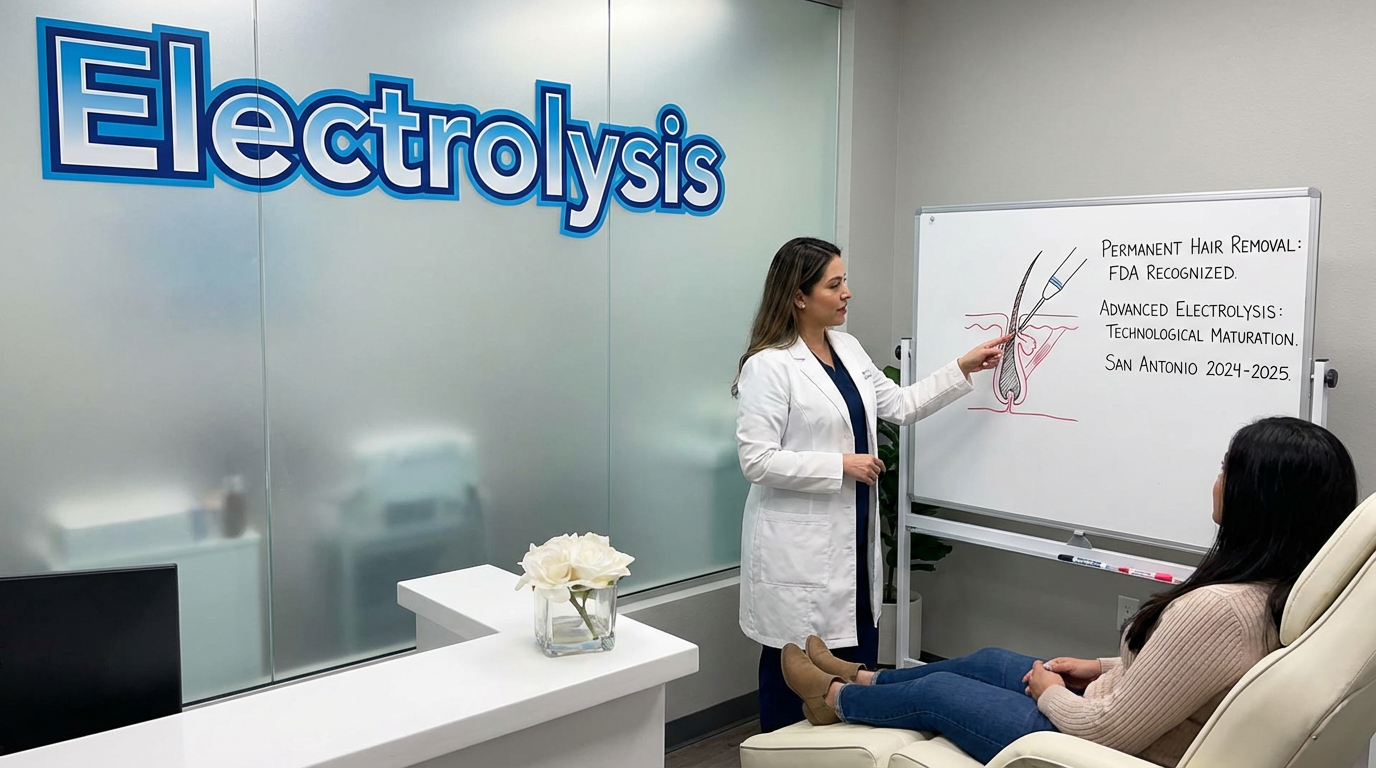
San Antonio (2024-2026)
The global aesthetic services market is witnessing a notable transformation, with permanent hair removal becoming a pivotal segment. Fuelled by increasing aesthetic awareness, the pervasive influence of social media, and a growing consumer demand for convenience and lasting results, the hair removal market is set for remarkable growth. Projections indicate a surge from approximately $4.5 billion in 2024 to over $11 billion by 2033, reflecting a robust 10.5% annual growth rate. Within this burgeoning sector, electrolysis – a method with a venerable 150-year history – is experiencing a significant resurgence. While often overshadowed by the rapid expansion of laser hair removal, electrolysis holds a unique and increasingly valued position as the only method officially recognized by the U.S. Food and Drug Administration (FDA) as truly “permanent” hair removal. This report delves into the current dynamics of permanent hair removal, highlighting the distinct advantages of advanced electrolysis, its technological maturation, and its growing market share, particularly within the San Antonio region during the 2024-2025 period.
This comprehensive analysis will explore the intricate interplay between market demand, groundbreaking technological innovations, and evolving client demographics that are reshaping the landscape of permanent hair removal. We investigate the critical outcome metrics that define the future trajectory of this essential aesthetic service, emphasizing how modern electrolysis techniques are not only improving efficacy and comfort but also addressing the needs of a diverse and expanding clientele, including those for whom other methods are ineffective. From specialized high-frequency devices and intelligent probes to multi-pulse and microflash techniques, the advancements in electrolysis are delivering significantly faster and more comfortable treatments, leading to superior client satisfaction and solidifying its role as an indispensable solution for lasting hair removal.
Key Takeaways
- The global hair removal market is projected to reach over $11 billion by 2033, with a 10.5% annual growth rate.
- Electrolysis is experiencing a resurgence, uniquely recognized by the FDA as the only “permanent” hair removal method.
- Advanced electrolysis works effectively on all hair colors and skin tones, unlike laser hair removal.
- Technological innovations like 27.12 MHz devices and smart probes significantly improve treatment speed, comfort, and efficacy, with up to 91% hair reduction after 6 sessions reported.
- Evolving demographics, including a 45% annual rise in male electrolysis treatments and significant demand from individuals with PCOS and transgender clients, are driving market growth.
- While requiring multiple sessions (8-16), electrolysis offers a definitively permanent solution, proving cost-effective long-term despite higher initial per-session costs.
- Client satisfaction is high due to the method’s inclusivity and its ability to provide lasting results where other methods fail.
1. Executive Summary
The global landscape of aesthetic services is undergoing a profound transformation, with permanent hair removal emerging as a cornerstone of this evolution. Driven by heightened aesthetic awareness, pervasive social media influence, and a growing consumer desire for convenience and lasting results, the hair removal market is experiencing exponential growth [1]. In 2024, the total hair removal market was valued at approximately $4.5 billion, with projections indicating a remarkable surge to over $11 billion by 2033, representing a robust 10.5% annual growth rate [2]. Within this burgeoning sector, electrolysis, a method with a 150-year history, is experiencing a significant resurgence. While often overshadowed by the rapid expansion of laser hair removal, electrolysis holds a unique and increasingly valued position as the only method officially recognized by the U.S. Food and Drug Administration (FDA) as “permanent” hair removal [3] [4]. This executive summary provides a comprehensive overview of the current dynamics of permanent hair removal, highlighting the distinct advantages of advanced electrolysis techniques, their technological maturation, and their growing market share both globally and within specific regional markets such as San Antonio during the 2024-2025 period. It delves into the interplay between market demand, technological innovation, evolving client demographics, and critical outcome metrics that define the future trajectory of this essential aesthetic service.
1.1. The Resurgence of Electrolysis in a Booming Market
The aesthetic hair removal market is characterized by dynamic growth and shifting consumer preferences. While traditional methods like shaving, waxing, and depilatory creams remain prevalent, accounting for an estimated 72%–89% regular usage for shaving [5], there is a clear trend towards long-term and permanent solutions. Consumers, influenced by curated images on social media platforms and a desire for effortless grooming, are increasingly investing in professional treatments that promise lasting freedom from unwanted hair [6].
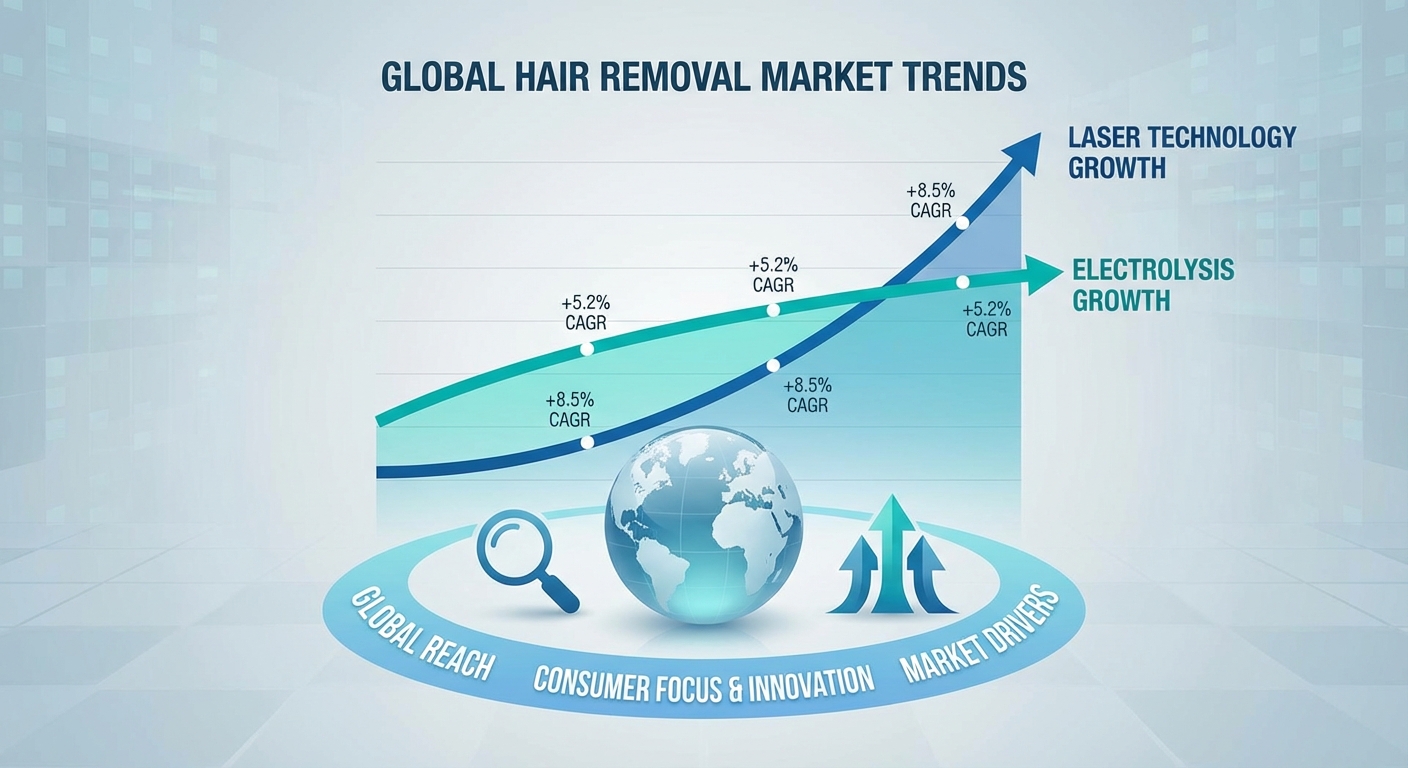
For decades, laser hair removal has captured a significant portion of this growth. The global laser hair removal market, valued at approximately $1.0 billion in 2023, is projected to skyrocket to $7.7 billion by 2035, demonstrating an exceptional Compound Annual Growth Rate (CAGR) of 18.3% between 2025 and 2035 [7] [9]. This rapid expansion is primarily attributable to its non-invasive nature, speed in treating large areas, and continuous technological improvements [9].
However, amidst the laser era, electrolysis is experiencing a powerful renaissance. Despite its smaller market footprint, with an estimated global valuation of around $891.8 million in 2024 and a projected growth to $1.4 billion by 2034 (a CAGR of approximately 5.2%) [10] [11], electrolysis is proving indispensable in scenarios where lasers fall short. Dermatologists universally affirm that electrolysis works on all hair colors and skin tones – a critical distinction given that lasers depend on pigment and are therefore ineffective on blonde, red, gray, or very fine hairs [12] [14]. This fundamental capability ensures electrolysis remains the preferred, and often the only, viable option for truly permanent results across the entire spectrum of client needs. Its unique FDA classification as “permanent” solidifies its position, meaning that once a hair follicle is successfully treated, it is irrevocably destroyed and cannot regrow [15].
The renewed interest in electrolysis is also fueled by social media. “Dermatologists and influencers on platforms like Instagram and YouTube have been educating about electrolysis as the *truly permanent* method,” highlights a report from India Today [16]. Personal stories, such as that of “Jackie,” known as “@Your_Hairy_Godmother,” a woman with Polycystic Ovary Syndrome (PCOS) who found that laser treatments paradoxically worsened her facial hair but achieved complete clearance with electrolysis, have gone viral [17] [211]. These narratives underscore the method’s efficacy for challenging cases, pushing it into the mainstream consciousness of a younger, more informed demographic seeking definitive solutions.
1.2. Pillars of Advanced Electrolysis: Technology, Speed, and Comfort
The electrolysis of today is far removed from its historical origins in 1875 by Dr. Charles E. Michel [19]. Modern technological advancements have dramatically enhanced its speed, comfort, and efficacy. Key innovations include:
- High-Frequency Devices: The adoption of 27.12 MHz radiofrequency current, particularly in advanced thermolysis machines like the Apilus xCell, allows for extremely rapid and precise heating of the follicle. This higher frequency minimizes heat spread to surrounding tissue, leading to more comfortable treatments, reduced skin irritation, and significantly faster hair removal [20].
- Computerized Precision and Smart Probes: Modern devices feature intelligent algorithms that automatically adjust energy output based on skin moisture, hair thickness, and even impedance within the follicle [21]. This automation ensures optimal, consistent treatment for each hair, reducing technician variability and improving overall results.
- Multi-Pulse and Microflash Techniques: These advanced thermolysis variations deliver rapid sequences of micro-pulses in a single insertion, ensuring comprehensive destruction of growth cells. One clinic reported an astounding 91% hair reduction after just 6 sessions using a microflash technique, nearly double the 50% reduction observed with older methods over the same period [22]. This dramatically shortens the overall treatment timeline for clients.
- Enhanced Client Comfort: Innovations such as insulated probes, which concentrate energy at the follicle base and spare superficial skin layers, along with advanced cooling systems and ergonomic designs, have made electrolysis far more tolerable. These improvements are crucial in expanding the market to individuals who might have previously found the procedure too uncomfortable [23].
These technological strides translate directly into improved client outcomes. While a typical course of electrolysis historically required 8–16 sessions spaced approximately four weeks apart [24] [25], the enhanced efficiency of advanced systems means clients reach permanent hair removal faster and with greater comfort. For instance, the transition to Multipulse Microflash has shown nearly a two-fold increase in efficacy, resulting in definitive clearance in fewer overall hours [26].
1.3. Evolving Client Demographics and Inclusive Solutions
The demand for permanent hair removal is expanding beyond its traditional demographic. Men now constitute a rapidly growing segment, with up to 38% of laser hair removal patients in the U.S. being male in recent years [27]. This trend is even more pronounced in electrolysis, with male treatments rising approximately 45% annually as grooming norms shift [28] [30]. Men seek permanent removal for various areas, including the back, chest, and beard lines, driven by a desire for reduced grooming effort and freedom from razor burn [30].
Moreover, individuals facing specific hair growth challenges are increasingly turning to electrolysis. This includes an estimated 20% of women in India with PCOS, who often contend with hormonal hirsutism that lasers cannot effectively treat [31] [33]. For these clients, electrolysis offers a definitive solution. Similarly, transgender individuals undergoing gender-affirming surgeries rely heavily on electrolysis for meticulous hair clearance in surgical sites, where even a few remaining hairs can lead to complications [34] [35]. This demographic often benefits from a combined approach, using laser for initial bulk reduction, followed by electrolysis for complete, permanent removal [36].
The inclusive nature of electrolysis—its effectiveness regardless of hair color, skin tone, or texture—addresses a crucial gap in the aesthetic market, ensuring that permanent hair removal is accessible to everyone. This inclusivity, coupled with effective results for challenging cases, is a significant driver of its sustained market growth.
1.4. Client Outcomes, Costs, and Satisfaction
Client outcomes with advanced electrolysis are overwhelmingly positive. The primary benefit is enduring permanence: once a follicle is treated, the hair is gone for good. While multiple sessions are required (typically 8–16 per area over several months) [37] [38], the investment yields a truly hair-free result without the need for future maintenance sessions characteristic of laser. In contrast, laser hair removal typically achieves 70–80% hair reduction after 6 sessions, often requiring annual touch-ups [39] [41].
The cost of electrolysis in the U.S. averages between $40–$200 per session [41]. For a small area like the chin, a complete treatment course might range from several hundred to over a thousand dollars. Although seemingly higher upfront than one-off waxing or shaving, electrolysis offers significant long-term cost-effectiveness. A full laser regimen might cost $1,500–$2,500 [42], but with the potential need for perpetual touch-ups, electrolysis ultimately eliminates ongoing expenses. For many, the value transcends mere cost-savings, translating into improved self-confidence and convenience [43].
Side effects from electrolysis are generally mild and temporary, including redness, slight swelling, or minor scabbing, which typically resolve within days [44] [46]. Scarring is rare with skilled practitioners and modern equipment. Overall, client satisfaction is high, with patients viewing permanent smooth skin as a worthwhile investment in quality of life. For instance, 94% of patients reported satisfaction with laser hair removal results in one survey [46], and those undergoing electrolysis for challenging cases often report life-changing improvements in self-esteem.
1.5. San Antonio: A Microcosm of Global Trends (2024-2025)
The trends observed globally are vividly reflected in regional markets like San Antonio, Texas. Local med-spas are increasingly adopting a multi-modal approach to permanent hair removal. For example, Bio2 Laser Studio in San Antonio, a clinic primarily focused on laser treatments, announced in February 2026 the strategic integration of electrolysis services [47] [48]. This decision was explicitly driven by a desire to offer inclusive solutions for all hair colors and skin types—filling the gaps where laser technology was inadequate [49] [51].
“Adding electrolysis allows us to cater to a broader client base, encompassing those with blonde, gray, red, or very fine hairs, as well as individuals with darker skin tones where laser may be limited or contraindicated,” stated a representative from Bio2 Laser Studio [51]. This strategic move aligns with a broader industry trend toward comprehensive aesthetic offerings, emphasizing tailored solutions that achieve genuine permanent results, rather than partial reductions [52].
Anecdotal evidence from San Antonio clinics indicates that the combination approach is gaining traction. Many clients begin with laser hair removal for bulk reduction on larger areas, then transition to electrolysis to meticulously clear remaining stubborn hairs or address areas ill-suited for laser (e.g., shaping eyebrows, removing stray facial hairs). This collaborative strategy benefits the client by leveraging the strengths of both technologies, providing expedited bulk hair reduction followed by definitive, permanent elimination. This approach also allows clinics to address the specific needs of San Antonio’s diverse population, including military personnel seeking low-maintenance grooming, and individuals with hirsutism. The increasing client education efforts in San Antonio, especially given the state’s lack of electrologist licensing [53], foster greater understanding and commitment to treatment plans, leading to higher completion rates and patient satisfaction.
1.6. Conclusion and Outlook for 2024-2025
The period of 2024-2025 marks a pivotal era for permanent hair removal. While the laser market continues its rapid ascent, electrolysis has firmly re-established itself as an indispensable method, particularly due to significant technological advancements that enhance its speed, comfort, and efficacy. The global market is witnessing an expansion in demand driven by a more diverse clientele, including a growing male grooming segment and individuals with specific medical or transitional needs. Client outcomes are improving, characterized by higher clearance rates, reduced discomfort, and profound enhancements in quality of life. In dynamic regional markets like San Antonio, providers are demonstrating an acute awareness of these trends, strategically integrating advanced electrolysis alongside laser services to offer truly comprehensive and inclusive permanent hair removal solutions. This multi-modal approach is positioning clinics to capture broader market share and deliver superior, long-lasting results that meet the evolving expectations of today’s discerning consumers.
The next sections of this report will delve deeper into each of these areas, providing a granular analysis of the technological advancements in electrolysis, a detailed comparison of outcome metrics, and a focused examination of specific case studies and market dynamics within San Antonio, further elaborating on the integrated approach foreseen for the future of permanent hair removal.
2. Global Market Trends and Growth Drivers
The landscape of personal grooming and aesthetic services is experiencing a significant transformation, with permanent hair removal emerging as a cornerstone of this evolution. Driven by an escalating global focus on aesthetics, the pervasive influence of social media, and a growing consumer willingness to invest in long-term solutions, the hair removal market is on a robust upward trajectory. This section delves into the dynamics of this burgeoning market, providing a comprehensive analysis of its overall growth, the expanding segments of both laser and electrolysis, and the key factors underpinning these trends in 2024-2025.
2.1 Overview of the Global Hair Removal Market
The global hair removal market is characterized by rapid expansion, reflecting a fundamental shift in consumer preferences from temporary to permanent solutions. In 2024, the market was valued at an estimated $4.5 billion, a substantial figure that is projected to more than double, reaching over $11 billion by 2033[2]. This impressive growth trajectory signifies a Compound Annual Growth Rate (CAGR) of 10.5% between 2026 and 2033 [2]. The primary catalysts for this robust expansion are multifaceted, encompassing rising aesthetic awareness, the considerable impact of social media on beauty standards, and an increased disposable income among consumers who are now more inclined to invest in elective cosmetic procedures [1]. The traditional methods of hair removal, such as shaving and waxing, while still prevalent, are increasingly being superseded by advanced, longer-lasting alternatives. Shaving, for instance, remains the most common method, with surveys indicating that 72%–89% of people shave regularly [20]. However, the transient nature of these methods, coupled with drawbacks like razor burn, ingrown hairs, and constant upkeep, fuels the demand for more enduring solutions [20]. This desire for convenience and lasting smoothness is a powerful underlying current driving market demand.
2.2 Market Segmentation and Growth Forecasts
Within the broader hair removal market, both laser and electrolysis technologies are experiencing significant, albeit distinct, growth. Laser hair removal, due to its speed in treating larger areas and continuous technological advancements, currently dominates the growth narrative in terms of market size. Electrolysis, while a smaller segment, maintains its critical position as the only method offering truly permanent hair removal, filling crucial gaps where laser falls short.
2.2.1 Laser Hair Removal Market Dynamics
The global laser hair removal market is experiencing an unprecedented surge, positioning it as one of the fastest-growing categories within the aesthetics industry. Valued at approximately $1.0 billion in 2023, this segment is forecast to reach a staggering $7.7 billion by 2035[5]. This represents an exceptionally high CAGR of 18.3% from 2025 to 2035 [5]. Several factors contribute to this exponential growth: * **Technological Advancements:** Continuous innovations in laser technology, including faster diode lasers and Nd:YAG lasers designed for darker skin tones, have expanded the treatment’s accessibility and efficacy [6]. * **Non-Invasive Appeal:** The non-invasive nature of laser treatments, coupled with reduced downtime, appeals to a broad consumer base seeking effective hair reduction without surgical intervention [4]. * **Social Media Influence:** Platforms like Instagram and TikTok have amplified beauty standards, leading to increased demand for smooth, hair-free skin, often showcased through aspirational content by influencers [1]. * **Growing Consumer Awareness:** As more individuals become aware of the long-term benefits and convenience of laser hair removal compared to traditional methods, its adoption rates climb. The professional sector heavily drives laser hair removal revenues, with clinics and med-spas being the primary service providers. While home-use laser devices exist, professional treatments remain the gold standard for safety and efficacy.
2.2.2 Electrolysis Hair Removal Market Dynamics
Despite the considerable growth of laser hair removal, the electrolysis segment demonstrates steady and consistent expansion, underscoring its enduring relevance. The global electrolysis hair removal market was valued at approximately $891.8 million in 2024 and is projected to reach $1.4 billion by 2034[7]. This constitutes a steady CAGR of approximately 5.2%[7]. Electrolysis holds a unique position in the market as the only method officially recognized by the U.S. FDA for permanent hair removal[3]. Dermatologists widely confirm its efficacy across all hair colors and skin tones, successfully addressing critical limitations of laser technology [10]. Key drivers for electrolysis growth include: * **Unmatched Permanence:** The promise of truly permanent hair elimination, where treated follicles are destroyed and hair will not regrow, remains a powerful selling point [10]. * **Versatility:** Electrolysis is effective on all hair types (light, dark, coarse, fine) and skin tones, making it an indispensable solution for individuals for whom laser is unsuitable [10]. * **Technological Advances:** Modern electrolysis machines, featuring higher frequencies (e.g., 27 MHz devices) and smart probes, have significantly enhanced treatment speed, precision, and client comfort, leading to improved outcomes [11], [12]. Clinics leveraging these advanced technologies report up to 91% hair reduction after just six sessions using modern microflash techniques, almost double the clearance rate of older methods [14]. * **Social Media Resurgence:** Electrolysis is benefiting from a “comeback” on social media, where individuals, particularly those with conditions like Polycystic Ovary Syndrome (PCOS), share their successful permanent hair removal journeys after experiencing limitations with laser [25]. The electrolysis market revenue is predominantly generated by professional clinics and dermatology offices, accounting for approximately 65% of the global market share in 2025[8]. However, the home-use electrolysis device segment is also growing, with an 8.3% annual increase, partially fueled by recent FDA approvals of DIY gadgets [8], [9]. Despite this, professional treatments remain the industry benchmark for efficacy and safety.
2.3 Regional Market Growth and Demographic Expansion
The growth in the hair removal market is not uniform across all regions, nor is its clientele homogeneous. Significant regional disparities and demographic shifts are observable.
2.3.1 Regional Growth Patterns
* **Asia-Pacific Dominance:** While North America and Europe represent mature markets with steady annual growth rates of approximately 4–5%, the Asia-Pacific region stands out as the fastest-growing market for electrolysis, exhibiting a CAGR of roughly 7.8%[16]. Countries like India and China, experiencing rapid urbanization and a burgeoning middle class, are witnessing a boom in aesthetic services [17]. The Indian electrolysis market alone is projected to reach approximately $62.7 million by 2033, growing at a significant 9.6% annually [18]. This surge is attributed to increasing female workforce participation, rising disposable incomes, and greater access to professional training and service standardization [19]. Market Table: Global Electrolysis Hair Removal Market by Region (CAGR 2024-2034) | Region | Projected CAGR (2024-2034)[16] | Current Market Status | | :——————— | :———————————- | :——————– | | Asia-Pacific | ~7.8% | Fastest Growing | | North America & Europe | ~4–5% | Mature Markets |
2.3.2 Expanding Demographics
The perception of permanent hair removal as a service exclusively for women is rapidly diminishing. The client base is diversifying across various demographics: * **Male Grooming Market:** Men now constitute a significant and rapidly growing segment. Up to 38% of laser hair removal patients in the U.S. in recent years have been male [22]. More strikingly, male electrolysis treatments are seeing an annual rise of approximately 45%, reflecting evolving grooming norms and aspirational demand for a refined appearance [13], [23]. Men increasingly seek permanent hair removal for areas such as the back, chest, and to define beard lines, aiming to avoid constant shaving and razor burn [24]. * **Hormonal Conditions (e.g., PCOS):** Individuals with hormonal imbalances causing unwanted hair growth are turning to electrolysis as a definitive solution. For instance, an estimated 20% of women in India suffer from PCOS, a condition that leads to hirsutism [26]. Laser treatments often prove ineffective on the finer, hormone-driven hairs associated with PCOS and, in some cases, can even stimulate paradoxical hair growth [26]. * **Transgender Individuals:** The transgender community has a pronounced demand for permanent hair removal, particularly in preparation for gender-affirming surgeries where 100% hair clearance is medically necessary to prevent complications [28], [29]. Electrolysis is often the preferred method or a crucial follow-up to laser to ensure complete and permanent eradication of hair in surgical graft sites.
2.4 Impact of Social Media and Post-Pandemic Trends
Social media platforms have become powerful engines for market growth, creating new avenues for consumer education and influencing aesthetic perceptions. * **”Electrolysis Comeback”:** Electrolysis, a technique first used in 1875 [30], is experiencing a modern resurgence spurred by dermatologists and influencers on platforms like Instagram and YouTube. These channels educate consumers about electrolysis as the only truly permanent method, distinguishing it from laser’s “reduction” claims [25]. Personal stories, such as that of “Jackie AKA @Your_Hairy_Godmother,” a PCOS patient who found permanent relief through electrolysis after laser treatments failed, have gained significant traction, inspiring a new wave of clients who are digitally savvy and seeking authentic, effective solutions [27]. By late 2024, India Today highlighted this trend, noting that women disappointed with laser’s non-permanent results are rediscovering electrolysis [25]. * **Post-Pandemic Demand Surge:** The initial disruption caused by the COVID-19 pandemic, which led to at-home grooming, has since given way to a strong rebound in demand for professional aesthetic services. Med-spas reported a surge in bookings for both laser and electrolysis as consumers caught up on missed appointments. This pent-up demand, combined with the increased flexibility offered by remote work enabling more frequent treatment sessions, has contributed to a strong revenue recovery and continued growth in the hair removal sector from 2022 to 2023 [24]. The underlying desire for lasting smooth skin remains a consistent driver, immune to temporary market fluctuations.
2.5 Comparison of Treatment Modalities: Laser vs. Electrolysis
Understanding the distinct roles, results, and limitations of laser and electrolysis is crucial for comprehending their respective market positions and growth drivers. * **Permanence vs. Reduction:** The defining difference lies in their FDA classifications: electrolysis is recognized as permanent hair removal, while laser hair removal is for “permanent hair reduction” [31]. Electrolysis physically destroys hair growth cells, ensuring no regrowth from that follicle [32]. Laser, conversely, damages follicles, significantly reducing hair but sometimes necessitating maintenance sessions due to potential regrowth or new follicular activity [34]. Laser typically achieves 70-90% hair reduction, whereas electrolysis aims for 100% elimination per follicle [21]. * **Hair and Skin Type Compatibility:** Laser relies on targeting pigment in hair, making it most effective on coarse, dark hairs against fair skin [35]. It struggles with light-colored (blonde, red, gray) or fine hairs and requires caution on darker skin tones to prevent hyperpigmentation or burns [36], [37]. Electrolysis, however, is independent of hair color and skin tone; its direct electrical current precisely targets each follicle regardless of melanin content, making it a universal solution [38], [39]. * **Speed and Coverage:** Laser treatments excel in speed, covering large areas rapidly due to its broad pulse coverage. A full leg or back can be treated in under an hour [40]. Electrolysis is meticulous and time-consuming, treating one follicle at a time. This makes it ideal for smaller areas, fine-tuning after laser, or hairs that laser cannot target. This distinction often leads to a combination approach: laser for initial bulk reduction, followed by electrolysis for remaining stubborn hairs [42]. * **Pain and Comfort:** Both methods involve discomfort. Laser is often described as a “snapping rubber band” sensation, and modern devices include cooling systems [43]. Electrolysis involves a tingling or heat sensation per follicle, which can be managed with topical numbing creams [44]. Advances in electrolysis technology, such as insulated probes and higher frequencies, have generally improved comfort and tolerability compared to older methods [45]. * **Specialized Applications:** Electrolysis is often the preferred method for specialized cases such as hormonal hirsutism (e.g., PCOS), where laser may be ineffective or even counterproductive [46]. It is also indispensable for transgender individuals requiring 100% hair removal for gender-affirming surgeries [47]. The professional consensus, as echoed by dermatologists like Dr. Azadeh Shirazi and Dr. Blair Murphy-Rose, is that both methods have their strengths and are best utilized strategically. For efficiency in broad areas, laser is often preferred, but for definitive, permanent results on all hair types and skin tones, especially fine or light hairs, electrolysis is unparalleled [49], [50]. This understanding is leading to a growing trend of clinics offering both technologies to provide comprehensive client solutions [51].
2.6 Technological Advancements in Electrolysis
The sustained growth of electrolysis is partly attributable to significant technological advancements that have enhanced its efficacy, speed, and comfort. * **High-Frequency Devices:** The advent of 27 MHz radiofrequency thermolysis devices, like the Apilus xCell, has revolutionized electrolysis [52], [53]. This higher frequency allows for incredibly rapid and precise heating of the follicle, reducing treatment time and minimizing heat spread to surrounding tissue, making it “more efficient, rapid and comfortable than any other technology” [54]. * **Computerized Precision:** Modern electrolysis machines incorporate intelligent algorithms and pre-set programs, automatically adjusting energy output based on skin moisture and hair thickness [55]. This computerized precision ensures optimal treatment for each follicle, enhancing efficacy and safety by delivering adequate energy while protecting surrounding skin. * **Faster Multi-Pulse and Flash Methods:** Techniques like “Microflash” or “Multiplex” thermolysis utilize rapid sequences of micro-pulses within a single follicle insertion, targeting growth cells more completely. The Austin Medical Electrolysis Clinic, for instance, reported a substantial improvement: 91% hair reduction after 6 treatments with advanced microflash, compared to 50% with older thermolysis [14]. This efficiency significantly reduces the total sessions required for clients. * **Improved Comfort:** Innovations like insulated probes, which concentrate current at the follicle base and minimize surface irritation, along with advanced temperature control, have made electrolysis significantly more tolerable [45]. This expanded comfort level is opening the market to a wider demographic beyond highly pain-tolerant individuals. * **Safety Monitoring:** Alongside technological leaps, there has been a concerted effort to standardize safety protocols. Modern machines feature built-in safeguards, and professional associations mandate updated training and stringent hygiene standards, leading to extremely low rates of scarring or complications when performed by skilled practitioners [56].
2.7 Client Outcomes, Satisfaction, and Long-Term Impact
Client outcomes for permanent hair removal are generally positive, with high satisfaction rates stemming from both efficacy and improved quality of life. * **Treatment Timeline and Results:** While laser shows noticeable thinning after 2-3 sessions (typically requiring 6 sessions spaced 4-8 weeks apart), electrolysis demands greater patience, with 8-15 sessions over several months usually needed to clear an area permanently [57], [33]. However, once completed, electrolysis offers *true* permanence, eliminating the need for ongoing maintenance that laser sometimes requires [58]. * **Success Rates:** Electrolysis boasts a success rate of over 90% per treated follicle, leading to realistic expectations for a totally hair-free area. Laser hair removal offers 60-90% hair reduction, depending on individual factors [59]. For clients seeking absolute clearance, electrolysis serves as the crucial final step [60]. * **Side Effects and Recovery:** Both methods induce temporary side effects like redness and swelling. Laser may cause temporary pigment changes [61], while electrolysis results in tiny scabs that heal within days [62]. Proper aftercare is essential for optimal healing and minimizing rare complications [63]. * **Pain Management:** Topical numbing creams are widely used for both treatments, significantly enhancing client comfort, particularly for electrolysis [64]. Pain generally decreases as hair becomes sparser over the course of treatment. * **Satisfaction and Quality of Life:** High satisfaction rates are reported for both laser and electrolysis, with many clients valuing the convenience, improved self-confidence, and long-term cost benefits [65]. For individuals with PCOS or those undergoing gender transition, successful electrolysis can be life-changing, profoundly enhancing self-esteem and daily comfort. The shift from constant grooming to permanent hairlessness is often viewed as a worthwhile investment in personal well-being.
2.8 San Antonio Spotlight: Local Trends and Innovations (2024-2025)
San Antonio serves as a compelling microcosm of these global trends, demonstrating how local aesthetic providers are adapting to meet evolving client demands and leverage advanced hair removal technologies. * **Integrated Service Models:** Local establishments are increasingly adopting comprehensive service models. For example, San Antonio’s **Bio2 Laser Studio**, originally a laser-focused med-spa, expanded to include electrolysis services in February 2026 [66]. This strategic move was a direct response to client demand, allowing the studio to cater to **all hair colors and skin tones**, effectively addressing limitations of laser technology alone [67], [68], [69]. This integration facilitates personalized treatment plans, utilizing laser for general reduction and electrolysis for precise, permanent fine-tuning. * **Diverse Clientele and Outcomes:** San Antonio’s diverse demographics, including a significant Hispanic community, present a broad range of skin and hair types. While laser hair removal quickly gained popularity for large areas, a substantial number of clients ultimately transition to electrolysis for complete satisfaction, particularly for facial hair related to hormonal conditions like PCOS or menopause. Men, including military personnel and athletes, are also increasingly part of the client base, seeking solutions for back, chest, and beard lines, often combining laser and electrolysis for optimal results. These positive outcomes lead to robust word-of-mouth referrals. * **Collaborative Approach:** A notable trend in San Antonio is the collaborative spirit among practitioners. Initial laser treatment for bulk hair reduction is often followed by referrals to electrologists for permanent clearance of remaining hairs [42]. Conversely, electrologists may recommend laser for initial density reduction in large areas. This cross-referral system underscores a commitment to prioritizing client outcomes, utilizing the strengths of both modalities. * **Client Education:** Despite Texas lacking state-level licensing for electrologists [56], San Antonio providers emphasize transparent client education. Detailed explanations of the hair growth cycle, treatment timelines, and realistic expectations improve client compliance and significantly contribute to successful outcomes. This focus on informed consent ensures clients understand the process and remain committed to necessary multiple sessions. The San Antonio market in 2024-2025 is poised for continued growth, with more clinics expected to invest in advanced electrolysis technology and trained personnel. The city’s demographic profile further suggests a sustained demand for comprehensive hair removal solutions, solidifying San Antonio’s role in the evolving landscape of permanent aesthetics.
2.9 Conclusion
The global hair removal market is undergoing a profound evolution, characterized by significant growth across both laser and electrolysis segments. Fuelled by increasing aesthetic awareness, the pervasive influence of social media, and a willingness among consumers to invest in long-term solutions, the market projects a trajectory of substantial expansion through 2033. Advances in electrolysis technology, notably higher-frequency devices and intelligent algorithms, have dramatically improved efficacy, speed, and comfort, ensuring its continued relevance as the only truly permanent hair removal method. This, coupled with an expanding demographic base that includes men and individuals with hormonal conditions, solidifies the market’s robust future. As evidenced by trends in places like San Antonio, the integration of both laser and advanced electrolysis techniques allows clinics to offer comprehensive, inclusive solutions, leading to higher client satisfaction and superior, lasting outcomes. The era of permanent hair removal is truly here, driven by innovation and a deep understanding of diverse client needs. This comprehensive analysis of global market trends and growth drivers sets the stage for a more detailed examination of advanced electrolysis techniques and their specific client outcomes in San Antonio, which will be explored in the subsequent sections of this report. [1] [www.linkedin.com/pulse/hair-removal-market-insights-2025-key-metrics-d3krf/#:~:text=What%20are%20the%20key%20drivers,global%20hair%20removal%20market%20growth] [2] [www.linkedin.com/pulse/hair-removal-market-insights-2025-key-metrics-d3krf/#:~:text=,2%20Billion%20by%202033] [3] [www.yahoo.com/lifestyle/only-hair-removal-method-thats-130000750.html#:~:text=Unlike%20laser%20hair%20removal%2C%20electrolysis,still%20a%20highly%20effective%20option] [4] [laserspots.net/guides/laser-hair-removal-statistics/#:~:text=Several%20factors%20contribute%20to%20the,seeking%20effective%20hair%20removal%20options] [5] [www.globenewswire.com/news-release/2025/02/26/3032549/0/en/Laser-Hair-Removal-Market-to-Reach-7-7-billion-Globally-by-2035-at-18-3-CAGR-Allied-Market-Research.html#:~:text=at%20%241%20billion%20in%202023%2C,from%202025%20to%202035] [6] [laserspots.net/guides/laser-hair-removal-statistics/#:~:text=Current%20Market%20Size%20and%20Projections] [7] [www.emergenresearch.com/industry-report/electrolysis-hair-removal-market#:~:text=The%20Electrolysis%20Hair%20Removal%20Market,across%20developed%20and%20emerging%20markets] [8] [www.emergenresearch.com/industry-report/electrolysis-hair-removal-market#:~:text=advancements%20in%20electrolysis%20equipment%2C%20expanding,annually] [9] [www.emergenresearch.com/industry-report/electrolysis-hair-removal-market#:~:text=Recent%20FDA%20approvals%20for%20home,treatment%20options] [10] [my.clevelandclinic.org/health/treatments/8306-electrolysis#:~:text=remove%20irritating%20ingrown%20eyelash%20hairs,method%20for%20permanent%20hair%20removal] [11] [www.dectro.com/en/apilus#:~:text=,comfortable%20than%20any%20other%20technology] [12] [www.apilus.com.pl/en#:~:text=Intelligent%20algorithms%20automatically%20adjust%20to,work%20and%20enhancing%20final%20results] [13] [www.emergenresearch.com/industry-report/electrolysis-hair-removal-market#:~:text=The%20male%20grooming%20market%20represents,aspirational%20demand%20among%20general%20male] [14] [www.austinmedicalelectrolysisclinic.com/electrolysis-casestudies.html#:~:text=Our%20current%20modality%2C%20Multipulse%2FMicroflash%2C%20produces,to%20contact%20us%20by%20email] [15] [www.emergenresearch.com/industry-report/electrolysis-hair-removal-market#:~:text=multiple%20sessions%20for%20complete%20hair,method%20for%20permanent%20hair%20removal] [16] [www.emergenresearch.com/industry-report/electrolysis-hair-removal-market#:~:text=Geographic%20expansion%20patterns%20reveal%20North,China%2C%20and%20Southeast%20Asian%20nations] [17] [www.emergenresearch.com/industry-report/electrolysis-hair-removal-market#:~:text=Geographic%20expansion%20patterns%20reveal%20North,China%2C%20and%20Southeast%20Asian%20nations] [18] [www.grandviewresearch.com/horizon/outlook/electrolysis-hair-removal-market/india#:~:text=India%20Electrolysis%20Hair%20Removal%20Market,is%20expected%20of%20India] [19] [www.emergenresearch.com/industry-report/electrolysis-hair-removal-market#:~:text=populations%20and%20increasing%20female%20workforce,practitioner%20training%20and%20service%20standardization] [20] [bio2laserstudio.com/hair-removal-technologies-san-antonio/#:~:text=match%20at%20L927%20utilized%20regularly,This%20mechanism%20is] [21] [bio2laserstudio.com/hair-removal-technologies-san-antonio/#:~:text=,while%20shaved%20hair%20reappears%20within] [22] [zipdo.co/laser-aesthetics-industry-statistics/#:~:text=Laser%20Aesthetics%20Industry%3A%20ZipDo%20Education,born%201997%E2%80%932012%29%20accounting] [23] [www.emergenresearch.com/industry-report/electrolysis-hair-removal-market#:~:text=attitudes%20toward%20male%20grooming%20and,that%20influence%20broader%20consumer%20adoption] [24] [www.emergenresearch.com/industry-report/electrolysis-hair-removal-market#:~:text=benefit%20beauty%20service%20providers%20offering,electrolysis%20treatments] [25] [www.indiatoday.in/lifestyle/beauty/story/is-the-new-trend-electrolysis-better-for-hair-removal-than-laser-2629189-2024-11-09#:~:text=advertisement] [26] [www.indiatoday.in/lifestyle/beauty/story/is-the-new-trend-electrolysis-better-for-hair-removal-than-laser-2629189-2024-11-09#:~:text=Jackie%20isn%E2%80%99t%20alone,removal%20often%20doesn%E2%80%99t%20work%20well] [27] [www.indiatoday.in/lifestyle/beauty/story/is-the-new-trend-electrolysis-better-for-hair-removal-than-laser-2629189-2024-11-09#:~:text=especially%20on%20YouTube,of%20views%20on%20her%20videos] [28] [transcare.ucsf.edu/guidelines/hair-removal#:~:text=may%20seek%20services%3B%20a%20care,referral%20for%20care%2C%20it%20is] [29] [transcare.ucsf.edu/guidelines/hair-removal#:~:text=being%20when%20hairs%20are%20in,12] [30] [www.eastmemphiselectrolysis.net/about-electrolysis/#:~:text=Electrolysis%20,With%20this%20procedure%2C%20the%20field] [31] [www.yahoo.com/lifestyle/only-hair-removal-method-thats-130000750.html#:~:text=Unlike%20laser%20hair%20removal%2C%20electrolysis,still%20a%20highly%20effective%20option] [32] [my.clevelandclinic.org/health/treatments/8306-electrolysis#:~:text=the%20only%20FDA,hair%20will%20not%20grow%20back] [33] [www.yahoo.com/lifestyle/only-hair-removal-method-thats-130000750.html#:~:text=What%20to%20consider] [34] [www.yahoo.com/lifestyle/only-hair-removal-method-thats-130000750.html#:~:text=eight%20sessions%20to%20achieve%20the,on%20regrowth%20and%20hormonal%20factors] [35] [transcare.ucsf.edu/guidelines/hair-removal#:~:text=Laser%20Hair%20Removal%3AThe%20use%20of,thin%2C%20light%2C%20red%2C%20blonde%20or] [36] [www.yahoo.com/lifestyle/only-hair-removal-method-thats-130000750.html#:~:text=,the%20right%20tool%20for%20you] [37] [ventureworld.org/press-release/2026-02-04/29057/bio2-laser-studio-expands-services-with-the-addition-of-electrolysis-for-permanent-hair-removal#:~:text=Electrolysis%20is%20recognized%20by%20the,may%20be%20limited%20or%20contraindicated] [38] [www.yahoo.com/lifestyle/only-hair-removal-method-thats-130000750.html#:~:text=,the%20right%20tool%20for%20you] [39] [transcare.ucsf.edu/guidelines/hair-removal#:~:text=the%20treatment%20location%2C%20as%20the,9%2C11] [40] [www.yahoo.com/lifestyle/only-hair-removal-method-thats-130000750.html#:~:text=,%E2%80%9D] [41] [www.yahoo.com/lifestyle/only-hair-removal-method-thats-130000750.html#:~:text=,treatment%20areas%2C%20electrolysis%20takes%20significantly] [42] [ventureworld.org/press-release/2026-02-04/29057/bio2-laser-studio-expands-services-with-the-addition-of-electrolysis-for-permanent-hair-removal#:~:text=Electrolysis%20complements%20Bio2%20Laser%20Studio%E2%80%99s,laser%20technology%20cannot%20effectively%20target] [43] [bio2laserstudio.com/hair-removal-technologies-san-antonio/#:~:text=,tedious%20and%20itchy%20by%20users] [44] [www.yahoo.com/lifestyle/only-hair-removal-method-thats-130000750.html#:~:text=Side%20effects%20of%20electrolysis] [45] [www.emergenresearch.com/industry-report/electrolysis-hair-removal-market#:~:text=Market%20penetration%20remains%20concentrated%20in,tolerant%20consumers] [46] [www.indiatoday.in/lifestyle/beauty/story/is-the-new-trend-electrolysis-better-for-hair-removal-than-laser-2629189-2024-11-09#:~:text=especially%20on%20YouTube,of%20views%20on%20her%20videos] [47] [transcare.ucsf.edu/guidelines/hair-removal#:~:text=may%20seek%20services%3B%20a%20care,referral%20for%20care%2C%20it%20is] [48] [pubmed.ncbi.nlm.nih.gov/35914381/#:~:text=,1%20%7D%2C%20Alexandra] [49] [www.yahoo.com/lifestyle/only-hair-removal-method-thats-130000750.html#:~:text=electrolysis%20is%20ideal%20for%20individuals,colored%20hair.%E2%80%9D] [50] [www.yahoo.com/lifestyle/only-hair-removal-method-thats-130000750.html#:~:text=,the%20right%20tool%20for%20you] [51] [ventureworld.org/press-release/2026-02-04/29057/bio2-laser-studio-expands-services-with-the-addition-of-electrolysis-for-permanent-hair-removal#:~:text=%E2%80%9CAdding%20electrolysis%20allows%20us%20to,%E2%80%9D] [52] [www.dectro.com/en/apilus#:~:text=%2A%20Code%3A%2001,permanent%20hair%20removal] [53] [www.dectro.com/en/apilus#:~:text=match%20at%20L51%20,comfortable%20than%20any%20other%20technology] [54] [www.dectro.com/en/apilus#:~:text=,comfortable%20than%20any%20other%20technology] [55] [www.apilus.com.pl/en#:~:text=Intelligent%20algorithms%20automatically%20adjust%20to,work%20and%20enhancing%20final%20results] [56] [www.aielectrology.com/Texas.shtml#:~:text=Electrology%20Programs%20for%20Texas%20Course,you%20want%20to%20become%20an] [57] [www.yahoo.com/lifestyle/only-hair-removal-method-thats-130000750.html#:~:text=Laser%20hair%20removal%20also%20requires,it%20often%20takes%20four%20to] [58] [my.clevelandclinic.org/health/treatments/8306-electrolysis#:~:text=the%20only%20FDA,hair%20will%20not%20grow%20back] [59] [transcare.ucsf.edu/guidelines/hair-removal#:~:text=some%20extent%20on%20the%20timing,12] [60] [ventureworld.org/press-release/2026-02-04/29057/bio2-laser-studio-expands-services-with-the-addition-of-electrolysis-for-permanent-hair-removal#:~:text=Electrolysis%20complements%20Bio2%20Laser%20Studio%E2%80%99s,laser%20technology%20cannot%20effectively%20target] [61] [www.yahoo.com/lifestyle/only-hair-removal-method-thats-130000750.html#:~:text=Side%20effects%20of%20electrolysis] [62] [www.yahoo.com/lifestyle/only-hair-removal-method-thats-130000750.html#:~:text=Side%20effects%20of%20electrolysis] [63] [www.yahoo.com/lifestyle/only-hair-removal-method-thats-130000750.html#:~:text=Aftercare] [64] [www.yahoo.com/lifestyle/only-hair-removal-method-thats-130000750.html#:~:text=Electrolysis%20is%20a%20safe%20procedure%2C,treatment%20to%20help%20alleviate%20discomfort] [65] [www.yahoo.com/lifestyle/only-hair-removal-method-thats-130000750.html#:~:text=When%20deciding%20between%20laser%20hair,colored%20hair.%E2%80%9D] [66] [ventureworld.org/press-release/2026-02-04/29057/bio2-laser-studio-expands-services-with-the-addition-of-electrolysis-for-permanent-hair-removal#:~:text=for%20Permanent%20Hair%20Removal%20lh3,skin%20types%20and%20hair%20colors] [67] [ventureworld.org/press-release/2026-02-04/29057/bio2-laser-studio-expands-services-with-the-addition-of-electrolysis-for-permanent-hair-removal#:~:text=With%20this%20addition%2C%20Bio2%20Laser,remain%20after%20laser%20hair%20reduction] [68] [ventureworld.org/press-release/2026-02-04/29057/bio2-laser-studio-expands-services-with-the-addition-of-electrolysis-for-permanent-hair-removal#:~:text=Electrolysis%20is%20recognized%20by%20the,may%20be%20limited%20or%20contraindicated] [69] [ventureworld.org/press-release/2026-02-04/29057/bio2-laser-studio-expands-services-with-the-addition-of-electrolysis-for-permanent-hair-removal#:~:text=The%20addition%20of%20electrolysis%20also,standard%20in%20permanent%20hair%20removal]
3. Electrolysis: The Resurgence of the Only FDA-Approved Permanent Method
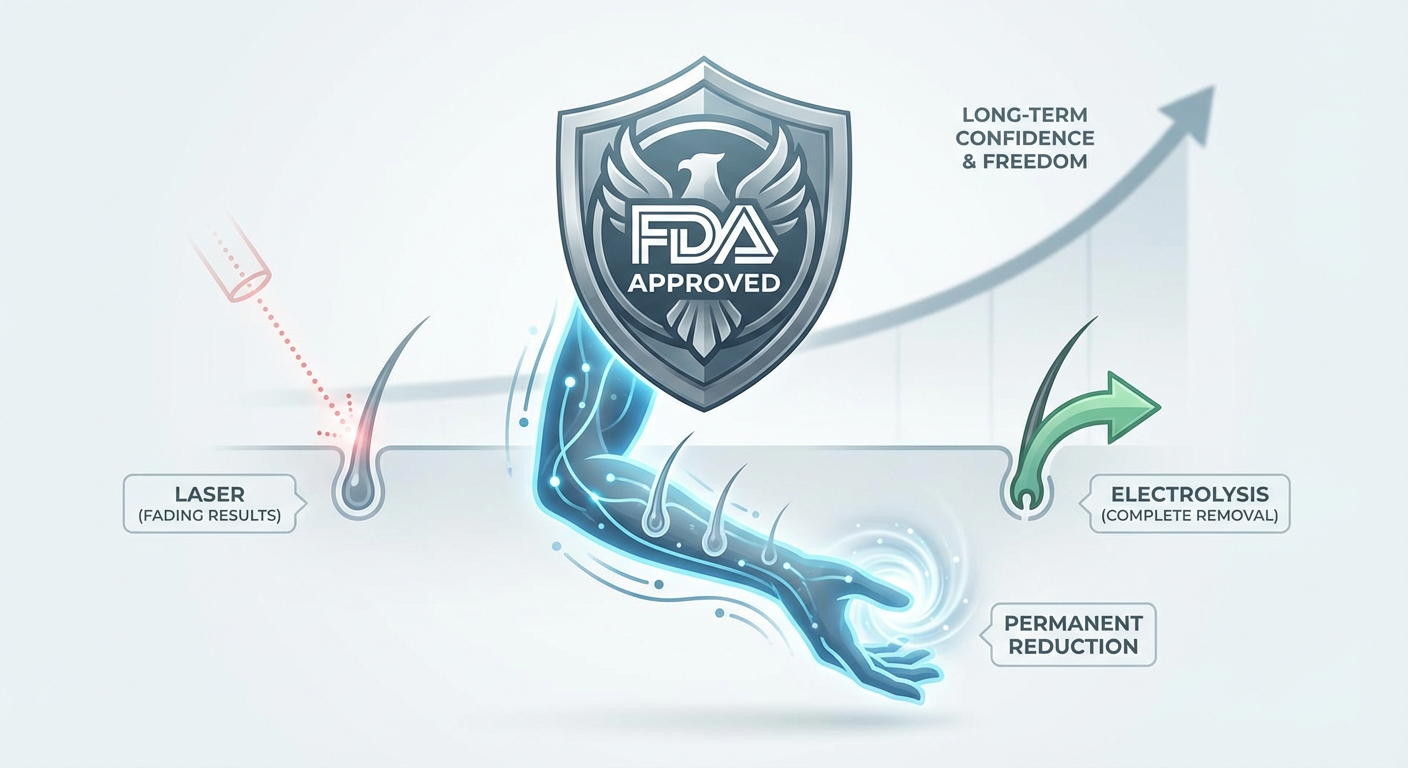
In a rapidly expanding global hair removal market, projected to swell from approximately $4.5 billion in 2024 to over $11 billion by 2033, a surprising resurgence is underway for electrolysis, a method first introduced in 1875 by Dr. Charles E. Michel [34]. Despite the widespread popularity and aggressive marketing of laser hair removal, electrolysis stands distinctively as the **only hair removal technique recognized by the U.S. Food and Drug Administration (FDA) as “permanent”** [3][12]. This crucial distinction sets it apart from laser devices, which are generally marketed for “permanent hair reduction” [3]. This section will delve into the unique aspects of electrolysis, exploring how its unparalleled FDA classification, coupled with significant technological advancements and increased social media awareness, is fueling renewed interest and driving its adoption across diverse demographic groups, particularly in metropolitan areas like San Antonio. We will examine the core differences between electrolysis and laser hair removal, highlight the improvements in modern electrolysis techniques that enhance comfort and efficacy, and analyze compelling client outcomes.
3.1. The “Permanent” Distinction: Electrolysis vs. Laser Hair Reduction
The semantic difference between “permanent hair removal” and “permanent hair reduction” carries profound implications for consumers seeking lasting solutions to unwanted hair. This distinction is the bedrock of electrolysis’s unique position in the aesthetic market.
3.1.1. FDA Classification and Mechanism of Action
Electrolysis, a method almost 150 years old, involves the insertion of a fine probe into each individual hair follicle. A small electrical current is then delivered, which permanently destroys the hair growth cells [12]. This process works by targeting the base of the follicle, coagulating the papilla and germinative cells responsible for hair regeneration. The Cleveland Clinic confirms that electrolysis “permanently destroys hair growth cells, ensuring treated hairs do not regrow” [12]. This direct and irreversible destruction of the growth mechanism is precisely why the FDA grants electrolysis its unique “permanent” classification [3]. In contrast, laser hair removal operates on a principle of selective photothermolysis, where concentrated light energy is absorbed by the melanin (pigment) in the hair follicle. This energy converts to heat, damaging the follicle and inhibiting future hair growth. While highly effective, laser treatments are approved for “permanent hair reduction” [3]. The term “reduction” signifies that while hair growth is significantly diminished, it is not always entirely eliminated, and some follicles may eventually recover or new ones may become active, particularly under hormonal influences [6]. Clinical data suggests laser hair removal typically achieves 70-80% reduction in hair regrowth after a full course of treatment [11]. Remaining hairs may be finer and lighter, but they might still require occasional touch-up sessions annually [6]. The table below summarizes the key differences in FDA classification and mechanism:
| Feature | Electrolysis | Laser Hair Removal |
|---|---|---|
| FDA Classification | Permanent Hair Removal | Permanent Hair Reduction |
| Mechanism | Destroys hair growth cells via electrical current (heat/chemical reaction) in each follicle [12] | Damages follicles via targeted light absorption by melanin [3] |
| Target | Individual hair follicle (irrespective of color or skin tone) | Melanin in hair (best on dark hair, light skin) |
| Result | Complete and permanent elimination of treated hair [12] | Significant reduction in hair growth; maintenance may be needed [6] |
3.1.2. Inclusivity for Diverse Hair and Skin Types
One of the most compelling advantages of electrolysis, directly stemming from its mechanism, is its universal applicability across all hair colors and skin tones [2]. Laser technology relies on the chromophore melanin, meaning it is most effective on contrasted demographics: individuals with dark, coarse hair and lighter skin (Fitzpatrick skin types I-III). Lasers struggle with light blonde, red, gray, or white hairs due to insufficient pigment, making them notably ineffective [2]. Similarly, using lasers on darker skin tones (Fitzpatrick skin types IV-VI) carries a higher risk of adverse effects like hyperpigmentation or burns, as the laser can target melanin in the skin as well as the hair [4]. While advanced laser systems like Nd:YAG 1064 nm are considered safer for darker skin, they still require extreme caution and experienced technicians [22]. Electrolysis, however, is not dependent on pigment. It can permanently remove a fine white hair from an upper lip just as effectively and safely as a coarse black hair from a chin [2]. This makes it a crucial solution for a significant portion of the population for whom laser hair removal is either contraindicated or ineffective. As noted by dermatologists, electrolysis fills “crucial gaps where lasers fall short” [2]. This inherent inclusivity is a key driver of its current resurgence, appealing to a broader demographic seeking guaranteed results, regardless of their hair or skin characteristics.
3.2. Resurgence Drivers: Technology, Social Media, and Evolving Demographics
The renewed interest in electrolysis isn’t merely due to its FDA-approved permanence; it’s a confluence of technological advancements, enhanced social awareness driven by social media, and a diversifying client base with specialized needs.
3.2.1. Technological Advancements in Electrolysis
While the core principle of electrolysis dates back to 1875, modern advancements have dramatically improved the treatment experience, making it faster, more comfortable, and significantly more effective. The primary technological leaps include:
- High-Frequency Devices (27 MHz): A major innovation is the shift to higher-frequency electrical currents. While traditional thermolysis devices operate at 13.56 MHz, state-of-the-art machines, such as the Apilus xCell, utilize 27.12 MHz radiofrequency [5]. This higher frequency allows for incredibly rapid and precise heating of the follicle, minimizing discomfort and spread of heat to surrounding tissues. Dectro International, a leading manufacturer, claims these devices are “more efficient, rapid and comfortable than any other technology” [5]. This increased speed means more hairs can be treated per session, reducing overall treatment time for clients.
- Computerized Precision and Smart Settings: Modern electrolysis machines feature advanced computerization with touchscreens and pre-set programs tailored for different body areas and hair types. Intelligent algorithms can automatically adjust energy output based on factors like skin moisture or hair thickness, ensuring optimal treatment for each follicle [6]. This precision reduces technician-dependent variability, making results more consistent and reliable, and improving safety by preventing over-treatment of surrounding tissues.
- Faster Multi-Pulse and Flash Methods: The evolution from older galvanic methods (which could take over a minute per hair) to rapid thermolysis, and now to advanced “Microflash” or “Multiplex” techniques, has revolutionized treatment speed. These methods deliver a rapid sequence of micro-pulses over multiple current bursts within a single follicle insertion [7]. This ensures complete destruction of all growth cells within the follicle. A compelling case study from the Austin Medical Electrolysis Clinic demonstrated a roughly **91% hair reduction after just 6 treatments** using a 27 MHz microflash technique, compared to approximately 50% reduction with older thermolysis methods [7]. This nearly doubled efficiency allows clients to achieve permanent results in significantly fewer sessions.
- Improved Comfort and Tolerability: Innovations like insulated probes (needles coated with an insulating material except at the tip) prevent unnecessary heating of the skin surface, concentrating the electrical current solely at the follicle’s base. This leads to less surface trauma, reduced redness, and minimal scabbing. The targeted heating of high-frequency machines also results in a less painful sensation than older modalities [23]. These advancements have made electrolysis a more accessible option for individuals with lower pain thresholds, expanding its market beyond “highly pain-tolerant individuals” [23].
3.2.2. The Impact of Social Media and Influencer Marketing
Social media platforms have played a pivotal role in the “comeback” of electrolysis [14]. Influencers, dermatologists, and everyday users are utilizing platforms like YouTube, Instagram, and TikTok to share their personal journeys and educate the public on the science behind permanent hair removal. This digital word-of-mouth has directly countered misconceptions and raised awareness about electrolysis’s unique benefits. A prime example is “Jackie,” known as “@Your_Hairy_Godmother” on social media [14]. As a woman with Polycystic Ovary Syndrome (PCOS), she struggled with excessive facial hair. After years of trying various methods, including laser treatments — which she reported paradoxically made her hair worse in some areas [17] — she discovered electrolysis. Jackie documented her nearly three-year journey to finally achieve a hair-free chin and upper lip, amassing thousands of followers and inspiring countless others with similar experiences [17]. Her story, highlighted by *India Today*, underscored how many consumers find laser lacking the “permanent” results they seek, leading them to reconsider the “century-old method” with fresh eyes [14]. This candid sharing creates a sense of trust and community, driving direct inquiries to clinics and contributing to the overall market uptick.
3.2.3. Diversifying Demographics and Specialized Needs
The client demographic for permanent hair removal is rapidly diversifying beyond its traditional female base.
- Male Grooming Market: Men now constitute a significant and growing segment. In recent years, men have accounted for up to 38% of laser hair removal patients in the U.S. [9]. For electrolysis, male treatments are rising by approximately 45% annually [10]. This surge is driven by evolving grooming norms, with men seeking permanent solutions for back, chest, and beard line hair to avoid constant shaving, razor burn, and achieve a sculpted look [10].
- Hormonal Conditions (e.g., PCOS): Conditions like Polycystic Ovary Syndrome (PCOS), affecting an estimated 20% of women in India alone, cause hirsutism (excessive hair growth) [14]. For these individuals, the finer, hormonally-driven hairs are often ineffective targets for lasers, which can even stimulate paradoxical growth in some cases [14]. Electrolysis becomes the definitive solution, systematically eliminating these hairs despite hormonal challenges.
- Transgender Individuals: Electrolysis is crucial for transgender individuals, particularly transgender women, preparing for gender-affirming surgeries such as vaginoplasty. For these procedures, 100% hair clearance is medically necessary in surgical sites to prevent post-operative complications like ingrown hairs or infections [13][22]. Laser may be used for initial bulk reduction if hair is dark, but electrolysis is often essential to achieve complete and permanent removal of all remaining hairs, including light or sparse ones, at critical sites [22]. The UCSF Transgender Health Program guidelines explicitly recommend this combined approach [22].
These specialized needs, coupled with the desire for truly permanent results across *all* hair and skin types, position electrolysis as an indispensable service in the modern aesthetic landscape.
3.3. Client Outcomes: Efficacy, Satisfaction, and Long-Term Impact
The ultimate measure of any hair removal method lies in its client outcomes: the efficacy of treatment, patient satisfaction, and the long-term impact on their lives.
3.3.1. Treatment Timelines and Success Rates
Both electrolysis and laser hair removal require multiple sessions, spread over weeks or months, to achieve desired results. This is primarily due to the hair growth cycle, as hair follicles are most receptive to treatment during the anagen (growth) phase.
- Electrolysis: Clients typically require 8-15 sessions per area, spaced approximately 4 weeks apart to catch hairs in their active growth phase [6][8]. While this commitment is significant, once a follicle is successfully treated, it is permanently disabled. This means that upon completion of the full treatment course for an area, active regrowth ceases, and no further maintenance is needed [12]. The success rate for permanently disabling individual follicles via electrolysis is very high, often cited as over 90% per treated follicle [12].
- Laser Hair Removal: Laser treatments usually require around 6 sessions, often spaced 4-8 weeks apart, for optimal initial reduction [6]. While many experience significant reduction, achieving 100% hair elimination is rare, with 70-90% reduction being a more typical outcome [18][22]. Annual touch-ups are often recommended to maintain results, as some dormant follicles may reactivate, particularly due to hormonal fluctuations [6].
For clients seeking absolute freedom from hair, the definitive permanence of electrolysis, despite its longer upfront commitment, often proves to be the deciding factor.
3.3.2. Side Effects and Recovery
Both methods are safe when performed by qualified professionals, with generally mild and temporary side effects.
- Electrolysis: Common temporary side effects include localized redness, slight swelling, and the formation of tiny scabs or pinpoint crusts at the treated follicle sites [15]. These typically resolve within a few days with proper aftercare, which includes applying soothing agents like aloe vera and avoiding sun exposure or harsh exfoliants [15]. Scarring is rare with modern techniques and skilled practitioners.
- Laser Hair Removal: Immediately following a laser session, clients often experience temporary redness and perifollicular edema (swelling around the follicles), akin to mosquito bites, which subsides within hours [15]. Temporary pigment changes (lightening or darkening) can occur, especially on darker skin tones or with sun exposure, but these typically resolve over weeks.
Professional adherence to safety protocols, including sterilization and appropriate machine settings, is critical for minimizing risks for both treatments.
3.3.3. Client Satisfaction and Quality of Life
The growing global hair removal market, valued at $4.5 billion in 2024 and projected to reach $11.2 billion by 2033 [1], is a testament to the high satisfaction levels clients derive from permanent hair removal solutions. Patients view the investment in permanent smooth skin as a significant boost to confidence and convenience [16]. For many, electrolysis is truly life-changing. Individuals who have suffered from body hair dysphoria, such as transgender individuals seeking facial hair removal, or those with conditions like PCOS battling persistent facial hair, often report immense relief and improved self-esteem after successful electrolysis treatments. The psychological benefits of not worrying about daily hair removal, or the embarrassment of unwanted hair, are substantial. As the “Hairy Godmother” Jackie’s case illustrates, the emotional impact of finally achieving hair-free skin after years of struggle can be revolutionary [17]. Moreover, the financial long-term savings from eliminating a lifetime of shaving, waxing, or depilatory creams further contributes to overall client satisfaction, turning an initial upfront cost into a valued investment.
3.4. San Antonio Spotlight: Local Innovations and Client Outcomes (2024–2025)
The trends observed globally in the resurgence of electrolysis are evident within the San Antonio aesthetic market, with local clinics adapting to meet diverse client needs through integrated solutions.
3.4.1. Integration of Services for Comprehensive Care
San Antonio-based med-spas are increasingly adopting a multi-modality approach to hair removal. A notable example is Bio2 Laser Studio. Traditionally specializing in laser hair removal, Bio2 Laser Studio announced in February 2026 the integration of electrolysis services into their offerings [4]. This strategic expansion was driven by a commitment to “inclusive care” for the diverse San Antonio community, acknowledging that while lasers are effective, they cannot treat all hair colors or skin tones [4]. By adding FDA-recognized electrolysis, Bio2 Laser Studio positioned itself as a comprehensive center capable of serving clients with virtually any hair and skin profile [4]. This integration allows for tailored treatment plans. For example, a client with dense, dark hair on a large area might first undergo several laser sessions for bulk reduction, followed by electrolysis to meticulously remove any remaining lighter hairs or those that proved resistant to laser [11]. This “combination approach,” as seen in the UCSF Transgender Health Program guidelines [22], yields superior outcomes by leveraging the strengths of both technologies, providing initial speed with laser and definitive permanence with electrolysis.
3.4.2. Positive Outcomes Across Diverse Clientèle
San Antonio’s diverse population, including a significant Hispanic community and a robust military presence, presents a wide array of hair and skin types. Local providers report increasing demand for tailored permanent hair removal solutions. Hormonal Hair Cases: Electrolysis for facial hair, particularly for women experiencing PCOS or menopause-related hirsutism, has seen a growing demand. Local electrologists have witnessed clients experience dramatic improvements in self-confidence and quality of life after addressing chronic facial hair that often did not respond to other methods. Male Grooming: The rising trend in male grooming is also reflected in San Antonio. Men are increasingly seeking permanent hair removal for areas such as the back, chest, and to define beard lines. Many opt for initial laser sessions to thin out dense hair, then utilize electrolysis for precise sculpting and clearing of residual hairs, demonstrating the practical application of the combined approach. Transgender Community: For the transgender community in San Antonio, electrolysis provides medically necessary hair removal for gender-affirming surgeries, ensuring hair-free graft sites and helping align physical appearance with gender identity. These real-world applications underscore how local innovation in service integration translates directly into highly satisfying client outcomes across various personal and medical needs.
3.4.3. Client Education and Professional Standards
In Texas, where electrologists are not currently licensed at the state level [24], San Antonio providers emphasize robust client education and voluntary adherence to national best practices to build trust and ensure accountability. This involves:
- Transparent Expectations: Clients are thoroughly educated about the hair growth cycle, the necessity of multiple treatment sessions, and realistic timelines for permanent removal (often 12-18 months for a given area).
- Realistic Progress Mapping: Providers communicate what clients can expect after 3, 6, and successive sessions, helping manage expectations and encourage commitment to the full treatment plan.
- Commitment to Training: Many San Antonio electrologists pursue national certifications and continuous education to stay abreast of advanced techniques and safety protocols, despite the lack of state-level mandates.
This proactive educational approach leads to greater client compliance, fewer drop-offs mid-treatment, and ultimately, higher rates of successful, permanent hair removal. Satisfied clients, who understand the process and achieve their desired results, become strong advocates through word-of-mouth referrals, further fueling the resurgence of electrolysis in the local market. The outlook for 2024–2025 in San Antonio reflects global predictions: continued investment in advanced electrolysis technology, coupled with skilled practitioners and integrated service models, will lead to increasingly superior client outcomes. The city’s unique demographics and progressive aesthetic clinics are poised to both mirror and contribute to the evolution of permanent hair removal services, cementing electrolysis’s role as a cornerstone of truly lasting results. This comprehensive re-examination of electrolysis underscores its enduring value, distinguishing it clearly from laser hair reduction by virtue of its permanent status. The next section will delve deeper into the specific advanced electrolysis techniques currently employed, focusing on their mechanisms and how they contribute to improved efficiency and client experience. —
References
- Brand Division Research. (2025, May 17). *Hair Removal Market Insights 2025: Key Metrics for Decision-Makers*. LinkedIn. [1]
- Underwood, B., & Balagam, I. (2025, February 9). *This Is The Only Hair Removal Method That’s Permanent, Says The FDA. Experts Explain.* Yahoo Lifestyle. [2]
- Underwood, B., & Balagam, I. (2025, February 9). *This Is The Only Hair Removal Method That’s Permanent, Says The FDA. Experts Explain.* Yahoo Lifestyle. [3]
- Brand News 24. (2026, February 4). *Bio2 Laser Studio Expands Services with the Addition of Electrolysis for Permanent Hair Removal*. VentureWorld. [4]
- Dectro International. (n.d.). *Apilus*. Retrieved from Dectro.com. [5]
- Underwood, B., & Balagam, I. (2025, February 9). *This Is The Only Hair Removal Method That’s Permanent, Says The FDA. Experts Explain.* Yahoo Lifestyle. [6]
- Austin Medical Electrolysis Clinic. (n.d.). *Electrolysis Case Study – Including Female Chin Hair Removal*. Retrieved from austinmedicalelectrolysisclinic.com. [7]
- Underwood, B., & Balagam, I. (2025, February 9). *This Is The Only Hair Removal Method That’s Permanent, Says The FDA. Experts Explain.* Yahoo Lifestyle. [8]
- ZipDo. (n.d.). *Laser Aesthetics Industry: ZipDo Education Reports 2026*. Retrieved from zipdo.co. [9]
- Emergen Research. (2025, October 24). *Electrolysis Hair Removal Market Size, Share, Growth | Emerging Trends [2024-2034]*. [10]
- Bio2 Laser Studio. (n.d.). *Laser Hair Removal Technologies*. Retrieved from bio2laserstudio.com. [11]
- Cleveland Clinic. (2021, January 5). *Electrolysis: Definition & Treatment*. Cleveland Clinic Health Library. [12]
- UCSF Department of Family Medicine. (2016, June 17). *Hair removal*. UCSF Transgender Care Guidelines. [13]
- Sharma, D. (2024, November 9). *Is the new trend electrolysis better than laser?* India Today. [14]
- Underwood, B., & Balagam, I. (2025, February 9). *This Is The Only Hair Removal Method That’s Permanent, Says The FDA. Experts Explain.* Yahoo Lifestyle. [15]
- Underwood, B., & Balagam, I. (2025, February 9). *This Is The Only Hair Removal Method That’s Permanent, Says The FDA. Experts Explain.* Yahoo Lifestyle. [16]
- Sharma, D. (2024, November 9). *Is the new trend electrolysis better than laser?* India Today. [17]
- UCSF Department of Family Medicine. (2016, June 17). *Hair removal*. UCSF Transgender Care Guidelines. [18]
- Emergen Research. (2025, October 24). *Electrolysis Hair Removal Market Size, Share, Growth | Emerging Trends [2024-2034]*. [19]
- Apilus.pl. (n.d.). *Apilus | Profesjonalne Urządzenia do Trwałego Usuwania Włosów*. Retrieved from apilus.com.pl. [20]
- Underwood, B., & Balagam, I. (2025, February 9). *This Is The Only Hair Removal Method That’s Permanent, Says The FDA. Experts Explain.* Yahoo Lifestyle. [21]
- UCSF Department of Family Medicine. (2016, June 17). *Hair removal*. UCSF Transgender Care Guidelines. [22]
- Emergen Research. (2025, October 24). *Electrolysis Hair Removal Market Size, Share, Growth | Emerging Trends [2024-2034]*. [23]
- American Institute of Electrology. (n.d.). *Electrology Licensing Program for Texas*. Retrieved from aielectrology.com. [24]
- East Memphis Electrolysis. (n.d.). *About Electrolysis History of Electrolysis Hair Removal East Memphis Electrolysis*. Retrieved from eastmemphiselectrolysis.net. [34]
4. Technological Innovations in Electrolysis
Electrolysis, a method for permanent hair removal first employed in 1875, has endured for over a century due to its fundamental efficacy in destroying hair follicles [54]. While the underlying principle of delivering electrical current to the hair follicle remains unchanged, the technology, particularly over the last two decades, has undergone significant transformation. Propelled by both scientific advancements and consumer demand for faster, more comfortable, and highly effective treatments, modern electrolysis devices are far more sophisticated than their predecessors. This section delves into the detailed technological innovations in electrolysis, exploring how high-frequency devices, computerized precision, and efficient multi-pulse/microflash methods have revolutionized treatment speed, comfort, and efficacy, ultimately enhancing client outcomes in San Antonio and beyond.
4.1 The Evolution of Electrolysis Technology: From Direct Current to Advanced Radiofrequency
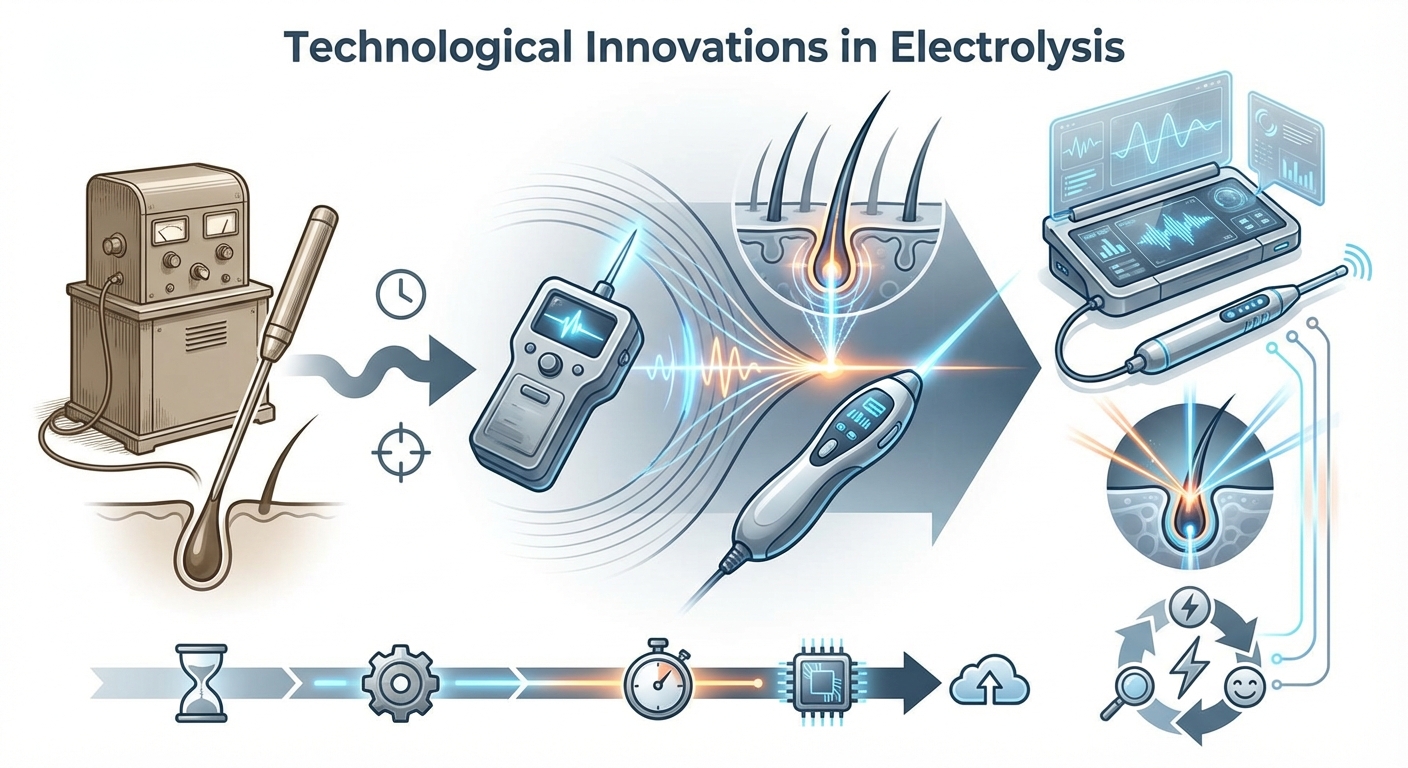
The journey of electrolysis began with Dr. Charles E. Michel’s pioneering use of direct current (galvanic method) to remove an ingrown eyelash in 1875 [54]. This method, while effective, was notoriously slow, often requiring a minute or more per hair. Over time, thermolysis (also known as short-wave diathermy) emerged, utilizing alternating current (AC) at radiofrequencies to generate heat within the follicle, significantly speeding up the process to under a second per hair [34]. The blend method, combining both galvanic and thermolysis currents, further enhanced efficacy by leveraging the chemical and heat-based destruction mechanisms simultaneously. However, the most profound advancements in recent years stem from increasing the operating frequency of thermolysis devices and integrating smart, computerized controls.
4.1.1 27 MHz High-Frequency Devices: Precision and Speed Amplified
One of the most impactful technological innovations in modern electrolysis is the adoption of high-frequency devices operating at 27.12 MHz. This represents a significant leap from older machines that typically operated at 13.56 MHz [30]. Manufacturers of these advanced systems, such as Apilus, highlight their superiority, claiming they are “more efficient, rapid and comfortable than any other technology” [7]. The principle behind this enhancement lies in the physics of radiofrequency energy. Higher frequencies allow for extremely rapid oscillations of water molecules within the tissue, concentrating the heat generated more precisely at the tip of the probe and the base of the hair follicle [30]. This localized heating causes swift and complete coagulation of the follicular cells responsible for hair growth, minimizing thermal spread to surrounding tissues.
The benefits of 27 MHz technology are multifold:
- Increased Efficiency: The ultra-fast heating means that individual hairs can be treated in a fraction of a second. This drastically reduces the time required for each insertion, allowing electrologists to treat a greater number of hairs per session. This is a critical factor for both client convenience and clinic throughput [9].
- Enhanced Precision: The highly localized thermal effect ensures that the destructive energy is contained within the follicle, sparing adjacent dermal tissues. This reduces the risk of skin irritation, redness, and potential scarring, which were more common concerns with older, less controlled thermolysis devices.
- Improved Comfort: Because the energy delivery is so rapid and precise, clients report significantly less discomfort. The sensation is often described as a momentary heat or tingling, rather than a prolonged sting [34]. This enhanced tolerability means that longer sessions can be performed, leading to faster overall clearance, and a wider range of clients who might have previously found electrolysis too painful can now comfortably undergo treatment [34].
- Reduced Skin Reaction: The precise targeting results in minimal superficial skin damage. This translates to less post-treatment redness, swelling, and scabbing, allowing clients to resume their normal activities more quickly and reducing the aftercare burden [34].
The real-world impact of 27 MHz devices is evident in reports from clinics like the Austin Medical Electrolysis Clinic. They documented that with a new multipulse microflash protocol utilizing a 27 MHz device, they achieved approximately 91% hair reduction after just 6 treatments, a nearly twofold improvement compared to the ~50% reduction seen with their previous standard thermolysis method over the same number of sessions [9].
4.2 Computerized Precision with Smart Probes and Intelligent Algorithms
Beyond the raw frequency, modern electrolysis devices have integrated sophisticated computing power to optimize treatment parameters. This has ushered in an era of unprecedented precision and consistency.
4.2.1 Intelligent Algorithms and Automated Adjustments
Modern electrolysis machines are no longer simple power dials. They are equipped with intelligent algorithms that automatically adjust treatment settings in real-time. These algorithms can consider several factors to optimize energy delivery:
- Skin Moisture Level: Electrical conductivity can be affected by skin hydration. Advanced devices can measure this and fine-tune the current to ensure consistent energy delivery regardless of variations in skin moisture.
- Hair Thickness and Depth: Thicker, deeper hairs require more energy than finer, shallower ones. Smart probes, often paired with sophisticated software, can sometimes infer these characteristics and adjust the energy output accordingly, or allow electrologists to select pre-programmed settings tailored to specific hair types and body areas [8].
- Impedance Measurement: Some cutting-edge systems can measure the electrical impedance within the follicle during insertion. This feedback mechanism allows the device to deliver precisely the right amount of energy needed to destroy the follicle, preventing both under-treatment (which leads to regrowth) and over-treatment (which can cause unnecessary tissue damage or discomfort).
This level of automation significantly reduces the guesswork for the electrologist, improving the consistency and efficacy of treatments. Even less experienced practitioners can achieve excellent results by leveraging these smart presets, ensuring that each follicle receives optimal treatment the first time around [8].
4.2.2 Touchscreen Interfaces and Pre-Set Programs
The user experience for electrologists has also been streamlined. Modern machines feature intuitive touchscreen interfaces with pre-set programs for various body areas and different hair characteristics. This means:
- Ease of Use: Practitioners can quickly select appropriate settings, reducing setup time and the potential for human error.
- Reproducibility: Pre-set programs help standardize treatment across clients and even between different electrologists within a clinic, contributing to more predictable and consistent outcomes.
- Training and Skill Transfer: The advanced functionalities make the learning curve for new electrologists less steep, as much of the complex parameter adjustment is handled by the machine’s intelligence.
4.2.3 Smart Probes and Insulated Needle Technology
The probes themselves have also seen advancements. Insulated probes, where the needle is coated with an insulating material except for the very tip, are a game-changer. This design feature:
- Concentrates Energy: Ensures that the electrical current is delivered directly to the base of the follicle, where the growth cells are located, while minimizing energy dispersion to the upper layers of the skin.
- Reduces Surface Trauma: By protecting the epidermis from unnecessary heat exposure, insulated probes significantly reduce post-treatment redness, swelling, and the tiny scabs that were once a common side effect of electrolysis [34].
- Improves Client Comfort: Clients typically experience far less surface sensation and discomfort, leading to a more pleasant treatment experience [34].
4.3 Efficient Multi-Pulse and Microflash Methods: Doubling Efficacy
The drive for speed and thoroughness has led to the development of advanced treatment methodologies, specifically multi-pulse and microflash techniques, predominantly used with high-frequency thermolysis devices.
4.3.1 Multiplex and Microflash Thermolysis
Traditional thermolysis delivered a single, rapid pulse of energy to destroy the follicle. However, hair follicles are complex structures, and growth cells can be present at slightly different depths or locations within the follicular wall. Multi-pulse and microflash methods address this by delivering a rapid burst of multiple, extremely short pulses into the follicle with a single insertion of the probe [9]. This effectively creates a more comprehensive and thorough destruction of all the germinative cells.
The “Microflash” technique, described by the Austin Medical Electrolysis Clinic as part of their Multipulse modality, exemplifies this innovation. By firing several micro-bursts of energy in quick succession, it ensures that the entire target area within the follicle is adequately coagulated [9]. The impact of this methodological shift is profound:
- Dramatic Increase in Clearance Rates: As highlighted by the Austin Medical Electrolysis Clinic, the switch to a Multipulse Microflash protocol saw hair reduction nearly double, from approximately 50% to 91% after only 6 treatments [9]. This means clients are achieving near-complete hair clearance in significantly fewer overall sessions.
- Reduced Regrowth: The more thorough destruction of the follicle cells ensures that treated hairs are far less likely to regrow, reinforcing electrolysis’s reputation as the only truly permanent hair removal method [6].
- Faster Overall Treatment Time: While each individual probe insertion still takes a fraction of a second, the enhanced efficacy per treated hair means fewer retreatments are necessary over the entire course of therapy, leading to a shorter total treatment timeline for the client. This translates to faster achievement of permanent results.
4.4 Improved Comfort and Client Outcomes through Innovation
Beyond the technical specifications, the ultimate measure of these innovations lies in their impact on the client experience and outcomes. The advancements in 27 MHz technology, computerized precision, and multi-pulse methods collectively contribute to a significantly more comfortable, efficient, and effective treatment journey.
4.4.1 Reduced Discomfort and Pain Perception
The localized and rapid energy delivery of high-frequency and multi-pulse techniques, combined with insulated probes, fundamentally changes the sensation of electrolysis. Clients report less stinging and a more tolerable experience compared to older machines [34]. This is a critical psychological factor, as fear of pain is a common barrier to seeking electrolysis. The improved comfort broadens the appeal of electrolysis to a wider demographic, extending beyond just individuals with high pain tolerance [34].
4.4.2 Minimized Side Effects and Faster Recovery
The precision of modern electrolysis significantly reduces collateral damage to surrounding skin. Consequently, post-treatment side effects such as redness, swelling, and scabbing are greatly minimized and tend to resolve much faster, often within hours or a day [18]. This allows clients to return to their normal activities sooner, reducing downtime and making the treatment more convenient.
4.4.3 Enhanced Efficacy and Predictable Permanence
The primary goal of electrolysis is permanent hair removal, and technological advancements have made this goal more attainable and predictable. The higher clearance rates per session, as demonstrated by the Austin Medical Electrolysis Clinic’s 91% reduction after 6 treatments [9], mean clients see tangible results faster and require fewer overall sessions. This efficiency translates to significant cost and time savings for clients, reinforcing the value proposition of electrolysis as a permanent solution [11].
The table below summarizes the key advancements and their impact on client experience:
| Technological Innovation | Impact on Treatment Speed | Impact on Comfort | Impact on Efficacy |
|---|---|---|---|
| 27 MHz High-Frequency Devices | Significantly faster energy delivery per hair (fractions of a second) | Highly localized heat, reduced thermal spread, less stinging sensation | Precise follicular destruction, minimized collateral damage |
| Computerized Precision & Smart Probes | Optimized energy delivery reduces need for repeat insertions | Automated settings prevent overtreatment, insulated probes reduce surface sensation | Consistent, tailored energy for each follicle, higher first-pass destruction |
| Multi-Pulse/Microflash Methods | Multiple bursts in one insertion, greater follicular destruction per probe | Rapid delivery minimizes perceived duration of discomfort | Up to ~91% hair reduction in 6 sessions (vs. ~50% with older methods) [9] |
4.5 The Impact of Technological Innovations in San Antonio (2024-2025)
The integration of these advanced electrolysis techniques is increasingly evident in markets like San Antonio. Local med-spas and clinics are recognizing the competitive advantage of offering state-of-the-art electrolysis, especially as consumer awareness of its unique benefits grows. For instance, Bio2 Laser Studio in San Antonio, historically a laser-focused establishment, expanded its services to include electrolysis in early 2026 [13]. The studio explicitly highlighted that this was to accommodate clients with “all hair colors and skin types,” which laser alone could not effectively treat, implying an investment in suitable advanced electrolysis equipment.
This trend signifies a broader shift towards comprehensive, multimodal hair removal strategies. Clinics are no longer solely relying on one technology but are integrating the best capabilities of both laser and advanced electrolysis to provide optimal outcomes for every client’s unique needs. This integrated approach allows for:
- Targeting All Hair Types: Electrolysis can treat blonde, grey, red, and fine vellus hairs that lasers cannot [44] [56].
- Safety for All Skin Tones: Unlike some lasers, electrolysis is safe and effective on all Fitzpatrick skin types, from very fair to very dark, without the risk of pigmentation issues [56].
- Finishing Laser Treatments: Electrolysis is often used to “clean up” the residual hairs that remain or are unaffected after a course of laser hair reduction, providing truly permanent results [56] [12].
- Addressing Hormonal Hair: For conditions like PCOS, where hormonal fluctuations can stimulate new hair growth or render laser less effective, advanced electrolysis offers a definitive solution [17].
In San Antonio, this means clients who might have previously been turned away or experienced suboptimal results from laser alone can now achieve complete and lasting hair removal. The case of Bio2 Laser Studio adding electrolysis services serves as a benchmark for local providers, illustrating the move towards inclusive cosmetic services that leverage the unique strengths of advanced electrolysis to ensure ultimate client satisfaction [13].
4.6 Automation and Emerging Tools in Electrolysis
While electrolysis remains fundamentally a manual skill requiring precise hand-eye coordination, the industry is seeing nascent developments towards automation and hybrid technologies, hinting at the future direction of the field.
4.6.1 Robotic-Assisted Electrolysis (Future Prospects)
Though not yet a widespread commercial reality, research and development are exploring robotic-assisted electrolysis. The goal is to enhance the speed and consistency of probe insertion, potentially reducing treatment times for electrologists and minimizing operator fatigue. Such systems would likely involve:
- AI-Powered Follicle Identification: Advanced imaging and AI could help rapidly identify active hair follicles, optimizing the sequence of treatment.
- Precision Insertion: Robotic arms could perform probe insertions with micro-precision, ensuring ideal depth and angle every time, further enhancing efficacy and reducing discomfort.
- Human Supervision: It is highly probable that such systems would operate under the close supervision of a trained electrologist, who would monitor the process and intervene as needed, ensuring safety and adapting to individual client needs.
While still in experimental stages, the potential for robotic assistance in electrolysis could drastically alter its scalability and accessibility in the long term.
4.6.2 Blended Modalities and Electro-Optical Synergy
Another area of innovation lies in combining different energy sources to create synergistic effects. Some devices are already exploring platforms that integrate laser and radiofrequency (RF) energy. In these systems, a laser pulse might first prime the follicle by causing initial damage or making it more receptive to subsequent energy. Then, an RF current, similar to that used in thermolysis, is delivered to achieve a more thorough and permanent destruction of the growth cells.
This “electro-optical synergy” aims to combine the speed of laser with the permanent efficacy of electrical energy. While still evolving, these hybrid technologies suggest a future where a single pass with a device could achieve greater hair clearance with fewer sessions, bridging the gap between the speed of laser and the permanence of electrolysis.
4.7 Safety Monitoring and Standards in the Age of Advanced Electrolysis
Concurrent with technological advancements, there has been a significant emphasis on safety protocols and professional standards. Modern electrolysis machines often incorporate built-in safeguards, such as real-time feedback systems that prevent excessive current delivery if skin resistance drops too low, thereby preventing overtreatment and burns.
Professional associations globally are updating their training curricula to instruct electrologists on the optimal use of these advanced machines. Best practices now emphasize:
- Disposable Probes: Single-use, sterile probes are standard, drastically minimizing the risk of infection.
- Strict Hygiene: Adherence to rigorous hygiene and sterilization protocols in clinics is paramount.
- Client Education: Comprehensive client education about aftercare and realistic expectations for treatment timelines is crucial for optimal healing and satisfaction.
The FDA’s enduring recognition of electrolysis as a “permanent” hair removal method comes with inherent oversight for device manufacturers and practitioners [6]. Consequently, the risk of serious complications like scarring, once a worry with less skilled practitioners or older equipment, is now exceedingly rare when advanced electrolysis is performed by a trained and certified professional [18]. Even in states like Texas, where electrologists are not state-licensed, leading clinics voluntarily adhere to national best practices and certifications, ensuring high standards of safety and efficacy [39].
The continuous improvement in both technology and practitioner training ensures that advanced electrolysis provides effective results while maintaining an excellent safety profile, making it a reliable choice for permanent hair removal in 2024-2025.
The continuous evolution of electrolysis technology, driven by innovations in high-frequency devices, computerized precision, and efficient multi-pulse methods, has profoundly enhanced the speed, comfort, and efficacy of permanent hair removal. These advancements are directly translating into improved client outcomes, characterized by faster clearance, reduced discomfort, and a higher degree of lasting permanence. This technological renaissance is positioning electrolysis not just as a traditional method, but as a cutting-edge solution for a diverse and growing clientele seeking definitive hair removal results.
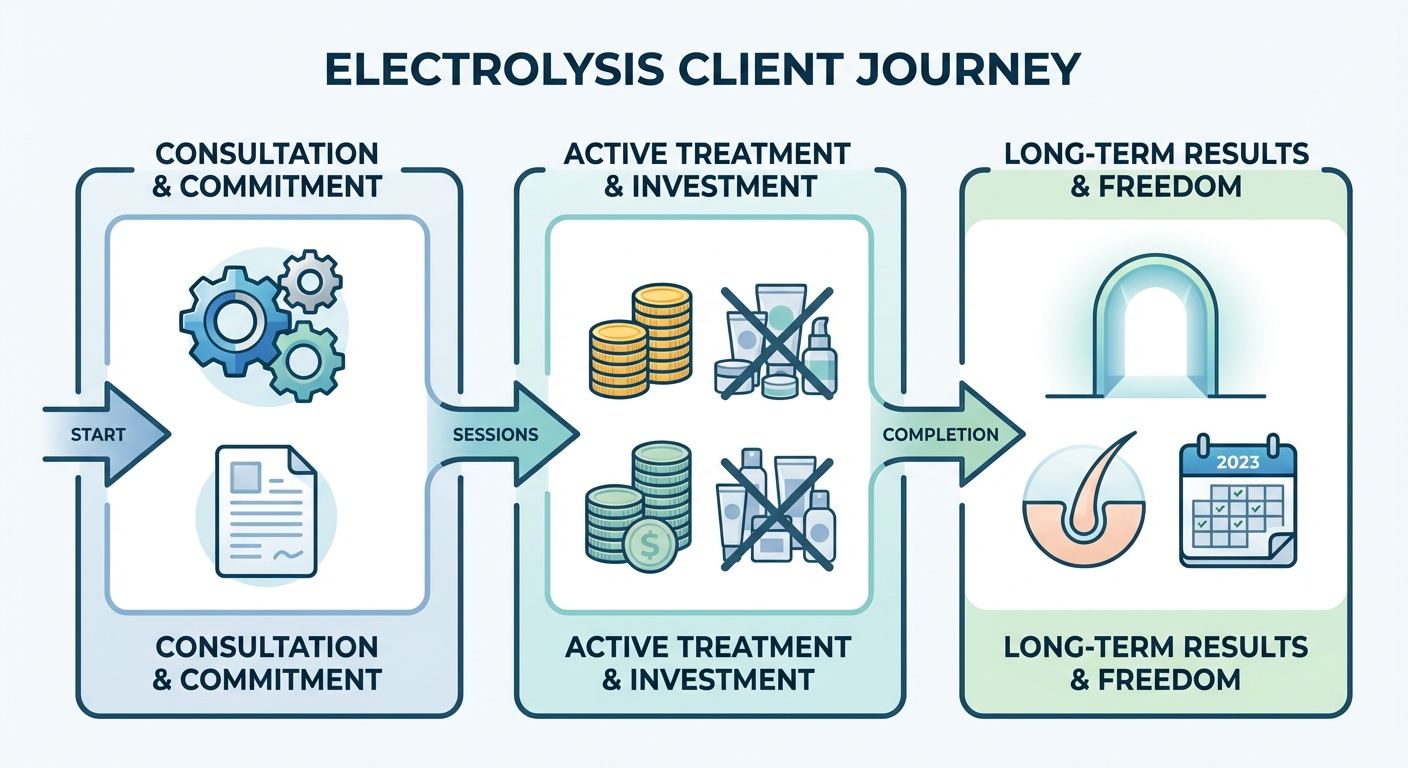
5. Client Outcomes and Treatment Journey
The journey toward permanent hair removal is often a significant commitment for clients, entailing a series of treatments, financial investment, and diligent aftercare. However, for many, the prospective outcomes—lasting smoothness and freedom from constant hair management—represent a profoundly worthwhile investment in their confidence and convenience. This section provides a comprehensive overview of typical client experiences with advanced electrolysis techniques, detailing the number of sessions required, average costs in 2025, and expected results. It also juxtaposes the treatment commitment and long-term cost-effectiveness of electrolysis against other hair removal methods, including laser, shaving, and waxing, drawing on the latest research and market trends observed in 2024-2025.
Customer Expectations and the Path to Permanence
Achieving permanent hair removal through electrolysis is a process that demands patience and consistency. Unlike temporary methods that offer immediate but fleeting results, electrolysis targets individual hair follicles to permanently destroy their growth capabilities. This fundamental difference shapes the entire client journey, from initial consultation to final outcome.
Understanding Treatment Duration and Sessions
Clients embarking on an electrolysis treatment plan often underestimate the number of sessions required due to the cyclical nature of hair growth and the methodical, hair-by-hair approach of the technique. Hair grows in three main phases: anagen (growth), catagen (transitional), and telogen (resting). Electrolysis is most effective when hairs are in the active growth (anagen) phase, as the follicle is still attached to the blood supply, allowing the electrical current to effectively cauterize the dermal papilla responsible for hair nourishment. Since only a percentage of hairs in any given area are in the anagen phase at one time, multiple treatments are necessary to target all hairs as they cycle into this optimal stage. Research indicates that clients typically require about 8 to 16 electrolysis sessions per area to achieve complete and permanent results[7]. Dermatologists often estimate around 10 treatments on average for optimal outcomes on a specific area[7]. These sessions are usually spaced approximately four weeks apart, aligning with the typical hair growth cycles, ensuring that new anagen hairs are targeted as they emerge[10]. Larger treatment zones or areas with denser, hormonally-influenced hair (such as the chin or upper lip for individuals with PCOS) may necessitate more sessions, sometimes reaching up to 16 or more[10]. This commitment contrasts with laser hair removal, which often averages around 6 sessions[10]. However, laser treatments are generally for “permanent hair reduction” and may still require yearly touch-ups due to potential hair regrowth, particularly with hormonal shifts[11]. Electrolysis, on the other hand, aims for genuinely permanent results, meaning once a follicle is treated successfully, it is destroyed for good, and no further maintenance is needed for that specific hair[17]. This distinction is crucial for managing client expectations and reinforcing the long-term value of electrolysis.
The Role of Advanced Electrolysis Techniques in Expediting Results
Modern advancements in electrolysis technology have significantly improved treatment speed and efficacy, impacting the overall client journey. Technologies like microflash electrolysis, utilizing higher frequencies (e.g., 27 MHz radiofrequency), enable electrologists to treat hairs more rapidly and effectively. For instance, the Austin Medical Electrolysis Clinic reported a remarkable 91% hair reduction after just 6 sessions using a multipulse microflash technique, a significant improvement compared to the approximately 50% reduction observed with older thermolysis methods over the same number of sessions[13]. This nearly double efficiency means clients can achieve their permanent results in fewer total visits or with shorter treatment courses, enhancing satisfaction and increasing clinic throughput. These advanced machines, such as the Apilus xCell, deliver ultra-fast electrical pulses and often incorporate smart algorithms that auto-adjust energy output based on skin moisture levels and hair thickness[14]. This precision ensures optimal follicle destruction with minimal collateral tissue damage, leading to more consistent results and improved comfort for the client[15]. Insulated probes further concentrate the electrical current at the follicle’s base, reducing surface trauma and post-treatment irritation[44]. Such innovations shorten the overall treatment timeline and improve the client’s experience by reducing discomfort and visible side effects.
Costs and Long-Term Value Proposition
The financial aspect of permanent hair removal is a significant consideration for clients. While the upfront costs for treatments like electrolysis and laser can seem substantial, they often represent a long-term investment that can be more economical than a lifetime of temporary hair removal methods.
Average Costs of Electrolysis in the U.S. (2025)
As of 2025, electrolysis sessions in the U.S. typically range from **$40 to $200 per session**[12]. This wide range depends on various factors including:
- Treatment Area Size: Smaller areas like the upper lip or eyebrows will generally cost less per session than larger areas like the back or legs.
- Clinic Location: Prices can vary significantly between urban and rural areas, and between different states or regions.
- Electrologist’s Experience: Highly experienced electrologists using advanced equipment may charge more.
- Session Duration: Sessions are often billed by time (e.g., 15 minutes, 30 minutes, 1 hour).
A full treatment course for a small area, such as the chin, might range from **$500 to $1,000** in total[12]. Considering the need for 8-16 sessions at an average of 30-minute intervals, the total investment for a permanent solution in a localized area can be significant.
Comparative Cost-Effectiveness with Other Methods
To truly understand the value proposition of electrolysis, it’s essential to compare its costs with other hair removal methods over a lifetime.
| Method | Initial Cost / Session Cost (2025 US) | Frequency / Duration | Long-Term Cost Estimate (Over 10 years) | Permanence |
|---|---|---|---|---|
| Electrolysis | $40–$200 per session[12] (Total for area: $500–$2,000+) | 8–16+ sessions[7] (spread over 6-18 months) | $500–$2,000+ (one-time investment per area) | Permanent (FDA-approved)[4] |
| Laser Hair Removal | $45–$400 per session[18] (Total for package: $1,500–$2,500+)[19] | 6–8 sessions[11] (initial), then annual touch-ups | $1,500–$2,500 (initial) + $200–$500/year (touch-ups) = $3,500–$7,500+ | Permanent Reduction (not 100% permanent)[30] |
| Waxing (Professional) | $30–$80 per session (per area) | Monthly (12 times/year) | $3,600–$9,600+ | Temporary (3-6 weeks) |
| Shaving (DIY) | $5–$20 per month (razors, creams) | Daily/Weekly | $600–$2,400+ (plus time cost) | Temporary (1-3 days) |
As illustrated in the table, while electrolysis may appear more expensive upfront than temporary methods like shaving or waxing, its *permanent* nature makes it exceptionally cost-effective in the long run. The initial investment in a full course of electrolysis effectively eliminates recurring costs associated with these temporary methods. For instance, the ongoing expense and time commitment for regular waxing or the continuous purchase of shaving supplies accumulate significantly over years. A complete laser regimen, though initially priced higher than electrolysis for larger areas (e.g., $1,500–$2,500)[19], can necessitate ongoing touch-up sessions, adding to the cumulative cost. Thus, electrolysis, by offering a true “set it and forget it” solution, delivers unparalleled long-term value, freeing clients not just financially but also in terms of daily routines and mental load.
Client Experience: Discomfort, Side Effects, and Recovery
Understanding the client experience during and after electrolysis is crucial for managing expectations and ensuring high satisfaction. While often described as more precise and more tolerable than older methods, it’s not entirely without sensation or temporary side effects.
Sensation and Pain Management
Electrolysis targets each hair follicle individually, and clients typically feel a distinct sensation—often described as a tiny heat, tingling, or prickling—as the electrical current is delivered[20]. The intensity of this sensation varies significantly based on individual pain tolerance, the body area being treated (some areas are more sensitive than others), and the skill of the electrologist. Modern advancements, particularly high-frequency machines with ultra-fast pulses and insulated probes, have contributed to significantly reducing discomfort compared to older techniques[15]. Many clinics employ strategies to enhance client comfort:
- Topical Anesthetic Creams: Lidocaine-based numbing creams are commonly applied 30-60 minutes before sessions, especially for sensitive areas like the upper lip or bikini line[21].
- Cooling Measures: Some electrologists use ice packs or chilled air devices during the treatment to help minimize discomfort.
- Adjustable Settings: Skilled practitioners will fine-tune the machine’s intensity and duration settings to align with the client’s comfort level while maintaining efficacy.
It’s also worth noting that the perceived pain often decreases as treatment progresses, not only due to physiological adaptation but also because the hair becomes sparser, meaning fewer active follicles are treated per session.
Typical Side Effects and Healing Process
Immediately following an electrolysis session, clients can expect some temporary side effects localized to the treated area. These typically include:
- Redness and Swelling: The skin around each treated follicle may appear red and mildly swollen, similar to small mosquito bites. This is a normal inflammatory response and usually subsides within a few hours to a day or two[20].
- Pinpoint Scabs or Crusts: Tiny scabs or crusts may form over the treated follicles within 24-48 hours. These are part of the natural healing process and indicate that the follicle has been successfully treated. It is crucial for clients to avoid picking these scabs to prevent scarring or infection[23].
- Minor Bruising: In rare cases, especially in delicate areas or with very fine skin, minor bruising can occur, which typically resolves within a week.
Serious complications like hyperpigmentation (darkening of the skin), hypopigmentation (lightening of the skin), or scarring are exceedingly rare when electrolysis is performed by a trained and experienced professional using proper techniques and sterile equipment[20]. The use of disposable probes is standard to ensure hygiene. Proper aftercare, which typically includes applying soothing agents like aloe vera, avoiding direct sun exposure, and refraining from harsh exfoliants for a few days, is vital to promote optimal healing and prevent adverse reactions[24].
Client Outcomes: Efficacy, Satisfaction, and Quality of Life Improvements
The ultimate measure of success for any permanent hair removal method lies in its efficacy and the long-term satisfaction of the client. Electrolysis, with its FDA-approved status as a permanent solution, consistently delivers high rates of hair elimination and significant improvements in clients’ quality of life.
High Efficacy and True Permanence
Electrolysis boasts the highest success rate per hair of any removal method. Over 90% of successfully treated follicles will not produce new hair growth, and any follicles that show renewed activity can be retreated until permanently disabled[17]. This targeted, precise destruction of individual hair growth cells ensures that genuinely permanent hair removal is attainable for all hair types and skin tones, unlike laser, which relies on pigment and is more effective on dark hair against light skin[33]. This high efficacy is particularly beneficial for:
- Individuals with Light/Fine Hairs: For blonde, red, gray, or fine vellus hairs that lasers struggle to treat due to lack of pigment, electrolysis is the only effective permanent method[32].
- Hormonal Hair Growth: Conditions like Polycystic Ovary Syndrome (PCOS) can cause stubborn, hormone-driven hair growth (hirsutism) that often responds poorly to laser treatments and can sometimes even induce paradoxical growth[16]. Electrolysis becomes the definitive solution for these cases, though more sessions might be required to manage ongoing hormonal stimulation.
- Pre-Surgical Clearance: For transgender individuals undergoing gender-affirming surgeries, 100% hair clearance at the surgical site is often medically necessary to prevent post-operative complications like internal hair growth or infection. Electrolysis is vital to ensure complete removal, especially after initial debulking with laser[25].
Client Satisfaction and Quality of Life Impact
Numerous reports and testimonials underscore the profound positive impact of permanent hair removal on clients’ lives. While laser hair removal patients report high satisfaction, valuing the significant reduction in hair density and ingrown hairs[26], electrolysis clients often describe a “life-changing” transformation. The ultimate freedom from daily shaving, painful waxing, or constant plucking translates into tangible improvements in confidence, self-esteem, and daily convenience. Jackie, an individual with PCOS who documented her electrolysis journey online, exemplifies this impact. After years of struggling with excessive facial hair that laser treatments failed to resolve and even exacerbated, electrolysis ultimately provided her with a hair-free chin and upper lip after approximately three years of consistent treatment[68]. Her experience demonstrates that while the process can be lengthy, the permanent resolution of a deeply personal and persistent aesthetic concern leads to immense satisfaction. This sentiment is echoed by many, particularly those with conditions causing unwanted hair, who gain back a sense of control and comfort in their own skin.
San Antonio: A Case Study in Integrated Hair Removal Services (2024–2025)
The hair removal market in San Antonio, Texas, mirrors broader national and global trends, with local providers increasingly adopting a multi-modal approach to meet diverse client needs and maximize outcomes.
The Rise of Integrated Practices
San Antonio’s aesthetic clinics are evolving to offer both laser and advanced electrolysis under one roof, recognizing that no single method is universally superior. A prime example is Bio2 Laser Studio, a prominent med-spa that, by February 2026, expanded its services to include electrolysis[5]. This strategic decision was driven by client demand and the understanding that electrolysis could address the limitations of laser-only treatments, such as ineffectiveness on light-colored hair or certain skin tones[5]. By integrating electrolysis, Bio2 Laser Studio aims to provide comprehensive, inclusive care, catering to clients of all hair colors and skin types[5]. This approach allows for personalized treatment plans, often combining laser for initial hair reduction and electrolysis for meticulous, permanent clearance of residual hairs.
Diverse Clientele and Tailored Outcomes
San Antonio’s diverse population, including a significant Hispanic community, presents a broad spectrum of hair types and skin tones, necessitating versatile hair removal solutions. While laser remains popular for its speed on larger areas, electrologists in the city report growing demand for electrolysis from clients with specific needs:
- Women with Hormonal Hair: Electrolytic removal of facial hair (e.g., chin, upper lip) is a growing service for women experiencing hirsutism due to PCOS or hormonal changes.
- Men Seeking Grooming Refinement: The rise in male grooming is evident in San Antonio, with men increasingly seeking permanent solutions for beard lines, back, and chest hair. Many opt for initial laser debulking followed by electrolysis for precision sculpting and permanent results.
This combination approach facilitates excellent outcomes, providing immediate hair reduction from laser and ensuring total permanence with follow-up electrolysis. Clients often transition between the two modalities, benefiting from the strengths of each. For example, a client with dense dark arm hair might undergo a few laser sessions for bulk removal and then switch to electrolysis for the remaining 15-20% of hairs, including any finer, lighter ones that laser couldn’t target. This collaborative and client-centric approach by San Antonio practitioners underscores a commitment to optimal, lasting results.
Client Education and Professional Standards
Effective client education is an important element of the successful treatment journey in San Antonio. Given that Texas has historically not licensed electrologists at the state level (though this may be subject to change)[46], many local electrology professionals proactively build trust through transparent communication and adherence to national best practices and certifications. Clinics emphasize explaining the hair growth cycle, the necessity of multiple sessions, and realistic timelines (often 12-18 months for complete clearance in an area). This educational focus leads to better client adherence to treatment plans and ultimately, higher satisfaction rates. Clients who fully understand the process are more patient and appreciative of the permanent results, frequently becoming enthusiastic advocates for their chosen provider.
Conclusion
The future of permanent hair removal, as seen through the lens of advanced electrolysis techniques and client outcomes in San Antonio for 2024-2025, is characterized by innovation, specialization, and comprehensive care. Advances in electrolysis technology, such as high-frequency microflash devices, have dramatically improved efficacy and comfort, reducing the overall treatment burden for clients. While requiring a greater time commitment upfront compared to laser hair removal, electrolysis delivers unparalleled permanence and long-term cost-effectiveness. The increasing integration of electrolysis into med-spas and its vital role for diverse client needs—including those with specific hair/skin types or medical requirements—highlights its indispensable position in the evolving aesthetic market. Clients completing their electrolysis journey report profound improvements in confidence and quality of life, affirming the value of this lasting investment. The San Antonio market exemplifies these trends, with local businesses adapting to offer integrated solutions that prioritize individualized care and deliver truly permanent hair removal results for an increasingly diverse clientele. The next section will delve into the regulatory landscape governing electrolysis and laser hair removal, examining current standards, licensing requirements, and consumer protection measures.
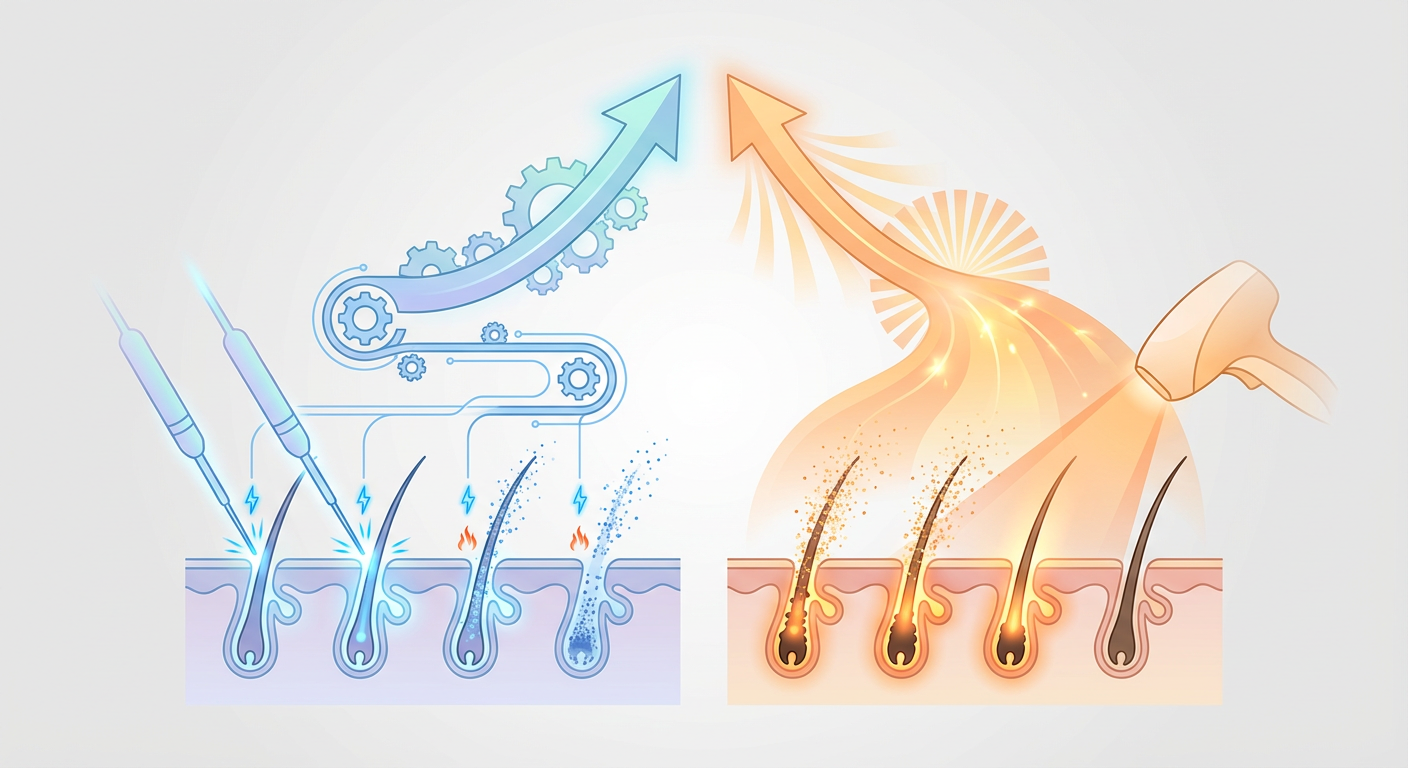
6. Electrolysis vs. Laser: A Comparative Analysis
The pursuit of smooth, hair-free skin has driven innovation in cosmetic procedures for centuries, culminating in advanced permanent and long-term hair removal methods. Among these, electrolysis and laser hair removal stand out as the most prominent professional treatments. In the dynamic hair removal market, projected to escalate from an estimated **$4.5 billion in 2024 to over $11 billion by 2033** globally, fueled by rising aesthetic awareness and social media influence, understanding the distinct capabilities and limitations of each method is paramount for both practitioners and clients alike [1], [2]. While both modalities aim to reduce unwanted hair, their mechanisms, suitability for different hair and skin types, treatment speeds, and ultimately, their long-term outcomes, differ significantly. This section will delve into a head-to-head comparison of electrolysis and laser hair removal, dissecting their respective strengths and limitations in achieving permanence, their applicability across diverse client profiles, the practicalities of treatment including coverage speed and pain levels, and their crucial roles in specialized cases like Polycystic Ovary Syndrome (PCOS) or gender-affirming care. Recognizing these distinctions is essential for making informed decisions in an increasingly competitive and technologically advanced aesthetic landscape.
6.1. Defining Permanence: FDA Classifications and Clinical Outcomes
The understanding of “permanence” in hair removal is a critical differentiator between electrolysis and laser hair removal, directly influencing client expectations and outcomes. The U.S. Food and Drug Administration (FDA) plays a pivotal role in clarifying this distinction, affecting how these treatments are marketed and perceived [25].
6.1.1. Electrolysis: The Only FDA-Approved Permanent Method
Electrolysis holds a unique position as the **sole hair removal method officially recognized by the FDA as “permanent”** [3], [25], [26]. This classification is attributed to its mechanism of action: electrolysis directly destroys the hair growth cells within each individual hair follicle using a fine probe that delivers an electrical current [26]. This targeted destruction ensures that once a follicle is successfully treated, it is rendered incapable of producing hair ever again. The Cleveland Clinic affirms this, stating that properly performed electrolysis permanently destroys hair growth cells, ensuring treated hairs do not regrow [26]. This implies a near-100% success rate per follicle, meaning each treated hair is permanently eliminated [34]. The history of electrolysis dates back to **1875**, when Dr. Charles E. Michel, a St. Louis ophthalmologist, first used it to remove an ingrown eyelash [42]. This foundational concept of using electricity to destroy a hair follicle remains the basis of modern electrolysis, despite significant advancements in precision and comfort over the past 150 years [42].
6.1.2. Laser Hair Removal: Permanent Hair Reduction
In contrast, laser hair removal devices are classified by the FDA for **”permanent hair reduction,” not full removal** [3], [25]. Lasers work by emitting concentrated light that is absorbed by the pigment (melanin) in the hair follicle. This absorbed light converts to heat, damaging the follicle and impeding future hair growth [45]. While highly effective, laser treatments typically achieve around **70% to 90% reduction in hair regrowth** for the average patient after a full course of treatment [33]. Many patients experience a “permanent reduction,” but usually not 100% elimination. Some fine hairs may remain or regrow slowly, especially under hormonal influences [11], [45]. Consequently, maintenance sessions, often annually, may be required to address any regrowth and maintain optimal results [11]. This difference explains why electrolysis is frequently utilized to “finish off” the last stubborn hairs after laser therapy, aiming for complete removal [13], [46].
6.1.3. Treatment Session Requirements
The number of sessions required also highlights the difference in permanence and efficacy: * **Electrolysis:** Typically, **8 to 16 electrolysis sessions** are needed per area for complete removal, spaced approximately 4 weeks apart [8], [9], [27], [29]. Dermatologists estimate around **10 treatments** on average for optimal results [28]. While this can seem like a longer process upfront, once an area is fully cleared via electrolysis, no further maintenance is generally needed outside of addressing new hormonal growth [10]. * **Laser Hair Removal:** A full course of laser hair removal often averages around **6 sessions** [10], though more may be required. While offering quicker initial results, the need for potential yearly touch-ups makes it a long-term reduction strategy rather than a permanent eradication [12]. Many clients see noticeable thinning after just 2-3 sessions [48]. In essence, while laser hair removal offers significant long-term reduction with greater speed on large areas, electrolysis provides the definitive, permanent removal of individual hairs, making it the preferred choice for those seeking absolute hair elimination [25], [44].
6.2. Suitability for Various Hair and Skin Types
The effectiveness of hair removal methods is heavily contingent upon the client’s hair color, hair texture, and skin tone. This is where electrolysis and laser hair removal diverge significantly in their versatility.
6.2.1. Hair Color and Texture
* **Laser Hair Removal:** Laser technology fundamentally relies on the principle of selective photothermolysis, meaning it targets pigment (melanin) in the hair follicle [45]. This makes laser hair removal most effective on individuals with **coarse, dark hairs against fair skin**, where there is a strong contrast for the laser to effectively identify and heat the follicle [45]. Conversely, lasers struggle to treat lighter hair colors such as **blonde, red, gray, or white hairs** because these lack sufficient melanin to absorb the laser’s energy [4], [5], [44]. Fine vellus hairs also present a challenge for lasers. * **Electrolysis:** Electrolysis is a truly universal hair removal method because its efficacy is **independent of hair color or texture** [4], [44]. By inserting a fine probe directly into each hair follicle and delivering an electrical current, electrolysis bypasses the need for pigment altogether [44]. This means it can permanently remove any hair, whether it’s a prominent black hair, a fine blonde peach fuzz, or even an all-white mustache hair [44]. This advantage makes electrolysis invaluable for clients whose hair characteristics preclude them from successful laser treatment.
6.2.2. Skin Tone
* **Laser Hair Removal:** The interaction between laser light and skin pigment is a crucial consideration for safety and effectiveness. Lasers can be used on a range of skin tones, but require caution, particularly on darker skin types. Older or less versatile laser systems primarily targeted lighter skin tones (Fitzpatrick types I-III) due to the risk of hyperpigmentation (darkening of the skin) or hypopigmentation (lightening) on darker complexions, as the laser can inadvertently target melanin in the skin rather than just the hair [45]. * Advances in laser technology, such as Nd:YAG lasers (operating at 1064 nm wavelength), have made laser hair removal safer and more effective for darker skin tones (Fitzpatrick types IV-VI) [44], [45]. However, even with these advancements, a highly skilled and experienced technician is crucial to minimize risks on darker skin [44]. * **Electrolysis:** Electrolysis is considered **safe and effective for all skin tones** [5]. Because it delivers electrical current directly into the follicle rather than relying on light absorption by melanin in the skin, it eliminates the risk of pigmentary changes associated with laser treatment on darker complexions [5], [44]. This makes electrolysis a crucial solution for individuals with darker skin who may not be suitable candidates for all laser types or who face potential risks from laser hair removal. As Bio2 Laser Studio in San Antonio noted, adding electrolysis allows them to treat “all hair colors and skin types,” filling crucial gaps where lasers fall short [5], [17].
| Feature | Electrolysis | Laser Hair Removal |
|---|---|---|
| FDA Classification | Permanent Hair Removal [3] | Permanent Hair Reduction [3] |
| Mechanism | Direct electrical current destroys follicle [26] | Light energy targets melanin, damaging follicle [45] |
| Hair Color Suitability | All hair colors (blonde, red, gray, white, dark) [4], [44] | Most effective on dark hair, struggles with light/red/gray [45] |
| Skin Tone Suitability | Safe for all skin tones [5], [44] | Effective on light to medium skin; specific lasers for dark skin (Nd:YAG) [44] |
| Number of Sessions | Typically 8-16 for complete clearance [8] | Typically 6-8 for significant reduction, may need touch-ups [10] |
| Speed | Slow, treats one hair at a time [47] | Fast, covers large areas quickly [47] |
| Pain Level | Tingling/heat sensation, can be sensitive [39] | “Snapping rubber band” sensation, often with cooling [38] |
6.3. Coverage Speed and Pain Levels
Beyond the fundamental differences in permanence and suitability, practical considerations like treatment speed and perceived pain levels significantly impact a client’s choice and experience.
6.3.1. Coverage Speed
* **Laser Hair Removal:** Speed is arguably one of laser hair removal’s greatest advantages, especially for larger body areas. Laser devices utilize a wider treatment “spot size” and can deliver multiple pulses per second, allowing them to cover broad patches of skin efficiently [47]. A session for a large area such as full legs or an entire back can often be completed in under an hour [47]. This rapid coverage makes it an attractive option for clients seeking to reduce hair over extensive areas quickly. Dr. Brendan Camp, a dermatologist, notes that laser “quickly zaps larger sections” [47]. * **Electrolysis:** By design, electrolysis is a meticulous, hair-by-hair process. As each individual hair follicle must be targeted with a fine probe, it is inherently more time-consuming [47]. Clearing a large area like full legs could necessitate dozens of hours of work, spread across many appointments [47]. However, recent advancements in electrolysis technology, such as higher-frequency 27 MHz devices and Multiplex Microflash techniques, have significantly improved treatment speed and efficiency per follicle [6], [7], [31], [51]. One clinic reported achieving 91% hair reduction after just 6 sessions using a modern microflash method—nearly double the clearance of older techniques over the same period [7], [31]. Despite these improvements, electrolysis still remains a slower process for extensive areas compared to laser.
6.3.2. Pain and Sensation
Perceived pain is subjective and varies greatly among individuals, but both methods come with distinct sensations: * **Laser Hair Removal:** Pain associated with laser hair removal is commonly described as a “snapping rubber band” sensation or a brief stinging and heat with each pulse [38]. Modern laser devices often incorporate integrated cooling systems (such as chilled sapphire tips, air cooling, or cryogen sprays) that provide immediate relief, mitigating discomfort [38]. While the flashes can be intense, the overall duration of discomfort per session, especially for large areas, is relatively short due to the faster coverage [40]. * **Electrolysis:** The sensation during electrolysis is often described as a tiny **heat or tingling** within each follicle as the electrical current works [15]. Because it involves individual insertions, sensitive areas can become quite tender over the course of a session. To manage discomfort, topical numbing creams (e.g., lidocaine) are frequently applied before electrolysis treatments [39]. Technological advancements, such as higher-frequency machines and insulated probes, have made modern electrolysis more comfortable than older methods by localizing the heat effect and protecting surrounding skin [6], [52], [53], [54]. This enhanced comfort has broadened the appeal of electrolysis to a wider range of clients [40]. For extensive areas, many practitioners recommend **laser hair removal for initial “debulking”** to quickly reduce a significant volume of hair, followed by electrolysis to meticulously clear any remaining or resistant hairs [13]. This hybrid approach combines the speed of laser with the definitive permanence of electrolysis, offering a balanced solution for many clients.
6.4. Roles in Special Cases: PCOS and Gender-Affirming Care
Beyond general cosmetic hair removal, both electrolysis and laser play distinct, often complementary, roles in specific medical and personal circumstances. The efficacy of each method becomes particularly critical in cases like Polycystic Ovary Syndrome (PCOS) and gender-affirming care, where hair growth patterns or the need for absolute clearance dictate the treatment choice.
6.4.1. Polycystic Ovary Syndrome (PCOS)
PCOS is a common endocrine disorder affecting an estimated **20% of women in India** alone, frequently leading to hirsutism—excessive hair growth on the face and body [17]. The hair associated with PCOS is often fine, diffuse, and hormone-driven, making it particularly challenging to treat effectively. * **Laser Hair Removal and PCOS:** Lasers frequently struggle with the finer hair types seen in PCOS. Because laser efficacy depends on targeting pigment in coarse hair, fine, lighter hairs are less responsive [17]. Moreover, there have been documented instances of **paradoxical hair growth** where laser treatments on fine hormonal hair can, in rare cases, inadvertently stimulate more hair growth rather than reducing it [17], [41]. This phenomenon, highlighted by social media advocates like ‘Jackie’ (@Your_Hairy_Godmother), makes laser a less reliable option for many PCOS patients [59], [60]. * **Electrolysis and PCOS:** Electrolysis is generally the recommended and most effective treatment for PCOS-related hair growth [17]. Its ability to treat any hair color or texture and directly destroy the follicle cells makes it ideal for systematically eliminating these hormone-stimulated hairs. While new hairs may emerge over time due to ongoing hormonal influences, electrolysis can permanently remove existing follicles, providing definitive results where lasers fall short [17]. Jackie’s case is a prime example: after years of unsuccessful laser treatments that worsened her condition, electrolysis ultimately provided her with a completely hair-free chin and upper lip after nearly 3 years of consistent sessions [59], [60].
6.4.2. Gender-Affirming Care
For individuals undergoing gender-affirming transitions, permanent hair removal often plays a critical role, particularly in preparation for surgeries or to align physical appearance with gender identity, such as for transgender women seeking a smooth face. * **Combined Approach for Surgical Preparation:** The UCSF Gender Affirming Health Program provides guidelines that advocate a combined approach for hair removal in transgender patients [36], [64]. For areas requiring absolute hair clearance before surgery (e.g., graft sites for vaginoplasty), even a few remaining hairs can lead to complications like internal hair growth post-op [19], [41], [64]. * **Laser First (Debulking):** If the hair is dark and dense, laser hair removal is often used as a first-line treatment for **rapid bulk reduction** [35], [64]. This can significantly reduce the overall treatment time and cost by quickly eliminating a large percentage of hair. * **Electrolysis Second (Finishing):** Following laser, **electrolysis is then crucial to ensure 100% clearance** of any remaining hairs, including fine, light, or resistant follicles that the laser missed [19], [35], [64]. This meticulous second stage with electrolysis is vital for preventing post-operative complications and achieving the desired aesthetic outcome [19]. UCSF guidelines suggest that each method alone yields about **85-90% effectiveness**, but combining them provides the best possible result for completely hair-free skin [37], [65]. * **Facial Hair for Transgender Women:** For transgender women, facial hair removal is frequently a priority. While laser can significantly reduce dark facial hair, electrolysis is often indispensable for achieving lasting smoothness, especially for light-colored hairs or residual stubble, and for critically important areas like the upper lip, chin, and jawline where complete removal is desired for congruence with gender identity. In both PCOS and gender-affirming care, clients often exhibit a strong motivation for permanent hair removal, which helps them adhere to the rigorous treatment schedules required for electrolysis. These cases underscore that while laser offers efficiency, electrolysis remains the gold standard when absolute permanence and versatility across all hair and skin types are non-negotiable.
6.5. Cost Analysis and Long-Term Value
The financial investment in permanent hair removal is a crucial factor for clients. A direct comparison of session costs and the overall investment for a complete treatment course reveals different economic models for electrolysis and laser hair removal, emphasizing long-term value over initial outlay.
6.5.1. Session Costs (USA, 2025)
* **Electrolysis:** The average cost for an electrolysis session in the U.S. as of 2025 ranges from approximately **$40 to $200 per session** [12], [30]. This variability depends on factors such as the size of the area being treated (e.g., upper lip vs. chin), the clinic’s location, and the practitioner’s experience. Given that multiple sessions are required (typically 8–16 [8]), a full course for a smaller area like the upper lip or chin might total approximately **$500–$1,000** [30]. * **Laser Hair Removal:** Laser hair removal sessions generally range from **$45 to $400 per session** [30]. Similar to electrolysis, pricing is influenced by the treated area, provider, and geographical location. However, because lasers cover larger areas more quickly, the cumulative cost for a full treatment package for a significant area (like full legs) can be higher upfront, potentially reaching **$1,500–$2,500** [14], [30].
6.5.2. Long-Term Cost-Effectiveness
While initial costs for both advanced methods can seem substantial compared to temporary hair removal solutions (shaving, waxing), their long-term cost-effectiveness is a significant draw. * **Electrolysis:** Although electrolysis requires more sessions and thus a higher cumulative cost for larger areas than laser, its **truly permanent results** mean that once treatment is complete, there are generally no ongoing expenses for that treated area [10]. This negates the recurring costs of razors, shaving creams, waxing appointments, or depilatory products over a lifetime. This one-time investment for permanent hair removal can be highly cost-effective in the long run. * **Laser Hair Removal:** While a full laser regimen for a large area might cost **$1,500–$2,500**, it can still prove cheaper than years of traditional hair removal methods [14]. However, the caveat is that laser often requires occasional maintenance sessions for touch-ups [11], which adds to the long-term cost. Despite this, the convenience and significant reduction in daily grooming make it a worthwhile investment for many.
6.5.3. Market Dynamics and Investment Trends
The growing global hair removal market, projected to more than double from $4.5 billion in 2024 to $11.2 billion by 2033 [1], [2], indicates a strong consumer willingness to invest in lasting solutions. * The **laser hair removal market** alone reached **$1.0 billion in 2023** and is projected to skyrocket to **$7.7 billion by 2035** [22], [23], [67], demonstrating robust growth (18.3% CAGR). This signifies a strong consumer demand for long-term reduction options. * The **electrolysis hair removal market**, though smaller at an estimated **$891.8 million in 2024**, is also forecast to reach **$1.4 billion by 2034** with a steady 5.2% CAGR [24], [66]. This consistent growth shows a solid demand for truly permanent solutions, particularly among clients for whom other methods are insufficient. The general trend shows consumers are increasingly valuing long-term convenience and efficacy over lower upfront costs associated with temporary methods. Marketing strategies often frame these professional treatments as an “investment in oneself” that saves time, effort, and money over a lifetime [57].
6.6. Client Outcomes: Efficacy, Satisfaction, and Long-Term Impact
Evaluating client outcomes involves assessing the efficacy of hair removal, client satisfaction levels, and the overall long-term impact on their lives, including side effects and psychological well-being.
6.6.1. Efficacy and Success Rates
* **Electrolysis:** With modern techniques, electrolysis boasts a very high success rate per follicle, over **90% of treated follicles** will not produce hair again [51]. Those that do can be re-treated. The goal of electrolysis is **100% permanent hair removal** in a given area [26], [34]. Clinic data supports this: the Austin Medical Electrolysis Clinic, using advanced Multiplex Microflash methodology, reported up to **91% hair reduction after just 6 treatments** for certain areas [7]. This demonstrates that complete hair-free results are realistic with dedicated treatment. * **Laser Hair Removal:** A full course of laser hair removal typically achieves **60–90% reduction** in hair regrowth [33]. While significant, complete eradication is less common. The remaining hairs are often finer and lighter. Many clients find this level of reduction highly satisfactory, as it eliminates the need for daily shaving, but it does not promise complete hairlessness [33].
6.6.2. Client Satisfaction
Both methods demonstrate high client satisfaction, albeit for different reasons and target outcomes: * **Laser Hair Removal:** Surveys show high satisfaction rates for laser hair removal, with one reporting **94% of patients** being satisfied after completing treatment [18], [57]. Clients appreciate the substantial reduction in hair density, the smoother skin, and the freedom from frequent shaving or waxing. * **Electrolysis:** While harder to quantify with large-scale surveys, electrolysis caters to specific, often deeply motivated, client needs. Its ability to provide true permanence for all hair types and skin tones means it can be life-changing. For example, individuals with PCOS finally achieving hair-free skin, or transgender clients undergoing facial hair removal, often report immense relief and improved self-confidence [17], [59], [60]. The emotional and psychological benefits derived from finally eliminating chronic unwanted hair are a major driver of satisfaction.
6.6.3. Side Effects and Recovery
Both procedures are generally safe when performed by trained professionals, with mild, temporary side effects being common. * **Laser Hair Removal:** Immediately after a laser session, clients may experience mild redness and swelling around follicles, often resembling mosquito bites, which typically resolves within hours [15], [55]. Temporary pigment changes (darkening or lightening of skin) can occur but are usually transient and can be minimized with proper technique and sun protection [55]. * **Electrolysis:** Electrolysis often results in temporary redness and slight swelling for a day or two, and tiny scabs or pinpoint crusts may form as follicles heal [15], [56]. These typically disappear within days. Serious complications or scarring are rare with skilled practitioners and proper aftercare [16], [57].
6.6.4. Pain Management and Comfort
Pain tolerance is subjective, but significant advancements have been made in managing discomfort for both methods. * **Laser Hair Removal:** Many modern lasers incorporate cooling systems to minimize pain [38]. Topical numbing creams can also be used, especially for sensitive areas. * **Electrolysis:** Numbing creams are commonly used during electrolysis to enhance comfort [39], [58]. Advanced electrolysis machines with higher frequencies and insulated probes like the Apilus 27 MHz devices are designed to minimize discomfort compared to older equipment [6], [52], expanding its appeal to a broader client base [40]. Ultimately, the long-term impact for clients who complete their chosen treatment plan is overwhelmingly positive. Whether it’s significantly reduced hair with laser or totally eliminated hair with electrolysis, clients report enhanced confidence, convenience, and a better quality of life [57].
6.7. San Antonio Spotlight: Local Trends and Integrated Approaches (2024-2025)
The aesthetic market in San Antonio reflects the broader national and global trends in permanent hair removal, with a growing emphasis on comprehensive solutions that integrate both electrolysis and laser technologies. This integrative approach is becoming increasingly common to address the diverse needs of a varied client base.
6.7.1. Integrated Services in Clinics
San Antonio service providers are recognizing the limitations of offering only one modality, especially given the diverse demographics of the region. A prime example is **Bio2 Laser Studio**, a prominent med-spa in San Antonio. Historically focused on laser hair removal, Bio2 announced in **February 2026** its decision to expand services to include electrolysis [19], [62]. This strategic move was directly driven by client demand for addressing hair types and skin tones not optimally treated by laser, such as very light hair or dark skin tones [5], [19], [61]. * **Inclusive Care:** By incorporating FDA-recognized electrolysis, Bio2 positioned itself as a “one-stop” permanent hair removal center catering to **all hair colors and skin types** [19], [61]. This demonstrates a commitment to inclusive care for San Antonio’s diverse community, which includes a significant Hispanic population with a wide range of skin and hair characteristics [62], [63]. * **Personalized Treatment Plans:** Clinics like Bio2 are now able to develop personalized treatment plans that leverage the strengths of both modalities. Laser can be used for initial debulking of larger areas, followed by electrolysis for fine-tuning, eliminating residual hairs, or treating areas where laser was ineffective. This tailored approach ensures optimal outcomes and improved client satisfaction [19].
6.7.2. Diverse Clientele and Combination Strategies
San Antonio’s client base increasingly includes individuals seeking specialized or combination treatments: * **Hormonal Hair:** Local practitioners report a growing number of women seeking electrolysis for hormonal facial hair (e.g., due to PCOS or menopause), where laser often yields unsatisfactory results [17]. * **Male Grooming:** In 2024, there’s been a notable increase in men seeking permanent hair removal, particularly for back and chest hair, and beard lines. While many men opt for laser for initial reduction, some then transition to electrolysis for precise sculpting or to address resistant hairs [32]. Men accounted for **35-40% of U.S. laser hair removal clients in 2023** [16], [68], and male electrolysis treatments are surging year-over-year at approximately **45%** in the mid-2020s [17], [69]. * **Combination Case Example:** A common scenario involves a client starting with several laser sessions at a San Antonio clinic to reduce coarse, dark hair. If lighter or finer hairs remain, or if particular sensitive areas need absolute clearance, they are then referred for electrolysis to “finish the job.” This cross-referral network among local specialists highlights a collaborative environment geared towards achieving the best results for the client by utilizing the most appropriate technology.
6.7.3. Client Education and Expectations
Given that Texas previously lacked state licensing for electrologists [50] (a situation that is evolving nationwide), San Antonio practitioners often proactively provide thorough client education. They emphasize the hair growth cycle, the need for multiple sessions, and realistic timelines (often 12–18 months for complete removal in a persistent area). This transparency fosters greater client compliance and satisfaction, as clients understand the journey and are prepared for the commitment required. The success of these educational efforts leads to positive word-of-mouth referrals, further bolstering the industry. By 2024–2025, San Antonio is at the forefront of a trend where clinics blend advanced electrolysis with laser treatments to provide tailored solutions. This approach maximizes efficiency for initial hair reduction and ensures the permanent removal of recalcitrant hairs, thereby meeting diverse client needs and enhancing overall satisfaction. As the market matures, more clinics are expected to invest in state-of-the-art equipment and dual-modality expertise, cementing San Antonio’s position in advanced permanent hair removal.
6.8. Conclusion: A Synergistic Future
The comparative analysis of electrolysis and laser hair removal clearly delineates their distinct strengths and optimal applications. Electrolysis, with its FDA-approved status as “permanent hair removal,” offers an inclusive solution for all hair colors and skin types, making it indispensable for specific cases like PCOS-related hirsutism or critical surgical preparation in gender-affirming care. Its meticulous, follicle-by-follicle approach, though slower, guarantees complete and lasting eradication of treated hairs, particularly with the advent of advanced high-frequency and microflash technologies that enhance speed and comfort. Laser hair removal, on the other hand, excels in rapidly reducing hair over large areas, proving highly effective for clients with coarse, dark hair. While it offers “permanent hair reduction” and significant long-term convenience, it typically requires maintenance to address regrowth and has limitations regarding hair color and skin tone. The market trend in 2024-2025, exemplified by developments in San Antonio, points towards a synergistic future where clinics increasingly offer both modalities. This approach allows practitioners to tailor treatment plans, leveraging the speed of laser for initial debulking and the definitive permanence of electrolysis for comprehensive clearance. This integrated strategy addresses a wider demographic, caters to specialized needs, and ultimately leads to higher client satisfaction and superior, lasting outcomes. As technology continues to evolve and client expectations for truly permanent results grow, the combined expertise in both advanced electrolysis and laser techniques will become the gold standard in the permanent hair removal industry. The next section will delve into the specific advancements in electrolysis technology, examining how these innovations are transforming treatment efficacy and client experience. —
References
- www.linkedin.com. Hair Removal Market Insights 2025: Key Metrics for Decision-Makers. [1], [20]
- www.linkedin.com. Hair Removal Market Insights 2025: Key Metrics for Decision-Makers. [2], [21]
- www.yahoo.com. This Is The Only Hair Removal Method That’s Permanent, Says The FDA. Experts Explain. [3], [25], [43]
- www.yahoo.com. This Is The Only Hair Removal Method That’s Permanent, Says The FDA. Experts Explain. [4], [44]
- ventureworld.org. Bio2 Laser Studio Expands Services with the Addition of Electrolysis for Permanent Hair Removal. [5], [19], [61]
- www.dectro.com. Apilus. [6], [52]
- www.austinmedicalelectrolysisclinic.com. Electrolysis Case Study – Including Female Chin Hair Removal. [7], [31]
- www.yahoo.com. This Is The Only Hair Removal Method That’s Permanent, Says The FDA. Experts Explain. [8], [27], [29]
- www.yahoo.com. This Is The Only Hair Removal Method That’s Permanent, Says The FDA. Experts Explain. [9]
- www.yahoo.com. This Is The Only Hair Removal Method That’s Permanent, Says The FDA. Experts Explain. [10]
- www.yahoo.com. This Is The Only Hair Removal Method That’s Permanent, Says The FDA. Experts Explain. [11]
- www.yahoo.com. This Is The Only Hair Removal Method That’s Permanent, Says The FDA. Experts Explain. [12], [30]
- ventureworld.org. Bio2 Laser Studio Expands Services with the Addition of Electrolysis for Permanent Hair Removal. [13], [46]
- bio2laserstudio.com. Laser Hair Removal Technologies – Bio2 Laser Studio. [14]
- www.yahoo.com. This Is The Only Hair Removal Method That’s Permanent, Says The FDA. Experts Explain. [15], [55], [56]
- zipdo.co. Laser Aesthetics Industry: ZipDo Education Reports 2026. [16], [68]
- www.indiatoday.in. Is the new trend electrolysis better for hair removal than laser? – India Today. [17], [59]
- www.yahoo.com. This Is The Only Hair Removal Method That’s Permanent, Says The FDA. Experts Explain. [18], [57]
- ventureworld.org. Bio2 Laser Studio Expands Services with the Addition of Electrolysis for Permanent Hair Removal. [19], [62], [63]
- www.linkedin.com. Hair Removal Market Insights 2025: Key Metrics for Decision-Makers. [20]
- www.linkedin.com. Hair Removal Market Insights 2025: Key Metrics for Decision-Makers. [21]
- www.globenewswire.com. Laser Hair Removal Market to Reach $7.7 billion, Globally,. [22], [67]
- laserspots.net. Laser Hair Removal Statistics: Key Trends and Insights for 2024 – LaserSpots. [23], [70], [71]
- www.emergenresearch.com. Electrolysis Hair Removal Market Size, Share, Growth | Emerging Trends [2024-2034]. [24], [66]
- www.yahoo.com. This Is The Only Hair Removal Method That’s Permanent, Says The FDA. Experts Explain. [25], [43], [45]
- my.clevelandclinic.org. Electrolysis: Definition & Treatment. [26], [40], [49]
- www.yahoo.com. This Is The Only Hair Removal Method That’s Permanent, Says The FDA. Experts Explain. [27], [48]
- www.yahoo.com. This Is The Only Hair Removal Method That’s Permanent, Says The FDA. Experts Explain. [28]
- www.yahoo.com. This Is The Only Hair Removal Method That’s Permanent, Says The FDA. Experts Explain. [29]
- www.yahoo.com. This Is The Only Hair Removal Method That’s Permanent, Says The FDA. Experts Explain. [30], [48]
- www.austinmedicalelectrolysisclinic.com. Electrolysis Case Study – Including Female Chin Hair Removal. [31], [51]
- www.emergenresearch.com. Electrolysis Hair Removal Market Size, Share, Growth | Emerging Trends [2024-2034]. [32]
- bio2laserstudio.com. Laser Hair Removal Technologies – Bio2 Laser Studio. [33]
- my.clevelandclinic.org. Electrolysis: Definition & Treatment. [34]
- pubmed.ncbi.nlm.nih.gov. Comparison of Permanent Hair Removal Procedures before Gender-Affirming Vaginoplasty: Why We Should Consider Laser Hair Removal as a First-Line Treatment for Patients Who Meet Criteria – PubMed. [35], [64]
- transcare.ucsf.edu. Hair removal | Gender Affirming Health Program. [36], [64]
- transcare.ucsf.edu. Hair removal | Gender Affirming Health Program. [37], [65]
- bio2laserstudio.com. Laser Hair Removal Technologies – Bio2 Laser Studio. [38]
- www.yahoo.com. This Is The Only Hair Removal Method That’s Permanent, Says The FDA. Experts Explain. [39], [58]
- www.emergenresearch.com. Electrolysis Hair Removal Market Size, Share, Growth | Emerging Trends [2024-2034]. [40]
- transcare.ucsf.edu. Hair removal | Gender Affirming Health Program. [41]
- www.eastmemphiselectrolysis.net. About Electrolysis History of Electrolysis Hair Removal East Memphis Electrolysis | East Memphis Electrolysis. [42]
- www.yahoo.com. This Is The Only Hair Removal Method That’s Permanent, Says The FDA. Experts Explain. [43]
- www.yahoo.com. This Is The Only Hair Removal Method That’s Permanent, Says The FDA. Experts Explain. [44]
- transcare.ucsf.edu. Hair removal | Gender Affirming Health Program. [45]
- ventureworld.org. Bio2 Laser Studio Expands Services with the Addition of Electrolysis for Permanent Hair Removal. [46]
- www.yahoo.com. This Is The Only Hair Removal Method That’s Permanent, Says The FDA. Experts Explain. [47]
- www.yahoo.com. This Is The Only Hair Removal Method That’s Permanent, Says The FDA. Experts Explain. [48]
- my.clevelandclinic.org. Electrolysis: Definition & Treatment. [49]
- www.aielectrology.com. Electrology Licensing Program for Texas. [50]
- www.austinmedicalelectrolysisclinic.com. Electrolysis Case Study – Including Female Chin Hair Removal. [51]
- www.dectro.com. Apilus. [52]
- www.apilus.com.pl. Apilus | Profesjonalne Urządzenia do Trwałego Usuwania Włosów. [53]
- www.austinmedicalelectrolysisclinic.com. Electrolysis Case Study – Including Female Chin Hair Removal. [54]
- www.yahoo.com. This Is The Only Hair Removal Method That’s Permanent, Says The FDA. Experts Explain. [55]
- www.yahoo.com. This Is The Only Hair Removal Method That’s Permanent, Says The FDA. Experts Explain. [56]
- www.yahoo.com. This Is The Only Hair Removal Method That’s Permanent, Says The FDA. Experts Explain. [57]
- www.yahoo.com. This Is The Only Hair Removal Method That’s Permanent, Says The FDA. Experts Explain. [58]
- www.indiatoday.in. Is the new trend electrolysis better for hair removal than laser? – India Today. [59]
- www.indiatoday.in. Is the new trend electrolysis better for hair removal than laser? – India Today. [60]
- ventureworld.org. Bio2 Laser Studio Expands Services with the Addition of Electrolysis for Permanent Hair Removal. [61]
- ventureworld.org. Bio2 Laser Studio Expands Services with the Addition of Electrolysis for Permanent Hair Removal. [62]
- ventureworld.org. Bio2 Laser Studio Expands Services with the Addition of Electrolysis for Permanent Hair Removal. [63]
- transcare.ucsf.edu. Hair removal | Gender Affirming Health Program. [64]
- transcare.ucsf.edu. Hair removal | Gender Affirming Health Program. [65]
- www.emergenresearch.com. Electrolysis Hair Removal Market Size, Share, Growth | Emerging Trends [2024-2034]. [66]
- www.globenewswire.com. Laser Hair Removal Market to Reach $7.7 billion, Globally,. [67]
- zipdo.co. Laser Aesthetics Industry: ZipDo Education Reports 2026. [68]
- www.emergenresearch.com. Electrolysis Hair Removal Market Size, Share, Growth | Emerging Trends [2024-2034]. [69]
- laserspots.net. Laser Hair Removal Statistics: Key Trends and Insights for 2024 – LaserSpots. [70]
- laserspots.net. Laser Hair Removal Statistics: Key Trends and Insights for 2024 – LaserSpots. [71]
7. Expanding Demographics and Inclusivity
The landscape of permanent hair removal is undergoing a profound transformation, evolving from a niche service primarily sought by a narrow demographic to a mainstream aesthetic and medical solution embracing a dramatically diversifying client base. This shift is particularly evident in the growing appeal of advanced electrolysis techniques, which offer unparalleled inclusivity in terms of hair color, skin tone, and underlying hormonal conditions. As the global hair removal market surges, projected to reach over $11 billion by 2033 from $4.5 billion in 2024, partly fueled by rising aesthetic awareness and social media influence, the demand for truly permanent and universally applicable methods like electrolysis is gaining significant traction [1] [2]. While laser hair removal has experienced its own boom, its inherent limitations—dependency on melanin pigment and potential risks for certain skin types—have concurrently highlighted the unique strengths of electrolysis. This section delves into the expanding demographics for permanent hair removal, with a particular focus on the significant rise in male grooming, the critical role of electrolysis in managing hormonal conditions like Polycystic Ovary Syndrome (PCOS), and its unmatched suitability for all hair colors and skin tones, thereby addressing crucial gaps where other technologies fall short.
Historically, hair removal services were predominantly marketed toward and utilized by women desiring smoother skin on legs, underarms, and bikini areas. However, changing societal aesthetics, increasing male grooming standards, advancements in technology, and a broader understanding of hair growth disorders are collectively propelling a more diverse clientele into permanent hair removal clinics. Electrolysis, recognized by the FDA as the only method providing “permanent” hair removal, stands at the forefront of this inclusive revolution [3] [4]. Unlike laser treatments, which achieve “permanent hair reduction” by targeting melanin in the hair follicle, electrolysis directly and permanently destroys the hair germinating cells, rendering them incapable of regrowth [3] [6]. This fundamental difference makes electrolysis an indispensable tool for individuals previously underserved or unable to benefit from laser technology, ensuring effective treatment for everyone regardless of their unique physiological characteristics.
7.1 The Surge in Male Grooming and Permanent Hair Removal
One of the most significant demographic shifts in the permanent hair removal market is the dramatic increase in male clients. Gone are the days when hair removal was exclusively a feminine pursuit. Modern male grooming standards, influenced by media, athletic trends, and professional aesthetics, have led an increasing number of men to seek long-term solutions for unwanted body and facial hair. The data unequivocally supports this trend: men accounted for a substantial 35-40% of U.S. laser hair removal patients by 2023 [16], a noteworthy leap from previous decades. Moreover, industry reports indicate an astonishing ~45% year-over-year annual growth in male electrolysis treatments in the mid-2020s [17].
This surge is driven by a variety of factors:
- Aesthetic Preferences: A desire for a cleaner, more sculpted physique, often influenced by fitness culture and popular media. Many men now prefer a smooth back, chest, or defined beard line.
- Athletic Demands: Athletes, including swimmers, bodybuilders, and cyclists, often opt for hair removal to enhance performance, improve hygiene, or facilitate massage and medical treatments.
- Professional Grooming: For some professions, a meticulously groomed appearance is essential, and permanent hair removal offers a low-maintenance solution to avoid daily shaving and razor burn [18].
- Comfort and Convenience: Eliminating the need for constant shaving, waxing, or trimming saves time and reduces skin irritation, ingrown hairs, and discomfort associated with temporary methods.
Electrolysis plays a particularly crucial role in male grooming due to its precision and permanent results. While laser hair removal can effectively reduce hair on large areas like the back and chest, electrolysis is often preferred for intricate areas or to address specific hair characteristics where laser might fail. For instance, shaping beard lines, treating sensitive neck hair prone to ingrowns, or clearing scattered hairs that remain after laser treatments are ideal applications for electrolysis [19]. The ability of electrolysis to target individual follicles precisely makes it superior for achieving defined edges and addressing stubborn patches. This expanding male demographic represents a significant growth segment for clinics offering advanced electrolysis treatments, as male clients increasingly seek definitive, long-lasting solutions to their grooming needs [18].
7.2 Electrolysis for Hormonal Conditions: Addressing PCOS and Hirsutism
Beyond aesthetic considerations, electrolysis has proven to be an invaluable medical solution for individuals suffering from hormonal conditions that cause excessive or unwanted hair growth, known as hirsutism. One of the most common medical conditions benefiting from electrolysis is Polycystic Ovary Syndrome (PCOS).
7.2.1 The Challenge of PCOS-Related Hirsutism
PCOS affects a significant portion of the female population globally; for example, an estimated 20% of women in India are diagnosed with PCOS [20]. A primary symptom of PCOS is hirsutism, characterized by the growth of coarse, dark hair in areas typically associated with male hair patterns (e.g., upper lip, chin, chest, back, and abdomen). This can lead to significant distress, anxiety, and self-consciousness for affected individuals.
Traditional hair removal methods, and even laser treatments, often prove ineffective or even counterproductive for PCOS-related hair growth:
- Laser’s Limitations: Laser hair removal relies on targeting the pigment (melanin) in dark, coarse hair. While it can reduce some PCOS-related hair, many of the hormonally driven hairs are finer and lighter, making them poor targets for laser energy [20] [34]. Moreover, some patients, like Jackie (@Your_Hairy_Godmother), an online advocate, have reported paradoxical hair growth where laser treatments actually worsened their facial hair, making it thicker or stimulating dormant follicles [20] [63].
- Hormonal Stimulation: Because PCOS is an ongoing hormonal condition, new hair follicles can be activated even after existing ones are treated. This means that while laser might offer temporary reduction, the underlying hormonal imbalance often leads to recurrence, requiring perpetual maintenance not conducive to true permanence.
7.2.2 Electrolysis as the Definitive Solution for PCOS
This is where electrolysis unequivocally excels. Since electrolysis directly destroys the hair follicle’s growth cells through electrical current, it is entirely independent of hair color, hair thickness, or hormonal status [3] [6]. Each treated follicle is permanently eliminated, regardless of whether it’s fine vellus hair or coarse terminal hair, or if it’s influenced by raging hormones. This makes electrolysis the most effective and often the only truly permanent treatment option for hirsutism caused by PCOS or other hormonal imbalances.
The journey for PCOS patients often involves a longer treatment course compared to other hair removal clients, as new hairs may emerge over time due to hormonal fluctuations. However, the outcomes are profoundly life-changing. Jackie’s inspiring case, documented on her social media platforms between 2019 and 2022, exemplifies this. After experiencing frustration with various methods, including laser, she embarked on an electrolysis journey, consistently attending sessions over nearly three years. By 2022, she achieved a completely hair-free chin and upper lip, dramatically improving her self-confidence and inspiring thousands of followers with her transparent account [63] [64]. This commitment, while significant, ultimately provides a permanent solution to a chronic and emotionally taxing problem.
7.3 Universal Efficacy: All Hair Colors and Skin Tones
Perhaps the most compelling aspect of advanced electrolysis, and a primary driver for its expanding demographic reach, is its universal applicability. Electrolysis is the only method that effectively and safely removes hair regardless of its color or the client’s skin tone [4] [34]. This stands in stark contrast to laser hair removal, which has inherent limitations due to its mechanism of action.
7.3.1 Overcoming Laser’s Limitations
Laser and Intense Pulsed Light (IPL) technologies rely on the principle of selective photothermolysis, meaning they target the pigment (melanin) in the hair shaft to destroy the follicle [34]. This makes them most effective on individuals with dark, coarse hair and fair skin, where there is a strong contrast between the hair and skin pigment. For individuals falling outside this ideal profile, laser treatments present significant challenges:
- Light-Colored Hair: Lasers are largely ineffective on blonde, red, gray, or white hairs because these hairs lack sufficient melanin to absorb the laser energy [4] [34]. For these individuals, electrolysis is the only viable permanent solution. Dermatologists emphasize that electrolysis can permanently remove an “all-white mustache hair just as easily as a black one” [35].
- Darker Skin Tones: Treating darker skin tones with lasers requires extreme caution. Melanin is present in both hair and skin, so a laser that targets melanin can inadvertently heat the skin, leading to risks of burns, hypopigmentation (lightening), or hyperpigmentation (darkening) [5] [36]. While advanced lasers (e.g., Nd:YAG 1064 nm) are safer for darker skin types (Fitzpatrick types V and VI), they still require experienced technicians and precise settings [37]. For these clients, especially if they have mixed hair colors or conditions like PCOS, electrolysis offers a safer and more definitive path to permanent hair removal.
7.3.2 The Inclusive Power of Electrolysis
Electrolysis, by delivering an electrical current directly into each follicle via a fine probe, bypasses the need for pigment entirely [35]. The energy directly cauterizes the blood supply and germinating cells, ensuring permanent destruction regardless of the hair’s color or the surrounding skin’s pigmentation. This “color-blind” nature makes electrolysis inherently inclusive, opening up permanent hair removal to a vast demographic segment previously excluded from effective treatment. This includes:
- Individuals with naturally blonde, red, gray, or white hair.
- Clients with very dark skin tones who seek permanent removal without the risks associated with laser.
- People with mixed hair colors on a single area, where some hairs are laser-resistant while others are not.
- Those with fine vellus hair that lasers cannot effectively target.
The foresight of San Antonio clinics like Bio2 Laser Studio in expanding their services to include electrolysis, as observed in February 2026, directly addresses these inclusivity needs. By offering both laser and FDA-recognized electrolysis, they can provide personalized treatment plans that cater to “all hair colors and skin types,” ensuring comprehensive solutions for their diverse clientele [5] [59]. This strategic integration is not merely a business decision but a testament to the growing understanding of electrolysis’s critical role in delivering equitable and effective permanent hair removal services.
7.4 Supporting Transgender Individuals
In addition to hormonal conditions, electrolysis plays a vital and often medically necessary role in supporting transgender individuals through their transitions. Hair removal is a crucial component of gender-affirming care for many, contributing significantly to their physical comfort and psychological well-being.
For transgender women, removing facial and body hair is frequently a high priority to align their physical appearance with their gender identity. While hormone therapy can reduce some hair growth, it rarely eliminates it entirely, and dense, coarse facial hair often remains a persistent source of dysphoria. Laser hair removal may be a suitable initial step for reducing dark hair in larger areas. However, for complete and permanent clearance, especially for lighter hairs or to meticulously clear areas for facial feminization surgery, electrolysis becomes indispensable. The UCSF Transgender Health Program, for instance, provides care guidelines that highlight the combined use of laser and electrolysis, with electrolysis often serving as the meticulous “cleanup” phase to ensure 100% hair removal [21] [70].
Similarly, transgender men undergoing gender-affirming surgeries, such as phalloplasty or metoidioplasty, require complete hair removal from skin grafts that will form internal urethral or genital structures. Any hair remaining in these areas can lead to significant post-operative complications, including infections, urinary tract issues, and discomfort. In these critical medical contexts, only the absolute permanence offered by electrolysis can ensure patient safety and optimal surgical outcomes. The UCSF guidelines stress that “even a few remaining hairs can cause post-op complications,” making electrolysis the preferred method for surgical site preparation due to its guarantee of 100% follicle destruction [22] [70].
These specialized applications underscore electrolysis’s unique value in the broader healthcare spectrum, moving beyond purely cosmetic concerns to address essential aspects of physical and mental health for a vulnerable population.
7.5 The Blended Approach: Optimizing Outcomes for a Diverse Clientele
The evolving demographics and the unique strengths of both laser and electrolysis are driving a significant trend towards combining these modalities in modern aesthetic practices. Rather than viewing them as competing technologies, progressive clinics are recognizing their complementary nature to achieve optimal client outcomes for an increasingly diverse patient base.
This blended approach generally involves:
- Initial Bulk Reduction with Laser: For clients with large areas of dark, coarse hair (e.g., male backs/chests, female legs/bikini), laser hair removal is often the first choice. Its speed and ability to cover extensive areas quickly make it highly efficient for achieving significant initial hair reduction (70-80% after 6 sessions) [11] [15]. This rapidly debulks the majority of the hair, making subsequent electrolysis more manageable.
- Electrolysis for Precision and Permanence: Once laser treatments have achieved their maximum reduction, electrolysis steps in to meticulously eliminate any remaining or resistant hairs. This is particularly effective for:
- Light-colored hairs (blonde, red, gray, white) that the laser missed [5].
- Hairs on darker skin tones prone to laser complications [5].
- Fine hairs or areas of new growth stimulated by hormones (e.g., PCOS).
- Defining precise lines or touching up small, intricate areas (e.g., eyebrows, upper lip, beard line).
- Ensuring complete, 100% hair removal for critical needs like pre-surgical clearance [15] [21] [70].
The San Antonio market provides a prime example of this integrated strategy. Bio2 Laser Studio’s decision in 2026 to add electrolysis services alongside its existing laser offerings demonstrates a commitment to “inclusive care” and comprehensive solutions for “all skin types and hair colors” [5] [59]. This move allows them to retain clients who might otherwise seek out another clinic for hard-to-treat hairs and caters to the city’s diverse population, including a large Hispanic community, which may include individuals with a wider range of skin tones [5]. Feedback from local electrologists and specialists indicates that clients who undergo this combined approach report high satisfaction, valuing the initial speed of laser and the definitive, permanent results of electrolysis [60].
One anecdotal account from San Antonio highlights a client with stubborn upper lip hair, resistant to laser due to its light color. By switching to a local electrologist utilizing a modern Apilus machine, she achieved permanent clearance over approximately 12 treatments, expressing immense satisfaction with the freedom from worrying about unwanted hair. Conversely, another client with dense, coarse arm hair was advised by an electrologist to undergo laser first for bulk reduction, followed by electrolysis for the remaining 15-20% of hairs. This type of collaborative, cross-referral network among San Antonio practitioners ensures that clients receive tailored solutions, maximizing efficacy and ultimately leading to positive outcomes and referrals [61].
This holistic approach not only expands market reach by serving previously excluded clienteles but also elevates the overall quality of permanent hair removal services. Clients are no longer forced to choose between “fast” and “permanent” but can pursue a customized journey that combines the best of both worlds, truly addressing their unique needs and contributing to broader market growth. The global hair removal market is projected to grow from $4.5 billion in 2024 to $11.2 billion by 2033, with a CAGR of 10.5% [1] [2]. This growth is undoubtedly propelled by the increasing inclusivity and efficacy offered by advanced electrolysis techniques, especially when integrated into broader treatment strategies.
7.6 Client Education and Long-Term Impact
As the demographics expand and treatment strategies become more nuanced, client education has emerged as a cornerstone of successful outcomes. Transparent communication about the hair growth cycle, the necessity of multiple sessions, and realistic timelines is crucial for managing client expectations and ensuring adherence to treatment plans. In regions like Texas, where electrolysis licensing is not state-mandated, reputable professionals go above and beyond to establish trust through thorough education and national certifications [62].
Clients who are well-informed about the process—e.g., that hair must be treated in its active growth phase (anagen) and that consistency is key—are more likely to complete their treatment courses. This leads to higher satisfaction rates, which in turn generate positive word-of-mouth referrals and contribute to the industry’s continued expansion. For many, the long-term impact of permanent hair removal extends far beyond mere aesthetics; it translates into enhanced self-confidence, reduced daily grooming time, and an improved quality of life. The psychological relief for individuals with PCOS or gender dysphoria, having finally found a permanent solution to a deeply personal concern, is immeasurable. This profound positive impact solidifies permanent hair removal, particularly advanced electrolysis, as a valuable investment in personal well-being rather than just a cosmetic luxury.
The expansion of permanent hair removal demographics, driven by factors such as rising male grooming trends, specific medical needs like PCOS, and the universal applicability of electrolysis across all hair and skin types, highlights a transformative period in the aesthetic industry. The integration of advanced electrolysis techniques into comprehensive treatment plans ensures that more individuals than ever before can achieve truly permanent hair reduction or elimination. This growing inclusivity not only broadens market opportunities but also reinforces the status of electrolysis as an essential and indispensable modality in the future of hair removal.
The next section, “8. Regulatory Landscape and Ethical Considerations,” will delve into the critical aspects of professional standards, licensing, and patient safety that underpin this rapidly evolving industry.
References
1. LinkedIn. Hair Removal Market Insights 2025: Key Metrics for Decision-Makers. [R1]
2. LinkedIn. Hair Removal Market Insights 2025: Key Metrics for Decision-Makers. [R2]
3. Yahoo Lifestyle. This Is The Only Hair Removal Method That’s Permanent, Says The FDA. Experts Explain. [R3]
4. Yahoo Lifestyle. This Is The Only Hair Removal Method That’s Permanent, Says The FDA. Experts Explain. [R4]
5. VentureWorld. Bio2 Laser Studio Expands Services with the Addition of Electrolysis for Permanent Hair Removal. [R5]
6. Cleveland Clinic. Electrolysis: Definition & Treatment. [R6]
7. Dectro. Apilus. [R7]
8. Apilus. Apilus | Profesjonalne Urządzenia do Trwałego Usuwania Włosów. [R8]
9. Austin Medical Electrolysis Clinic. Electrolysis Case Study – Including Female Chin Hair Removal. [R9]
10. Yahoo Lifestyle. This Is The Only Hair Removal Method That’s Permanent, Says The FDA. Experts Explain. [R10]
11. Yahoo Lifestyle. This Is The Only Hair Removal Method That’s Permanent, Says The FDA. Experts Explain. [R11]
12. Yahoo Lifestyle. This Is The Only Hair Removal Method That’s Permanent, Says The FDA. Experts Explain. [R12]
13. Bio2 Laser Studio. Laser Hair Removal Technologies – Bio2 Laser Studio. [R13]
14. Yahoo Lifestyle. This Is The Only Hair Removal Method That’s Permanent, Says The FDA. Experts Explain. [R14]
15. VentureWorld. Bio2 Laser Studio Expands Services with the Addition of Electrolysis for Permanent Hair Removal. [R15]
16. ZipDo. Laser Aesthetics Industry: ZipDo Education Reports 2026. [R16]
17. Emergen Research. Electrolysis Hair Removal Market Size, Share, Growth | Emerging Trends [2024-2034]. [R17]
18. Emergen Research. Electrolysis Hair Removal Market Size, Share, Growth | Emerging Trends [2024-2034]. [R18]
19. Emergen Research. Electrolysis Hair Removal Market Size, Share, Growth | Emerging Trends [2024-2034]. [R19]
20. India Today. Is the new trend electrolysis better for hair removal than laser? – India Today. [R20]
21. UCSF Transgender Care Guidelines. Hair removal | Gender Affirming Health Program. [R21]
22. UCSF Transgender Care Guidelines. Hair removal | Gender Affirming Health Program. [R22]
23. Yahoo Lifestyle. This Is The Only Hair Removal Method That’s Permanent, Says The FDA. Experts Explain. [R23]
24. Yahoo Lifestyle. This Is The Only Hair Removal Method That’s Permanent, Says The FDA. Experts Explain. [R24]
25. East Memphis Electrolysis. About Electrolysis History of Electrolysis Hair Removal East Memphis Electrolysis | East Memphis Electrolysis. [R25]
26. LinkedIn. Hair Removal Market Insights 2025: Key Metrics for Decision-Makers. [R26]
27. LinkedIn. Hair Removal Market Insights 2025: Key Metrics for Decision-Makers. [R27]
28. Bio2 Laser Studio. Laser Hair Removal Technologies – Bio2 Laser Studio. [R28]
29. LaserSpots. Laser Hair Removal Statistics: Key Trends and Insights for 2024 – LaserSpots. [R29]
30. LaserSpots. Laser Hair Removal Statistics: Key Trends and Insights for 2024 – LaserSpots. [R30]
31. GlobeNewswire. Laser Hair Removal Market to Reach $7.7 billion, Globally,. [R31]
32. Emergen Research. Electrolysis Hair Removal Market Size, Share, Growth | Emerging Trends [2024-2034]. [R32]
33. Emergen Research. Electrolysis Hair Removal Market Size, Share, Growth | Emerging Trends [2024-2034]. [R33]
34. UCSF Transgender Care Guidelines. Hair removal | Gender Affirming Health Program. [R34]
35. Yahoo Lifestyle. This Is The Only Hair Removal Method That’s Permanent, Says The FDA. Experts Explain. [R35]
36. UCSF Transgender Care Guidelines. Hair removal | Gender Affirming Health Program. [R36]
37. UCSF Transgender Care Guidelines. Hair removal | Gender Affirming Health Program. [R37]
38. Yahoo Lifestyle. This Is The Only Hair Removal Method That’s Permanent, Says The FDA. Experts Explain. [R38]
39. Bio2 Laser Studio. Laser Hair Removal Technologies – Bio2 Laser Studio. [R39]
40. Yahoo Lifestyle. This Is The Only Hair Removal Method That’s Permanent, Says The FDA. Experts Explain. [R40]
41. Yahoo Lifestyle. This Is The Only Hair Removal Method That’s Permanent, Says The FDA. Experts Explain. [R41]
42. Emergen Research. Electrolysis Hair Removal Market Size, Share, Growth | Emerging Trends [2024-2034]. [R42]
43. India Today. Is the new trend electrolysis better for hair removal than laser? – India Today. [R43]
44. PubMed. Comparison of Permanent Hair Removal Procedures before Gender-Affirming Vaginoplasty: Why We Should Consider Laser Hair Removal as a First-Line Treatment for Patients Who Meet Criteria – PubMed. [R44]
45. Yahoo Lifestyle. This Is The Only Hair Removal Method That’s Permanent, Says The FDA. Experts Explain. [R45]
46. Yahoo Lifestyle. This Is The Only Hair Removal Method That’s Permanent, Says The FDA. Experts Explain. [R46]
47. Yahoo Lifestyle. This Is The Only Hair Removal Method That’s Permanent, Says The FDA. Experts Explain. [R47]
48. Dectro. Apilus. [R48]
49. Dectro. Apilus. [R49]
50. Austin Medical Electrolysis Clinic. Electrolysis Case Study – Including Female Chin Hair Removal. [R50]
51. AI Electrology. Electrology Licensing Program for Texas. [R51]
52. Yahoo Lifestyle. This Is The Only Hair Removal Method That’s Permanent, Says The FDA. Experts Explain. [R52]
53. Yahoo Lifestyle. This Is The Only Hair Removal Method That’s Permanent, Says The FDA. Experts Explain. [R53]
54. Yahoo Lifestyle. This Is The Only Hair Removal Method That’s Permanent, Says The FDA. Experts Explain. [R54]
55. VentureWorld. Bio2 Laser Studio Expands Services with the Addition of Electrolysis for Permanent Hair Removal. [R55]
56. VentureWorld. Bio2 Laser Studio Expands Services with the Addition of Electrolysis for Permanent Hair Removal. [R56]
57. VentureWorld. Bio2 Laser Studio Expands Services with the Addition of Electrolysis for Permanent Hair Removal. [R57]
58. VentureWorld. Bio2 Laser Studio Expands Services with the Addition of Electrolysis for Permanent Hair Removal. [R58]
59. VentureWorld. Bio2 Laser Studio Expands Services with the Addition of Electrolysis for Permanent Hair Removal. [R59]
60. VentureWorld. Bio2 Laser Studio Expands Services with the Addition of Electrolysis for Permanent Hair Removal. [R60]
61. VentureWorld. Bio2 Laser Studio Expands Services with the Addition of Electrolysis for Permanent Hair Removal. [R61]
62. AI Electrology. Electrology Licensing Program for Texas. [R62]
63. India Today. Is the new trend electrolysis better for hair removal than laser? – India Today. [R63]
64. India Today. Is the new trend electrolysis better for hair removal than laser? – India Today. [R64]
65. Austin Medical Electrolysis Clinic. Electrolysis Case Study – Including Female Chin Hair Removal. [R65]
66. Austin Medical Electrolysis Clinic. Electrolysis Case Study – Including Female Chin Hair Removal. [R66]
67. PubMed. Comparison of Permanent Hair Removal Procedures before Gender-Affirming Vaginoplasty: Why We Should Consider Laser Hair Removal as a First-Line Treatment for Patients Who Meet Criteria – PubMed. [R67]
68. UCSF Transgender Care Guidelines. Hair removal | Gender Affirming Health Program. [R68]
69. UCSF Transgender Care Guidelines. Hair removal | Gender Affirming Health Program. [R69]
70. UCSF Transgender Care Guidelines. Hair removal | Gender Affirming Health Program. [R70]
8. The San Antonio Market Landscape (2024-2025)
The San Antonio market for permanent hair removal in 2024-2025 stands at a pivotal juncture, mirroring broader global trends while developing its own unique characteristics driven by local demographics and innovative med-spa practices. As the global hair removal market continues its rapid expansion, projected to reach over $11 billion by 2033 from an estimated $4.5 billion in 2024 (a robust 10.5% annual growth), San Antonio businesses are strategically responding to an increasingly discerning client base [1][2]. This section delves into how advanced med-spas in San Antonio are integrating sophisticated electrolysis techniques alongside established laser hair removal services to deliver comprehensive solutions, analyzing the nuanced local market trends, practitioner approaches, and evolving client expectations for permanent hair removal in the vibrant South Texas region.
The overarching trend in San Antonio, much like other progressive aesthetic markets, is a shift away from singular technology offerings towards multi-modal approaches. This is primarily fueled by a growing understanding among both practitioners and consumers that no single hair removal method is universally superior across all hair types, skin tones, and desired outcomes [3]. While laser hair removal has experienced its own boom, with the global laser hair removal market valued at approximately $1.0 billion in 2023 and forecast to climb to $7.7 billion by 2035 (an impressive 18.3% CAGR) [4][5], the renewed interest in electrolysis is critical. Electrolysis, with a global market size of roughly $891.8 million in 2024, is projected to reach $1.4 billion by 2034 (a steady 5.2% CAGR), reflecting its enduring relevance as the sole FDA-approved method for “permanent” hair removal [6][7][8].
8.1 Integration of Electrolysis and Laser Hair Removal in San Antonio Med-Spas
San Antonio’s leading med-spas are proactively addressing the limitations of singular hair removal technologies by adopting a comprehensive, integrated service model. This model recognizes the distinct advantages of both laser and electrolysis, leveraging each to maximize client outcomes and broaden market reach. A salient example of this strategic integration is observed with Bio2 Laser Studio, a prominent San Antonio med-spa. Historically focused on laser treatments, Bio2 Laser Studio announced in February 2026 its expansion to include advanced electrolysis services [9]. This move signifies a broader trend in the market towards providing truly inclusive permanent hair removal options. As the studio articulated, the addition of FDA-recognized electrolysis allows them to effectively treat all hair colors and skin tones, thereby overcoming the inherent limitations of lasers, which are less effective on blonde, red, gray, or fine vellus hairs, and require careful application on darker skin tones [3][9].
This integration is not merely about offering more services; it’s about creating synergistic treatment plans. For instance, laser hair removal often serves as an efficient initial “debulking” method for large areas with dense, dark hair, achieving a significant reduction of 70-80% hair regrowth [10]. Following this, electrolysis is then employed to “finish off” any remaining stubborn hairs that the laser could not effectively target, such as those that are too light in color or too fine, or to achieve a complete 100% permanent removal where essential [11]. This combination approach ensures that clients receive optimal results, blending the speed and broad coverage of laser with the precision and definitive permanence of electrolysis.
8.1.1 The Rationale Behind Integrated Approaches
- Addressing Hair and Skin Type Variances: Laser technology relies on melanin absorption, making it most effective for dark hair on light skin. However, San Antonio’s diverse population includes individuals with a wide spectrum of hair and skin types. Electrolysis, which directly targets the hair follicle regardless of pigment, fills this crucial gap, providing permanent solutions for blonde, gray, red, and fine hairs often missed by lasers [12].
- Achieving True Permanence: While laser offers “permanent hair reduction,” electrolysis is the only method officially recognized by the U.S. FDA as “permanent hair removal” [8]. For clients demanding absolute hair elimination, particularly in sensitive areas or for specific medical reasons (e.g., transgender individuals preparing for gender-affirming surgeries requiring 100% hair clearance from surgical sites) [13], electrolysis is indispensable. The UCSF Transgender Health Program, for example, outlines protocols that combine laser for initial bulk reduction, followed by electrolysis to achieve full, permanent removal of all hairs crucial for surgical safety and success [14].
- Enhanced Client Satisfaction: By offering both modalities, med-spas can tailor treatment plans to individual client needs, leading to higher satisfaction rates. Clients who combine treatments often express greater happiness with the outcome, enjoying both the immediate reduction provided by laser and the long-term, definitive results of electrolysis [15]. This tailored approach allows providers to address the diverse concerns of San Antonio’s clientele, from those seeking general convenience to those with chronic conditions like Polycystic Ovary Syndrome (PCOS) [16].
8.2 Local Market Trends and Client Demographics in San Antonio
The San Antonio market for permanent hair removal is experiencing several notable trends, driven by evolving aesthetic awareness, technological advancements, and a diversifying client base:
8.2.1 Expanding Demographics: Male Grooming and Inclusivity
The traditional perception of hair removal as a primarily female aesthetic concern is rapidly dissolving in San Antonio. The male grooming market is experiencing significant growth, with men increasingly seeking permanent hair removal services. Nationally, men constituted approximately 35-40% of U.S. laser hair removal clients by 2023 [17]. Industry reports indicate that male electrolysis treatments are surging by approximately 45% year-over-year [18][19]. San Antonio’s med-spas observe this trend directly, with more male clients seeking to permanently remove hair from their backs, chests, and to sculpt beard lines, aiming for improved aesthetics, comfort, and relief from shaving-related irritation [19]. This demographic expansion is a key driver for the adoption of integrated services, as male clients often benefit from initial laser treatment for dense body hair, followed by electrolysis for precision and complete removal.
Furthermore, San Antonio’s diverse ethnic composition, including a significant Hispanic population, means clients present with a wide array of skin tones and hair types. Med-spas recognize the importance of inclusive care, understanding that laser devices often require specific settings for darker skin types to prevent hyperpigmentation, and may not be suitable for all [20]. Electrolysis, being color-blind to skin tone, ensures a safe and effective permanent solution for all complexions [12]. This focus on inclusivity is a competitive advantage for local providers offering a full spectrum of technologies.
8.2.2 The Rise of “Finish-Off” and Corrective Electrolysis
A prominent trend in San Antonio is the use of electrolysis to “finish off” residual hairs after a course of laser treatments. Many clients experience significant hair reduction with laser, but a few fine or light-colored hairs often remain. These “leftover” hairs can be a source of frustration, undermining the perceived permanence of the treatment. Electrolysis offers the perfect solution for these situations, allowing practitioners to precisely target and permanently remove individual hairs, achieving complete hairlessness in the treated area. This approach enhances overall client satisfaction, turning an “almost-there” result into a “fully permanent” one.
In addition, “corrective electrolysis” is gaining traction, particularly for individuals who experienced suboptimal or even counterproductive outcomes from laser hair removal. Cases where laser treatments have paradoxically stimulated hair growth (known as paradoxical hypertrichosis), or where fine hairs were not effectively treated, are increasingly being addressed by electrologists. A notable example from research is “Jackie,” an influencer with PCOS, whose facial hair worsened with laser treatments, ultimately finding permanent relief only through consistent electrolysis over three years [16][21]. San Antonio practitioners are attuned to these scenarios, offering electrolysis as a reliable fallback or primary solution for such challenging cases, particularly those involving hormonal hair growth, common in conditions like PCOS (affecting an estimated 20% of women in India, indicating a global prevalence for such conditions) [16].
8.3 Practitioner Approaches and Advanced Techniques
San Antonio practitioners are increasingly investing in and adopting advanced electrolysis techniques and equipment to meet evolving client needs and improve treatment efficacy and comfort. The landscape is characterized by a strong emphasis on technology and continuous skill development.
8.3.1 Investment in High-Frequency Technology
The shift towards higher-frequency electrolysis devices is a significant development in San Antonio. Traditional electrolysis machines operate at 13.56 MHz, but newer systems, such as the Apilus xCell, utilize 27.12 MHz radiofrequency [22]. This higher frequency allows for incredibly rapid and precise heating of the hair follicle, resulting in faster and more comfortable treatments [23]. Dectro International, a leading manufacturer, asserts that their 27 MHz devices are “more efficient, rapid and comfortable than any other technology” [24]. This translates to several benefits for both practitioners and clients:
- Increased Efficiency: The ability to treat each hair follicle in a fraction of a second means more hairs can be treated per session, reducing overall treatment time for the client and increasing throughput for the clinic.
- Enhanced Comfort: The highly localized thermal effect minimizes discomfort and collateral damage to surrounding skin tissue, decreasing post-treatment redness, swelling, and scabbing [15]. This improvement in tolerability is crucial for expanding the client base beyond those with high pain thresholds [25].
- Superior Efficacy: Real-world data from the Austin Medical Electrolysis Clinic, for example, demonstrated that switching to a 27 MHz Multipulse Microflash technique achieved a remarkable 91% hair reduction after just 6 treatments, nearly double the 50% reduction seen with older thermolysis methods [26]. This illustrates the dramatic improvement in client outcomes enabled by advanced technology.
8.3.2 Computerized Precision and Smart Algorithms
Many modern electrolysis machines utilized in San Antonio’s advanced med-spas are equipped with computerized precision and intelligent algorithms. These systems offer pre-set treatment programs for various body areas and hair types, and can even automatically adjust energy output based on skin moisture levels or hair thickness [27]. This technological sophistication standardizes treatment quality, reduces reliance on manual adjustments, and ensures optimal energy delivery to each follicle, leading to more consistent and effective results for clients.
8.3.3 Importance of Practitioner Skill and Education
Despite technological advancements, the skill of the electrologist remains paramount. In Texas, there is no state-level licensing for electrologists, which places greater responsibility on practitioners to pursue rigorous training and obtain national certifications [28]. San Antonio’s leading med-spas emphasize ongoing education and training for their staff to ensure proficiency with advanced techniques and equipment. This commitment to expertise is critical for maximizing the benefits of high-tech devices, minimizing side effects, and accurately assessing individual client needs. Experienced practitioners understand the nuances of hair growth cycles, skin reactions, and pain management, all of which contribute to superior client outcomes.
8.4 Client Expectations and Outcomes in San Antonio
Client expectations in San Antonio are largely aligned with global trends: a desire for effective, permanent, and comfortable hair removal solutions. The rise of social media has significantly influenced these expectations, with clients often seeking the “glass skin” or perfectly smooth aesthetic promoted online.
8.4.1 Realistic Treatment Timelines and Commitment
While clients desire quick results, experienced San Antonio practitioners emphasize the importance of understanding realistic treatment timelines. Both laser and electrolysis require multiple sessions attuned to the hair growth cycle. Laser hair removal typically involves around 6 sessions for effective reduction, with potential annual touch-ups [29]. Electrolysis, on the other hand, demands more patience, usually requiring 8-16 sessions per area (spaced approximately four weeks apart) for complete, permanent removal [31]. A full treatment course for an area like the chin might span many months, costing several hundred dollars, but ultimately results in genuinely permanent hair elimination with no further maintenance [33].
Med-spas in San Antonio dedicate significant effort to client education, particularly given the absence of state licensing for electrologists [28]. This educational approach covers the hair growth cycle, the need for consistency, and what to expect at different stages of treatment. By setting clear expectations early, practitioners foster better client compliance and ultimately lead to higher satisfaction with the permanent results.
8.4.2 Satisfaction and Quality of Life Improvements
Client outcomes in San Antonio show high levels of satisfaction, consistent with national and international data. Studies indicate that a significant majority of patients report satisfaction with hair removal procedures, with some surveys reporting 94% satisfaction with laser hair removal results [15]. For electrolysis, while less extensively surveyed, the impact on clients seeking true permanence is often profound. Many individuals who have struggled with unwanted hair, particularly facial hair due to PCOS or hormonal imbalances, report a significant improvement in self-confidence and quality of life after successful electrolysis [16].
Temporary side effects for both methods, such as redness, minor swelling, or pinpoint scabs for electrolysis, are generally mild and resolve within a few days when proper aftercare is followed [15][35]. Serious complications or scarring are rare, especially when treatments are performed by experienced professionals using modern equipment [37]. The ability to offer permanent smooth skin is viewed by clients as a worthwhile investment in confidence and convenience, eliminating the ongoing chore and cost of temporary hair removal methods [39].
8.5 Future Outlook for San Antonio (2024-2025)
The San Antonio market for permanent hair removal is poised for continued growth and innovation in 2024-2025. Several factors indicate a strong trajectory:
- Increased Investment in Advanced Technology: More local clinics are expected to invest in state-of-the-art electrolysis machines and advanced laser platforms, enabling them to offer broader, more effective solutions. This investment directly translates into improved client outcomes through greater efficiency and efficacy.
- Growing Demand Across Demographics: The expansion of the male grooming market, coupled with an increasing call for inclusive solutions for all skin tones and hair colors, will continue to drive demand. San Antonio’s unique military population, with its emphasis on meticulous grooming, also contributes to a steady client base.
- Emphasis on Comprehensive Solutions: The trend towards integrating both laser and electrolysis will likely become the industry standard for advanced med-spas. This ensures that every client can receive a tailored approach to achieve their permanent hair removal goals, whether it requires initial laser “debulking” or precise electrolysis “finishing.”
- Enhanced Client Education: With advancements in technology, practitioners will continue to prioritize educating clients on the science of hair growth and realistic expectations for treatment. This transparency builds trust and empowers clients, leading to greater commitment to long-term treatment plans and, ultimately, more satisfied customers.
In essence, San Antonio is evolving into a sophisticated market where “permanent hair removal” means much more than just a single treatment. It represents a commitment to comprehensive, client-centric solutions that leverage the best of both advanced laser and cutting-edge electrolysis, delivering truly lasting results across a diverse clientele.
The next section will delve deeper into the specific advanced electrolysis techniques themselves, examining their scientific underpinnings and practical applications that contribute to these positive client outcomes in markets like San Antonio.
9. Frequently Asked Questions
Understanding the nuances of permanent hair removal, particularly advanced electrolysis techniques, often leads individuals to a series of common questions regarding efficacy, safety, discomfort, financial investment, and suitability. This section aims to address these frequently asked questions by drawing upon the extensive research conducted for this report, providing clear, detailed, and authoritative answers to empower potential clients and practitioners in San Antonio and beyond with comprehensive knowledge. Given the rapid growth in the global hair removal market, projected to reach over **$11 billion by 2033** from **$4.5 billion in 2024** [1], and the renewed interest in electrolysis as the only FDA-approved permanent method [3], clarity on these concerns is paramount.
9.1. Is Electrolysis Truly Permanent Hair Removal? How Does it Compare to Laser?
Yes, electrolysis is unequivocally recognized as the only method for hair removal that the U.S. Food and Drug Administration (FDA) classifies as “permanent” [3]. This critical distinction sets it apart from other popular methods, including laser hair removal. The Cleveland Clinic further affirms that electrolysis permanently destroys hair growth cells, ensuring that treated hairs do not regrow [19]. The fundamental difference lies in their mechanisms of action and long-term outcomes:
- Electrolysis: This method involves inserting a fine probe into each individual hair follicle and delivering a precisely controlled electrical current. This current either directly destroys the hair growth cells (galvanic method), heats them to critical temperatures (thermolysis method, including advanced microflash techniques), or combines both actions (blend method) [19]. The objective with electrolysis is the complete and irreversible destruction of the dermal papilla, bulge, and other germinative structures within the follicle. Once these cells are eliminated, the follicle is rendered incapable of producing hair, making the removal genuinely permanent for that specific follicle [19]. Modern advanced electrolysis machines, such as those operating at 27 MHz, utilize ultra-fast pulses and intelligent algorithms to adjust current automatically, significantly improving the efficacy and reducing discomfort compared to older methods [5][6]. For example, some clinics utilizing 27 MHz microflash techniques have reported up to **91% hair reduction after just 6 sessions**, nearly doubling the clearance rates of older thermolysis methods [7].
- Laser Hair Removal: In contrast, laser hair removal is approved by the FDA for “permanent hair reduction,” not complete removal [3]. Laser devices emit concentrated light that is absorbed by the pigment (melanin) in the hair follicle. This absorbed light converts to heat, damaging the follicle and inhibiting future hair growth. While highly effective, leading to a significant reduction of **70-80% in hair regrowth** for the average patient [27], it doesn’t always guarantee the complete destruction of every hair-producing cell. This means that some follicles may recover over time, leading to eventual regrowth, often in finer, lighter form, or new hair cycles may activate, especially under hormonal influence [11]. Many individuals require periodic maintenance sessions (e.g., annual touch-ups) after an initial course of laser treatments [11].
The choice between the two often depends on hair characteristics and desired outcome. Electrolysis works on all hair colors (including blonde, red, grey, and white) and all skin tones, since it targets the follicle directly, independent of pigment [4]. Laser, however, is most effective on dark, coarse hair against light skin, as it relies on pigment for heat absorption [38]. For areas requiring absolute hair eradication, such as before gender-affirming surgeries, electrolysis is often the preferred and necessary final step, even after laser has been used for bulk reduction [30].
9.2. How Many Sessions Are Required and How Long Does Treatment Take?
Both electrolysis and laser hair removal require multiple sessions because hair grows in cycles (anagen, catagen, telogen), and treatment is most effective on hairs in the active growth phase (anagen).
- Electrolysis: The number of electrolysis sessions required to achieve permanent removal varies depending on the treatment area, hair density, hair growth cycle, and individual factors (such as hormonal influences). Generally, clients typically need around **8 to 16 electrolysis sessions per area** [8]. Dermatologists often estimate an average of **10 treatments** for optimal results on a given area [20]. Sessions are usually spaced approximately **4 weeks apart** to target hairs as they enter their active growth phase [9]. For larger areas or those with significant hormonal hair growth, such as due to Polycystic Ovary Syndrome (PCOS), the treatment course might extend beyond 16 sessions, potentially over 12-18 months for complete clearance [11][51]. For instance, an upper lip might take 6–12 months of regular visits to fully treat [51].
- Laser Hair Removal: Laser typically requires fewer initial sessions. An average course of laser hair removal is around **6 sessions**, usually spaced 4-8 weeks apart [11]. However, as noted, these sessions result in permanent *reduction*, and maintenance sessions may be needed annually or semi-annually after the initial course to address any regrowth [11].
While electrolysis requires more sessions upfront, particularly due to its follicle-by-follicle approach, the crucial advantage is that once a hair follicle is successfully treated, it is permanently disabled, eliminating the need for future maintenance in that specific area [11]. This ultimately means that for true permanence, electrolysis offers a definitive end point, whereas laser often entails ongoing (though infrequent) commitment.
9.3. Is Electrolysis Painful? What Are the Side Effects?
The sensation experienced during electrolysis can vary among individuals and depend on the area being treated, the electrologist’s skill, and the technology used. Many describe the feeling as a brief **heat or tingling sensation** in each follicle as the electrical current is applied [18]. While some find it mildly uncomfortable, others may experience it as prickly or stinging, especially in more sensitive areas like the upper lip or bikini line. However, advancements in electrolysis technology have significantly improved treatment comfort:
- High-Frequency Machines: Modern devices, such as those operating at 27 MHz, deliver energy with much greater speed and precision. This allows for quicker destruction of the follicle, reducing the duration of discomfort per hair [5]. These advanced machines are often described as more comfortable than older technologies [5].
- Insulated Probes: Many modern probes are insulated, meaning the electrical current is concentrated at the tip that enters the follicle, sparing the upper layers of the skin. This minimizes surface irritation and pain, leading to less redness and scabbing [46].
- Pain Management: To further enhance comfort, electrologists commonly use **topical numbing creams** containing lidocaine, applied to the treatment area prior to the session [18]. Ice packs or chilled air streams can also be applied during the procedure. Pain generally decreases over time as the hair becomes sparser and fewer follicles need to be treated [55].
Side Effects: When performed by a trained and experienced practitioner, electrolysis is very safe, and side effects are generally mild and temporary [18]. Common side effects include:
- Redness and Swelling: Temporary redness and slight swelling are common responses at the treatment site, usually subsiding within a few hours to a day or two [18].
- Pinpoint Scabs or Crusts: Tiny pinpoint scabs or crusts may form a day after treatment as the follicle heals. It is crucial not to pick these, as they will naturally fall off [53].
- Temporary Pigmentation: In rare cases, especially with improper aftercare, temporary darkening or lightening of the skin (post-inflammatory hyperpigmentation or hypopigmentation) can occur, but this typically resolves over time [53].
Serious complications, such as scarring or infection, are extremely rare when the procedure is performed correctly by a skilled professional following strict hygiene protocols [53]. Proper aftercare, including avoiding sun exposure, harsh exfoliants, and hot environments (like hot tubs) for 24-48 hours, is essential for optimal healing [54].
9.4. What is the Cost of Electrolysis, and is it a Worthwhile Investment?
The cost of electrolysis varies depending on the location, the practitioner’s experience, the size of the area being treated, and the duration of each session. In the U.S. as of 2025, individual electrolysis sessions typically range from **$40 to $200 per session** [12]. For a small area like an upper lip or chin, a full course of treatment might total approximately **$500 to $1,000** [12]. When considering the overall investment, it’s crucial to compare it with other hair removal methods:
- Against Laser Hair Removal: A complete laser treatment package for a large area can cost between **$1,500 and $2,500** upfront [13]. While laser sessions (typically $45-$400 per session [14]) may initially seem more cost-effective due to fewer overall sessions, the need for occasional maintenance treatments should be factored in.
- Against Temporary Methods: The long-term cost benefits of permanent hair removal become even clearer when compared to recurring temporary methods such as shaving, waxing, or depilatory creams. A lifetime of these methods incurs continuous expenses not just for products and services, but also in terms of time and convenience. For example, waxing appointments for an area can easily cost hundreds of dollars per year, accumulating significantly over decades. Shaving requires constant repurchase of razors and creams, adding up over time.
From a financial perspective, many clients view electrolysis as a **one-time investment** that eliminates future costs and the daily hassle of hair removal [11]. The ability to achieve truly permanent results, especially for stubborn or unwanted hair, justifies the upfront cost for many. Research shows that clients often experience **high satisfaction rates**, considering the permanent smooth skin gained as a worthy investment in confidence and convenience [17][56]. For specific groups, like individuals with PCOS or those undergoing gender affirmation, the psychological and emotional benefits of permanent hair removal can be immeasurable, making the financial investment a transformative expenditure [32][30].
The total cost should be discussed transparently with an electrologist during the initial consultation, which often includes a personalized treatment plan and estimated budget.
| Method | Cost Per Session / Event | Typical Full Course / Annual Cost | Permanence | Key Considerations |
|---|---|---|---|---|
| Electrolysis | $40 – $200 | $500 – $1,500 (per area, total for full clearance) | Permanent (FDA-approved) | Requires 8-16+ sessions; effective on all hair/skin types; diligent aftercare needed. |
| Laser Hair Removal | $45 – $400 | $1,500 – $2,500 (total for full course, per large area) | Permanent Reduction (FDA-approved) | Requires 6+ sessions; best on dark hair/light skin; may require touch-ups. |
| Waxing (Professional) | $30 – $100+ | $360 – $1,200+ (annual, for regular waxing) | Temporary (3-6 weeks) | Recurring cost and discomfort; potential for ingrown hairs. |
| Shaving (DIY) | Low up-front cost for supplies | $100 – $300+ (annual, for supplies) | Temporary (1-3 days) | Daily routine; risk of razor burn, cuts, ingrown hairs. |
9.5. Who is a Suitable Candidate for Electrolysis?
One of the significant advantages of electrolysis is its universal applicability across various individuals and hair characteristics. Unlike laser hair removal, which relies on hair pigment, electrolysis directly targets the hair follicle’s growth center, making it effective for nearly everyone [4]. This inclusivity means a wide range of individuals are suitable candidates for electrolysis:
- All Hair Colors and Types: Electrolysis is the ideal solution for individuals with hair that cannot be effectively treated by laser, including:
- Light-colored hairs: Blonde, red, gray, and white hairs [4].
- Fine hairs: Vellus hairs that are too fine for laser to target.
- All Skin Tones: Since electrolysis does not target pigment, it is safe and effective for individuals of all skin tones, from Fitzpatrick I to VI, without the risk of hyperpigmentation or hypopigmentation often associated with lasers on darker skin types [4][39]. This makes it a crucial option for diverse populations, including in San Antonio with its large Hispanic community [61].
- Individuals with Hormonal Hair Growth: Those experiencing excess hair due to hormonal imbalances, such as Polycystic Ovary Syndrome (PCOS), menopause, or medication-induced hirsutism, are prime candidates for electrolysis. Laser hair removal often struggles with these hormone-driven hairs and can even, in rare cases, stimulate paradoxical hair growth [31]. Electrolysis offers a permanent solution by systematically eliminating these follicles, providing significant relief and improved quality of life [31]. An estimated **20% of women in India have PCOS**, illustrating a significant demographic benefit from electrolysis [16].
- Transgender Individuals: Electrolysis plays a vital role in medical transitions, particularly for transgender individuals preparing for gender-affirming surgeries (e.g., vaginoplasty or phalloplasty), where hair removal at the surgical site is critical to prevent post-operative complications [30][32]. It is also highly effective for facial hair removal to achieve a smoother, more feminized appearance.
- People Seeking Precision Hair Removal: Electrolysis is excellent for small, specific areas where precision is needed, such as shaping eyebrows, clearing stray chin hairs, or removing problematic hairs from moles.
- Clients Finishing Laser Treatment: Many individuals who have undergone laser hair removal and achieved significant reduction but still have residual, lighter, or finer hairs often turn to electrolysis to achieve complete clearance [28]. This combined approach leverages the speed of laser for bulk reduction and the permanence of electrolysis for the final touches [30].
While most individuals are suitable, a consultation with a qualified electrologist is recommended to assess individual health history, skin condition, and hair growth patterns to create a tailored treatment plan. Conditions that might require medical clearance include certain heart conditions (e.g., pacemakers), active infections, or recent use of photosensitizing medications (in the case of combination treatments with laser).
9.6. What Should I Look for in an Electrolysis Practitioner or Clinic?
Choosing a qualified and experienced electrologist is crucial for achieving optimal results and ensuring safety. As electrolysis involves direct interaction with the skin and hair follicles, the practitioner’s skill and the quality of their equipment significantly impact the outcome. For clients in San Antonio and other regions, here are key factors to consider:
- Certification and Licensing: Look for practitioners who are certified by recognized professional bodies. While Texas does not state-license electrologists, many reputable practitioners voluntarily hold certifications from national organizations such as the American Electrology Association (AEA) or its international equivalents [48]. These certifications indicate adherence to rigorous training and ethical standards.
- Experience and Expertise: Inquire about the electrologist’s years of experience and their specialization. An experienced practitioner will have a deep understanding of hair growth cycles, skin types, and effective treatment strategies for various body areas. They should be able to candidly discuss realistic timelines and expectations.
- Advanced Technology: Prioritize clinics that utilize modern, high-frequency electrolysis machines (e.g., 27 MHz devices like Apilus systems) [5]. These advanced machines offer greater precision, speed, and comfort due to features like intelligent algorithms, multi-pulse modes (e.g., microflash), and insulated probes [6][7]. Older, less advanced equipment may lead to more discomfort and require more sessions.
- Hygiene and Sterilization: Clinics must adhere to strict hygiene and sterilization protocols. All probes used should be pre-sterilized, disposable, and single-use. The practitioner should wear gloves and maintain a clean treatment environment to prevent infections.
- Consultation and Customization: A reputable electrologist will offer a thorough initial consultation, including a skin and hair analysis. They should explain the procedure in detail, discuss potential side effects, outline a personalized treatment plan, and provide a clear cost estimate. They should address all your questions and concerns without pressure.
- Client Testimonials and Reviews: Check online reviews, testimonials, and before-and-after photos (if available and ethically obtained) to gauge other clients’ experiences and satisfaction levels. Word-of-mouth referrals from satisfied clients are often a strong indicator of quality.
- Integrated Services Approach: In San Antonio, clinics like Bio2 Laser Studio are increasingly adopting an integrated approach, offering both laser and electrolysis services [202]. A clinic offering both demonstrates a commitment to inclusive care and optimal outcomes for all hair and skin types [62].
- Clear Aftercare Instructions: The practitioner should provide detailed post-treatment care instructions to minimize side effects and promote healing. This includes advice on sun protection, avoiding harsh products, and managing any temporary redness or scabbing [54].
By thoroughly vetting practitioners and clinics based on these criteria, clients can increase their chances of a safe, effective, and satisfying permanent hair removal journey.
9.7. Can Electrolysis Be Combined with Other Hair Removal Methods for Better Results?
Absolutely. Combining electrolysis with other hair removal methods, particularly laser hair removal, is an increasingly popular and effective strategy to achieve superior and comprehensive results, especially for individuals with diverse hair and skin characteristics or specific goals [28]. This multimodal approach leverages the strengths of each technology while mitigating their respective limitations. The complementary nature of electrolysis and laser hair removal is particularly evident in these scenarios:
- Initial Bulk Reduction with Laser, Final Clearance with Electrolysis: For individuals with dense, dark hair over large body areas (like the back, legs, or chest), starting with laser hair removal can significantly reduce the overall hair volume and density relatively quickly and efficiently. Laser’s ability to treat multiple follicles simultaneously makes it faster for “debulking” [41]. Once the hair is substantially reduced, the remaining lighter, finer, or more stubborn hairs – which laser might not effectively target – can then be meticulously treated with electrolysis for permanent eradication [28]. This “laser first, electrolysis second” strategy optimizes both speed and permanence. San Antonio clinics like Bio2 Laser Studio have adopted this approach, recognizing that it allows them to provide truly inclusive and effective care for all clients [31]. In these cases, electrolysis becomes the primary or supplementary method to definitively eliminate these resistant hairs. Many clients report turning to electrolysis after frustrating or incomplete results with laser on fine or light-colored hairs [16].
- Pre-Surgical Hair Removal (e.g., Gender Affirmation): In medical contexts, such as preparing for gender-affirming surgeries, achieving **100% hair removal** in a specific area is often critical to prevent complications [30]. Medical guidelines, such as those from the UCSF Transgender Health Program, often recommend a combination approach: using laser for initial reduction if hair is dark, followed by careful, exhaustive electrolysis to ensure every single follicle is removed permanently [30][75].
- Patchy Regrowth: After a full course of laser hair removal, some areas might still have patchy regrowth due to different hair growth cycles or missed follicles. Electrolysis can be used to precisely target and eliminate these remaining isolated hairs for a smoother finish.
The decision to combine treatments should always be made in consultation with an experienced practitioner who can assess the client’s hair type, skin tone, treatment goals, and medical history. This tailored approach ensures that clients receive the most efficient, effective, and permanent outcome possible, reflecting a growing trend in the hair removal industry towards comprehensive, outcome-focused solutions [72].
The landscape of permanent hair removal is continuously evolving, driven by technological advancements and increasing consumer demand for lasting solutions. These FAQs highlight the transformative potential of advanced electrolysis techniques, especially when integrated into a holistic treatment strategy, and emphasize the importance of informed decision-making for optimal client outcomes. The dedication to comprehensive care and client education in San Antonio-based practices mirrors broader trends aiming to meet these rising expectations.
References
- Hair Removal Market Insights 2025: Key Metrics for Decision-Makers
- Hair Removal Market Insights 2025: Key Metrics for Decision-Makers
- This Is The Only Hair Removal Method That’s Permanent, Says The FDA. Experts Explain.
- This Is The Only Hair Removal Method That’s Permanent, Says The FDA. Experts Explain.
- Bio2 Laser Studio Expands Services with the Addition of Electrolysis for Permanent Hair Removal
- Apilus
- Apilus | Profesjonalne Urządzenia do Trwałego Usuwania Włosów
- Electrolysis Case Study – Including Female Chin Hair Removal
- This Is The Only Hair Removal Method That’s Permanent, Says The FDA. Experts Explain.
- This Is The Only Hair Removal Method That’s Permanent, Says The FDA. Experts Explain.
- This Is The Only Hair Removal Method That’s Permanent, Says The FDA. Experts Explain.
- This Is The Only Hair Removal Method That’s Permanent, Says The FDA. Experts Explain.
- This Is The Only Hair Removal Method That’s Permanent, Says The FDA. Experts Explain.
- Laser Hair Removal Technologies – Bio2 Laser Studio
- Laser Aesthetics Industry: ZipDo Education Reports 2026
- Electrolysis Hair Removal Market Size, Share, Growth | Emerging Trends [2024-2034]
- Is the new trend electrolysis better for hair removal than laser? – India Today
- This Is The Only Hair Removal Method That’s Permanent, Says The FDA. Experts Explain.
- This Is The Only Hair Removal Method That’s Permanent, Says The FDA. Experts Explain.
- Bio2 Laser Studio Expands Services with the Addition of Electrolysis for Permanent Hair Removal
- Bio2 Laser Studio Expands Services with the Addition of Electrolysis for Permanent Hair Removal
- Bio2 Laser Studio Expands Services with the Addition of Electrolysis for Permanent Hair Removal
- Bio2 Laser Studio Expands Services with the Addition of Electrolysis for Permanent Hair Removal
- Hair Removal Market Insights 2025: Key Metrics for Decision-Makers
- Hair Removal Market Insights 2025: Key Metrics for Decision-Makers
- Laser Hair Removal Market to Reach $7.7 billion, Globally,
- Laser Hair Removal Statistics: Key Trends and Insights for 2024 – LaserSpots
- Laser Hair Removal Statistics: Key Trends and Insights for 2024 – LaserSpots
- Electrolysis Hair Removal Market Size, Share, Growth | Emerging Trends [2024-2034]
- Electrolysis Hair Removal Market Size, Share, Growth | Emerging Trends [2024-2034]
- Electrolysis Hair Removal Market Size, Share, Growth | Emerging Trends [2024-2034]
- Electrolysis Hair Removal Market Size, Share, Growth | Emerging Trends [2024-2034]
- Electrolysis Hair Removal Market Size, Share, Growth | Emerging Trends [2024-2034]
- Electrolysis Hair Removal Market Size, Share, Growth | Emerging Trends [2024-2034]
- Electrolysis Hair Removal Market Size, Share, Growth | Emerging Trends [2024-2034]
- India Electrolysis Hair Removal Market Size & Outlook, 2033
- Electrolysis Hair Removal Market Size, Share, Growth | Emerging Trends [2024-2034]
- This Is The Only Hair Removal Method That’s Permanent, Says The FDA. Experts Explain.
- Electrolysis: Definition & Treatment
- This Is The Only Hair Removal Method That’s Permanent, Says The FDA. Experts Explain.
- This Is The Only Hair Removal Method That’s Permanent, Says The FDA. Experts Explain.
- This Is The Only Hair Removal Method That’s Permanent, Says The FDA. Experts Explain.
- This Is The Only Hair Removal Method That’s Permanent, Says The FDA. Experts Explain.
- This Is The Only Hair Removal Method That’s Permanent, Says The FDA. Experts Explain.
- This Is The Only Hair Removal Method That’s Permanent, Says The FDA. Experts Explain.
- This Is The Only Hair Removal Method That’s Permanent, Says The FDA. Experts Explain.
- Laser Hair Removal Technologies – Bio2 Laser Studio
- Electrolysis Case Study – Including Female Chin Hair Removal
- Electrolysis Case Study – Including Female Chin Hair Removal
- Laser Hair Removal Technologies – Bio2 Laser Studio
- Laser Hair Removal Technologies – Bio2 Laser Studio
- Laser Hair Removal Technologies – Bio2 Laser Studio
- Electrolysis: Definition & Treatment
- Bio2 Laser Studio Expands Services with the Addition of Electrolysis for Permanent Hair Removal
- Laser Aesthetics Industry: ZipDo Education Reports 2026
- Electrolysis Hair Removal Market Size, Share, Growth | Emerging Trends [2024-2034]
- Electrolysis Hair Removal Market Size, Share, Growth | Emerging Trends [2024-2034]
- Electrolysis Hair Removal Market Size, Share, Growth | Emerging Trends [2024-2034]
- Is the new trend electrolysis better for hair removal than laser? – India Today
- Is the new trend electrolysis better for hair removal than laser? – India Today
- Hair removal | Gender Affirming Health Program
- Hair removal | Gender Affirming Health Program
- This Is The Only Hair Removal Method That’s Permanent, Says The FDA. Experts Explain.
- This Is The Only Hair Removal Method That’s Permanent, Says The FDA. Experts Explain.
- About Electrolysis History of Electrolysis Hair Removal East Memphis Electrolysis | East Memphis Electrolysis
- Hair Removal Market Insights 2025: Key Metrics for Decision-Makers
- Hair Removal Market Insights 2025: Key Metrics for Decision-Makers
- Laser Hair Removal Technologies – Bio2 Laser Studio
- Laser Hair Removal Statistics: Key Trends and Insights for 2024 – LaserSpots
- Laser Hair Removal Statistics: Key Trends and Insights for 2024 – LaserSpots
- Laser Hair Removal Market to Reach $7.7 billion, Globally,
- Electrolysis Hair Removal Market Size, Share, Growth | Emerging Trends [2024-2034]
- Electrolysis Hair Removal Market Size, Share, Growth | Emerging Trends [2024-2034]
- Laser Aesthetics Industry: ZipDo Education Reports 2026
- Electrolysis Hair Removal Market Size, Share, Growth | Emerging Trends [2024-2034]
- Electrolysis Hair Removal Market Size, Share, Growth | Emerging Trends [2024-2034]
- Bio2 Laser Studio Expands Services with the Addition of Electrolysis for Permanent Hair Removal
- This Is The Only Hair Removal Method That’s Permanent, Says The FDA. Experts Explain.
- Electrolysis Hair Removal Market Size, Share, Growth | Emerging Trends [2024-2034]
- Is the new trend electrolysis better for hair removal than laser? – India Today
- Is the new trend electrolysis better for hair removal than laser? – India Today
- Is the new trend electrolysis better for hair removal than laser? – India Today
- Electrolysis Hair Removal Market Size, Share, Growth | Emerging Trends [2024-2034]
- This Is The Only Hair Removal Method That’s Permanent, Says The FDA. Experts Explain.
- Electrolysis: Definition & Treatment
- This Is The Only Hair Removal Method That’s Permanent, Says The FDA. Experts Explain.
- Hair removal | Gender Affirming Health Program
- This Is The Only Hair Removal Method That’s Permanent, Says The FDA. Experts Explain.
- Bio2 Laser Studio Expands Services with the Addition of Electrolysis for Permanent Hair Removal
- This Is The Only Hair Removal Method That’s Permanent, Says The FDA. Experts Explain.
- Hair removal | Gender Affirming Health Program
- This Is The Only Hair Removal Method That’s Permanent, Says The FDA. Experts Explain.
- This Is The Only Hair Removal Method That’s Permanent, Says The FDA. Experts Explain.
- Bio2 Laser Studio Expands Services with the Addition of Electrolysis for Permanent Hair Removal
- Hair removal | Gender Affirming Health Program
- Hair removal | Gender Affirming Health Program
- This Is The Only Hair Removal Method That’s Permanent, Says The FDA. Experts Explain.
- Bio2 Laser Studio Expands Services with the Addition of Electrolysis for Permanent Hair Removal
- Laser Hair Removal Technologies – Bio2 Laser Studio
- This Is The Only Hair Removal Method That’s Permanent, Says The FDA. Experts Explain.
- This Is The Only Hair Removal Method That’s Permanent, Says The FDA. Experts Explain.
- Electrolysis Hair Removal Market Size, Share, Growth | Emerging Trends [2024-2034]
- Is the new trend electrolysis better for hair removal than laser? – India Today
- Comparison of Permanent Hair Removal Procedures before Gender-Affirming Vaginoplasty: Why We Should Consider Laser Hair Removal as a First-Line Treatment for Patients Who Meet Criteria – PubMed
- Hair removal | Gender Affirming Health Program
- This Is The Only Hair Removal Method That’s Permanent, Says The FDA. Experts Explain.
- This Is The Only Hair Removal Method That’s Permanent, Says The FDA. Experts Explain.
- This Is The Only Hair Removal Method That’s Permanent, Says The FDA. Experts Explain.
- This Is The Only Hair Removal Method That’s Permanent, Says The FDA. Experts Explain.
- Bio2 Laser Studio Expands Services with the Addition of Electrolysis for Permanent Hair Removal
- Bio2 Laser Studio Expands Services with the Addition of Electrolysis for Permanent Hair Removal
- Apilus
- Apilus
- Apilus
- Apilus | Profesjonalne Urządzenia do Trwałego Usuwania Włosów
- Electrolysis Case Study – Including Female Chin Hair Removal
- Electrolysis Hair Removal Market Size, Share, Growth | Emerging Trends [2024-2034]
- Electrology Licensing Program for Texas
- This Is The Only Hair Removal Method That’s Permanent, Says The FDA. Experts Explain.
- This Is The Only Hair Removal Method That’s Permanent, Says The FDA. Experts Explain.
- This Is The Only Hair Removal Method That’s Permanent, Says The FDA. Experts Explain.
- This Is The Only Hair Removal Method That’s Permanent, Says The FDA. Experts Explain.
- Electrolysis: Definition & Treatment
- Electrolysis: Definition & Treatment
- Hair removal | Gender Affirming Health Program
- Bio2 Laser Studio Expands Services with the Addition of Electrolysis for Permanent Hair Removal
- This Is The Only Hair Removal Method That’s Permanent, Says The FDA. Experts Explain.
- This Is The Only Hair Removal Method That’s Permanent, Says The FDA. Experts Explain.
- This Is The Only Hair Removal Method That’s Permanent, Says The FDA. Experts Explain.
- This Is The Only Hair Removal Method That’s Permanent, Says The FDA. Experts Explain.
- This Is The Only Hair Removal Method That’s Permanent, Says The FDA. Experts Explain.
- Bio2 Laser Studio Expands Services with the Addition of Electrolysis for Permanent Hair Removal
- Bio2 Laser Studio Expands Services with the Addition of Electrolysis for Permanent Hair Removal
- Bio2 Laser Studio Expands Services with the Addition of Electrolysis for Permanent Hair Removal
- Bio2 Laser Studio Expands Services with the Addition of Electrolysis for Permanent Hair Removal
- Bio2 Laser Studio Expands Services with the Addition of Electrolysis for Permanent Hair Removal
- Electrology Licensing Program for Texas
- Bio2 Laser Studio Expands Services with the Addition of Electrolysis for Permanent Hair Removal
- Bio2 Laser Studio Expands Services with the Addition of Electrolysis for Permanent Hair Removal
- Bio2 Laser Studio Expands Services with the Addition of Electrolysis for Permanent Hair Removal
- Bio2 Laser Studio Expands Services with the Addition of Electrolysis for Permanent Hair Removal
- Bio2 Laser Studio Expands Services with the Addition of Electrolysis for Permanent Hair Removal
- Is the new trend electrolysis better for hair removal than laser? – India Today
- Is the new trend electrolysis better for hair removal than laser? – India Today
- Is the new trend electrolysis better for hair removal than laser? – India Today
- Is the new trend electrolysis better for hair removal than laser? – India Today
- Electrolysis Case Study – Including Female Chin Hair Removal
- Electrolysis Case Study – Including Female Chin Hair Removal
- Hair removal | Gender Affirming Health Program
- Comparison of Permanent Hair Removal Procedures before Gender-Affirming Vaginoplasty: Why We Should Consider Laser Hair Removal as a First-Line Treatment for Patients Who Meet Criteria – PubMed
- Hair removal | Gender Affirming Health Program
- Electrolysis Hair Removal Market Size, Share, Growth | Emerging Trends [2024-2034]
- Electrolysis Hair Removal Market Size, Share, Growth | Emerging Trends [2024-2034]
- This Is The Only Hair Removal Method That’s Permanent, Says The FDA. Experts Explain.
- This Is The Only Hair Removal Method That’s Permanent, Says The FDA. Experts Explain.
- Laser Hair Removal Market to Reach $7.7 billion, Globally,
- Is the new trend electrolysis better for hair removal than laser? – India Today
- Is the new trend electrolysis better for hair removal than laser? – India Today
- Bio2 Laser Studio Expands Services with the Addition of Electrolysis for Permanent Hair Removal
- Bio2 Laser Studio Expands Services with the Addition of Electrolysis for Permanent Hair Removal
- Electrolysis: Definition & Treatment
- Electrolysis: Definition & Treatment
- Electrolysis Case Study – Including Female Chin Hair Removal
- Hair removal | Gender Affirming Health Program
- Hair removal | Gender Affirming Health Program
- Hair Removal Market Insights 2025: Key Metrics for Decision-Makers
- Hair Removal Market Insights 2025: Key Metrics for Decision-Makers
- Laser Hair Removal Statistics: Key Trends and Insights for 2024 – LaserSpots
- Laser Hair Removal Statistics: Key Trends and Insights for 2024 – LaserSpots