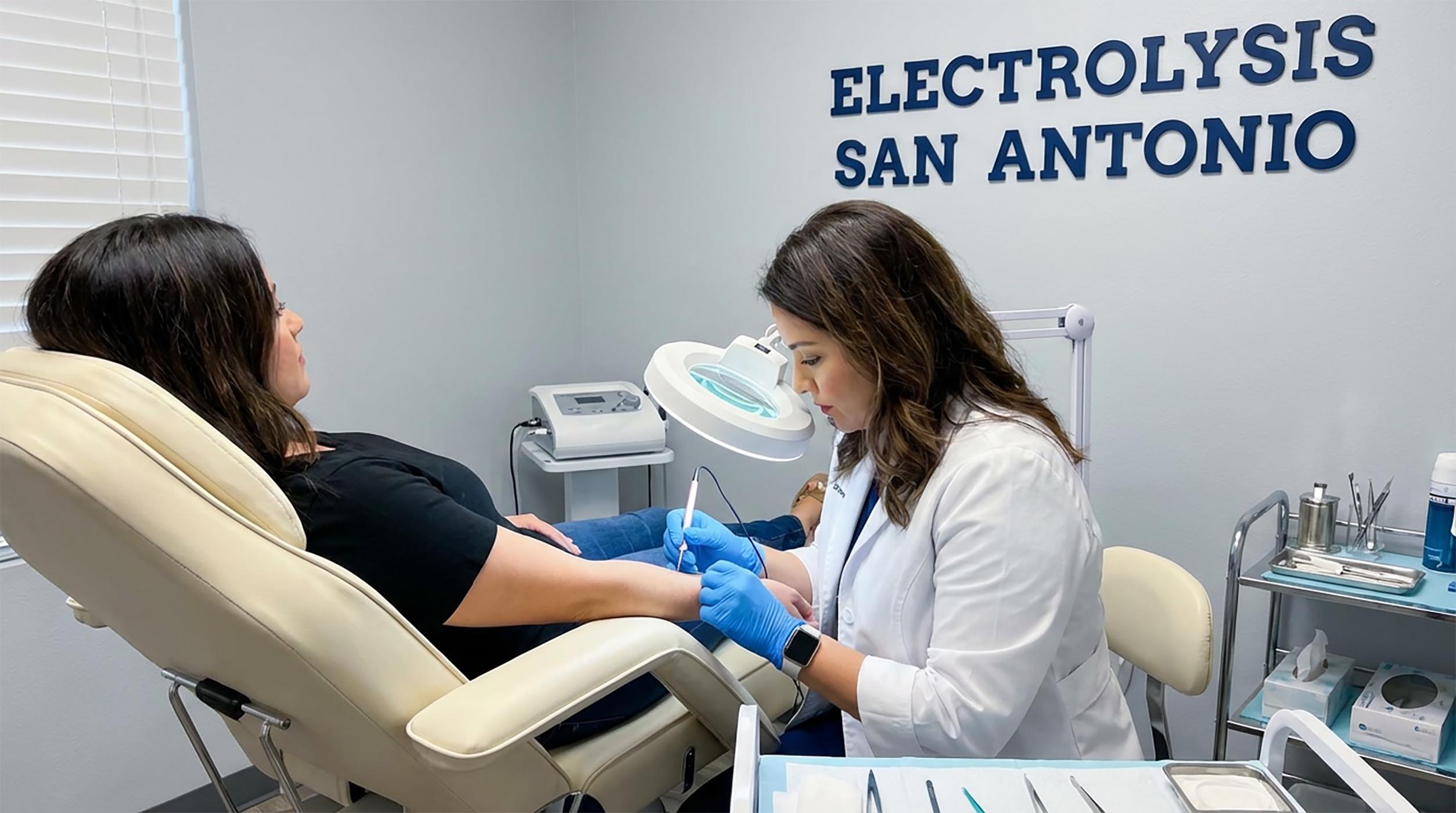
San Antonio, Texas Regulations
The landscape governing electrolysis hair removal in the United States is characterized by a complex and often contradictory patchwork of state-level regulations. Unlike many other professions that have achieved some degree of national standardization or interstate reciprocity, the practice of electrology – the only FDA-approved method for permanent hair removal – remains subject to widely divergent rules across the 50 states and the District of Columbia. This inconsistency creates significant disparities in practitioner qualifications, safety oversight, and consumer protection, directly impacting both the industry’s growth and the public’s access to safe, professional services. This report provides a comprehensive overview of this fragmented regulatory environment, highlighting key variations in licensing, training, and oversight, with a specific focus on the deregulated approach in Texas as a contrasting case study against more stringent states.
As of 2025, a majority of U.S. jurisdictions, specifically 32 states and the District of Columbia, mandate that electrologists hold a professional license to practice. Conversely, 18 states, including populous ones such as Texas, New York, Pennsylvania, and Georgia, operate without any state-level licensing requirements for electrology. This fundamental division sets the stage for a wide spectrum of requirements regarding education, examination, and ongoing competency. The impact of this regulatory disparity extends beyond individual practitioners to influence business development, market competition, and ultimately, consumer safety. The inconsistencies reflect a long-standing debate between the perceived benefits of robust occupational licensing for consumer protection and the economic arguments for reducing barriers to entry and fostering market accessibility.
Key Takeaways:
- Regulatory Disparity: US electrolysis regulation is a fragmented patchwork; 32 states require licensing, while 18 (including Texas) do not, creating significant inconsistencies.
- Texas’s Deregulated Market: Texas has no specific state license for electrologists, operating under broader cosmetology definitions without dedicated oversight for the invasive procedure.
- Varied Training Standards: Licensed states show extreme variation in mandatory training hours, from 300 in Delaware to 1,100 in Massachusetts, reflecting no national standard.
- Consumer & Practitioner Impact: This regulatory inconsistency impacts consumer safety (requiring diligent vetting in unregulated states) and creates challenges for practitioners in terms of multi-state operation and baseline competency assurance.
- Economic & Safety Implications: Deregulation lowers barriers to entry but shifts risk to consumers, while robust licensing aims for higher safety standards but can increase service costs and limit market entry.
1. Executive Summary
The landscape governing electrolysis hair removal in the United States is characterized by a complex and often contradictory patchwork of state-level regulations. Unlike many other professions that have achieved some degree of national standardization or interstate reciprocity, the practice of electrology – the only FDA-approved method for permanent hair removal [15] – remains subject to widely divergent rules across the 50 states and the District of Columbia. This inconsistency creates significant disparities in practitioner qualifications, safety oversight, and consumer protection, directly impacting both the industry’s growth and the public’s access to safe, professional services. This section provides a comprehensive overview of this fragmented regulatory environment, highlighting key variations in licensing, training, and oversight, with a specific focus on the deregulated approach in Texas as a contrasting case study against more stringent states.
As of 2025, a majority of U.S. jurisdictions, specifically 32 states and the District of Columbia, mandate that electrologists hold a professional license to practice. Conversely, 18 states, including populous ones such as Texas, New York, Pennsylvania, and Georgia, operate without any state-level licensing requirements for electrology [2]. This fundamental division sets the stage for a wide spectrum of requirements regarding education, examination, and ongoing competency. The impact of this regulatory disparity extends beyond individual practitioners to influence business development, market competition, and ultimately, consumer safety. The inconsistencies reflect a long-standing debate between the perceived benefits of robust occupational licensing for consumer protection and the economic arguments for reducing barriers to entry and fostering market accessibility [7].
1.1. The Diverse Regulatory Landscape for Electrolysis Across US States
The regulation of electrolysis hair removal across the United States is marked by extreme variation, forming a “patchwork” system rather than a unified national standard [1]. This lack of uniformity means that the prerequisites for practicing electrolysis differ drastically from one state border to the next, creating a complex environment for professionals and consumers alike.
1.1.1. Uneven State Licensing Across the Nation
The most striking disparity lies in the fundamental requirement for a license. A significant majority, 32 states plus Washington D.C., currently require electrologists to be licensed [2]. This group encompasses states with varying populations and geographical locations, implying a broad, though not universal, consensus on the need for formal oversight. However, a substantial minority of 18 states, including major economic hubs and populous areas like Texas, New York, Pennsylvania, and Georgia, do not impose any specific state licensing for electrologists [2]. This leaves millions of residents in areas where electrology services are legally provided without direct state certification or mandated training tailored to the profession [2].
This uneven distribution of licensing requirements means that professional standards, even among “licensed” practitioners, can fluctuate wildly. For instance, an electrologist in Florida must complete 320 hours of approved training and pass an exam, regulated by the Florida Department of Health’s Electrolysis Council [6]. In stark contrast, a practitioner in neighboring Georgia has no such state-mandated requirements for education or examination. These differences are not merely bureaucratic; they reflect fundamentally different approaches to assessing the risk associated with electrolysis and the necessary level of public protection. As one industry source aptly puts it, “The only constant among states requiring electrologist licenses is that there is no constant!” [3].
The origins of this patchwork are rooted in individual state legislative actions over decades. States independently evaluated the potential public health risks of electrolysis and decided whether to enact licensing laws, often influenced by professional associations and consumer advocacy groups. Those adopting licensing frequently did so between the 1980s and 2000s [1]. Other states, citing low incident rates, anti-regulatory philosophies, or a classification of electrolysis as a general cosmetic service (which may fall under broader cosmetology licenses), opted to not introduce specific electrology licenses [1].
1.1.2. Implications for Quality, Safety, and Market Dynamics
The diverse regulatory landscape carries significant implications for service quality, consumer protection, and market competition. In states with robust licensing, proponents argue that mandated training and exams ensure a baseline of professional competence, theoretically safeguarding clients from unqualified practitioners. Electrolysis, which involves inserting a fine probe into hair follicles to destroy them with an electric current, punctures the skin barrier and carries a risk of infection or scarring if performed improperly [10]. Licensing aims to mitigate these risks by enforcing education in areas like infection control, skin anatomy, and proper technique [10].
Conversely, in unregulated states, while many reputable electrologists voluntarily pursue advanced training or national certifications (such as the Certified Professional Electrologist (CPE) designation from the American Electrology Association), there is no legal impediment for untrained individuals to perform the service [3]. This situation places a greater burden on consumers to diligently vet their providers’ qualifications, as the state provides no official assurance of competence or safety. An electrologist practicing in Arizona, an unlicensed state, cautions consumers: “Without one doubt the state licensed & registered [electrologist] is your best and only choice to achieve safe permanent hair removal” [12].
From an economic standpoint, the regulatory variations influence market dynamics. States with extensive training and licensing requirements often have higher barriers to entry for new practitioners, leading to potentially higher labor costs and service prices. A clinic in heavily regulated Massachusetts, for instance, faces higher costs associated with training and maintaining licensed staff compared to a similar business in unregulated Texas. This can influence where clinics choose to establish themselves and how competitive service pricing can be. The market was estimated at $198 million in 2018 and is projected to exceed $430 million by 2033, growing at 4-5% annually [13]. However, industry analysts note that these “regulatory hurdles and licensing requirements” act as a significant “restraint” on the U.S. electrolysis market, hindering faster growth and making multi-state expansion challenging [7].
1.2. Texas: An Anomalous Deregulated Market
Texas stands as a prime example of a state that has largely adopted a deregulated approach to electrolysis hair removal. This contrasts sharply with many other states and even with its own internal regulatory framework for related services.
1.2.1. Absence of Specific Electrologist Licensing
In Texas, there is no specific license or certification required by the state exclusively for electrologists to perform permanent hair removal [4]. This places Texas among the 18 states nationwide that do not directly regulate electrology as a distinct profession [2]. Consequently, individuals can legally perform electrolysis in Texas without undergoing specialized state-mandated training, passing a dedicated electrology exam, or adhering to specific facility licensure tied to electrolysis. Electrology programs in Texas often train individuals to meet the standards of other regulated states, acknowledging the void in state-specific credentials [4].
While Texas law broadly defines “hair removal” as an act of cosmetology, encompassing procedures using “depilatories, tweezers, or other devices,” [5] this general classification does not translate into specific electrology oversight. A general cosmetology or esthetician license is required for body hair removal services falling under the Texas Department of Licensing and Regulation (TDLR) [5]. However, there is no specialized “electrologist” credential or examination offered by TDLR. This means that a practitioner with a basic esthetician license, focused on skin care and temporary hair removal methods, could legally perform electrolysis without any specific training in the intricate and invasive nature of the procedure itself. Many electrologists in Texas therefore operate within a regulatory gray area, some holding general cosmetology licenses, others operating with only private training and no state credential at all.
1.2.2. Pros and Cons of the Texas Model
The deregulated environment in Texas offers several advantages, primarily reduced barriers to entry for practitioners. Individuals can establish an electrolysis practice more easily, often after attending private training institutions or through apprenticeships, without the financial and time investments required for state-mandated licensing and examinations. This flexibility can foster entrepreneurial activity and potentially lead to a greater supply of providers, which could in turn offer more competitive pricing for consumers. For instance, the American Institute of Education (AIE) Electrology Programs highlights the time and cost savings for Texas students due to the state’s no-license status [4].
However, this model also presents significant drawbacks, particularly concerning consumer protection. The absence of state oversight means there’s no official mechanism to verify an electrologist’s training, competence, or adherence to sanitation standards. Consumer advocates and professional electrologists express concerns that “uneducated unlicensed” providers might offer electrolysis without adequate training, increasing the risks of complications such as skin burns, infections, scarring, or ineffective treatment [12]. This places the onus entirely on the consumer to research and vet potential practitioners, a task that can be difficult without clear state-mandated credentials.
1.2.3. Contrast with Laser Hair Removal Regulation in Texas
Interestingly, Texas maintains a much stricter regulatory stance on laser hair removal, which provides an insightful contrast to its hands-off approach to electrolysis. Since 2010, Texas has mandated that laser hair removal can only be performed by a certified technician under the direct supervision of a physician, with clinics and practitioners registered through the Department of State Health Services [8]. This stringent regulation was enacted due to documented safety concerns regarding lasers, which can cause severe burns, pigment changes, and eye damage if operated improperly [8].
This dual approach highlights how Texas calibrates its regulatory efforts based on perceived risk. While both electrolysis and laser hair removal aim for permanent hair reduction, Texas legislators apparently deemed laser technology to be significantly higher risk, warranting comprehensive medical oversight. Electrolysis, which uses a fine probe and electrical current, is traditionally considered lower risk when performed with proper hygiene and technique, perhaps explaining its comparative lack of regulation. This is part of a broader trend in Texas to deregulate services deemed lower risk, including services like eyebrow threading in 2017 [5].
1.2.4. Impact on Texas Practitioners
For electrology professionals in Texas, the deregulated environment presents a mixed bag. On one hand, it offers ease of entry and entrepreneurial freedom. Skilled individuals from other states can quickly establish a practice, and local beauty professionals can integrate electrolysis into their service offerings without additional state-specific licensure. On the other hand, the absence of a state license can challenge professional credibility. Many Texas electrologists proactively seek voluntary credentials, such as graduation certificates from prominent electrology schools (often those meeting California’s stringent curriculum standards), or obtain the Certified Professional Electrologist (CPE) designation from the American Electrology Association (AEA) [3]. These voluntary certifications serve as a means for practitioners to signal their commitment to high standards and competence in a market where state validation is absent. The Electrology Association of Texas, an AEA affiliate, also plays a role in promoting best practices and informal standards, attempting to fill some of the gaps left by the lack of state regulation.
1.3. Wide Variations in Licensing Requirements: Training, Exams, and More
Beyond the fundamental question of whether a license is required, states that do mandate licensing for electrologists exhibit vast differences in their specific requirements for training, examinations, and ongoing professional development. This further compounds the complexity of the national regulatory landscape.
1.3.1. Disparity in Training Hours: From 300 to 1,100 Hours
Perhaps the most significant variation lies in the mandated practical and theoretical training hours. The range is astonishingly wide, indicating a profound lack of consensus on the minimum education required for safe and effective practice. For example, Delaware requires only 300 hours of classroom training (or a 600-hour apprenticeship) for licensure [13]. Similarly, Florida sets its requirement at 320 hours [6]. These figures contrast starkly with Massachusetts, which mandates an extensive 1,100 hours of instruction – the highest in the nation [1]. This is nearly a full year of intensive, full-time study and more than triple the hours required in Delaware. Many other licensed states typically cluster around the 500-600 hour mark, including California, Illinois, and Ohio [1].
These disparities often reflect historical context, the influence of state professional associations, or different regulatory philosophies. Some states may align electrolysis with other cosmetology specialties, which typically have shorter training requirements. Others view it more akin to allied health professions, thus demanding more extensive education. For both consumers and practitioners, this means that the phrase “licensed electrologist” can represent vastly different levels of foundational training; a newly licensed electrologist in Massachusetts will have significantly more state-mandated education than one in Florida or Delaware.
1.3.2. Examination and Certification Standards
Most states that license electrologists require candidates to pass a rigorous examination to demonstrate competency. However, the nature and standardization of these exams also vary. Over a dozen states require candidates to pass the International Board of Electrologist Certification (IBEC) exam, a standardized national exam developed with input from the industry [1]. States like Connecticut, Florida, Illinois, and Massachusetts include the IBEC exam in their licensing criteria [1]. The IBEC exam typically assesses both theoretical knowledge (e.g., hair biology, basic electricity, skin health, infection control) and sometimes a practical component.
However, the IBEC exam is not universally adopted. Some states administer their own state-specific examinations, while others may add additional tests. For example, New Jersey requires candidates to pass the IBEC exam *and* a state jurisprudence exam covering local laws and regulations [1]. North Dakota is a notable outlier, requiring 600 hours of training but explicitly stating “no examination” for initial licensure [1]. The lack of a single, universally adopted standard exam means that licensure in one state does not automatically translate to the ability to practice in another. Limited reciprocity typically means a licensed electrologist moving to a new state must apply for a new license, often proving equivalent training hours and passing the new state’s specific exam [14].
1.3.3. Age, Education Prerequisites, and Alternative Pathways
Standard prerequisites commonly include a minimum age of 18 years and a high school diploma or GED [1]. However, some states, like Delaware, allow licensure at age 16 with a 10th-grade education [13]. On the higher end, Oklahoma sets the minimum age at 21 and uniquely mandates that electrologist candidates hold a Bachelor’s degree in an approved field, in addition to completing a 600-hour internship [1]. This makes Oklahoma an extreme outlier, reflecting a view of electrology as a highly specialized, quasi-medical profession rather than a trade [1].
Several states also offer alternative pathways to licensure, most commonly through apprenticeships. California, for instance, allows a two-year apprenticeship under a licensed electrologist as an alternative to 600 classroom hours [1]. Delaware offers a 600-hour apprenticeship alternative to its 300-hour school program [13]. These apprenticeship options can broaden access for individuals who prefer on-the-job training or who live in areas without formal electrology schools. However, the quality of apprenticeship training can vary based on the mentor, and the availability of qualified mentors can be a limiting factor [3].
1.3.4. Continuing Education and Renewal Requirements
Many licensed states require electrologists to complete periodic continuing education (CE) for license renewal, aiming to keep practitioners’ skills and knowledge current. Common requirements range from 10 to 20 hours every two years, with states like Illinois and New Jersey mandating 20 hours biennially [1]. Massachusetts requires 10 hours of CE every two years [1]. These CE requirements often cover topics such as sanitation, infection control, new technologies, or relevant medical updates.
However, a significant number of licensed states, including prominent ones like California, do not currently require continuing education for electrologists. This means that once licensed, practitioners in these jurisdictions are not legally compelled to refresh their knowledge, leading to a potential disparity in ongoing competency. The presence or absence of CE requirements signifies another philosophical divergence in state regulation: some states actively manage ongoing practitioner competency, while others primarily focus on initial qualification.
1.4. Regulatory Oversight: Cosmetology Boards vs. Medical Boards
The governmental body responsible for overseeing electrology also varies significantly from state to state, reflecting different classifications of the profession and influencing the regulatory standards applied.
1.4.1. Cosmetology Boards: Classifying Electrology as a Beauty Service
In roughly half of the states that license electrologists, oversight falls under boards traditionally responsible for cosmetology, barbering, or similar beauty services [1]. In these instances, electrology is often treated as a specialized license within the broader cosmetology umbrella. Examples include California, Arkansas, Michigan, and Wisconsin, where the licensing process (including facility inspections and hygiene rules) tends to align with those for other salon services [13]. This model frequently means that electrologists are subject to the same general salon regulations as manicurists or cosmetologists, which can offer consistency across personal care establishments. However, some electrologists argue that their profession, involving invasive procedures and medical considerations, warrants more specialized oversight than general beauty boards might provide [13].
1.4.2. Health/Medical Boards: Treating Electrology as Allied Health
A smaller but significant number of states place electrology under the purview of health departments or medical boards, signifying a classification of the profession as allied health. Florida’s Electrolysis Council operates under its Department of Health’s Board of Medicine [1]; New Jersey’s Electrologist Advisory Council is part of its State Medical Board [1]; and Ohio regulates electrologists through its State Medical Board [1], and Connecticut has a Board of Examiners of Electrologists operating under its health department [13]. These nuances dictate business models, investment in infrastructure, and ongoing compliance requirements.
1.5. Safety, Consumer Protection, and the Rationale Behind Regulation
The core rationale underpinning electrolysis regulation, where it exists, is consumer protection and public safety. Electrolysis is an invasive procedure, making proper training and adherence to hygiene protocols critical.
1.5.1. Invasive Nature and Associated Risks
As the only FDA-approved method for permanent hair removal, electrolysis involves inserting a fine needle or probe into individual hair follicles and delivering electrical current to destroy the follicle [15]. This process necessarily breaks the skin barrier, creating a potential pathway for infection if sterilization techniques are insufficient. Risks include bacterial, viral, or fungal infections, skin irritation, hyperpigmentation or hypopigmentation, and scarring if the procedure is performed improperly or with incorrect settings [11]. Licensing proponents argue that without mandatory training in areas such as single-use probe protocols, effective sterilization (e.g., proper use and monitoring of autoclaves), bloodborne pathogen prevention, and proper probe insertion techniques, clients are exposed to unnecessary risks [10]. Some states even mandate specific equipment, such as an autoclave and regular (e.g., monthly) spore testing of that autoclave, to ensure truly sterile instruments [11]. This case, though involving a laser, underscored how practicing beyond one’s scope and inadequate credentialing can lead to significant patient harm [11]. In another anecdotal instance from an AEA conference, a client experienced a minor skin infection because a practitioner reused probes without proper sterilization – a preventable incident with basic training [10]. Such examples reinforce the argument that standardized training and oversight are vital to prevent lasting consequences for clients.
1.5.3. Professional Standards and Consumer Trust
Beyond preventing physical harm, regulation contributes significantly to fostering consumer trust and professionalizing the electrology field. A client’s confidence is often enhanced by knowing their practitioner is “state licensed” or “registered,” implying a verified level of skill and adherence to established standards. This builds credibility for the individual practitioner and elevates the perception of the profession as a whole. Conversely, in unregulated states like Texas, the onus is on the consumer to perform extensive due diligence (e.g., checking for voluntary certifications like CPE, reviewing training certificates, and seeking testimonials) to ensure their electrologist is qualified [3].
1.5.4. Balancing Accessibility and Safety: The Ongoing Debate
The regulation of electrolysis often involves a balancing act between ensuring public safety and maintaining accessibility to services. Proponents of robust licensing emphasize the need for standardized training due to the invasive nature of the procedure and the potential for serious complications. They also highlight that electrologists often work on sensitive areas of the body, where mistakes can have significant psychological and cosmetic impact. Opponents, however, contend that overly strict licensing can create artificial barriers to entry, increasing costs for both practitioners and consumers, and potentially limiting service availability, especially in rural areas. They argue that the costs of compliance may outweigh the actual safety benefits for a procedure considered relatively low-risk when performed competently and that self-regulation and voluntary certification could achieve similar consumer confidence without the economic burden of state mandates. This tension between public protection and economic opportunity remains at the heart of legislative debates surrounding occupational licensing across many professions, including electrology.
1.6. Business and Market Impact: How Regulation Affects the Industry
The heterogeneous regulatory landscape profoundly shapes the business environment for electrolysis services, influencing market entry, expansion capabilities, workforce mobility, and pricing strategies.
1.6.1. Barriers to Entry and Workforce Mobility
For aspiring electrologists, the requirements for entering the profession vary dramatically by state. In heavily regulated states such as Massachusetts (1,100 hours of training) [1] or New Jersey (600 hours plus IBEC exam and state jurisprudence exam) [1], individuals must invest significant time (months to over a year) and financial resources (often thousands of dollars in tuition) before becoming licensed and legally able to earn an income. This stands in stark contrast to completely unregulated states like Texas, where an individual can potentially begin practicing after a private short course, without state certification [4]. This discrepancy creates uneven playing fields for new entrants. While deregulation in Texas fosters easier entry, it may lead to a workforce with highly variable skill levels. For businesses, this impacts recruitment and expansion, as finding qualified, license-eligible staff who can seamlessly transfer across state lines becomes a significant hurdle. A 2025 market analysis identified “regulatory hurdles and licensing requirements” as a “major restraint” on the U.S. electrolysis market, complicating both new market entry and business expansion [7].
1.6.2. Challenges for Multi-State Business Expansion
Electrolysis businesses, particularly growing clinics or med-spas, face substantial challenges when attempting to expand their operations across state borders. A company established in an unregulated state like Colorado, for example, encounters entirely new compliance requirements if it wishes to open a branch in licensed Nebraska (which demands 600 hours of training and a state exam) [13]. This often necessitates sending existing staff for additional training, engaging in costly licensure-by-endorsement processes, or hiring new, local licensed electrologists. Industry sources suggest that preparing for multi-state compliance can take 6 to 12 months, incurring thousands of dollars in legal fees, training costs, and delayed revenue [7]. Consequently, many electrolysis businesses tend to remain local or regional, as the administrative and financial burdens of navigating diverse state regulations outweigh the benefits of broader expansion. The lack of standardized licensing or interstate compacts, analogous to those in nursing, severely limits labor mobility and business scalability [14].
The “Electrolysis LLC” case demonstrates this effectively: a business thriving in deregulated Texas faced significant delays and over $15,000 in additional costs to open a single location in regulated Florida, due to mandatory training and facility inspections . The limited supply in such areas can drive up service prices, as clients pay a premium for verified expertise. Economists often argue that overly restrictive licensing can create an artificially constrained supply, leading to inflated consumer costs. However, proponents argue that such premiums are justified by the assurance of higher-quality and safer services.
The U.S. electrolysis market is projected to reach over $430 million by 2033 [13]. If states move towards more balanced and harmonized regulations, it could foster a more competitive market by “encouraging new entrants and expanding service availability,” ultimately benefiting consumers through potentially lower prices and greater access [7].
1.6.4. Adaptability and Compliance Costs
Existing electrolysis clinics must remain adaptable to regulatory changes. When Illinois first mandated electrologist licenses in 2005, many long-practicing individuals were required to seek additional training or obtain grandfathered status to continue legal practice [9]. Similar “sunset” provisions, as seen in Illinois’s Electrologist Licensing Act, require periodic legislative review of professional licenses, providing opportunities to reassess relevance and necessity [9]. The Illinois legislature’s decision in 2023 to extend electrology licensure to 2029, following a positive review that highlighted its “low-cost regulation that provides consumer confidence,” indicates a continued perceived value of oversight in certain states [9].
Compliance also involves ongoing costs: licensed establishments typically pay initial and renewal fees, and must adhere to state-mandated sanitary codes, often incurring inspection costs. While unlicensed states spare businesses these direct governmental compliance expenses, many reputable establishments voluntarily adopt similar high standards to manage liability risks and meet client expectations. Insurance providers, for example, may offer better rates to licensed electrologists or those demonstrably adhering to industry best practices, creating an indirect financial incentive to meet regulatory-level standards even where not legally mandated. In essence, regulation introduces overhead but also professionalizes the field, and businesses must navigate these dynamics to thrive in the growing electrolysis market.
The diverse, often fragmented regulatory framework for electrolysis hair removal across the U.S. represents a complex interplay of consumer protection, public health concerns, economic considerations, and varying state philosophies. Texas’s largely deregulated approach provides a stark contrast to states with stringent licensing mandates, highlighting both the opportunities and potential risks associated with the absence of formal state oversight. The absence of a national standard or widespread reciprocity means that the industry continues to operate as a collection of localized markets, impacting everything from practitioner training and mobility to business expansion strategies and consumer choice. As the electrolysis market continues to grow, there is an ongoing push from industry associations and some state regulators toward greater standardization and enhanced consumer protections, aiming to strike a balance that supports both professional excellence and widespread access to safe services.
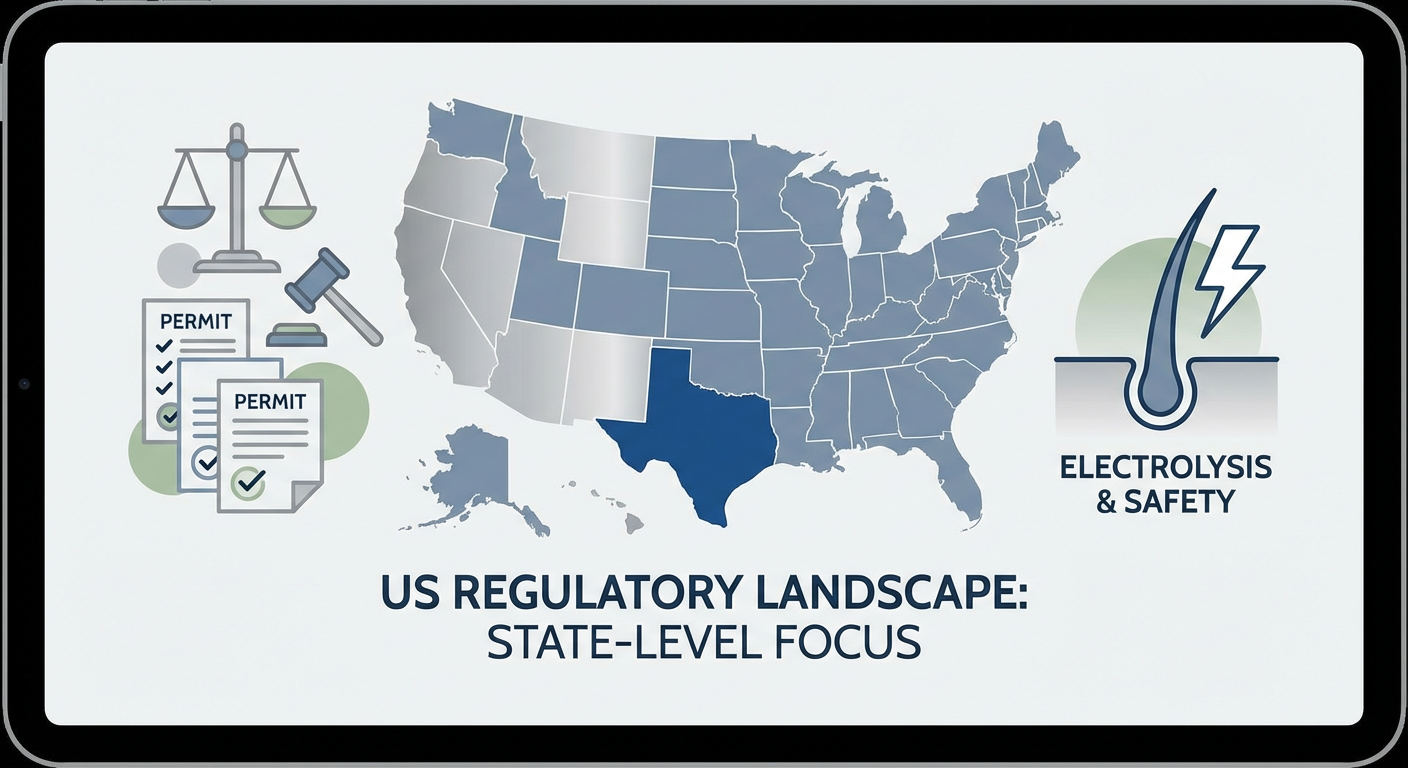
2. Introduction to Electrolysis Regulation in the US
The landscape of cosmetic and personal care services in the United States is characterized by a complex tapestry of state-level regulations. Among these, the professional practice of electrolysis hair removal stands out as a prime example of this inconsistent and often fragmented regulatory environment. Electrolysis, recognized by the U.S. Food & Drug Administration (FDA) as the only permanent method of hair removal, involves the insertion of a fine probe into individual hair follicles, through which an electric current is delivered to destroy the hair growth cells[15]. Given its invasive nature, which breaks the skin barrier and exposes clients to potential risks such as infection, scarring, or tissue damage if performed improperly, the question of robust regulation has naturally arisen across jurisdictions[11], [12]. However, as of 2025, there is no unified national standard governing the practice of electrolysis in the United States. Instead, electrologists operate within a “patchwork of state regulations” where licensing requirements, training mandates, and oversight structures vary dramatically from one state to another[1], [2]. This section delves into this inconsistent regulatory framework, examining the stark differences in licensing requirements, educational pathways, and supervisory authorities across the fifty states and the District of Columbia. We will highlight states that mandate licenses versus those that do not, analyze the wide spectrum of training standards (from a mere 300 hours in some states to a demanding 1,100 hours in others), and explore how these disparities impact practitioners, businesses, and, ultimately, consumer safety and access to services. Through a detailed comparison, with a particular focus on the unique, deregulated approach taken by Texas, this analysis seeks to illuminate the challenges and opportunities presented by the current decentralized regulatory model in the electrolysis industry.
2.1 The Patchwork of State Regulations: A Lack of National Standard
The most striking feature of electrolysis regulation in the U.S. is its profound inconsistency. The notion of a single, overarching national standard for electrologists is entirely absent. Instead, states have independently determined the necessity, scope, and intensity of regulation, leading to a highly varied environment for both practitioners and consumers. This “patchwork” translates into significant differences in the legal prerequisites for performing electrolysis, affecting everything from basic training hours to continuing education requirements and the type of examinations mandated[3]. As of February 2025, the majority of U.S. states and the District of Columbia—specifically, 32 states plus D.C.—require prospective electrologists to obtain a professional license before they can legally practice[1], [2]. These states typically outline specific educational curricula, practical experience thresholds, and often require successful completion of one or more examinations. In contrast, a substantial minority of 18 states have opted for a deregulated approach, where no state-level licensing or certification is required for electrology services[1], [2]. This group includes economically significant states such as Texas, New York, Pennsylvania, and Georgia, which combined represent tens of millions of residents within regions where electrology is not directly regulated by the state[1], [2]. The implications of this disparity are manifold. For example, in New York, a heavily populated state, an individual can practice electrolysis with no state credential, relying solely on private training or self-acquired skills[1], [2]. Conversely, in Florida, electrologists must complete at least 320 hours of approved training and pass a mandated state exam to be legally cleared for practice[6]. Even adjacent states can present stark differences; while Texas imposes no dedicated electrology license, its neighbor Arkansas requires 600 hours of education and an examination[3]. This fragmented regulatory landscape has primarily evolved over several decades, with individual states making autonomous decisions based on perceived public risk, lobbying efforts from professional associations, and differing governmental philosophies regarding occupational licensing. There is no federal oversight for electrology; all regulation rests at the state level[3]. As observed by one industry source, “The only constant among states requiring electrologist licenses is that there is no constant!”[3]. This variability poses challenges for businesses considering multi-state expansion and for practitioners seeking career mobility across state lines, often necessitating additional training, fees, and examinations to comply with local laws[7]. The market analysis conducted by Emergen Research specifically cites varying state licensing rules as a “major restraint” on the U.S. electrolysis market, hindering new entrants and limiting service expansion[7]. The ongoing debate surrounding this regulatory patchwork often centers on the balance between consumer protection and economic accessibility. Proponents of robust licensing argue that it ensures a baseline of training and competence, safeguarding clients from potential harm associated with an invasive procedure[10], [12]. They advocate for stringent standards to prevent complications like infections and scarring, which can arise from improper technique or inadequate sanitation[11]. On the other hand, critics argue that excessive licensing creates undue barriers to entry, increases costs for practitioners, and can limit the availability of services, particularly in underserved areas. They suggest that voluntary certifications and market demand for quality could adequately protect consumers without the need for extensive state intervention.
Table 1: State Licensing Status for Electrolysis Hair Removal (as of Feb 2025)
| Regulatory Status | Number of States/Jurisdictions | Examples of States |
|---|---|---|
| Requires License | 32 States + D.C. | Massachusetts, Florida, California, Illinois, New Jersey, Ohio, Connecticut, Tennessee, Nebraska |
| No License Required | 18 States | Texas, New York, Pennsylvania, Georgia, Wyoming, Colorado, Mississippi, Missouri, South Carolina, South Dakota, Virginia, Washington, West Virginia, Kentucky, Minnesota, New Mexico, North Carolina, Arizona |
Source: Electrology.edu, 2025; Professionals.electrology.com, 2026.[1], [2], [1] Despite the prevailing inconsistency, there is a gradual trend towards greater standardization. Organizations like the American Electrology Association (AEA) actively campaign for licensure in unregulated states, aiming to “secure legislative protection across all states”[7]. Furthermore, some states are exploring inter-state compacts or reciprocity agreements to ease cross-state credentialing, which could “foster a more competitive market” and encourage new entrants[7]. While progress is slow, the industry appears to be moving towards a future with clearer and more uniform regulations.
2.2 Texas as a Case Study: A Deregulated Approach
Texas serves as a compelling case study of a deregulated environment for electrolysis hair removal. Distinct from many states, Texas does not require a specific license or direct regulation for electrologists to practice[4]. This positions Texas as one of the states where individuals can legally perform electrolysis without a specialized state-issued credential, directly contrasting with the stringent licensing requirements found in many other beauty and personal care professions within the state. Under Texas law, the removal of “superfluous hair from a person’s body using depilatories, tweezers, or other devices” is broadly defined as an act of cosmetology[5]. This statutory language implies that a general Cosmetology Operator or Esthetician license might be required to perform body hair removal using various methods, including electrolysis[5]. However, in practice, Texas does not have a dedicated mechanism to license, test, or certify specifically for electrolysis skills. This creates a regulatory gray area where many electrologists in Texas choose to hold a general cosmetology or esthetician license to cover broader hair removal services, while others may operate without such a license, capitalizing on the absence of specific electrolysis oversight. Effectively, practitioners in Texas are subject to no state-mandated electrology-specific training hours or examinations, diverging sharply from states that require specialized education and testing for this invasive procedure. This deregulated approach in Texas presents both advantages and disadvantages. On one hand, it significantly lowers barriers to entry for individuals interested in providing electrolysis services. Entrepreneurs can establish an electrolysis business with greater ease, and practitioners can gain skills through private courses or apprenticeships without the time and financial burden associated with state-mandated training programs and examinations. This flexibility has potentially contributed to a higher concentration of electrolysis clinics in major urban centers across Texas. However, the absence of specific licensing also carries notable trade-offs, particularly concerning consumer protection. Without state oversight, consumers in Texas shoulder a greater responsibility in vetting the qualifications of their electrologist. Critics argue that this environment allows “uneducated unlicensed” providers to offer electrolysis services without proper training in crucial areas such as sterilization, skin anatomy, and proper technique, thereby increasing the risk of adverse outcomes like burns, infections, or scarring[12]. The state essentially relies on market forces and consumer diligence to ensure service quality and safety. Adding an interesting layer to Texas’s regulatory stance is its stringent approach to laser hair removal. In stark contrast to electrolysis, Texas has, since 2010, mandated that laser hair removal be performed only by certified technicians under the direct supervision of a physician, with both facilities and practitioners requiring registration through the Department of State Health Services[8]. This divergent regulatory philosophy highlights how Texas calibrates its oversight based on the perceived risk level of a procedure. While electrolysis, which uses electrical current via a fine probe, is generally considered lower-risk when proper hygiene is maintained, laser devices were deemed higher risk due to their potential for burns and pigment damage, thus warranting tight control[8]. This shows a broader trend in Texas towards deregulating what it views as lower-risk beauty services, such as the deregulation of eyebrow threading in 2017[5], while maintaining strict control over more hazardous procedures. For electrology professionals in Texas, this environment is a double-edged sword. While it offers unparalleled ease of entry, it also places the onus on them to establish and maintain professional credibility in the absence of state-sanctioned verification. Many reputable electrologists in Texas voluntarily pursue supplementary credentials, such as certificates from out-of-state electrology schools or the nationally recognized Certified Professional Electrologist (CPE) designation, to signal their competence and instill client confidence[3]. Industry organizations, such as the Electrology Association of Texas (an affiliate of the American Electrology Association), also play a crucial role in advocating for best practices and promoting high standards within the deregulated market. This ensures that even without state mandates, many Texas-based professionals strive for excellence, underscoring the industry’s capacity for self-regulation where formal governmental oversight is absent.
2.3 Wide Variations in Licensing Requirements: Training, Exams, and More
Beyond the fundamental question of whether a license is required, the states that do mandate licensure for electrologists exhibit striking variations in their specific requirements. These differences encompass the number of training hours, the nature of examinations, age and education prerequisites, and the availability of alternative pathways such as apprenticeships. These variations underscore the absence of a consensus on what constitutes adequate preparation for safely and effectively performing electrolysis.
2.3.1 Training Hours: A Spectrum from 300 to 1,100 Hours
The most prominent divergence lies in the number of mandatory training hours. Some states demand a relatively modest duration of schooling, while others require extensive educational commitments. * **Lowest Requirements:** States such as Delaware set their minimum training at just **300 hours** of classroom instruction, while also offering a 600-hour apprenticeship alternative[3]. Florida is another example with a requirement of **320 hours** of state-approved training[6]. Iowa mandates 425 hours[3]. These lower-hour requirements are among the least demanding in the nation. For perspective, Delaware’s 300-hour mandate is approximately 27% of the highest requirement nationwide[3]. * **Highest Requirements:** At the other end of the spectrum, Massachusetts stands out with the nation’s most stringent requirement, mandating **1,100 hours** of instruction for licensure, which translates to almost a year of full-time study[1]. This significantly higher number reflects Massachusetts’s conservative approach to consumer safety and professional competence. * **Common Range:** Many other licensing states cluster around a middle ground, typically requiring between **500 and 600 hours** of training. Examples include California, Illinois, and Ohio. This wide range reflects different philosophical approaches: some states align electrolysis more closely with cosmetology, where shorter training periods are common for specialized services, while others view it more akin to allied health professions, warranting more extensive preparational education. A direct consequence is that two individuals holding “licensed electrologist” titles in different states may have vastly different levels of foundational training, impacting their initial skill sets and understanding of complex cases.
2.3.2 Examination and Certification
While most licensing states require an examination, the type and format of these tests also vary. * **Standardized Exams:** A significant number of states, over a dozen, utilize the **International Board of Electrologist Certification (IBEC) exam** as part of their licensure process[1]. Developed with industry input, the IBEC exam serves as a standardized measure of theoretical knowledge in areas such as hair biology, electricity, skin health, and infection control. States like Connecticut, Florida, Illinois, Massachusetts, and New Jersey all specify the IBEC exam in their licensing criteria[1]. * **State-Specific Exams and Additions:** Some states employ their own proprietary examinations, while others combine the IBEC exam with additional state-specific components. For instance, New Jersey requires candidates to pass the IBEC exam *and* a state jurisprudence exam covering local laws and regulations governing electrology practice[1]. Tennessee offers flexibility, allowing candidates to choose between the IBEC exam or one administered by another recognized electrology organization (SCMHR)[1]. * **No Exam Requirement:** Notably, a few states are outliers in not requiring an examination at all. North Dakota, for example, issues an electrologist license based solely on the completion of 600 hours of training and continuing education, with “no examination” required for initial licensure[1]. This approach, which focuses entirely on verified training hours rather than a competency test, is rare among regulating states. The lack of universal reciprocity between state licenses further complicates matters. An electrologist licensed in one state typically cannot automatically practice in another without meeting the new state’s specific requirements, which often include passing their local examination or demonstrating equivalency of training. This restricts workforce mobility and can create barriers for skilled practitioners.
2.3.3 Age and Education Prerequisites
General eligibility criteria also show minor but significant differences: * **Common Requirements:** The most common prerequisites include a minimum age of **18 years** and at least a **high school diploma or General Educational Development (GED)** equivalent[1]. * **Lower Age/Education:** Delaware is more permissive, allowing licensure at **16 years of age** with a minimum of a 10th-grade education[3]. * **Higher Age/Education:** On the more restrictive end, Oklahoma mandates a minimum age of **21 years** and uniquely requires candidates to possess a **Bachelor’s degree in an approved field**, in addition to 600 hours of internship, before they can be licensed as an electrologist[1]. This requirement is an extreme outlier, as no other state imposes a general college degree for entry into the electrology profession.
2.3.4 Apprenticeships vs. Formal Schooling
Several states offer apprenticeship programs as an alternative or supplementary pathway to licensure, reflecting a pragmatic approach to training: * **Apprenticeship Options:** States like California permit a **2-year apprenticeship** under a licensed electrologist as an alternative to completing 600 classroom hours[1]. Delaware similarly allows for a **600-hour apprenticeship**, which is twice its formal school requirement but provides a hands-on learning route[3]. Kansas and Hawaii also feature apprenticeship pathways, though these typically require more total hours than school-based programs. These apprenticeship routes are designed to provide flexibility for aspiring practitioners who may not have access to formal electrology schools (which are often few and far between) or who prefer an earn-as-you-learn model. However, the success of such programs often hinges on the availability of qualified mentors and the consistency of the training provided, factors that can be difficult to standardize.
2.3.5 Continuing Education (CE) and Renewal Requirements
Licensure often is not a one-time event; many states require ongoing professional development to maintain a license: * **Mandatory CE:** Approximately half of the states with licensure mandate **continuing education (CE)** for license renewal[1]. Common requirements range from **10 to 20 hours** every two years. For example, Illinois and New Jersey both require 20 hours of CE biennially[1], [1], while Massachusetts requires 10 hours every two years[1]. These CE courses often cover critical updates in sanitation, infection control, new technologies, and sometimes basic life support. * **No Mandatory CE:** In contrast, other states that license electrologists, such as California, do not impose mandatory CE requirements for license renewal. In these jurisdictions, renewal typically involves paying a fee and demonstrating continued practice without the need for periodic knowledge updates. The presence of CE requirements signifies a state’s commitment to ensuring ongoing competency and adaptation to evolving industry standards, particularly in a field where technology and safety protocols can advance. Its absence, conversely, places the entire onus of staying current solely on the individual practitioner. In summary, the sheer breadth of variations in training hours, examination formats, eligibility requirements, and continuing education expectations across the U.S. demonstrates a profound lack of uniformity in how electrologists are prepared and overseen. This inconsistency shapes the competency profile of the national electrology workforce and significantly impacts professional mobility and business development strategies.
2.4 Who Regulates Electrolysis? Cosmetology vs. Medical Boards
The regulatory authority responsible for overseeing electrolysis also varies significantly from state to state. This departmental assignment often reflects how a state fundamentally perceives the practice of electrolysis—whether it is viewed primarily as a beauty service, an allied health procedure, or a specialized profession deserving of its own governing body. These distinctions have practical implications for the scope of practice, sanitation standards, and overall enforcement rigor.
2.4.1 Cosmetology Boards: Treating Electrolysis as a Beauty Service
In a substantial number of states, electrology falls under the purview of boards that also regulate other personal care services such as cosmetology, esthetics, and barbering. Approximately 20 states utilize this model, frequently designating electrolysis as a specialty license within the broader cosmetology regulatory framework, often denoted as a “Licensed Electrologist (LE)” or “Registered Electrologist (RE)”[1], [1]. States such as California, Arkansas, Michigan, and Wisconsin exemplify this approach. In these states, the process for obtaining an electrology license typically mirrors that for other beauty professionals: candidates complete a prescribed curriculum and pass a board examination, aligning electrology with general esthetic or barbering standards[3]. The primary implication of this oversight model is that electrologists are often subject to the same general salon regulations, including facility inspections and hygiene rules, that apply to beauty establishments. While this can foster consistency within the personal care industry, some electrologists express concern that their practice, which involves invasive procedures with needles and electrical currents, may not receive the specialized attention to health and clinical standards that it warrants under a broader cosmetology board.
2.4.2 Health/Medical Boards: Treating Electrolysis as Allied Health
A significant minority of states categorize electrolysis under the domain of state health departments or medical boards, signifying a view of the practice as an allied health procedure with inherent medical considerations. For instance: * Florida: Electrologists in Florida are regulated by the Department of Health’s Electrolysis Council, which operates under the Board of Medicine[1]. * New Jersey: An Electrologist Advisory Committee functions under New Jersey’s State Medical Board of Examiners, providing oversight for the profession[1], [1]. * Ohio: The State Medical Board of Ohio is responsible for licensing electrologists in the state[1]. * Oklahoma: As previously noted, Oklahoma’s exceptionally high educational and age requirements stem from its placement under the State Board of Medical Licensure, reflecting a perception of electrology as a specialized, quasi-medical field[1]. This regulatory assignment typically arises from concerns regarding the invasive nature of electrolysis, the potential for infection, and the need for stringent infection control protocols. States operating under medical board oversight often impose more rigorous training requirements (e.g., specific blood-borne pathogen training) and may regulate the scope of practice more tightly, such as requiring physician supervision for electrologists who also perform laser hair removal. The underlying philosophy is that because electrolysis permanently alters body tissue, it demands a higher standard of healthcare-level oversight rather than general beauty industry regulation. The impact on practitioners often means more clinically oriented scrutiny, stricter sterilization requirements, and potentially closer collaboration with dermatologists or medical settings.
2.4.3 Dedicated Electrology Boards: A Blended Approach
A smaller number of states have established standalone boards or commissions specifically for electrology, granting the profession its own dedicated voice and regulatory body. * Massachusetts: The state boasts a Board of Registration of Electrologists, which operates independently to oversee the profession[1]. * Connecticut: Electrologists are regulated by a Board of Examiners of Electrologists, which functions under the state’s health department infrastructure[1]. These dedicated boards typically comprise experienced electrologists and sometimes other healthcare professionals who focus exclusively on issues pertinent to electrology, ranging from curriculum development to consumer complaint resolution. The advantage of this model is specialized attention and the ability to tailor regulations to the unique aspects of the profession. For instance, Massachusetts’s board has been instrumental in updating regulations to mandate modern sterilization techniques (like autoclave use) and maintaining high educational standards. While potentially more administratively costly for a smaller profession, these independent boards demonstrate a strong valuation of electrology as a distinct and specialized field.
2.4.4 Impact on Practitioners: Cultures of Regulation
The choice of regulatory authority significantly shapes the daily practice and business environment for electrologists. An electrologist operating under a cosmetology board might be subject to inspections focused on general salon ambiance, cleanliness, and the display of licenses. In contrast, one under a medical board could face audits scrutinizing consent forms, adherence to patient privacy laws, and more detailed infection control protocols. Disciplinary actions can also differ, with medical boards often imposing more severe penalties for transgressions related to patient health. For businesses, strategic planning must account for the specific regulatory body. In Florida, a spa offering electrolysis must adhere to the Department of Health’s clinic standards, potentially necessitating a medical-spa model. Conversely, in Illinois, which is cosmetology-regulated, a standard salon setup is often sufficient. These nuanced differences determine not only operational protocols but also the fundamental business model and staffing requirements, making cross-state expansion a complex regulatory puzzle.
2.5 Safety, Consumer Protection, and the Rationale Behind Regulation
The debate over electrolysis regulation fundamentally revolves around patient safety, consumer protection, and the appropriate level of governmental oversight for an invasive procedure. Electrolysis, as the only FDA-approved method for permanent hair removal, necessitates breaking the skin barrier through the insertion of a fine probe into hair follicles[3], [15]. This action carries inherent risks, including infection, scarring, hyper/hypopigmentation, and other adverse skin reactions, if performed by untrained or improperly equipped individuals.
2.5.1 Invasive Procedure Considerations
The invasive nature of electrolysis is a cornerstone argument for its regulation. The process involves direct contact with and penetration of the skin, making proper sanitation, sterilization, and knowledge of skin anatomy paramount. Licensing advocates consistently argue that without mandatory training in these areas, electrologists could inadvertently cause harm. Critical aspects of training often include: * **Sterilization Techniques:** Proper cleaning and sterilization of equipment (especially reusable probes if applicable, though single-use disposable probes are now standard and often mandated), and disinfection of the treatment area. Many state regulations explicitly require practices like autoclave use for any reusable instruments and mandate monthly spore testing of these autoclaves to ensure efficacy[53530]. * **Infection Control:** Understanding blood-borne pathogens, cross-contamination prevention, and proper disposal of biohazardous waste. * **Skin Anatomy and Physiology:** Knowledge of different skin types, hair growth cycles, and potential reactions to treatment to personalize procedures and avoid damage. Cases of actual harm, while relatively rare compared to the volume of procedures performed, underscore the need for these precautions. For example, a case study reported by MedPro Group highlighted a situation where an unqualified provider (an esthetician using a laser hair removal device, analogous in its invasive risk to electrolysis due to improper use) caused permanent skin damage and scarring, leading to a malpractice lawsuit and settlement[11]. Such incidents, whether involving electrolysis probes or related hair removal devices, serve as powerful reminders for regulators that mistakes can have lasting consequences for clients.
2.5.2 Professional Standards and Consumer Trust
Beyond preventing direct physical harm, regulation plays a vital role in building consumer confidence and professionalizing the industry. The presence of a state license signals to the public that a practitioner has met certain verified standards of training and competence. In deregulated states, this assurance is absent, placing a heavier burden on consumers to perform due diligence. Kimberly Williams, a licensed electrologist practicing in both rigorously regulated Massachusetts and unregulated Arizona, advises consumers to specifically seek out practitioners with licenses from other states or national certifications (like Certified Professional Electrologist – CPE) when operating in unregulated markets. She states, “Without one doubt the state licensed & registered [electrologist] is your best and only choice to achieve safe permanent hair removal”[12]. This sentiment reflects how licensing can become a de facto quality assurance mark. Conversely, without regulation, individuals with minimal or even no formal training can claim to be electrologists, potentially undermining the reputation of legitimate professionals. This phenomenon pushes many electrologists in unlicensed states to voluntarily pursue certifications from national bodies like the American Electrology Association (AEA) or to obtain licenses from neighboring regulated states to differentiate themselves and reassure clients[3].
2.5.3 Balancing Access and Safety: The Ongoing Debate
The core of the regulatory debate often revolves around finding the optimal balance between ensuring safety and maintaining accessibility to services. * **Arguments for Strict Regulation:** Proponents highlight that electrologists work with specialized equipment and often treat individuals with sensitive conditions (e.g., hormonal imbalances causing hirsutism), making competency critical for positive outcomes. They also point out that procedures on visible or intimate areas (face, bikini line) mean errors are not only physically damaging but can be psychologically distressing. From this perspective, rigorous training and ongoing oversight are non-negotiable for public health. * **Arguments Against Excessive Regulation:** Critics, including some policy analysts and economists, contend that overly strict licensing, particularly mandates for hundreds of hours of training, can be an “overkill” for a procedure they consider low-risk, especially when compared to other occupations with similar or greater inherent risks that have lighter or no regulation at all. They argue that high entry barriers increase costs for practitioners (tuition, fees), which can reduce the supply of electrologists, drive up service prices for consumers, and limit access, especially in rural or economically disadvantaged areas. There’s a concern that such barriers create an artificial monopoly, benefiting existing practitioners while hindering new entrants and consumer choice. The political process grapples with these competing viewpoints. Recent efforts in states like Texas to “deregulate” certain personal care services, such as threading in 2017[5], reflect a broader legislative push to reduce occupational licensing requirements where the public benefit is not clearly demonstrated. The electrology field, therefore, sits at a crucial intersection of these debates, requiring careful consideration of both consumer protection and professional opportunity.
2.5.4 Recent Trends in Safety Standards
Despite regulatory inconsistencies, a positive trend across the industry is a voluntary movement towards higher safety standards. The AEA publishes comprehensive Standards of Practice and a Code of Ethics, which provide guidelines on aspects like annual sterilization equipment checks, proper glove use, safe probe disposal, and adherence to one’s scope of competence[10]. Many conscientious electrologists, regardless of state mandates, voluntarily adopt these best practices to ensure client safety and professional reputation. Furthermore, several states have updated their regulations to mandate modern safety measures, such as the exclusive use of single-use, pre-sterilized needles/probes, effectively banning older, less sanitary practices. Even in states like Texas with no dedicated licensure, many established practitioners adhere to these industry best practices to mitigate liability risks and maintain client trust. This continuous evolution, driven by both governmental regulation and professional self-regulation, aims to minimize risks while expanding access to this valued permanent hair removal service.
2.6 Business and Market Impact: How Regulation Affects the Industry
The decentralized and highly variable regulatory environment for electrolysis hair removal in the U.S. profoundly impacts the business dynamics of the industry, influencing everything from market entry and expansion strategies to practitioner mobility and service pricing. The lack of a uniform national standard creates a complex operational landscape for businesses and professionals alike.
2.6.1 Barrier to Entry for Practitioners
One of the most immediate effects of diverse regulations is the creation of disparate barriers to entry for aspiring electrologists. In states with stringent licensing requirements, such as California or New Jersey, individuals must invest substantial time and financial resources into comprehensive training programs, often costing between \$5,000 and \$10,000+, alongside several months of dedicated study or apprenticeship, followed by rigorous examinations and licensing fees[3]. Only after successfully navigating these hurdles can they legally begin to earn income from electrolysis services. In sharp contrast, an individual in an unlicensed state like Texas faces no such state-mandated pathway. Theoretically, one could begin practicing after attending a private, often shorter, course or even through self-training, although market demand usually pushes for some verifiable training. This disparity can lead to an uneven distribution of qualified professionals; highly regulated states may experience a relative shortage of new electrologists due to the high entry costs, while unregulated markets might see a greater influx of practitioners, albeit with varying degrees of initial training and skill. A 2024 market analysis by Emergen Research explicitly identified these varied licensing requirements as “barriers to entry for new service providers” and a “major restraint” on the overall growth of the U.S. electrolysis market[7].
2.6.2 Difficulty Expanding Across States
For businesses, particularly clinics or med-spas aiming to operate in multiple states, the regulatory patchwork presents significant logistical and financial challenges. A company established in a deregulated state, for instance, Colorado, intending to expand into a licensed state like Nebraska, will quickly discover that Nebraska requires electrologists to be state-licensed after completing 600 hours of training and passing a state exam[3]. This often necessitates sending existing staff for additional training, recruiting new licensed professionals within the target state, or managing complex reciprocation processes. Multi-state chains frequently prioritize laser hair removal services (which also have their own complex regulatory landscape) over electrolysis precisely because the inconsistent licensing requirements for electrologists make scaling operations across state lines difficult and costly. Businesses report that compliance preparation for launching a new location in a different regulatory environment can take anywhere from **6 to 12 months** and incur costs in the thousands of dollars, attributable to training, fees, and delays in generating revenue. These “regulatory hurdles” effectively act as a strong disincentive for large-scale, national expansion, tending to keep most electrolysis businesses localized or regional[7].
2.6.3 Reciprocity and License Portability Issues
Electrology licenses currently enjoy very limited reciprocity between states. Unlike some professions with interstate compacts, a license obtained in one state rarely grants automatic permission to practice in another. When an electrologist relocates, they typically must apply for a new license in the new state, which often involves demonstrating that their prior training hours and examination standards are “substantially equivalent” to the new state’s requirements[14]. This can mean undergoing additional training to meet a higher hourly mandate or re-taking examinations. The absence of universal license portability directly impacts the labor pool in states with strict regulations, making it challenging for them to attract experienced practitioners from states with less demanding requirements. For businesses, this complicates hiring strategies, as an experienced electrologist from an unlicensed state cannot easily be brought in to practice in a tightly regulated state without first investing in their local licensing process. This issue is a recurring point of discussion within the industry, with calls for the development of an interstate compact for electrology to streamline credentialing and enhance professional mobility, though no such agreement is currently established.
2.6.4 Supply, Demand, and Pricing
The regulatory environment also has an indirect but tangible impact on the supply of electrologists and, consequently, the pricing of services. In states like New York, where there are no licensing requirements, the absence of high entry barriers facilitates a larger number of practitioners. This increased supply, even amidst high demand in urban centers like New York City, can foster competition and help keep prices for electrolysis services relatively moderate. Conversely, in highly regulated states such as Massachusetts, where the demanding 1,100-hour training requirement limits new entrants, the pool of actively licensed electrologists is smaller (e.g., approximately 30–40 statewide as per 2022 data). This constrained supply, coupled with steady client demand, often translates into longer wait times and higher service prices. Economists frequently argue that overly stringent licensing can create an artificial scarcity of professionals, driving up costs for consumers. Consumers in these states may pay a premium, but they also arguably receive a service provided by extensively vetted professionals. The U.S. electrolysis hair removal market, estimated at \$198 million in 2018, is projected to reach over \$430 million by 2033, with an annual growth rate of 4-5%[13]. Industry analysts believe that the current “regulatory hurdles and licensing requirements” are a factor restraining even faster growth[7]. A move towards moderating and standardizing regulations across states is anticipated to “encourage new entrants” and expand service availability, potentially fostering greater competition and making electrolysis more accessible and affordable in the long run[7].
2.6.5 Business Adaptability and Compliance Costs
Existing electrology clinics must regularly adapt to regulatory changes, which can impose significant compliance costs. For example, when Illinois first mandated licenses in 2005, many long-practicing electrologists were required to undergo additional training or prove their experience to be “grandfathered in” under the new laws[9]. This represented a substantial investment in time and money for those professionals and businesses. Licensed establishments incur direct compliance costs such as initial licensing fees and recurring renewal fees, typically ranging from \$50 to several hundred dollars. They must also consistently adhere to sanitary codes, facility inspection standards, and sometimes insurance mandates. While businesses in unlicensed states escape these direct governmental costs, many voluntarily adopt similar standards (e.g., hospital-grade disinfectants, professional liability insurance) to attract clientele and manage reputational or legal risks. Insurers may also offer preferential rates to licensed electrologists or those following state-recommended guidelines, providing an indirect financial incentive to meet professional standards even where not legally required. In essence, while regulation adds operational overhead, it can also confer legitimacy and professionalize the sector, which in turn can build consumer trust and market demand. As the industry continues its projected growth, the ongoing evolution of regulatory frameworks—whether towards greater standardization or deliberate deregulation—will undeniably shape its future trajectory, influencing where and how electrolysis services are delivered across the country. The exploration of these diverse regulatory environments forms a critical foundation for understanding the operational intricacies and market dynamics of the electrology profession. The ensuing sections will delve deeper into specific state requirements and their direct impact on both the practice and public perception of electrolysis.
3. Texas: A Case Study in Deregulation
The landscape of professional regulation in the United States is characterized by a complex and often inconsistent patchwork, particularly evident in specialized fields such as electrolysis hair removal. While a significant majority of US states and the District of Columbia (32 states + D.C. as of 2025) mandate specific licensing for electrologists, a substantial minority, comprising 18 states, including populous ones like New York, Pennsylvania, and Georgia, operate without such dedicated state-level oversight [1], [2]. This creates a highly varied regulatory environment, where requirements for practicing electrolysis can differ drastically from one state border to the next. Texas emerges as a prominent example within this deregulated cohort, offering a unique perspective on the implications of a hands-off approach to a specialized beauty service. Unlike many states that impose stringent training hours, rigorous examinations, and ongoing professional development requirements, Texas has consciously opted out of a dedicated electrologist licensing system [4]. This section will delve into the specifics of Texas’s regulatory model for electrolysis, examining its categorization under existing cosmetology laws, and analyzing the multifaceted implications of this deregulation for both current practitioners and the consumer base. By comparing Texas’s approach with the more stringent frameworks found in other states, we can illuminate the ongoing debate between ensuring consumer safety through robust regulation and fostering market accessibility through reduced barriers to entry.
3.1 The Texan Regulatory Framework for Electrolysis
Texas’s regulatory posture towards electrolysis is distinctive in its absence of a specific occupational license for electrologists. This places it in stark contrast to states that have established comprehensive licensing programs. As of 2025, Texas is officially identified as an “unlicensed state” for electrology [4], meaning that individuals are not required to obtain a specific state-issued electrology credential or pass a specialized exam to legally perform electrolysis procedures. This policy, or lack thereof, significantly reduces the barrier to entry for individuals aspiring to practice electrolysis within the state.
3.1.1 Categorization under Cosmetology
While Texas does not have a dedicated electrologist license, its existing legal framework implicitly touches upon hair removal services. Under Texas law, the act of removing “superfluous hair from a person’s body using depilatories, tweezers, or other devices” is broadly defined as an act of cosmetology [5], [12]. This classification means that, in a strict interpretation, a general Cosmetology Operator or Esthetician license issued by the Texas Department of Licensing and Regulation (TDLR) *could* be considered applicable to individuals performing hair removal services, including electrolysis [5], [12]. However, the critical distinction lies in the specificity and enforcement. Texas has “no mechanism to license or test specifically for electrolysis skills” [12]. Consequently, while many electrologists in Texas might hold general cosmetology or esthetician licenses, others operate without any cosmetology license at all, leveraging the ambiguities and enforcement gaps inherent in a deregulated market [12]. This effective deregulation translates to zero hours of state-mandated electrology training specific to the modality and no specialized examination. The onus is therefore placed largely on general cosmetology training, individual practitioner responsibility, and consumer diligence to ensure skill and safety [4].
3.1.2 Contrast with Laser Hair Removal Regulation
Interestingly, Texas adopts a considerably more stringent and direct regulatory approach for laser hair removal, which stands in stark contrast to its policy on electrolysis. Since 2010, Texas law has mandated that laser hair removal procedures must be performed by a certified technician operating under the direct supervision of a physician [8], [13]. Facilities offering laser hair removal, as well as the practitioners themselves, must be registered through the Department of State Health Services. This stringent regulation was a direct response to safety concerns associated with lasers, such as the potential for burns and pigment damage [8], [13]. This divergent approach highlights Texas’s philosophy of calibrating regulation based on perceived risk. Electrolysis, which involves using a fine probe and electrical current, is generally considered a low-risk procedure when proper hygiene and technique are employed [12]. Lasers, conversely, are viewed as carrying a higher inherent risk, thus warranting tight control and medical oversight. This distinction underscores Texas’s broader trend towards deregulating what it views as lower-risk beauty services (e.g., threading was deregulated in 2017 [9], [14]) while maintaining strict controls over procedures deemed higher risk.
3.2 Implications of Deregulation in Texas
The deregulated environment in Texas for electrolysis creates a unique set of circumstances for practitioners, consumers, and the industry at large.
3.2.1 Lowered Barriers to Entry and Market Accessibility
One of the most immediate effects of deregulation is the significant reduction in barriers to entry for aspiring electrologists. Without the need for specific state-mandated training hours, examinations, or licensing fees, individuals can enter the profession more easily and quickly. This flexibility allows entrepreneurs to establish electrolysis businesses with fewer bureaucratic hurdles and capital requirements initially. For beauty professionals already holding cosmetology or esthetician licenses, adding electrolysis services becomes a straightforward extension of their existing practice, rather than requiring a wholly new credentialing process [12]. This relative ease of entry may contribute to a more diverse and accessible market for consumers, potentially fostering competition and keeping service prices moderate [16]. This is exemplified by the hypothetical multi-state clinic “Electrolysis LLC” mentioned in the research. Founded in Houston, Texas, in 2018, the company faced *zero* licensing hurdles, enabling a quick launch with two electrologists holding private training certificates. This contrasts sharply with the experience of expanding into Florida, which mandated specific licensure, additional training, and a state exam, resulting in a 6-month delay and approximately \$15,000 in compliance costs [18].
3.2.2 Consumer Protection and Safety Concerns
While deregulation can enhance market accessibility, it also introduces potential vulnerabilities for consumers. In the absence of state-mandated training and testing specific to electrolysis, there is a risk of “uneducated unlicensed” providers offering services without proper knowledge of sterilization, skin anatomy, and safe techniques [12], [10]. Electrolysis is an invasive procedure, involving the insertion of a fine probe into hair follicles and the application of electrical current, which breaks the skin barrier [15]. Improper technique or unsterile practices can lead to significant complications, including skin burns, scarring, or infections [11], [10]. Consumer advocates and professional electrologists often voice concerns that the Texas model places the entire burden of vetting practitioners on the clients. Unlike in licensed states where a state-issued credential serves as a baseline assurance of competence, clients in Texas must diligently research a practitioner’s training, certifications, and reputation [12]. This “buyer beware” environment necessitates increased consumer education and vigilance to ensure safe and effective treatment. A notable incident in New York (another unlicensed state) highlighted these risks. In 2017, an unlicensed individual advertising as an electrologist reportedly used improper techniques and unsterile needles, leading to reports of severe skin infections (folliculitis) among several clients [20]. While no specific Texas-based example was provided, such cases in other unregulated markets underscore the potential dangers of practices by untrained individuals.
3.2.3 Professional Credibility and Voluntary Certification
For electrology professionals in Texas, the deregulated environment presents a dual challenge. While it offers ease of entry, it simultaneously necessitates proactive measures to establish professional credibility. Many Texas electrologists voluntarily pursue advanced training, obtain certificates from reputable out-of-state electrology schools, or seek national certifications such as the Certified Professional Electrologist (CPE) designation [12]. The CPE, administered by the American Electrology Association’s (AEA) credentialing board, is a popular voluntary certification that helps practitioners demonstrate competency in the absence of state licensure [6]. It is estimated that approximately 15-20% of electrologists nationwide hold a CPE or similar certification, with this number being notably higher in unlicensed states like Texas and Arizona [6]. These voluntary credentials serve as a market-driven alternative to state regulation, allowing practitioners to signal their commitment to high standards and attract clients seeking qualified providers. The Electrology Association of Texas, an affiliate of the AEA, also plays a role in educating practitioners on best practices and advocating for high standards, even without formal state regulation. This internal push highlights the industry’s attempt to self-regulate and maintain standards where governmental oversight is absent [12].
3.2.4 Workforce Mobility and Business Expansion Challenges
The absence of a standardized licensing framework in Texas, when viewed in the context of the national patchwork of regulations, creates significant challenges for workforce mobility and multi-state business expansion. An electrologist trained and practicing in Texas, for example, would encounter substantial hurdles if they wished to relocate to a licensed state like Florida, which mandates 320 hours of training and specialized exams [6], [19]. They would likely need to invest in additional training, pass the new state’s exams, and incur associated fees to comply with local laws. This lack of reciprocity and portability across state lines can restrict the geographic movement of skilled professionals and complicate the growth strategies of electrolysis businesses aiming to operate in multiple jurisdictions. A market analysis noted that varying state licensing rules act as a “major restraint” on the U.S. electrolysis market, making it harder for new providers to enter and expand [7], [16]. Conversely, an electrologist from a state with very strict requirements might find Texas a highly attractive environment due to the absence of licensing complexities.
3.3 Comparison with Other State Regulations
To fully appreciate Texas’s deregulated model, it is crucial to compare it with the diverse regulatory approaches adopted by other states across the U.S. These comparisons reveal the wide spectrum of philosophies and standards applied to electrolysis.
3.3.1 Training Hour Requirements: Extreme Variance
The most striking difference across states with licensing relates to the required training hours. While Texas mandates zero specific hours for electrolysis, licensed states vary wildly:
- Massachusetts: Requires a staggering 1,100 hours of instruction, the highest in the nation [3], [19]. This represents nearly a year of full-time study and reflects a highly stringent approach to practitioner competence and consumer safety.
- Delaware: Conversely, requires only 300 hours of schooling (or a 600-hour apprenticeship), one of the lowest formal education requirements [3], [19].
- Florida: Mandates 320 hours [3], [19].
- Illinois and California: Require approximately 500-600 hours [3].
This extreme range—from 0 hours in Texas to 1,100 hours in Massachusetts—underscores the lack of national consensus on what constitutes adequate training for electrolysis. It also implies a significant disparity in the baseline skill and knowledge level of a “licensed electrologist” depending on their state of origin.
3.3.2 Licensing Examinations and Certification
Most licensing states require candidates to pass an examination to demonstrate competency. The most common is the International Board of Electrologist Certification (IBEC) exam, a standardized national assessment adopted by at least a dozen states, including Connecticut, Florida, New Jersey, and Massachusetts [3], [19]. This exam tests theoretical knowledge in areas such as hair biology, electricity, and skin health. However, some states supplement or use their own state-specific tests. For instance, New Jersey requires the IBEC exam *plus* a state jurisprudence exam covering local laws and regulations [3]. In a rare exception, North Dakota does not mandate an examination at all, relying solely on 600 hours of training and continuing education [3]. Texas, of course, has no specific electrolysis exam currently [4].
3.3.3 Age and Education Prerequisites
While most states require electrology candidates to be at least 18 years old and possess a high school diploma or GED, there are notable deviations [19]. Delaware, for example, allows licensing at age 16 with a 10th-grade education [19]. On the other end of the spectrum, Oklahoma stands out for its exceptionally high requirements: a minimum age of 21 and a Bachelor’s degree in an approved field (e.g., science or health-related) in addition to a 600-hour internship and the IBEC exam [3], [19]. This positions Oklahoma’s regulation of electrology closer to that of a specialized medical profession than a beauty service, reflecting a fundamentally different interpretation of the practice’s inherent risks and demands. In contrast, Texas has no such specific educational prerequisites for electrolysis practitioners.
3.3.4 Apprenticeship Pathways
Several states offer apprenticeship routes as an alternative to formal schooling, providing flexibility for those who prefer on-the-job learning. California allows a two-year apprenticeship under a licensed electrologist in lieu of 600 classroom hours [3], [19]. Delaware also permits a 600-hour apprenticeship (compared to 300 hours of schooling) [3], [19]. These pathways are absent in Texas for electrolysis, as there is no formal licensing structure to support such regulated apprenticeships.
3.3.5 Continuing Education Requirements
Maintaining competency through continuing education (CE) is a common requirement in about half of the licensed states. New Jersey and Illinois, for instance, mandate 20 hours of CE every two years for license renewal [3], [19]. Florida requires 20 hours per two-year renewal cycle [3], [19]. These requirements ensure practitioners stay updated on new techniques, safety protocols, and industry advancements. Texas, as an unlicensed state, has no formal CE requirements for electrologists, placing the responsibility on individual practitioners to pursue ongoing professional development voluntarily. A summary table highlights some of these key differences:
| Regulatory Aspect | Texas (Deregulation) | Massachusetts (Stringent) | Delaware (Less Stringent) | Oklahoma (Rigorous) |
|---|---|---|---|---|
| Dedicated License Required? | No [4] | Yes [3] | Yes [3] | Yes [3] |
| Mandatory Training Hours | 0 (no specific electrology license) [4] | 1,100 hours [3] | 300 hours (or 600 hr app.) [3] | 600 hours (internship) [3] |
| State Exam Required | No (for electrolysis) [4] | Yes (IBEC) [3] | Yes [3] | Yes (IBEC) [3] |
| Minimum Age | Varies by general cosmetology rules | 18 [3] | 16 [3] | 21 [3] |
| Education Prerequisite | Typically High School/GED (for cosmetology) | High School/GED [3] | 10th Grade [3] | Bachelor’s Degree in approved field [3] |
| Continuing Education (CE) | No formal requirement | 10 hours/2 years [3] | No [3] | Yes (periodic) [3] |
| Regulating Authority | TDLR (General Cosmetology) [5] | Board of Registration of Electrologists [3] | Board of Cosmetology and Barbering | State Board of Medical Licensure [3] |
3.4 The Broader Context: Deregulation vs. Consumer Protection
Texas’s deregulated approach to electrolysis is part of a broader philosophical debate concerning the balance between fostering economic opportunity and ensuring consumer safety. Proponents of deregulation argue that it reduces unnecessary burdens on entrepreneurs, encourages market entry, and can potentially lead to lower service costs for consumers due to increased competition [7], [16]. The ability for individuals to start an electrolysis business in Texas without extensive prior licensing processes exemplifies this argument. Conversely, advocates for licensing emphasize the inherent risks of invasive procedures like electrolysis. They argue that standardized training, examinations, and continuing education are essential to protect the public from unskilled or unsafe practices [10]. The potential for burns, scarring, or infections, though relatively rare, underscores the importance of foundational knowledge in areas such as sterilization, skin biology, and proper technique [11], [10]. Moreover, some argue that licensing elevates the professional standing of electrologists, instilling greater consumer confidence [10], [17]. Texas’s decision to deregulate certain beauty services, including threading in 2017 [9], [14], reflects a legislative inclination to reduce occupational licensing where perceived risks are low. However, this stance is continuously evaluated, as demonstrated by other states like Illinois, which periodically reviews its Electrologist Licensing Act through sunset clauses and has repeatedly affirmed the need for regulation for consumer protection [9], [14], [20].
3.5 Conclusion on Texas’s Approach
Texas’s approach to electrolysis hair removal is a compelling case study in deregulation. By not having a specific electrologist license, the state prioritizes ease of entry and market freedom, arguably fostering a more accessible and competitive service landscape. Practitioners benefit from fewer bureaucratic hurdles, while consumers may find lower prices due to increased supply. However, this model places a significant burden on consumers to verify the qualifications of their providers and introduces potential risks if practitioners lack adequate training in critical areas such as hygiene and technique. The bifurcated regulatory strategy in Texas—strict oversight for laser hair removal juxtaposed with deregulation for electrolysis—highlights a risk-based assessment inherent in its legislative decisions. While professional associations and many practitioners in Texas pursue voluntary certifications and adhere to high standards to build credibility, the absence of state-mandated minimums leaves a gap that could potentially impact consumer safety and consistent service quality. As the electrolysis market continues to grow, the ongoing debate in Texas and other unregulated states will likely center on whether the benefits of deregulation truly outweigh the perceived value of standardized professional oversight and robust consumer protection. The variations observed across states, particularly when comparing Texas to those with highly structured licensing frameworks, underscore the urgent need for greater national consistency or, at minimum, clearer guidelines to benefit both practitioners’ mobility and consumer safety across the United States. This ongoing disparity informs wider discussions within the industry and among policymakers about the ideal balance between professional access and public welfare in specialized services.
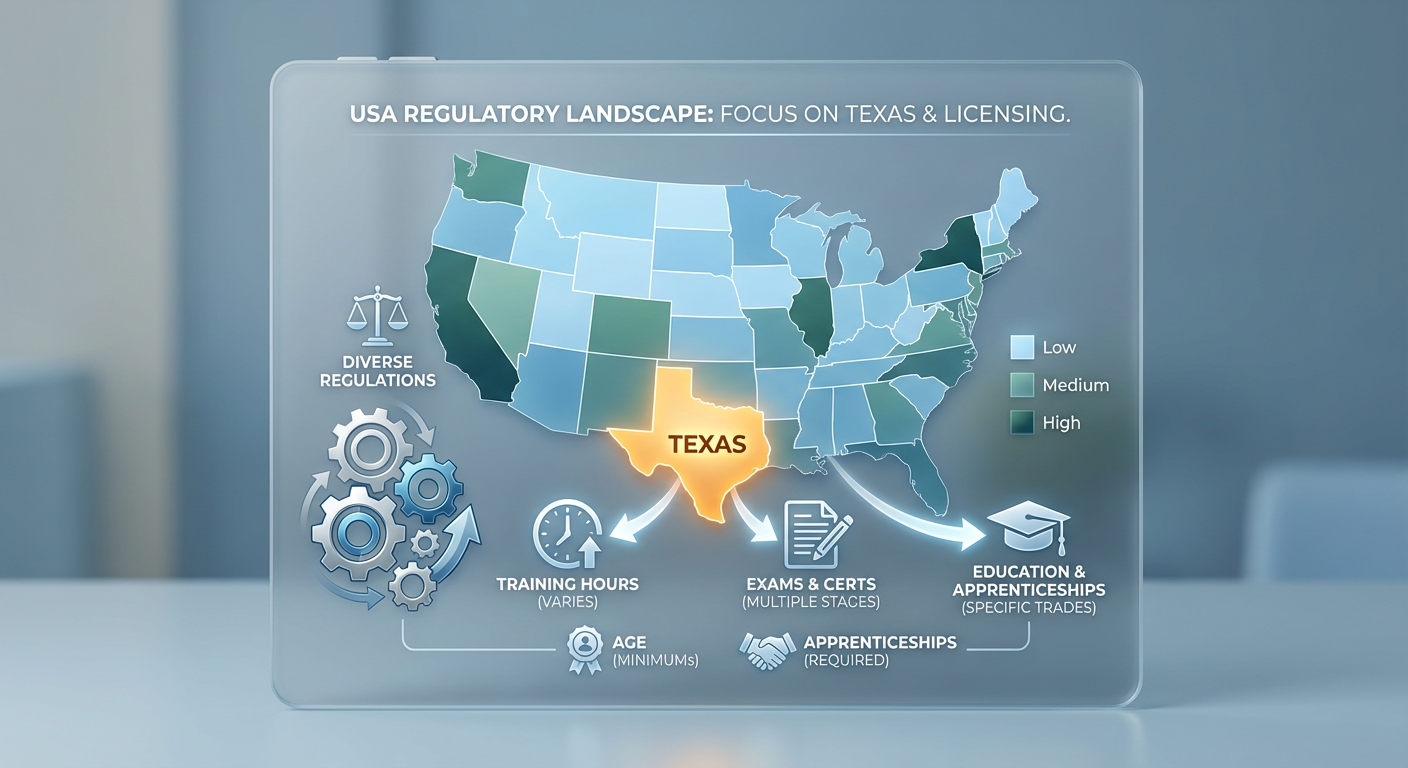
4. Comparative Analysis of Licensing Requirements Across States
The regulatory landscape governing the practice of electrolysis hair removal in the United States presents a complex and varied picture, characterized by a distinct “patchwork” approach rather than a unified national standard. This section provides an in-depth comparative analysis of state-specific licensing requirements, highlighting the significant disparities and their implications for practitioners, businesses, and consumers. From vastly differing mandated training hours to diverse examination types, age and education prerequisites, and the availability of apprenticeship alternatives, the requirements for becoming a licensed electrologist can change dramatically from one state to another. A detailed examination of these variations reveals not only the differing philosophical stances states adopt towards occupational licensing but also the practical challenges and opportunities that arise from this fragmented regulatory environment.
As of February 2025, the division is nearly two-thirds to one-third, with 32 U.S. states and the District of Columbia mandating a professional license for electrologists, while 18 states have no specific licensing requirements for the profession [2]. This division means that a majority of American residents live in jurisdictions where electrologists must be state-certified, indicating a prevalent belief in the necessity of regulation for this service. However, a significant minority, including populous states such as Texas, New York, Pennsylvania, and Georgia, operate without state-level electrology licenses, leaving tens of millions of individuals in areas where the practice is effectively unregulated by the state [2]. This fundamental divergence forms the core of the comparative analysis, with Texas serving as a crucial case study of a deregulated approach, juxtaposed against states with stringent licensing frameworks like Massachusetts.
4.1 The Fundamental Divide: Licensed vs. Unlicensed States
The most striking aspect of electrolysis regulation in the U.S. is the binary distinction between states that require a license and those that do not. This creates a regulatory dichotomy that profoundly influences the professional landscape. The impetus for licensing often stems from concerns over public safety due to the invasive nature of electrolysis, which involves inserting a fine probe into hair follicles and applying electric current [55]. This process breaks the skin barrier, posing risks of infection or scarring if performed improperly [56]. Proponents of licensing argue that standardized training in sterilization, skin anatomy, and proper technique is crucial to mitigate these risks [55]. Conversely, states without licensing often take a more laissez-faire approach, sometimes classifying electrolysis as a lower-risk aesthetic service, or relying on broader cosmetology regulations.
The implications of this fundamental divide are extensive. In licensed states, consumers generally have a baseline assurance of a practitioner’s training and adherence to safety protocols, as evidenced by their state credential. In unlicensed states, however, the burden of due diligence falls entirely on the consumer. As one veteran electrologist advised, emphasizing the consumer’s role in unregulated markets, individuals should seek practitioners with credentials from other states or national certifications to ensure competence [60]. The “CPE” (Certified Professional Electrologist) designation, administered by the American Electrology Association (AEA), serves as a popular voluntary credential in these states, with approximately 15-20% of electrologists nationwide holding such certifications, a figure notably higher in unlicensed states [27].
The existence of this regulatory patchwork has significant effects on new market entrants and overall market dynamics. States with stringent licensing often face higher entry costs for practitioners (tuition, fees, extensive training) compared to their unlicensed counterparts, which can influence the geographical distribution of clinics and service pricing [64]. For example, a market analysis conducted in 2024 flagged these licensing hurdles as a “major restraint” on the U.S. electrolysis market’s growth, making it harder for new providers to enter and expand [7].
4.2 Texas: A Case Study in Deregulation
Texas stands as a notable example of an unlicensed state for electrology. In Texas, there is no specific professional license required for electrologists, setting it apart from the majority of states that mandate specialized training and testing [3]. This means that, unlike many other beauty trades in Texas which require strict licensing, anyone can legally practice electrolysis without a dedicated electrologist license [15].
Under Texas law, the act of removing “superfluous hair…using…tweezers, or other devices” is broadly defined as cosmetology [4]. Consequently, performing electrolysis could arguably fall under the purview of a general Cosmetology Operator or Esthetician license [5]. However, crucially, Texas has no specific mechanism or examination to license or test for electrolysis skills. This leads to a situation where many Texas electrologists might be dually licensed as cosmetologists or estheticians, but some may operate without any cosmetology license, exploiting a grey area in enforcement [32]. Effectively, practitioners in Texas face zero hours of state-mandated electrology training and no electrolysis-specific examination, which undoubtedly lowers barriers to entry into the profession [15].
The Texas model presents both advantages and disadvantages. On the one hand, it fosters ease of entry, allowing entrepreneurs to establish electrolysis businesses more readily and enabling beauty professionals to incorporate electrolysis services without encountering additional licensing requirements [32]. This flexibility might contribute to a greater number of clinics and increased accessibility in major Texan cities. On the other hand, the absence of specific oversight raises concerns among consumer advocates, who warn that “uneducated, unlicensed” providers may offer electrolysis without adequate training, potentially elevating the risks of burns, infections, or other complications due to a lack of knowledge in sterilization and proper technique [11].
A striking contrast emerges when comparing Texas’s approach to electrolysis with its regulation of laser hair removal. Since 2010, Texas has implemented rigorous regulations for laser hair removal, requiring certification under physician supervision and facility registration with the Department of State Health Services [8]. This divergence highlights that Texas calibrates its regulatory efforts based on perceived risk. While electrolysis is considered generally low-risk when conducted hygienically, lasers were deemed higher risk due to potential for burns or pigment damage, thus warranting tight control [33]. This approach aligns with a broader trend in Texas to deregulate what it considers lower-risk beauty services, such as eyebrow threading, which was deregulated in 2017 [9].
For electrology professionals in Texas, the deregulated environment presents a dual reality. While offering ease of entry, it also necessitates proactive measures to establish professional credibility. Many Texas electrologists voluntarily seek credentials like the CPE certification or out-of-state training certificates to reassure clients [34]. This pursuit of voluntary certifications underscores a self-regulatory impulse within the Texan electrology community to maintain high standards despite the absence of state mandates.
4.3 Mandated Training Hours: The Widest Variations
Among states that do license electrologists, the requirements for didactic and practical training hours exhibit the most extreme variations, indicating a profound lack of national consensus on what constitutes adequate preparation for the profession. This disparity is a central theme in the comparative analysis of licensing requirements.
The range of mandated training hours is staggering:
- Massachusetts: At the zenith of stringency, Massachusetts demands 1,100 hours of instruction for electrologist licensure [6]. This requirement, one of the highest in the nation, reflects a very conservative approach to ensuring practitioner competence and consumer safety. It translates to nearly a full year of intensive, full-time study for aspiring electrologists. Massachusetts also mandates 10 hours of continuing education every two years for license renewal [16].
- Delaware: On the opposite end of the spectrum, Delaware licenses electrologists with just 300 hours of schooling, or alternatively, a 600-hour apprenticeship [17]. This represents less than a third of Massachusetts’s requirement, showcasing a significantly more lenient stance on initial training. Delaware’s minimal age (16 years) and schooling (10th grade education) prerequisites further underscore its lower barrier to entry [18].
- Mid-Range States: Many states fall within a common range of 500–600 hours of training. Examples include California (600 hours or a two-year apprenticeship) [19], Illinois, and Ohio [37]. Other states like Florida (320 hours) [20] and Iowa (425 hours) [21] further illustrate the lack of uniform standards even within the relatively lower-hour tiers.
This wide divergence in training hours means that the fundamental definition of a “licensed electrologist” can vary significantly across state lines. A newly licensed practitioner in Delaware likely has three times less formal training than their counterpart in Massachusetts. According to industry analysis, “The only constant among states requiring electrologist licenses is that there is no constant!” [26]. These discrepancies often stem from historical legislative decisions, varying interpretations of the public risk associated with electrolysis, and the influence of professional associations in lobbying for specific standards. States that regulated earlier or faced particular safety concerns tended to implement higher hour requirements [37]. The philosophical split also plays a role, with some states aligning electrology more closely with cosmetology (where a few hundred hours are typical for specialties) and others viewing it as more akin to an allied health field, thus warranting more extensive education [37].
The practical implications for practitioners seeking to relocate are substantial. Moving from a low-hour state to a high-hour state often necessitates additional training to meet the new jurisdiction’s requirements [65]. This lack of reciprocity and standardization can hinder workforce mobility and limit the expansion capabilities of multi-state businesses [66].
4.4 Examination Types and Certification
Beyond training hours, the methods used to assess competency for licensure also vary considerably across states. While most licensing states require candidates to pass an examination, the specific type, content, and administration of these exams differ.
4.4.1 The International Board of Electrologist Certification (IBEC) Exam
A significant trend towards standardization is observed in the adoption of the International Board of Electrologist Certification (IBEC) exam. At least a dozen states utilize the IBEC exam as a core component of their licensure process [22]. States such as Connecticut, Florida, New Jersey, Illinois, and Massachusetts all include the IBEC exam in their licensing criteria [23]. This standardized national exam, developed in collaboration with the American Electrology Association, covers theoretical knowledge in areas like hair biology, electricity, skin health, and safety protocols, and often includes a practical component [38]. The widespread adoption of the IBEC exam helps ensure a consistent baseline of fundamental knowledge and practical skills among electrologists across participating states, promoting a degree of inter-state comparability in competency levels.
4.4.2 State-Specific and Supplemental Examinations
Despite the growing influence of the IBEC exam, some states still employ their own state-specific examinations or augment the IBEC with additional tests. For example, New Jersey requires candidates to pass the IBEC exam *and* a state jurisprudence exam, which assesses knowledge of local laws and regulations pertinent to electrology [24]. Similarly, Tennessee offers candidates a choice between the IBEC exam or a test administered by another electrology organization (SCMHR) [39]. The varying nature of these examinations means that even a licensed electrologist transitioning from one state to another may need to undertake further testing to meet the new jurisdiction’s specific examination requirements, reflecting the limited reciprocity inherent in the current system [67].
4.4.3 States with No Exam Requirement
In a rare departure from the norm, North Dakota stands out as a licensing state that does not mandate a licensing examination for electrologists [25]. Qualification for licensure in North Dakota is based solely on the completion of 600 hours of training and ongoing continuing education (5 hours annually), with “no examination” required for initial licensure [25]. This makes North Dakota one of the least restrictive licensing states, outside of those with no licensure at all. This approach suggests a state focus on verifiable training hours and ongoing competency through continuing education, rather than a one-time assessment of knowledge and skills via examination [25].
4.5 Age, Education, and Apprenticeship Alternatives
In addition to training hours and examinations, states often impose age and educational prerequisites, which also vary, and some provide alternative pathways to licensure through apprenticeships.
4.5.1 Age and Education Prerequisites
Most states establish a minimum age for licensure—typically 18 years—along with a requirement for at least a high school diploma or GED [40]. However, exceptions exist; Delaware permits licensing at age 16 for individuals with a 10th-grade education [41]. At the other extreme, Oklahoma and New Mexico set the minimum age at 21 [42], with Oklahoma uniquely requiring a Bachelor’s degree in an approved field in addition to 600 hours of internship [28]. This makes Oklahoma’s requirements arguably the most stringent nationwide, viewing electrology as a specialized, quasi-medical field that warrants a higher level of academic preparation [28].
Oklahoma’s mandate for a Bachelor’s degree is a significant outlier; no other state imposes such a general higher-education requirement for electrologists [43]. This requirement places electrology under the State Board of Medical Licensure, reflecting a perception of the profession as allied health rather than a skilled trade [28]. While this might limit the number of practitioners, it aims to ensure a highly educated workforce.
4.5.2 Apprenticeship Alternatives
Recognizing that formal schooling may not be universally accessible or preferred, several states offer apprenticeship routes as an alternative to traditional classroom instruction. This flexibility allows individuals to gain the necessary skills through on-the-job training under the supervision of experienced electrologists [68].
- California: A prominent example is California, which accepts a two-year apprenticeship under a licensed electrologist as an alternative to completing 600 classroom hours at an electrology school [29].
- Delaware: Similarly, Delaware allows licensure after a 600-hour apprenticeship, which is twice the hour requirement for its school-based route [30].
- Kansas and Hawaii: These states also provide apprenticeship options, although they typically require a greater total number of hours compared to school programs. For instance, Kansas accepts a 1,000-hour apprenticeship as an alternative to 500 hours of schooling [31].
Apprenticeship programs can broaden access to the profession, particularly for those who prefer practical, hands-on learning or face geographical barriers to accessing formal electrology schools, which can be few and far between [44]. However, challenges such as finding qualified mentors, varying quality of training depending on the mentor, and potentially longer total hours compared to school programs, mean apprenticeships are not without their complexities [44].
4.6 Regulatory Oversight: Cosmetology vs. Medical Boards
The authority responsible for regulating electrology also varies significantly among states, influencing the specific rules, standards of practice, and enforcement mechanisms. This oversight can fall under cosmetology boards, health/medical boards, or even dedicated electrology boards, each bringing a different regulatory culture to the profession.
4.6.1 Cosmetology Boards
In over 20 states, electrologists are regulated by boards that also oversee cosmetologists, estheticians, and barbers [45]. Under this model, electrology is typically classified as a specialty license within the broader cosmetology umbrella, often designated as “Licensed Electrologist” (LE) or “Registered Electrologist” (RE) [45]. States like California, Arkansas, Michigan, and Wisconsin exemplify this approach [46]. The licensing process often emphasizes practical skills and sanitation, aligning with the standards applied to other beauty professions [47]. This can ensure regulatory consistency across personal care services but may also lead to a perception among electrologists that their work, which involves invasive procedures, warrants more specialized oversight than typical cosmetology services [47].
4.6.2 Health/Medical Boards
A notable minority of states, approximately 5-7, position electrology under health departments or medical boards. These states typically view electrolysis as an allied health service due to its invasive nature and potential health implications, particularly concerning infection control [48].
- Florida: Electrologists are regulated by the Department of Health’s Electrolysis Council, operating under the Board of Medicine [10].
- New Jersey: Features an Electrologist Advisory Council under its State Medical Board [12].
- Ohio: Licenses electrologists through its State Medical Board [14].
Regulation by medical boards often translates to more rigorous requirements, including stricter sterilization protocols, mandatory blood-borne pathogen training, and specific rules regarding physician oversight, especially for the use of laser devices by electrologists [49]. This approach underscores a perspective that electrology, by altering body tissue, should adhere to health-care-level standards [49]. Practitioners in these states may work more closely with dermatologists or in medical settings, fostering a different professional culture compared to cosmetology-regulated environments where standalone electrology studios are more common [49].
4.6.3 Dedicated Electrology Boards
A few states, such as Massachusetts and Connecticut, have established entirely independent electrology boards or councils [13]. These dedicated boards provide specialized attention to the unique aspects of the electrology profession, from setting training curricula to addressing consumer complaints. The advantage lies in having experts explicitly focused on electrology issues, which can lead to higher standards and more tailored regulations. For instance, Massachusetts’s Board of Registration of Electrologists has been instrumental in updating rules to require modern sterilization techniques like autoclave use [50]. The drawback can be the administrative cost associated with maintaining a separate board for a relatively small profession [50].
The type of regulatory body significantly influences the day-to-day practice for electrologists, dictating the nature of inspections (general salon compliance vs. clinical audits), the stringency of disciplinary actions, and the required facility standards [50]. This means businesses must align their operational models—whether a typical salon or a medical spa—with the specific regulatory environment of each state in which they operate.
4.7 Continuing Education and Renewal Requirements
Licensure is often not a one-time event; many states require electrologists to engage in ongoing professional development to maintain their licenses. This ensures practitioners remain updated on the latest techniques, safety guidelines, and technological advancements in the field.
- Mandatory Continuing Education: Approximately half of the states that license electrologists mandate continuing education (CE) for license renewal [51]. Common requirements range from 10 to 20 hours of CE every two years. For example, New Jersey and Illinois require 20 hours biennially [52], while Massachusetts requires 1 CEU (equivalent to 10 hours) every two years [53]. These CE courses often cover critical areas such as sanitation, infection control, new epilation techniques, and CPR refreshers.
- Florida’s Example: Florida, for instance, requires 20 hours of CE every renewal cycle (two years) [54].
- States Without CE Requirements: Conversely, many licensed states, and all unlicensed states like Texas, do not impose formal continuing education requirements. In these jurisdictions, renewal typically involves paying a fee and, in some cases, providing proof of continued practice.
The presence of CE requirements reflects a commitment to ongoing practitioner competency, ensuring that electrologists adapt to new knowledge and technologies. Critics, however, sometimes argue that mandatory CE can be burdensome. Nevertheless, advocates emphasize its importance in a field that sees continuous innovation in equipment and techniques, especially given the invasive nature of the procedure.
4.8 Table: Comparative Overview of Key Licensing Parameters in Select States
To summarize the diversity in requirements, the following table provides a comparative overview of key licensing parameters for electrologists across a selection of U.S. states, including Texas for contrast.
| State | Licensing Required? | Mandated Training Hours (School) | Apprenticeship Alternative? | Type of Examination | Minimum Age | Minimum Education | Regulatory Oversight | Continuing Education (CE) |
|---|---|---|---|---|---|---|---|---|
| Texas | No specific license, but hair removal defined as cosmetology [4] | 0 (state-specific electrolysis) [15] | N/A | None (state-specific electrolysis) [15] | N/A | N/A | TDLR (Cosmetology) for general hair removal [5] | None |
| Massachusetts | Yes | 1,100 hrs [6] | No | IBEC [23] | 18 yrs [40] | High school or GED [40] | Board of Registration of Electrologists [13] | 10 hrs/2 yrs [16] |
| Delaware | Yes | 300 hrs [17] | Yes (600 hrs) [17] | State Exam (e.g., IBEC) [17] | 16 yrs [18] | 10th Grade Education [18] | Board of Cosmetology and Barbering | Varies (often none) |
| Florida | Yes | 320 hrs [20] | No | IBEC [20] | 18 yrs | High school or GED | Board of Medicine, Electrolysis Council [10] | 20 hrs/2 yrs [54] |
| Illinois | Yes | 600 hrs | No | IBEC [23] | 18 yrs | High school or GED | Department of Financial and Professional Regulation | 20 hrs/2 yrs [52] |
| New Jersey | Yes | 600 hrs | No | IBEC + State Jurisprudence [24] | 18 yrs | High school or GED | Electrologist Advisory Council under Medical Examiners [12] | 20 hrs/2 yrs [52] |
| Oklahoma | Yes | 600 hrs (internship) [28] | Yes (internship) [28] | IBEC [28] | 21 yrs [28] | Bachelor’s degree in approved field [28] | State Board of Medical Licensure [28] | Periodic CE |
| New York | No | 0 | N/A | None | N/A | N/A | None | None |
This table underscores the profound differences in regulatory approaches, from the complete absence of specific licensing in Texas and New York to the highly specialized and stringent requirements in Massachusetts and Oklahoma. The market impact, as previously noted, is considerable; a U.S. electrolysis hair removal market projected to reach over $430 million by 2033 is nonetheless held back by these “regulatory hurdles and licensing requirements” [7]. Efforts to standardize and streamline these regulations could stimulate significant growth by encouraging new entrants and expanding service availability [7].
4.9 Conclusion and Transition
The comparative analysis of electrologist licensing requirements across U.S. states reveals a fragmented and inconsistent regulatory landscape. This “patchwork” system, with its wide variations in training hours, examination procedures, educational prerequisites, and oversight bodies, poses significant challenges for practitioners and businesses while creating an uneven playing field for consumer protection. While some states like Massachusetts and Oklahoma have established rigorous standards aimed at ensuring high levels of competence and safety, others, including Texas and New York, have opted for a deregulated environment, trusting market forces and voluntary certifications to maintain quality. The ongoing debate between consumer protection and economic accessibility continues to shape legislative efforts, with trends towards standardization and periodic review of existing regulations suggesting an evolving landscape. Understanding these nuanced differences is crucial for anyone navigating the professional or commercial aspects of electrolysis hair removal in the United States.
The next section will delve deeper into the specific impacts of these varying regulations on market dynamics, business expansion strategies, and workforce mobility within the electrolysis industry, further exploring how the regulatory environment shapes the economic realities of this specialized field.
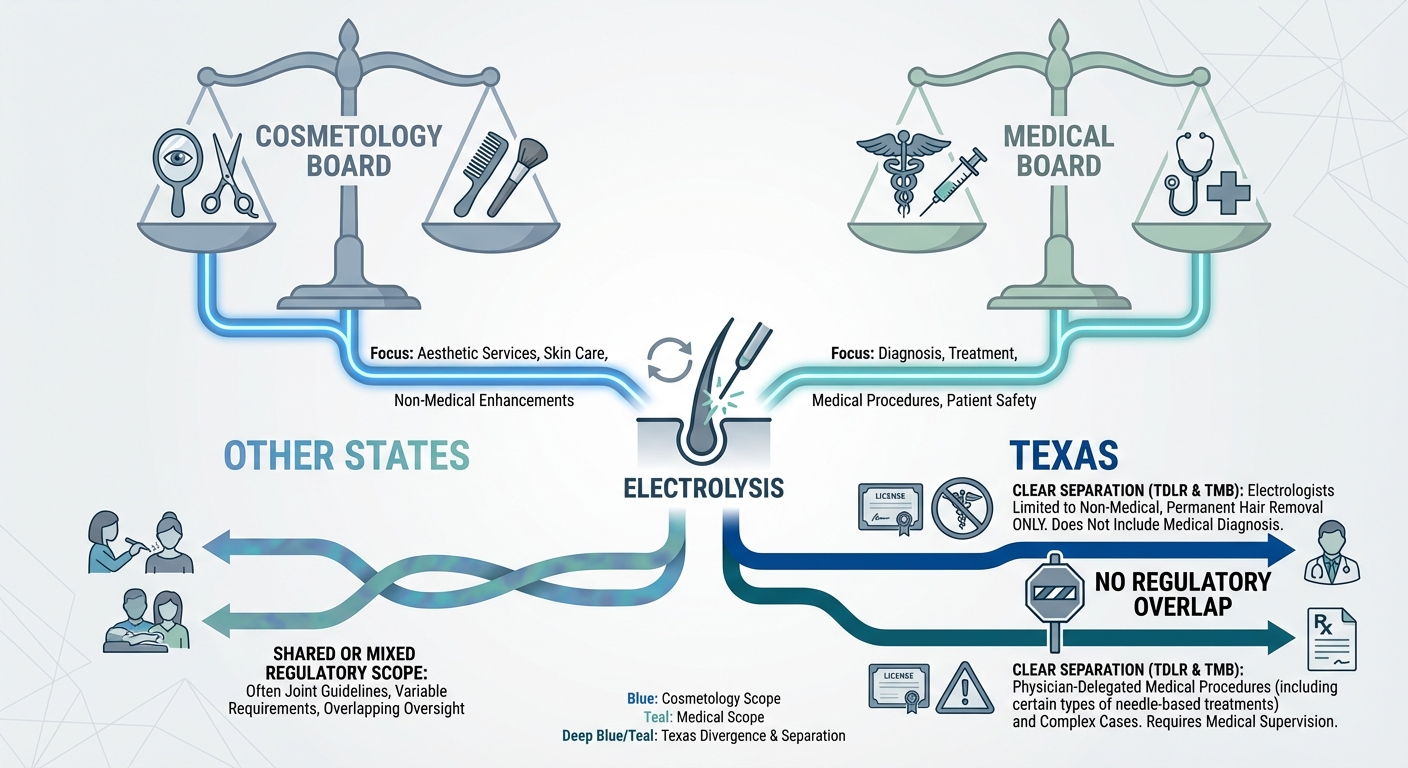
5. Regulatory Oversight Bodies: Cosmetology vs. Medical Boards
The landscape of electrolysis regulation in the United States is characterized by a significant divergence in oversight authorities, presenting a complex and often inconsistent framework for practitioners and consumers alike. The specific state agency responsible for regulating electrolysis—whether a cosmetology board, a medical board, or a dedicated electrology board—profoundly impacts the standards of practice, training requirements, scope of permissible services, and the overall professional standing of electrologists within that jurisdiction. This section delves into these distinctions, examining how the designation of electrolysis as either a beauty service or an allied health procedure shapes its regulatory environment, with a particular focus on Texas’s unique position and comparisons to other states’ approaches. Historically, the regulation of personal care services has evolved in a piecemeal fashion across the U.S., with states independently determining the necessity and appropriate level of oversight for various professions. Electrolysis, being the only FDA-approved method for permanent hair removal, occupies a unique position, involving invasive procedures that break the skin barrier and carry potential health risks if not performed correctly [15]. These inherent risks, coupled with the cosmetic benefits, have led to a regulatory split: some states align electrolysis with other aesthetic services under cosmetology boards, while others categorize it closer to medical procedures, placing it under health or medical boards [9]. The primary implication of this varied oversight is the establishment of fundamentally different regulatory cultures. Cosmetology boards typically focus on general salon sanitation, aesthetic technique, and consumer satisfaction within a beauty services context. In contrast, medical or health boards tend to impose stricter clinical standards, emphasizing infection control, patient safety protocols, and often requiring more extensive training on human anatomy and physiology. This section will explore these regulatory models, their specific requirements, and the consequences for the electrology profession, including the challenges of interstate mobility and the broader market implications.
5.1. The Regulatory Mosaic: A State-by-State Overview
As of 2025, the regulation of electrolysis exhibits a “patchwork” characteristic across the United States. While 32 states and the District of Columbia require electrologists to be licensed, 18 states, including populous ones like Texas, New York, Pennsylvania, and Georgia, do not impose specific state-level licensing for the profession [2]. This fundamental divergence creates a vast spectrum of operational environments for electrologists. Within the states that do mandate licensure, the identity of the regulatory authority is a critical factor. Broadly, these authorities can be categorized into three main types:
- Cosmetology or Barber Boards: These boards oversee a wide range of beauty and personal care services, implicitly classifying electrolysis as an aesthetic service.
- Health-focused Agencies or Medical Boards: These entities typically regulate professions with direct health implications, thus categorizing electrolysis as an allied health service due to its invasive nature.
- Dedicated Electrology Boards: A smaller number of states have established specific boards solely for electrology, signaling a recognition of its distinct professional identity.
A survey indicates that over 20 states regulate electrologists through cosmetology boards, often issuing a specialty license (e.g., “Licensed Electrologist” or “Registered Electrologist”) under the broader cosmetology umbrella [9]. This approach means that electrologists operating in these states are often subject to similar facility inspection, hygiene, and business regulations as hairstylists or estheticians. For example, California’s Barbering & Cosmetology Board oversees electrology licensing, requiring applicants to complete a prescribed curriculum and pass a board exam, mirroring the processes for other beauty professionals [26]. Conversely, at least 5 to 7 states assign oversight of electrology to health-related boards [9]. A prime example is Florida, where the Electrolysis Council operates under the Department of Health’s Board of Medicine [17]. Similarly, New Jersey’s electrologists are regulated by an Electrologist Advisory Council under its State Medical Board [18], and Ohio licenses electrologists through its State Medical Board [19]. This regulatory model tends to bring more stringent requirements, such as stricter sterilization protocols, mandatory blood-borne pathogen training, and sometimes limitations on practices like laser use without explicit physician supervision. Oklahoma, for instance, requires electrologists to possess a Bachelor’s degree in an approved field and complete a 600-hour internship, placing it under the State Board of Medical Licensure, reflecting a view of electrology as a specialized, quasi-medical field [13]. A few states have opted for standalone boards or councils specifically dedicated to electrology. Massachusetts, with its Board of Registration of Electrologists [20], and Connecticut, with a Board of Examiners of Electrologists under its health department [25], exemplify this approach. These dedicated boards allow for focused attention on the unique aspects of the electrology profession, often leading to comprehensive training curricula and specific handling of consumer complaints relevant to the practice.
5.2. Texas: An Outlier in Regulatory Philosophy
Texas stands as a notable example of an “unlicensed state” for electrology [4]. Unlike the majority of U.S. states, Texas does not require a specific license or certification for individuals to practice electrolysis. This means that, unlike many other beauty trades in Texas, there are no state-mandated training hours, no dedicated electrology credential, and no specific state examination for electrologists [6]. This deregulated approach streamlines market entry for practitioners but places a significant onus on consumers for due diligence. Under Texas law, the removal of “superfluous hair… using… tweezers, or other devices” falls under the broad definition of cosmetology [5]. Therefore, a general esthetician or cosmetologist license from the Texas Department of Licensing and Regulation (TDLR) would technically cover body hair removal [6]. However, this general license does not entail specialized training or testing for electrolysis itself. Consequently, many electrologists in Texas are dual-licensed as cosmetologists or estheticians, but some may operate without any cosmetology license, benefiting from the ambiguity in enforcement regarding specific electrolysis credentials [6]. A key insight is that Texas practitioners effectively face “0 hours of state-mandated electrology training” and no specific exam, fostering a market reliant on general cosmetology training and individual responsibility for skill and safety [6]. This approach reflects a broader philosophical stance in Texas towards certain beauty services. The state has, for instance, deregulated services like eyebrow threading in 2017, signaling a move to reduce occupational licensing where perceived risks are low [8]. The distinction becomes particularly stark when comparing electrolysis regulation to that of laser hair removal in Texas. Since 2010, laser hair removal has been heavily regulated, requiring certified technicians, physician supervision, and registration through the Department of State Health Services, primarily due to heightened safety concerns regarding potential burns and pigment damage [8]. This divergence highlights how Texas calibrates regulation based on the perceived risk level of the procedure: electrolysis, despite being an invasive procedure, is viewed as lower risk than laser treatments and thus subject to minimal specific oversight. The implications for practitioners in Texas are mixed. On one hand, the absence of specific licensing reduces barriers to entry, making it easier for individuals to start an electrolysis business or for cosmetology professionals to add electrolysis to their service offerings. This flexibility may contribute to the growth of clinics, particularly in major urban centers. On the other hand, the lack of a state credential means that professional credibility often relies on voluntary certifications, such as the Certified Professional Electrologist (CPE) designation from the American Electrology Association (AEA) or proof of training from out-of-state schools [23]. Consumers in Texas must exercise greater due diligence, as the state does not guarantee a baseline of specialized electrolysis training. Professional associations, like the Electrology Association of Texas (an AEA affiliate), play a crucial role in promoting best practices and advocating for high standards even in the absence of formal state regulation.
5.3. Impact of Regulatory Bodies on Training and Scope of Practice
The nature of the regulating authority directly influences the practical aspects of an electrologist’s profession, including training requirements, examination standards, and the permitted scope of practice.
5.3.1. Training Hour Disparities
One of the most vivid illustrations of regulatory variation is the vast difference in mandated training hours for electrologists across states. This disparity often correlates with whether the regulating body is a cosmetology or a medical board.
| State | Required Training Hours | Regulatory Body Context | Notes |
|---|---|---|---|
| Massachusetts | 1,100 hours | Dedicated Electrology Board | Highest in the nation; reflects a stringent approach [1] |
| Delaware | 300 hours (600 hr apprenticeship alternative) | — (licenses awarded via state board) | Among the lowest formal education requirements [7] |
| Florida | 320 hours | Board of Medicine’s Electrolysis Council | Health-focused, yet relatively low hours [17] |
| California | 600 hours (2-year apprenticeship alternative) | Barbering & Cosmetology Board | Common standard for cosmetology oversight [11] |
| Oklahoma | 600-hour internship + Bachelor’s degree | State Board of Medical Licensure | Outlier, quasi-medical credentialing [13] |
| Texas | 0 (no specific license) | (General cosmetology license covers hair removal) | Deregulated approach for electrolysis [6] |
States where electrology falls under cosmetology boards often align training hours with those for other beauty specialties, which can be a few hundred hours. In contrast, states with dedicated electrology boards or medical oversight, such as Massachusetts, may impose significantly more rigorous requirements, demanding 1,100 hours of instruction—more than double the requirement in many other licensing states [1]. Delaware, conversely, licenses electrologists with just 300 hours of schooling or a 600-hour apprenticeship, representing roughly 27% of Massachusetts’s requirement [7]. These disparities underscore fundamental philosophical differences. Some regulators view electrolysis primarily as a cosmetic procedure, akin to esthetics, warranting several hundred hours of training. Others emphasize its invasive nature, the use of electricity, and potential for bloodborne pathogen transmission, thus demanding more extensive education akin to an allied health profession.
5.3.2. Examination and Certification Standards
An electrologist’s path to licensure is also shaped by the type of examination required, which again often reflects the regulatory philosophy of the governing board. Most licensing states require candidates to pass an examination after completing their training [10]. The International Board of Electrologist Certification (IBEC) exam is a widely adopted standardized assessment, used by over a dozen states including Connecticut, Florida, New Jersey, Illinois, and Massachusetts [10]. The IBEC exam, administered in coordination with the American Electrology Association (AEA), aims to ensure a consistent baseline of knowledge and skills, encompassing theoretical aspects of hair biology, electricity, skin health, and practical application. However, some states supplement this national standard with their own requirements. New Jersey, for instance, mandates the IBEC exam along with a state jurisprudence exam covering local laws and rules [10]. Other states may utilize their own state-specific tests or integrate the electrology examination into the broader testing systems of their cosmetology boards. The absence of a universal exam means that licensure in one state does not automatically translate to the ability to practice in another, creating significant challenges for license portability and practitioner mobility. In deregulated states like Texas, where no state exam is required, electrologists frequently pursue voluntary certifications like the Certified Professional Electrologist (CPE) designation [23]. This serves as a market signal to clients, demonstrating a commitment to professional standards and a baseline of knowledge, even without state compulsion.
5.3.3. Scope of Practice and Operational Requirements
The regulatory body dictates not only who can practice but also how they can practice.
- Under Cosmetology Boards: Electrologists are typically integrated into general salon regulations. This means their facilities are subject to standard cleanliness and sanitation inspections common to beauty establishments. Their scope of practice is generally limited to permanent hair removal through galvanic, thermolysis, or blend methods. Emphasis is placed on client comfort, aesthetic outcomes, and hygiene consistent with other personal care services. For example, in Illinois, regulated by a cosmetology board, a standard salon license is sufficient for a business offering electrolysis [29].
- Under Health/Medical Boards: Regulation is often more clinically oriented. These boards might mandate stricter sterilization protocols, such as requiring on-site autoclaves and monthly spore testing, viewing electrolysis as a procedure that could transmit bloodborne pathogens [16]. Training on bloodborne pathogens and medical waste disposal is more common. The scope of practice might also be more explicitly defined, with closer oversight on any adjunctive treatments. In states like Florida, where electrologists are regulated by the Board of Medicine, there are explicit rules regarding their ability to use lasers (often requiring additional certification and, in some cases, physician oversight) [17]. Disciplinary actions under medical boards can also be more severe, reflecting a higher standard of care expected for health-related professions.
- Under Dedicated Electrology Boards: These boards often blend aspects of both. They can establish robust training and examination standards, often leading to high educational requirements (e.g., Massachusetts’ 1,100 hours) [25]. They prioritize the unique safety and efficacy standards specific to electrolysis, often updating rules to reflect the latest technology and best practices. For instance, Massachusetts’ board has ensured modern sterilization techniques are mandatory for licensees [20].
The type of oversight also impacts facility requirements. A medical board may require a separate treatment room that meets clinical standards, whereas a cosmetology board might permit electrolysis within a general salon environment, provided basic sanitation rules are followed. This directly affects business models; a spa in a health-regulated state might need to adopt a “medical-spa” model with attendant infrastructure and personnel, while a similar business in a cosmetology-regulated state could operate as a conventional salon.
5.4. Continuing Education and Professional Development
Beyond initial licensing, regulatory bodies also influence ongoing professional development through continuing education (CE) requirements. Approximately half of the states that license electrologists mandate continuing education for license renewal [21]. Common requirements range from 10 to 20 hours of CE every two years. For example, Illinois and New Jersey require 20 CE hours biennially [22], while Massachusetts requires 1 CEU (10 hours) every two years [17]. These CE hours often cover critical topics such as sanitation, infection control, new techniques, and sometimes even CPR refreshers. The rationale is to ensure practitioners stay current with evolving best practices and technological advancements in the field, thereby enhancing client safety and service quality. For instance, electrology machines have seen technological updates, and CE helps ensure practitioners understand how to operate newer models safely. However, a number of licensing states, and all unregulated states (like Texas, New York, Pennsylvania), do not have formal CE requirements [2]. In these jurisdictions, once licensed (or practicing without a license), there is no state-mandated periodic review of a practitioner’s knowledge or skills. This places the burden of staying updated on the individual electrologist, who may choose to pursue voluntary training or certifications for professional integrity and client confidence. Critics of mandatory CE argue it can be burdensome and costly for practitioners, while proponents assert its necessity for maintaining competency in an evolving, invasive field. The presence or absence of CE requirements illustrates another layer of regulatory philosophy: some states actively manage ongoing practitioner competency, while others focus solely on initial qualification.
5.5. The Crucial Role of Regulatory Oversight in Safety and Consumer Protection
The debate regarding regulatory oversight bodies inevitably circles back to consumer safety and protection. Electrolysis is an invasive procedure that involves the insertion of a fine probe into hair follicles and the application of an electric current [16]. This process necessarily bypasses the skin barrier, creating a potential risk of infection if proper sterilization and hygiene protocols are not meticulously followed. Furthermore, improper technique can lead to skin damage, such as burns, scarring, or hyperpigmentation [16]. Licensing advocates, particularly those in health-regulated states, argue that robust training in sterilization, cross-contamination prevention, and skin anatomy is paramount to mitigate these risks. Cases of injury, such as skin burns or infections from unsterile practices, reinforce this argument [16]. For example, a case detailed in a MedPro insurance risk report described an unqualified individual performing laser hair removal (mistakenly referred to as electrolysis by the esthetician) using overly aggressive settings, leading to a permanent scar on a patient’s chin [33]. While this specific case involved a laser, it highlights the risks of allowing individuals to perform invasive hair removal procedures without proper training and adherence to scope of practice. Although such severe adverse outcomes are relatively rare in traditional electrolysis, the potential for harm forms the core rationale for state regulation. The very choice of regulatory body—cosmetology board versus medical board—reflects a state’s primary concern. A medical board’s involvement signals a heightened emphasis on public health, infection control, and the “quasi-medical” nature of electrode insertion. These boards are more likely to mandate specific sterilization technologies (like autoclaves), require blood-borne pathogen training, and enforce clinical best practices to prevent the transmission of infections. In contrast, states where cosmetology boards oversee electrolysis might implicitly weigh the cosmetic benefits and economic accessibility more heavily. While these boards also enforce sanitation, their standards may sometimes differ from those of medical boards, focusing more on general salon hygiene rather than specialized clinical sterility. For consumers, the presence of a state license, particularly one issued under a health or medical board, can instill greater confidence. It implies that the practitioner has met a state-defined minimum standard of training and competence, and that there is an official avenue for complaints and recourse. In unlicensed states like Texas, the onus is almost entirely on the consumer to verify an electrologist’s qualifications, training, and adherence to safety protocols [12]. While many electrologists in these states voluntarily pursue high standards and certifications like the CPE, the absence of a legal mandate means varied quality and safety. In essence, the regulatory body choice reflects a state’s balancing act between promoting industry accessibility and ensuring public safety. The trend towards standardization and possible interstate compacts, though gradual, suggests an ongoing desire to find a common ground that protects consumers while fostering a viable and growing profession [14]. **Transition to the next section:** The varied regulatory oversight bodies and their differing approaches to training and practice standards have significant implications for the professional identity and operational environment of electrologists. The next section will delve deeper into how these regulations directly impact the professional scope and autonomy of electrologists, further examining the differences in qualifications, allowed procedures, and the interaction with other related professions.
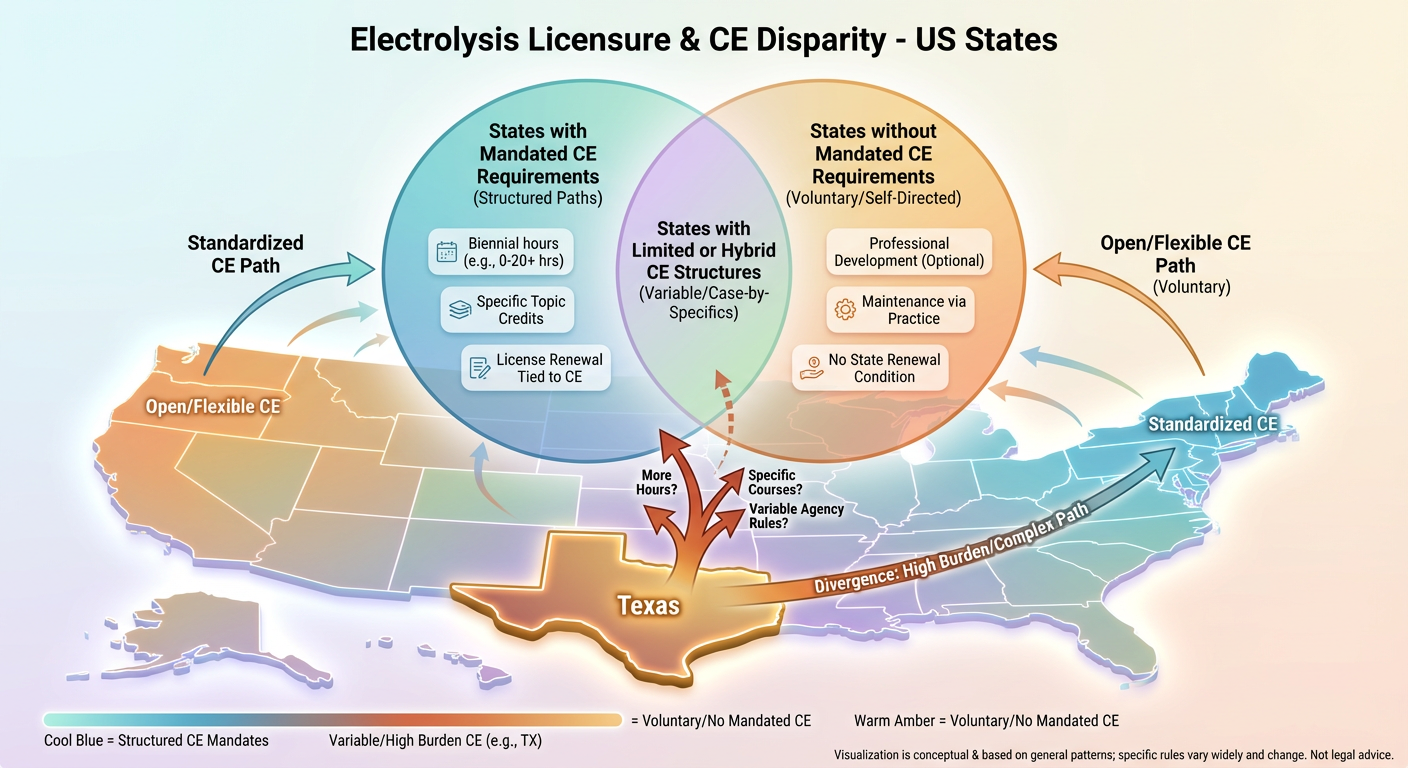
6. Continuing Education and License Renewal Practices
The landscape of electrolysis regulation in the United States is characterized by a significant disparity among states, particularly concerning the requirements for continuing education (CE) and license renewal. While approximately 32 states and the District of Columbia mandate some form of licensure for electrologists, the ongoing obligations for practitioners to maintain their credentials vary widely [2]. This creates a complex environment where an electrologist in one state may be required to complete regular CE hours, pass renewal exams, and adhere to specific renewal cycles, while a colleague in an adjacent state, or in an unregulated state like Texas, faces virtually no such formal mandates. This section will delve into the intricacies of these differing requirements, highlighting the typical hour requirements and renewal cycles in states that mandate ongoing education, and contrasting them directly with states, including Texas, where no such obligations exist. The implications of this regulatory patchwork for practitioner competency, consumer safety, workforce mobility, and market dynamics are substantial, touching upon fundamental questions of professional standards versus ease of entry into the profession.
6.1. The Duality of Continuing Education Mandates
The requirement for continuing education (CE) is a cornerstone of professional licensure in many fields, designed to ensure that practitioners remain current with evolving techniques, technologies, and safety protocols. In the realm of electrolysis, the presence or absence of CE mandates reflects differing philosophies among states regarding ongoing professional competency and consumer protection. In states that do mandate licensure for electrologists, roughly half impose specific continuing education requirements for license renewal [10]. These mandates typically involve a specified number of hours to be completed within a defined renewal period, which is most often biennial. The general requirement often falls within the range of 10 to 20 hours of CE every two years [10]. For instance, both New Jersey and Illinois require electrologists to complete 20 hours of continuing education every two years to maintain their licenses [25][24]. Similarly, Florida stipulates 20 hours of CE within each two-year renewal cycle [26]. Massachusetts, a state known for its stringent initial training requirements, also necessitates at least 10 hours of continuing education every two years for license renewal [19]. These CE requirements often cover critical topics such as sanitation, infection control, bloodborne pathogens, and sometimes even updates on new technologies or advanced epilation techniques, ensuring that electrologists are adequately prepared to prevent risks like skin burns, scarring, or infections [10]. The objective behind these requirements is clearly to uphold and periodically refresh the practitioner’s knowledge and skills, thereby enhancing client safety and the overall quality of service. Conversely, a significant number of states, despite having initial licensure requirements, do not impose any formal continuing education mandates for electrologists. This category includes major states such as California, which requires 600 hours of initial training, and New York, which as of 2025, remains an unlicensed state for electrolysis altogether [30][27]. In these jurisdictions, once an electrologist obtains their initial license, there is no state-mandated obligation to periodically update their knowledge or skills. This places the entire responsibility for staying current on the individual practitioner, relying on their professional ethics and commitment to self-improvement. Critics of this approach argue that in a field involving invasive procedures and potential health risks, the absence of mandatory CE can lead to a gradual degradation of knowledge and adherence to best practices over time, potentially compromising client safety. Advocates, however, might argue that CE can be burdensome and that market forces, combined with voluntary professional development, are sufficient to maintain high standards. The renewal cycles themselves are fairly consistent among states that require licensure, typically operating on a biennial (two-year) basis. During this period, licensed electrologists must not only complete their mandated CE hours but also submit a renewal application and pay associated fees. Some states, like Tennessee, require 10 hours annually, which can be fulfilled through various professional seminars or courses [28].
6.2. Texas: An Absence of Formal Ongoing Professional Development
Texas stands as a prime example of a state that does not regulate electrologists with specific licensing requirements, and consequently, has no mandates for continuing education or specific license renewal practices for this particular profession [4]. This position is part of a broader deregulated approach to certain hair removal services in the state. Under Texas law, the act of removing “superfluous hair…using…tweezers, or other devices” is broadly defined as cosmetology [5]. As a result, a practitioner performing electrolysis might technically fall under the umbrella of requiring a general Esthetician or Cosmetology Operator license [6]. However, there is no dedicated electrology credential or specialized exam in Texas. This means there are effectively zero hours of state-mandated electrology training required, and as a natural extension, no formal continuing education or renewal obligations specific to electrolysis skills. This deregulated environment in Texas has a pronounced impact on practitioners. While it lowers barriers to entry, allowing individuals to practice after private training or apprenticeships without state oversight, it also means there is no state mechanism to ensure that electrologists remain updated on the latest techniques, safety protocols, or infection control measures. The onus is entirely on the individual practitioner to pursue voluntary professional development. Many reputable electrologists in Texas choose to seek voluntary credentials, such as the Certified Professional Electrologist (CPE) designation, administered by the American Electrology Association (AEA)’s credentialing board [42]. Obtaining CPE status often requires passing a comprehensive exam and may also encourage, or even technically require, ongoing professional development to maintain the certification, though not mandated by the state of Texas. For consumers in Texas, this means a higher degree of due diligence is necessary to verify the qualifications and current knowledge of their chosen electrologist, as the state provides no official assurance of ongoing competency through CE.
6.3. Comparative Analysis of CE Requirements Across States
The disparate approaches to continuing education for electrologists across the United States can be best understood by comparing requirements, or lack thereof, in a tabulated format. This approach highlights the variability and the states’ differing commitments to post-licensure professional development.
| State | Licensing Required for Electrology | Continuing Education (CE) Required | CE Hours & Cycle (Typical) | Renewal Cycle | Regulatory Body |
|---|---|---|---|---|---|
| Texas | No specific license (falls under general cosmetology, but no electrolysis-specific CE) [4] | No (for electrolysis) [4] | N/A | N/A | Texas Dept. of Licensing & Regulation (for cosmetology) [6] |
| New Jersey | Yes [25] | Yes [10] | 20 hours biennially [25] | Biennial (2 years) [25] | Electrologist Advisory Council under State Medical Board [22] |
| Illinois | Yes [24] | Yes [10] | 20 hours biennially [24] | Biennial (2 years) [24] | Illinois Department of Financial and Professional Regulation |
| Florida | Yes [26] | Yes [10] | 20 hours per renewal cycle [26] | Biennial (2 years) [26] | Board of Medicine’s Electrolysis Council [21] |
| Massachusetts | Yes [19] | Yes [19] | 10 hours every 2 years (1 CEU) [19] | Biennial (2 years) [19] | Board of Registration of Electrologists [23] |
| Tennessee | Yes [28] | Yes [10] | 10 hours annually [28] | Annual [28] | Tennessee Board of Electrolysis |
| North Dakota | Yes [34] | Yes [35] | 5 hours annually [36] | Annual [36] | North Dakota State Board of Cosmetology |
| California | Yes [27] | No [10] | N/A | Biennial (2 years) | Board of Barbering and Cosmetology [39] |
| New York | No license required [2] | N/A | N/A | N/A | None (for electrology) [2] |
| Pennsylvania | No license required [2] | N/A | N/A | N/A | None (for electrology) [2] |
As the table demonstrates, the range of requirements is considerable. While states like New Jersey, Illinois, and Florida emphasize ongoing learning with 20 hours biennially, Massachusetts maintains a robust initial training requirement (1,100 hours) supplemented by a moderate 10 hours of CE every two years [19]. North Dakota presents a unique case with 5 hours of annual CE, but notably, does not mandate an initial licensing exam [36], placing a greater emphasis on continued learning over initial comprehensive testing. The presence of continuing education requirements often correlates with the regulatory body overseeing electrologists. States where the profession falls under medical or health-related boards (e.g., Florida, New Jersey) tend to have more robust CE mandates, signifying a view of electrolysis as an allied health service requiring continuous updating of medical and safety knowledge [21][22]. Conversely, states where electrology is governed by cosmetology boards, or those with no specific licensure (like Texas and New York), may have less emphasis on ongoing learning specific to the nuances of electrology, although general cosmetology licenses might have their own CE stipulations that are not directly related to electrolysis.
6.4. Implications for Practitioners and the Industry
The striking variations in continuing education and renewal practices have significant ramifications for individual electrologists, the industry at large, and ultimately, consumer safety. For practitioners, the presence or absence of CE requirements directly impacts their professional development trajectory. In states with mandatory CE, electrologists are routinely exposed to refreshed knowledge on infection control, technological advancements, and best practices. “Continuing education ensures practitioners stay up-to-date on the latest techniques and safety guidelines,” [10] a point often made by proponents of CE. This can lead to a more consistently high standard of service across the licensed workforce in those states. However, mandatory CE also represents a compliance cost, both in terms of time and financial investment, which can be perceived as burdensome by some practitioners [10]. In contrast, in unregulated states like Texas, practitioners face no such state-imposed financial or time commitments for ongoing learning related to electrolysis. This might reduce overhead for electrologists and, arguably, lower barriers to entry. However, it places the onus entirely on individual initiative for professional development. While many electrologists in Texas are highly dedicated and seek voluntary certifications like the CPE [42], there is no state mechanism to ensure that *all* practitioners maintain up-to-date knowledge and skills. This variability in ongoing competency can be a concern for consumer safety. As one veteran electrologist remarked, “Without one doubt the state licensed & registered [electrologist] is your best and only choice to achieve safe permanent hair removal” [12], underscoring the perceived value of state mandates. From an industry perspective, the lack of uniformity in CE and renewal practices acts as a barrier to workforce mobility and business expansion [7]. An electrologist licensed in a state with robust CE requirements moving to a state with less stringent or no CE requirements might find it easier to practice, but the reverse can be challenging. A professional from an unregulated state like Texas, moving to New Jersey, would not only need to meet initial training requirements but also then commit to ongoing biennial CE. This lack of license portability complicates geographical expansion for multi-state clinics and can lead to a less efficient distribution of skilled professionals. The absence of a national standard means a qualified electrologist moving states isn’t guaranteed easy transferability of their credentials [14]. The debate over continuing education directly connects to the broader discussion of balancing consumer protection with professional opportunity [16]. Advocates for mandatory CE argue that it is critical for ensuring client safety in a procedure that involves inserting probes into follicles and dealing with potential bloodborne pathogens [16]. They point to cases of skin burns, scarring, or infections resulting from improper hair removal as justification for strong oversight, including ongoing education [8][9]. Conversely, those who argue against extensive regulation, or for reliance on voluntary mechanisms, suggest that excessive CE requirements can be an unnecessary barrier to entry, increasing costs for both practitioners and consumers, and limiting the availability of services. The market analysis confirms that “regulatory hurdles and licensing requirements” are a “major restraint” on the U.S. electrolysis market, hindering new providers and expansion [7]. While this often refers to initial training and licensing, CE requirements also contribute to this complexity and cost. However, the trajectory for the industry suggests that “more states standardize and clarify rules,” it could “foster a more competitive market” by encouraging new entrants and expanding service availability [7]. This includes a potential move towards more consistent, yet not overly burdensome, continuing education frameworks. Finally, the periodic “sunset reviews” in states like Illinois (which recently extended its electrology licensing and associated CE mandates to 2029) [13] exemplify how regulatory bodies continuously evaluate the necessity and impact of licensure, including ongoing education. These processes indicate a dynamic, rather than static, approach to professional oversight, aiming to strike a balance between maintaining high standards and avoiding undue burdens on professionals. The subsequent section will explore the examination and certification processes, which are closely intertwined with initial training and can sometimes substitute for, or supplement, continuing education requirements in ensuring practitioner competency.
7. Impact of Inconsistent Regulation on the Electrolysis Industry
The varied and often contradictory landscape of electrolysis regulation across the United States presents a complex challenge for the industry, influencing everything from business expansion strategies and workforce mobility to consumer protection and market access. While the core service of electrolysis—permanent hair removal through electrical current—remains consistent, the rules governing its practice shift dramatically from one state to the next. This inconsistency creates a “patchwork” of regulations, with significant operational, financial, and ethical implications that reverberate throughout the industry and directly affect both providers and consumers alike [1]. This section delves deep into the broader implications of these fragmented state-level regulations. It will examine the specific hurdles faced by businesses aspiring to operate across state lines, analyze the constraints on workforce mobility for electrologists, and critically assess the delicate balance between ensuring consumer protection through stringent oversight and facilitating market access and innovation by reducing regulatory burdens. Through detailed analysis of training hour disparities, examination requirements, and differing oversight authorities, this section aims to provide a comprehensive understanding of how regulatory heterogeneity shapes the U.S. electrolysis market.
7.1 The “Patchwork” Regulatory Landscape: A Fundamental Challenge
As of 2025, the regulation of electrolysis for permanent hair removal in the U.S. is anything but uniform [1]. A significant majority of states, specifically 32 states plus the District of Columbia, mandate that electrologists be licensed to practice [2]. These states typically impose distinct requirements for education, training hours, and competency examinations. However, a considerable minority, comprising 18 states, including populous ones like Texas, New York, and Pennsylvania, have no state-level licensing requirements for electrologists [2]. This fundamental divergence forms the bedrock of the industry’s regulatory challenges. The “patchwork” nature means that what is considered legal, safe, and professional practice in one state may be entirely unregulated in another, or even fall under a different regulatory framework. For instance, in Florida, electrologists are explicitly licensed under the Board of Medicine’s Electrolysis Council, requiring 320 hours of training and the successful completion of the International Board of Electrologist Certification (IBEC) exam [15]. Conversely, in neighboring Georgia, there are no state-specific licensing requirements for electrologists whatsoever [2]. This creates a scenario where consumers in Florida benefit from state-verified standards, while those in Georgia must rely on practitioner credentials or voluntary certifications for assurance of quality and safety. The origin of this disparity is rooted in the individual legislative histories of each state. Over decades, states have independently decided whether electrolysis posed sufficient public risk to warrant occupational licensing [3]. Many states that introduced licensing did so between the 1980s and 2000s, often influenced by professional associations advocating for higher standards and consumer safety. Other states, particularly those emphasizing deregulation or with fewer reported incidents, opted against specific licenses [3]. This bottom-up approach has led to a situation where, as one industry source aptly notes, “The only constant among states requiring electrologist licenses is that there is no constant!” [4]. The absence of federal oversight or a national licensure system further solidifies this state-centric variability [3]. The implications of such a fractured regulatory environment are multifaceted. For consumers, it translates to uneven levels of protection and varying degrees of assurance regarding practitioner competence. In licensed states, consumers have a baseline guarantee that their electrologist has met minimum training and examination requirements. In unlicensed states, the onus falls entirely on the consumer to vet a practitioner’s qualifications, potentially leading to increased risks if due diligence is not performed [12]. For businesses, the inconsistency introduces complexities in market entry, expansion, and staffing, directly impacting operational efficiency and growth potential.
7.2 Disparities in Training Hours and Examination Standards
One of the most striking illustrations of inconsistent regulation involves the vast differences in mandated training hours and examination requirements across states. These disparities directly affect the perceived and actual competence of licensed practitioners, their mobility, and entry barriers into the profession.
7.2.1 Extreme Range in Baseline Training Hours
The required instructional hours for electrologists vary dramatically among states that do mandate licensing. This range spans from a few hundred hours to over a thousand: * Massachusetts stands out with the highest training requirement in the nation, mandating 1,100 hours of instruction for licensure [5]. This extensive curriculum necessitates nearly a year of full-time study, reflecting a very stringent approach to practitioner competence and consumer safety. * In stark contrast, states like Delaware require just 300 hours of schooling (or a 600-hour apprenticeship) [6], which is less than a third of Massachusetts’s requirement. Similarly, Florida mandates 320 hours of approved training [7], and Iowa requires 425 hours[13]. * Many other states cluster around a middle ground, typically requiring 500 to 600 hours of training. Examples include California, Illinois, and Ohio [8]. These diverse requirements stem from differing philosophical views on where electrology fits within the professional landscape. Some states align it more closely with cosmetology, where relatively lower hour requirements are common for specialized services. Others, viewing it as an invasive procedure with potential health risks, categorize it closer to allied health professions, thus demanding more extensive education. The historical context also plays a role; states that regulated early, or those with strong professional lobbying efforts, often settled on higher hour requirements. The practical impact of this extreme range is significant. A newly licensed electrologist in Delaware may have received three times less formal training than their counterpart in Massachusetts, despite both holding a state-issued license. This difference can lead to variations in skill sets, understanding of advanced techniques, and knowledge of complex skin conditions or potential complications.
7.2.2 Diverse Examination and Certification Pathways
Beyond training hours, the methods used to assess competency also differ significantly. Most licensing states require candidates to pass a rigorous examination post-training [9]. * A growing number of states, over a dozen according to industry sources, utilize the International Board of Electrologist Certification (IBEC) exam[9]. This standardized national exam, developed with industry input, assesses theoretical knowledge across various domains, including hair biology, electricity, skin health, and sanitation practices. States like Connecticut, Florida, New Jersey, Illinois, and Massachusetts include the IBEC exam as part of their licensing criteria [10]. The adoption of the IBEC exam introduces a degree of consistency in the baseline knowledge of electrologists across these states. * However, some states supplement or entirely replace the IBEC with their own state-specific tests. For example, New Jersey requires the IBEC exam alongside a state-specific jurisprudence exam covering local laws and regulations [9]. * A rare exception is North Dakota, which does not mandate a licensing exam for electrologists. Instead, it issues licenses based solely on the completion of 600 hours of training and ongoing continuing education, without a formal skills assessment [11]. This atypical approach suggests a focus on verified training and continuous learning rather than a one-time examination of competency. Apprenticeship programs offer an alternative route to licensure in at least seven states [14]. California, for instance, permits a two-year apprenticeship under a licensed electrologist as an alternative to 600 classroom hours [14]. Similarly, Delaware accepts a 600-hour apprenticeship for licensure [6]. While these pathways offer flexibility and “earn-as-you-learn” opportunities, they often require a longer total time commitment and depend on the availability of qualified mentors. These varying examination standards and alternative pathways highlight the inherent challenges in ensuring uniform professional competence. The absence of universal reciprocity means that an electrologist licensed in one state typically cannot directly transfer their credentials to another state without undergoing additional training or examinations to meet the new jurisdiction’s specific requirements [14]. This significantly impedes workforce mobility and creates administrative burdens for skilled professionals seeking to relocate.
7.3 Texas as a Deregulated Case Study
Texas presents a compelling case study in the impact of a deregulated approach to electrolysis. While most states have some form of licensing, Texas currently has no specific license or regulatory framework for electrologists, positioning it as an “unlicensed state” for this profession [16]. This contrasts sharply with many other states and even with Texas’s own stringent regulations concerning other hair removal modalities like laser treatment.
7.3.1 Absence of Specific Electrolysis Licensing
In Texas, an individual can legally practice electrolysis without any special state-issued electrologist license or certification. While state law defines hair removal using “depilatories, tweezers, or other devices” as an act of cosmetology, requiring a general Cosmetology Operator or Esthetician license [17], there is no Texas-specific credential or examination for electrolysis skills [18]. This means that while some electrologists in Texas might hold a general cosmetology or esthetician license, many operate without one, exploiting a gray area in enforcement. Fundamentally, Texas mandates 0 hours of state-mandated electrology training and no specific exam for electrolysis [1].
7.3.2 Pros and Cons of Deregulation
The deregulated model in Texas offers both advantages and disadvantages. * Pros: * Lower Barriers to Entry: Entrepreneurs can establish electrolysis businesses more easily, and practitioners can begin their careers after private training or apprenticeships without the significant financial and time investments required for state licensing and exams [18]. This flexibility may foster more rapid growth in local markets and increase service availability. * Market-Driven Accountability: In theory, competition among providers in an unregulated market incentivizes quality service, as practitioners rely on reputation and client referrals. * Cons: * Variable Standards and Consumer Risk: Without state-mandated training or exams, there is no assurance of a baseline level of competence, hygiene, or safety. Consumer advocates warn that “uneducated unlicensed” providers might offer electrolysis without proper training, increasing risks of burns, scarring, or infections due to inadequate sterilization or technique [12]. * Increased Due Diligence for Consumers: Consumers in Texas must bear the burden of thoroughly vetting an electrologist’s qualifications, training certificates, and reputation, as the state provides no official stamp of approval [12]. * Professional Credibility Challenges: For reputable electrologists in Texas, the absence of state licensing can make it harder to differentiate themselves from less qualified practitioners. Many voluntarily pursue credentials from out-of-state electrology schools or national certifications like the Certified Professional Electrologist (CPE) designation to bolster their professional standing [19].
7.3.3 Contrast with Texas Laser Regulations
Notably, Texas adopts a significantly stricter stance on laser hair removal. Since 2010, the state has mandated that laser hair removal procedures can only be performed by certified technicians under the direct supervision of a physician [20]. Clinics and practitioners offering laser services must be registered with the Department of State Health Services, and facilities must adhere to strict procedural and protocol guidelines [21]. This rigorous approach was a direct response to safety concerns associated with lasers, which carry a higher risk of burns and skin damage if misused. This divergent regulatory philosophy highlights how Texas calibrates regulation based on perceived risk. Electrolysis, while invasive, uses a fine probe and is generally considered low-risk when proper hygiene is observed. Lasers, by contrast, involve more powerful energy and were quickly identified as requiring tight government control. Texas’s deregulation of threading in 2017 further underscores a broader trend in the state to reduce occupational licensing for what it deems lower-risk beauty services [22]. The Texas model showcases a tension between fostering market entry and ensuring consumer safety. While the ease of market access can benefit entrepreneurs, it places a greater burden on consumers to identify qualified providers, and leaves the industry susceptible to varying standards of practice.
7.4 Workforce Mobility and Business Expansion Across State Lines
The inconsistent regulatory landscape creates substantial barriers for electrologists seeking to practice in different states and for businesses aiming to expand their operations regionally or nationally.
7.4.1 Hindrances to Workforce Mobility
For individual practitioners, moving from one state to another often means navigating a fresh set of requirements, even if they are already experienced and licensed in their previous state. * Additional Training and Exams: An electrologist moving from an unregulated state like Texas to a regulated one such as California or Florida will typically need to complete state-mandated training hours, pass required examinations (like the IBEC exam), and pay licensing fees [23]. This can involve significant investments of time and money, acting as a deterrent to relocation. * Limited Reciprocity: Unlike some professions with interstate compacts, electrology licenses have limited reciprocity. While some states offer “licensure by endorsement” if a previous state’s requirements are deemed “substantially equivalent” [24], the bar for equivalence can be high given the wide variations in training hours and examination content [14]. For example, an electrologist trained in a 300-hour state would likely need to complete additional coursework if moving to a 600-hour state. * Impact on Labor Pool: This lack of seamless license portability directly limits the labor pool available in states with strict regulations, potentially leading to practitioner shortages and longer waiting lists for consumers. A spa in a licensed state cannot easily recruit experienced electrologists from an adjacent unlicensed state without significant investment in their re-credentialing, further complicating hiring efforts.
7.4.2 Challenges for Multi-State Business Expansion
Electrolysis businesses, particularly those aspiring to grow beyond a single state, encounter significant operational and strategic hurdles due to the regulatory patchwork. * Legal and Financial Complexities: A business accustomed to operating in an unregulated state like Colorado faces entirely new legal and financial obligations if it seeks to open a branch in Nebraska, where electrologists must be licensed after 600 hours of training and a state exam [13]. This often requires sending existing staff for additional training, hiring new license-eligible staff, and adapting business models to meet local regulatory nuances. * Delayed Market Entry and Increased Costs: Industry analysts have identified varying state licensing rules as a “major restraint” on the U.S. electrolysis market, noting that these regulations make it difficult for new providers to enter and expand [25]. Entrepreneurs report that preparing for compliance in a new, strictly regulated state can take 6 to 12 months, incurring thousands of dollars in compliance costs before any revenue can be generated [13]. * Localizing Business Strategies: The burden of regulatory compliance often compels electrolysis businesses to remain local or regional. This contrasts with other industries where national growth is more commonplace, hindering the economies of scale and brand consistency that multi-state operations can offer. * Example: Electrolysis LLC (Hypothetical): Consider Electrolysis LLC, a hypothetical company that successfully launched in Houston, Texas, in 2018. With no specific licensing requirements in Texas, the business commenced operations quickly with privately trained electrologists. However, when the owner attempted to expand into Florida in 2021, they faced mandatory licensing requirements including 320 hours of training and a state exam [26]. This forced the company to hire Florida-licensed electrologists and fund additional training and licensing for one of their Texas staff members. The Florida location opened six months behind schedule, and incurred approximately $15,000 in additional costs due to training, fees, and lost revenue from the delay [26]. This case vividly illustrates how strategic expansion must be tailored to each state’s distinct regulatory environment. The market impact of these inconsistencies is clear: while the U.S. electrolysis market is projected to grow to over $430 million by 2033 (a 4-5% annual growth rate) [27], regulatory hurdles act as a significant drag on even faster expansion [28]. Rationalized and more consistent regulations are widely expected to “encourage new entrants” and facilitate the expansion of services, ultimately fostering a more competitive and accessible market [29].
7.5 The Balance: Consumer Protection vs. Market Access
The varied approach to electrolysis regulation across states fundamentally stems from an ongoing debate about the appropriate balance between consumer protection and market access. This tension is central to understanding the industry’s landscape.
7.5.1 Arguments for Strong Regulation and Consumer Protection
Proponents of robust licensing frameworks emphasize several key points: * Invasive Nature of the Procedure: Electrolysis involves inserting a fine probe into individual hair follicles and delivering an electrical current to destroy the root, effectively breaking the skin barrier [30]. This process carries inherent risks, including infection, scarring, burns, and hyperpigmentation, if not performed with precision and proper hygiene [31]. * Risk of Bloodborne Pathogens: The invasive nature means contact with blood is possible, necessitating strict adherence to sterilization protocols (e.g., disposable probes, autoclavable equipment, and comprehensive disinfection practices) to prevent the transmission of bloodborne pathogens [30]. States with strong regulations often mandate specific sterilization procedures, such as requiring an autoclave on-site and monthly spore testing to ensure equipment sterility [32]. * Preventing Harm: Advocacy groups and professional associations argue that minimum training standards are critical for public safety. Cases of adverse outcomes, such as permanent scars from improper technique or infections due to unsterile equipment, are often cited as justification for strong oversight [33]. One MedPro insurance risk report details a case where an unqualified provider using a hair removal device improperly resulted in permanent skin damage for a patient, leading to a malpractice settlement [34]. While this incident involved a laser, it underscores the risks of allowing individuals to operate beyond their trained scope. * Professional Standards and Trust: Licensing provides a baseline of professional competence that can enhance public confidence in the service. Consumers may feel more secure knowing their electrologist has been vetted by a state authority [12]. Industry professional bodies, like the American Electrology Association (AEA), reinforce these arguments by publishing Standards of Practice and a Code of Ethics that emphasize hygiene, client assessment, and ethical conduct despite state mandates [35].
7.5.2 Arguments for Deregulation and Market Access
Conversely, critics of stringent licensing, including some policymakers and economists, contend that excessive regulation creates unnecessary barriers and limits market access: * Economic Opportunity Barriers: High training hour requirements, costly tuition, and lengthy examination processes can deter aspiring practitioners from entering the field, particularly those from lower-income backgrounds. This reduced supply of electrologists can lead to higher service costs for consumers and longer wait times [36]. Economists argue that overly strict licensing artificially constrains the supply of labor, driving up prices. * “Low-Risk” Procedure Argument: Some argue that electrolysis, while invasive, is a relatively low-risk cosmetic procedure compared to other medical or even beauty services (like tattooing or some forms of piercing) that may have either fewer requirements or none at all in certain jurisdictions. * Market-Driven Quality: Advocates for deregulation suggest that market forces—consumer reviews, reputation, word-of-mouth—are sufficient to ensure quality and safety. In unlicensed states like New York, a robust industry exists where many practitioners voluntarily seek additional training or certifications (like CPE) to attract clients and maintain a competitive edge [37]. * Legislative Trends: Some states, like Texas, have actively pursued deregulation of certain beauty services (e.g., eyebrow threading in 2017) [22], reflecting a broader push to reduce occupational licensing where it is deemed overly burdensome or unnecessary.
7.5.3 The Evolving Debate and Search for Balance
The electrology profession sits squarely at the intersection of these conflicting perspectives. States are constantly re-evaluating their regulatory stance. Illinois, for example, has built “sunset clauses” into its Electrologist Licensing Act, requiring periodic review and renewal of the law [38]. Its latest review in 2023, while noting zero major injuries, recommended extending licensure to 2029, citing it as “a low-cost regulation that provides consumer confidence” [39]. This demonstrates a conscious effort to justify licensing based on demonstrable public benefit and ensure it remains relevant. The industry also sees trends towards standardization. Professional associations like the AEA actively lobby for licensure in currently unregulated states, aiming to “secure legislative protection across all states” [40]. There are also nascent discussions about inter-state compacts or reciprocity agreements to ease workforce mobility without compromising safety [41]. These initiatives aim to strike a better balance, creating more consistent standards across jurisdictions that protect consumers while also fostering a more accessible and competitive market. The long-term trajectory appears to favor a move towards clearer and more uniform regulations, which industry analysts believe will ultimately benefit both practitioners and consumers by expanding service availability and building greater trust in the profession [29]. **Transition to next section:** The varied state-level regulation discussed in this section highlights critical operational and ethical challenges for the electrolysis industry. Understanding how these regulations impact business growth, practitioner mobility, and consumer safety is crucial. The next section will build upon this by examining specific regulatory requirements in detail, providing a comparative analysis of key aspects such as training hours, examination procedures, and continuing education. —
References
- “Summary.” (Accessed Feb. 2026).
- Electrology.edu. “Unlicensed States (as of Feb 1, 2025).” Feb. 2025.
- Cosmetology-License.com. “How to Become an Electrologist: Licensing Requirements by State.” (n.d., updated 2021).
- Cosmetology-License.com. “The only constant among states requiring electrologist licenses is that there is no constant!” (n.d., updated 2021).
- American Electrology Association. “Electrology Licensure by State.” (Accessed Feb. 2026).
- ElectroPro. “Electrology Licensing Requirements (Tabulated).” (2024 update).
- American Electrology Association. “Florida Electrolysis Licensure FAQ.” (2022).
- Cosmetology-License.com. “While some states require electrologist, training before issuing a license.” (n.d., updated 2021).
- American Electrology Association. “Visit Website Requirements 600 hrs; Examination: IBEC.” (Accessed Feb. 2026).
- American Electrology Association. “Requirements 320 hrs; Examination: IBEC.” (Accessed Feb. 2026).
- American Electrology Association. “No Examination is required for initial licensure, but 5 hours of continuing education annually.” (Accessed Feb. 2026).
- Boston-Electrolysis.com. “AZ Licensed vs Unlicensed Electrologist?” (Kimberly Williams, RE) (Oct. 2020).
- ElectroPro. “Delaware and Iowa Electrology Licensing Requirements.” (2024 update).
- Cosmetology-License.com. “Apprenticeship pathways.” (n.d., updated 2021).
- American Electrology Association. “Electrology licensing boards and requirements | American Electrology Association.” (Accessed Feb. 2026).
- AIE (American Institute of Education) Electrology Programs. “Electrology Licensing Program – Texas.” (2019).
- Texas Legislature Online. “OCCUPATIONS CODE CHAPTER 1603. REGULATION OF BARBERING AND COSMETOLOGY.”
- Texas Department of Licensing & Regulation (TDLR). “Who Regulates What? (Hair Removal).” (2023).
- Cosmetology-License.com. “Certified Professional Electrologist (CPE) designation.” (n.d., updated 2021).
- Texas 81st Legislature, Bill Analysis. “HB 449 – Regulation of Laser Hair Removal.” (May 2009).
- Texas 81st Legislature, Bill Analysis. “certified professional, each facility.” (May 2009).
- Texas Department of Licensing & Regulation (TDLR). “Texas deregulated eyebrow threading in 2017.” (2023).
- American Electrology Association. “Requirements 320 hrs; Examination: IBEC; 18 yrs; High school or equiv.” (Accessed Feb. 2026).
- Texas Legislature Online. “Sec. 1603.201. Examination; Issuance of License.”
- Emergen Research. “Emerging Trends in US Electrolysis Hair Removal Market (2024–2034).” (2025 report).
- “Notable Examples – Texas vs. Florida – Business Expansion and Compliance.” (Accessed Feb. 2026).
- Grand View Research. “U.S. Electrolysis Hair Removal Market Size & Outlook, 2033.”
- Emergen Research. “One of the major restraints, regarding the practice of electrolysis.” (2025 report).
- Emergen Research. “ongoing efforts to “standardize licensing requirements” are expected to “encourage new entrants and [expand] service availability.”” (2025 report).
- Cosmetology-License.com. “Electrolysis remains the only method approved by the FDA for permanent hair removal.” (n.d., updated 2021).
- MedPro Group. “It was ultimately determined that, costs in the low range.” (Laura M. Cascella) (2016).
- Texas Legislature Online. “Sec. 1603.2504. Sterilization Procedures.”
- MedPro Group. “Numerous common risk factors that, for the patient’s adverse outcome.” (Laura M. Cascella) (2016).
- MedPro Group. “Case Study – Improper Electrolysis Performance.” (Laura M. Cascella) (2016).
- American Electrology Association. “Standards of Practice & Code of Ethics (Electrology).” (2018).
- Emergen Research. “barriers to entry for new service providers.” (2025 report).
- “Notable Examples – New York – A Longstanding Regulatory Void and Attempts to Fill It.” (Accessed Feb. 2026).
- Illinois General Assembly. “Illinois Electrologist Licensing Act sunsets to 2024.” (2013).
- Illinois General Assembly. “Senate Bill 2058 (2023) passed, extending the electrology licensure law to 2029.” (2023).
- Electrology.edu. “Battleground states remain a pressing.” (Accessed Feb. 2025).
- Emergen Research. “permanent hair removal solutions.” (2025 report).
8. Trends Towards Standardization and Future Outlook
The regulatory landscape governing electrolysis hair removal in the United States is currently characterized by a fragmented, state-by-state approach, which creates significant disparities in practitioner qualifications, consumer safety, and market dynamics nationwide. This “patchwork of state regulations” [1], as of 2025, sees 32 states and the District of Columbia mandating licensure for electrologists, while 18 states, including populous ones like Texas, New York, and Pennsylvania, operate without any specific state licensing requirements for the profession [2]. Such a diverse regulatory environment naturally leads to inconsistencies in training hours, examination standards, and oversight bodies, presenting both challenges and opportunities for the industry. However, amidst this varied terrain, there is a discernable trend towards greater standardization, driven by professional associations, market forces, and a growing recognition of the need for uniform safety and competence benchmarks. This section delves into the ongoing efforts and potential future trajectories aimed at increasing regulatory consistency in the electrolysis industry, examining the role of professional organizations and the prospects for interstate reciprocity. ### 8.1 The Current State of Regulatory Heterogeneity The United States currently exhibits an extreme range in its regulatory philosophy for electrolysis. This is best illustrated by contrasting states like Massachusetts and Texas. Massachusetts imposes the nation’s highest training requirement at 1,100 hours of instruction, alongside mandatory continuing education (10 hours every two years) and the International Board of Electrologist Certification (IBEC) exam [4]. This stringent approach positions electrolysis as a highly specialized, quasi-medical service requiring substantial investment in education. In stark contrast, Texas has no dedicated electrology license or exam requirements [3]. While the state’s cosmetology laws technically define body hair removal as a cosmetology act requiring a general esthetician or cosmetologist license [5], there is no specific credential for electrolysis itself. This means, in practice, Texas practitioners face “0 hours of state-mandated electrology training” [14] specific to electrolysis, lowering barriers to entry but potentially increasing reliance on self-regulation and individual practitioner integrity. This regulatory inconsistency is not merely a matter of state philosophy; it translates into tangible differences across various aspects of the profession: * **Training Hours:** The mandated training hours fluctuate wildly, from a mere 300 hours in Delaware (or a 600-hour apprenticeship) to Massachusetts’ 1,100 hours [6]. Many states fall in the 500-600 hour range, demonstrating “no national standard” [7][8]. Oklahoma even mandates a college degree plus 600 hours of internship [10], an outlier highlighting how some states view electrolysis as an allied health profession rather than solely a cosmetic service. * **Examination Requirements:** Most licensing states require a rigorous exam, with the IBEC exam emerging as a “de facto standard” [14] for many, including Connecticut, Florida, Illinois, and New Jersey [9]. However, some states, like North Dakota, remarkably do not require a licensing exam at all [11], focusing instead on training hours and continuing education. * **Regulatory Authority:** Oversight varies significantly, with about half of the licensing states placing electrology under cosmetology or barber boards [12], while others, like Florida and New Jersey, regulate it under health-focused agencies, such as the Board of Medicine’s Electrolysis Council [13] or the State Board of Medical Examiners [13]. A few states, such as Massachusetts, maintain “standalone boards” specifically for electrologists [13]. This choice of regulatory body influences the emphasis on clinical standards, infection control, and scope of practice. * **Continuing Education:** Post-licensure, requirements for continuing education (CE) also diverge. States like New Jersey and Illinois require 20 hours of CE every two years [15], while Florida mandates 20 hours per renewal cycle [15]. Conversely, other licensed states, and all unlicensed states, have no formal CE requirements, leaving ongoing professional development to the discretion of the individual practitioner [15]. This intricate, non-uniform regulatory framework creates substantial challenges for workforce mobility, business expansion, and consumer protection, contributing to what market analysts describe as a “major restraint” on the U.S. electrolysis market [16]. ### 8.2 Driving Forces for Standardization Despite the current heterogeneity, several forces are pushing the electrolysis industry towards greater regulatory consistency and standardization. These include the advocacy of professional associations, the demands of a growing market, and a nuanced re-evaluation of occupational licensing in general. #### 8.2.1 Role of Professional Associations Professional organizations, most notably the American Electrology Association (AEA), play a pivotal role in advocating for elevated and standardized practices within the industry. The AEA actively lobbies for licensing in unregulated states to “secure legislative protection across all states” [17]. Their efforts are rooted in a dual concern for consumer safety and professional recognition. Electrolysis, involving the insertion of a fine probe into hair follicles and the application of electrical current, is an invasive procedure that breaks the skin barrier. Without proper training in sterilization and skin anatomy, there is a risk of infection or scarring [18]. The AEA publishes critical documents such as the *Standards of Practice* and a *Code of Ethics* [27], which serve as benchmarks for hygiene, client assessment, and ethical conduct. These standards, while not legally binding in all states, influence state regulations and guide voluntary compliance, especially in unregulated markets. For example, in states like Texas and Arizona, where no license specific to electrology is required, many practitioners voluntarily seek the **Certified Professional Electrologist (CPE)** designation, administered by the AEA’s credentialing board [19]. Approximately 15-20% of electrologists nationwide hold a CPE or similar certification, with higher numbers in unlicensed states where it serves as a “de facto standard where a legal standard is absent” [19]. This voluntary certification not only boosts client confidence and professional credibility but also demonstrates a grassroots effort within the profession to self-regulate and ensure competence in the absence of state mandates. #### 8.2.2 Market Dynamics and Economic Incentives The growth of the U.S. electrolysis hair removal market, estimated at $198 million in 2018 and projected to exceed $430 million by 2033 with an annual growth rate of 4-5% [20], also acts as a catalyst for standardization. Market analysts note that regulatory hurdles and varied licensing requirements are currently a “major restraint” on this growth [21]. The challenges faced by businesses expanding across state lines, as illustrated by the hypothetical “Electrolysis LLC” case study, underscore this point. A company starting in unregulated Texas, for instance, would encounter significant compliance costs and delays when attempting to open a branch in Florida, where strict licensing, training, and state exams are mandatory [22]. Conversely, standardization is expected to “encourage new entrants and expand service availability” [23][24]. When qualifications are more uniform and licenses are more portable, businesses can scale more efficiently, and practitioners can relocate more easily. This could lead to a more competitive market, potentially moderating prices and increasing consumer access to services. Economic arguments against overly stringent licensing often highlight that high barriers to entry can restrict the supply of practitioners, driving up costs for consumers. Therefore, a balance between robust safety standards and reasonable accessibility is sought. #### 8.2.3 Legislative Review and Deregulation Trends Some states regularly review their occupational licensing laws through mechanisms like “sunset clauses,” which require re-evaluation and legislative renewal of regulations after a set period. Illinois provides a relevant example: its Electrologist Licensing Act, established in 2005, has undergone periodic reviews and extensions, most recently in 2023, when legislators passed SB 2058 to extend the law until 2029 [25][26]. These reviews offer opportunities to assess the continued relevance and effectiveness of licensing, ensuring it aligns with public interest without imposing undue burdens. However, a broader push for deregulation in some sectors, as seen in Texas’s recent deregulation of threading services in 2017 [18], illustrates a counter-trend. This philosophical debate pits consumer protection against economic liberty and access. In electrolysis, the discussion often centers on whether the invasive nature of the procedure warrants stringent regulation or if voluntary certification and market forces are sufficient to ensure safety. ### 8.3 Potential Pathways to Standardization The path towards greater standardization in electrolysis regulation involves several key strategies, ranging from enhanced reciprocity to the adoption of national minimum standards. #### 8.3.1 Reciprocity and Interstate Compacts The current lack of license portability is a significant impediment to workforce mobility. An electrologist licensed in one state often faces an uphill battle to transfer their credentials to another, typically requiring them to undergo additional training, exams, and fees to meet the new state’s specific requirements. This is particularly challenging for professionals moving from an unlicensed state like Texas to a regulated one [18]. Efforts to standardize licensing criteria and ease cross-state credentialing are gaining momentum. While no federal oversight for electrology exists, and no interstate compact akin to those in nursing (which allow nurses to practice in multiple compact states with a single license) is currently in place for electrologists, industry dialogues are exploring such possibilities. Reciprocity agreements, where states mutually recognize each other’s licenses based on “substantially equivalent” requirements [28], could significantly streamline the process. However, the wide variance in training hours (e.g., 300 hours in Delaware vs. 1,100 hours in Massachusetts) poses a challenge to defining “substantial equivalency.” A more likely near-term solution might involve: * **Endorsement Pathways:** States could universally adopt robust endorsement processes that allow licensed practitioners from other states to obtain a new license if their previous training and experience meet or exceed the receiving state’s current requirements, potentially with a jurisprudence exam to cover local laws. * **Waiver of Examinations:** For states that rely on standardized national exams like IBEC, it would be logical to waive the examination requirement for candidates who have already passed it in another state, focusing instead on state ethics and jurisprudence. #### 8.3.2 Adoption of National Minimum Standards A national minimum standard for training hours and competency would represent a major step towards consistency. While full federal regulation is unlikely, professional associations, in collaboration with state licensing boards, could advocate for and develop a consensual set of baseline requirements. This could include: * **Core Curriculum Consensus:** Developing a universally accepted core curriculum for electrology training, perhaps requiring a minimum of 500-600 hours, which covers essential theoretical knowledge (hair biology, skin anatomy, electricity, infection control) and practical skills. This would respect states’ rights to impose higher standards while ensuring a nationwide floor. * **Universal Exam Adoption:** Greater adoption of the IBEC exam as a mandatory national competency assessment would ensure a consistent baseline of knowledge and skills for all licensed electrologists, regardless of their training location. * **Standardized Scope of Practice:** Defining a clearer, more consistent scope of practice for electrologists would reduce ambiguities and ensure that practitioners across states understand their boundaries, particularly concerning invasive procedures and collaboration with medical professionals. This would help prevent incidents like the MedPro case study, where an esthetician performed laser hair removal beyond her legal scope, resulting in patient harm [29]. #### 8.3.3 The Role of Technology and Continuing Education Technological advancements in electrolysis equipment and techniques necessitate ongoing education. The trend towards mandatory continuing education (CE) for license renewal in many states (e.g., 20 hours biennially in New Jersey [15]) reflects this need. Expanding these requirements uniformly across all licensed states, and encouraging voluntary CE in unlicensed states, would help ensure that practitioners remain current with best practices, including evolving infection control protocols and new epilation methods. Online learning platforms and virtual CE courses could make such requirements less burdensome for practitioners. ### 8.4 Comparing Texas with Trends Towards Standardization Texas provides an interesting case study in the broader debate about standardization. As an “unlicensed state” for electrology [3], it represents the extreme end of deregulation. Here’s a comparison with the trends discussed: * **Absence of Formal Standards:** Texas currently lacks the formal training hour requirements, specific examinations, and continuing education mandates that are the hallmarks of regulated states. This means electrologists in Texas operate largely without state-imposed standardization, relying on general cosmetology definitions (which lump electrolysis with other hair removal methods like waxing [5]) or self-regulation. * **Voluntary Self-Regulation:** In the absence of state regulation, Texas electrologists often pursue voluntary credentials like the CPE certification or internal professional guidelines. The Electrology Association of Texas, an AEA affiliate, advocates for high standards, demonstrating the professional community’s desire for quality even without a legal mandate. This echoes the broader trend of professional associations driving standardization from within. * **Contrast with Laser Hair Removal:** Texas’s strict regulation of laser hair removal (requiring certified technicians under physician supervision since 2010 [18]) highlights a calibration of regulation based on perceived risk. This suggests that if the perceived risks of electrolysis were to increase, or if strong advocacy emerged from professional groups highlighting safety concerns, Texas might consider implementing specific licensing. * **Market Impact:** Texas’s deregulated environment likely contributes to a more accessible market for practitioners and potentially lower entry costs for businesses. However, it also places a greater onus on consumers to vet practitioners, as highlighted by expert opinions from licensed electrologists in other unregulated states [27]. For Texas, a move towards standardization could involve: 1. **Introducing a specialty license** under the existing Texas Department of Licensing and Regulation (TDLR) framework for cosmetology, similar to how estheticians or nail technicians are licensed. 2. **Mandating a minimum number of training hours** specific to electrolysis, perhaps aligning with the 500-600 hour median seen in other states. 3. **Requiring a competency exam**, possibly the IBEC exam, to ensure a baseline of knowledge and skills. Such changes would bring Texas more in line with the majority of US states, providing greater consumer protection and professional recognition, while still potentially allowing for flexibility in training pathways (e.g., apprenticeships). ### 8.5 Future Outlook The trajectory of electrolysis regulation in the U.S. points towards a gradual but steady increase in standardization. While a unified federal approach is improbable, market demands, safety concerns, and the advocacy of professional bodies like the AEA will likely continue to push states towards more consistent regulatory frameworks. * **Increased Licensure:** The AEA’s active lobbying suggests a continued effort to introduce licensing in the remaining 18 unregulated states. As the market grows and the invasiveness of electrolysis is better understood by policymakers, more states may opt for licensing, aligning with the majority trend. * **Enhanced Reciprocity:** As more states implement licensure, the pressure to facilitate interstate practice will grow. This could lead to a broader adoption of “substantially equivalent” endorsement pathways or even the exploration of an interstate compact for electrology. * **Refinement of Standards:** Existing licensed states may refine their training requirements and continuing education mandates, often influenced by the AEA’s *Standards of Practice* [27], to ensure robust but not overly burdensome oversight. There may be a convergence towards a widely accepted range of training hours (e.g., 500-800 hours). * **Technology Integration:** Future regulations will likely need to address advancements in equipment and techniques, ensuring that training and continuing education keep pace with technological evolution in the field. The interplay between electrolysis and other hair removal technologies, particularly lasers, will also continue to be a regulatory focal point, as demonstrated by Texas’s stringent laser regulations [18]. The goal is to balance consumer protection with market accessibility and professional mobility. “Clearer and more uniform electrology regulations” are anticipated to foster a “more competitive market” by encouraging new entrants and expanding service availability, ultimately benefiting both practitioners and consumers [17][24]. In conclusion, the American electrolysis industry stands at a critical juncture. The current regulatory environment is a complex tapestry of varied requirements, with states like Texas embodying a deregulated approach. However, the overarching trend suggests a move towards harmonization and clearer standards. This shift, driven by a confluence of professional advocacy, market efficiency, and public safety considerations, portends a future where electrologist qualifications and consumer protections are more consistent across state lines, paving the way for a more robust and trusted industry.
9. Frequently Asked Questions
The landscape of electrolysis regulation in the United States is complex and, at times, contradictory, leading to a myriad of questions for both aspiring practitioners and consumers seeking permanent hair removal solutions. The lack of a uniform national standard means that understanding the rules often requires a state-by-state investigation. This section aims to address some of the most frequently asked questions regarding electrolysis regulation, shedding light on licensing requirements, mandatory training, professional oversight, and consumer safety concerns across different states, with a particular focus on the unique situation in Texas compared to other jurisdictions. The goal is to provide clarity on this “patchwork” system and its profound implications for the industry and its clients.
9.1 What is the general regulatory landscape for electrolysis hair removal in the U.S.? Is it uniform across all states?
The general regulatory landscape for electrolysis hair removal in the U.S. is anything but uniform; it is best described as a “patchwork of state regulations” 1. As of 2025, the regulation of electrolysis, which is the only hair removal method recognized as permanent and approved by the FDA 75, varies significantly across the country 1. While **32 states and the District of Columbia require electrologists to be licensed**, a substantial minority of **18 states, including major ones like Texas, New York, and Pennsylvania, have no state-level licensing for this profession** 1,11. This fundamental divergence means that the requirements for practicing electrolysis differ drastically depending on geographical location 1. The absence of a federal oversight or a national licensing standard for electrologists means that each state has individually decided whether or not electrolysis poses enough public risk to warrant regulation 42,43. These decisions have evolved over decades, often influenced by pressure from professional associations, reported safety concerns, or, conversely, anti-regulation sentiments 45. The result is a regulatory environment where even adjacent states can have vastly different rules 45. For example, a practitioner in an unregulated state like New York can operate without a state credential, whereas a practitioner in neighboring Florida must complete state-approved training (at least 320 hours) and pass exams 41. Arkansas, bordering Texas, requires 600 hours of education and an exam, starkly contrasting with Texas’s unregulated approach to electrolysis 46. This variability is so profound that one industry source quipped, “The only constant among states requiring electrologist licenses is that there is no constant!” 44. This inconsistent approach has significant implications for both service quality and market dynamics. In regulated states, licensure is often presented as a guarantee of a minimum standard of training, thereby protecting clients from potentially unqualified operators 67. In unregulated states, while many reputable electrologists pursue voluntary credentials, such as the Certified Professional Electrologist (CPE) designation 67, to signal their competence, less qualified individuals can also practice unchecked, increasing the onus on consumers to perform due diligence 67. From a business perspective, heavily regulated states impose higher entry costs (tuition for training, licensing fees, etc.) which can impact where clinics establish themselves and how services are priced. For instance, a comparison between an electrolysis studio in unregulated Georgia and one in licensed Tennessee might reveal lower labor costs and potentially a pricing edge in Georgia 45. The ongoing debate revolves around balancing consumer protection and safety with accessibility and professional opportunity. While proponents of licensing emphasize the invasive nature of electrolysis and the risks associated with improper technique and sanitation 19,55, opponents argue that excessive regulation creates unnecessary barriers to entry and increases costs 20. Efforts are being made by industry associations like the American Electrology Association (AEA) to lobby for consistent licensure across all states 21, and some states are exploring reciprocity agreements to standardize licensing and facilitate cross-state credentialing 23,24. However, the path towards a more uniform regulatory framework is gradual, reflecting the deep-seated philosophical differences in the approach to occupational licensing within the U.S.
| Regulatory Status | Number of States | Notable Examples |
|---|---|---|
| Require License | 32 States + D.C. | Massachusetts, Florida, California, Illinois, New Jersey |
| No License Required | 18 States | Texas, New York, Pennsylvania, Georgia, Colorado |
Table 9.1: U.S. States with and without Electrolysis Licensing Requirements (as of 2025) 1,11
9.2 How does Texas regulate electrolysis hair removal, and how does this compare to other states?
Texas stands as a prominent example of a state with a deregulated approach to electrolysis hair removal. Unlike the majority of U.S. states, **Texas does not license or directly regulate electrologists** 3,12. This means that, as an “unlicensed state,” there is no dedicated electrology credential or specific exam required to practice electrolysis within its borders 3. This places Texas in a distinct category alongside 17 other states that also do not require specific electrologist licenses 11. While Texas law defines removing “superfluous hair…using…tweezers, or other devices” as cosmetology, potentially requiring a general esthetician or cosmetologist license for “body hair removal” 4,5,48, there is no specialized oversight for the practice of electrolysis itself. This effectively translates to **zero hours of state-mandated electrology training** and no electrolysis-specific examination for practitioners in Texas 12. This model significantly lowers the barrier to entry for individuals wishing to perform electrolysis within the state 47. In practice, many electrologists in Texas may hold general cosmetology or esthetician licenses, but some operate without any cosmetology license at all, navigating what is often described as a “gray area” of enforcement 48. Comparing Texas to other states reveals a stark contrast:
- Training Hours: While Texas has no specific training hour requirements for electrolysis, many other states mandate extensive education. Massachusetts, for instance, requires a national high of **1,100 hours** of instruction 6, 13. Other states commonly require between 500-600 hours, such as California, Illinois, and Ohio 49. Even states with lower requirements, like Delaware (300 hours) or Florida (320 hours), still impose a foundational level of formal training that is entirely absent in Texas 7, 14, 41.
- Examinations: Most licensing states require candidates to pass a rigorous exam, often the standardized International Board of Electrologist Certification (IBEC) exam, or a state-specific test 8, 15. Texas has no such specific exam for electrolysis 3.
- Regulatory Oversight: In roughly half of the states, electrology falls under cosmetology or barber boards 9, 10, 25, 71. However, numerous states (5-7) place it under health-focused agencies, like Florida’s Board of Medicine or New Jersey’s State Board of Medical Examiners 17, 18, 26. A few even have standalone electrology boards, such as Massachusetts 19, 27. Texas, by contrast, has no direct regulatory authority specifically for electrologists 3.
- Continuing Education: Many licensing states require ongoing continuing education (CE) for license renewal, typically 10-20 hours every two years, to ensure practitioners stay updated 20, 28, 29. Texas has no formal CE requirements for electrologists .
An interesting juxtaposition within Texas is its approach to laser hair removal. While electrolysis is unregulated, Texas has a much stricter regulatory framework for laser hair removal, requiring certified technicians, physician supervision, and facility registration through the Department of State Health Services 63,64. This highlights Texas’s philosophy of calibrating regulation to perceived risk—laser hair removal, with its potential for burns and pigment damage, was deemed higher risk than electrolysis, which involves inserting a fine probe and applying electric current 51. The deregulated model in Texas offers both advantages and disadvantages. It lowers barriers for entrepreneurs and practitioners, allowing for quicker market entry and greater flexibility in learning through private courses or apprenticeships 47. However, it also places a significant burden on consumers to vet practitioners’ qualifications independently 47. Consumer advocates warn that “uneducated unlicensed” providers could pose risks of burns or infection 50. Many Texas electrologists, recognizing this, voluntarily seek credentials like the Certified Professional Electrologist (CPE) designation 52 or certificates from schools in regulated states to build client trust and professional credibility 47,53.
9.3 What are the mandatory training requirements for electrologists, and how drastically do they differ by state?
Mandatory training requirements for electrologists vary drastically across the United States, reflecting a lack of national consensus on the necessary level of education to safely and effectively perform the profession. The range is extreme, from states with no specific electrology license or training mandate to those requiring extensive curricula spanning well over a thousand hours 1,11. Let’s break down the disparities:
- Minimum Training Hours: On the lower end, states like **Delaware** mandate as little as **300 hours** of classroom training for licensure. Alternatively, Delaware offers a 600-hour apprenticeship option 7, 14. Similarly, **Florida** requires **320 hours** 16, 41. Iowa is another example with 425 hours 14. These figures represent the baseline for formal education in some of the most lenient licensing states.
- Maximum Training Hours: At the opposite end of the spectrum is **Massachusetts**, which sets the highest training-hour requirement in the nation at an intensive **1,100 hours** of instruction 6, 13. This demanding curriculum is more than double the requirement of many other licensing states and has been a consistent standard since at least the 1990s 13. Completing such a program would typically involve nearly a year of full-time study 49.
- Common Range: Many licensing states fall into a middle ground, requiring approximately **500–600 hours** of training 2. Examples include California, Illinois, and Ohio 49. Even New York, an currently unlicensed state, had proposed requirements in this range during past legislative attempts to introduce regulation 49.
- No Specific Requirements: States like **Texas** have no specific training hours mandated for electrologists, as there is no dedicated license for the profession 3, 12. In these states, a general cosmetology or esthetician license might cover hair removal in a broad sense, but there are no specific hour requirements for the practice of electrolysis itself 5, 12. This situation places “0 hours of state-mandated electrology training” on practitioners 12.
This extreme variability stems from different philosophical approaches to regulating the profession 49. Some states may align electrolysis with other cosmetology specialties, which typically have training requirements in the few hundreds of hours. Others view electrolysis as closer to an allied health field due to its invasive nature, warranting more extensive training akin to medical professions 49. Earlier regulatory actions, specific incidents, or lobbying efforts from active electrologist associations have also historically influenced these hour requirements 49. The implications of these disparities are substantial. A newly licensed electrologist in Delaware, with 300 hours of training, will have received three times less formal instruction than a newly licensed electrologist in Massachusetts 49. This raises questions about consistent competency levels among “licensed” professionals across states. For practitioners, this means navigating widely different educational investments depending on where they choose to practice or move. For consumers, it means that even a “licensed electrologist” might represent a vastly different level of foundational training depending on the state where the license was issued 49.
| State | Required Training Hours | Notes |
|---|---|---|
| Massachusetts | 1,100 hours | Highest in the nation; often includes CE.6, 13 |
| California | 600 hours (school) | 2-year apprenticeship alternative.8, 15 |
| Illinois | 600 hours | 20 |
| Ohio | 600 hours | 26 |
| Florida | 320 hours | Lower end of requirements, typically under health boards.16, 41 |
| Delaware | 300 hours | Lowest formal training in the U.S. (school); 600-hour apprenticeship.7, 14 |
| Texas | 0 hours (specific to electrolysis) | No specific electrology license. Covered by general cosmetology/esthetician license (variable training).3, 12 |
Table 9.2: Examples of State-Specific Electrology Training Hour Requirements
9.4 Are specialized exams required, and do states offer alternative pathways like apprenticeships?
Yes, specialized exams are almost universally required in states that license electrologists, and many states also offer alternative pathways, most notably apprenticeships, to meet licensure requirements. However, as with training hours, the specifics vary considerably.
9.4.1 Specialized Examinations
The majority of states that license electrologists mandate passing an exam to ensure a baseline of knowledge and skill 2. The most prevalent standardized examination is the **International Board of Electrologist Certification (IBEC) exam** 8,15. This exam, developed with significant input from the industry, tests theoretical knowledge in areas such as hair biology, electricity, skin health, and sanitation protocols, and sometimes includes a practical component 15. At least a dozen states, including Connecticut, Florida, New Jersey, Illinois, and Massachusetts, incorporate the IBEC exam into their licensing criteria 15,16. The widespread adoption of the IBEC exam helps establish a de facto national standard of competence, even in the absence of federal regulation 15. However, not all states rely solely on the IBEC. Some use their own state-specific examinations, or a combination of tests. For example, **New Jersey** requires the IBEC exam, but also tacks on a state jurisprudence exam to assess knowledge of local laws and rules specific to the practice of electrology 8,15. **Tennessee** offers candidates a choice between the IBEC exam or an exam from another electrology organization (SCMHR) 28. A few states integrate the electrolysis exam into their broader cosmetology board testing systems. Interestingly, a rare outlier is **North Dakota**, which notably does *not* mandate a licensing exam for electrologists 20,21. Instead, North Dakota issues a license based solely on the completion of 600 hours of training and requires 5 hours of continuing education annually 22. This makes North Dakota one of the least restrictive licensing states, prioritizing verified training hours and ongoing competency over a one-time examination 22.
9.4.2 Alternative Pathways: Apprenticeships
Beyond formal schooling and examinations, several states recognize apprenticeships as a legitimate pathway to licensure 7,16. This option caters to individuals who prefer on-the-job learning or may not have access to a formal electrology school, which can be geographically scarce in some regions 51.
Notable examples of states offering apprenticeship routes include:
- California: Allows a **two-year apprenticeship** as an alternative to completing 600 classroom hours at an electrology school 8, 16, 51. This hands-on experience under a licensed electrologist can be highly valuable.
- Delaware: Offers licensure after a **600-hour apprenticeship**, which is double the hours of its formal school program but still a recognized alternative 7, 14, 51.
- Kansas: Accepts a **1,000-hour apprenticeship** under a licensed electrologist as an equivalent to 500 hours of school-based training 16.
- Hawaii: Also provides an apprenticeship option, typically with a higher total hourly commitment than school programs 51.
While apprenticeships provide valuable practical experience and can make the profession more accessible, they come with their own set of considerations. They often require a greater total hourly commitment than school programs 51. The availability of qualified mentors can also be a limiting factor, as some states cap the number of apprentices an electrologist can supervise 51. Furthermore, the quality of training can vary significantly among mentors, which is why some regulators favor standardized school curricula 51. In contrast, states like Texas, which have no specific licensure for electrologists, naturally have no state-mandated exams or apprenticeship pathways for electrolysis. Any training received would be through private institutions or self-study, without state oversight 3. This highlights the varied approaches to ensuring practitioner competence, with some states relying on standardized testing, others on supervised practical experience, and a few on minimal or no direct state intervention.
9.5 Who regulates electrologists: cosmetology boards, medical boards, or standalone entities?
The regulatory authority overseeing electrologists varies significantly from state to state, reflecting different perceptions of the profession—either as primarily a beauty service, an allied health profession, or a specialized field deserving its own dedicated oversight. The choice of regulatory board has profound implications for the scope of practice, sanitation standards, and enforcement rigor.
9.5.1 Cosmetology Boards: Treating Electrology as a Beauty Service
In a considerable number of states—over **20 states**—electrologists are regulated by the same boards that govern cosmetologists, estheticians, and often barbers 9,10,25. These boards typically issue a specialty license for electrology (sometimes designated as “Licensed Electrologist” or “Registered Electrologist”) under the broader cosmetology umbrella 25. States like **California, Arkansas, Michigan, and Wisconsin** employ this model 25,71. Under cosmetology boards, the licensing process often emphasizes practical skills and rigorous sanitation standards, similar to other beauty professions. For instance, California’s Barbering & Cosmetology Board licenses electrologists, requiring them to complete a prescribed curriculum and pass a board exam, much like manicurists or cosmetologists 71,72. This alignment means electrologists are typically subject to the same salon regulations, including facility inspections and general hygiene rules, that apply to other beauty establishments 56. While this approach can promote consistency across personal care services, some electrologists argue that their invasive work, involving needles and electricity, might benefit from more specialized oversight 56.
9.5.2 Health/Medical Boards: Treating Electrology as Allied Health
A significant minority of states, approximately **5 to 7**, categorize electrology under health departments or medical boards 25. This classification generally stems from concerns regarding invasive procedures, the potential for bloodborne pathogens, and the importance of stringent infection control.
- Florida: Electrologists are regulated by the Department of Health’s Electrolysis Council, which operates under the Board of Medicine 17, 26.
- New Jersey: Features an Electrologist Advisory Committee that falls under its State Board of Medical Examiners 18, 26.
- Ohio: Licenses electrologists through its State Medical Board 26.
- Oklahoma: Requires a college degree and a 600-hour internship, placing it under the State Board of Medical Licensure, reflecting its view of electrology as a specialized, quasi-medical field 19.
States regulated by medical boards often impose more rigorous standards. For example, Florida and New Jersey not only require continuing education but also have specific rules, sometimes involving physician oversight, for how electrologists may utilize laser devices 57. The underlying philosophy in these states is that electrolysis, despite not being a surgical procedure, involves permanently altering body tissue and thus necessitates health-care-level standards 57. This can lead to stricter sterilization protocols, mandatory blood-borne pathogen training, and closer collaboration with medical professionals like dermatologists 57.
9.5.3 Dedicated Electrology Boards: A Blended Approach
A select few states have opted for standalone boards or commissions specifically for electrology, granting the profession its own dedicated voice and regulatory body.
- Massachusetts: Operates a Board of Registration of Electrologists 19, 27.
- Connecticut: Has a Board of Examiners of Electrologists, positioned under the health department 58.
These dedicated boards typically include experienced electrologists and other healthcare professionals who focus exclusively on issues pertaining to their field, from setting training curricula to handling consumer complaints 58. The advantage is specialized attention and the ability to implement rules that directly address the unique aspects of electrology, such as requiring modern sterilization techniques like autoclave use and spore testing 58.
9.5.4 Impact on Practitioners
The type of regulatory body significantly influences the daily practice and business operations of electrologists. Under a cosmetology board, an electrologist might face inspections focused on general salon compliance. Conversely, under a medical board, inspections might be more clinically oriented, examining documentation like consent forms and adherence to health privacy rules 59. Disciplinary actions can also be more stringent under medical boards for infractions. Businesses offering electrolysis must align their operations with the specific requirements of their state’s regulating authority, whether that means establishing a medical-spa model or a standard salon setup 59. In **Texas**, the absence of a specific electrology board or designation under a health or medical board means that electrologists operate in a largely unregulated environment 3. While general cosmetology licenses might apply to broad hair removal services 5, the detailed oversight found in other states under specialized boards is not present. This lack of focused oversight contributes to the unique market dynamics in Texas, where practitioners must often uphold voluntary standards to build and maintain professional credibility.
9.6 What are the consumer safety concerns related to electrolysis, and how do regulations aim to address them?
Electrolysis, despite being the only FDA-approved method for permanent hair removal, is an invasive procedure that involves the insertion of a fine probe into hair follicles and the application of an electric current 54,55,75. This process necessarily breaches the skin barrier, creating inherent risks that regulations are designed to mitigate. The primary consumer safety concerns and how regulations aim to address them include:
9.6.1 Infection and Disease Transmission
- The Concern: Any procedure that breaks the skin carries a risk of infection, including bacterial, fungal, or even bloodborne pathogens if proper sterilization and sanitation protocols are not meticulously followed. Improper reuse of probes or inadequate disinfection of equipment can directly lead to client infections 61.
- Regulatory Response: Licensing advocates strongly argue that minimum training in sterilization (e.g., proper use of autoclaves for needles) and bloodborne pathogen prevention is critical 19. Many state regulations explicitly mandate strict sterilization procedures. For example, some states require electrology clinics to have an **autoclave on-site** and conduct **monthly spore testing** to verify its effectiveness 55. Required training often covers infection control, proper hygiene, and the safe disposal of single-use needles (probes) 60. Professional bodies like the AEA also publish stringent “Standards of Practice” and a “Code of Ethics” that emphasize meticulous hygiene, use of gloves, and proper probe disposal, which influence both state laws and voluntary compliance 60, 61.
9.6.2 Skin Damage: Burns, Scarring, and Pigmentation Changes
- The Concern: Improper technique, such as using excessive current, incorrect probe insertion, or treating skin that is not suitable for electrolysis, can result in adverse outcomes like localized skin burns, pitting, permanent scarring, or hyper-/hypopigmentation (darkening/lightening of the skin) 19, 55. These issues can be debilitating, especially if they occur on visible areas like the face 60.
- Regulatory Response: Regulations typically mandate extensive training in skin anatomy, physiology, and pathology to ensure practitioners can assess skin conditions, identify contraindications, and apply appropriate techniques 60. Training hours often include substantial practical experience under supervision to hone precise probe insertion and current application 49. States also define the “scope of practice” to ensure that practitioners do not perform procedures for which they are not adequately trained. For instance, a notable malpractice case highlighted how an esthetician using a laser beyond her scope led to permanent scarring, underscoring the importance of clear regulatory boundaries 73, 74.
9.6.3 Lack of Professional Standards and Consumer Trust
- The Concern: In the absence of regulation, consumers face difficulty discerning qualified practitioners from untrained individuals. This can lead to dissatisfaction with results, financial loss, or worse, actual harm from unqualified providers 67.
- Regulatory Response: Licensing ensures that practitioners meet minimum educational, examination, and ethical standards, thereby instilling greater public confidence 67. As a veteran electrologist from an unregulated state advises, consumers should actively seek out licensed or nationally certified practitioners, stating, “Without one doubt the state licensed & registered [electrologist] is your best and only choice to achieve safe permanent hair removal” 67. Furthermore, requiring continuing education, as in New Jersey (20 hours biennially) or Massachusetts (10 hours biennially), ensures that electrologists remain current with best practices, new technologies, and safety protocols 20, 28, 29. The oversight by state boards provides a mechanism for consumer complaints and disciplinary action against practitioners who violate regulations or ethical standards.
9.6.4 Balancing Safety vs. Accessibility
The entire debate around electrolysis regulation often weighs consumer safety against accessibility and economic opportunity 20.
- Pro-Regulation Argument: Proponents emphasize that given the invasive nature and potential for lasting harm, standardized training is essential for public protection, especially since many clients may be vulnerable (e.g., seeking treatment for hormonal conditions) 20.
- Anti-Regulation Argument: Opponents, particularly those with libertarian views, argue that extensive schooling requirements are excessive for what they consider a low-risk cosmetic procedure 20. They suggest that self-regulation and voluntary certification, coupled with consumer vigilance, could be sufficient, reducing barriers to entry and potentially making services more affordable 20.
States like **Texas**, by not licensing electrologists, essentially place the onus on the consumer for due diligence and rely on market forces to dictate quality and safety 47. This contrasts sharply with states like Illinois, which periodically reviews and extends its licensing laws, continuously reaffirming the necessity of regulation for consumer confidence in this permanent cosmetic procedure 65,66. While serious adverse events remain relatively rare, the regulations aim to minimize these occurrences and ensure a professional, safe experience for all clients.
9.7 How does the lack of uniformity in electrolysis regulation impact businesses and practitioners?
The lack of uniformity in electrolysis regulation across U.S. states creates a significant and multifaceted impact on both businesses and individual practitioners, primarily presenting **”regulatory hurdles and licensing requirements”** as major restraints on the U.S. electrolysis market 7,31.
9.7.1 Barriers to Entry for Practitioners
The initial journey for an aspiring electrologist varies dramatically based on state regulations:
- High-Regulation States: In states like California or New Jersey, a significant investment is required for lengthy training programs (often costing $5,000–$10,000+) and several months (4-8+) in school or apprenticeship, followed by rigorous exams and licensing fees 68. This substantial upfront commitment can deter potential practitioners, potentially leading to a shortage of qualified electrologists in these areas.
- Low-Regulation States (e.g., Texas): In contrast, states like Texas, where no specific electrology license is required, present a much lower barrier to entry 3, 12. An individual can potentially begin practicing after a private short course or even through self-training, allowing for quicker entry into the profession 68. While this fosters more entrants, it also leads to a varied skill set within the practitioner base 68.
This disparity impacts the labor supply: highly regulated states might face challenges in attracting and retaining new talent due to the arduous entry process, while unregulated states might see a higher, albeit less consistent, influx of practitioners 68.
9.7.2 Challenges for Multi-State Business Expansion
Electrolysis businesses aiming to expand beyond a single state face substantial hurdles:
- Navigating Diverse Rules: A business that thrives in an unregulated state like Colorado, for example, would encounter stringent licensing requirements in Nebraska (600 hours of training and a state exam) if it wished to open a branch there 69. This often necessitates sending existing staff for additional training or hiring new, already licensed electrologists in the target state 69.
- Compliance Costs and Delays: Entrepreneurs report that achieving compliance to open a new location in a different state can take 6–12 months, involving significant costs for training, fees, and potential delays in revenue generation 69. A hypothetical multi-state clinic expanding from Texas (unlicensed) to Florida (licensed) experienced approximately \$15,000 in additional costs due to training, fees, and delayed opening 62. This capital and time investment often limits electrology businesses to remain local or regional 69.
- Focus on Other Services: Some multi-state hair removal chains may even choose to focus more on laser services, which, while having their own regulatory complexities, might offer a more streamlined multi-state compliance path compared to the fragmented electrolysis regulations 69.
9.7.3 Limited Reciprocity and License Portability
Unlike some professions with interstate compacts, electrologist licenses generally have limited reciprocity 77. When practitioners move between states:
- They typically must apply for a new license in the new state 77.
- States often require proof of “substantially equivalent” or greater training hours and passing the local exam 77, 78. This can mean making up training hour differences or undergoing new examinations, which is a significant hurdle 77.
The lack of uniform standards means a qualified electrologist from one state is not assured mobility, which can reduce the available labor pool, particularly in states with stringent requirements 77. This complicates hiring for businesses, as they cannot easily recruit experienced practitioners from neighboring states without having them re-qualify 69. While industry discussions about an interstate compact exist, no such agreement is currently in place 69.
9.7.4 Impact on Supply, Demand, and Pricing
Regulations directly influence the supply of practitioners and, consequently, pricing:
- Unregulated Markets: In an unregulated market like New York City, the absence of legal entry barriers allows a large number of electrologists to practice, fostering competition that can keep prices moderate despite high demand 70.
- Regulated Markets: In contrast, highly regulated states like Massachusetts, with demanding requirements, tend to have a smaller pool of actively licensed electrologists (e.g., 30–40 statewide in 2022) 70. This limited supply often leads to higher prices for electrolysis services, a premium for what is arguably vetted expertise 70.
Some economists argue that overly strict licensing artificially constrains supply, driving up consumer costs 70. However, a move towards moderate, consistent regulation could balance safety with an expanded practitioner supply, potentially lowering prices and increasing access to services for consumers. Market analysts project that standardizing licensing requirements could “encourage new entrants and expand service availability,” thus benefiting the overall industry 23,32.
9.7.5 Business Adaptability and Compliance Costs
Existing clinics must also adapt to regulatory changes (e.g., when Illinois first required licenses, long-practicing electrologists had to seek grandfathering or additional schooling) 68. Licensed establishments incur direct compliance costs, including initial and renewal fees (from $50 to hundreds of dollars) and the ongoing expense of maintaining sanitary facilities 69. While businesses in unregulated states like Texas avoid these direct costs, many voluntarily adopt similar standards (e.g., hospital-grade disinfectants, liability insurance) to meet client expectations and mitigate legal risks 69. Insurance companies often offer more favorable rates to licensed practitioners or those adhering to sanctioned guidelines, creating an indirect financial incentive for compliance even where not legally mandated 69. In summary, the decentralized regulatory framework for electrolysis poses significant challenges including varied entry barriers, restricted interstate expansion, and limited professional mobility. While adding overhead, regulation can also professionalize the field, ultimately benefiting both practitioners and consumers through increased trust and potential market growth, projected at 4–5% annually in the U.S., reaching over $430 million by 2033 30,69. This comprehensive overview addresses the most common inquiries regarding electrolysis regulation in the U.S. and Texas. The subsequent section will delve into detailed state-by-state comparisons of specific licensing requirements, providing a more granular look at the variations discussed here.
References
- Unlicensed States
- Unlicensed States
- Electrology Licensing Program for Texas
- OCCUPATIONS CODE CHAPTER 1603. REGULATION OF BARBERING AND COSMETOLOGY
- Who Regulates What? | Barbering and Cosmetology | TDLR.Texas.gov
- Electrology licensing boards and requirements | American Electrology Association
- ElectroPro | Electrology Licensing by State
- How to Become an Electrologist | Certification and Licensing Requirements by State
- How to Become an Electrologist | Certification and Licensing Requirements by State
- Electrology licensing boards and requirements | American Electrology Association
- Electrology licensing boards and requirements | American Electrology Association
- Electrology licensing boards and requirements | American Electrology Association
- Electrology licensing boards and requirements | American Electrology Association
- Electrology regulations by state – HairFacts | Hair Removal Information
- Electrology regulations by state – HairFacts | Hair Removal Information
- Electrology licensing boards and requirements | American Electrology Association
- Electrology licensing boards and requirements | American Electrology Association
- Electrology licensing boards and requirements | American Electrology Association
- Electrology licensing boards and requirements | American Electrology Association
- Electrology licensing boards and requirements | American Electrology Association
- ElectroPro | Electrology Licensing by State
- Electrology licensing boards and requirements | American Electrology Association
- US Electrolysis Hair Removal Market Size, Share, Growth | Emerging Trends [2024-2034]
- Electrology licensing boards and requirements | American Electrology Association
- Electrology Licensing Program for Texas
- Boston Electrolysis® – AZ Licensed Electrologist vs Unlicensed Electrologist? Which is the best?
- CASE STUDY: Electrolysis Treatment Removes Unwanted Hair but Causes Another Unsightly Outcome | MedPro Group
- CASE STUDY: Electrolysis Treatment Removes Unwanted Hair but Causes Another Unsightly Outcome | MedPro Group
- Who Regulates What? | Barbering and Cosmetology | TDLR.Texas.gov
- Unlicensed States
- US Electrolysis Hair Removal Market Size, Share, Growth | Emerging Trends [2024-2034]
- US Electrolysis Hair Removal Market Size, Share, Growth | Emerging Trends [2024-2034]
- Unlicensed States
- Unlicensed States
- Unlicensed States
- Electrology Licensing Program for Texas
- Who Regulates What? | Barbering and Cosmetology | TDLR.Texas.gov
- Electrology licensing boards and requirements | American Electrology Association
- Electrology licensing boards and requirements | American Electrology Association
- ElectroPro | Electrology Licensing by State
- ElectroPro | Electrology Licensing by State
- Electrology licensing boards and requirements | American Electrology Association
- ElectroPro | Electrology Licensing by State
- Electrology licensing boards and requirements | American Electrology Association
- Electrology licensing boards and requirements | American Electrology Association
- Electrology licensing boards and requirements | American Electrology Association
- Electrology licensing boards and requirements | American Electrology Association
- Electrology licensing boards and requirements | American Electrology Association
- How to Become an Electrologist | Certification and Licensing Requirements by State
- How to Become an Electrologist | Certification and Licensing Requirements by State
- Electrology licensing boards and requirements | American Electrology Association
- ElectroPro | Electrology Licensing by State
- Electrology licensing boards and requirements | American Electrology Association
- Electrology licensing boards and requirements | American Electrology Association
- Electrology licensing boards and requirements | American Electrology Association
- Electrology licensing boards and requirements | American Electrology Association
- Electrology licensing boards and requirements | American Electrology Association
- Electrology regulations by state – HairFacts | Hair Removal Information
- Electrology regulations by state – HairFacts | Hair Removal Information
- Electrology licensing boards and requirements | American Electrology Association
- Electrology licensing boards and requirements | American Electrology Association
- Electrology licensing boards and requirements | American Electrology Association
- Electrology licensing boards and requirements | American Electrology Association
- Electrology licensing boards and requirements | American Electrology Association
- Electrology licensing boards and requirements | American Electrology Association
- Electrology licensing boards and requirements | American Electrology Association
- Electrology licensing boards and requirements | American Electrology Association
- How to Become an Electrologist | Certification and Licensing Requirements by State
- Public Act 0363 98TH GENERAL ASSEMBLY
- Public Act 0363 98TH GENERAL ASSEMBLY
- Public Act 0363 98TH GENERAL ASSEMBLY
- SB2058 103RD GENERAL ASSEMBLY
- The United States Electrolysis Hair Removal Market Size & Outlook, 2033
- US Electrolysis Hair Removal Market Size, Share, Growth | Emerging Trends [2024-2034]
- US Electrolysis Hair Removal Market Size, Share, Growth | Emerging Trends [2024-2034]
- Unlicensed States
- Unlicensed States
- Electrology licensing boards and requirements | American Electrology Association
- ElectroPro | Electrology Licensing by State
- How to Become an Electrologist | Certification and Licensing Requirements by State
- How to Become an Electrologist | Certification and Licensing Requirements by State
- How to Become an Electrologist | Certification and Licensing Requirements by State
- How to Become an Electrologist | Certification and Licensing Requirements by State
- Electrology Licensing Program for Texas
- OCCUPATIONS CODE CHAPTER 1603. REGULATION OF BARBERING AND COSMETOLOGY
- Who Regulates What? | Barbering and Cosmetology | TDLR.Texas.gov
- Boston Electrolysis® – AZ Licensed Electrologist vs Unlicensed Electrologist? Which is the best?
- 81(R) HB 449 – Engrossed version – Bill Analysis
- 81(R) HB 449 – Engrossed version – Bill Analysis
- Who Regulates What? | Barbering and Cosmetology | TDLR.Texas.gov
- How to Become an Electrologist | Certification and Licensing Requirements by State
- ElectroPro | Electrology Licensing by State
- Electrology licensing boards and requirements | American Electrology Association
- Electrology licensing boards and requirements | American Electrology Association
- Electrology licensing boards and requirements | American Electrology Association
- Electrology licensing boards and requirements | American Electrology Association
- Electrology licensing boards and requirements | American Electrology Association
- Electrology licensing boards and requirements | American Electrology Association
- Electrology licensing boards and requirements | American Electrology Association
- ElectroPro | Electrology Licensing by State
- Electrology licensing boards and requirements | American Electrology Association
- Electrology licensing boards and requirements | American Electrology Association
- Electrology licensing boards and requirements | American Electrology Association
- ElectroPro | Electrology Licensing by State
- ElectroPro | Electrology Licensing by State
- Electrology licensing boards and requirements | American Electrology Association
- Electrology licensing boards and requirements | American Electrology Association
- Electrology regulations by state – HairFacts | Hair Removal Information
- ElectroPro | Electrology Licensing by State
- ElectroPro | Electrology Licensing by State
- Electrology licensing boards and requirements | American Electrology Association
- Electrology licensing boards and requirements | American Electrology Association
- Electrology licensing boards and requirements | American Electrology Association
- Electrology licensing boards and requirements | American Electrology Association
- Electrology licensing boards and requirements | American Electrology Association
- How to Become an Electrologist | Certification and Licensing Requirements by State
- OCCUPATIONS CODE CHAPTER 1603. REGULATION OF BARBERING AND COSMETOLOGY
- CASE STUDY: Electrolysis Treatment Removes Unwanted Hair but Causes Another Unsightly Outcome | MedPro Group
- CASE STUDY: Electrolysis Treatment Removes Unwanted Hair but Causes Another Unsightly Outcome | MedPro Group
- Boston Electrolysis® – AZ Licensed Electrologist vs Unlicensed Electrologist? Which is the best?
- Electrologist Code of Ethics | American Electrology Association
- Standards of Practice for Electrology Professionals | American Electrology Association
- US Electrolysis Hair Removal Market Size, Share, Growth | Emerging Trends [2024-2034]
- US Electrolysis Hair Removal Market Size, Share, Growth | Emerging Trends [2024-2034]
- OCCUPATIONS CODE CHAPTER 1603. REGULATION OF BARBERING AND COSMETOLOGY
- OCCUPATIONS CODE CHAPTER 1603. REGULATION OF BARBERING AND COSMETOLOGY
- US Electrolysis Hair Removal Market Size, Share, Growth | Emerging Trends [2024-2034]
- The United States Electrolysis Hair Removal Market Size & Outlook, 2033
- Electrology licensing boards and requirements | American Electrology Association
- Public Act 0363 98TH GENERAL ASSEMBLY
- Public Act 0363 98TH GENERAL ASSEMBLY
- Public Act 0363 98TH GENERAL ASSEMBLY
- SB2058 103RD GENERAL ASSEMBLY
- CASE STUDY: Electrolysis Treatment Removes Unwanted Hair but Causes Another Unsightly Outcome | MedPro Group
- CASE STUDY: Electrolysis Treatment Removes Unwanted Hair but Causes Another Unsightly Outcome | MedPro Group
- CASE STUDY: Electrolysis Treatment Removes Unwanted Hair but Causes Another Unsightly Outcome | MedPro Group
- CASE STUDY: Electrolysis Treatment Removes Unwanted Hair but Causes Another Unsightly Outcome | MedPro Group
- CASE STUDY: Electrolysis Treatment Removes Unwanted Hair but Causes Another Unsightly Outcome | MedPro Group
- CASE STUDY: Electrolysis Treatment Removes Unwanted Hair but Causes Another Unsightly Outcome | MedPro Group
- Electrology licensing boards and requirements | American Electrology Association
- Electrology licensing boards and requirements | American Electrology Association
- Unlicensed States
- Unlicensed States
- How to Become an Electrologist | Certification and Licensing Requirements by State
- How to Become an Electrologist | Certification and Licensing Requirements by State
- Electrology Licensing Program for Texas
- Electrology Licensing Program for Texas
- Who Regulates What? | Barbering and Cosmetology | TDLR.Texas.gov
- Who Regulates What? | Barbering and Cosmetology | TDLR.Texas.gov
- Electrology licensing boards and requirements | American Electrology Association
- Electrology licensing boards and requirements | American Electrology Association
- US Electrolysis Hair Removal Market Size, Share, Growth | Emerging Trends [2024-2034]
- US Electrolysis Hair Removal Market Size, Share, Growth | Emerging Trends [2024-2034]
- 81(R) HB 449 – Engrossed version – Bill Analysis
- 81(R) HB 449 – Engrossed version – Bill Analysis
- Public Act 0363 98TH GENERAL ASSEMBLY
- SB2058 103RD GENERAL ASSEMBLY
- Boston Electrolysis® – AZ Licensed Electrologist vs Unlicensed Electrologist? Which is the best?
- Electrologist Code of Ethics | American Electrology Association
- CASE STUDY: Electrolysis Treatment Removes Unwanted Hair but Causes Another Unsightly Outcome | MedPro Group
- CASE STUDY: Electrolysis Treatment Removes Unwanted Hair but Causes Another Unsightly Outcome | MedPro Group
- Boston Electrolysis® – AZ Licensed Electrologist vs Unlicensed Electrologist? Which is the best?
- Boston Electrolysis® – AZ Licensed Electrologist vs Unlicensed Electrologist? Which is the best?
- ElectroPro | Electrology Licensing by State
- ElectroPro | Electrology Licensing by State
- OCCUPATIONS CODE CHAPTER 1603. REGULATION OF BARBERING AND COSMETOLOGY
- OCCUPATIONS CODE CHAPTER 1603. REGULATION OF BARBERING AND COSMETOLOGY
- Bio2 Laser Studio, San Antonio, Texas